

Girona-born artist Jofre Oliveras on public space, censorship, and the "human column."
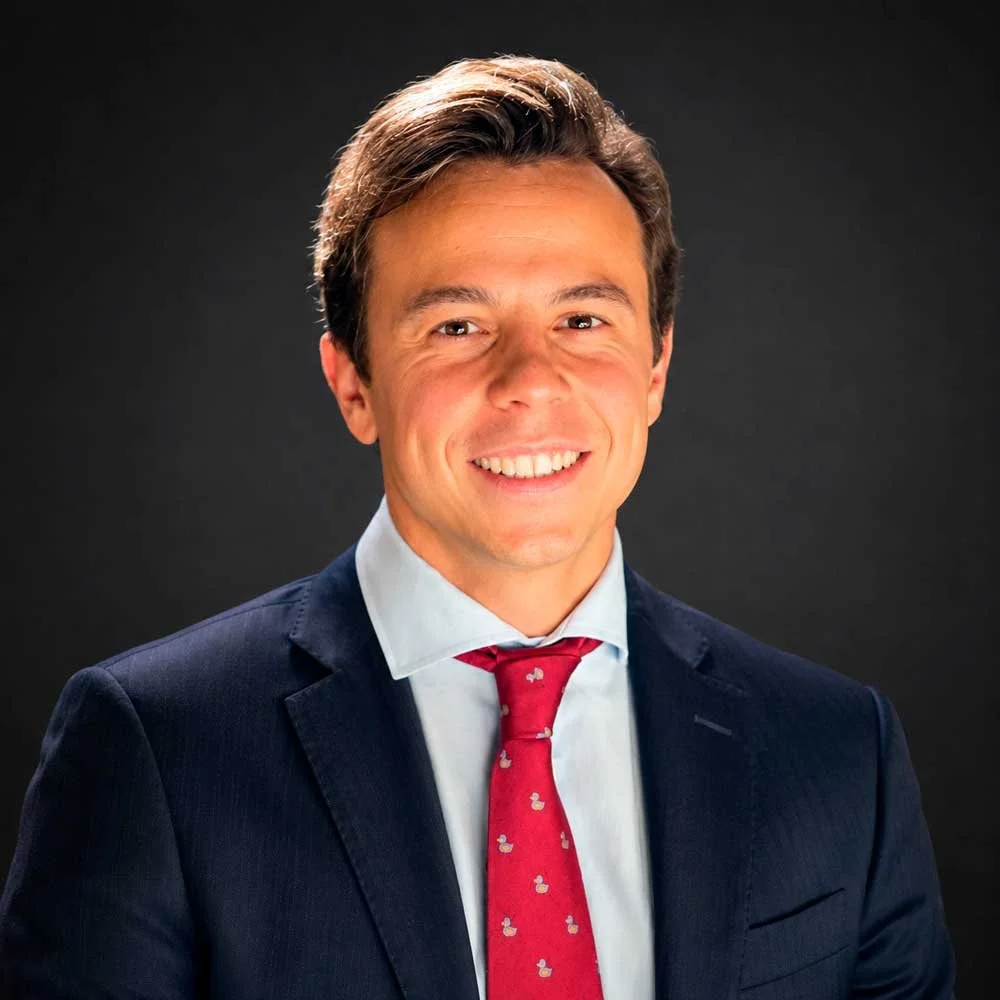
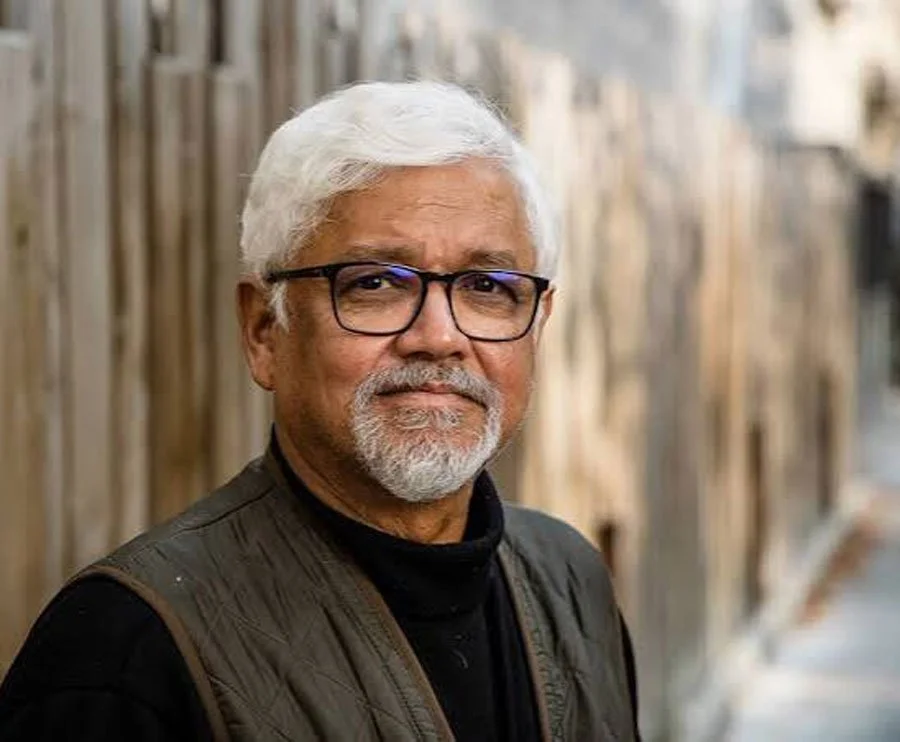
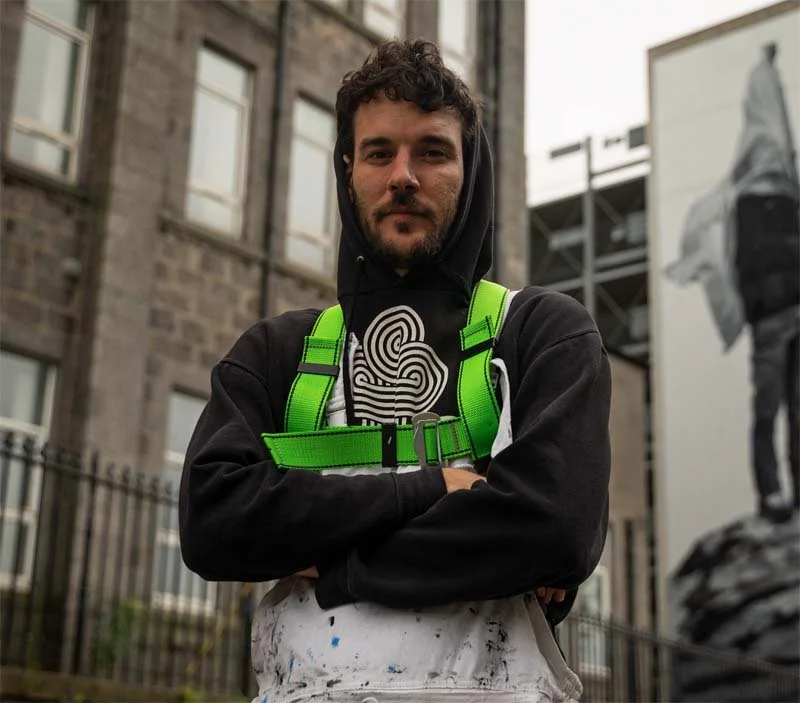
Jofre Oliveras (b. 1989, Girona, Spain) is an artist currently based between Spain and India. With an academic background in philosophy and journalism, he uses art and writing as tools for communication with a focus on social environments. Rooted in Mediterranean culture, his work reflects classical influences while engaging with communities through public art. He is a key figure at Konvent, an experimental contemporary art center housed in a former textile factory in Catalonia. @jofre.oliveras
You were born and raised in Spain. How did your upbringing there influence your artistic perspective?
I was born and raised in the city of Girona, Spain, a place that kept me closely connected to the rural landscape and the rhythms of nature. In Catalonia, the sea and the mountains are never far apart, so I grew up moving easily between both worlds. That constant dialogue with land and water has shaped my artistic vision, where the presence of nature and its elemental forces remains a defining influence.
When did you first fall in love with art and realize you wanted to be an artist?
I began drawing on scraps of paper before I could even walk. My family and teachers always noticed a talent in me, and their constant encouragement turned my fascination with lines and colours into something I understood as central to who I was. I’ve always felt that learning came easily, but having the people around me value what I created gave me an early sense of responsibility—to do something meaningful with that ability. Even through moments of deep confusion, art remained a refuge, a way to escape and to build an alternative reality. That need to create the world I wanted to inhabit became the foundation of my artistic drive. The first real turning point in shaping my path as an artist came at university. I always knew I wanted to study art, but I wasn’t a strong student and narrowly missed the score required to enter the fine arts academy. Suddenly, if I wanted to keep learning, I had to imagine a future beyond painting and drawing, which had been my strengths. I chose to study philosophy. For the first time, I read and wrote with real discipline, discovering a new depth of thought. Later I switched to journalism, and both fields gave me historical awareness and critical context that deeply informed my thinking. It was during those years that I understood art as a powerful form of communication—a way to grasp what was happening in the world and to express it through creative practice. That realisation set me on a long path of exploration, engaging with diverse communities and grounding my work in a strong social perspective.
Describe your new studio project at Konvent and how it fits into your semi-nomadic life.
I don’t really have a typical day in the studio because my life is currently divided between Spain and India, and my work has always focused on public space and creating art within the landscape. This has kept me in a state of constant movement, and I’ve built my skills and techniques through each new public project. Now, however, I’m starting my first proper studio. I feel an increasing need to give physical form to ideas, to experiment, and to learn through new materials and cross-disciplinary practices that I feel need to be more grounded. That’s why I’m renovating one of the old factory warehouses where I live in Spain, in the industrial colony of Cal Rosal in the province of Barcelona. I’ve been part of an artistic community there for almost a decade. It’s a fascinating place born from industrial ruins, reusing the infrastructure that once defined Catalonia’s textile boom. This was once one of the largest textile factories in the region. I arrived when the project was just emerging as an alternative cultural space—an experimental contemporary art center that began in the colony’s former convent, which gave the project its name: Konvent. Step by step we’ve been restoring these vast spaces, once dedicated to large-scale textile production, and adapting them for artistic creation and exhibitions. We’re shaping a project of collective living and cultural production that has become a reference point in the region for alternative contemporary culture outside the city, right in the middle of a rural landscape. This is where I’m planning my new studio, balancing the needs of the community with my own as an artist. In a few months—after extensive renovations of the roof, walls, windows, and water and energy systems—I’ll finally be able to use the studio. Yet the work of transformation will never truly end, because creating and shaping spaces is part of my artistic practice itself. The studio will be highly versatile: a large painting area with high walls to accommodate canvases up to five meters tall, plus space for carpentry, welding, ceramics, and any other technical needs that might arise in my work. And the entire factory will remain, more than just a studio, a playground for experimentation and site-specific installations.
Tell us about your current experimental projects, such as the mycelium sculpture.
I’m currently developing several exhibitions featuring stained-glass works, a new sculptural piece made from mycelium, and other projects that involve new technical skills and areas of knowledge that push me to study and explore fields closer to engineering, architecture, and the sciences. Even so, the themes remain deeply social. Throughout my work, there’s a constant search for real alternatives and a call to expose injustice. I continue along this path, though I find myself gradually moving away from direct social critique and focusing more on actively creating proposals for change.
When viewers experience your large-scale murals, what impact do you hope to have?
On one hand, I feel a strong desire to share knowledge and cultivate awareness; on the other, there is the sheer pleasure of aesthetic wonder. Painting has always drawn me to captivate viewers through bold color and large, commanding images. Murals carry a monumental quality, but they also demand a deep sense of responsibility—you’re occupying public space with something that can’t be ignored. It’s essential to create work that resonates with people and to know how to engage with the endless diversity of opinions that arise. For me, every piece contains a direct and clear message, yet behind it lies an entire way of thinking and living that remains unseen but is an integral part of the work. What’s certain is that every creative act must be a provocation: it may draw fascination and wonder, but at times it should also be capable of provoking the opposite.
Which artists, past or present, would you like to meet?
Most of the artists who first come to mind are Spanish classics—Velázquez, Goya, Sorolla—towering figures in the history of painting. But I’m sure there are many contemporary artists from whom I could learn just as much. Some have already crossed my path, and with a few I remain in contact.
Do you draw inspiration from music, writing, or other disciplines?
Yes, music is very much a form of escape and meditation for me. I enjoy playing the piano and other instruments, and at different times music has been more or less present in my life, much like writing. These are artistic and communicative practices I like to keep close—as resources I can always turn to. Although I don’t see them as a way to make a living now, they are important to my work and to my own enjoyment. I also have future projects in mind that focus more on writing or producing electronic music, but for now I’m simply nurturing those ideas gradually.
What is uniquely inspiring about living between Spain and India?
As I mentioned earlier, my life and work are mostly divided between India and Spain, although I travel to different countries to carry out artistic projects. In Spain, I live within a community closely connected to the natural environment. In India, I move between large cities like Mumbai and smaller towns in regions such as Kerala. My life is shaped by a diversity of experiences, and what I value most is the privilege of living a semi-nomadic lifestyle that allows me to explore entirely contrasting contexts in different parts of the world.
Can you describe the intense challenges you faced during your projects in Amman and Beirut?
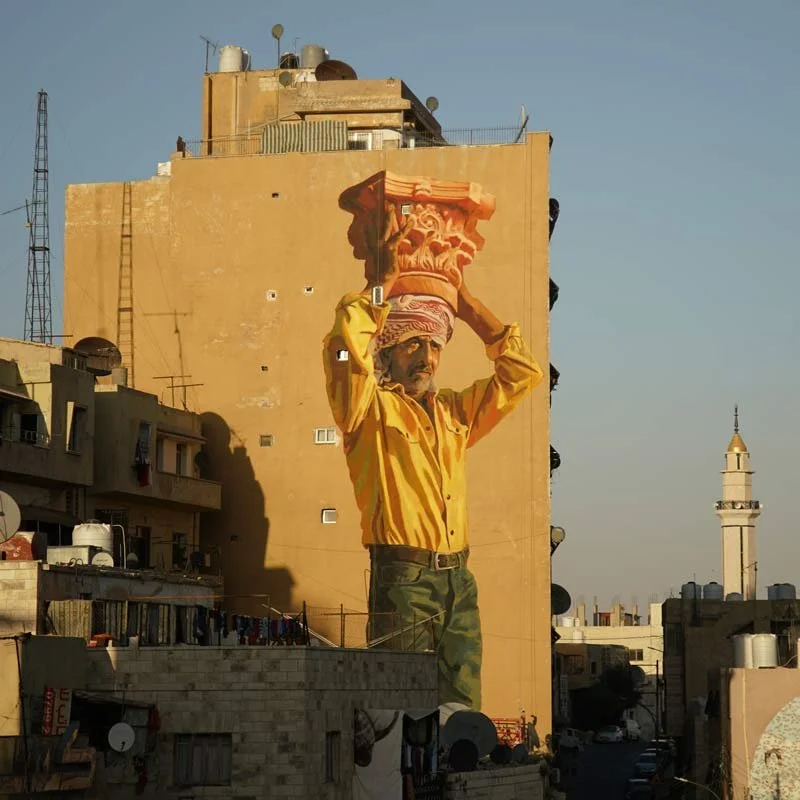
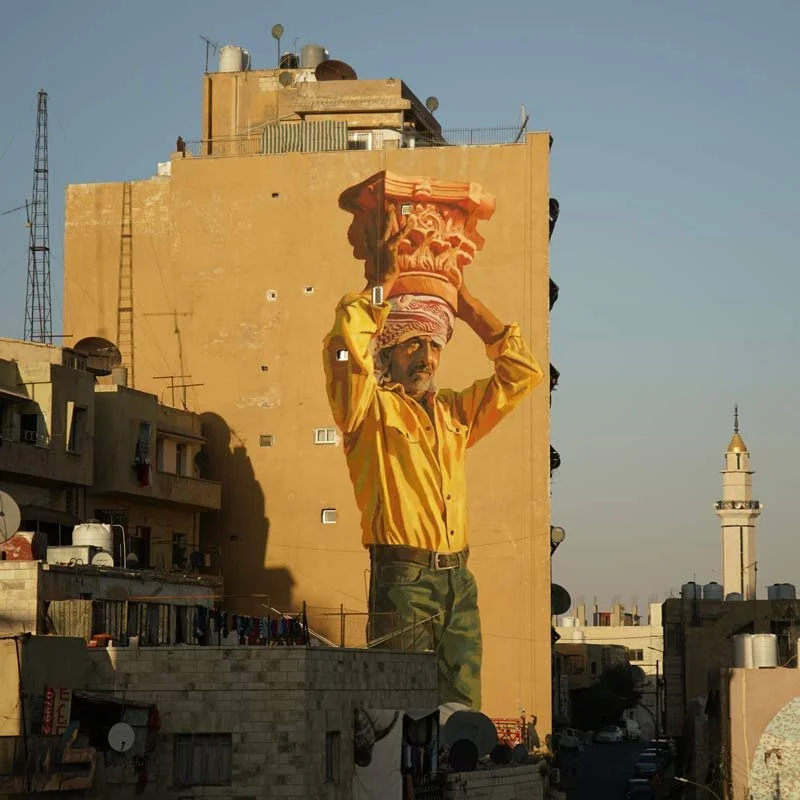
I always try to make each project a challenge that pushes me to learn and grow, but one experience from about five years ago stands out. It began just after the explosion in the port of Beirut, when I organized a group of artists to collaborate on projects with local artists there. Before reaching Lebanon, however, I was painting a mural in Amman, Jordan—a project that became an unexpected test. Not long after I started, the Amman Department of Culture contacted me to say I had to stop. Apparently, the mural had been reported to the secret service by ordinary citizens who serve as informants. The work depicted an Egyptian man who worked in Amman’s theater, shown standing vertically and holding a Nabatean capital from Petra on his head—forming a “human column” carrying the weight of history. He wore a keffiyeh around his head, and some people interpreted it as royal attire, claiming that no stone (the capital) could be shown above the king’s head. It was absurd, but the authorities insisted. For several days I argued with cultural officials to defend my design, promising that once the mural was finished I could adjust the keffiyeh’s color if necessary. It became a serious issue: they threatened to cover the entire piece if I didn’t comply. In the end I managed to complete the 25-meter mural, photograph the original design, and then slightly modify the keffiyeh to preserve the work. Painting in the August heat while negotiating every day was exhausting. Soon after, I arrived in Beirut to a far harsher reality: electricity only a few hours a day and an economy devastated by the explosion that had left half the city in ruins. There I organized murals, coordinated artists, and worked with local organizations to create artistic actions. It was already challenging, but then a civil conflict erupted between Hezbollah and the Christian party—one of the most complex political situations imaginable. I witnessed snipers exchanging fire and the early days of open fighting. In that environment, art and the projects we were managing suddenly felt almost irrelevant compared to the human crisis unfolding around us. The positive side of that experience was that we built strong connections with local artists, which eventually allowed us to share creative spaces beyond Lebanon. One of them has been living and working at Konvent with me for over a year now, deepening our collaboration and exchange.
Tell us about the important collaborators and peers who have impacted your journey.
I’ve had the opportunity to collaborate and live alongside fascinating artists within the urban art scene. I’ve worked with Escif, Blu, Erica il Cane, Sam III, and others—artists connected to the early days of public art in Europe. Later, I organized events and painted a mural together with Axel Void, through whom I also connected with other remarkable artists such as Faith XLVII, Sebas Velasco, and Michael Beitz. Gonzalo Borondo, like Axel Void, has created projects at Konvent, and with other artists we’ve shared experiences at various self-managed events. I have learned from all of them, but what I value most is the growth that comes from sharing, collaborating, and exchanging ideas with other artists.
Does nature inspire your art or your process?
Nature is everything. After all, what we do as artists is, in many ways, a reflection or imitation of nature. Often we find ourselves admiring human creations and attributing to them importance and grandeur, but no work of art can surpass nature itself. I’ve even found myself bored in an exhibition, only to step outside and experience the natural world, realizing that no human creation can rival the depth of that encounter. For me, the highest aspiration is for my work to integrate seamlessly into the landscape, becoming part of nature itself.
In a world increasingly saturated with industrialized and algorithmic creative practices, what is the role of the artist in preserving human authenticity and our connection to the ‘real'?
For me, we must remember that technology is a tool, not the other way around. We live in a world that places technology at the center, often pushing ourselves to the side to accommodate technological ideals of salvation. Many of our problems, however, stem from our disconnection from our origins. While technology can help us surpass previous limits and achieve things once unimaginable, it is also a major cause of the destruction of our habitat. In my work, I aim to balance these forces. I use materials, techniques, and even technological tools when they serve to enhance understanding, experimentation, or communication, but I never allow them to replace the human, tactile, and experiential aspects of creation. Handmade work, physical presence, and direct engagement with space and community remain central to my practice. Technology can amplify an idea, but the essence of art, for me, lies in human perception, experience, and connection.
Exploring ideas, art and the creative process connects me to…
the deep meaning of my human experience. Through exploration I gather insights that help me understand and perceive more consciously what it means to be a living being.