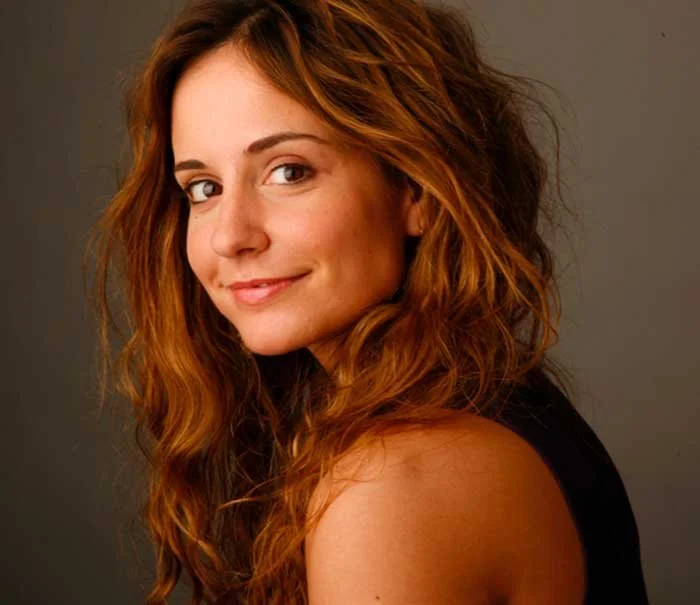


Istanbul-based artist Zeynep Beler on digital noise, the Princes Islands, and suspended attention.
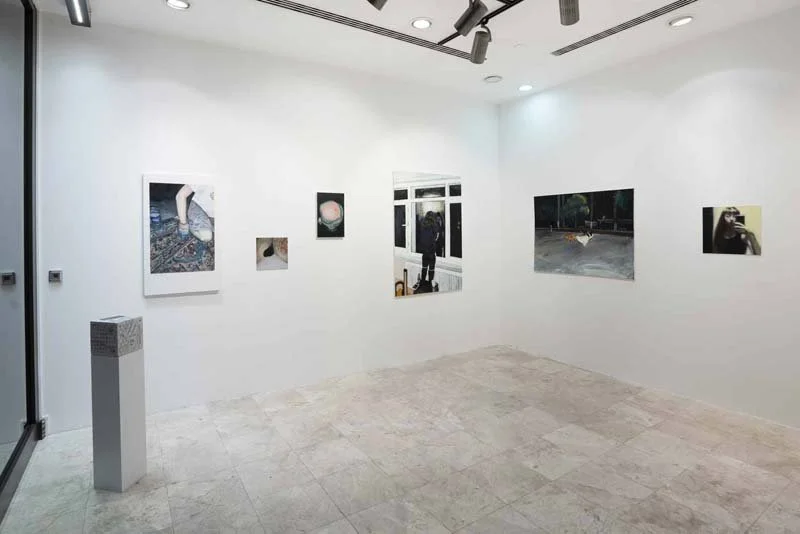
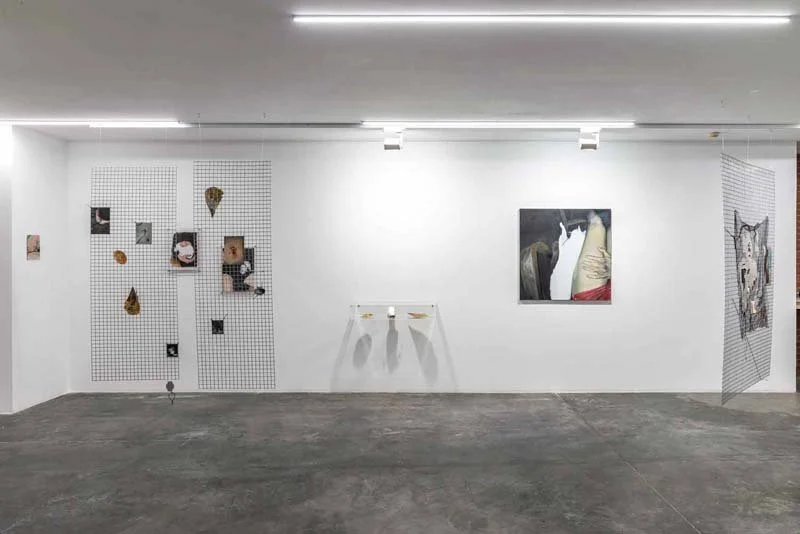
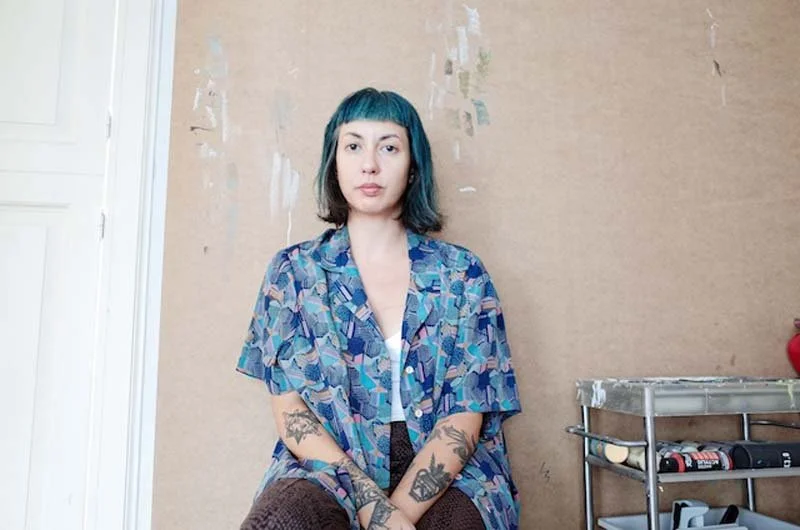
Zeynep Beler is an Istanbul-based painter whose work investigates the intersection of digital imagery and tactile mediums. Born in Ankara, she has participated in residencies including Borusan ArtCenter Istanbul and Gastatelier des Landes Nordrhein Westfalen. Her recent exhibitions include Apparent Life and Oriented Body, reflecting her focus on time, attention, and the materiality of the digital image. She currently lives and works on the Princes Islands. @zbeler
You were born and raised in Turkey. How has your upbringing in that environment influenced your art and your thinking about the world?
I was born and raised in Ankara. Ankara is the capital of Turkey and a staunchly bureaucratic city. It has its charming neighborhoods, but it's mostly kind of an urban sprawl. It's changed now, but as I was growing up there wasn't much for a teenager to do. We had to come up with our own entertainment.
When did you first fall in love with art and realize you wanted to be an artist? For you, what is the importance of the arts?
I was pretty much guided towards the arts by my father. He was an astrophysicist/academic with an artist's sensibility. He helped shape my awareness of nature and being sensitive to one's world and subjectivities. I'd say it's about having a compass and an anchor, as well as what helps me celebrate disorder, diversity and uncertainty in life. On a personal level it's about being aware of your individual reality - not just life and the arts but even science is interpreted through the limited scope of human awareness. It's also about maintaining an inner life, with a boundary that remains porous to your community.
Describe a typical day in your studio and your most used materials.
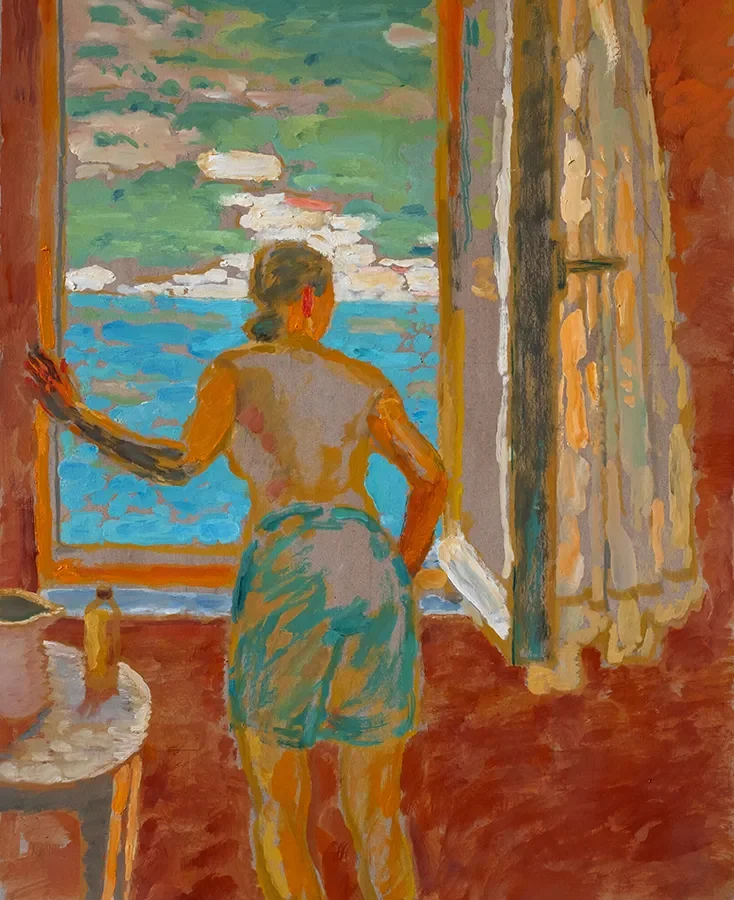
My studio is my living room, so I usually just drift towards it in the morning when I'm having my second coffee. I journal and draw before getting into the swing of things. If I have stuff to do on the computer, I do that. Since my studio has no doors, I need to draw some psychic boundaries with my domestic life and my studio life, and I establish that by putting on a playlist, arranging my paints, hanging up a fresh sheet if I don't already have a painting going. My most used materials are my oil pastels, my staple gun and a particular kitchen knife I use for scraping.
Tell us about your current series based on digital glitches and the themes driving your work.
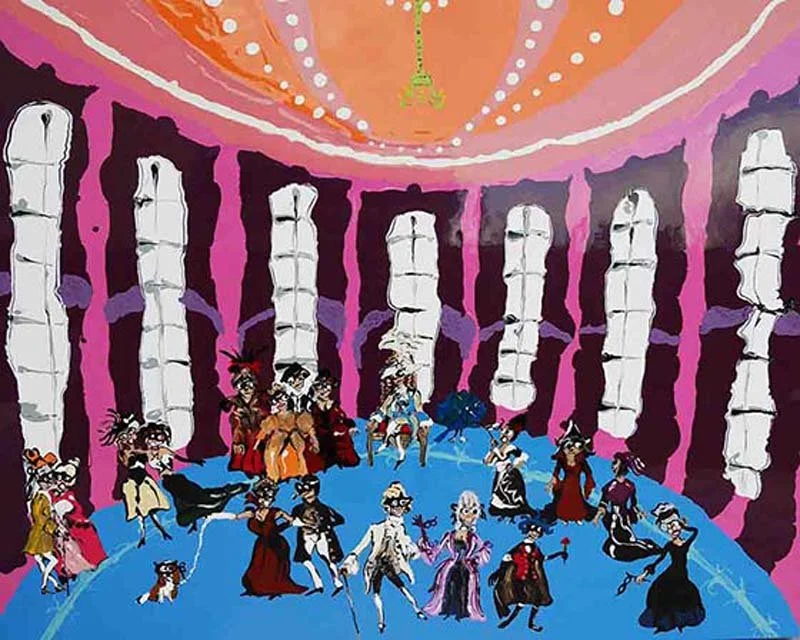
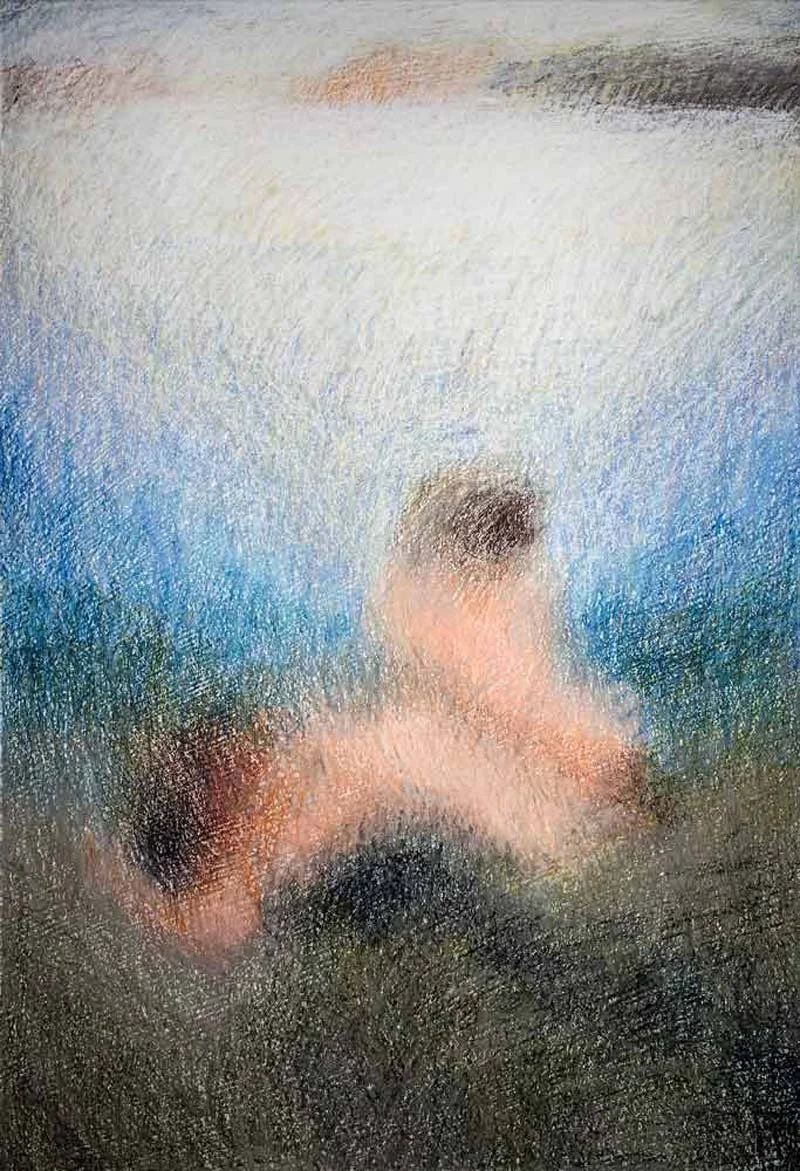
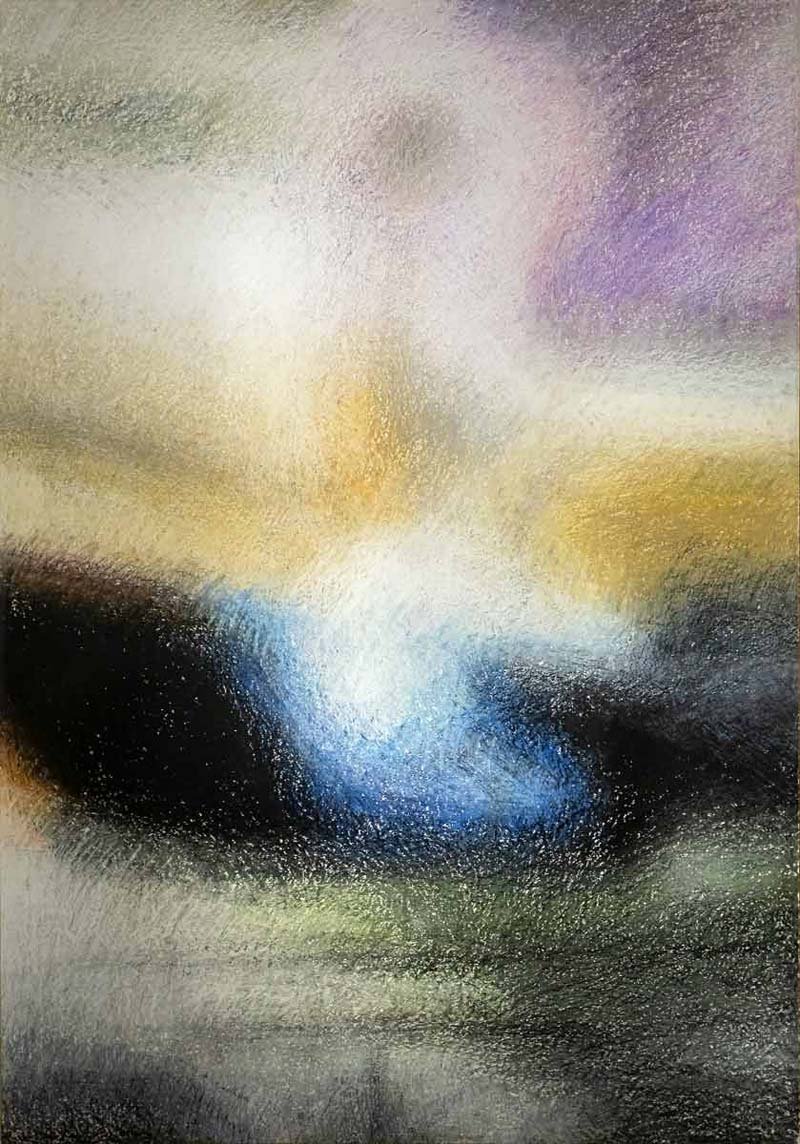
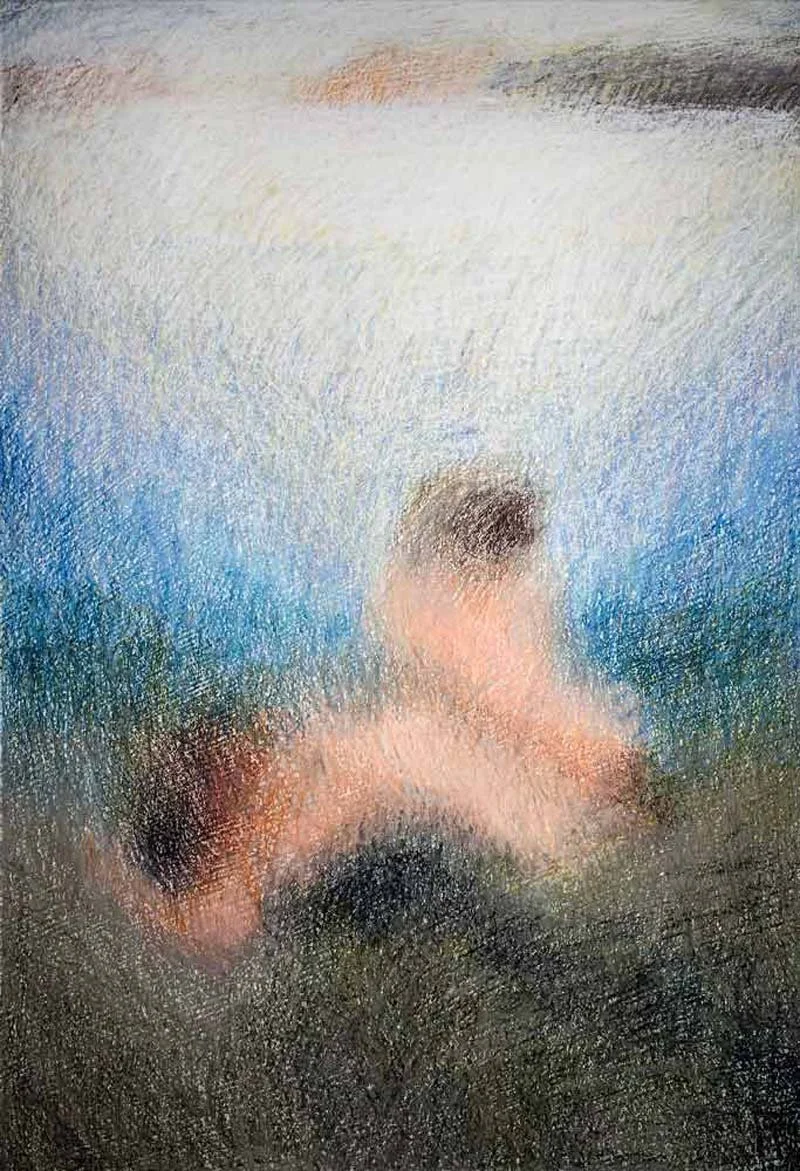
I've been working on the same series of paintings for the past two years. These are oil pastels on paper based on a certain image command I began mining from the internet, something circumstance, that is to say, my poor internet connection, led me to awareness of. I would be sitting on the ferry for two hours to get to my studio, which was in the city at the time, and the images in my feed would refuse to load. Some would load halfway and get stuck. My feed would be glitching and testing my limited patience, because our attention spans are severely truncated as it is. I've been thinking a lot about these fleeting images that nonetheless burn into our retinas in passing, what it means to enlarge and preserve such artifacts. Also a lot about time and attention.
When viewers experience your art, what emotions or reflections do you hope they feel?
A lot of my work is about suspended attention, and somehow I hope it reflects or loops back on that primary urge. The pixel noise and forgettable images we don't pay much attention to, is in fact often deployed to manipulate user attention online, becomes a very tangible, forceful characteristic in my paintings and when I see people struck by the texture or the quasi-forms, pausing at length in front of the painting and asking me if this or that is what they're meant to see, I feel like I've succeeded in prolonging their attention.
Do you draw inspiration from music, literature, or other disciplines?
I definitely draw inspiration from music, it's my fuel when I'm working. I also try to read a lot. Currently I'm working through Nabokov's Collected Stories, which is dense and excellent. I have a moderate yoga practice, which is crucial for me to physically ground myself as I can be very much in my head. This is important because painting is also such a physical practice; I feel like it's consolidated by the yoga somehow.
What is uniquely inspiring about living on Istanbul’s Princes Islands?
I live on one of Istanbul’s Princes Islands, a district unique for its protected status and its sampling of local nature, just a very short distance from the city. Historically the islands were a place of exile and hermitage. In more recent history, the islands have been a holiday retreat, home to summer houses for Istanbul residents, but often they also nurtured artist communities, as they do today. I feel fortunate to belong to one such network of creatives. Living as neighbors on the islands invigorates our work together, making collaboration feel very natural. Living year-round on the island is also a good middle ground for people like us who crave both retreat and connection.
Tell us about the important teachers and mentors in your life, including your father.
As I mentioned, my father gave me the tools and discipline to become an artist, and all my life I’ve found inspiration in the people closest to me. I was never very receptive within a teacher-student dynamic, although I had art teachers and tutors. Inspiration grows more naturally out of the bonds I form. I've rarely sought out collaboration, but friends and lovers frequently became collaborators. Often, collaborating on a project feels like a natural and inevitable extension of a personal relationship.
Does being in nature, specifically on the islands, inspire your art or your process?
I think I'd have lost it a long time ago if I couldn't take my daily hikes in my neck of the woods. Every August, the storks have a layover on the Princes Islands before continuing on their way South. It happened once years ago, and once again this year their arrival caught me during a hike. It's an incredible thing to witness closely and makes me feel so humbled.
In a world increasingly saturated with industrialized and algorithmic creative practices, what is the role of the artist in preserving human authenticity and our connection to the ‘real'?
AI slop takes the median in the totality of existing human creation and basically puts forward an approximation. The result is blandness. I've played around with AI myself and continue to use it as a tool. I realize that thoughtful prompts can generate more interesting results. For creation as we've always known it, however, human error and intuition remain indispensable, and a kind of channeling of raw materials. Which is what AI art is to me. Otherwise I look with real enthusiasm upon forays that blend art with technology. Technology has evolved at a staggering pace, and largely without a moral compass. This is precisely why the humanities—and art in particular—are essential: they can provide the critical and ethical frameworks, as well as imagination, that technological innovation on its own intrinsically lacks.
Exploring ideas, art and the creative process connects me to…
the life of the mind and the greater tradition of humans following their natural curiosity, one of our defining, distinct traits. I feel like as long as I can unlock new vantage points in my mind I have something to look forward to. It offers a counter to anxiety, which otherwise feels like my baseline state of being in and responding to the world at this time.