

Detroit-raised artist Jon Parlangeli on color blindness, urban decay, and painting as a "need."
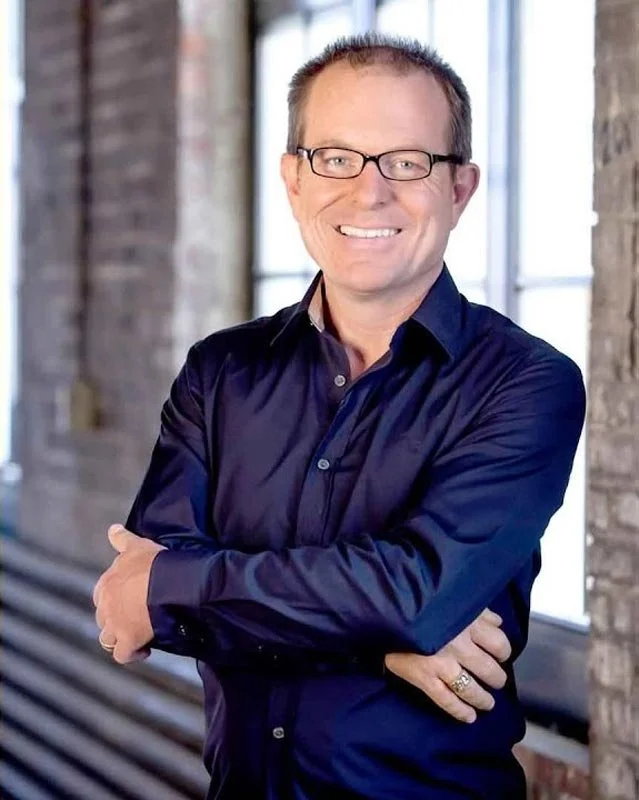
Jon Parlangeli is an American painter whose work explores the space between the real and the abstract. Born in Connecticut and raised in the Detroit area, he draws inspiration from the interplay between nature and urban decay. Born partially color blind, Parlangeli uses color as a "weapon of indelicacy," creating vibrant, textured works that push beyond subtlety. His paintings have been exhibited internationally and are held in corporate and private collections across the US, Europe, Asia, and the Middle East. @painterjon303
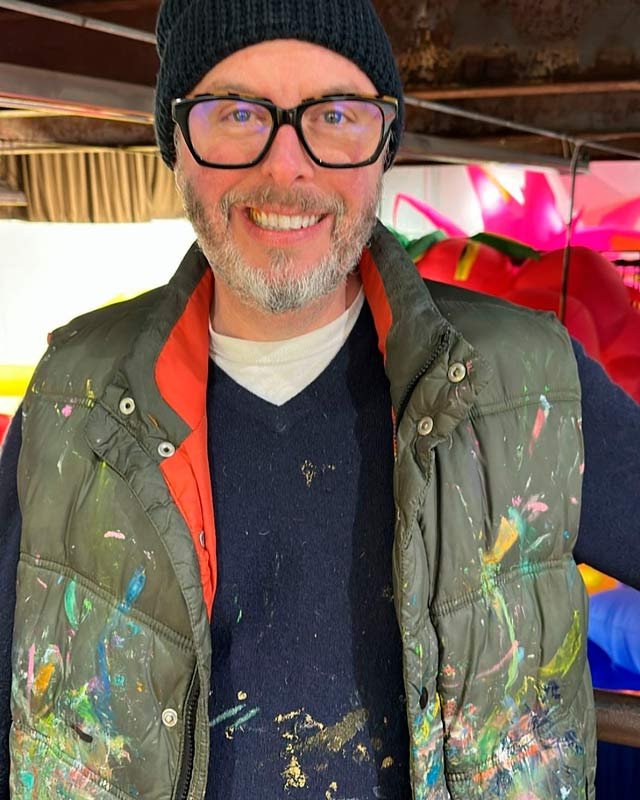
You were born in Connecticut but raised in the Detroit area. How did the contrast between East Coast landscapes and Detroit’s urban environment influence your artistic perspective?
I was born in Windham, Connecticut and moved to the Detroit area as a small child. My heart has always been with the East Coast, and between the mountains and the ocean my soul has always resided there. That said, the sheer impact of the City of Detroit, from elegant sky scrapers to abandoned houses and devastated neighborhoods of the 80s and 90s, I began to develop a fascination with natural objects as they encountered man made elements, new and decaying. This fascination grew into an obsession for spatial relationships, texture, composition and happy accidents in art.
When did you first fall in love with art and realize you wanted to be an artist?
I was a distracted youth who was constantly drawing and obsessing over at random patterns until an enterprising high school art instructor contacted my parents to suggest additional training in the arts. They had a series of "secret meetings" about it, and all the while my father's dream of me becoming a policeman, like him, was slowly dying! I distinctly remember him lovingly, but firmly shaking my hand before sending me off to my first art class at the Birmingham/Bloomfield Art Center. Since that day, 40 years ago, art has been my life. Its not a calling, but instead a need, a must, and one of the most important things people need to encounter and engage in. It both identifies and adds to the better part of our humanity.
Describe a typical day in your studio and your process, specifically your "pilot's cockpit" setup.
My studio days begin with the wonderful smell of oil as I enter the room. It permeates everything and smells like home to me. There are works in in there dating as far back as the early 90s, and I always take time for them before beginning something new. The years of knowledge and experimentation they contain help to open my mind up the the creative process. My painting area is set up like a pilot's cockpit where the chair is surround by piles of oil tubes, brushes, rags, lights and random objects for mark making. Once seated in my flight space, I grab my trusty, orange #12 filbert (it acts like my director's baton I suppose), and begin to let my mind wander. I barley draw anymore, except into the paint itself, so the session starts with loud music and observation for about 30 minutes or so. The mental notes taken during that period launch a trance-like process I like to compare to action painting. Thoughts of the external world leave me and my senses narrow responding solely to color, form and texture. The work at this point is driven purely by fast moving emotional exchanges coming from the canvas. Subliminal elements of the natural world do creep in at times, but I never seem to notice their influence until the day is done. Anyways, after several hours of this I'm exhausted and its time for reflection, a cigar and a great glass of wine.
Tell us about Reconstructed Expressionism and the themes driving your current work.
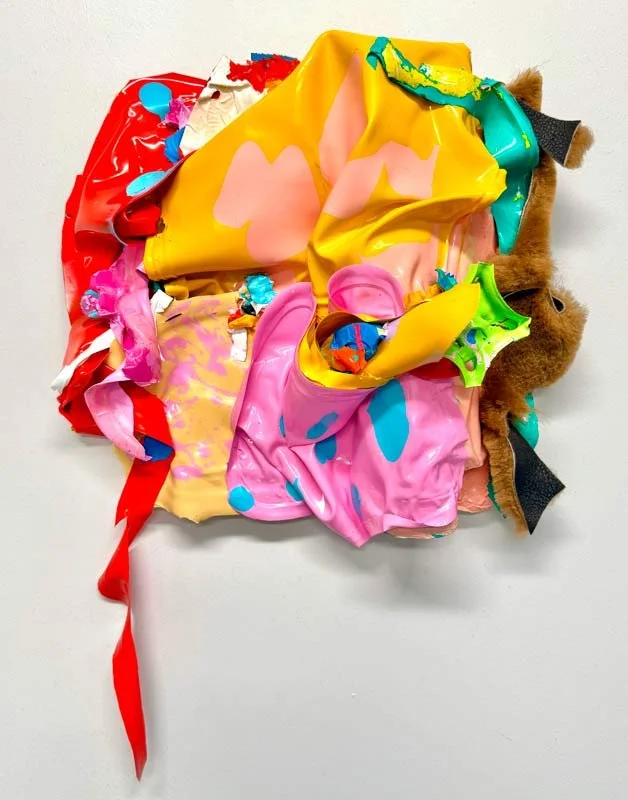
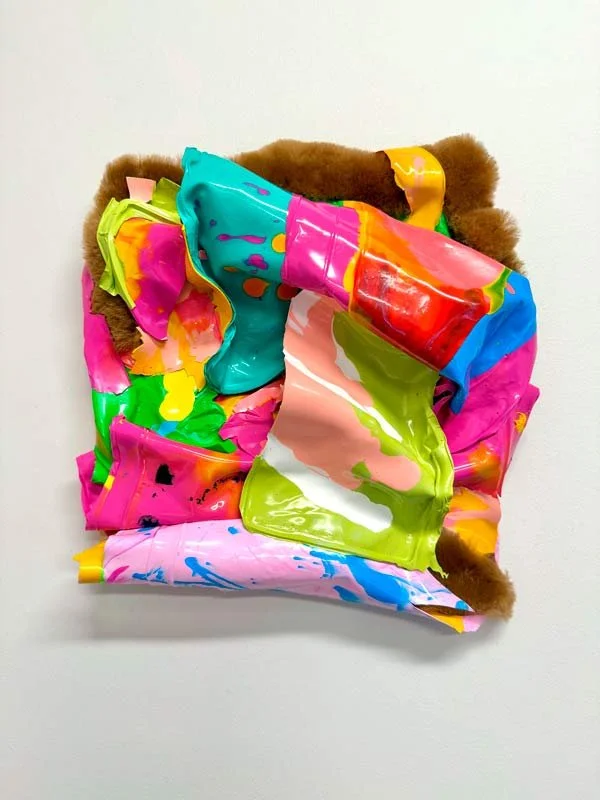
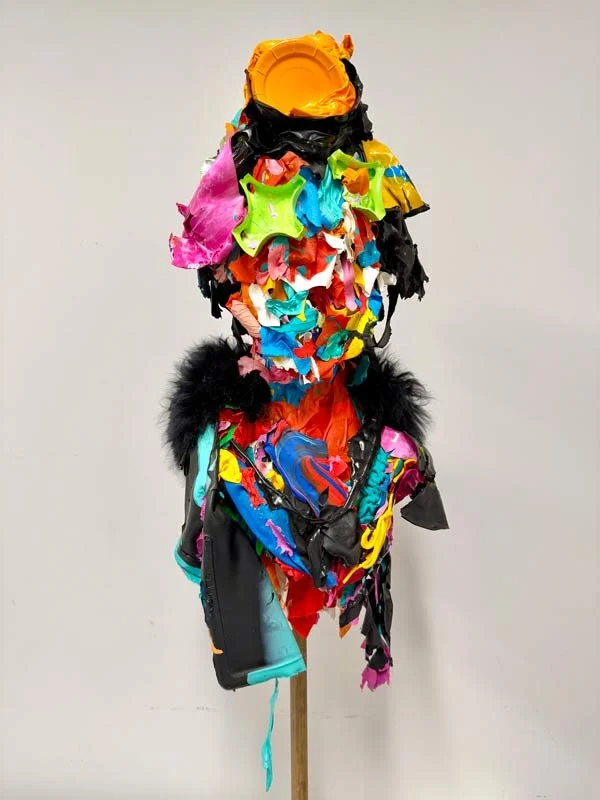
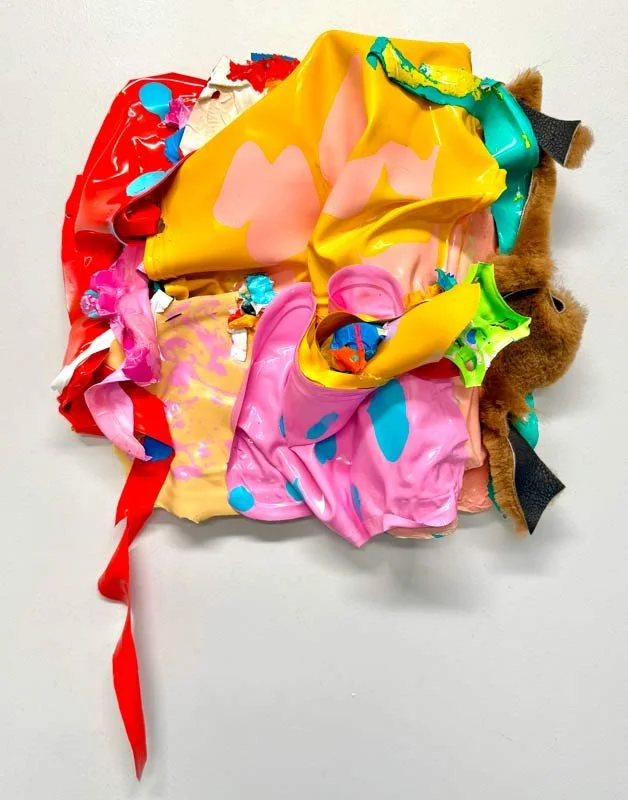
I'm always working on my co-themes of nature and figure in oil, but I've also returned to an acrylic project I started back in 2015-16 called Reconstructed Expressionism. After taking a few years off from making them my emotional psyche had become out of balance as this creative process fulfills an entirely different creative need than the nature and figure based oils do. Without realizing it I'd come to crave, even obsess over, the process. These are the photos submitted with this interview. I've described the style as: Color and form brought into new light and life through movement and dimension. I spent years perfecting this technique and stabilizing the paint to bring it into the 3rd dimension. These works are a reflection of life in the Communication Age; living in an info-bite addicted culture moving 1000 miles a minute. There is so much information out there at such a pace the mind cannot accept it as a whole. Therefore my images become reflections of info-bites as they streams though our consciousness and form perception.
When viewers experience your art, what emotions or connections do you hope they feel?
I'm trying to create an emotional response that helps people identify with their own humanity...to help them awaken something within their inner self that helps to create peace within them.
Which artists, past or present, would you like to meet?
de Kooning! He was the greatest amongst the Abstract Expressionists and his vision, once applied to canvas, was second to none. I'd like to observe his process as he builds the composition and creates movement and/or stagnation through color.
Do you draw inspiration from music, art, or other disciplines?
The whole world, good or bad, inspires me to work, and I never know what specifically will affect me. In my creative process, painting is a form of meditation and must come from within me. In this time its not always possible, but I strive to keep other artist's work out of my head while I'm working. That said, I am a voracious art collector and my home is a museum to many. As mentioned in another of my answers above, I feel that art is what is best in humanity, so I prefer to surround myself with that all-powerful creative energy all the time!
What is a great thing about living in your city and having an open studio?
My studio is in my home and always open to the public. I always enjoy random drop-ins by those that are curious as it gives me a chance to engage with those that are both educated with and ignorant, but curious to, art.
Can you describe a project that challenged you creatively or emotionally—and how you worked through it?
Yeah, my first mural project which was given to me with less than 24 hours' notice. I was to cover a recently closed storefront painting live during a citywide event. I was young, inexperienced, a true introvert, had no idea what to paint and had never worked in front of a large gathering before. It was also about 90 degrees outside and in direct sunlight when I began. All I can say is that I turned inward, focused not on the anxiety of any possible failure, but on the opportunity presented by this blank wall in front of me. In total the project in total took about 12 hours, and as day progressed into night I found that a crowd had gathered, and people were celebrating the mural behind me as worked towards completion. I still remember finally sitting around 10pm, hot and exhausted, on top of an empty paint as a group of skateboarders dropped their boards and rushed in for a photo in front of it. They were oblivious to me, but their reactions made the experience truly worthwhile.
Tell us about the important teachers and mentors who impacted your growth, particularly regarding your color blindness.
I'm red/green color blind and was pushed away from painting when I was in school because of it. It was true I had no real idea of color either way, but could not comprehend the idea of not painting and also the shortsightedness of some in academia. It was 1988 and at that point I was at Western Michigan University. However, I ended up meeting professor Don King there and he forced me to stop working for what seemed like weeks as had me read his books on the science of color while also encouraging me to speak with or read about other colorists regarding their application. Don knew the path well. He was 100% color blind! Anyways, there have been many mentors/influencers over the years, but Don was at the right time and place to push me into becoming a colorist myself!
Does being in nature inspire your art or your process?
My work is first and foremost inspired by nature, the greatest artist. After all, who can't stare and a rose or dahlia and wonder about the magic of the Fibonacci sequence? One of my oldest collectors was a master gardener, and I've cumulatively spent years walking his gardens (usually with a glass of wine) and witnessing some of the greatest art one can experience. I would wander through fields experiencing all creations of nature from birth to death in color and form. Its become a part of me.
As AI begins to mirror human output, what do you believe remains the 'irreplaceable core' of human creativity?
I understand that there is art inspired by AI, fully created by AI and onward we go. That's just the future knocking as it always does, and, as always, someone monetize the art for blue chip circles. To me personally, AI can be a good tool or resource for ideas, but as a final product it will forever remain a novelty when compared the hand made works. There really is no comparison.
Exploring ideas, art and the creative process connects me to…
my inner self, my purpose, my peace and my joy.