

In the space where language fails, how does the artist create a world where doubt and beauty can coexist?
Mario Abela is a Maltese artist whose practice spans painting, drawing, and digital media. A winner of the PRISMA Art Prize in Rome and the CREA OPEN in Venice, he brings a background in history education and graphic design to his evocative, layered works. Currently a senior lecturer at MCAST and a brand ambassador for Cretacolor Vienna, Abela’s work explores the intersections of memory, perception, and the existential tension between the known and the uncertain. @abela_mario
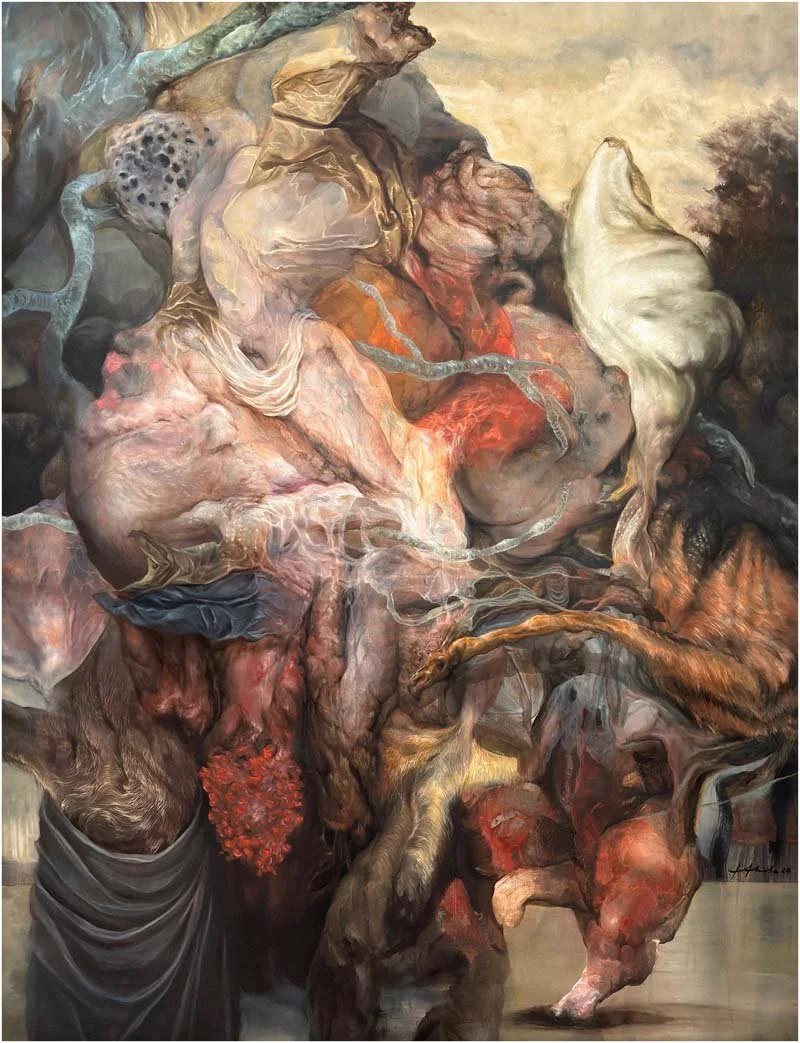
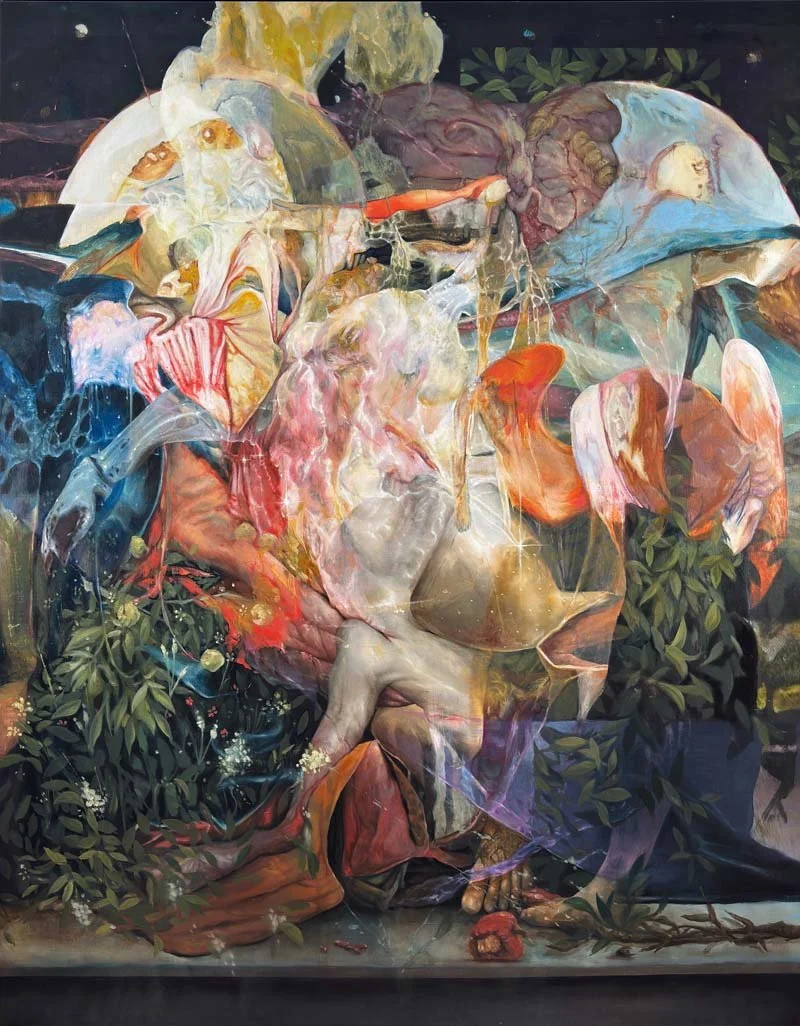
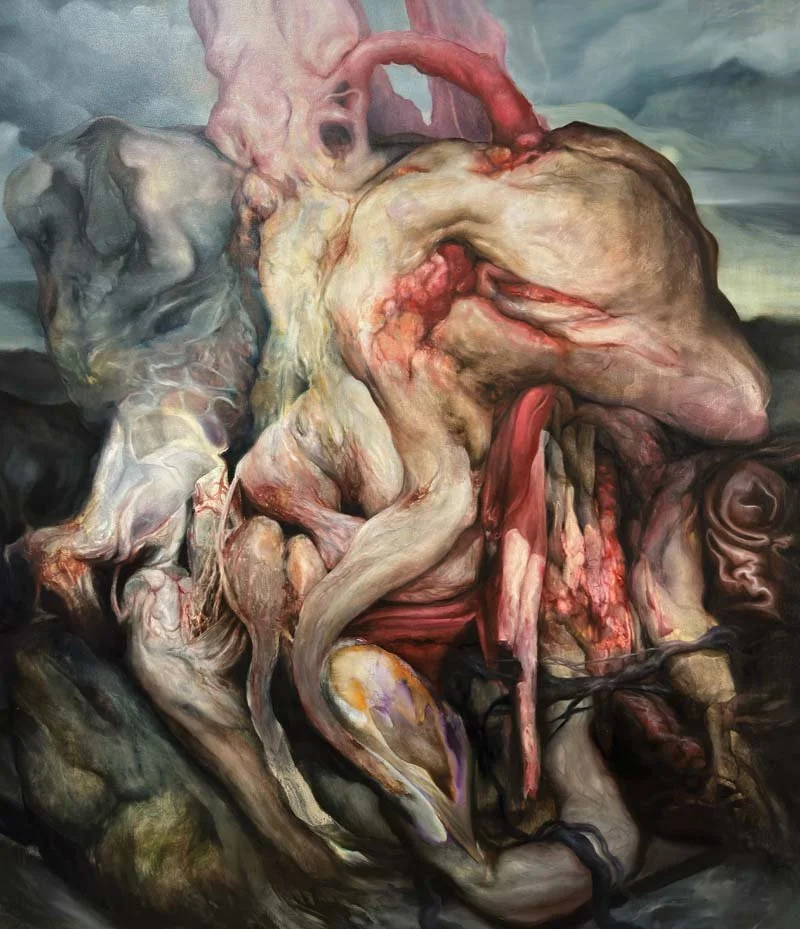
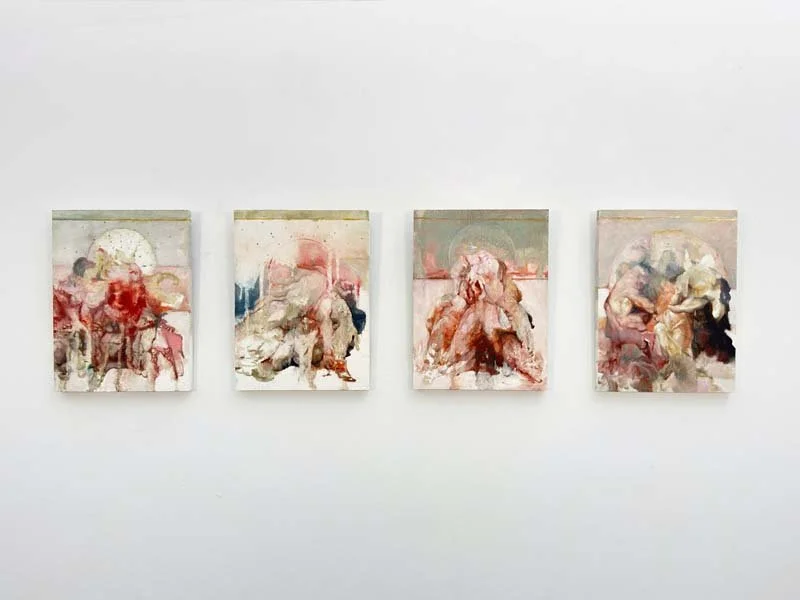
How did your upbringing in Malta shape your imagination and your approach to art? I was born and raised in Gozo, the smaller sister island of Malta, within a very Roman Catholic family. My childhood was steeped in ritual; going to church almost every day, surrounded by a world of paintings, statues, and sacred spaces. Those experiences shaped my visual vocabulary before I even knew what art was. Religion gave me a kind of order, a framework for understanding how to see, reason, and navigate the world.
But as I grew older, I began to question that framework. While it gave me structure, it also made me curious about what lies beyond prescribed belief. That curiosity pushed me toward more existentialist thinking, where doubt is as important as certainty, and meaning is not inherited but created. This shift influenced not only how I see the world but also how I approach my practice as an artist. I find myself constantly negotiating between order and disruption, tradition and reinterpretation, the known and the uncertain. Gozo gave me the foundation, but it also gave me the impulse to challenge it, and that tension continues to drive my work today.
Can you recall a moment when you recognized art as your chosen path?
I think the moment I fell in love with art was when I discovered that words often weren’t enough for me. There were times when language failed to capture what I was feeling or thinking, when reasoning through words felt limited. Art opened up another dimension—it gave me a way to say things without sounding them, to express doubt, longing, or contradiction in a visual form. That realization made me understand that being an artist wasn’t just something I wanted to do, but something I needed in order to exist fully.
For me, the arts carry an immense importance because they operate in a space that goes beyond logic. They are like a vast void in the human psyche—a space of boundless possibility, where one can almost play god. In that void, we are free to create worlds, to confront questions, to hold beauty and discomfort in the same frame. The arts are where humanity rehearses its deepest struggles and its greatest hopes. They remind us of the richness and complexity of being human, not by resolving contradictions, but by letting us live inside them.
Describe a typical day in your studio.
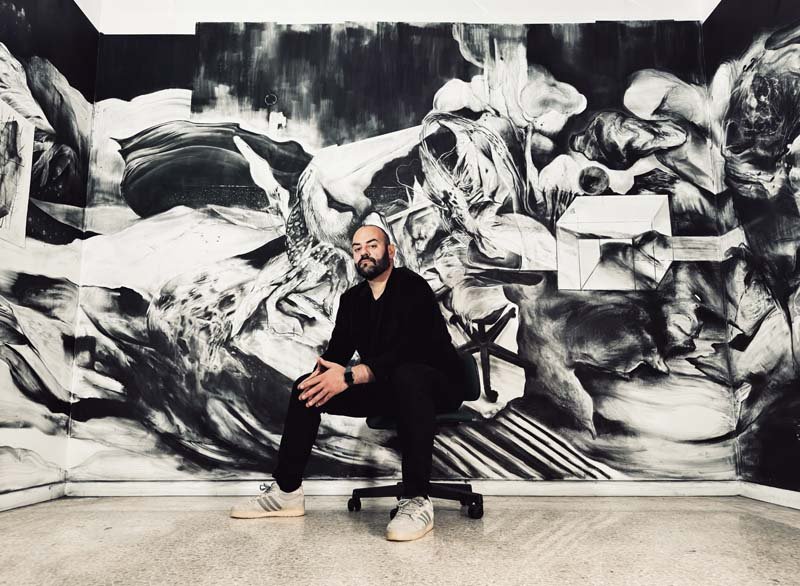
A typical day in the studio usually begins with a pause. I’ll spend some quiet time simply looking at what’s already on the walls or resting on the easel. That initial moment of observation is essential, because often the work itself suggests what needs to happen next. Sometimes a painting shows you its own unfinished needs, other times it resists, and that tension keeps me moving.
From there, the rhythm of the day is never linear. It shifts between bursts of intense concentration and longer periods of waiting and stepping back. I might work deeply on a surface for an hour, then leave it untouched while I watch, question, or even walk away to give the image space to breathe. Those pauses are just as important as the active mark-making. My studio itself carries the traces of works in progress and works abandoned; unfinished canvases leaning against walls, drawings on the wall, pigments and brushes scattered across tables. There’s a sense of both order and chaos, as though the room itself holds memory.
Tell us about your current projects and the themes driving your work.
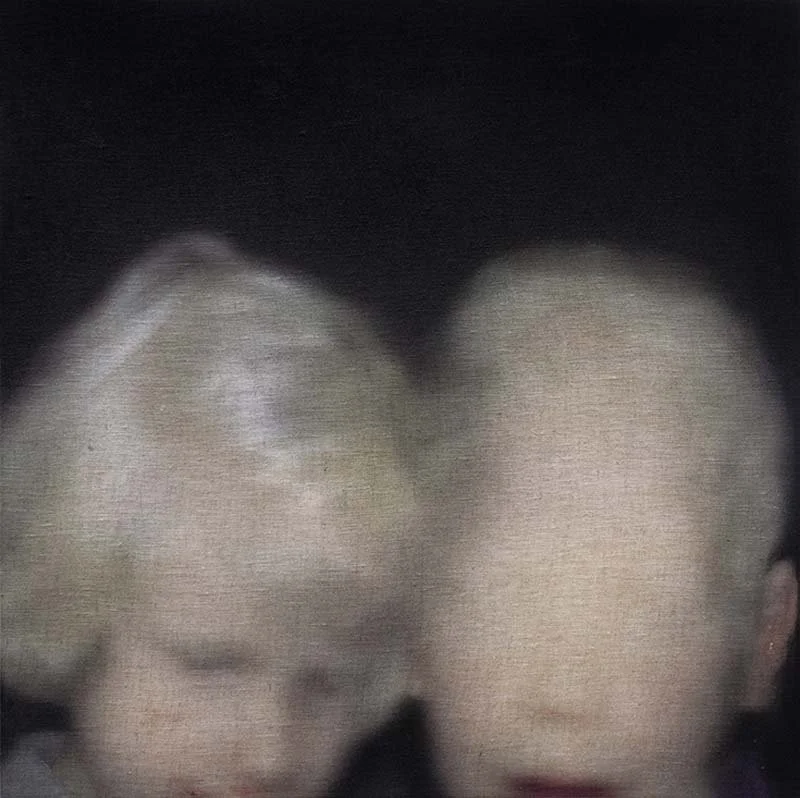
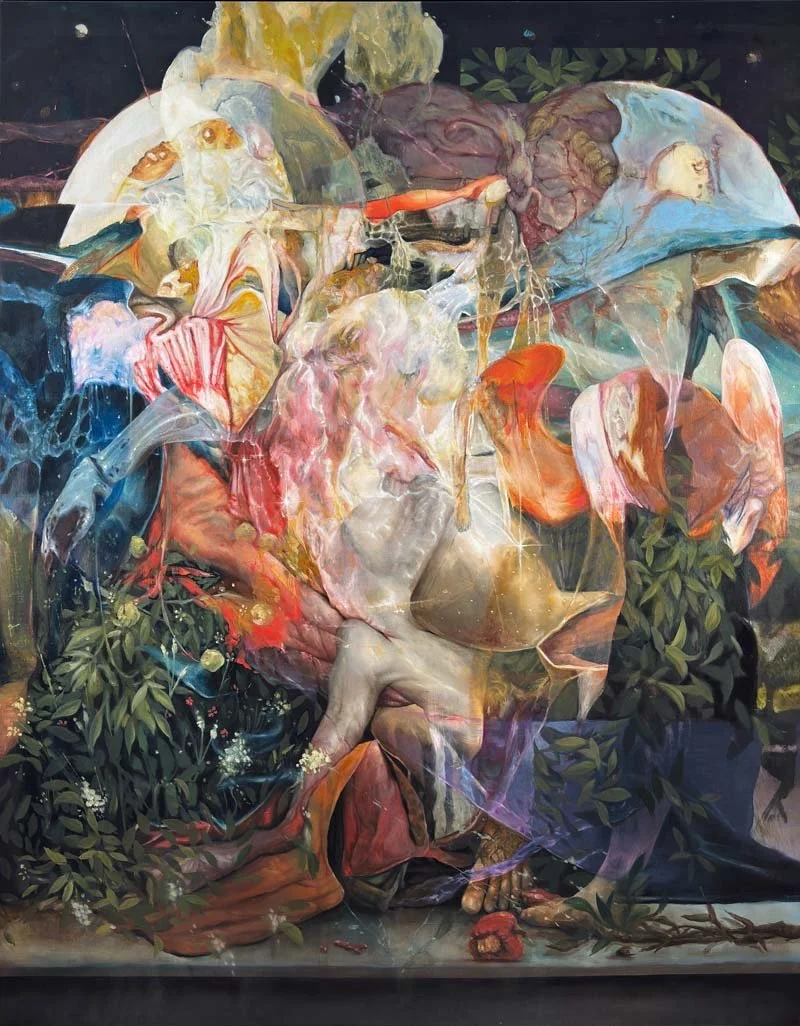
At the moment I’m working on a body of paintings and works on paper that continue to explore the tension between clarity and obscurity; how images can be both present and elusive at the same time. I’m interested in that space where recognition slips into uncertainty, where a figure or gesture begins to dissolve, and the viewer is left questioning what is actually seen.
Thematically, I find myself returning often to ideas of faith and doubt, memory and erasure. These aren’t subjects I approach in a literal sense, but rather as psychological states that shape how we experience the world. I’m drawn to the fragility of images; how they can carry authority and yet be unstable, vulnerable to distortion and disappearance. These new works are less about offering resolution and more about creating conditions where doubt can coexist with belief, where beauty and unease overlap.
When viewers experience your work, what emotions or ideas do you hope they connect with?
I don’t expect viewers to feel one specific thing when they encounter my work. I’d rather want them to enter into a space of uncertainty. If the work can create a moment where someone pauses, questions what they’re seeing, and allows themselves to sit with that ambiguity, then it has done its job.
What I’m trying to express isn’t a fixed message, but a condition where fragility of images, the way faith and doubt, beauty and unease coexist. My works are often about what resists clarity, what slips through understanding. I want people to sense both presence and absence, to feel that something is being revealed and concealed at the same time. If the work leaves a trace, then it has opened the possibility for a deeper reflection, which for me is more important than resolution.
Do you draw inspiration from music, literature, or other disciplines?
Yes, music is a constant source of inspiration for me. I listen to a lot of different kinds, but I’ve always been drawn to uneven structures like drones, multi-tempo tracks, compositions that resist easy resolution. In many ways, they mirror my work: layered, shifting, sometimes dissonant, and open to interpretation.
Beyond music, I also draw inspiration from literature, film, and philosophy. Texts and ideas that explore uncertainty, memory, or the fragility of perception often inform the psychological undertones of my work. Likewise, cinema and visual storytelling influence how I think about space, composition, and movement within a painting or drawing. I’m interested in how different disciplines can echo each other; how the tension in a piece of music can find a visual counterpart, or how a philosophical idea can take shape as a gesture or mark on paper.
What is the significance of the geography of the Mediterranean to your creative practice?
One of the great things about living on an island in the middle of the Mediterranean is the paradox it offers. On the one hand, you are constantly reminded of physical boundaries. The sea defines your horizon and makes you acutely aware of the edges of things, of the limits that geography imposes. That sense of containment shapes how you live and think—it’s both grounding and, at times, restrictive.
But for me, those very boundaries are what push my work beyond them. The island becomes a metaphor for the mind: a finite space surrounded by vastness. While I live within physical constraints, my art allows me to explore what lies beyond the confines of the human brain—those places of uncertainty, imagination, and possibility. There’s a kind of tension between the island’s tangible borders and the limitless inner landscapes that painting and drawing can access.
Tell us about the people or experiences that influenced the artist you are today.
I don’t focus on individual mentors or teachers, because in truth, everyone who has had an impact on me is reflected in my work in some way. Each encounter, conversation, or shared experience has left a trace; shaping how I see, how I think, and how I make. I’m influenced not just by guidance or instruction, but by the subtle ways people inspire curiosity, challenge assumptions, or open new perspectives.
In that sense, my practice is a kind of mosaic of those interactions. Every mark, gesture, or decision carries echoes of the people, ideas, and experiences that have touched me, even if indirectly. The studio becomes a space where all of those influences converge, creating something that is simultaneously personal and connected to a wider network of inspiration.
Sustainability in the art world is an important issue. Does being in nature inspire your art or your process?
For me, being in nature is not an option but a must. I walk almost every day, either along the coastline near the Xwejni saltpans or through the winding country lanes of the same island of Gozo where I live. These walks are a way of grounding myself, of reconnecting with something that feels real and elemental. They remind me of my own finitude, that I too am part of this fragile cycle. That awareness of being finite, of belonging to something larger yet impermanent, is central to how I think and work.
The natural world has always been a source of wonder, but sadly, we are increasingly losing our bond with it. We tend to forget that our existence is deeply interwoven with these landscapes, seas, and skies. In this sense, nature doesn’t just inspire me, but it holds me accountable.
In an era where digital tools like AI are redefining reality, what is the importance of the physical, haptic act of painting?
AI and technology are certainly transforming the way we create, perceive, and share images and ideas. As a lecturer of digital media and someone who works regularly with software and AI, I’ve seen both the potential and the limits of these tools. They offer incredible possibilities, but they also highlight what is uniquely human about art. Handmade, human-created work carries imperfections, intimacy, and traces of thought, hesitation, and gesture that no algorithm can truly replicate.
Human art is not just about the final product; it’s about the process, the risk, the doubt, and the choices made in real time. Those moments of vulnerability and experimentation give a work its depth and resonance. Technology can produce images efficiently, even convincingly, but it cannot replicate the psychic and emotional imprint of a hand moving across a surface or the subtle dialogue between artist, material, and environment.
Exploring ideas, art and the creative process connects me to the deeper rhythms of thought and perception. It connects me to the moments where uncertainty, curiosity, and imagination intersect. It links me to the history of artistic practice, to the materiality of making, and to the countless human experiences and emotions that resonate through images. Above all, it connects me to a space of reflection and presence, where thinking and making coexist, and where the act of creation becomes a way of understanding the world and myself.