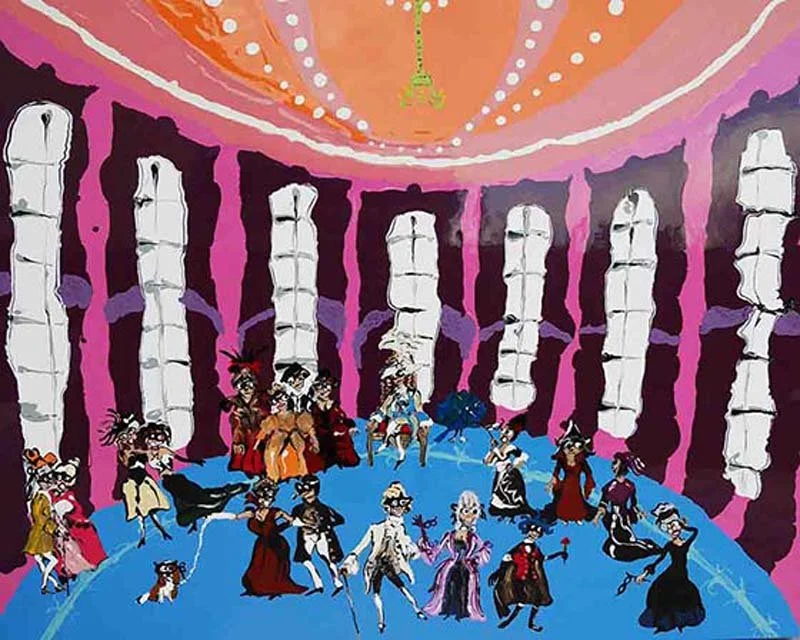


Athens-based architect and illustrator Marylia Fotiadou discusses the influence of historic buildings, the freedom of watercolors, and the vital role of art.
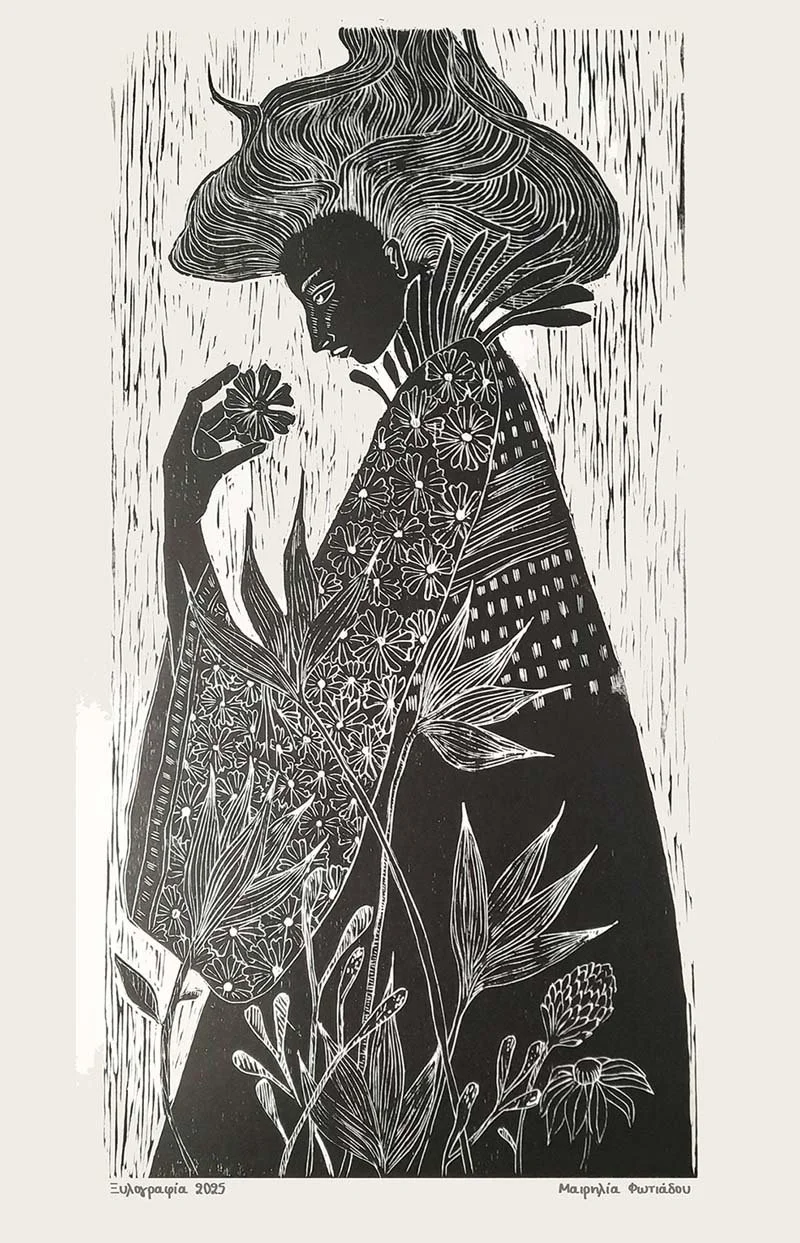
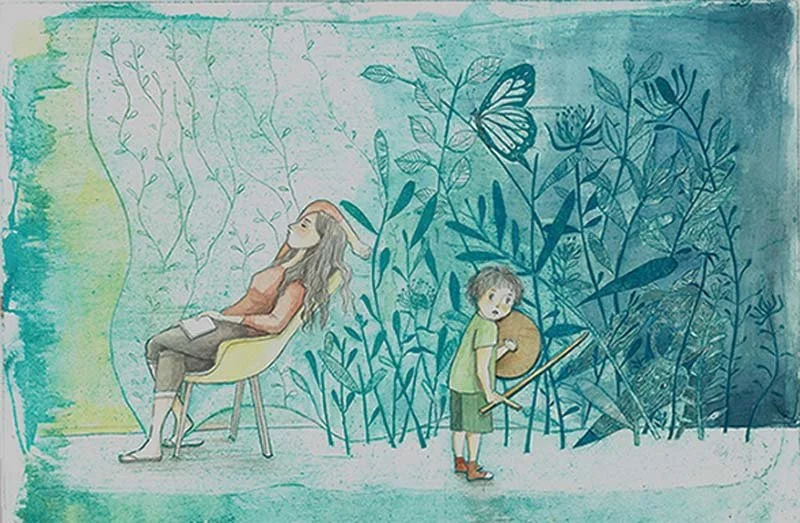
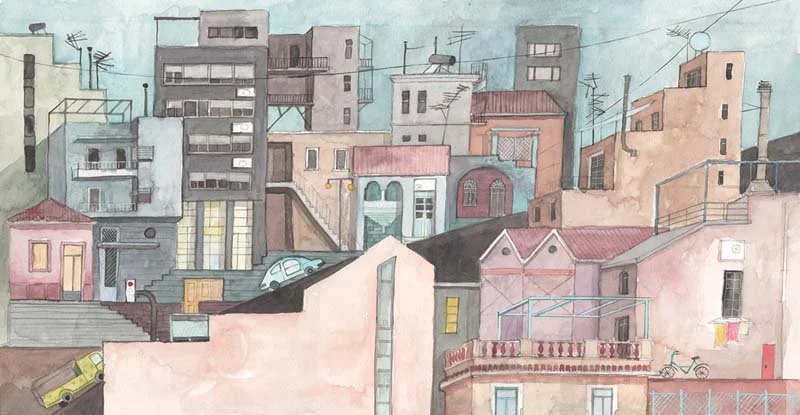
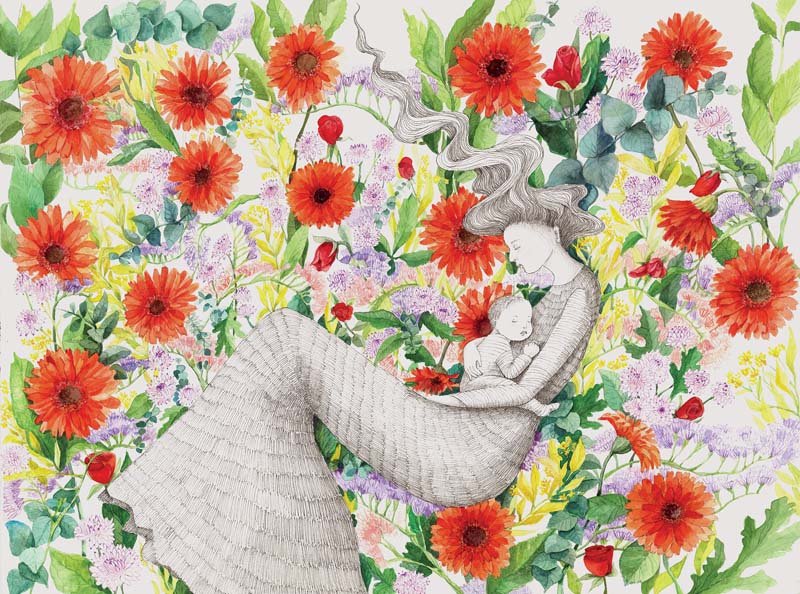
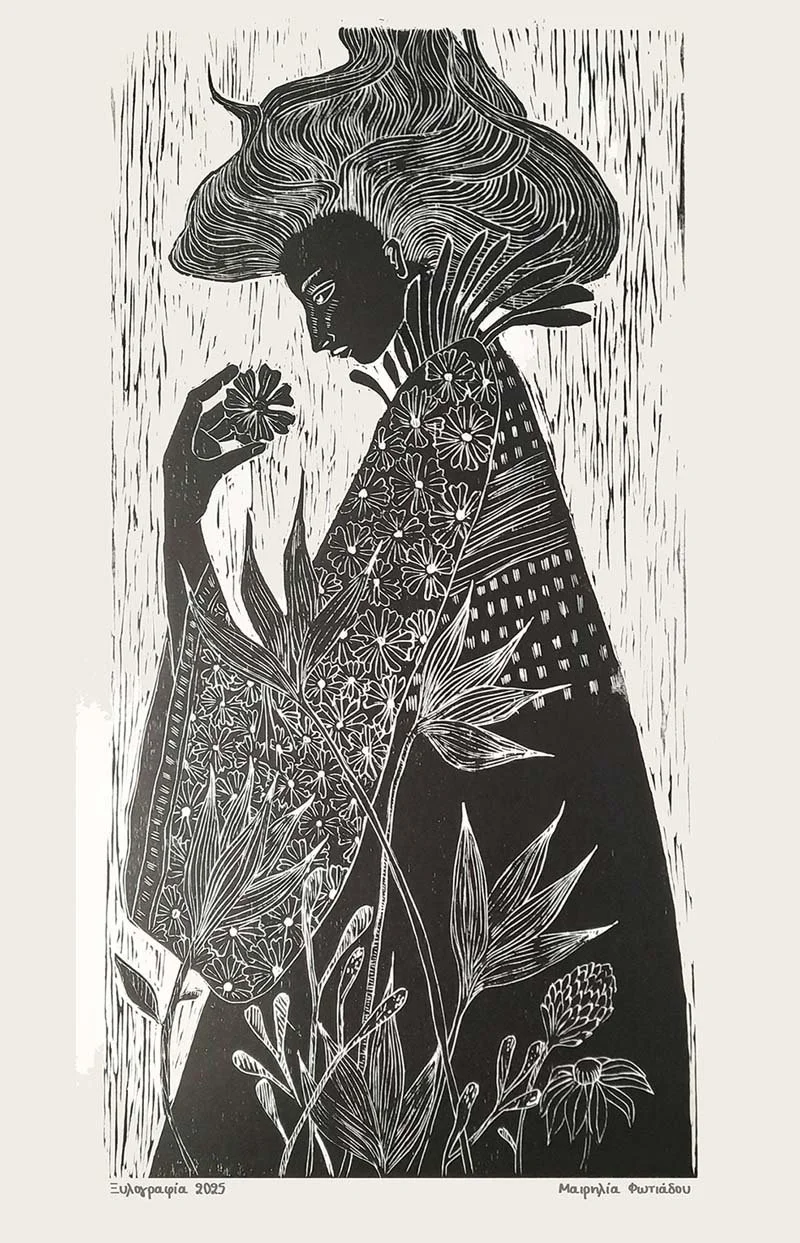
Marylia Fotiadou (b. 1976) is an architect and children’s book illustrator based in Athens. Having studied Architecture at the National Technical University of Athens with a postgraduate focus on the "Conservation and Restoration of Historic Buildings and Complexes," her professional background deeply informs her visual language and narrative perspective. Working across pencils, inks, watercolors, and engraving, Fotiadou focuses on themes of femininity, solitude, and the enchanting world of fairy tales, seeking to bridge the gap between the structured urban landscape and the limitless imagination of childhood. @marylia_fotiadou
How did your upbringing in Athens shape your imagination and your thinking about the world?
I was born and raised in Athens, with a memorable four-year period spent on a small island during my childhood, which left a lasting impression on me. I grew up surrounded by love, tenderness, and a sense of complete freedom, which I believe has shaped the way I see the world, approach life, and express myself through my painting.
Can you recall a moment when you recognized art as your chosen path?
I don’t remember the first time I picked up a pencil or brush—I feel as if I have always been painting. It has been my way of making sense of the world around me, of experiencing it and absorbing it, or, at times, of escaping reality and getting lost in my own stories. I have never considered myself an artist, nor have I ever sought to be one—I simply love to paint. I think that all of us are artists. The arts are our breath, our oxygen—the vital force that nourishes both mind and spirit, helping us find balance in this often hostile and unforgiving world.
Describe a typical day in your studio.
I should start by saying that I work at a company during the day, so I return to my studio in the afternoons and on weekends. The first thing I do is to put on some music, and then I begin—sometimes sketching, sometimes painting. Watercolors are my favorite medium, because they evoke a sense of freedom, playful unpredictability, and lightness. I inevitably find myself returning to them again and again.
Tell us about your current projects and the themes driving your work.
At the moment, I am creating illustrations for a fairy tale about mermaids. I have always loved fairy tales and books, as each one gives you a world to explore and a theme to develop. Right now, my thoughts are on water—its transparency and fluidity—the characters of the story, the emotions I need to convey, the deeper meaning behind the tale. I’m looking forward to getting to the coloring stage. When I’m not illustrating fairy tales, I am fascinated by themes like the nature of women and solitude within the pluralistic beauty of both urban and natural landscapes.
When viewers experience your art, what emotions or ideas do you hope they connect with?
I hope they feel tenderness, warmth, and hope. I hope my illustrations reach and revive the child that lies within everyone.
Which artists, past or present, would you like to meet, and what would you like to discuss with them?
I would love to meet Paul Klee, who has always been one of my favorite painters. I am also drawn to Alexis Akrithakis, Giorgos Varlamos, Iwasaki Chihiro, Hayao Miyazaki, and countless others. I wouldn’t ask them any specific questions. I would simply like to be around them and watch them at work, painting.
Do you draw inspiration from music, film, or other disciplines?
I draw inspiration from music, from films, from books, from my favorite painters, printmakers, illustrators, and photographers, but also from everyday life, from a moment, an image, or an emotion.
What is the significance of the cultural landscape of Athens to your creative practice?
Athens where I live, brings me a sense of calm—its chaos, its contradictions, its imperfections. I love that, at any hour, there are always people around. I like its scale and its history, which is reflected in the buildings. What bothers me is the contemporary architecture of luxury and over-tourism, which is slowly beginning to transform the city.
Can you describe a project that challenged you creatively or emotionally—and how you worked through it?
Every fairy tale I work on is a challenge. Each one is something new, so I have to find a way to bring it to life. The most difficult so far has been drawing animals in the stories, because I have never been comfortable illustrating them. What hasn’t come yet, however, will be the greatest challenge.
Tell us about the teachers or mentors who influenced the artist you are today.
At university, I was fortunate to have two of the greatest professors, both of whom had a profound impact on me. One inspired me through his passion for the art and his teaching, while the other impressed me with her character, determination, and her perspective on social and urban issues. Since graduating, my mentors have been my friends, my husband, and my children.
Sustainability in the art world is an important issue. Does being in nature inspire your art or your process?
It’s not just a memory; it’s something I do whenever I have the chance—looking at the stars in the night sky free from human light, and swimming in the sea. To swim and feel as if I am an inseparable part of the water. Yes, nature deeply inspires me.
In an era where digital tools like AI are redefining reality, what is the importance of the physical, handmade act of creation?
AI has helped me translate my writing into English! and for that I am grateful. Information and knowledge are now more accessible than ever to those who seek it. However it can create insecurities about our abilities and our range of thought, making us dependent on it in order to make decisions. When it comes to art, technology cannot replace intuition, authenticity, life experience, imagination and the emotion of an artist. It can support and recreate, but it is not in its nature to create.
Exploring ideas, art and the creative process connects me to my soul.