

What is the enduring power of the handmade mark in an age of automated perfection?
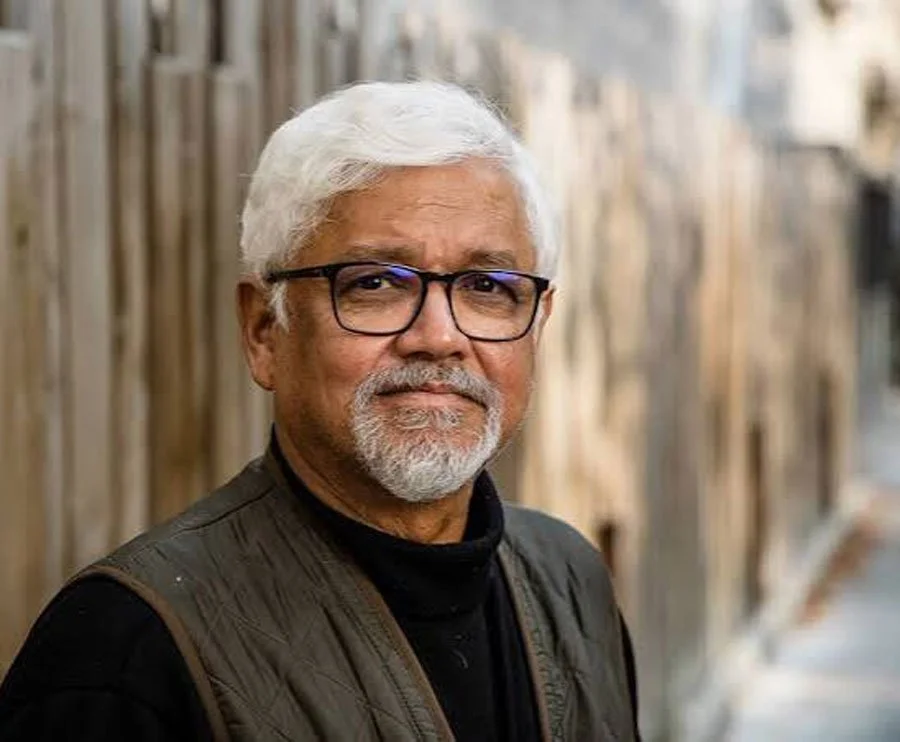
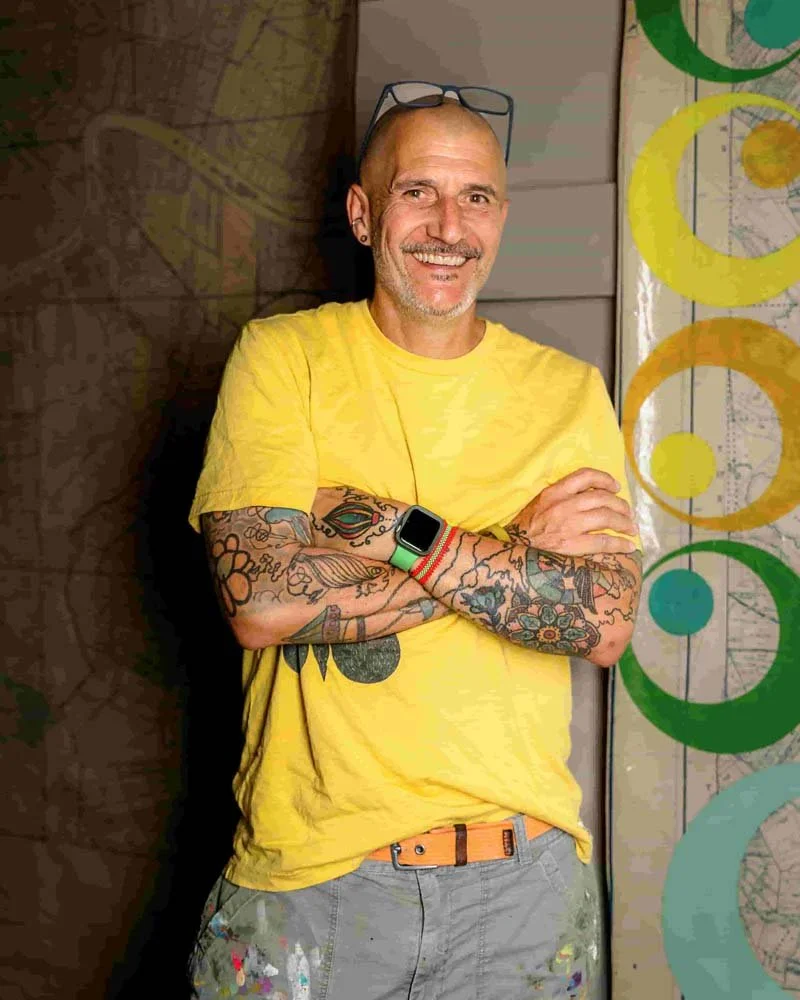
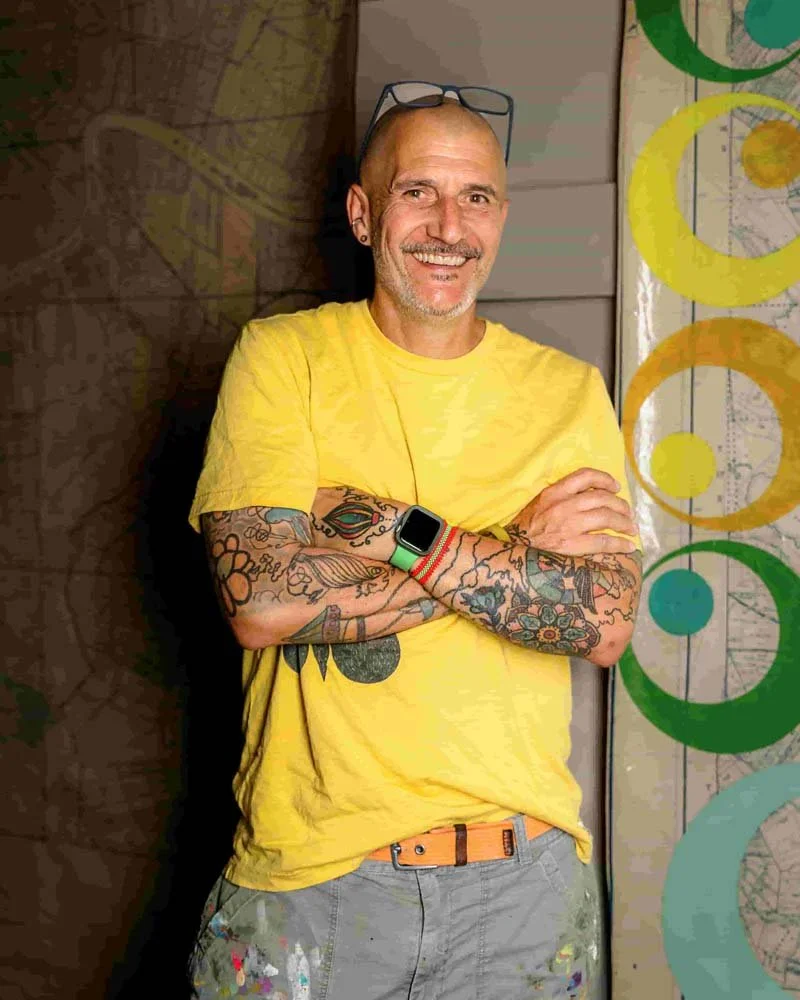
Robbie Austin is an artist, a teacher, a father, and a husband based in Lake Charles, Louisiana. He lives in a 115-year-old house and has taught at his high school alma mater for over 20 years. He holds a BFA from CalArts and an MFA in sculpture from UCLA. Austin’s work is driven by memory, music, and the histories embedded in materials like timeworn field books, maps, and journals. By layering gestural marks and geometric patterns over these surfaces, he creates a dialogue between past and present gestures, exploring the tension between the sacred and the mundane. Austin describes his practice as a way to make the invisible visible, connecting with a creative pulse that he believes is essential to navigating the world and connecting with others. @robbieaustinstudio
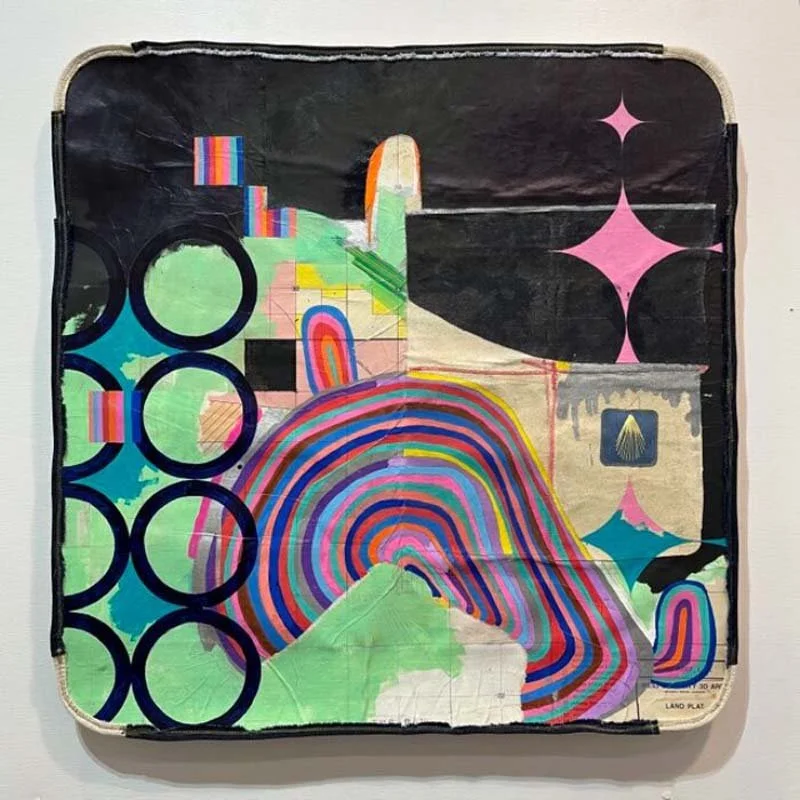
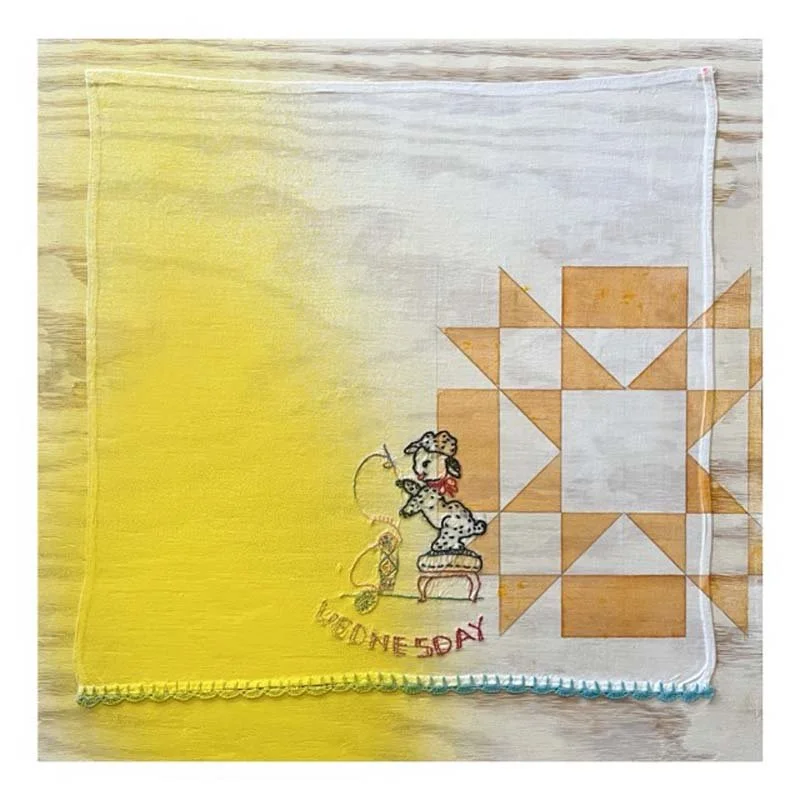
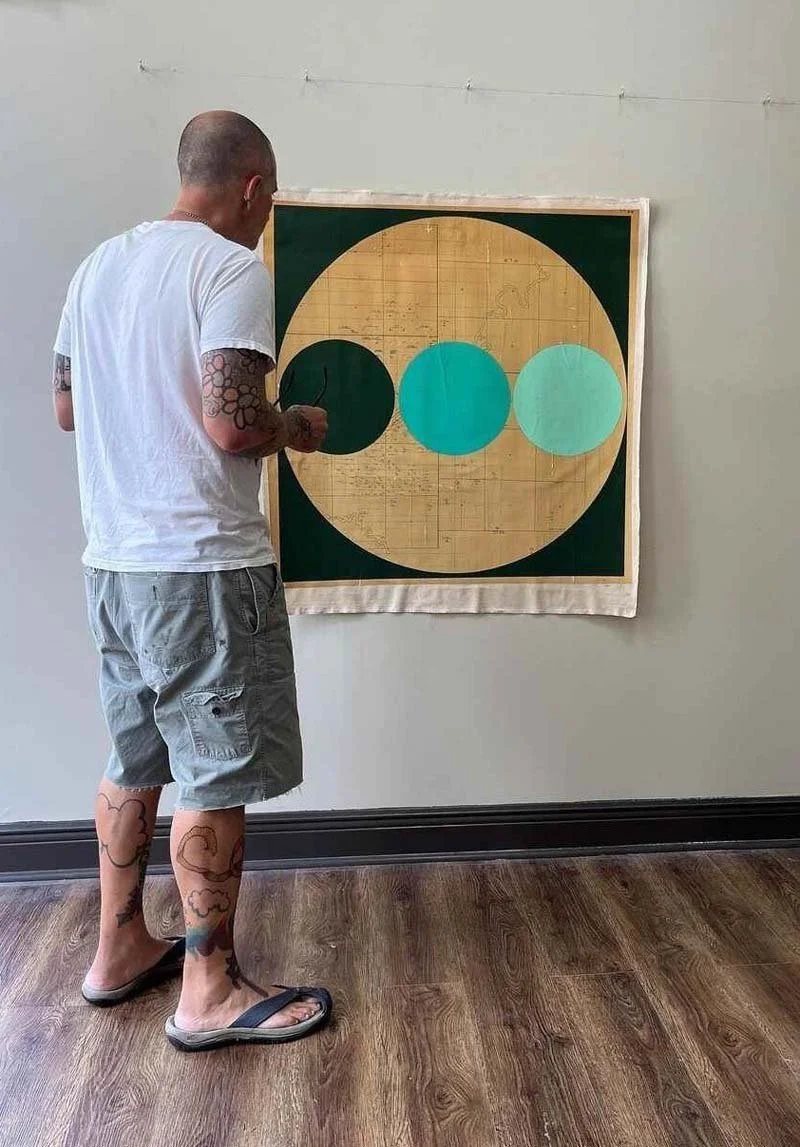
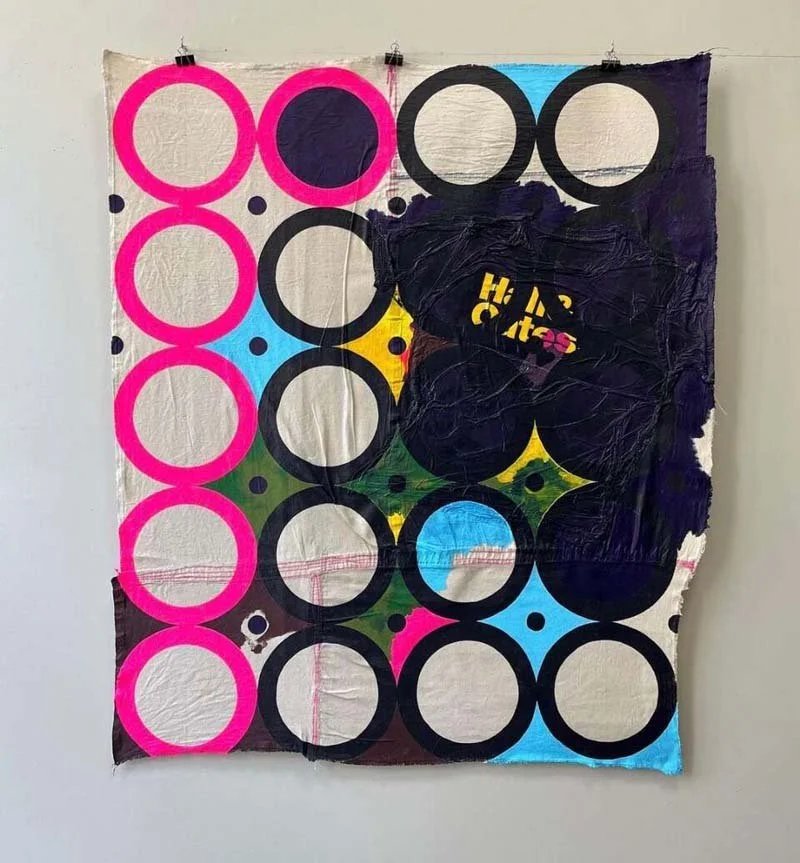
How has your upbringing in Louisiana shaped your approach to art? I’m a Louisiana kid, born and raised in a place where the air is thick and the stories are thicker. You grow up learning to read people, weather, and rooms — sometimes all at once. Down here, ordinary people are never truly ordinary, and beauty and tension live side-by-side, whether you notice it or not.
That upbringing taught me to see the world sideways, to pay attention to what’s said without being spoken, and to inhabit the in-between space — the place you only understand if you were raised somewhere that never stops shaping you. My work comes from that mindset: finding meaning in the mess, translating experience into something honest, and leaning into the contradictions that formed me.
Can you recall a defining moment when you recognized art as your chosen path?
I first fell in love with art on album covers. As a teenager, I was drawn not just to new wave music, but to the images that came with it: Psychedelic Furs’ Mirror Moves, XTC’s English Settlement, Simple Minds’ Life in a Day, The Cure’s A Head on the Door. Those covers combined sound and vision in ways that felt immediate and alive, and I realized that art could communicate emotion beyond words.
It wasn’t until high school, at a Cy Twombly exhibit, that I began to understand abstraction. Twombly and Richard Tuttle blew me away — almost mischievously, as if they were fooling everyone — and yet it was completely justified. Suddenly, every mark, every gesture, could be a channel for feeling. That moment opened a door: I understood that I could make art my way of seeing and speaking to the world.
Art matters because it makes the invisible visible. It’s intentionality made tangible. Some spaces, like Jason Rhoades’ installations, are crowded with energy and references; others are clean, quiet, pared down. Either way, every gesture, every decision communicates something — whether we consciously notice it or not. Art shapes the way we experience the world, teaches us to pay attention to emotion and nuance, and reminds us that meaning often lives in what’s between the obvious and the overlooked. Without it, our rooms, our lives, and our moments would feel emptier; with it, every detail can resonate.
Describe a typical day in your studio.
A typical day in the studio has shifted for me recently. As an empty-nester, my days are more open. I teach until the early afternoon and then return to my home studio. I start by making coffee, changing clothes, and settling into either the front room of the house or the back garage. Clean work happens inside, while saws and sanding are reserved for outside.
My wife keeps me on track—my work tends to spill into the hall, den, and dining rooms. Most of my work, however, takes place in a two-table, eleven foot ceilinged rectangle with three north-facing windows. From there, I see two large oaks beyond a deep porch. Lighting a candle or incense has become a ritual, a way to let the room and my mind get ready.
I work in spurts. Depending on the size of the pieces, I might have four to twelve works in progress at a time. Recently, I’ve developed a love for spray paint (outdoor work) and markers, though gouache and textiles often find their way into the mix - graphite pencils too. My materials are always timeworn—old ledgers, field books, tablecloths, maps, band t-shirts, and the like. My tools include a very large compass, long rulers, and audio books.
I work until around 5:00, when my wife comes home. Sometimes I return to the studio if a deadline is pressing, but otherwise, I try to spend that time with her.
Tell us about your current projects involving maps and field books, and the themes driving your work.
I’m working on two parallel projects. One features 36×36” maps with geometric patterns, exploring structure, repetition, and line. The other focuses on 8×10” field maps, where gestural markings meet transparent stripes, reminiscent of stage lights pushing through fog. I start by spreading over 100 field books across a table, then move around with spray paint, letting the overlaps of the pages create unexpected blocks of color. Each piece builds on marks made by land surveyors from the 1940s through the 1990s, creating a dialogue between past and present gestures.
Memory, music, and the histories embedded in materials drive my work. Timeworn objects—field books, maps, and journals—carry traces of human activity that I respond to visually. Patterns, rhythm, and repetition translate musical ideas into geometric overlays and gestural marks. The tension between sacred and mundane, personal and communal, continues to guide my practice, producing pieces that feel like maps of memory, trauma, and beauty.
When viewers see your work on these marked surfaces, what emotions do you hope they experience?
I want people to feel a subtle shift in how they see the world—as if a familiar landscape has been rearranged. My art layers time, memory, and place, drawing attention to histories hidden in everyday detail. Working on old maps, field books, and marked surfaces, each gesture becomes both discovery and reflection. My hope is that viewers leave sensing the world, like my surfaces, is never fixed—always open to reinterpretation, always inviting a second look.
Which artists, past or present, would you like to meet, and what would you like to discuss with them?
If I had to meet an artist, I’m not sure who it would be. Probably not someone whose work I already love—I’d be afraid they’d ruin it for me. That happened with Richard Tuttle. It’s like Don McLean never explains American Pie: people build their own histories around it, and any explanation risks breaking the magic.
I’d rather go camping, take long walks, share playlists, cook a meal—see the person behind the work. That’s where I operate, and if someone admired my art, that’s exactly how I’d want to meet them. For me, it would be Agnes Martin and Julian Schnabel.
Do you draw inspiration from music, art, or other disciplines?
Yes. Music, history, and the physical world all shape my work. Music often drives my production—it reflects, informs, and enhances what I’m making. The light in my studio, the layering of history in maps and field books, and even memories from childhood road trips influence the decisions I make in the studio. I’m drawn to surfaces that already carry meaning, and in responding to them, I’m guided by patterns, emotions, and associations that extend beyond painting or drawing alone. My inspiration comes from the intersection of experience, place, and the material world.
What is the significance of the sense of history in Lake Charles to your creative practice?
A great thing about living in Lake Charles is the sense of rootedness and history. The town has resilience woven into its streets and waterways—from surviving a city-razing fire in its early days to weathering hurricanes. There’s the rich culture of Cajuns, pirates, French and Spanish influence, and the food—all the things South Louisiana is famous for that most of the world drools over, yet I have in my backyard. It can be taken for granted, but sometimes its pure, overwhelming beauty strikes me. Lake Charles is not an art center, but it is a cultural one. I am rooted like an oak, absorbing and growing from my surroundings, but not anchored—I am still free to reach and expand.
Can you describe a moment when a project challenged you and you had to rethink your design?
When a project challenges me creatively, it usually means the design wasn’t strong enough to start with. I dive in full of energy, eager to make, but if the materials or concept resist, that’s a signal. I step back, pivot when I can, and walk away when a fix becomes a compromise. Starting fresh has become my saving grace—and often leads to a stronger, more thoughtful design.
Tell us about teachers or mentors who influenced the artist you are today. Two of the most important mentors in my life are Lane Relyea and Dennis Cooper. Lane was my mentor at CalArts—a writer deeply engaged in art theory and practice—while Dennis, an instructor at UCLA, is a poet, fiction author, critic, and curator. Both have written about music and taught in studio art departments, which made their guidance especially resonant for me.
Their influence wasn’t about the mechanics of material—it was about ideas, dynamics, and the art of presenting them. They taught me how to think critically, how to frame concepts, and how to trust the process of exploration. It’s ironic, in a way, that I’ve ended up working in a traditional form—painting and drawing on paper—but I feel grounded and directed because of their mentorship. Their guidance shaped the way I approach art, not just as objects, but as ideas in dialogue with the world.
What role does the memory of that hurricane in your backyard play in your work today? I’m continually inspired by the forces of the natural world. I remember the day a hurricane tore through my backyard and flattened my treehouse—chaos, fatigue, and awe all rolled together. Hidden in the wreckage, I discovered a trove of resin-infused, stormproof field books. The sudden destruction, followed by calm and steady rebuilding, mirrors the tension in my work. I respond to these materials, already steeped in memory and history, layering marks, color, and gesture. My process becomes a dialogue between the wild energy of nature and the persistence of the past, translating that rhythm and force into each piece.
In an era where digital tools are everywhere, what do you believe is the enduring power of a work created slowly, by hand? AI is everywhere now, and to be honest, my first reaction isn’t wonder—it’s frustration. Every time I use a tool, I’m met with warnings or limits, and it reminds me how new and unpredictable all of this still is. I worry about being fooled by it, or about the ways it can be used to mislead or harm. That’s where my concern sits—not in art, which at its core isn’t mean-spirited, but in everything around it.
In the studio, I trust we’ll still be able to tell what’s digital and what’s analog when it matters. And if someone tries to pass off a digital piece as something handmade, that’s really just an acknowledgment that the human method still carries more weight. Technology can stretch what creativity looks like, but the physical act of making slows the world down long enough for meaning to take root. That’s why I keep returning to the simple, tangible things. When I think about the kind of presence I want in my work, I think about my treehouse—crooked, weathered, built board by board. You can’t automate that kind of connection. You have to show up for it.
Exploring ideas, art, and the creative process helps me feel the pulse of creation, like the big creator is working through me. We’re all creators—my medium is different than yours, but the pulse is the same. Understanding what drives you to create isn’t just about art; it’s essential to being a team player, a member of society, a parent, a partner. Once you start to see where your drive comes from, it becomes easier to navigate the world and connect with others. Making, reflecting, and sharing—it’s all part of the same rhythm.