

Fort Collins-based artist Matthew McHugh on deep time, teaching, and the mystery of cave paintings
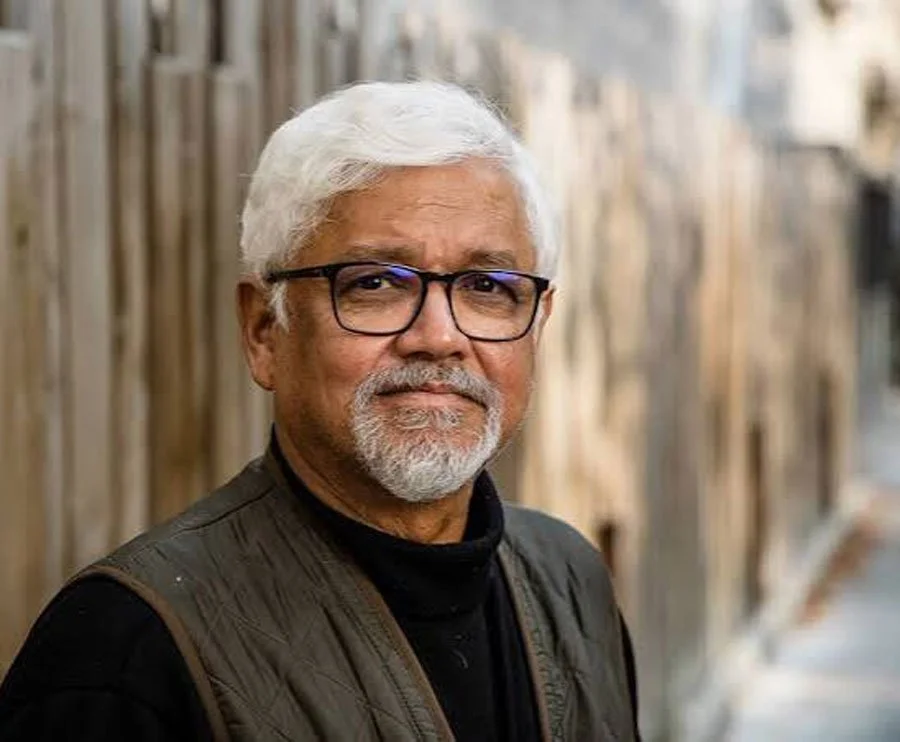
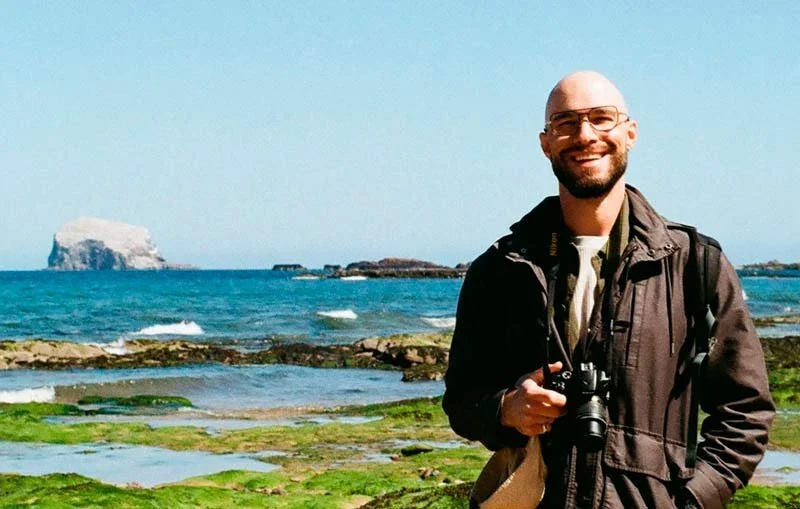
Matthew McHugh is an artist from Fort Collins, Colorado. He earned a BFA in drawing from Colorado State University and an MFA in drawing, painting, and printmaking from Purdue University. Currently, he lives out his passion for teaching and art as an instructor at the University of Northern Colorado. He regularly shows in nationally and internationally juried exhibitions and is an active member of the Society of American Graphic Artists.@themattmchugh
You were born and raised in Colorado. How did your upbringing near the mountains influence your art and your thinking about the world?
I was born and raised in Fort Collins, Colorado. I spent much of my childhood in the mountains exploring and making art outdoors. Colorado instilled a love of nature and an affinity for sublime, awe-inspiring scenes, which have influenced my art for many years.
When did you first fall in love with art and realize you wanted to be an artist? For you, what is the importance of the arts?
I’ve enjoyed drawing for as long as I can remember, and I just never let it go. Growing up, art was a way for me to create other worlds and escape into them. I find it significant as a form of communication and a way for people to find common ground. Art creates windows into other peoples’ worlds and shows the different facets of what it means to experience life as a person.
Describe a typical day in your studio and your most used materials.
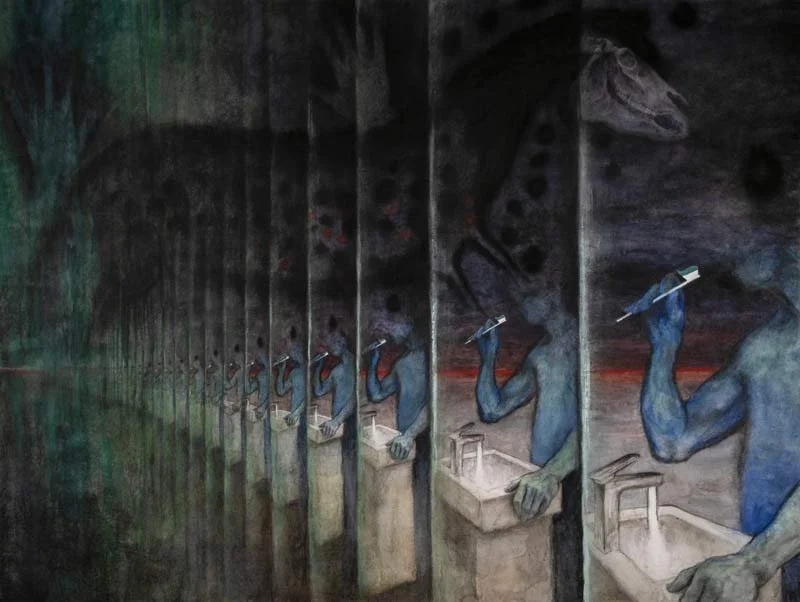
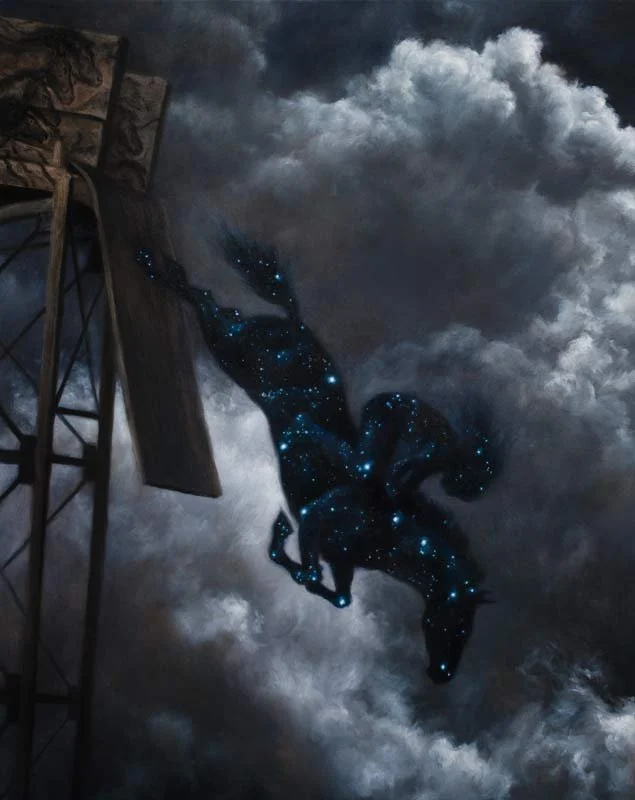
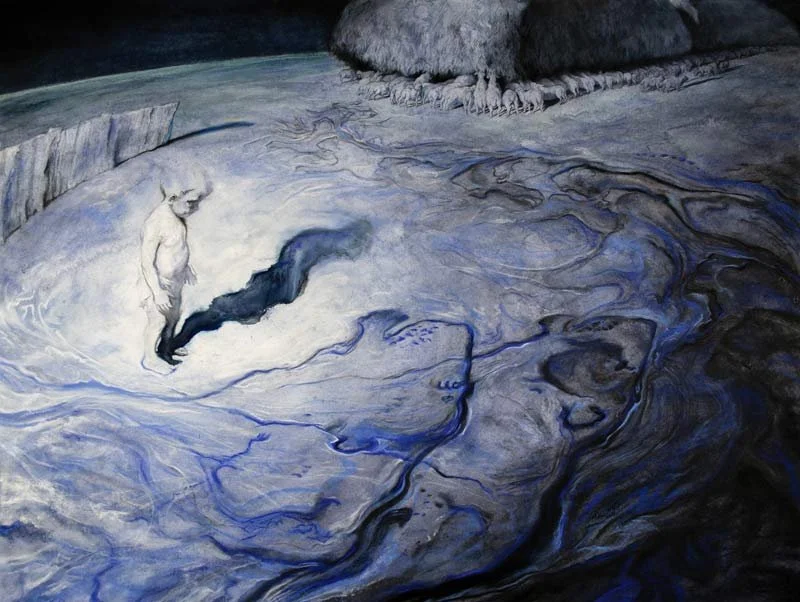
As a professor, my work day is spent in the classroom. I make time to create art late at night and on the weekends for about 20 hours/week. My studio is just in a corner of a bedroom since it is convenient and affordable to work on my art from home - I can’t afford a separate studio space. My typical materials are watercolor combined with other drawing media, especially charcoal, but sometimes pastel, graphite, colored pencil or other media. I typically work on a fairly large scale, usually around 36x48 inches. Sometimes I use oil paints, acrylics, or various printmaking techniques as well. One of the perks of teaching at a university is I can use the school’s printing presses.
Tell us about your obsession with Paleolithic cave art and the themes driving your current work.
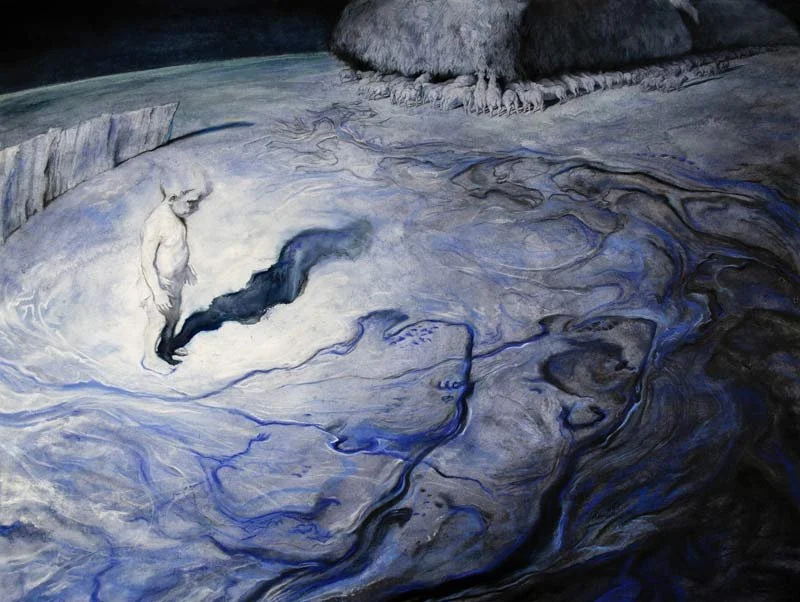
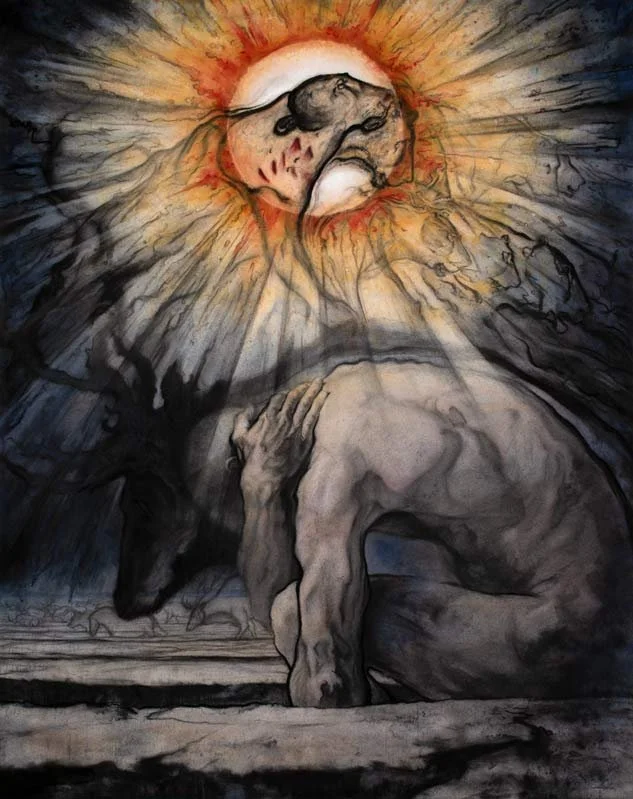
For the past few years, I have been obsessed with Paleolithic cave art. I invite Paleolithic cave art into surreal worlds to reflect on the vastness of time and the transience of individual human life. Humanity as we know it would not exist without the foundational contributions of the earliest people. In that sense, cave art constantly overshadows the present and prompts us to ask what our place is within the larger story of humanity.
When viewers experience your art, what emotions or reflections do you hope they feel?
Although we encounter it differently, everyone faces the question of how they fit into their larger world. Time, mortality, and the construction of self-narratives are shared human experiences. By visualizing my own explorations of self-contextualization, I make them tangible to others and encourage connection, curiosity, and self-reflection.
Which artists, past or present, would you like to meet?
The Paleolithic cave artists are top of the list for me. The meaning of most of the art made from that era, such as Chauvet Cave, is a complete mystery. I’d love to know more about what inspired those artists to prioritize the creation of art tens of thousands of years before the invention of agriculture, writing, large-scale social systems, or other important developments that are so common in humanity today. There are many well-educated theories about the meaning behind these incredibly ancient artworks, but there are no clear answers.
Do you draw inspiration from music, literature, or other disciplines?
I almost always listen to music when I create art. I see it as more of a fuel for the energy to create though, rather than a source for my ideas. I also am inspired by art and spend a lot of time researching contemporary and historical artists. I just finished a book about Kathe Kollwitz the other week, who is one of my absolute favorite artists.
What is a great thing about living in Fort Collins?
The sunshine! Colorado is one of the sunniest states in the U.S., and it definitely helps my mental health to get out and enjoy the sun and fresh air.
Can you describe a project that challenged you creatively or emotionally—and how you worked through it?
Every project I work on, I make sure I feel like I’m biting off more than I can chew. This is the fastest way to grow as an artist in my opinion. If I ever make something that I already feel comfortable making, it’s a good indicator that I won’t improve, since I know I already could create it without challenges or obstacles. To work through these challenges, I alternate between creation and analysis. I find it helpful to listen to what the artwork tells me it needs compositionally and make those changes, even if they conflict with my initial vision for the piece. It also helps me to spend plenty of time with sketches, material tests, and studies before and during the creation of a longer and more complicated artwork.
Tell us about the important teachers and mentors in your life.
There are too many to count! I have had wonderful peers and mentors throughout my entire education in art, each of whom I’ve learned something different from. One of my drawing professors during my undergraduate degree, Marius Lehene, was always helpful and inspiring, and he was the first person who encouraged me to pursue my master’s degree. I also had plenty of wisdom and guidance from my professors during graduate school, including Christine Wuenschel, Sigrid Zahner, Jen Scheuer, and Charles Gick. In graduate school, the biggest thing I learned is how to be intentional with the ways I communicated my ideas in my art.
Does being in nature, particularly in Colorado, inspire your art or your process?
Almost every time I travel, I bring watercolors with me to paint outside. As a child, I would go on family camping trips and paint in the mountains. These experiences gave me a great appreciation and awe for the beauty of nature and wildlife.
In your view, is there a specific 'human signature' or a certain quality of imperfection in traditional mediums that technology can never truly replicate?
Handmade creations ground us in the real. Human art is made out of at least three things: time, the artist’s decisions, and whatever physical material is involved. AI doesn’t understand the physical nature of materials, and cannot sense or experience the world the same way humans do through our sensory engagement with physical reality. It is therefore just a collage of distant echoes of these experiences, which are filtered through artificial means.
Exploring ideas, art and the creative process connects me to…
humanity, time, and the material experience of being.