We don't need to find an end solution, but it's a space where we can speculate, imagine, and practice our foresight. We can be part of a bigger imagination together with an institutional framework, which is really what we try to motivate as well when we communicate these exhibitions to our audience and speak with our guests about these works.
We can also sense that it's really a place where a lot of people like to enter these days. When you turn on a TV, look at a newspaper, listen to your radio, or speak with your friends, it seems like the world is falling apart on so many levels. It's such a challenging time. I think we can also offer this space for reflection and hopefully provide a reflection that gives some idea or feeling of agency. I think that is one of the places where we are really challenged, especially when we speak to kids and young people, as they often feel they have little agency in creating a better future for themselves. So, I believe we can really give that space to our audiences by showcasing some of these groundbreaking practices that are out there right now in contemporary art.
For me, it's this awe that I feel every time I meet an artist who has the courage to deal with what it means to be in the world as a human being and to tackle it from different ways and through different media. I always feel that through the collaborations I have with artists, I learn a little bit more about the world.
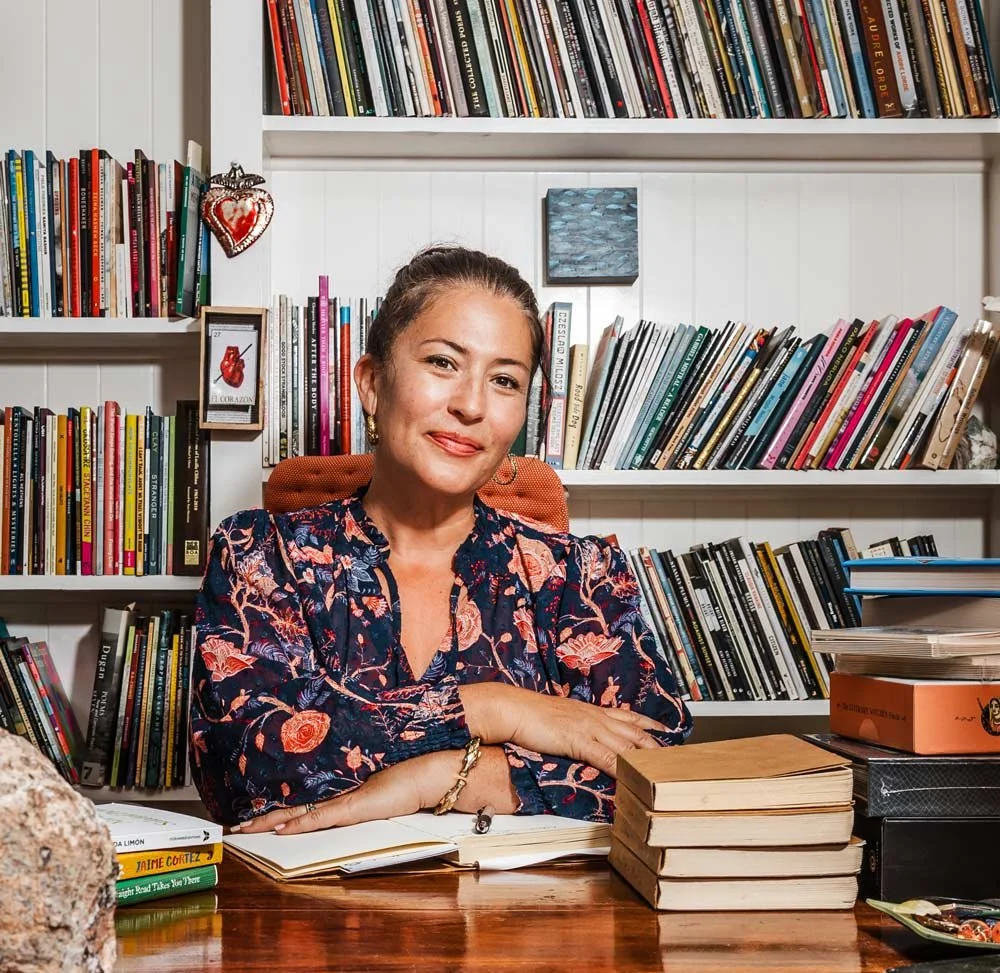
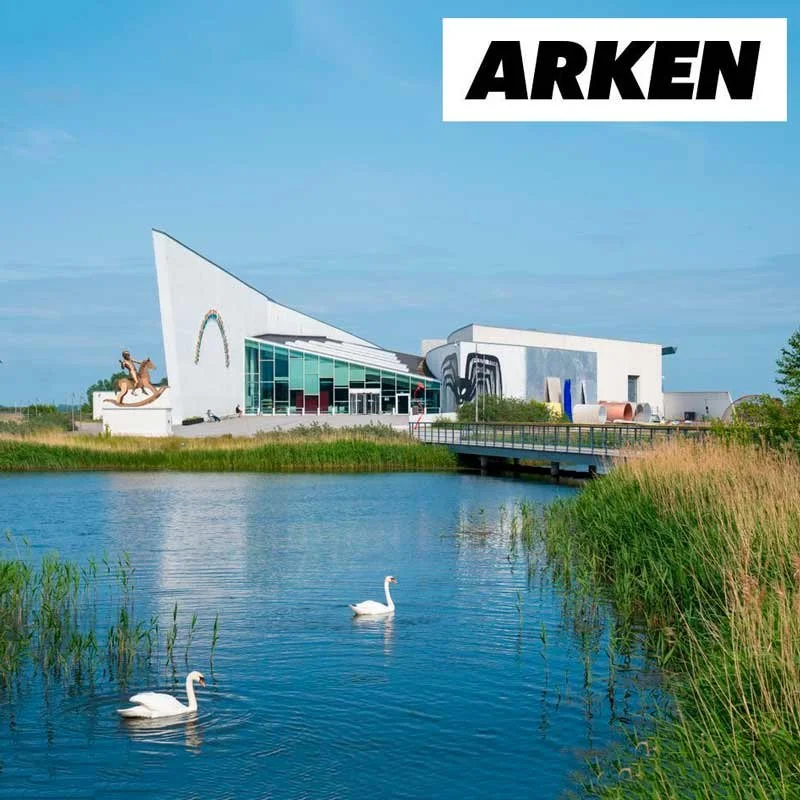
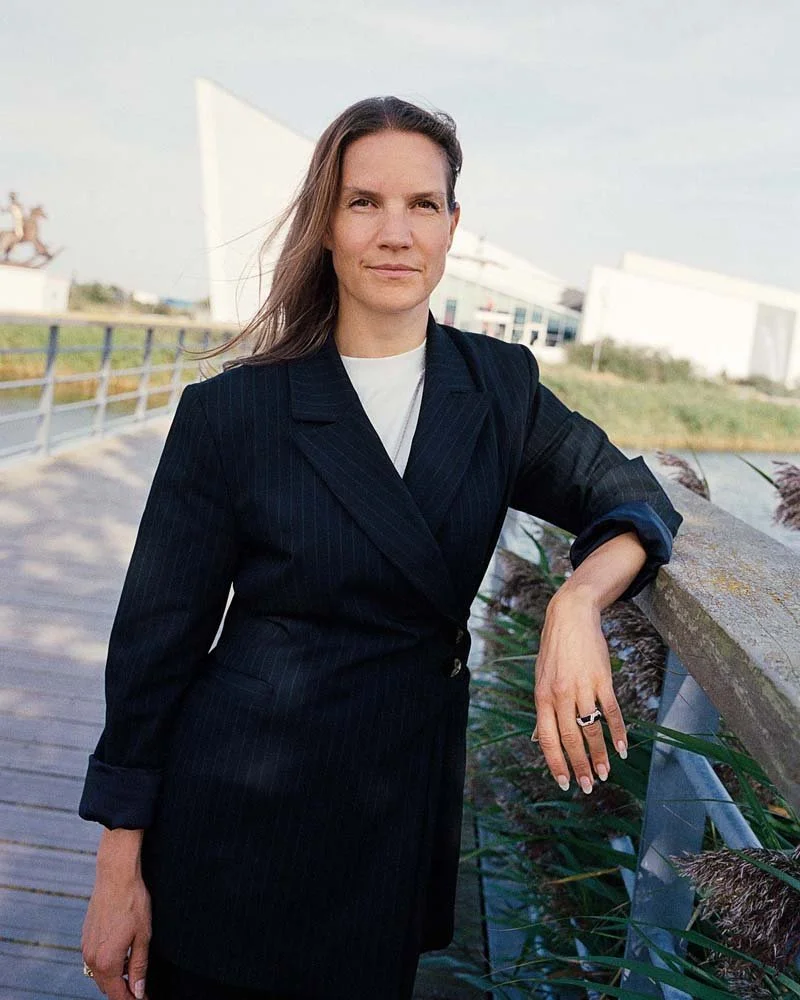
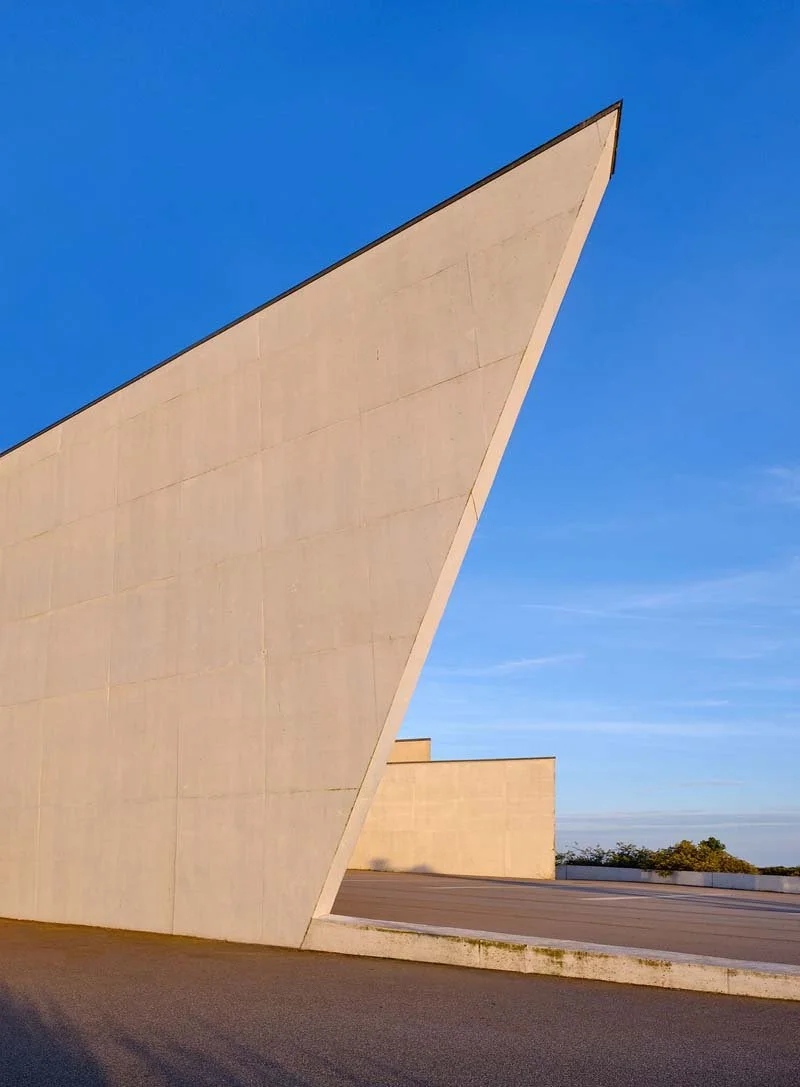
In the ever-evolving world of contemporary art, some voices rise to shape the conversation in truly profound ways. Marie Nipper has spent her career at the nexus of institutional leadership, curatorial innovation, and artistic collaboration. As the director of the ARKEN Museum of Contemporary Art in Denmark, she is not just leading a museum; she's rethinking its very purpose—from an artistic lab to a public town square. Her journey has taken her from the hallowed halls of the TATE and ARoS to the forward-thinking spaces of Copenhagen Contemporary, all while championing the freedom of artists and the civic role of the museum.
MARIE NIPPER · ARKEN MUSEUM
I always feel that through the collaborations I have with artists, I learn a little bit more about the world, myself, my feelings or emotions, and how I reflect on things. Getting another person's perspective and taking that in is extremely generous. What we can take with us from the artistic practices we encounter is significant. Again, I think one of the fundamental aspects of art is that it doesn't require agreement, consensus, or rules. It's a place where we can speculate, imagine, and, hopefully, re-courage ourselves in a way, if that's a word. I've always been motivated by working with artists; that personal meeting is always extremely fruitful.

THE CREATIVE PROCESS
You've had this remarkable trajectory from ARoS to Tate Liverpool and then to Copenhagen Contemporary, and now to Arken. What was the through line? How do you see the institutional DNA of each place informing the next chapter of your curatorial practice and your vision for the museum?
NIPPER
That's something you usually see in retrospect, right? The different points that outline a career and the different positions I've held. ARoS was my first real job in an institution. I started in 2004, and at the time, the museum wasn't even open to the public yet; it was this brand new institution opening in Aarhus, which is the second biggest city in Denmark. It was a museum built for contemporary art because it moved out of its previous location due to space constraints. The spaces were too small to show contemporary art as it was developing at that time. I had my first encounter with an institution that was really trying to rethink itself, working with new agendas in contemporary art and new formats that aimed to speak to audiences in innovative ways, reforming how institutions had been working before.
I was part of a period in time for that institution, which was super exciting because we were trying new exhibition formats and introducing artists to a Danish audience who had never been shown before. ARoS has a historical collection, but it was also very much about introducing contemporary art to a Danish Nordic audience. I think it was extremely formative for me to start my career there. I began as a tour guide and ended up as the chief curator and manager of the curatorial and learning department.
This progression in terms of my professional development involved stepping into managerial roles and taking on leadership within the institution. After about ten years, I wished to gain a more international perspective on the workings of institutions. So, I started at Tate Liverpool first as senior curator and then as interim artistic director. It was extremely important for me to gain that international outlook and investigate practices outside of Denmark. I wanted to understand how an institution like Tate worked with its collection, acquisitions, exhibitions, and particularly the learning and community work they were doing.
I noticed that UK museums were quite ahead of Danish institutions in terms of engaging communities in their workings. On the other hand, especially in ARoS, we might have been more daring regarding exhibitions and the staging of exhibitions. We were highly engaged with the experience of visiting a museum. So, I think I brought a bit of a Scandinavian approach to audience engagement through community work, outreach, and hospitality in an institution. It's about how you accommodate people when they come in and guide audiences through your exhibitions.
This learning experience at Tate was an essential aspect for me: how can institutions be the best hosts possible for audiences who might not be accustomed to visiting museums, and even less to contemporary art, which for some might seem unapproachable? It was a great opportunity when I was asked to return to Denmark to open this new institution, Copenhagen Contemporary, which at the time did not have a collection but was set to open in an old shipyard on the outskirts of Copenhagen. Although very close to the center, it was an area that had not been gentrified or developed yet.
This old industrial area of Copenhagen provided a fantastic opportunity. I came to realize that my big motivation for my work is trying to contribute to the innovation of institutions and artistic practices. I aim to push the boundaries of the institution and either initiate or contribute to developments that test new ideas, making the institution relevant in today's world. Starting an institution from scratch felt extremely exciting due to the entrepreneurial atmosphere we had in those first few years. Of course, everything was complicated; we had these vast spaces to fill with art, and we needed to figure out how to manage this with our small team. We had to navigate financial structures, especially since we were not state-funded or funded by the municipality like many institutions in Denmark.
There was a new way of thinking about finances and how we wanted to engage with the audience in a part of Copenhagen that wasn't well developed yet. This was really fun, and we embraced a "let's try things out" mentality. If we wanted to change something, we could do it next week or even tomorrow, which is atypical for institutional practices, especially for museums, which are often large entities that take years to turn around.
When you want to change organizational structures or ways of working, it requires a lot of effort and time. The dynamic, the agility we had at Copenhagen Contemporary, was extremely exciting and also for the audience because having that courage and nerve as an institution really impacts the experience we provide. I was offered to come to Arken in 2022, about three years ago, with the task of performing a turnaround across all aspects of the institutional DNA.
This involved creating a clearer artistic vision for the institution and establishing a solid organization while consolidating its finances, which were extremely challenged. It was a huge task, but I also found it motivating because it was an opportunity to try something new. One of my mottos after this experience is "don't waste a good crisis," as there are many challenges that can be extremely difficult in situations where an institution is really struggling in various aspects of its institutional life. However, such circumstances also provide the mandate to do something different, to innovate, and to test new ideas.
THE CREATIVE PROCESS
It's great that you also emphasize educational engagement because that kind of embodied learning is really important going forward. AI is changing the way students learn, and this is something I want to discuss later in our conversation. It's important to involve them in actual encounters and learning, ensuring it's not all about screens or done for them via AI, which can make young people more dependent. Our education initiative includes participation from over a hundred universities, so we are deeply involved in these kinds of experiences.
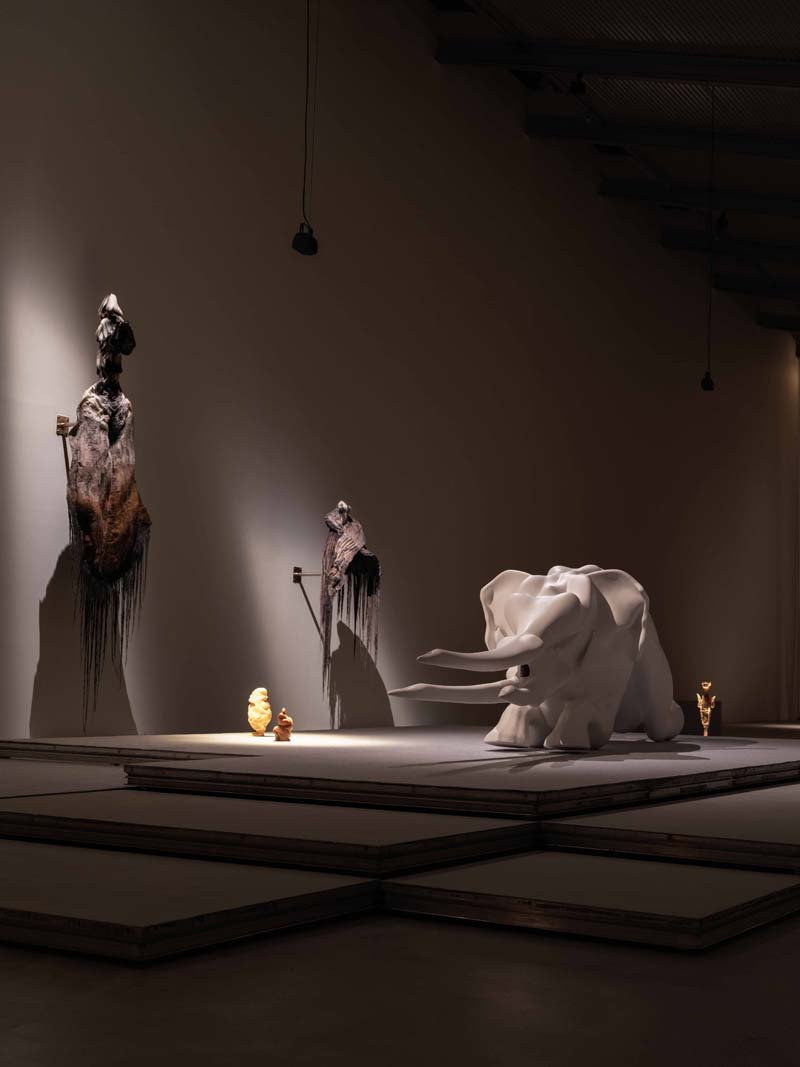
Another topic that is dear to our heart here at The Creative Process and the One Planet Podcast, where we've conducted hundreds of interviews and exhibitions about environmental concerns, is your current exhibition with French artist Marguerite Humeau titled Nature Future. I really love the concepts and questions she poses, like "What if humans became collective beings?" This line of inquiry is on the edge of the future, especially considering AI and collective intelligence. Also, I find it fascinating to consider the intelligence of plants, trees, and coral reefs, which in some ways seem more advanced than we are. What if we could synchronize with all life forms?
I particularly love this question: What if elephants had become the dominant species on Earth? We're so accustomed to being on top and dominating everything; however, this exhibition is truly a visual experience that is also auditory and breaks boundaries, blending art, science, and history. Can you tell us a bit more about it? I love exhibitions that make us feel but also provoke thought.
NIPPER
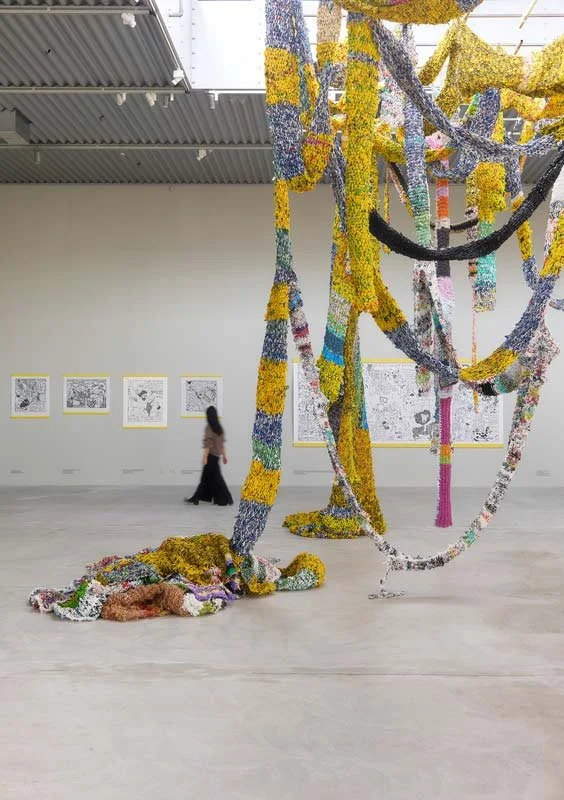
Marguerite's exhibition is the last in a trilogy that we initiated in 2023, titled Nature Future. It was based on the idea of allowing artists to explore the relationship between humanity, nature, and technology. At this time, this relationship is being investigated all the time and is extremely complicated. How do we embrace technology while insistent on remaining connected to physical nature and the importance of that connection for us as humans? We asked different artists to engage with this theme.
THE CREATIVE PROCESS
So, that explores the future—perhaps a future without humans. I don't want to believe that's a foregone conclusion. You mentioned exhibitions incorporating sound, and I know you've introduced new formats into the museum, like silent discos and concerts. These are all unique ways to appreciate art and allow it to resonate with people who are attracted to understanding and feeling through sound.
It's intriguing how music can provide a new perspective or entry point into contemplating art. Can you share more about those community engagements and ways of enjoying the museum space?
NIPPER
Yes, it's been crucial for us in the past three years to open up the institution and clearly communicate to the world around us that at Arken, we welcome everyone who wants to visit. We want to show that the museum can be a framework for multiple experiences. We are situated in a beautiful natural area—it's a small journey into nature by the beach, by the sea.
We are not a museum that people typically choose on their way home from work or stumble upon while doing their Sunday shopping; it requires a dedicated decision to visit Arken. Therefore, it's imperative for us to open our doors even wider and show that this museum can host multiple experiences.
To be honest, I sometimes question the critique museums receive for incorporating other forms of entertainment, like music, concerts, social gatherings, and different formats. I'm curious why there's a reluctance to do so, as the museum's framework is something we build ourselves—it's a culture of construction.
Today, in working with contemporary art, I encounter how closely contemporary art interacts with other creative areas. Cross-disciplinary work is beautiful; artists today are often cross-disciplinary themselves. If you ask them if they are a painter or a sculptor, they will say, "Yes, I am both. I also perform, collaborate with musicians, and work with scientists." There’s an overwhelming curiosity in contemporary art these days, and I think we, as institutions, should embrace that curiosity rather than limit ourselves to traditional shows.
Of course, we do conduct what you could call traditional exhibitions as well. I believe if we can be a place where people come to enjoy themselves, engage in conversations, have a drink, or listen to music, that's entirely acceptable. We had a wonderful experience during our first public openings. Typically, these openings involve VIP guests—people from society who come for fine dinners and speeches. The problem is, this often excludes a broader audience from being part of the celebratory event an opening can be.
We began hosting openings where everyone was welcome, featuring DJs to create a party atmosphere and celebrate the artist's work with hospitality. We organized buses from Copenhagen to transport audiences to Arken since we recognized a transport challenge. We did a lot to encourage people to come, and for our first big opening, we had about 3,000 attendees.
The most fantastic aspect was that I found myself in one of the spaces that evening, and I didn't know a single person there. That was amazing because, typically, I recognize nearly everyone at an opening; it's usually the same crowd. The experience of genuinely bringing in a younger crowd was fulfilling. I received a message the day after from a mother saying her 15-year-old son attended the opening with his friends and wanted to bring his parents to show them the museum.
He became an ambassador for Arken by attending our opening one night. Perhaps he didn't see all the art, but it didn't matter; he wanted to return. This sense of pride in having visited was significant; he thought it was cool. If we can do that for a few young people, it has made a difference.
THE CREATIVE PROCESS
How do you approach your curatorial vision regarding the artistic voice of the Nordic region? I know it's also very globalized, but how do you perceive it?
NIPPER
That's a good question. What's important for us, and we've discussed a lot in the curatorial team and within the museum organization, is what it means to be international today. I remember when I started in the museum world 20 years ago, at least in a Danish context, "international" was often everything not related to Denmark or the Nordics.
Everyone was looking to New York, London, or Paris—somewhere outside of Denmark. Every museum felt compelled to feature a Rauschenberg or an Andy Warhol as part of their modern collection. Many new museums were being established at the time, like Tate Modern and Bilbao, which helped shape the institutional landscape.
Looking back, I think Denmark lost much energy in focusing externally rather than nurturing our own region. Simultaneously, many artists left Denmark for places like Berlin because it was affordable, offering spaces for artistic expressions, or they went to London, New York, or other creative communities for inspiration. We weren't fostering such environments in Denmark.
However, times have changed. Today, there is renewed political interest in the Nordics due to global politics and discussions around power positioning. Over the last decade, a great deal of international attention has been drawn to life in Nordic countries, showcasing aspects like quality of life and work-life balance. Our food scene has garnered extreme international attention with the New Nordic Kitchen. I think this cultural shift is now translating into visual arts, particularly in Denmark, where we have many emerging talents.
In the Nordic countries, there is also a sense that fewer artists are leaving; they are choosing to stay and expand grassroots initiatives and artist-run spaces. We didn't have such abundance 20 years ago, although it existed to some extent. When I welcome international groups to the museum, they are pleased to see the occasional Rauschenberg or Andy Warhol—although we don’t have any in our collection—but what they truly want to see is the local art, Danish talents, and the interests of artists in our region.
There is an institutional urgency to showcase the fantastic artists from the Nordic region that have emerged in recent years. This is undoubtedly a focus for us moving forward, especially as next year marks our 30th anniversary. We're creating programming reminiscent of 1996 when we opened, including a significant exhibition featuring Superflex, a well-established international artist from Denmark.
But in 1996, they were brand new, emerging artists. It’s kind of fun to think about. We could have done the show we do next year in 96, but of course it would have been a different time. I think it's really difficult for me to give you a headline on what the special Nordic sensibility is or how the artists have a common ground. I think what is very pluralistic is that there are different practices going on, and media is being explored. What is important is that we, as institutions, still have quite a lot of freedom to investigate all different types of artistic practices. We still have that arm's length between the funding from the government and our institutional programming, and I think that is something we need to value. We need to nurture it because we see in Western democracies elsewhere that this is being challenged, where the governments are increasingly interested in the programming of institutions and artistic freedom.
There's something in the Nordics where we’ll be protective of that artistic freedom for a longer time than maybe other countries because it's such a fundamental part of Nordic democracies, the welfare state, and the way things are. But that is also under pressure from the welfare state; the Danish welfare state is part of a global economy today. It can't isolate itself from everything happening in the world. So, of course, things are also eroding and shifting. That's also a very interesting time for us to, through art and the artistic, look at what's happening to bring that forth to our audience and have those discussions.
THE CREATIVE PROCESS
Speaking of other limitations, it's not always those practicalities, but other countries have recent challenges as well. America has recently closed its scope, and you’re not the only institution affected by this. Due to the political agenda of President Trump, the Smithsonian has withdrawn from your nature project.
Tell us a little bit about that. You now have a new partner, I guess, the Phillips Collection. You're not the only museum or cultural institution; many have had their plans derailed by the limited scope of the Trump administration.
NIPPER
Yeah, that's why it's so important that the institutions where we don't have those restrictions yet do everything we can to support our colleagues around the world and the artists in having that artistic freedom and institutional freedom. We try to support it in every way we can. Yes, we initiated a collaboration with the Smithsonian last year on a project called Future Worlds, which is about engaging young people in working with artists who are engaged with nature in one way or another in their practices. A survey shows that a bit over 30% of both actual Danish and teenage youth have a hard time envisioning a positive future. Part of that is primarily due to the global climate crisis, according to the survey. They feel powerless.
Luckily, a lot of artists are quite interested in giving back that agency to society and engaging young people in that work with nature. We can also see in Denmark that the kids' vocabulary is diminishing; they have fewer words to describe nature and the cycle of nature. This means that when you don't have the words to speak about it, you don't have that understanding or knowledge.
THE CREATIVE PROCESS
I think that as much as we talk about a national character of artists, there are certain trends. I don't believe that museums should be nationalistic or propagandistic, and that's what we’ve seen as a tendency nudging towards, not from the institutions themselves, but it just passes down from policy, and that's unfortunate.
You've worked with some really amazing artists. You talked about light and space, and continuing on from that, you've worked with artists James Turrell, Doug Wheeler, and Olafur Eliasson, who create works about experience, not just objects. They open our eyes. It can be transcendental and offer something fleeting. What attracts you to these kinds of arts that reflect what we are also experiencing in our digital lives and our screen-based worlds? It's interesting; it kind of opens the spectrum but also reflects the technology as well.
NIPPER
What is important to remember when you think about the big, immersive, beautiful light installations of James Turrell and Doug Wheeler is that they come from a time in the sixties, similar to where we are now. You had political revolts and wars going on on the other side of the world from a U.S. perspective. You had technology booming. A lot was changing quite rapidly. A lot of these artists took their point of departure in this technological revolution. They provided us with a way to experience sensory realities.
I think you can lose track of your senses, of your body, and being in the world that is so challenging and filled with crisis as we are now. Those types of works can give you that bodily-based experience where you also enter a space that lies beyond actual reality. Think of Malevich, who, under the Russian Revolution, was painting his abstract black-on-black paintings while sitting in the middle of war. He escaped into this abstract reality.
It can also be an expression, or a consequence, of a world that is extremely hard to be in and deal with, where impulses come at you every day. Having an artistic experience where that actual world is left for a moment or two, and you step into something else, creates a room of potential. This can be subversive in the sense that it can give you agency; it allows you to reconnect with your body and with the world. I think that is extremely interesting and important, and maybe something that a lot of us need in times of crisis.
THE CREATIVE PROCESS
Yeah, but that's what remains. When you think about, we've done interviews about this, what are the future fossils? What will they tell? What will we say about ourselves? We have built all these roads. I think you can see roads from space. We left a lot of plastic, and we left a lot of carbon in the atmosphere.
It’s funny to think about what those future generations will intuit about us. Is the story we are now writing about who we are, what we believe in, and what we value what we really want to leave as our legacy?
NIPPER
Yeah, it's really interesting. In terms of unity, it’s fascinating to have this young artist from Kuwait who has experienced the transition from traditional Kuwaiti society to the discovery of oil. Of course, she is too young to have experienced it herself, but her parents’ generation went through an extreme change that altered the entire society. Monira says she is a "post-oil baby." She is not post-internet; that doesn’t matter anymore, but she is post-oil.
With that, she comments on a whole generation of, especially Middle Eastern youth, who don't remember how things were before extreme wealth. She recalls how her grandparents’ house would fall apart if it rained because it was made of clay. They had to rebuild, and they were fishing for pearls, holding onto their cultural traditions. There is a certain regret that a lot of this has been lost in the transition to extreme wealth.
It's also her way of asking what we will leave for the future. The oil industry impacted not just the extraction of oil itself but also the way we carry it across the sea throughout the world and how we refine it. It has invaded our bodies and everything we use and wear. I don't know, it’s almost like a pandemic, something that has really affected us all without us really noticing it, especially in countries where extreme wealth suddenly came to everyone.
She does it in an interesting, intelligent way. She creates beautiful, alluring works that look like large balloons or pop artist sculptures, but they are made of molecules from the oil that she blows up, or they are drill heads transformed into beautiful sculptures. I think she critiques the situation, embedding it in her work. She nuances the discussion by making it something that we can’t help but be fascinated by. I'm really looking forward to seeing her show at Arken.
THE CREATIVE PROCESS
We have to have the power of our convictions. Quickly, in closing, as you think about the future and what kind of world we are leaving for the next generation, what would you like young people to know, preserve, and remember?
NIPPER
Oh, that’s a great question. Well, I hope that young people can use, as I said, let’s not waste a good crisis. In the crisis we’re facing globally today, I hope they find motivation to say, “We’ll do it in a different way.” I hope they can insist on the imagination of the freedom of thought and artistic freedom to move society in a better direction. It’s not necessarily forward.
Sometimes we see human development as a progression toward something better, but maybe it’s not always forward. Maybe we need to go a little backward or sideways to find the future solutions for society and for humans. I hope they will dare to experiment and also be able to forgive the mistakes that will be made. Hopefully, they can mend the polarization that I regretfully see happening today. I hope they'll learn from the bees and the ants that collectiveness can really create an impact.