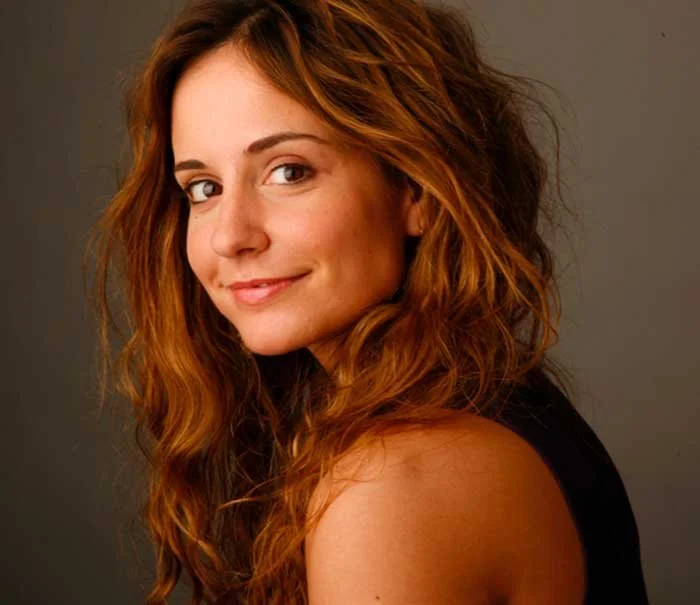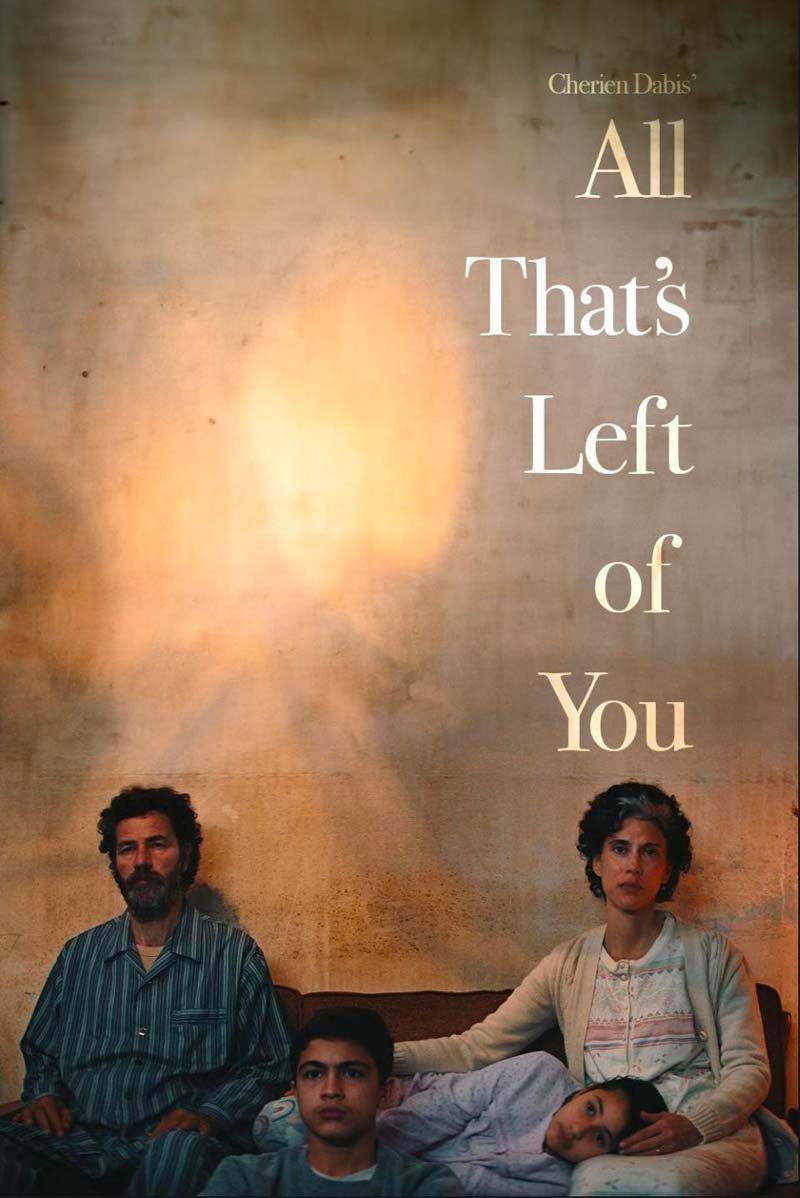


Filmmaker Cherien Dabis explores how history shapes our identity and why holding onto our humanity is the most powerful form of resistance
For me, we Palestinians are so much more than our pain and suffering, and the world often sees only our pain and suffering. I wanted to show other facets of who we are, no matter whether we're on the activist side of the spectrum or audience members who don't know very much about the situation. At the end of the day, we all have to choose humanity. In many ways I was inspired by observing the different generations of my own family and how our identities were shaped by everything happening in Palestine. That became the first idea for this film, to really show how it is a collective trauma for all Palestinians. That trauma is being passed down from generation to generation. Even if you're not a direct descendant of Nakba survivors, you still have that trauma. I wanted to explore that passage of trauma, that inheritance of my own trauma and take a look at how history and political events shape people.
These oppressive structures are built to strip us of our humanity. One of the ways they do that is by filling us with anger and hatred. If we allow ourselves to stay there, we're doing the job of the oppressor for them by slowly killing ourselves. I wanted to make a movie that would remind people that we can't allow them to win by giving up our humanity. We have to hold onto our humanity and try in these impossible circumstances.
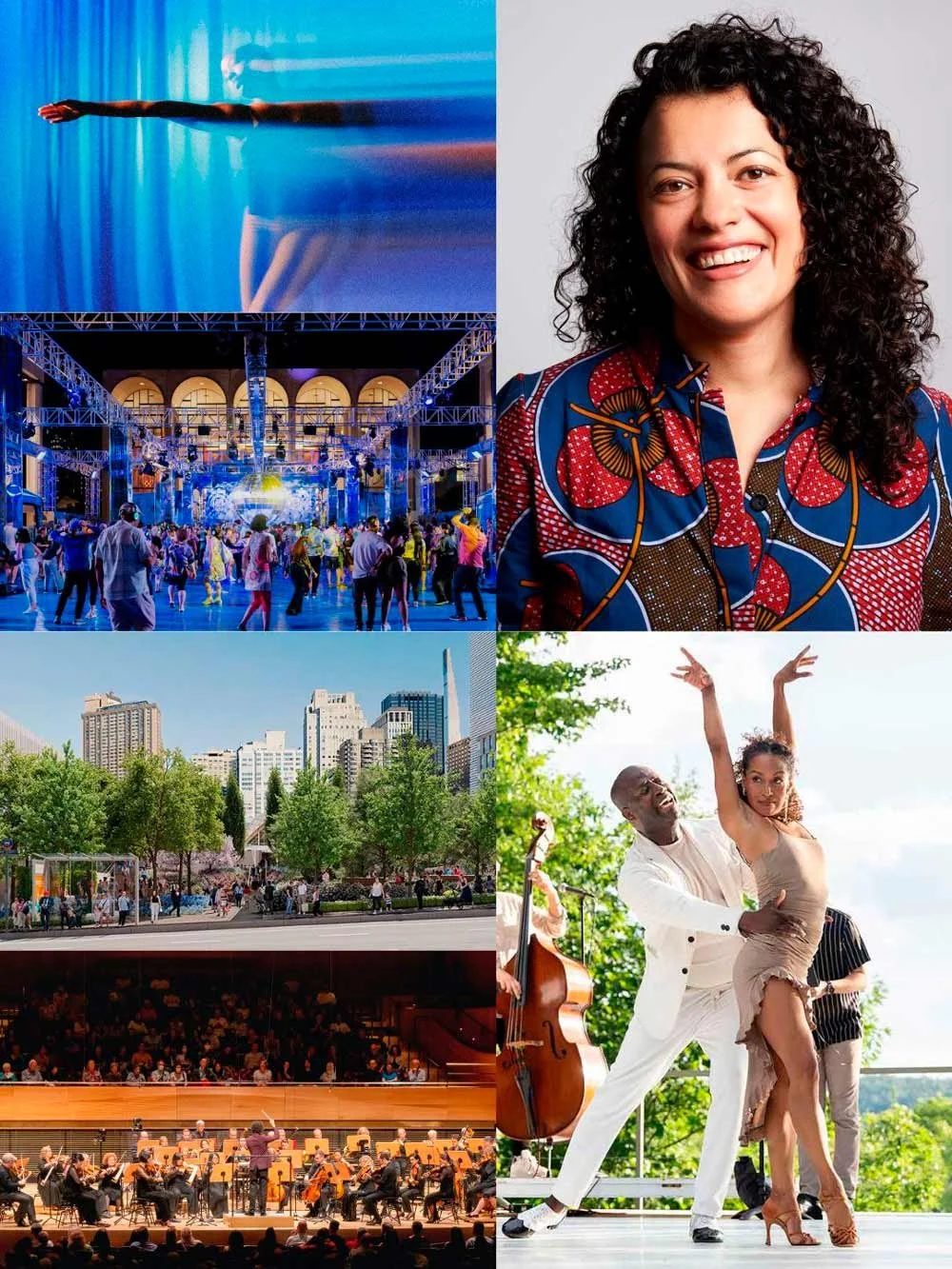
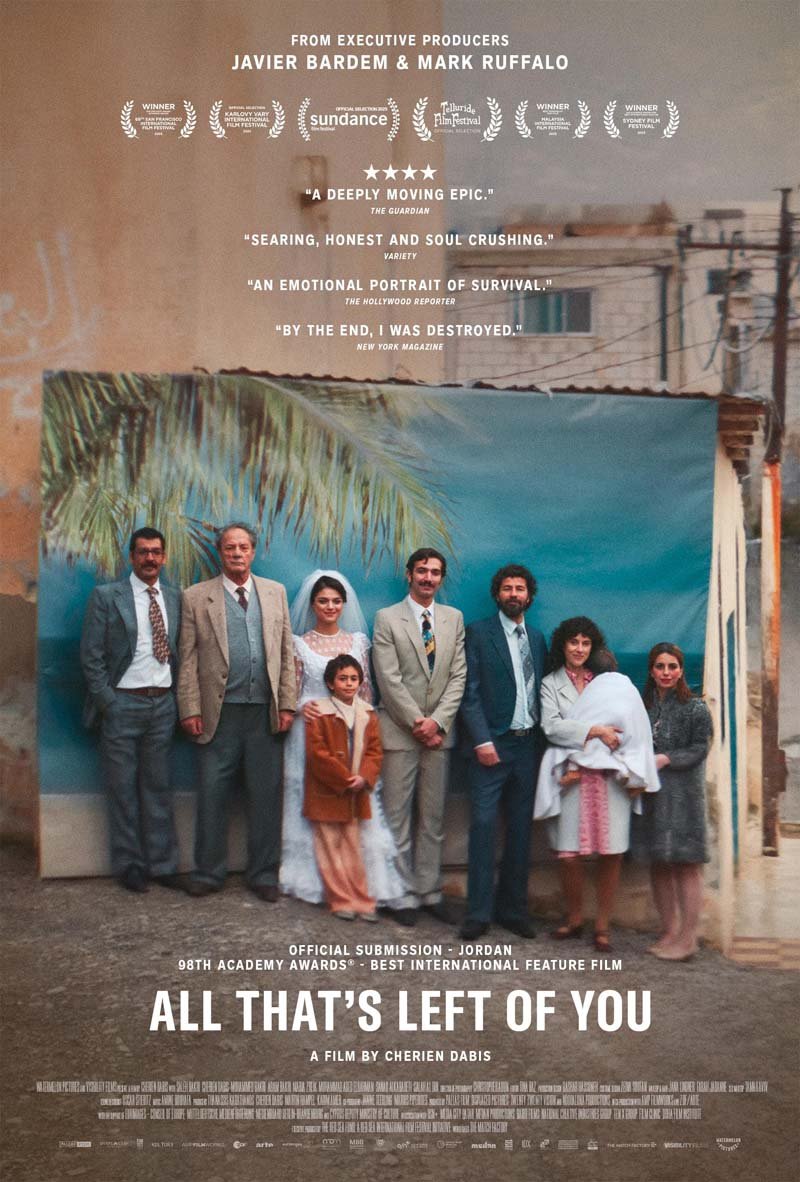
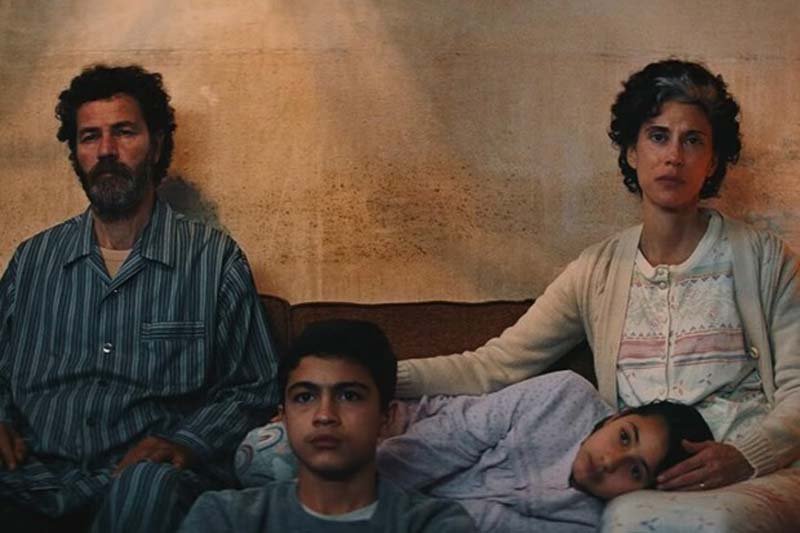
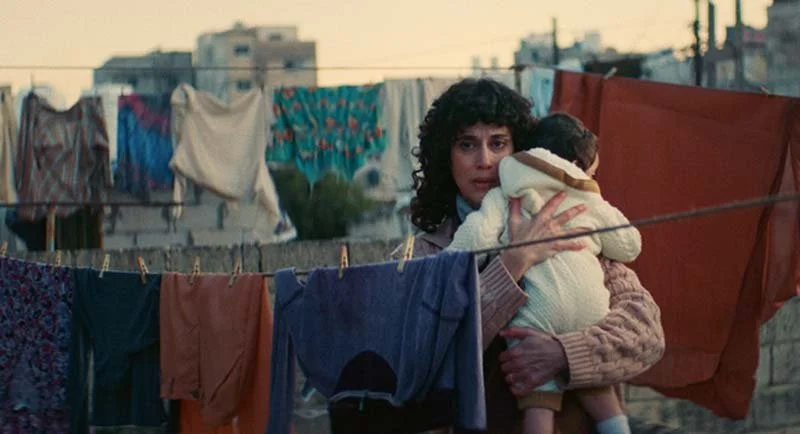
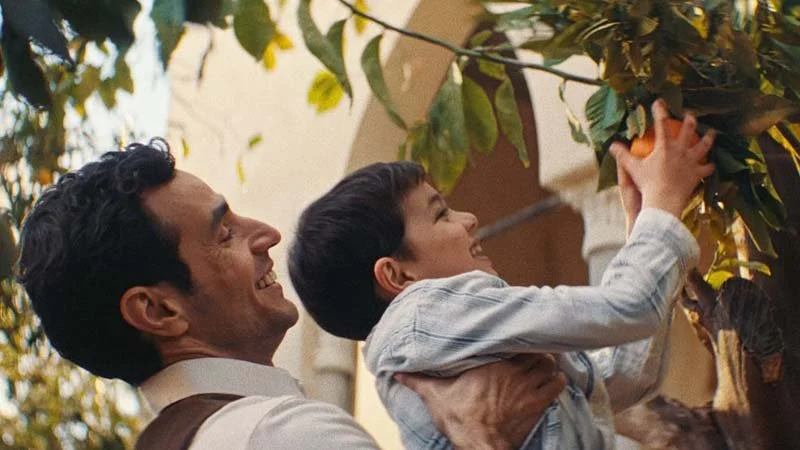
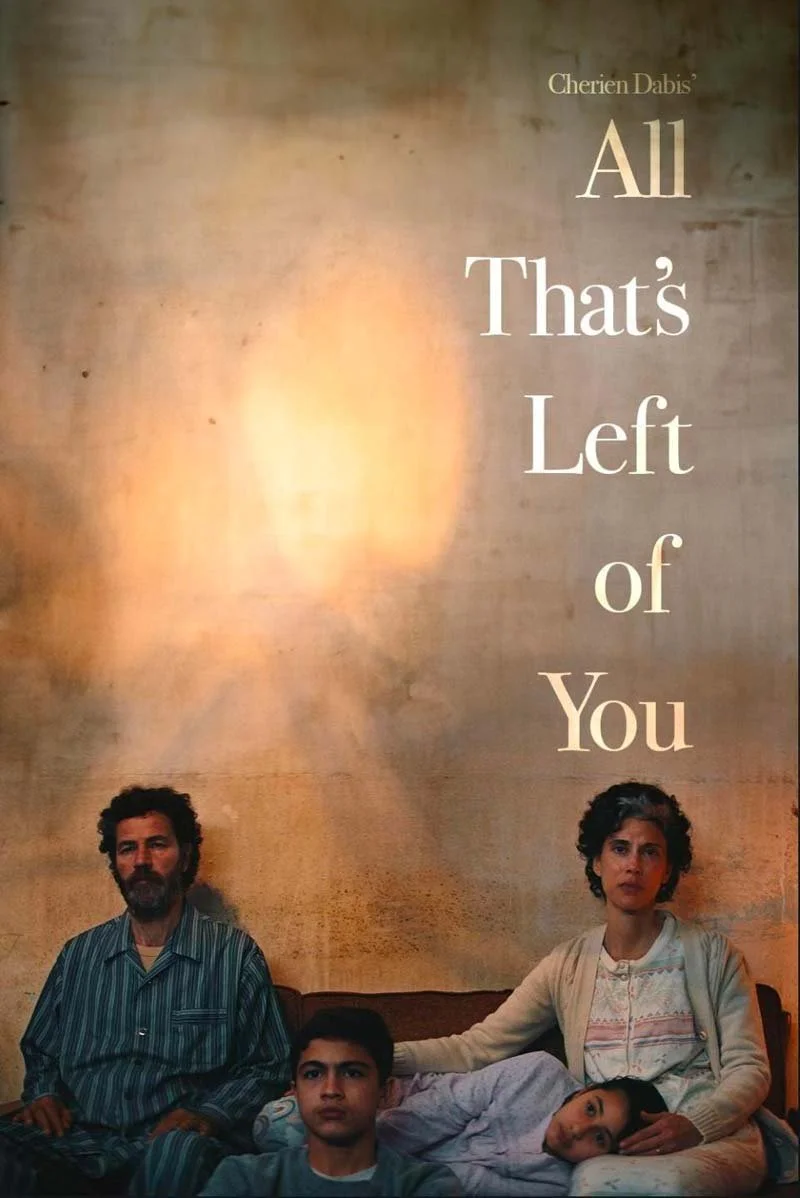
My guest today is Cherien Dabis. She’s a filmmaker and actress who has spent much of her career trying to fill the silences in the American narrative. In 2022, she became the first Palestinian to receive an Emmy nomination. She has worked on everything from The L Word to Ozark, Only Murders in the Building to the hit Netflix series Mo, always with an eye toward breaking the one-dimensional mold that has historically defined Arab representation in the West. But her latest project is perhaps her most ambitious yet. It’s a film called All That’s Left of You. It follows one Palestinian family across three generations, beginning in 1948 and ending in 2022. It is a story of exile and memory, and it’s Jordan’s official submission for this year’s Academy Awards.
THE CREATIVE PROCESS
Cherien, welcome to The Creative Process.
CHERIEN DABIS
Thank you so much. It's a pleasure to be here.
THE CREATIVE PROCESS
You remind us, and I think this is really important because we follow the news and can often forget the individual lives, that every single person was a child once. Look into their eyes and whatever hardship is etched there, they had dreams, play and make believe. They come from families and homes. They love their mother, grandfather, sons and daughters, and they carry those memories even when all else may be gone. All That's Left of You is the story of Palestine. It's a story of one family from 1948 up to almost the present day, but it's also a very human and universal story. I don't think anyone could see your film and not be moved. It's great cinema, but it's life and we can't turn away from it. I hadn't seen the Palestinian experience shown in this way, not shying away from the suffering but showing us the beauty there too.
CHERIEN DABIS
That's a beautiful summation. Thank you for that.
THE CREATIVE PROCESS
What was the artistic choice to set it in that way? There are so many different ways you've approached the diasporic experience, but why did you choose to set it this way?
CHERIEN DABIS
I was inspired by observing the different generations of my own family and how our identities were shaped by everything happening in Palestine. That became the first idea for this film, to show how it is a collective trauma for all Palestinians. That trauma is being passed down from generation to generation. Even if you're not a direct descendant of Nakba survivors, you still have that trauma. I wanted to explore that passage of trauma and really take a look at how history and political events shape people. You can't tell a story about the passage of trauma without it being multi-generational. The idea of telling a multi-generational story about the ongoing Nakba was always one of the first ideas. I started to mull over how I could show three generations of one family, how radically different everyone's response has been to what they're experiencing and how I can honor the humanity of the Palestinian people. I wanted to honor in particular our men who are so brutalized under occupation and apartheid. That was where I started, inspired by the different generations of my own family and my dad in particular.
THE CREATIVE PROCESS
You really feel that, and it's a beautiful performance by yourself. We should also mention the Bakri family. Even though you're not related, they're a real family representing three generations and that truly comes across. You felt just a part of that family. It's an extraordinary situation to have three generations on screen. And of course Mohammad, I think that's his last role in the film.
CHERIEN DABIS
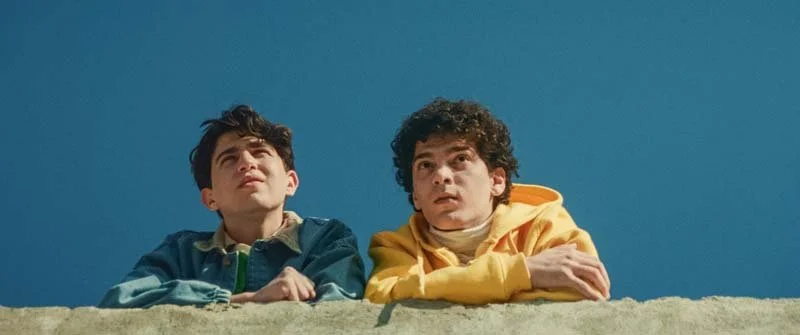
Sadly he passed in late December, which was devastating for all Palestinians. He was a giant of our cinema. He was a director, an actor and an incredible human being. I consider myself immensely fortunate to have worked with him and gotten to know him in the making of this film. I had always been a long-time admirer of his and really wanted to work with him. The fact that I got to work with him, two of his sons and his nephew in one film was incredible. The actor who plays teenage Sharif is Mohammad's nephew. It was four generations of one beautiful family, and they brought so much of their own life experience and relationship dynamics. They really bared their souls in this film, and I'm grateful to them.
THE CREATIVE PROCESS
When we talk about trauma, exile and losing a home, so much is about what's not said. That exchange of shorthand, what plays on their face, the wish to protect even though you can almost not protect yourself, and the humiliations that happen as part of that daily process of occupation. I guess it happened with the casting that they just lined up, because originally they weren't all going to be able to be in it.
CHERIEN DABIS
That's right. Originally Saleh was not available, and I had to try to put the film together in a different way. It was challenging, like putting together pieces of a puzzle, and I wasn't sure if they quite fit. From the moment I started writing this script, I was thinking of the Bakri family. They're the only acting family dynasty in Palestine. What better way to bring this intergenerational portrait to life on screen than to cast an actual family. This was ambitious casting and writing, meeting many characters at different ages in their lives. From the beginning, I was intimidated by my own ambition and wondering how I was going to pull this off. When I couldn't cast Saleh, I was still trying to figure it out with Mohammad and Adam playing younger and older Sharif, and finding someone to play Saleh's role. Once we had to push our shoot date because of the events of October 2023 when we had to evacuate Palestine, the irony was that Saleh became available and I ended up getting my dream cast.
THE CREATIVE PROCESS
Tell us about that, because you were literally two weeks away from your first day of shooting when October 7th happened and you had to leave. How do you finish or even begin a film about the Nakba when a new tragedy is unfolding in real time in front of you?
CHERIEN DABIS
It was one of the most intense experiences of my life. We had prepped for five months in Palestine and were only two weeks away from shooting when the events of October 2023 changed everything. It stopped us in our tracks, threw us into total uncertainty and put us in a state of crisis. We didn't know what to do or if we'd be able to continue making the film. We were based in Ramallah in the West Bank. West Bank cities were being sealed off, checkpoints were closing and movement became challenging if not impossible. I had foreign crew who were there with me, some of whom had just arrived the week before. Within 24 hours they wanted to leave. Their families were worried and thought it wasn't safe anymore. We had to change plans relatively quickly and found ourselves making a movie about what was happening as it was happening. We're making this Nakba film and suddenly watching an even bigger, more devastating Nakba unfold, which quickly became a genocide. It was incredibly intense and surreal, like art was imitating life. Some days we found ourselves filming scenes that looked a lot like what was happening in Gaza.
READ MORE [ + ]
We evacuated to Cyprus, where we had always planned to shoot a small part of the film, thinking we would start there and perhaps return to Palestine. The situation escalated and made our return impossible. We decided to go to Jordan because the story for this film became that much more vital, and we wanted to get it out into the world sooner rather than later. We didn't want to wait until it was safe enough to return, so we kept going. We ended up shooting most of the film in the Palestinian refugee camps in the north of Jordan. We shot a small percentage in Cyprus and finished the film in Greece. We were able to do some limited remote shooting in Palestine, but I was directing by FaceTime, which is always challenging.
Directing by FaceTime, I can't even imagine that. I don't like to give away what's in the film; people have to experience it. It's deeply moving for anyone wherever they are in the political divide. It awakens people's humanity if they had closed it to these situations that people have been going through for nearly 80 years. You end it at 2022. For me, it leaves it open to possibility and asks us what we are going to do about it. Oftentimes with stories about war or occupation there's a lot of distress, but you remind us of the beauty that exists alongside these family stories about memory. You almost showed the most gentle aspect, and I was wondering about that choice.
I wanted to focus the story on a family, not the political situation. This movie was really about how history shapes people and how political events shape who we become. Therefore you're able to see the devastating emotional impacts of this ongoing violence that people suffer under occupation and apartheid. To make a movie about family, you have to show all the facets of who we are. I didn't want to show a movie that was just about people suffering. I wanted to make a movie about human beings, their extraordinary will to survive, the resilience of the families, joy as an act of resistance and a sense of humor as a method for survival. There are many ways in which Palestinians resist, endure and attempt to survive these events. It was important to show human reactions and people's attempts to live their lives in impossible circumstances. That's why it's relatable, because it's about people trying to get on with their lives despite everything happening around them. For some, getting on is harder than for others. The character of Sharif is clinging to the past, doesn't want to live in the present because it isn't nearly as good as what he had, and is not willing to accept what he lost. Then you have his son, who has seen how much his father suffered and says he doesn't want to be angry or hold onto the past. He chooses to live right here, right now and accept what happened, which is a travesty to his father. It puts these characters in conflict. It was important to show the different reactions we all have to the ongoing events in Palestine, inspired by looking at the different generations of my own family. I found it fascinating that we all responded to things in such a different way.
I want to get into your upbringing in Ohio. You visited Palestine and Jordan frequently. But what a master course in writing, because a lot of us have asked ourselves what life is like in Palestine and Gaza, or what it's like to be held at a checkpoint. You answer these questions, but it doesn't seem like you're answering questions; you're just showing this is life. What it's like to be swept up in events happening around you, the confusion, the shelling or trying to get medical treatment while living under occupation. What's it like to be a young mother bringing life into the world during all this chaos, or to be a teacher giving care and expanding compassion even when exhausted.
That's the key right there, immersing people in the emotional experience of what it is to live in this situation. It gives people what is missing from the media landscape. I grew up in a small town in Ohio where I was so aware of how dehumanized we were in Western media and the dangerous ways we were being misrepresented. Telling our authentic stories and giving people a window into the emotional experience of surviving these events for decades was what motivated me. People think of the Palestinian identity as far away, but when you watch the movie, you see the relevance to your own life. You see the parallels, the difficulties and the devastating consequences of these events on human beings. Then you understand why Palestinians have been struggling for so many decades, fighting for their freedom and for justice. It was very important for me to center that.
INTERLUDE: Julia Kobic (Master's Student in International Security at Sciences Po, Paris) [+]
My name is Julia Kobic, and I'm a master's student in international security at Sciences Po Paris. I'm Polish and Irish, and I grew up surrounded by stories of occupation, repression, generational pain and resilience. One such story was passed down from my great-grandmother, who lived through the German occupation of Poland during World War II. One day when she was visiting her aunt with her mother, they were stopped at a military checkpoint. The soldiers held them at gunpoint, threatening and humiliating them, ordering them to polish their shoes if they wanted to be let go. Fearing for their lives, they obeyed, but the cruelty they experienced that day left a mark on her family for decades. This is just one story of many from a nation that has been repeatedly oppressed, and which still in the face of violence, has often chosen humanity. My family were amongst the countless Poles who risked everything to help their Jewish neighbors during the Holocaust, despite the mortal danger.
The same experience of resilience through humanity rings true in Ireland. For centuries Irish people were subjected to forced displacement, starvation and repression under British rule. As a nation, we understand the suffering that comes with occupation and the fight for independence. It should therefore come as no surprise that the Irish people have been among the most vocal in condemning the genocide in Gaza. As a proudly Polish and Irish person, I recognize the struggle of the Palestinian people for dignity, safety and statehood. I was deeply moved by how throughout the film, the scenes of oppression echoed those that I had inherited through my own family's histories. I was also incredibly touched by the way in which All That's Left of You took the brutality of oppression and turned it into a message of compassion and hope. There is something truly precious and profound about the idea of resilience through humanity, about choosing to help others in the face of suffering. Despite and because of our own pain, we know what it is to suffer and we do not wish for others to endure the same. Cherien Dabis portrays this beautifully in the heartbreaking dilemma her characters face, and the lessons in humanity and compassion that the film leaves us with are ones the world should heed. It is a testament to Cherien Dabis's work and to the power of universal human values that All That's Left of You resonates so deeply with experiences of oppression and resilience across the world. And now, back to the interview.
We talk about impossible situations. We sit in the audience and think what we would do in that situation. There's a very pivotal point around the midpoint where the father and son are stopped. You think no one should have to go through that. Why do we support it? Most of us are living in a country that in some ways has allowed this to happen or directly supported it. Tell us about that moment and all these aggressions that are not necessarily physical deaths in the film, but deaths of a different sort.
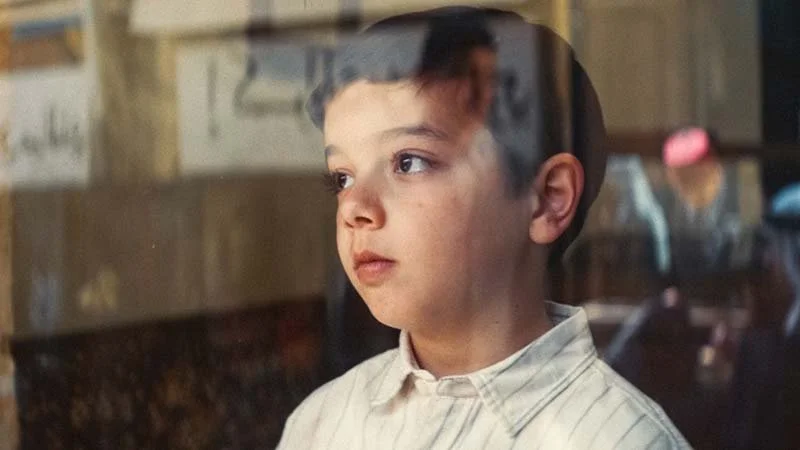
The moment you're speaking about is really a pivotal midpoint of the film where everything changes between a father and a son as a result of Israeli soldiers stopping them as they're walking home. They're coming home from the pharmacy where they picked up medication and there was a curfew imposed. Israeli soldiers stop this father and son duo and proceed to humiliate the father in front of his young son. The son who looked at his father as his hero sees his dad totally powerless in a situation where he has no ability to protect himself or his son, and his opinion of his dad plummets in that moment. Just seeing that is utterly devastating to him, and their relationship is forever changed. Throughout the film I showed different types of violence under occupation and apartheid. They're not all physical moments of violence, though there's always the threat of physical violence, but this particular moment is a moment of psychological violence. This is humiliation and harassment that has almost more devastating impacts than the physical violence in the film because you see this relationship transformed forever and understand that nothing will ever be the same. For me, that moment was about showing the different kinds of violence and the long-term devastating impacts they can have on people.
Talking about 80 years, I don't know if anyone has really done a proper study because it's hard to have a post-traumatic stress study when the trauma is ongoing. You've gone deeper and really studied it. What that does to people when they didn't get a childhood is something no one has the right to take.
They are robbed. You see in this moment, this young boy is robbed of his childhood. That's the moment you see his personality just shift, and you understand how he becomes the fiery, rebellious teenager that we then see ten years later in the film. That was really what I was interested in with this movie, showing how our identities are formed by our environment. How we are shaped by these kinds of events is not something we are privy to. This is not an emotional experience that we can really get anywhere outside of these kinds of films.
You see in the film how the trauma is passed on, as well as the spirit of resistance and determination for a liberated Palestine. You see how that spirit is passed on from the grandfather to the grandson in this film.
I think the identity and personality of this boy is definitely changed in the film. Palestinians have resisted in all kinds of ways. The world really only gets to see one type of Palestinian resistance, but the world doesn't get to see all the nonviolent resistance movements that Palestinians have organized. I don't think the world even knows about that, as the first intifada was largely nonviolent. That is an absolutely legitimate way to resist. Resistance through holding onto our humanity is one of the best ways to resist. These oppressive structures of apartheid and occupation are built to strip us of our humanity. One of the ways they do that is by filling us with anger and hatred. If we allow ourselves to stay there, we're doing the job of the oppressor for them by slowly killing ourselves. I wanted to make a movie that would remind people that we can't allow them to win by giving up our humanity. We have to try in these impossible circumstances.
There are so many teachers and caregivers within the film, talking about resistance as an act of passing on your values, history and culture. Teaching lessons about compassion even though empathy has not been shown to you. These are all the things that aren't normally seen, and I really appreciated seeing that because it's not part of our media diet. You read history books which just show dates like 1948 or 1967 without all of this particular detail, the faces, the people and the emotions. Talk about distributing your film. It's been received critically very well, but you've also said that people are still afraid to distribute it.
I think in certain territories people have definitely been afraid. The good news is we've had amazing distributors all over the world, and the film has opened everywhere from Italy to the US and Canada. It just opened in the UK, so it's been all over Europe and it's going to be opening in France, Spain, Latin and South America and Taiwan. We've had great distributors, but there have been some territories, in particular the US. We've also still not sold Australia and New Zealand, where all of the major distributors essentially passed and said they were afraid of the subject matter, which was incredibly demoralizing. We made this movie alongside a genocide. We're living in a world where Palestine is on the forefront of people's minds, and people are really interested in trying to understand what's happening. We've had the success of a movie like No Other Land, not only the critical and award success of that film that won the Oscar last year for best documentary but also the box office success here in North America. Despite all of that, for distributors to still say they're afraid of the subject matter was a real moment of questioning being a part of this industry. I wondered whether I would ever be able to break out of the echo chamber and reach a mainstream audience. It was a pivotal moment for me understanding that no major distributor or streamer is willing to pick up this film or has ever picked up a Palestinian film. What do we do? How do we move forward in a landscape where the gatekeepers have sealed the doors shut to certain narratives and are still operating within a system that dehumanizes us? They still create characters of us that are stereotypical, dangerous and villainized.
I'm not really sure what the answer to that question is, but I know I'm left with feelings of great disdain for this industry that I'm a part of. There is a desire to change things, and yet the desire to have nothing to do with it. Making this film was absolutely one of the greatest challenges of my life and one of the greatest gifts as well. To have this movie at this particular moment and be able to share it with audiences and talk to people about Palestine right now has been amazing. But to work nonstop on this movie for going on three years and feel that even in distribution the challenges are so great points to a broken distribution system.
READ MORE [ + ]
It's not just the film. I think a lot of filmmakers are going through this, which gives me a tiny bit of hope because I see the opportunity for change within the industry. There is systemic racism, but the industry is also falling apart. The whole system doesn't work, and I think people are finally seeing that. The hope for me is really at this point in dismantling the system and going about it in a completely different way. I don't know what that looks like yet, but I have formed a distribution company and I am attempting to do something I've never done. I am trying to figure out what the artist-driven distribution model is that we can start to move towards, where artists are centered in distribution rather than the last people to profit from the blood, sweat and tears of their own work.
That's so important. You've had great champions within Hollywood, of course, Javier Bardem and Mark Ruffalo as executive producers, hopefully helping with this distribution process.
Definitely. One of the greatest gifts of this year, and even the last couple of years, has been finding our allies and the people who are so aligned, vocal and willing to stand alongside us. That's been really amazing.
It's just down to the strong filmmaking and the visual path that you chart. It's grounded in a poem, this great poetic sensibility that you bring. Tell us about that.
The film opens with a father teaching his son this poem that was quite popular in Palestine in the 1940s. It's by an Egyptian poet named Hafez Ibrahim, who was known as the poet of the Nile but also the poet of the people because he often wrote about everyday people's struggles. This particular poem is very beautiful and evocative. It's about the Arabic language, but when you first hear it, it feels very multi-layered. You could almost interpret it to be about you and I and the treasures hidden within us as human beings. I loved how it evoked a lot for me when I first read it, and I ended up bookending the film with it. We hear it at the beginning, and then we hear it again at the end when the boy from the beginning is repeating that poem as an old man in his seventies, remembering his father. He starts reciting the poem and then teaching it to his wife. We come full circle in a moment of really appreciating that the poem is a love letter to the Arabic language. For me, the movie in so many ways is a love letter to the Palestinian people and culture. It felt really appropriate to bookend the film with this beautiful poem.
Yes, because it does harken back to All That's Left of You. Sometimes everything can be taken, but your language, you carry it with you. We carry the sea with us, and maybe the land is gone, but you carry that within.
Absolutely. The language, culture, identities, values and our love for each other. All that's left of us at the end of the day is our love for each other, and that's what has gotten us through many of these impossible events. Certainly that's what's left of the family at the end of the day, their love for each other. Our memories are the things that we carry with us throughout our lives, even when most of what we have is taken.
There are moments of humor in this with charismatic turns. I wanted to say that before this film, you've directed a number of projects. Talking about the comic side of things, Amreeka is more comedic and May in the Summer are different experiences. You've directed episodes of Only Murders in the Building and acted in Mo. Did you have to experience those before you created this film? How did they help in the storytelling that you draw upon for this film?
My previous films were also an exploration of family and identity, how we are formed in relationship to one another and to the events in our lives. Those films were looking more at the outer layer of identity, and they were more comedy dramas. I really wanted to explore the comedy side before making films. Going towards comedy first was the right move because it really helped me to bring levity into a more dramatic film like this one. Comedy is something that I love. In this particular film, I think the humor shows the survival mechanism of people in these horrible situations.
I'm always amazed when I go back to Palestine and am struck by people's sense of humor and how they use humor to get through these horrible moments in their lives. I really wanted to incorporate that into the film. My work in television in general, as a director, actor and writer, really helped me in the making of this film. To write for television, you have to keep a lot of story in your head at the same time. There are a lot of characters, episodes and story arcs across multiple episodes and the whole season. Working in TV allowed me to expand my ability to hold and create story on a larger scale over multiple episodes and possibly years. It really helped me to do the story math for this film and hold these stories in my mind before I even started writing them. It expanded my creative imagination. Working in TV also helped me hone my craft. Sometimes it takes four or five years to get a movie off the ground. If you're not directing in the meantime, you can show up to the set of your next film and feel very rusty. Television keeps you practicing your craft, experimenting with different lenses, styles, cameras and shots. I learned a lot from working with amazing actors like Meryl Streep, Jason Bateman and Laura Linney. My confidence increased between the making of my second feature and this film because of my work in television. Everything I've done up until this point informed my ability to make this film, hold this entire story and play all these different parts from writing to directing, acting and producing.
I was also thinking about the versatility when you had to change countries. I think getting a bit of that from television where there are so many moving parts and having to pick up from somebody else helps.
There's a certain level of flexibility you have to have in television because you're fitting your own vision inside the vision of someone else. You're working within the world that's already been created and trying to bring your own stamp to that. Having a versatility of experience and the ability to go with the flow is really important. Directing TV teaches you to let go a little bit more in a healthy way. It teaches you to let go and embrace what comes with uncertainty. Sometimes the best things happen when you let go and embrace the change or the happy accident.
We talk about the loss of home, land and lives. There's also been a huge ecological loss in Gaza. You paint the picture of the loss of Jaffa and the orange trees. That's another aspect that we haven't even gotten to, the overall loss of life, not just human life. What are your reflections on that and how can we build that back up?
It's devastating to think about the loss of life in this greater sense where you think about the loss of the ecosystem, trees, animals and insects. I don't even know that we know the depths of all of that loss, the environmental impact and the loss of the food supply. The water in Gaza was already 95% contaminated before all of this. Now we've got gases in the soil and air, and I'm not really sure how we're going to begin rebuilding that. We certainly can't until the violence ends, and it hasn't ended. It's a bit terrifying to think about all of that loss because the impact is so far-reaching. The level of environmental devastation that happened in Gaza will have a ripple effect and repercussions across the globe. We need an actual ceasefire before we can even begin to think about the larger implications because there's nothing we can do right now with the current ongoing violence.
THE CREATIVE PROCESS
As you think about the future, if you had a message to young people, what would you like them to know, preserve and remember? What has made your life meaningful, the importance of the arts and the importance of family?
CHERIEN DABIS
I'm so amazed by young people because I feel like they're not having it. Young people are truth seekers and are not buying the bullshit that previous generations bought. Part of it is that we now live in a world where everyone knows everything. Nothing is kept secret for that long before it breaks and there's a scandal. I think young people are incredibly brave. I almost want to apologize to young people for what they're being given, but I also just want to say I'm so inspired by them. I really think if anyone can change this world, it's them. I know that's a lot to put on them, but they're already doing it. They already see that they've not been given another choice. I think the world is going to look very different as they get older and into positions of power. The world is in for a big change for the positive. That's my hope, and I have a lot of hope in young people.
THE CREATIVE PROCESS
Through your storytelling you give that sense of grace, beauty and what is possible. Thank you Cherien Dabis for giving us a window onto the emotional experiences and sharing these stories of resilience and survival while holding onto that sense of joy, beauty and the importance of family. By dedicating yourself to the power of stories and bearing witness, you help us understand that we can create a better tomorrow. We all live on one planet we call home. Thank you for adding your voice to The Creative Process and One Planet Podcast.
CHERIEN DABIS
Thank you so much for having me.