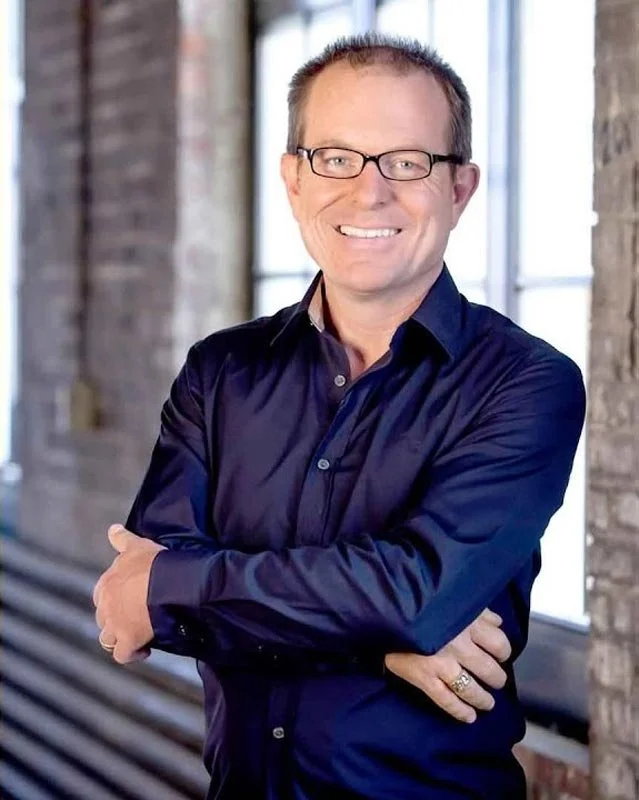
In this episode on Speaking Out of Place podcast Professor David Palumbo-Liu talks with Dan Hicks about the present’s responsibility to itself. How do not only monuments, but also the very idea of monumentality, serve to mystify and perpetuate beliefs that maintain social orders that deserve to be strenuously re-evaluated? Archaeologist and anthropologist Dan Hicks traces the development of a particularly virulent strain of monument-worship, that which emerges out of what he calls “militarist realism,” which harnesses technologies of war, particularly colonial, white supremacist war, to build institutions, disciplines, museums in its image in order to permanently maintain a border between those deemed human subjects and the object-worlds of the non-human—which includes racial others. Rather than grant the past immunity, Hicks argues that we need to decide for ourselves what we chose to remember, and what deserves to be forgotten.
Dan Hicks is Professor of Contemporary Archaeology at Oxford University, Curator at the Pitt Rivers Museum, and a Fellow of St Cross College. He has written widely on art, heritage, museums, colonialism, and the material culture of the recent past and the near-present. Dan's books include The Brutish Museums: the Benin Bronzes, colonial violence and cultural restitution (Pluto 2020) and Every Monument Will Fall: a story of remembering and forgetting (Hutchinson Heinemann 2025). Bluesky/Insta: @ProfDanHicks
DAVID PALUMBO-LIU
Could you explain what historical archeology is?
DAN HICKS
So I work in between archeology and anthropology in this field called either historical archeology or contemporary archeology, which often sounds like a contradiction in terms to people. It's really about where the past and the present meet, where archeology turns into anthropology and anthropology into archeology.
At the heart of that is the relationship between objects and humans. How do we write about the past or the present in terms of listening to human voices or evidence from things where maybe human voices have been erased or haven't left as much of a mark on the written records as others? Wrapped up with that, though, is always the risk of dehumanization, of the treatment of human lives as if the boundary between a subject and an object is one that is permeable, not in a sort of positive way, but in a more sinister way. There is a long history of people being treated as things.
So really, archeology and anthropology, and that intersection of the disciplines, which, of course, are 19th-century disciplines, are bound up in the history of empire. But really, that’s my point of departure. I talk in the book about the four ways. I also work not only in archeology and anthropology; this conversation is also going to rage, I’m sure, into art and architecture as well. The four ways, I think, have this natural synergy, but at the same time, it’s a synergy that has a history.
PALUMBO-LIU
And another word that pops up in the book a lot is fabulation.
HICKS
Absolutely. Fabulation occurs in the book in part because of the importance of the critical fabulation work of Saidiya Hartman, Christina Sharpe, and a series of other really important voices that are really moving those conversations forward over silences in the historical records in a very important way in the North American context.
Within historical anthropology and archeology, the work of Michel-Rolph Trouillot, the Haitian anthropologist from the 1990s, wrote a very important book called Silencing the Past. He introduced the idea that the past isn't just something that we receive in terms of what survives as evidence, but the gaps in the archive are often silences, which also silence.
They are active silences. He talks about mentions and silences. He states that silencing the past is like silencing a gun. What he and her colleagues are doing in the work of critical fabulation is encouraging writers and readers to fill those gaps with their imagination, to blur the boundary between fact and fiction where these gaps exist.
And so I’m doing something really rather different because I’m working not only with gaps but, in some ways, with misrepresentations of the work. I’m also working from a very different positionality as a white male curator in an elite institution, which is a legacy CRO institution. So my work is something that operates in a very different way.
The point of departure is that sense that it may be, in terms of the stories that monuments tell, in terms of the language of museums, in terms of the rhetoric of the disciplines and ideas in which we're framed, that in some ways we’ve been lied to, and we need to be careful not to repeat the lies of others.
Speaking Out of Place, which carries on the spirit of Palumbo-Liu’s book of the same title, argues against the notion that we are voiceless and powerless, and that we need politicians and pundits and experts to speak for us.
Judith Butler on Speaking Out of Place:
“In this work we see how every critical analysis of homelessness, displacement, internment, violence, and exploitation is countered by emergent and intensifying social movements that move beyond national borders to the ideal of a planetary alliance. As an activist and a scholar, Palumbo-Liu shows us what vigilance means in these times. This book takes us through the wretched landscape of our world to the ideals of social transformation, calling for a place, the planet, where collective passions can bring about a true and radical democracy.”
David Palumbo-Liu is the Louise Hewlett Nixon Professor and Professor of Comparative Literature at Stanford University. He has written widely on issues of literary criticism and theory, culture and society, race, ethnicity and indigeneity, human rights, and environmental justice. His books include The Deliverance of Others: Reading Literature in a Global Age, and Speaking Out of Place: Getting Our Political Voices Back. His writing has appeared in The Washington Post, The Guardian, The Nation, Al Jazeera, Jacobin, Truthout, and other venues.
Bluesky @palumboliu.bsky.social
Apple Podcasts · Spotify · Website · Instagram