I think one must frame what happened in Iran recently in the context of what is happening in the larger Middle East, which is that Israel and the United States principally are orchestrating a kind of regional shift in their power that can only be seen in light of what happened, and it continues to happen in Gaza and the wider Palestinian Territories, which is that Israel is, by virtue of signaling an aggressive move towards Iran, suggesting that it will continue unabated to exercise its will throughout the region, and that it also is interested in destroying Iranian support for Palestinian rights in the region.
Today on Speaking Out of Place with David Palumbo-Liu, we have a special episode on Israeli attacks on Iran that resulted in 12 days of bombings and culminated with the US dropping bunker bombs on Iran's nuclear facilities. Scholars and activists Persis Karim and Manijeh Moradian discuss both the Iranian national issues involved as well as the regional context, connecting this war with the genocide in Gaza and Israel’s extensive wars elsewhere. At stake is both Iranian sovereignty and the calls for so-called “regime change.” We question the use of that term, delve into how the struggle for liberation in Iran rejects both the repressive Islamic state and the US/Israeli war machine. Our discussion draws the frightening parallels between Iran’s stifling of dissent and imprisonment of political enemies and others with our own government’s. Finally, we recall the Woman, Life, Freedom movement and build hope for international solidarity with groups working for liberation in Iran, Palestine, and elsewhere, and insist liberation will never be achieved by dropping bombs.
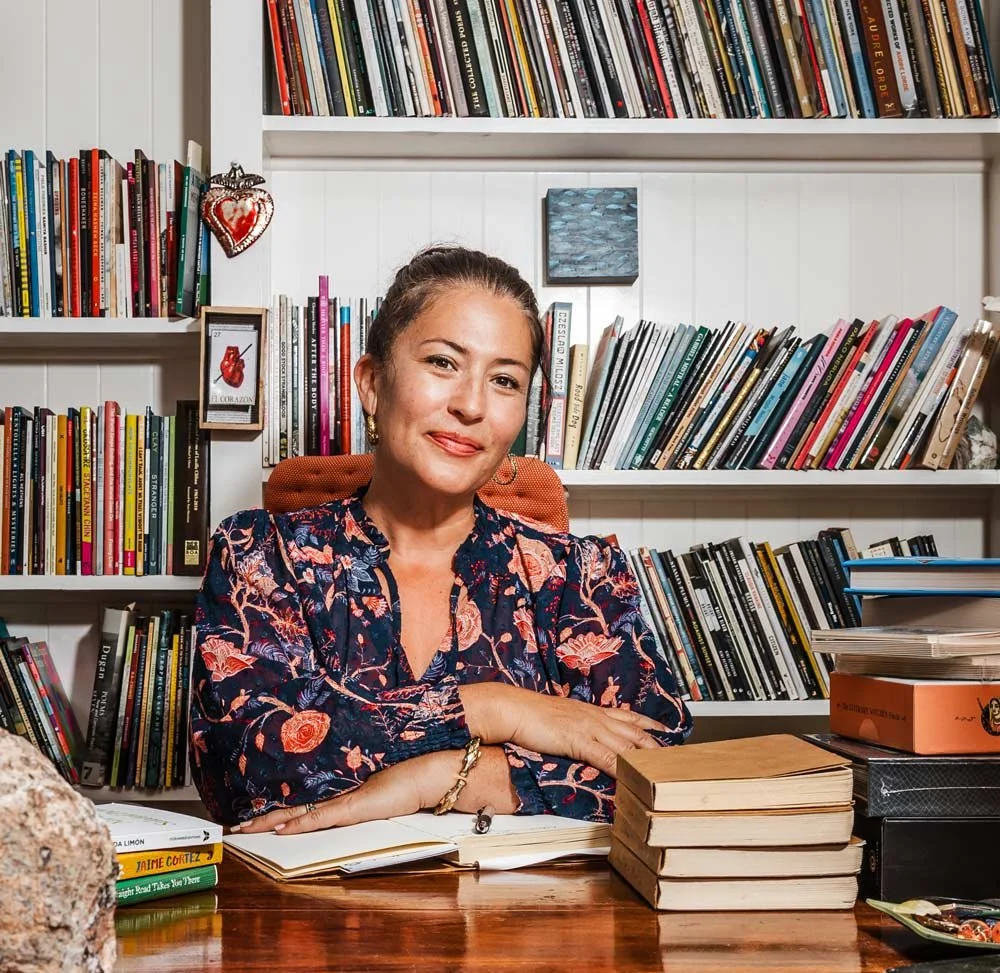
Persis Karim is the director emeritus of the Center for Iranian Diaspora Studies and a professor in the Department of Humanities and Comparative and World Literature at San Francisco State University. Since 1999, she has been actively working to expand the field of Iranian Diaspora Studies, beginning with the first anthology of Iranian writing she co-edited, A World Between: Poems, Short Stories and Essays by Iranian-Americans. She is the editor of two other anthologies of Iranian diaspora literature: Let Me Tell You Where I’ve Been: New Writing by Women of the Iranian Diaspora, and Tremors: New Fiction by Iranian-American Writers. Before coming to San Francisco State, she was a professor of English & Comparative Literature at San Jose State where she was the founder and director of the Persian Studies program, and coordinator of the Middle East Studies Minor. She has published numerous articles about Iranian diaspora literature and culture for academic publications including Iranian Studies, Comparative Studies of South Asian, African and Middle East Studies (CSSAMES), and MELUS: Multi-Ethnic Literatures of the United States. “The Dawn is Too Far: Stories of Iranian-American Life,” is her first film project (co-directed and co-produced with Soumyaa Behrens). She received her Master’s in Middle East Studies and her Ph.D. in Comparative Literature from UT Austin. She is also a poet.
Manijeh Moradian is assistant professor of Women’s, Gender and Sexuality Studies at Barnard College, Columbia University. Her book, This Flame Within: Iranian Revolutionaries in the United States, was published by Duke University Press in December 2022. She has published widely including in American Quarterly, Journal of Asian American Studies, Scholar & Feminist online, and Women’s Studies Quarterly. She is a founding member of the Raha Iranian Feminist Collective and a member of the Feminists for Jina transnational network.
DAVID PALUMBO-LIU
Thank you so much for being on the show Again, it's nice to see you both. Could you please give us the background that we need to know about this war and update us as to the current situation?
PERSIS KARIM
I think one must frame what happened in Iran recently in the context of what is happening in the larger Middle East, which is that Israel and the United States principally are orchestrating a kind of regional shift in their power that can only be seen in light of what happened, and it continues to happen in Gaza and the wider Palestinian Territories, which is that Israel is, by virtue of signaling an aggressive move towards Iran, suggesting that it will continue unabated to exercise its will throughout the region, and that it also is interested in destroying Iranian support for Palestinian rights in the region. And Iran and Yemen, for example, and Lebanon or Southern Lebanon anyway, in the form of Hezbollah, have been the principal agents of asserting Palestinian rights.
And because there has been support from the Islamic Republic of Iran for some of those organizations, like Hezbollah and Hamas, Israel is announcing that it will now go after the source, and that is exactly what I think it did. I think it's also to be a distraction from what Israel has been committing in Gaza as a genocide over the last nearly two years, and now it has the sort of free hand to do that because it has destroyed all semblance of credibility in terms of international laws and human rights, and the US has pretty much given it a task at license to do everything and anything it wishes.
It’s explicit military support and consent. I think you can't look at the attack on Iran through the lens of some of the narratives that Israel has created. We're attempting to liberate Iran from its government, we're destroying its nuclear capabilities. All those are, in some senses, part of the larger and longer narrative of why Iran needs to be brought to its knees.
And I think one of the biggest and most important things here is that Iran's sovereignty is under attack in large part because it is the only country in the Middle East region that has no standing military bases supported and underwritten by the United States. So the kind of broad foreign policy narratives about Iran's nuclear capabilities are of course part of this larger narrative that's been going on, especially since the first Trump administration exited the JPCOA.
But. We had the opportunity to negotiate. We had been in a process of diplomatic talks with Iran up until the very day when Trump announced his decision to launch these strikes against Iran's nuclear capabilities. So I think it's fraught with lies subterfuge course, a desire to bring one of the dominant powers in the region, Iran.
And this is no apology for some of Iran's behavior, but rather to suggest that Iran's sovereignty is really under attack more than anything else, and as a result, the people of Iran are under attack.
MANIJEH MORADIAN
Absolutely. I couldn't agree more that this bombing campaign has to be seen in relation to the genocide.
I think almost my entire life I've lived with this rhetoric and threat of the US bombing Iran. US slash Israel have been threatening. To bomb Iran for decades, and I can't count how many anti-war rallies I've gone to. Right? Right. We have a whole repertoire of slogans and signs of No War on Iran. Right.
It, it's been a perpetual part of our experience as anti-war activists in this country, and yet they had never actually done it. We always knew, as Obama would say, all options are on the table. It was always a real threat, but the, the fact that they never actually. Could do it or did it, or felt they could get away with it until now, until this genocide.
Right? Because Israel, despite turning world opinion against itself, has suffered no actual consequences, right? And has, as Persis said, shredded any pretense of international law or any kind of United Nations liberal world because Israel has essentially gotten away with genocide. All bets are off. They can do anything they want, or that is how they're behaving, right?
A bombing, Syria bombing Southern Lebanon and now Iran. And so I think this is actually a moment where many Iranian leftists, feminist, anti-imperialist. Iranian diaspora are really saying we have to understand the fate of Iranian people and the fate of Palestinian people as linked. We have to think regionally about solidarity and about our futures.
We can't allow these states to pit us against each other, and we can talk more about how and why many Iranians do feel alienated from the Palestinian cause. A ways in which Iranians and Palestinians actually have been pitted against each other. But I think it's a realignment in terms of what Persis said, US and Israel trying to.
Bring Iran to its knees, take out any threat to us Israeli hegemony in the region, but it's also a potential realignment for solidarity. This is exactly where I wanted to focus a lot of our discussion. What is happening in terms of the reaction of people in Iran? I know that's a huge monolithic group. So let's break down a little bit, and this also, at some point, brings in Iranians in the diaspora because that's utterly unrepresented in the American press.
DAVID PALUMBO-LIU
Right? Could you both talk about what's happening on the ground? Both Manijeh and I have family members in Iran, so it was impossible to watch what was happening as a kind of celebration of US and Israeli might, and not think about both the immediate consequences and the long-term consequences. So for, just to give you an example, I con contacted my cousin as Israel was launching its first strikes.
PERSIS KARIM
And I said, are you okay? What are you gonna do? And for two days she told me, we're gonna stay put. My mother is 84 years old and has a heart condition. And then within two days after that, when we saw on the news actual warnings of districts in Tehran, my cousin lives in Tehran, that were gonna be targeted, she made the decision to leave with her mother and also another cousin and her elderly mother to go to area about two hours north in the mountains.
And then all contact was lost. Because of course, one of the things that the Islamic Republic regularly does when there is either protests or a threat of internal security, is to shut down the internet. And this of course, causes great distress to people both inside of Iran and those who have. Family members here on the outside.
And that ostensibly was to both prevent Israeli hacking because Israelis do regularly hack Iranian computer networks. But also it's the way that the Islamic Republic can also control what they view as the narrative that's unfolding. So I think that's a really distressing part of what happened and continues to happen inside the country.
And you can only imagine for Iranians themselves who are living inside this space trying to figure out a plan to get out and having no opportunity to connect with each other. It's quite. Distressing and scary, so people left. It was just so ridiculous to see this tweet by Trump saying, evacuate Tehran. A maybe five word sentence, and it's a city of more than 10 million people.
Where are they gonna go? Many people don't have cars, many people have no place to go. It was a probably, I assume, and what I've heard, a state of utter panic. Also, we have to understand, many people inside of Iran lived with war before under the Iran Iraq War. That lasted for eight years, between 1980 and 1988.
So it's not like they don't have memories and bodily responses to that kind of panic and distress. My cousin was living. Within two miles of a security center, RGC Security Center, and she finally said, we have to leave. I was terrified for them also, because the other part of this is Iranians have been living with these crippling sanctions for years, and those sanctions pose all kinds of problems around food medicine.
So my aunt, for example, has a heart condition, and just recently, within the last six months, my cousin was getting a taxi to go around all the pharmacies in Tehran to be able to find the medicine that her mother needs. So everything is compounded by these realities of crippling sanctions, loss of communication.
And then, of course, the reality is that many people felt this just happened overnight, where usually there's a little buildup to war. Israel just took liberties like. We are expendable in the face of their military, might just took liberties without giving people any sort of sense that this was coming.
And of course, I think the other part of this is that connected to the genocide has been a real assault on the leadership of the organizations of Hezbollah and Hamas. And these targeted killings of Iran's leadership were very similar, which is to say Israel sees no distinction between the leadership of these organizations, whether they're state or considered terrorist organizations.
They don't see any distinction between the people who live among them and the leadership itself. So that also created disastrous conditions for the Iranian people because they were targeting some of these upper leadership in Iran's military. Their homes, not in workplaces. To me, it was just a frightening, a frightening unraveling of what could happen.
Sad to say again, yeah. This question about what do the Iranian people think? Obviously, we know 90 country of Iran, with 90 million people, we know in the US how polarized things are and how people think, all kinds of things. And of course that's true in Iran too, right? So I think one of the things that gets at the complexity of this is the way that the Iranian people get evoked and mobilized for different narratives and different political agendas, right?
MANIJEH MORADIAN
So if you listen to Democracy now, had a couple of Iranians come on who live in Iran and have served as negotiators during nuclear negotiations. So they have worked on behalf of the Iranian government, and it's fascinating to watch them say the effect of the war on the Iranian people is that they're rallying around the flag.
They're not gonna rise up like Israel says, and they're rallying around the flap. So that's one narrative. And there's another narrative that Israel's pushing, which is, we're gonna liberate you through bombs and we're gonna, we have a lot to say about that persons and I having been activists against the US wars and occupations in Afghanistan, Iraq, and the ongoing brutality, US-sponsored brutality in Palestine.
We have a lot to say about that, but that is a narrative that Israel's pushing that some Iranians have bought into, maybe especially in diaspora or maybe I just hear more of it in diaspora. But it's not that it doesn't circulate inside Iran; there is a politics of despair. There is a politics of some people feeling like we've tried to overthrow this government multiple times.
We've had protests. We keep being brutally suppressed in the darkness of despair. One can conjure fantasies of somebody's gonna come and take out this horrible government and then we'll be free. But it's a fantasy. It's a dangerous fantasy, and we have so much evidence that's not what happens on both sides of Iran's borders.
But I can't say that no one in Iran has that dream or that desperation, let's say it as a result of desperation and trauma. But I think I can say with confidence that for the broad swath of ordinary people in Iran, like my cousins, like nobody wants to be bombed. It's absolutely harrowing. It's terrifying.
It your whole life goes into complete crisis, right? You can't work. My cousin was about to take her final exams and graduate from college. That didn't happen. Many people don't get paid unless they go to work. Nothing is happening. How are we gonna get food? The fuel lines, they started rationing gasoline.
So if you're supposed to flee the country, but you can only get a few liters of. Gasoline, where are you gonna go? So everything went into total chaos. People were shocked, traumatized, afraid for their lives. I have cousins who live in the western part of Tehran. They could hear and feel the explosions.
They were just bombing densely populated neighborhoods. And as an anti-war activist for so long, I've never been to Iraq, I've never been to Afghanistan, I've never been to Palestine. That didn't stop me from protesting, but I didn't have an intimate personal connection to those geographies, those places.
I've been to Tehran a dozen times. I have a relationship to the city. The way that, as a New Yorker, I have a relationship to New York. It's like you, you know those neighborhoods? You know those intersections, you know those streets? It was like they were bombing New York for me like that. That's how it felt.
It was so shocking because it was unprovoked. It came out of nowhere. Nobody was ready. The Iranians did not have air raid sirens. They did not have bomb shelters to go to. The government actually didn't issue any instructions or warnings or help for people. Instead, people had to fend for themselves. And so there are amazing stories coming out about mutual aid and people checking on elderly neighbors and bringing sick neighbors food, and just the way that people rose to the occasion to keep each other alive.
But the idea that being bombed is gonna somehow free people. I think the vast majority of Iranians feel, quite frankly, caught between two very oppressive forces. And it's not about saying they're equal or the same. They're distinct, but the Iranian government is, I think, a far greater threat to its own people than to anyone in Israel.
I don't really think Iran is an existential threat to Israel. I think there was a, there's a lot of rhetoric, but militarily, Israel and the us, Iran is no match for them. Right? What they're very good at is oppressing their own people. And so Iranians have, they're in a terrible situation of being bombarded by imperial powers.
And then, quite frankly, the Iranian government did. What many governments do is they use the excuse of foreign invasion to ramp up their domestic repression, right? To ramp up executions of prisoners. Show trials accusing dissidents of being Israeli spies, right? It's the discourse of the war on terror and national security that we have here.
They say it there, oh, the jails. Everyone in Evin is an ISIS agent or helping Israel, right? And this is how they discredit any kind of opposition or a dissidence. And they've been doing mass arrests in the streets. And one of the worst things that's happened is the mass expulsion of Afghan migrants, right?
Which they had already begun hundreds of thousands of Afghans had, but they drastically increased the 40,000. This is the number I heard. 40,000 Afghans were expelled forcibly from the rounded up, like what ICE is doing, rounded up and thrown out of the country during the war, thrown back to what we know, the conditions in Afghanistan.
So Iranians are always dealing with that double whammy of the imperial aggression sanctions, and now actual war. And then how that actually intersects with the domestic repression and the priorities of the state to consolidate control and to use any threat to its sovereignty as an excuse to crack down.
*
Speaking Out of Place, which carries on the spirit of Palumbo-Liu’s book of the same title, argues against the notion that we are voiceless and powerless, and that we need politicians and pundits and experts to speak for us.
Judith Butler on Speaking Out of Place:
“In this work we see how every critical analysis of homelessness, displacement, internment, violence, and exploitation is countered by emergent and intensifying social movements that move beyond national borders to the ideal of a planetary alliance. As an activist and a scholar, Palumbo-Liu shows us what vigilance means in these times. This book takes us through the wretched landscape of our world to the ideals of social transformation, calling for a place, the planet, where collective passions can bring about a true and radical democracy.”
David Palumbo-Liu is the Louise Hewlett Nixon Professor and Professor of Comparative Literature at Stanford University. He has written widely on issues of literary criticism and theory, culture and society, race, ethnicity and indigeneity, human rights, and environmental justice. His books include The Deliverance of Others: Reading Literature in a Global Age, and Speaking Out of Place: Getting Our Political Voices Back. His writing has appeared in The Washington Post, The Guardian, The Nation, Al Jazeera, Jacobin, Truthout, and other venues.
Bluesky @palumboliu.bsky.social
Apple Podcasts · Spotify · Website · Instagram