Poetry is like one of the great loves of my life, and I think it's probably the longest relationship I'll ever have. I read a lot of poetry. I also wrote these short stories even when I was pretty young, like in second grade, and the stories kept getting shorter and shorter. My family used to go to Damascus in Syria and Lebanon every summer for three months until 2011, when the Civil War broke out in Syria. In 2015, we made our first return after that gap, and my father and I went to Lebanon for two weeks. It's the first time I felt that I belong. To the extent that was true or not, I'm obviously irrevocably American. I speak broken Arabic. I don't think I could ever live in Lebanon or Syria. But for what it was worth at 15 years old, it was a life-changing trip. I wrote my first official poem on the plane back to San Diego from that trip, and I feel that was a formative moment for me. I felt that I had a story to tell and wanted to put it to paper in the form of poetry.
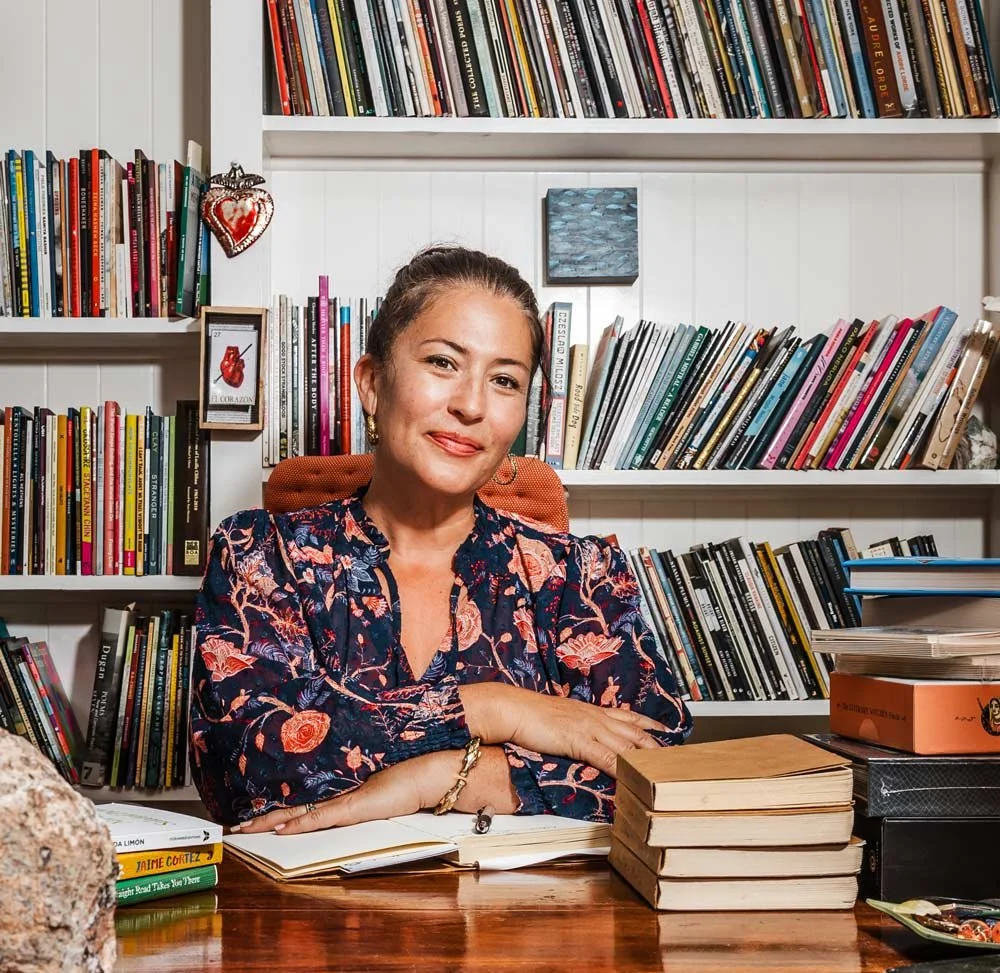
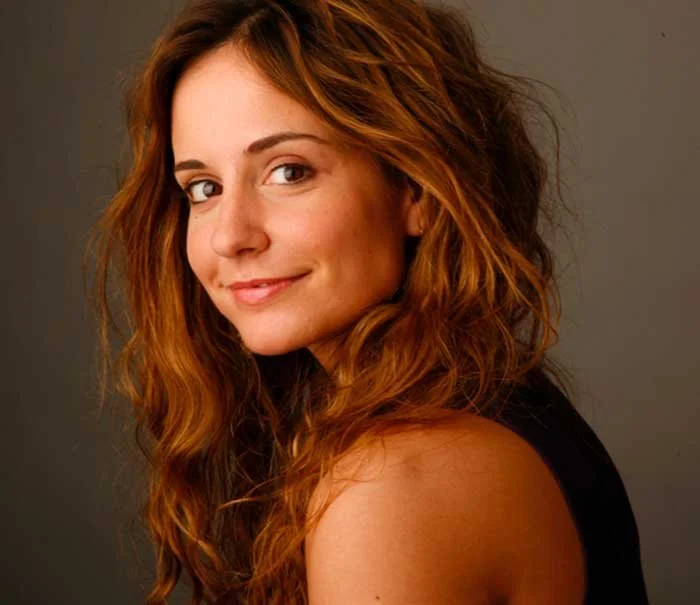
In this episode of the Speaking Out of Place podcast, Professor David Palumbo-Liu talks with poet Maya Salameh about her poetry collection, How to Make an Algorithm in the Microwave, which won the prestigious Etel Adnan Poetry Prize in 2022. The judges remarked, “Maya Salameh’s poetry stood out for its inventiveness in cracking the code of life ‘between system and culture'…The turns and swerves the poems make are astonishing; the expectations they upend are remarkable… It’s a testament to the aesthetic boundaries and intellectual revolt poets of Arab heritage are pushing, breaking, and reinventing.” We talk about what led her to both technology and poetry, language and story-telling, and the challenges and joys of representing life in the diaspora. In a time of war and genocide, Salameh’s poetry shows how patterns of life and reproduction and desire persist. In her readings and discussions of three poems, we find a new lexicon and a new grammar.
Maya Salameh is the author of MERMAID THEORY (Haymarket Books, 2026), HOW TO MAKE AN ALGORITHM IN THE MICROWAVE (University of Arkansas Press, 2022), winner of the Etel Adnan Poetry Prize, and the chapbook rooh (Paper Nautilus Press, 2020). She has received fellowships from the National Endowment for the Arts, Sewanee Writers’ Conference, Bread Loaf Environmental Writers’ Conference, and the President’s Committee for the Arts and Humanities, and served as a National Student Poet, America’s highest honor for youth poets. Her work has appeared in The Offing, Poetry, Gulf Coast, The Rumpus, AGNI, Mizna, and the LA Times, among others. @mayaslmh
DAVID PALUMBO-LIU
Thank you again for being on the show. It's so wonderful to have you on. I was struck by the title of your collection and, of course, this prestigious prize that it won. I watched one of your YouTube interviews when you were asked about how you got an interest in technology, and you gave a really interesting response about surveillance.
Could you talk a little bit about this? So, I’m an American. I grew up in San Diego, which is home to a very significant Navy base, and I was born the year before 9/11. I think growing up, I carried this feeling of being watched, whether it was warranted or not; the verdict remains. I know that we grew up hearing clicks on our home phone when we called back home to Syria and Lebanon.
MAYA SALAMEH
I know that my mother was oftentimes pulled over in those years for not very good reasons. Growing up as an Arab person in America during that time, and increasingly in this time now, I would argue actually that the last three years have been even worse in terms of Islamophobia and anti-Arab racism than they were in the years post-9/11.
Especially now, because our technological advancements have created the ability for the government to invade our privacy in new and unprecedented ways. Then I went to Stanford, which is the house of Silicon Valley and the hub of technological innovation, so to speak. My best friend was a computer science major, and a lot of the people that I interacted with were computer science majors.
I was a psychology major, and then I took the easiest CS class you could take at Stanford. It was like CS 106, which is like 101, and then there was 105, so I took 105. Technically, I still don't really understand much of the way computers work, but I was lucky enough to learn about the language and structure of computing.
It made me curious as I was surrounded by dialogues, not only about the surveillance of Arab and Muslim communities but also about technological innovation and progress, and what those conversations meant for an Arab person in an increasingly stalked and surveilled state. I think all of those experiences coalesced into my curiosity and mild obsession with the language of computers and the desire to surveil the computer back or to get into the innards of technological devices, which I think we often see as impersonal.
PALUMBO-LIU
I never knew the etymology of the word algorithm. Could you share that with us? It's a fascinating story.
SALAMEH
I have the book in front of me here because I remember that this was something I actually came across after the book was pretty much mostly done.
PALUMBO-LIU
I thought it might have been at the beginning, but no, this is interesting.
SALAMEH
And I was like, how perfect. So, algorithm derives from the Latin "algoritmi," which is a transliteration of the Arabic name Al-Khwarizmi, who was a mathematician who introduced algebra to Europe.
I love etymology. I was a huge spelling bee etymology nerd in middle school and continue to be one. But I just thought how fitting that there is an Arabic root for the word algorithm.
PALUMBO-LIU
Yeah, it's beautiful. So now we know about technology, Stanford, algorithm, and language. So let's make the move from that into poetry. How did you get into poetry?
SALAMEH
I was very lucky. My father was a poet, and he always encouraged my curiosity about poetry and writing. I was fortunate that he gave me a copy of The Prophet, which was probably one of the first poetry books I ever read. When I finished that, I thought, "This is amazing. I need more."
So, at around 11 or 12 years old, I started exploring Arab poets because the canon that we were mildly exposed to in public school English class was maybe some Shakespeare, et cetera. Those things never lit my fire or made me curious, but Khalil Gibran's work and words were so evocative. I still remember he had some line about "your children are arrows; you pair them, and then you release them."
So much of his work was so spiritual and philosophical, and it also helped set up a framework for the type of poet that I wanted to be. I knew immediately that I had developed a hunger and an obsession. I always use the word obsession because my friend told me I'm like a very neurotic person, and she said, "You have an obsession that is only born of real love," and it's true.
Poetry is like one of the great loves of my life, and I think it's probably the longest relationship I'll ever have. I read a lot of poetry. I also wrote these short stories even when I was pretty young, like in second grade, and the stories kept getting shorter and shorter. My family used to go to Damascus in Syria and Lebanon every summer for three months until 2011, when the Civil War broke out in Syria.
In 2015, we made our first return after that gap, and my father and I went to Lebanon for two weeks. Being back in one of my two homelands as a more fully formed person and not like a young child, I thought, "Wow, this is the first time I've been in an Arabic-speaking Arab place as a teenager."
It's the first time I felt that I belong. To the extent that was true or not, I'm obviously irrevocably American. I speak broken Arabic. I don't think I could ever live in Lebanon or Syria. I think that's another really important position that I try to center in my work—without romanticizing the homeland and without not acknowledging the own privileges of my blue passport.
But for what it was worth at 15 years old, it was a life-changing trip. I wrote my first official poem on the plane back to San Diego from that trip, and I feel that was a formative moment for me. I felt that I had a story to tell and wanted to put it to paper in the form of poetry.
*
Speaking Out of Place, which carries on the spirit of Palumbo-Liu’s book of the same title, argues against the notion that we are voiceless and powerless, and that we need politicians and pundits and experts to speak for us.
Judith Butler on Speaking Out of Place:
“In this work we see how every critical analysis of homelessness, displacement, internment, violence, and exploitation is countered by emergent and intensifying social movements that move beyond national borders to the ideal of a planetary alliance. As an activist and a scholar, Palumbo-Liu shows us what vigilance means in these times. This book takes us through the wretched landscape of our world to the ideals of social transformation, calling for a place, the planet, where collective passions can bring about a true and radical democracy.”
David Palumbo-Liu is the Louise Hewlett Nixon Professor and Professor of Comparative Literature at Stanford University. He has written widely on issues of literary criticism and theory, culture and society, race, ethnicity and indigeneity, human rights, and environmental justice. His books include The Deliverance of Others: Reading Literature in a Global Age, and Speaking Out of Place: Getting Our Political Voices Back. His writing has appeared in The Washington Post, The Guardian, The Nation, Al Jazeera, Jacobin, Truthout, and other venues.
Bluesky @palumboliu.bsky.social
Apple Podcasts · Spotify · Website · Instagram