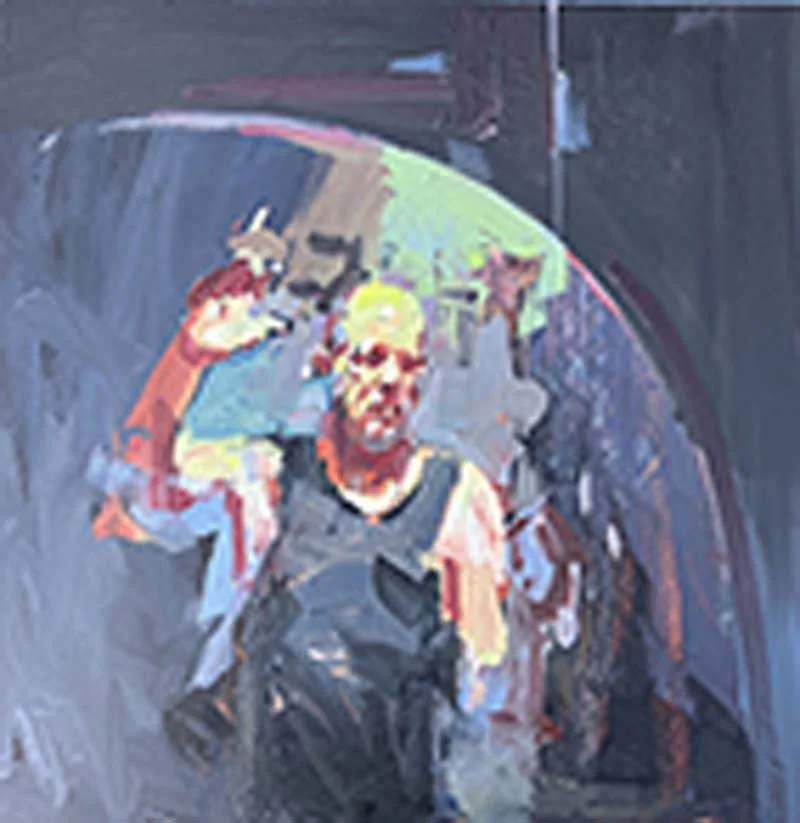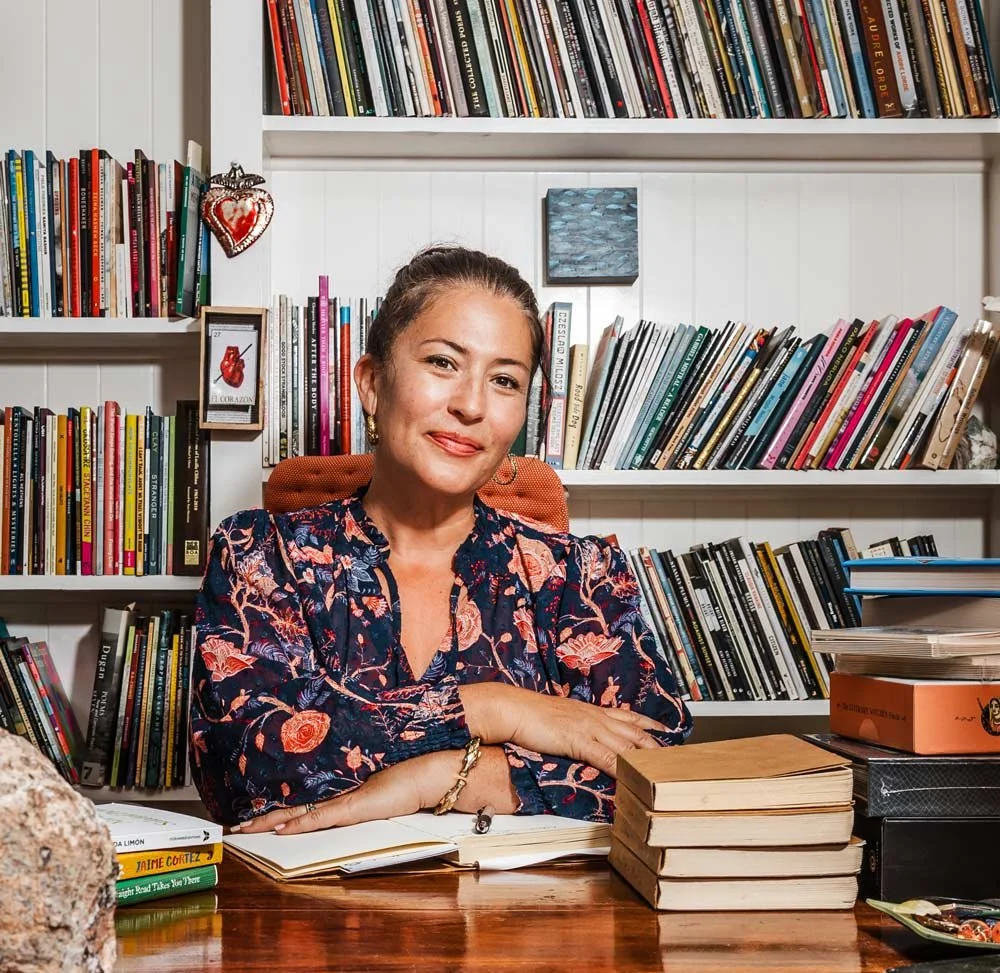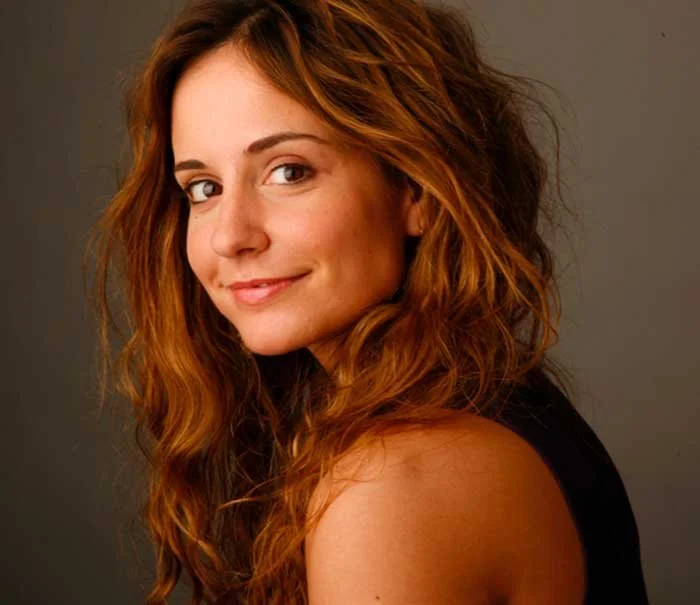


Michele Ramirez is a painter and printmaker. A granddaughter of Dust Bowl migrants to California’s Central Valley, she is influenced by rural geometry and the human factors that reshape it. With influences ranging from Richard Diebenkorn to Käthe Kollwitz, she has a longstanding interest in capturing the distinctive landscapes of California. Michele Ramirez lives and works in Oakland, California. She exhibits nationally. @mmicheleramirez
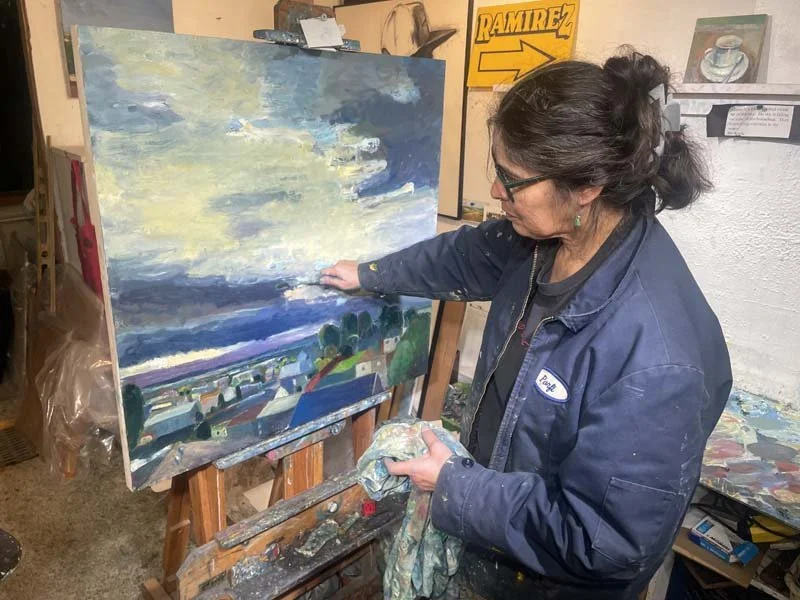
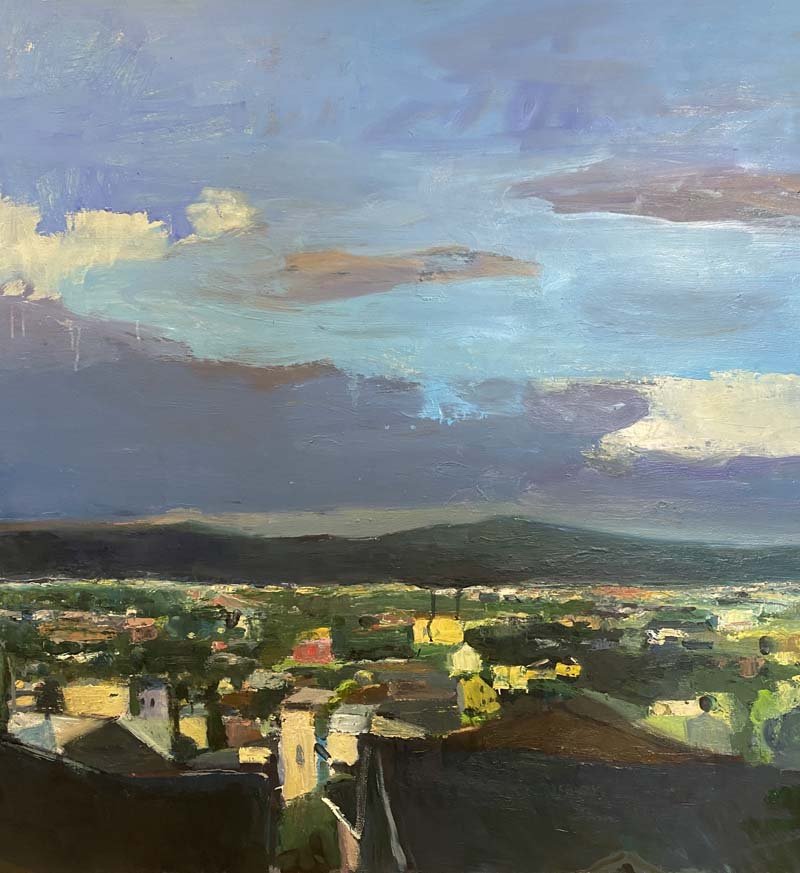
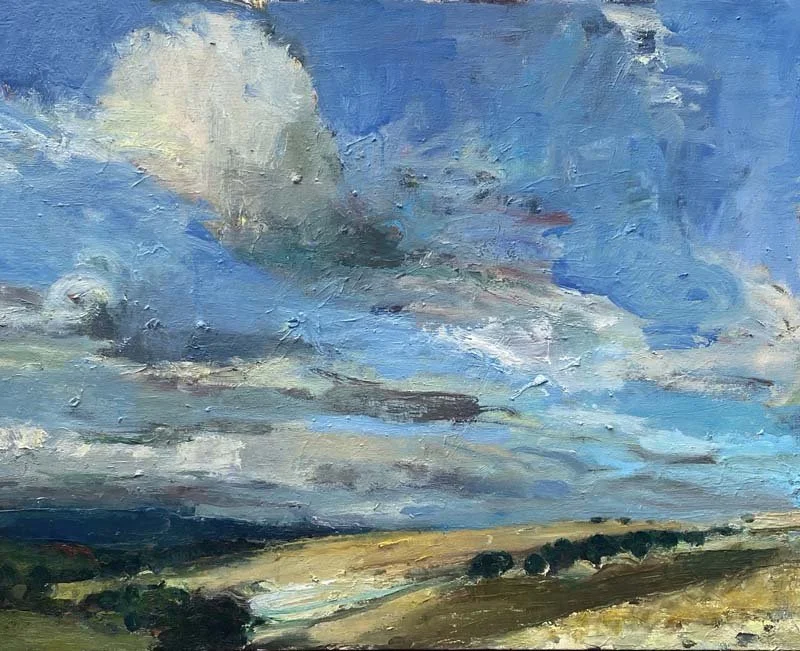
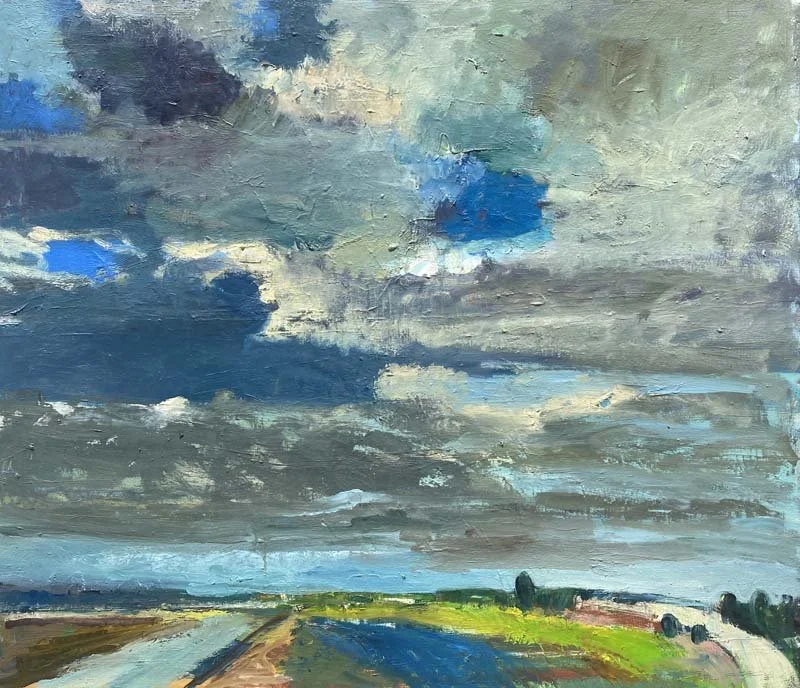
How did your formative years influence your art and your thinking about the world? I was born in a farming community surrounded by orchards and open fields. The changing seasons and skies altered the local colors, and I was always struck by how light transformed ordinary objects, how this green was different from that green, or how the shift in shadow made faraway beauty tangible.
How did you first fall in love with art and realize you wanted to be an artist? My father and grandmother were always doodling. I was fortunate that they showed interest in my drawings, and each, especially my father, would show me a quick way to sketch a face, arm, or tree if I asked. At one point, one of my uncles brought home an art history book, and my nine-year-old mind was blown. I was utterly engrossed and spent hours studying the color plates. My narrow world opened exponentially in a time before the internet.
Can you describe your studio environment and how it influences your work? I make a big pot of coffee and head downstairs to my home studio. I usually have a plan of what to work on since time is short, either complete a semi-completed painting or start a new painting. I paint in oil, so besides my painting knives, I go through stiff hog bristle brushes and constantly use them, so cleaning my favorites is an ongoing exercise. I'm always working. I need to make art every day, even if only a small drawing or watercolor.
What projects are you working on at the moment? And what themes or ideas are currently driving your work? I have a painting exhibition in August, so I'm pretty busy finishing up seven large paintings for that, but I'm a printmaker too. I'm making a ton of drawings for a book coming out next year or so. I'll turn those drawings into about 50 wood engravings, which in turn will be printed alongside the text.
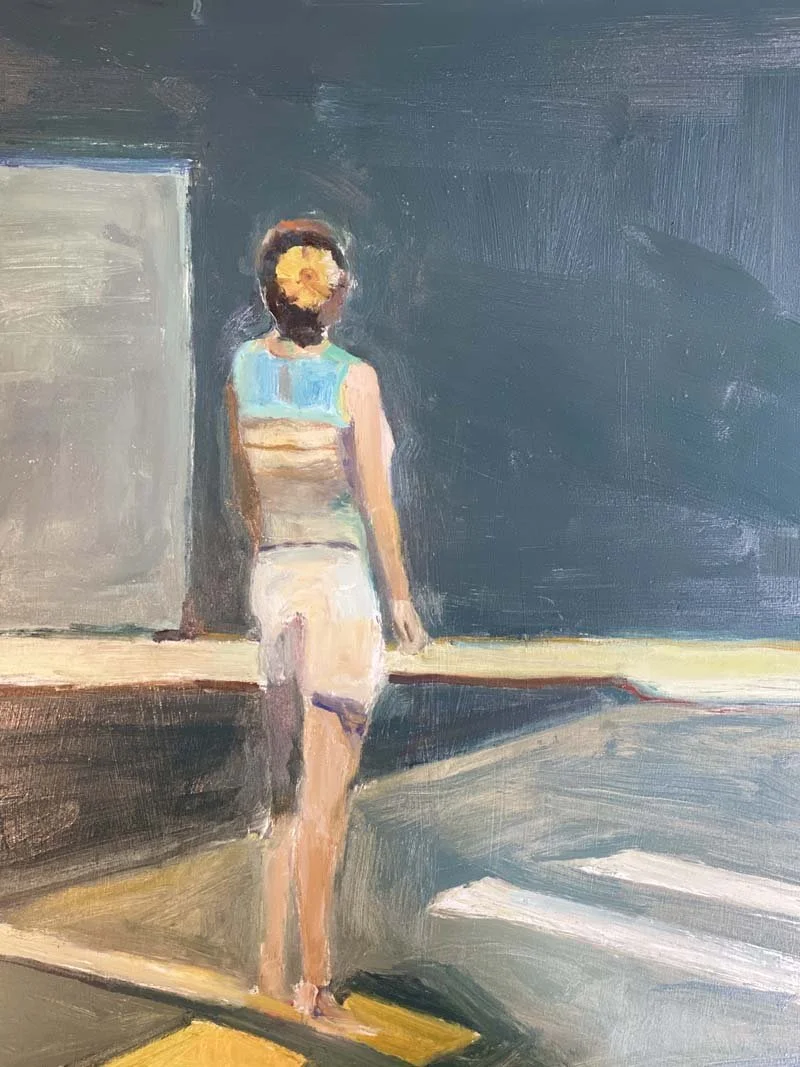
What do you hope people feel when they experience your art? My aim, whether it is a drawing, woodcut, or painting, is to share my reaction to a landscape or figure. I want them to feel what I felt when I viewed a particular vista, the light, the mood of a thing.
If you could sit down with any artist from history or today, who would it be—and what would you ask them? Oh, whoa. A tall order. I have many heroes, each of whom sparked inspiration. For painting and drawing, I would have loved to have met Richard Diebenkorn and bent his ear about his process, what mediums he used, if he used underpaintings, and most of all, how the hell did he teach himself to see so damn well? The man had an eye. For printmaking, either Käthe Kollwitz or Jorge Posada. To poke around their workshops and eyeball their tools and wood or lithostones sounds dreamy.
Do you draw inspiration from other disciplines or artistic fields? I'm drawn to live music. Nick Cave, or Pavement, the act of performance, I think, is akin to painting when it's loud and all encompassing. Opera, too, is a favorite way of reconnecting to art outside of myself and my interests. There's nothing like the human voice set to music.
How does your living environment enrich your art? Oakland, California, can be the best of this country: diverse, young and old, sketchy and urbane elements rub elbows on the daily. It has so much to offer artists in the way of community and exhibition opportunities. One only has to walk downtown to view the gorgeous murals on red brick buildings done in a variety of styles. Truly inspirational.
Can you describe a project that challenged you creatively or emotionally—and how you worked through it? When I graduated back in 1995, I was a printmaker through and through. However, after grad school, I found myself without a printing press, so I was a little out of sorts until my future sister-in-law offered me an easel in exchange for a painting she wanted to commission from me. I said, Sure, why not? So, I taught myself how to paint over 6 months. I started in oils, and the results were not great. I struggled with the medium and made many, many bad paintings on my brand-new easel, none of which survived. I'm a stubborn person, and wanting to learn, I went to museums, talked with other painters, and listened to their advice. Gradually, things improved. I'm happy to say that twenty years later, my sister-in-law still has that painting, and I quite like it.
Who are the most important mentors and supporters in your artistic life? I've had two important mentors, both of whom have passed. First was my printmaking prof at Cal State Stanislaus, Martin Camarata. He taught me the fundamentals of wood relief and consequently its subversive history—how artists like Kollwitz and Posada used it to address the disparity between the powerful and poor, the lack of humanity of the too-rich versus the real helplessness of innocents, migrants, mothers, and workers.
The other was William Collins of the University of North Carolina at Greensboro. Marty told me if I wanted to learn to draw, I'd study with Bill. I can say that Bill kicked my backside for two years. I needed his honesty, though I didn't appreciate it at the time. I was a young Mexican-American gal from the Central Valley, and this crusty WWII vet let me have it every time I produced a subpar live model drawing. He had me questioning why I was even there. It took a few years, but his lessons eventually sank in, and to this day, I can hear his cigarette-roughened voice in my head when I commit a cardinal sin of poor composition or attention to parts rather than the whole.
How does the natural beauty of California inspire your art or your process? California is one of the most beautiful places in the world. From desert to mountain, valley to sea, it stuns me with its beauty—redwoods, Joshua trees, Lake Tahoe, the Sierras, etc. At night, I feel the cool breeze that comes off the San Francisco Bay, so different from the hot, rich fragrance of the dried grasses of the Sierra foothills where I grew up, dreaming of becoming an artist. I am incredibly lucky to have been born here amid natural beauty. I will never run out of inspiration.
What are your reflections on the future of art in the age of generative AI? While I believe AI has its place, I don't see it in the arts. It lacks the artist's humanity, mistakes, brilliance, and the touch of the human hand, which move the viewer. There can be no art without an artist, and I don't think a machine-produced image has that soul.
Exploring ideas, art and the creative process connects me to… A world outside of myself.