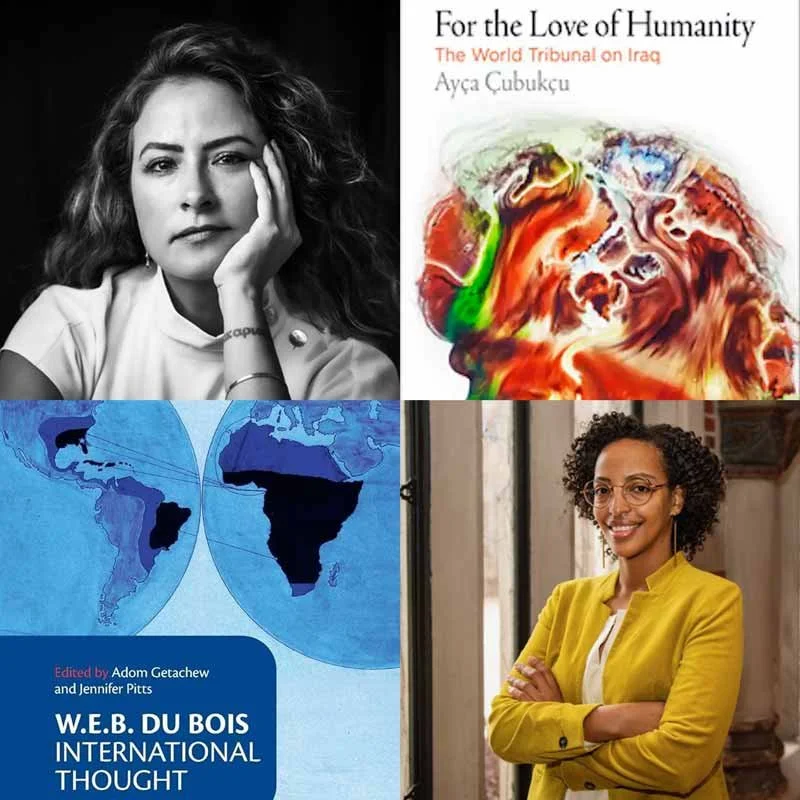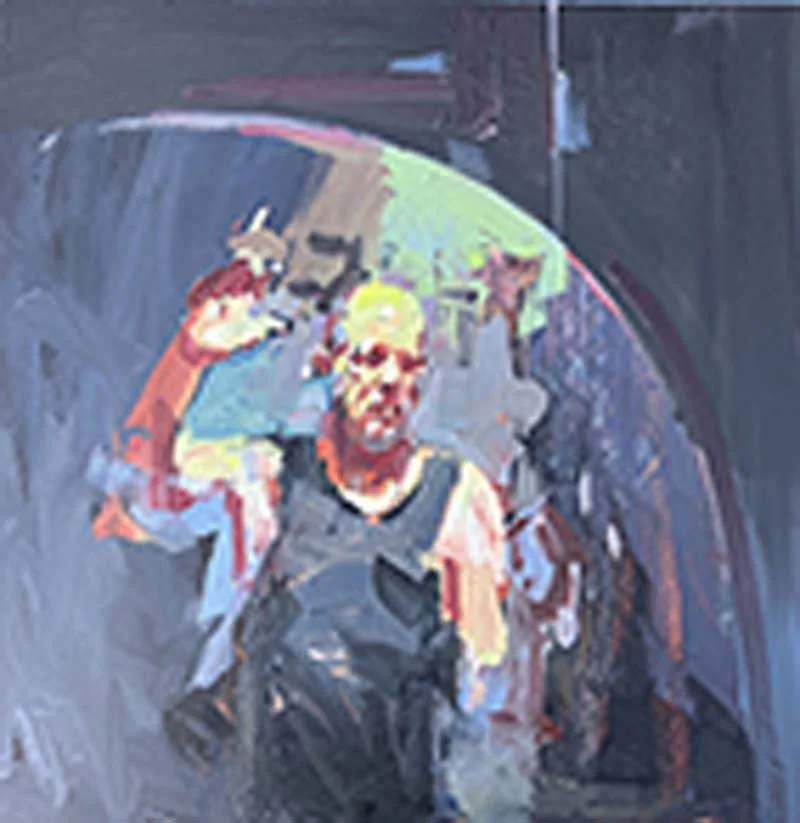


Phil Tyler trained in Fine Art at Loughborough College of Art and Design as well as Virginia Commonwealth University and completed his MA in Printmaking in Brighton in 1990, where he is currently the course leader of BA Fine Art Printmaking. His work explores the relationship between the materiality of painting and its potential to act as a cypher for grief and loss. He has exhibited in the NEAC, ING Discerning Eye, Royal Institute of Oil Painters, The Lynn Painter-Stainers prize, The Garrick Milne Prize, The Royal Overseas League, East, The National Open, and the Whitworth Young Contemporaries' competitions.
His work is in both public and private collections in this country as well as in America, Australia, Finland, Hong Kong, and Sweden, as well as Brighton Museum and Art Gallery, Peterborough Museum, University of Essex: Modern and Contemporary British Art Collection, Essex, Worthing Museum and Art Gallery, Yale Centre for British Art, and the Priseman Seabrook Collection. @philip.tyler60
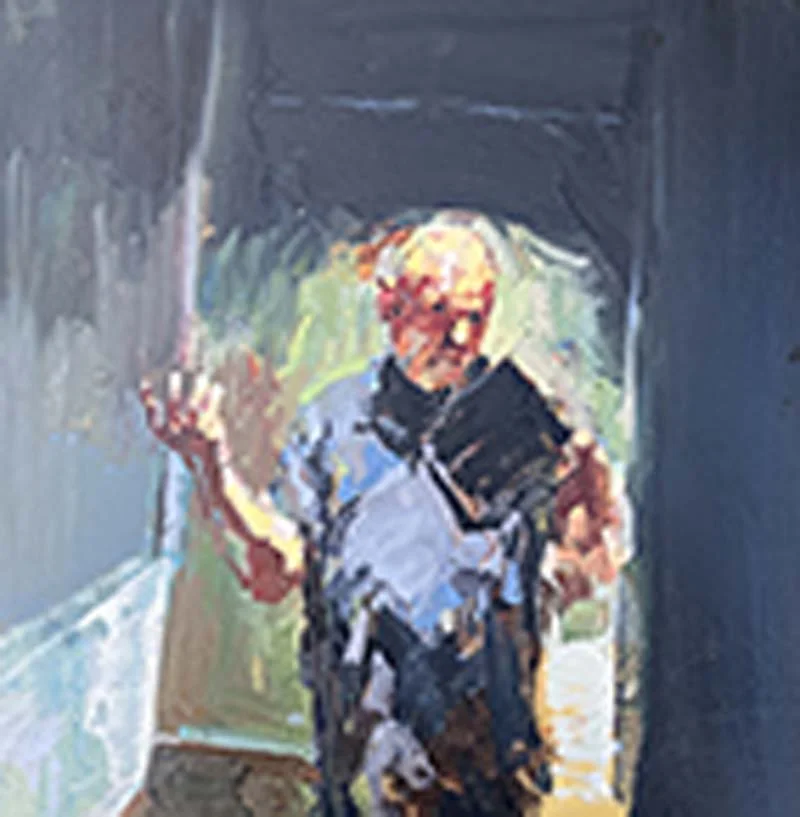
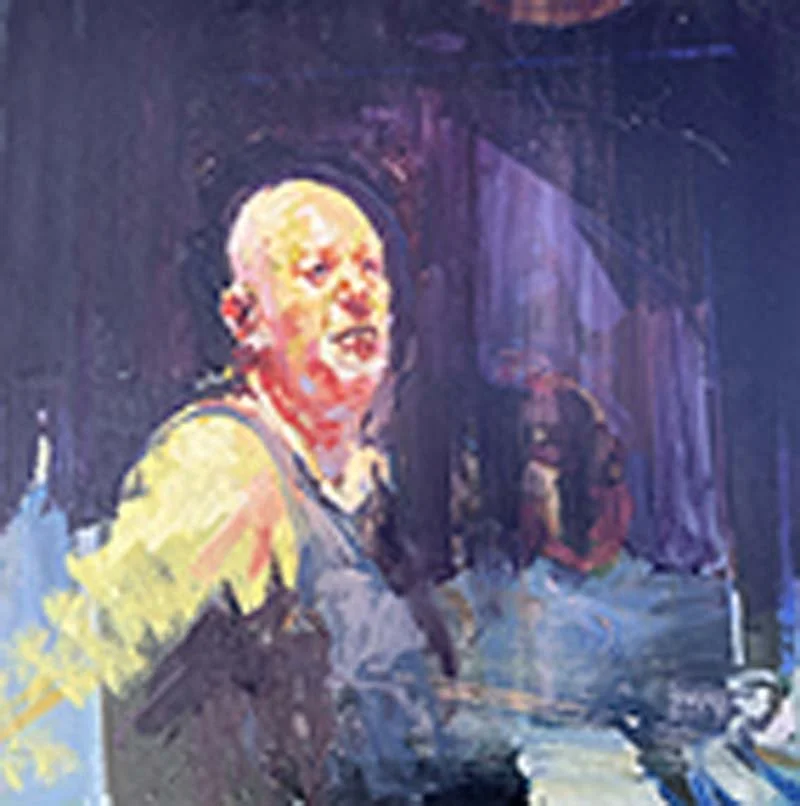
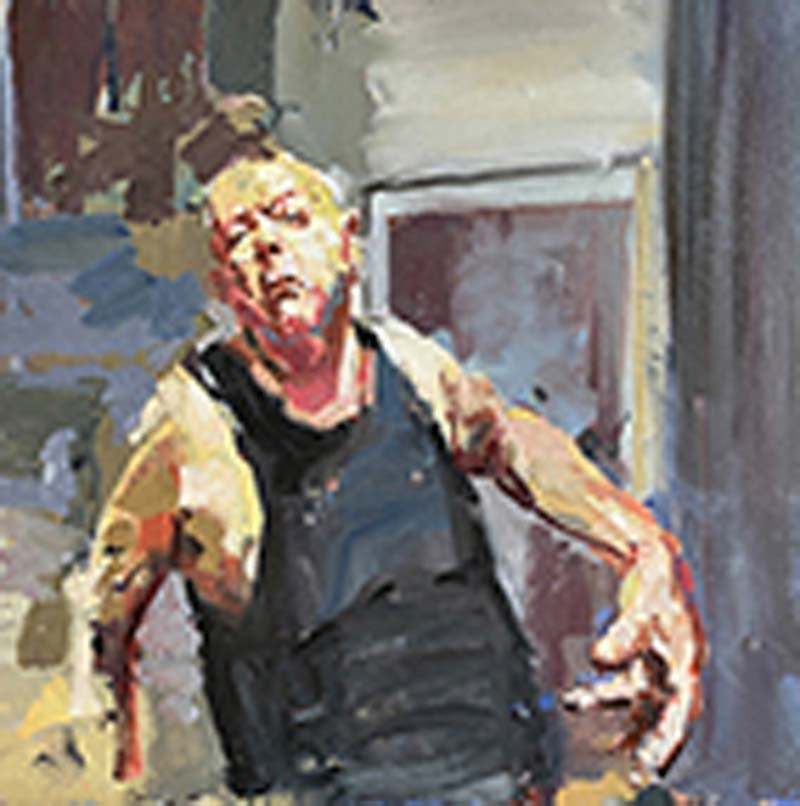
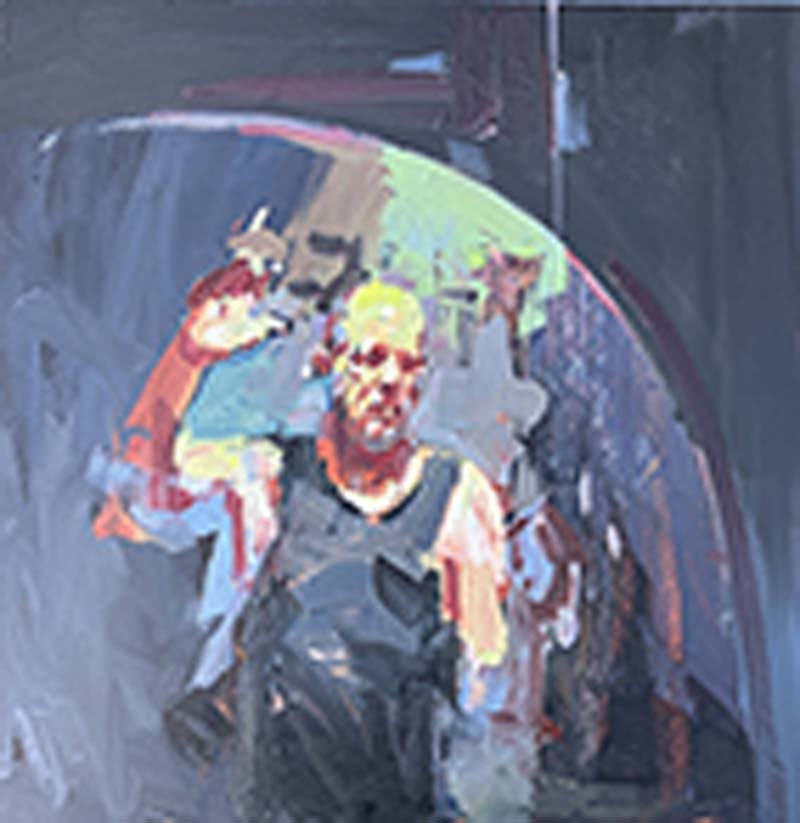
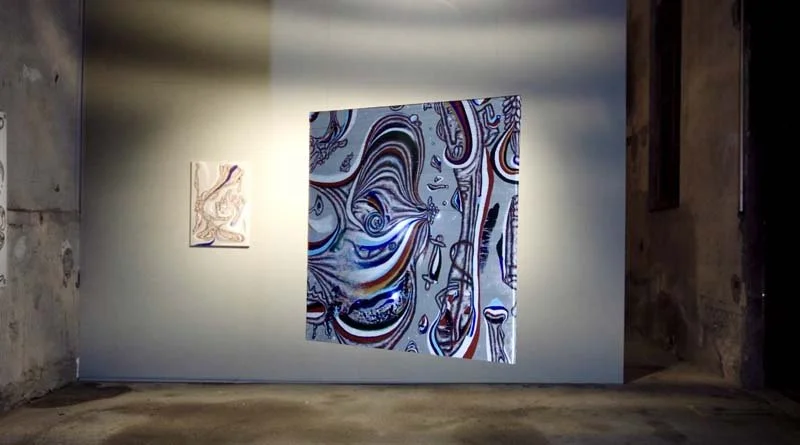
Photo credits: Edward St series. Oil on Board 40 x 40cm
What was it like to grow up in East London? How did it influence your art and your thinking about the world? It actually wasn’t until I reached the third year of my degree that I realised that the monumental, oppressive forms I was painting related to the Tower blocks I had been surrounded by.
I was the first person in my family to go to university and was certainly going against the grain of the majority of my peers’ life trajectories. I felt that art school was a privileged place to be, and I had to take it very seriously and work hard.
What became interesting in later life was that all the street names where I grew up were named after Norfolk towns, a place that would have a much bigger impact on my paintings
When did you first fall in love with art and realize you wanted to be an artist? For you, what is the importance of the arts? The idea of being an artist didn’t occur to me, and it wasn’t what people did where I grew up. I started to really get into drawing from Marvel comics, which first made an appearance in the UK when I was about 7. I could barely read at that age, but I started drawing the superheroes. By the time I went to secondary school, I fell in love with art, largely thanks to two brilliant art teachers. It was they who made me realise that this other world existed.
It’s interesting to think that during Lockdown, many people turned to art. I get enormous pleasure from looking at paintings and a huge sense of catharsis from making it. As humans, we have made art throughout our history, and it predates the written word.
What does your typical day in the studio look like? Walk us through your studio and your most used materials and tools. A typical day in the studio is not really a day, but a couple of hours. Since 1990, I’ve taught full-time, so the weekend tends to be a space to catch up with the jobs that need doing: shopping, cleaning, dog walking, et cetera. Ad Reinhardt used to say that you could not go to the studio until the wife was at work, the kids were at school, and the cooking and cleaning were done.
I get a couple of hours in the studio, so I have learned to work efficiently. My very small studio is in my house, so sometimes I get in there really early and work. It also means that I can nip in a put a layer on a painting. I’ll spend the first part of the session tidying my studio. I’m quite a messy worker, so clearing the decks gives me both physical and psychological space. Laying out my palette, selecting brushes, and deciding what I am going to work from is next. I don’t underdraw, but go straight into painting. This can be great, but it can also mean a high failure rate.
Leading up to that time in the studio will be spent thinking, making drawings, working on my iPad, and taking lots of photographs. If I’m commuting on the train, I will draw the commuters from life. If there’s rubbish on television, I’m drawing on my iPad, and many of the recent paintings draw direct inspiration from the iPad paintings that I’ve made.
Photography is usually the starting point for ideas that are taken through into painting. Sometimes one is too controlled by the content of the photograph, so the translation of the photograph into a digital painting helps me simplify the image into a much more abbreviated set of colours and marks. Working from black and white white imagery is also useful as it forces you to invent colour.
What projects are you working on at the moment? And what themes or ideas are currently driving your work? Winter paintings are usually focused on an ongoing series of self-portraits collectively titled the Edward St series—named after one elf on the University of Brighton buildings—which is somewhat like walking inside of Francis Bacon painting. This dark, claustrophobic space has been a massive inspiration.
In the summer months, I am more preoccupied with landscape, which has been a recurring subject of my work since I was very young. Most recently, I’ve been really inspired by the qualities of light during the golden hour. It’s that rich interplay between abstraction and figuration.
What do you hope people feel when they experience your art? What are you trying to express? I once said that I wanted people to have the same kind of experience in front of one of my paintings as they would listening to a piece of music by Elbow. I am much more drawn towards melancholy than I am happiness. I think we’re all sensing a time of change and foreboding; that’s part of the human condition, the realisation that we all struggle. Equally, I want people to look at my paintings and feel a sense of exaltation, the admiration of a beautiful moment, disappearing into a lack of self and finding the magic in the everyday.
The subject is all-important, and that’s what dictates the way in which an artwork is made, but ultimately can only make work for myself and cannot control what other people might think of the work.
Which artists, past or present, would you like to meet? And why? This is a bit like being asked who your favourite child is. I have always drawn inspiration from many different artists: Andrew Wyeth, Evan Uglow, Richard Diebenkorn, Jean Rustin, Nicolas de Stael, John Hoyland, etc.
Increasingly, I find myself looking at late 19th and early 20th-century figurative painters: Lovis Corinth, John Singer Sergeant, Anders Zorn, Sickert, and Sorolla.
If given the opportunity, I would have loved to watch them paint and ask them about their process.
Do you draw inspiration from music, art, or other disciplines? I’ve been a big fan of Steve Reich’s work for a very long time for its notion of repetition and iteration. I am also particularly drawn to contemporary composers like Ólafur Arnalds, Nils Frahm, and Max Richter. At the same time, I grew up in the 80s, so I do like the occasional bit of electronic music.
Can you describe a project that challenged you creatively or emotionally—and how you worked through it? Following my MA, I had a bit of a U-turn in my practice and began to destroy my very minimal abstract work. I had no ideas, so I made tiny drawings about not having ideas. Out of those scribbles, little figures, trees, clouds, and buildings emerged. That’s when I returned back to painting figuratively. Shortly after that my mum died, and I made hundreds of naked self-portraits. Periodically, my work has been a cypher for grief and loss, with each death a different motif, as each death has felt different.
Tell us about important teachers/mentors/collaborators in your life. Two of the most important art teachers in my life are Trevor Sowden and Chris Taylor. Both taught me at secondary school. Chris gave me skills during the first five years, and Trevor pushed me beyond skills and taught me to take risks in my sixth form. Both showed me a different life choice.
How does the natural environment show up in your work? The majority of my landscape work celebrates its beauty, whether an overhead cloud or the light breaking through trees, and I am in awe when I go to a high prominence and look over a vast stretch of land.
What are your reflections on AI and technology? What is the importance of human art and handmade creative works over industrialized creative practices? I suppose I am concerned about the use of A1 in student writing and in its production of digital images. Whilst plagiarism has been used for many years. A1 is siphoning the essays of academics without due care and creating fictional references to produce a superficial essay that says a lot in an articulate way, yet doesn’t really answer the question. The surfeit of digital images has been detrimental to students for a long time now and creates a false sense of register. Questions about authenticity, process, integrity, and endeavour go out the window, and students aspire to the quick-fix solution.
Yet A1 cannot replicate the physical engagement with material that comes through a physical process. I would hope that these traditional skills, like drawing, printmaking, and painting, take on a higher value.
Exploring ideas, art and the creative process connects me to… To the world and those that inhabit it.