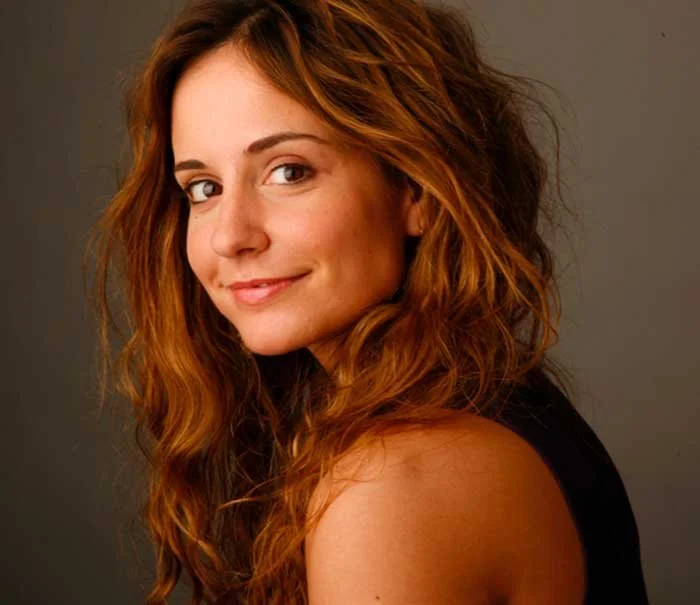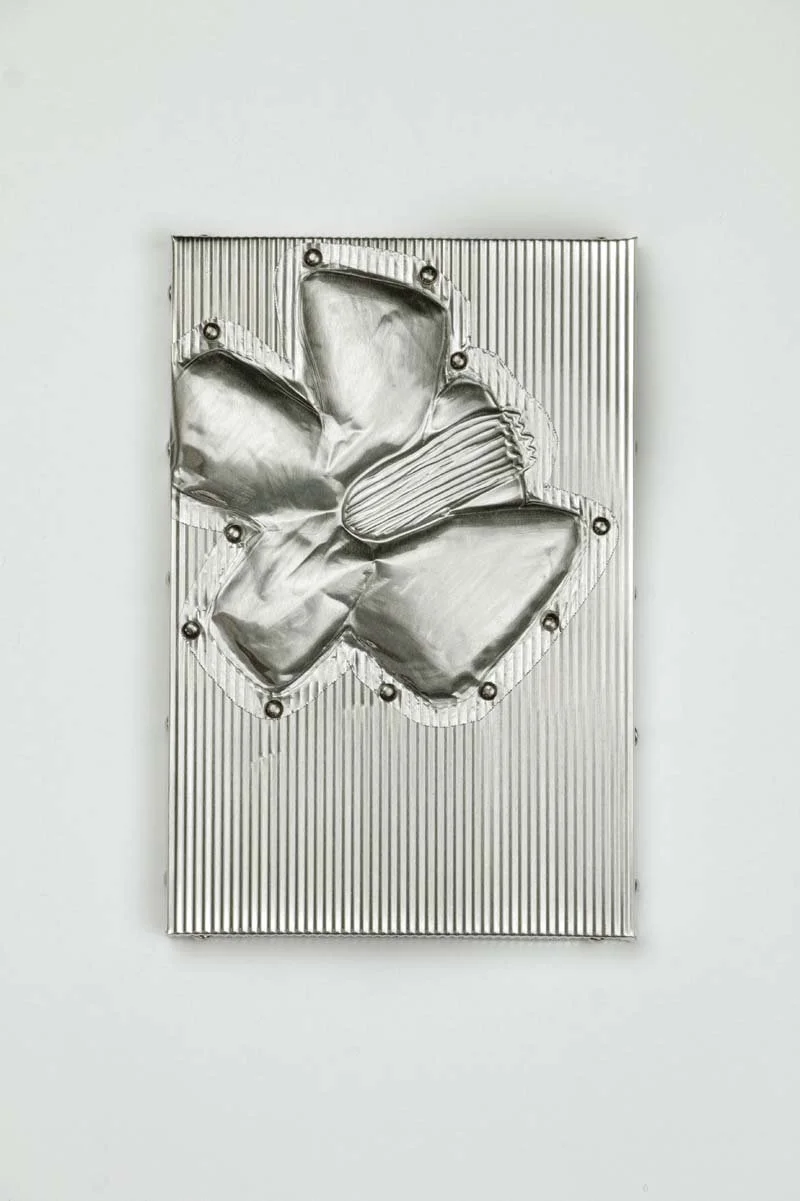


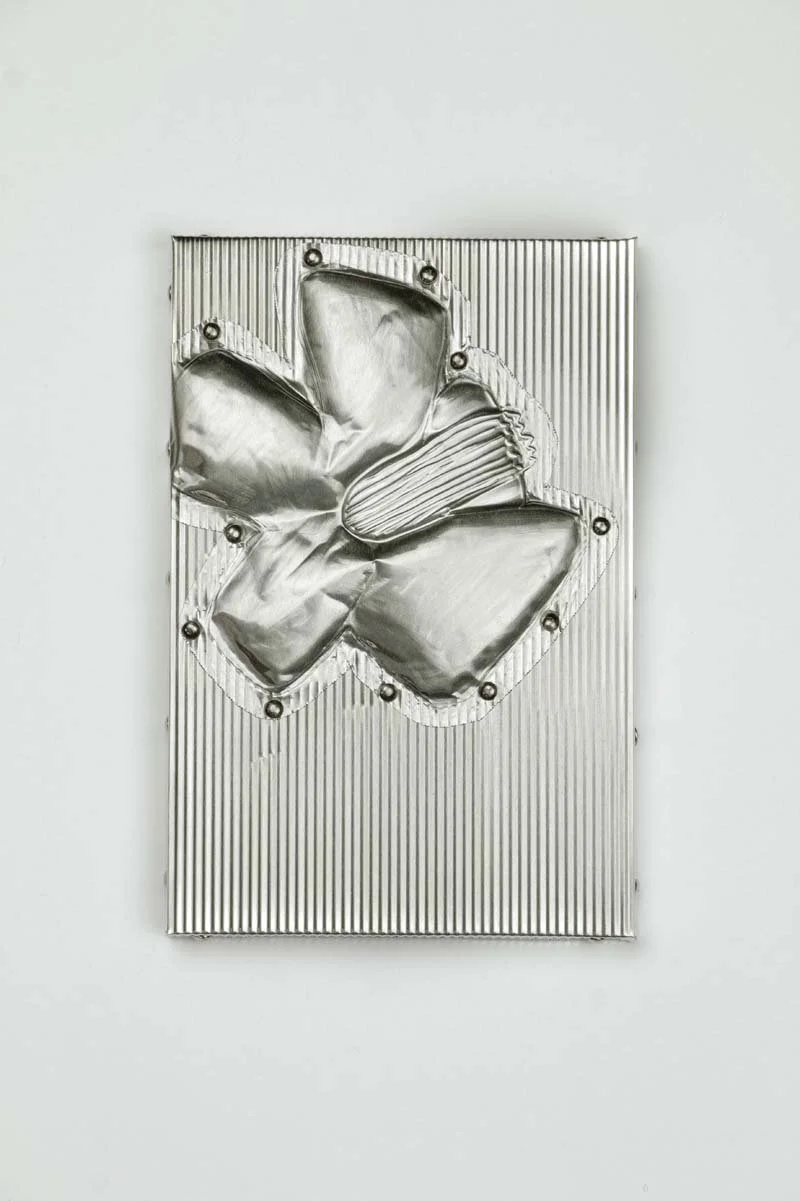
Rita Osipova is a multidisciplinary artist and curator working between Rotterdam and London. Her practice spans sculpture, installation, photography, painting, and poetry, exploring how digitalisation impacts human perception and emotion. Drawing from the philosophy of information, she merges scientific inquiry with a poetic visual language to create immersive, emotionally charged works. Osipova holds an MA in Sculpture from the Royal College of Art (2023) and a BA from Design Academy Eindhoven (2021). She exhibits internationally, with recent shows in London, Rotterdam, and Berlin. In 2023, she was awarded First Prize in Sculpture by the World Olymp’Arts Council UNESCO. @_ritaosipova_
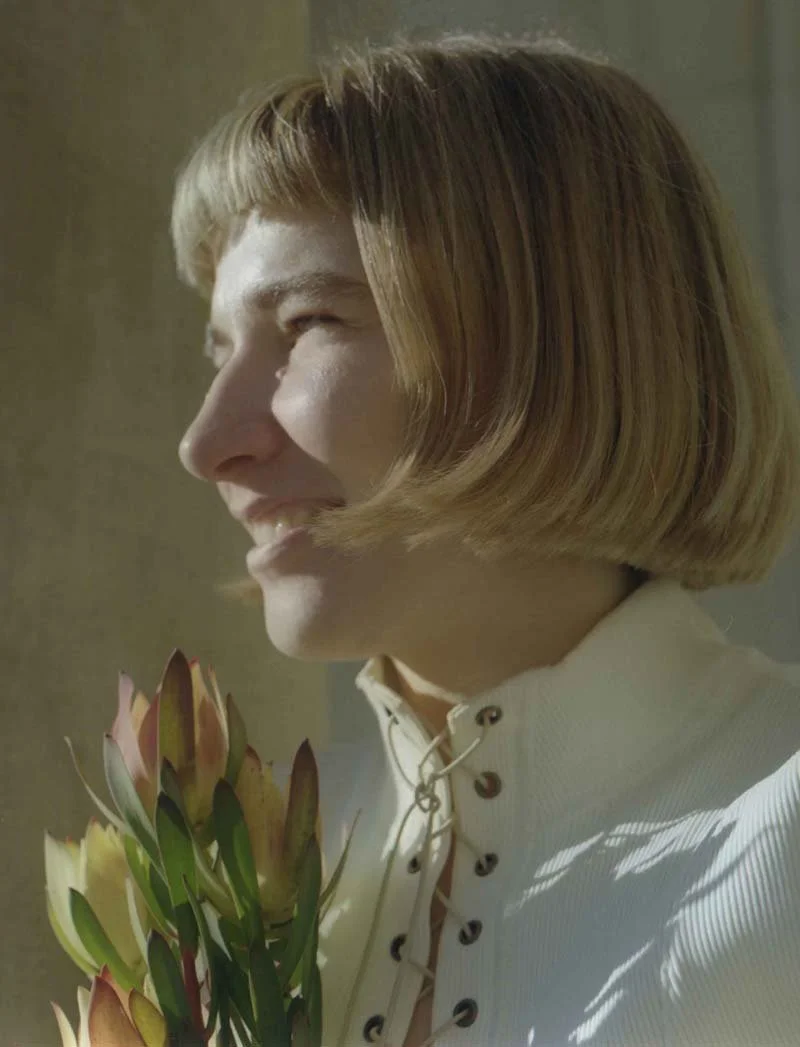

How did the environment of your upbringing influence your art and your thinking about the world? I was born in the tiny factory town of Dorogobuzh, Russia. My mother, who was born in Ukraine, was assigned there as a chemist after completing her studies. So I grew up between Russia and Ukraine, spending my best summers at my grandmother’s house in the Luhansk region with my cousins. They were like Tom Sawyer summers—making fishing rods out of bamboo, swimming in the river all day, sculpting with clay we collected ourselves, and setting off on 5 a.m. adventures that our grandmother fully encouraged.
We had no access to culture—no museums, galleries, or even a cinema—but I believe that gave me even more freedom to imagine new worlds, read science magazines, and experiment with whatever I could find. Despite a lack of finances, I was always told that I could do anything I wanted, as long as I put effort into it. I think that mindset shaped me: no matter what I want to create, I never feel restricted—my mind always says, go for it.
What sparked your initial interest in creating art, and how did that early curiosity evolve into a deeper commitment to art? I don’t think there was a specific moment when I thought, this is it. It was just always there—I was always making things. I was that annoying kid who did everything: singing, dancing, drawing, writing, taking photos. But because of my personal circumstances, I couldn’t pursue art as a career early on. It’s a very privileged profession, and I had to support my family financially.
As soon as I was able—though it happened quite late for me—I started, and I haven’t stopped since.
For me, art is a way to express what affects us internally. It’s a kind of therapy that helps us process the good and bad, the interesting and the mundane. And for those who can’t express these things themselves, art can do it for them. It makes us feel.
Are there any routines you keep in your artistic practice? What materials do you find yourself going back to? I’ve always struggled with structure. I tried to keep “classical” working hours, but recently realised I was fighting against my own rhythm—I'm a night owl. Mornings are slow and unproductive for me, so I’ve stopped forcing it. I usually spend that time reading, gathering thoughts, and slowly becoming a socially acceptable human being. When everyone else finishes work, that’s when I start creating.
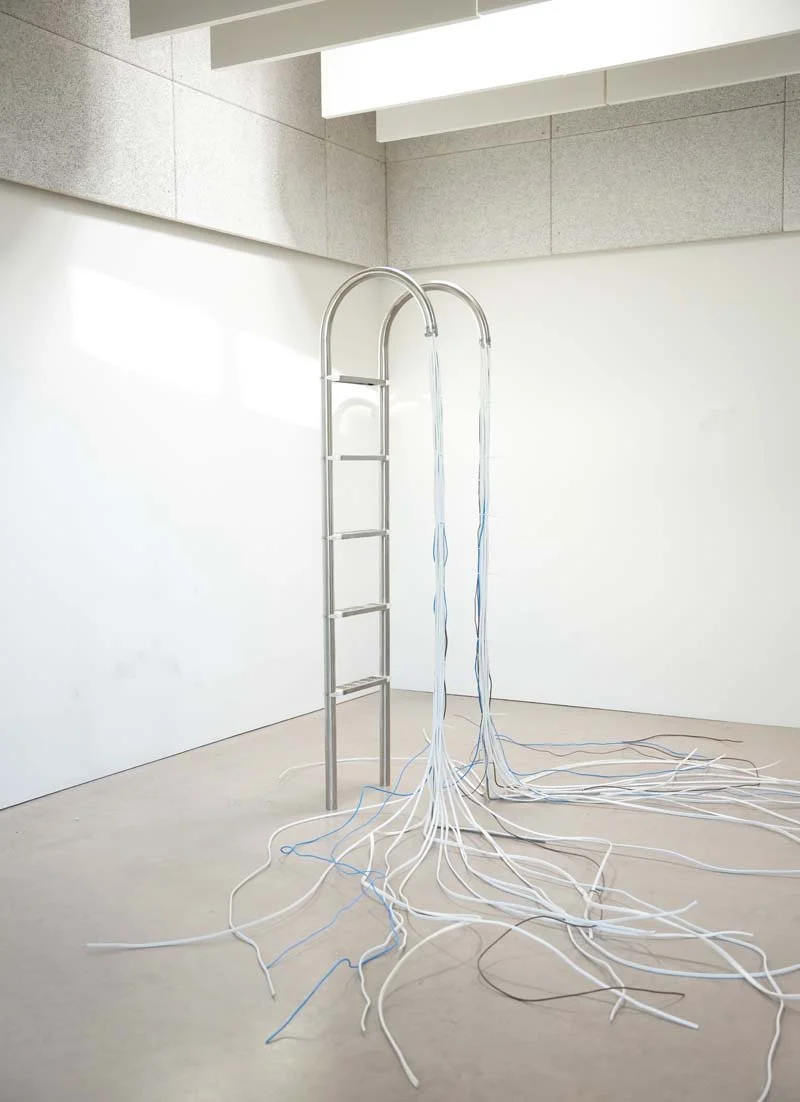
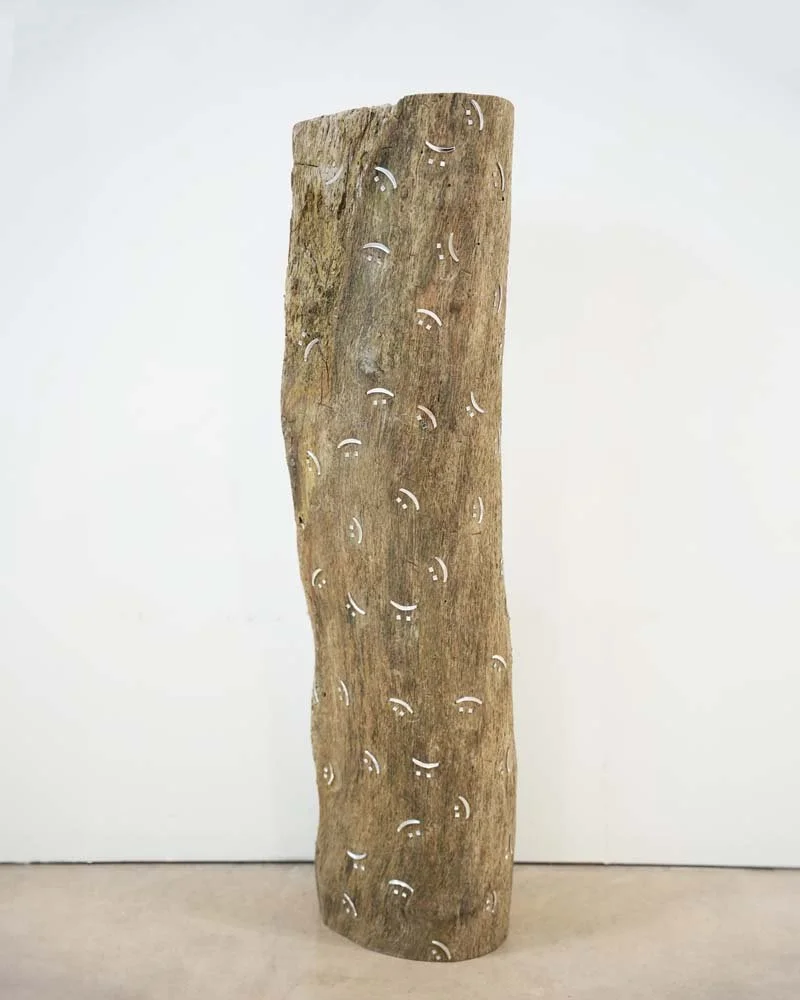
My process is very hands-on. Even sketches and drawings begin on paper. I work with a wide range of materials—whatever the idea demands. Right now, I'm focused on wire and metal constructions, exploring their structural and poetic potential.
Tell us a little about the projects you’re working on at the moment. What themes and ideas do they explore? At the moment, I’m working on a new project titled “Current”, supported by the Amarte Foundation Grant. The work is driven by my ongoing obsession with the philosophy of information (PI) and the complex role data plays in shaping human perception today.
Over the last decade, the way we consume information has shifted radically, yet our brains haven’t caught up. We now exist in algorithm-driven environments where curated content influences our beliefs and behaviours—often more than we realise. This loss of narrative control is unsettling, and it leads me to ask: can we lose control without losing our independence? My current work investigates this tension through sculptural and immersive forms.
What do you hope people feel when they experience your art? It’s hard to say what someone will feel, but I hope the work sparks an inner dialogue—whether it’s agreement, disagreement, or something in between. My goal isn’t to prove a point or offer conclusions. Instead, I aim to create a space for reflection, where a thought or feeling is triggered, and the viewer begins a conversation with themselves.
Which artists, past or present, would you like to meet? And why? Weirdly enough, I’ve never had a specific desire to meet any particular artist—past or present. I hope that doesn’t come across as arrogant; it’s not about lacking admiration. There are many artists I deeply respect and whose work I love, but I’ve never felt the urge to meet them in person. Partly, it’s because I struggle with small talk and often experience social anxiety in those situations.
If I could meet anyone, it wouldn’t be a famous artist—it would be my grandmother and my father, who have both passed away. They were the people who shaped me the most, and I would give anything for one more conversation with them. In many ways, they inspire my work more than any art-world figure ever could.
Do you draw inspiration from music, art, or other disciplines? Yes, I draw a lot of inspiration from science and philosophy. If I weren’t so free-spirited—and resistant to restrictions—I would have definitely pursued a career in one of those fields. I’m especially fascinated by Philosophy of Information (PI) and the work of Luciano Floridi. In fact, thinking about it now, maybe I should revise my earlier answer—he might actually be the one person I’d love to meet.
I also enjoy reading neuroscience papers to better understand how our brains work. This crossover between disciplines helps me explore how perception, emotion, and cognition are shaped—ideas that constantly feed into my art.
How does the environment you live in influence your work? It’s calm here, which allows you to really focus on your practice, but it’s also perfectly located—within just a few hours by train, I can reach all the major cities that matter to me: London, Paris, Brussels, Antwerp, Berlin. So you stay in this peaceful zone, yet you’re within fast and easy reach of multiple cultural epicenters (and most importantly, friends).
Have you had mentors or collaborators who changed your perspective or technique? I feel incredibly lucky to be surrounded by so many talented and inspiring people—it would honestly be unfair to name just one. That said, I’m currently taking part in a traineeship at the curatorial studio Shimmer in Rotterdam, where I have the opportunity to learn from Eloise Sweetman, a curator and brilliant writer, and her partner Jason Hendrik Hansma, an artist and curator. Their approach to curating, life, and philosophy is deeply thoughtful and unique. I’m genuinely thrilled to spend the next six months absorbing knowledge and perspectives from them both.
Does being in nature inspire your art or your process? Even though nature was never part of my interest in art, I love immersing myself in it. When I feel low, the best thing I can do is go somewhere into the mountains, where I can finally recalibrate my perspective. There, everything suddenly feels irrelevant, and that’s strangely liberating.
In general, when you're creatively stuck or overwhelmed, just go for a walk or a swim. It sounds simple, but it never fails.
What is it like to be an artist as AI moves into creative fields? This shift lies at the heart of my practice, and I find it quietly captivating. It feels like being mid-flight in a transformation—uncertain of the destination, unsure how it will shape us in the end. So, I fasten my seatbelt, not knowing the laws of aerodynamics, and surrender to the motion. I watch the world pass by through the window, letting the unknown unfold. And rather than being afraid, I try to embrace the change—because in the end, fear often comes from the unknown.
Exploring ideas, art and the creative process connects me to… To parts of myself I wouldn’t reach any other way—after all, artists are full of themselves, and I’m no exception.