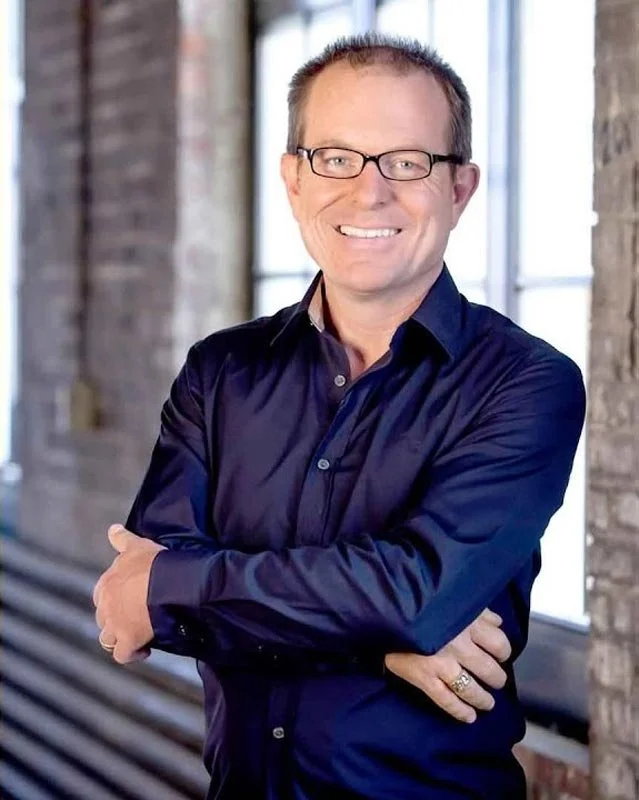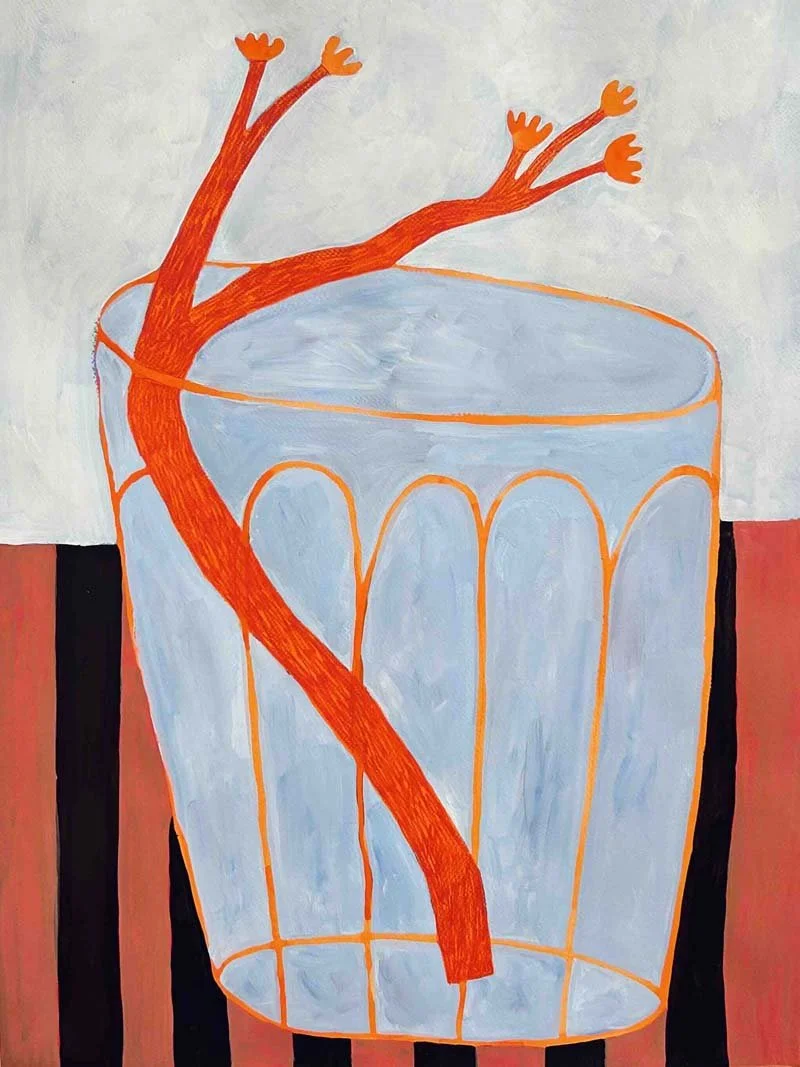


Josefin Norlin is an artist and children's book author from Gothenburg, Sweden. Her multidisciplinary practice includes painting, textile art, sculpting, illustration, and design. After attending art school in Gothenburg, she has been working in retail design and conceptual development alongside her art practice. Her art revolves around storytelling, often spanning over multiple disciplines. @josefin_norlin
Can you discuss the impact of your childhood experiences on your artwork? I was born and raised in Gothenburg, Sweden. My father was a decorator, the old-fashioned kind, who hand-painted signs, dressed windows, and created magical wonderlands at a fancier department store. My mother had a coffee shop called Fru Gredelina (Mrs Violet), where everything was painted in different purple hues. She often hosted theater groups, poetry readings, political debates, and whatnot in this lilac dream. My parents encouraged me to do what I love, and made me believe that anything is possible as long as you work really hard. For large parts of my teenage years, our home was filled with my mother's creative friends. And to be honest, I found them a bit scary and intimidating. I guess both of my parents had a thing for creating worlds and building dreams in their own distinctively different ways, something that I’m sure has impacted my life greatly. As an adult, I have learned that my childhood was a bit different, and thinking back, it feels a bit unreal. My parents have since passed, and so we never really had a chance to talk about it as adults. Everything I create, I create for and because of them.
When did you first fall in love with art and realize you wanted to be an artist? For you, what is the importance of the arts? I think it has always been clear that I would work with something creative. For as long as I can remember, I have always loved painting, drawing, collaging, writing, sculpting, and daydreaming. It was pretty much the only thing I did. I went to art school, but for the longest time I felt I was just ok at painting, ok at writing, ok at sculpting, and not exceeding at anything. My parents passed away a couple of years apart when I was in my twenties, and I pretty much gave up the thought of my ever being an artist. I decided to shift and make a career in retail as a visual merchandiser, following in my father’s footsteps. This has since led me into designing and conceptual development in retail. Eventually, as things do when they don’t quite fit, it started to create friction. I had things inside that needed to get out. I realized that I would never excel at anything as long as I didn’t keep pushing and striving. Come to think about it, it wasn’t so much a decision as just the way I am. I would describe it as a creative itch that gets worse and worse until it gets overwhelming and needs to be addressed. When it comes to the importance of the arts, for me, it equals life and being curious about the world around me.
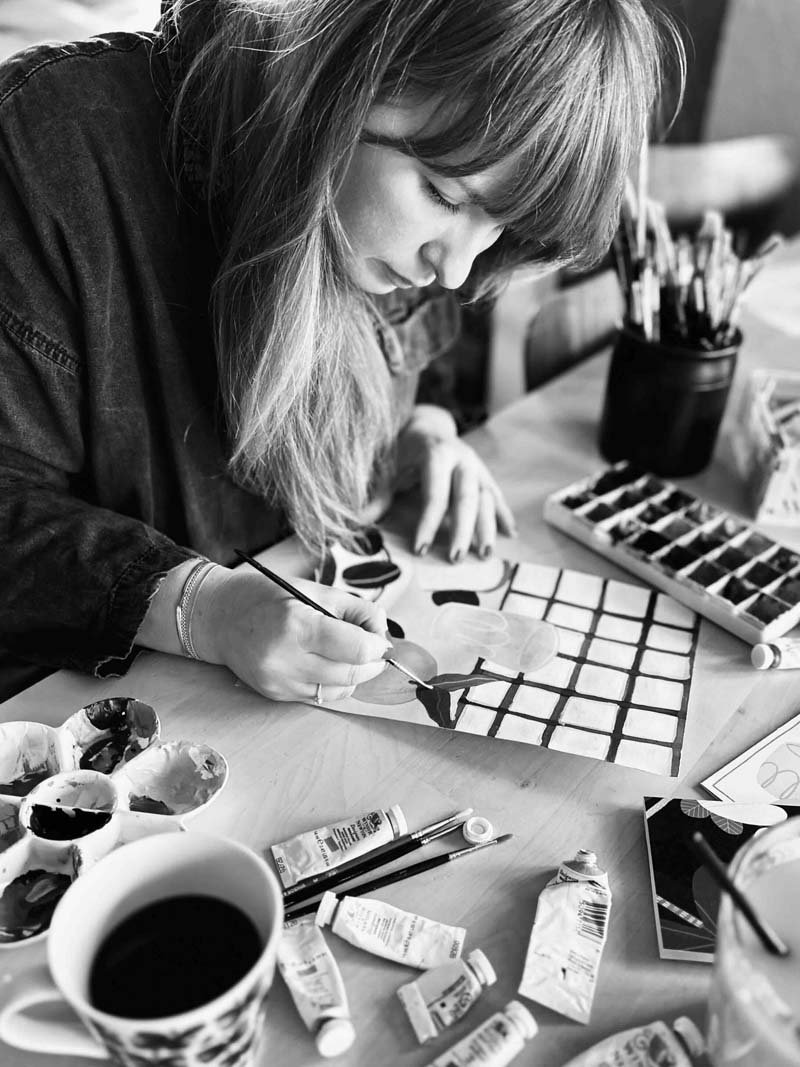
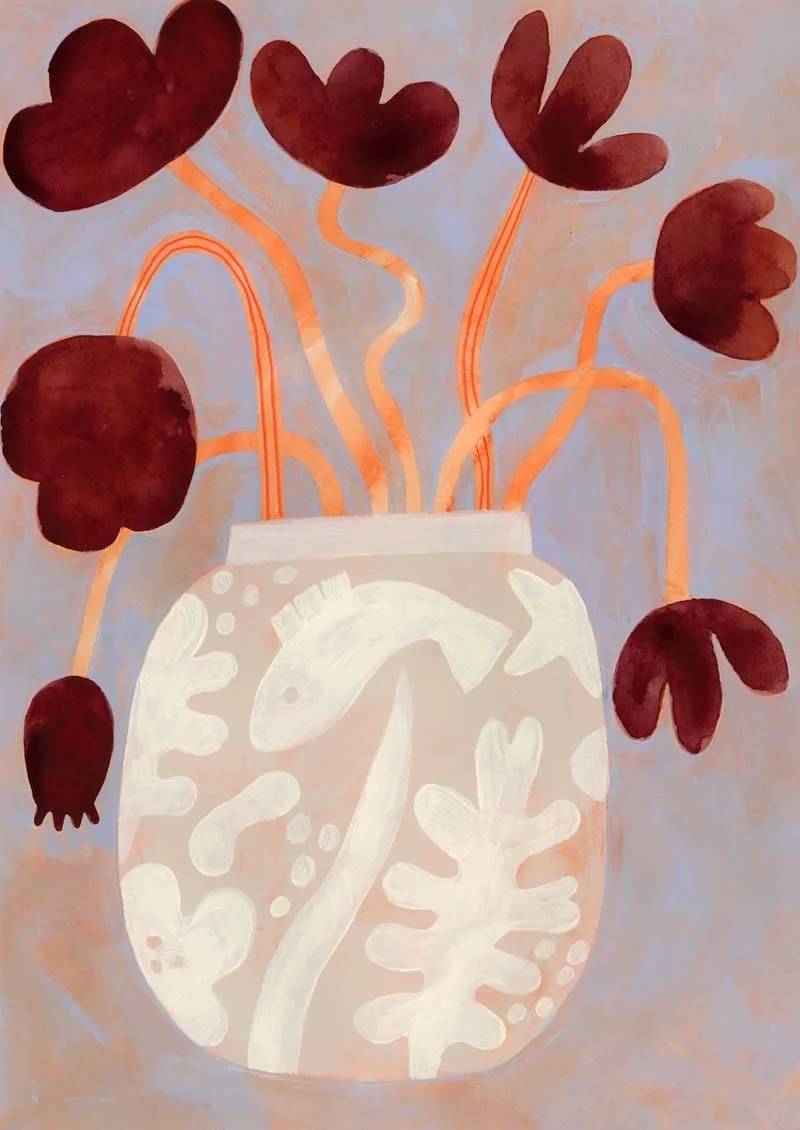
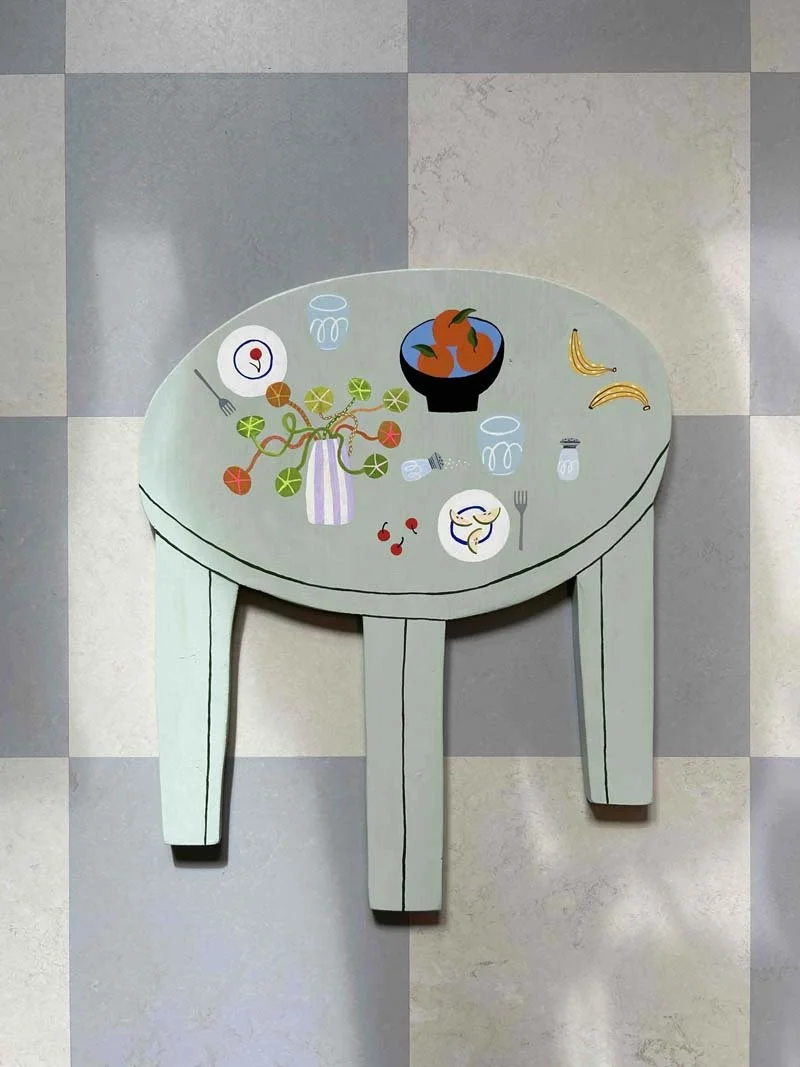
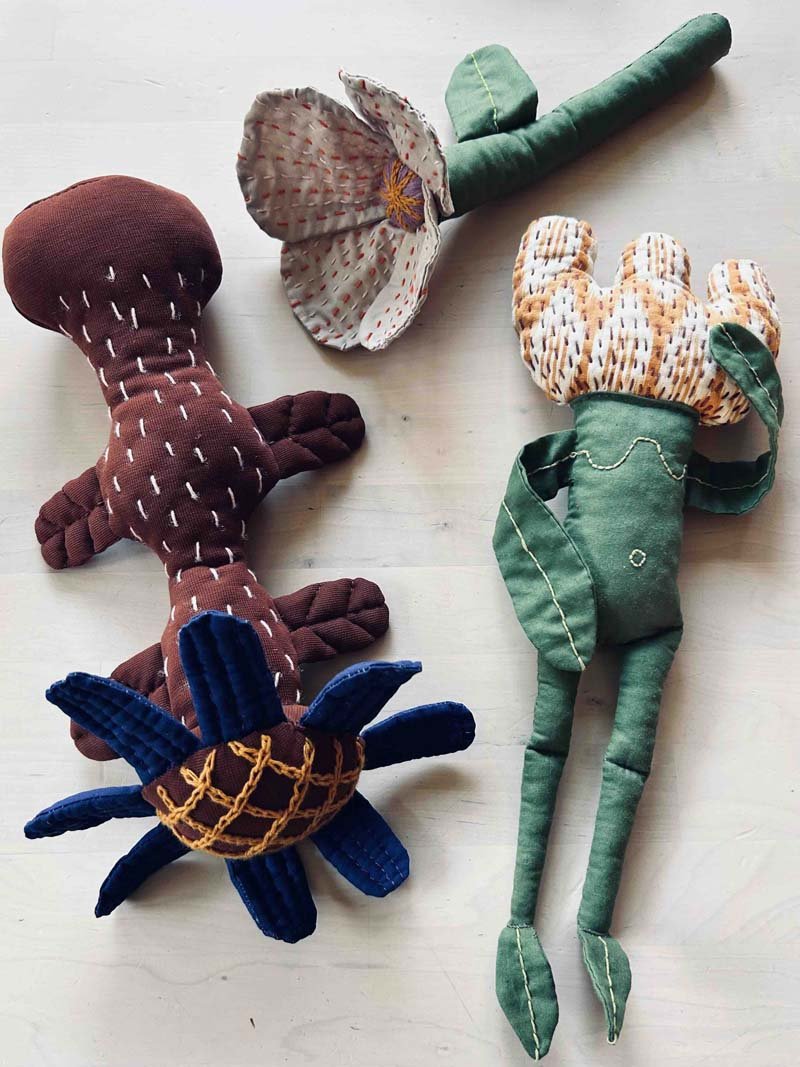
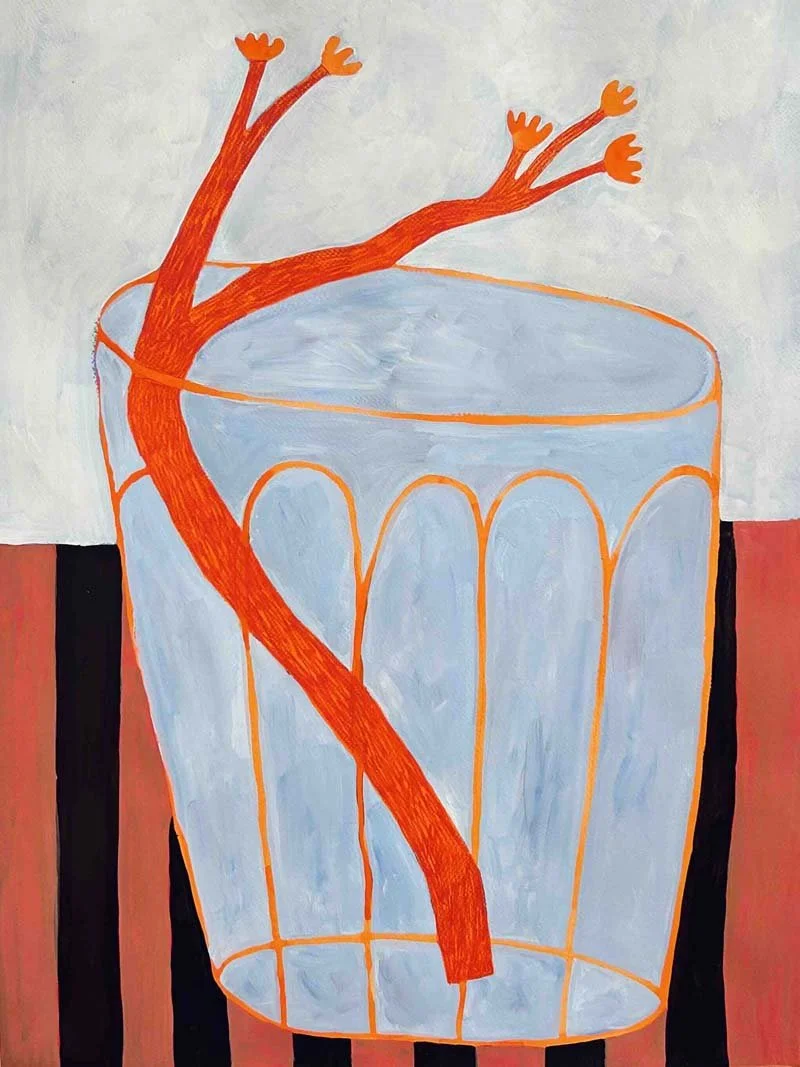
What does your typical day in the studio look like? Walk us through your studio and your most used materials and tools. My studio is currently in our dining room/living room. I work a lot on weekends and evenings as well as during the day, which means I need to be able to work where my family is. Being together is important to me. All the cupboards and drawers in the living room are full of my art supplies, and the stuff I don’t use every day, I have had to wedge down to the basement and get it when needed. I have two large drawing cabinets in the middle of the room that are filled with my paintings. I paint and sketch at the same table where we eat dinner, play games, and do homework. We call it the table of life. My kid is still at a fairly young age, and this is what works best for us. To be fair, I would probably like a similar setup anyway since I like being around the ones I love. The line between work and free time is fuzzy like a peach and probably not the most sustainable if you ask a professional, but who is asking? I’m quite disrespectful when it comes to different techniques and media. I like to mix things up, and if I feel like exploring something, I will. Regardless of whether it’s something I have previous experience in or not. It can certainly be provocative for people who have dedicated their entire professional lives to one technique or guild, but I’m far too restless and life is far too short to devote myself to one thing and one thing only. For me, it’s an endless search and a way to deepen my creativity. But if I were to name a few techniques that I return to over time, it would be textile art and painting with a mix of gouache, watercolor, and vinyl paint. And I paint almost exclusively on paper, rarely on canvas.
What projects are you at work on at the moment? And what themes or ideas are currently driving your work? Right now, I’m working on finalizing a couple of book ideas before searching for publishing houses. I am also doing the finishing touches on illustrations for a children’s book. Apart from that, I find myself at a crossroads. My struggles with health over the last year have made me question things and prioritize differently. I’m sure that will influence my work in the time to come, and I bet it will be quite the ride.
What do you hope people feel when they experience your art? What are you trying to express? Funnily enough, for me, there is somewhat of a discrepancy between making art and others interacting with it. Creating can sometimes be quite a personal and intimate experience where you allow yourself to get absorbed by the moment and your inner thoughts. It sometimes feels a bit surreal to present it to the world. People appreciating and engaging with my art is something I will never take for granted. And I am thankful for every single person taking the time to experience what I do, no matter if they like it or not. I hope my art expresses how much it means to me and how much love, time, and passion I put into it.
Which artists, past or present, would you like to meet? And why? Tough question, who could only pick one? Maybe Henri Matisse (1869-1954), I’m really inspired by his use of color, looseness, and the expressiveness in his paintings. He proposed a way of looking at the world that makes me happy and invigorated. But I’m also intrigued by Ester Henning (1887-1985), a Swedish expressionist who spent most of her life in mental institutions due to schizophrenia. She did both painting and embroidery.
Do you draw inspiration from music, art, or other disciplines? I draw inspiration from almost anything. A sun-bleached plastic bag on the street. A random person at the bus stop. In nature, one can find the most incredible patterns. In music and books. But the one thing that inspires me the most is other creatives. It’s extremely inspiring when someone is really good at something.
A great thing about living in my Gothenburg is… Gothenburg is a worker’s town with its roots in harbor industries and with a working-class history. To me, this is manifested by a simplicity and a no-nonsense attitude that I really appreciate.
Can you describe a project that challenged you creatively or emotionally—and how you worked through it? I have always worked a lot. In addition to art and my own business, I also work as a designer in retail. So the work-life balance is sometimes a real thing, and I often find myself in situations where I have too much on my plate, to no fault but my own. In periods of grief, like when I lost my parents, I had a longer period of self-doubt (and doubt in most other things, if I’m honest) that meant I barely touched a paintbrush for a couple of years. The complete absence of creative outlets for my grief and pain didn’t do me good, and I eventually had to pick up creating again.
Last year, I was diagnosed with cancer, which forced me to shift my focus yet again. The priority had to be getting better, having energy for operations, and the mental toll it took on me and my family. This spring, I was asked to illustrate a children’s book, and it was too hard for me to say no. I was clear about my not being well and that it would take me longer than usual. And even if I don’t have to hurry and I can do it in my own time, I am constantly feeling bad about not producing and getting it done fast enough. I feel bad when I take a weekend off with my family, but I really should be drawing for the project. I am now on the home stretch and only have a couple of illustrations left. It will soon be a book, and I know that my creative partner (the author) is totally fine with the delay. But oh, have I beaten myself up over this project! It’s almost always myself I have to battle.
Tell us about important teachers/mentors/collaborators in your life. I would say that my parents have been the number one driving force behind my pursuing art as a career. The storytelling aspect in both of them has inevitably led me to explore my own storytelling abilities, both as a children's book writer, illustrator, and artist. I often get tangled up in daydreaming, and my art is a continuation of that, weaving a story, building rooms and contexts around them. I foolishly think life is mine to direct however I please. In adult life, I find that voices of reason and clarity are found all around if I only care to stop and listen. My partner, friends, family, and collaborators all have their unique assets and knowledge.
Sustainability in the art world is an important issue. Can you share a memory or reflection about the beauty and wonder of the natural world? Does being in nature inspire your art or your process? Living in a world separated from nature, most likely does something to our mental and physical health. To remind myself once in a while that we are just as much animals as every other animal, I try to think about the importance of nature and our place within it. It’s really easy to get carried away with everyday life: work, school, groceries, watching series, playing games, and whatnot. You forget to go outside to connect with nature, really stop and feel the wind, the rain, and the sun. As I live in a country in the north where winters are long, cold, and dark with limited daylight, it can sometimes go weeks and months without being out in the sun (if you work in the daytime). But when the sun returns in the spring, you will most likely find Swedes with their eyes closed facing the sun whenever it reaches over the horizon. A behavior we don’t even realize about ourselves, you just do it because your body is craving the sun so badly. I get sad thinking about how we so desperately strive to get anywhere but closer to nature. And I’m just as bad.
AI is changing everything - the way we see the world, creativity, art, our ideas of beauty and the way we communicate with each other and our imaginations. What are your reflections about AI and technology? What is the importance of human art and handmade creative works over industrialized creative practices? There is a difference between creating things to please and gain acceptance, and creating to explore, learn, process, and raise awareness. In my opinion, AI is, for the most part, used to create content that ticks every box and suits the purpose perfectly. It makes it easy to generate content that is based on billions of inputs. Theoretically, that’s not a bad thing; nature has been doing it for the longest of times. But in nature, ever so often, something or someone slips through the net and gets to influence with their uniqueness. It creates new paths and new findings. And that is what’s lacking with AI: it’s too much of everything at once that it gets boring, flat, and uninteresting. If we are presented with the opportunity to create flawless images that suit the situation perfectly, I bet we will get bored by that and start craving something else. Handmade art not only serves the purpose of fulfilling the context, but also the creators’ need to process or tell a story. And that is a need, I think humans will continue to have in some shape or form. Whatever happens, I think we have to get used to AI. I’m going to keep doing what I do best and try to figure out how to navigate in an environment where I compete with everything and anything all at once.
Exploring ideas, art and the creative process connects me to… My inner fears and battles. Who knows what I will find?