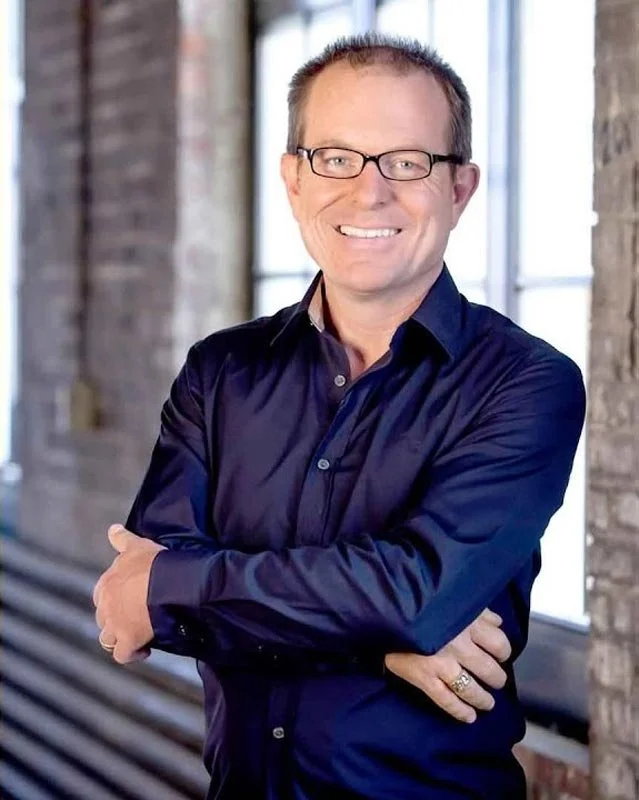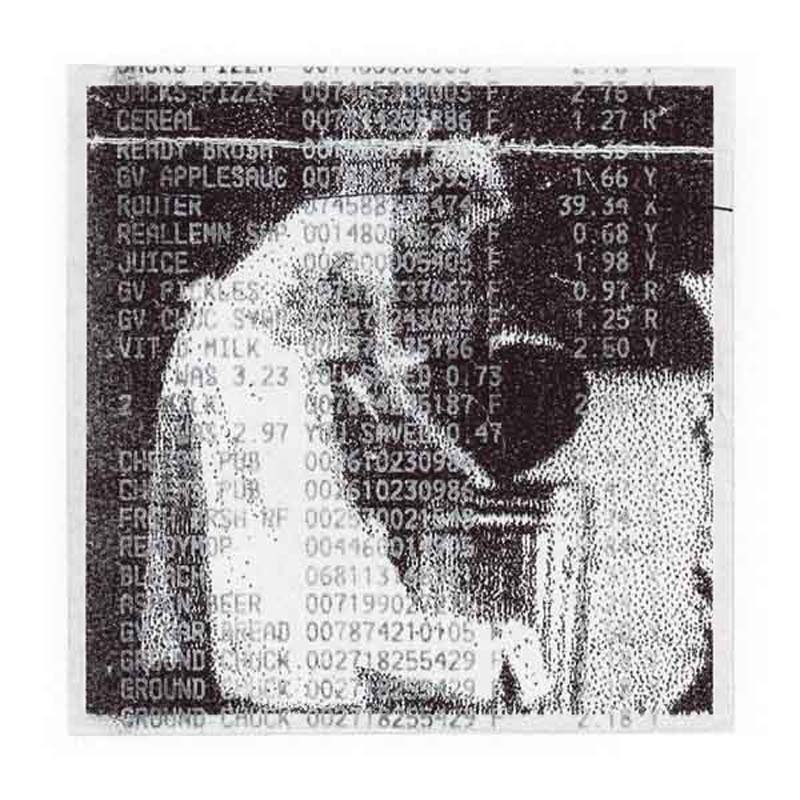


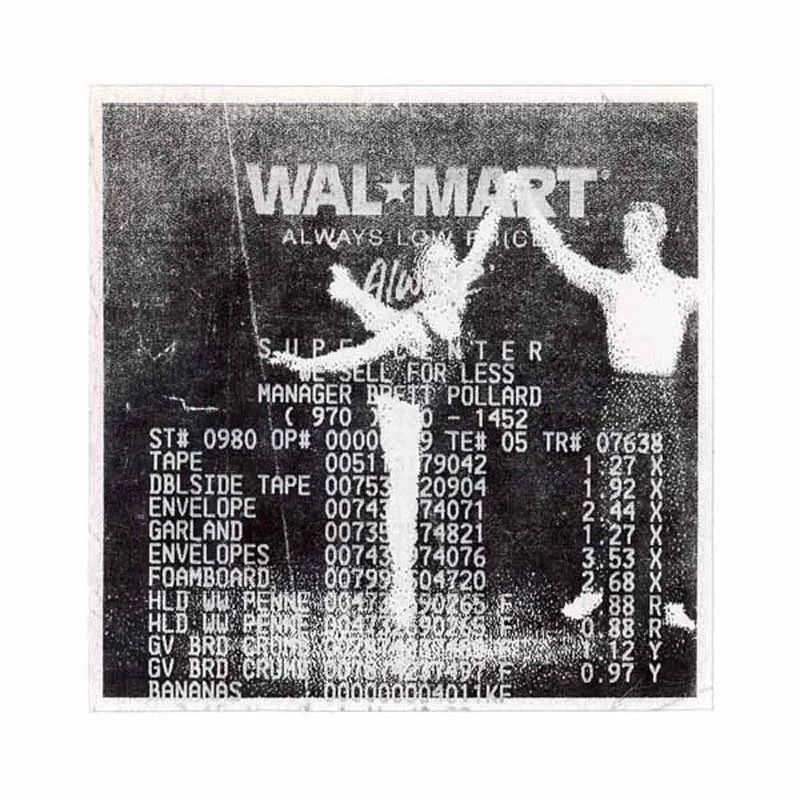
Ade Hanft is an experimental artist known for his looping animations that are printed on receipts. His Instagram account (@ade3) tends to show the meticulous process of his work. Ade uses time-lapse techniques to condense hours of work down to seconds. His non-traditional methods have led him to invent thermal printmaking techniques, one-of-a-kind cameras, and novel approaches to animation.
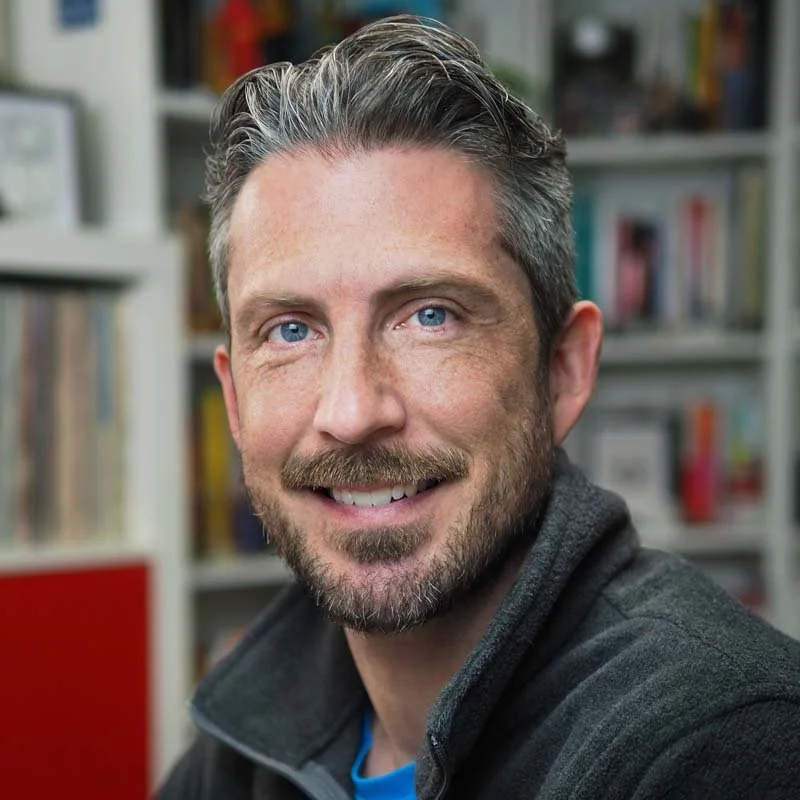
Reflecting on your childhood in Missouri, how did it mold your approach to art? I grew up in the Midwest, my childhood was in Missouri, and I went to college in Nebraska. My dad is a sculptor, and my mom was an art and music teacher. Mom homeschooled me for the first years of education, and she raised me as an artist. When I went to school for the first time with other students in 1st grade, it was a shock to realize that not everyone saw the world from an artistic perspective. It’s a realization that I don’t think I have ever really fully reconciled.
When did you first fall in love with art and realize you wanted to be an artist? For you, what is the importance of the arts? I remember being in the garage and drawing my dad’s motorcycle. It was the coolest object I knew, and I wanted to capture the awe it made me feel. That drawing won a blue ribbon at the art fair, and it made me feel special.
I was lucky to have art teachers who encouraged my development. Beyond just creative thinking, I think it’s really important for people to learn how to work with their hands. Not just art, anything where you are physically making something increases your knowledge more than anything else we can do.
What does your typical day in the studio look like? Walk us through your studio and your most used materials and tools. A typical day is a combination of making my art, documenting my production process, and experimenting. My studio is a mostly unfinished basement. I like to have several projects going on at different stages of development. My receipt animations are made on my main table in the center, but on the edges are the half-baked ideas waiting for a breakthrough to push them to completion. “Getting stuck” is really common, and having something else to switch to when a project stalls allows me to avoid momentum killers.
I’ve got several lights and tripods around for filming my work in progress. I try to make this as effortless as possible because the friction of fiddling with camera setups can kill spontaneity.
My studio also holds old TVs, video mixers, cameras, and projectors. I usually have music playing, typically on cassette tape, because that’s one of the things I collect. There’s a computer in a space under the stairs where I record audio and edit video. I also have a spot where I solder and tinker with electronics. There’s a comfy chair where I write on an iPad. And shelves of books, movies, and toys.
Making my own tools is an important part of my practice. I love to make cameras. Most recently, I modified a toy digital camera with knobs that glitch the video in beautiful ways. Previously, I made a giant camera out of thousands of coffee stirrers. There was a camera made out of a flatbed scanner, a Lego camera that used medium format film, and a Polaroid camera that I modified to print on receipt paper.
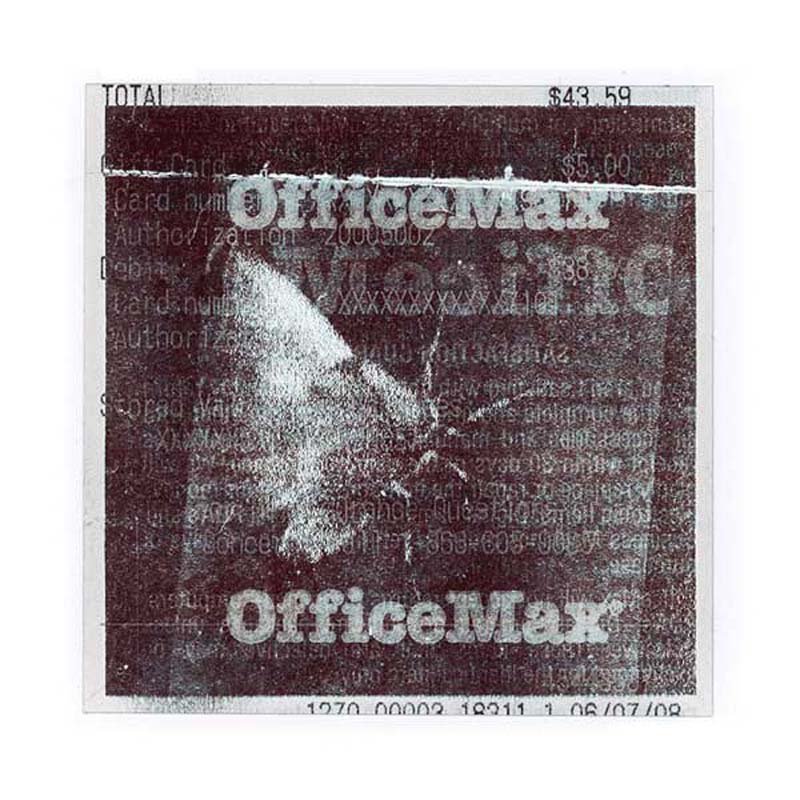
One of the materials I’ve fallen in love with is thermal paper. In addition to receipts, I have also done lots of work with shipping labels. Compared to receipt paper, shipping labels can withstand much more abuse. Plus, they have adhesive on one side, which makes them great for collage and graffiti applications.
I developed a process that allows me to create prints with shipping labels using alcohol and heat. Think of it as a heat stencil. I print with flowers, insects, and anything that I can cover with alcohol and squeeze beneath a heat press or iron. My insect experiments culminated in a project I called “Infestation” that I launched on Kickstarter. I made hundreds of prints from the bodies of cicadas, butterflies, and dragonflies. Backers received 3 prints along with a “graffiti kit” with instructions for how to spread the art in their town.
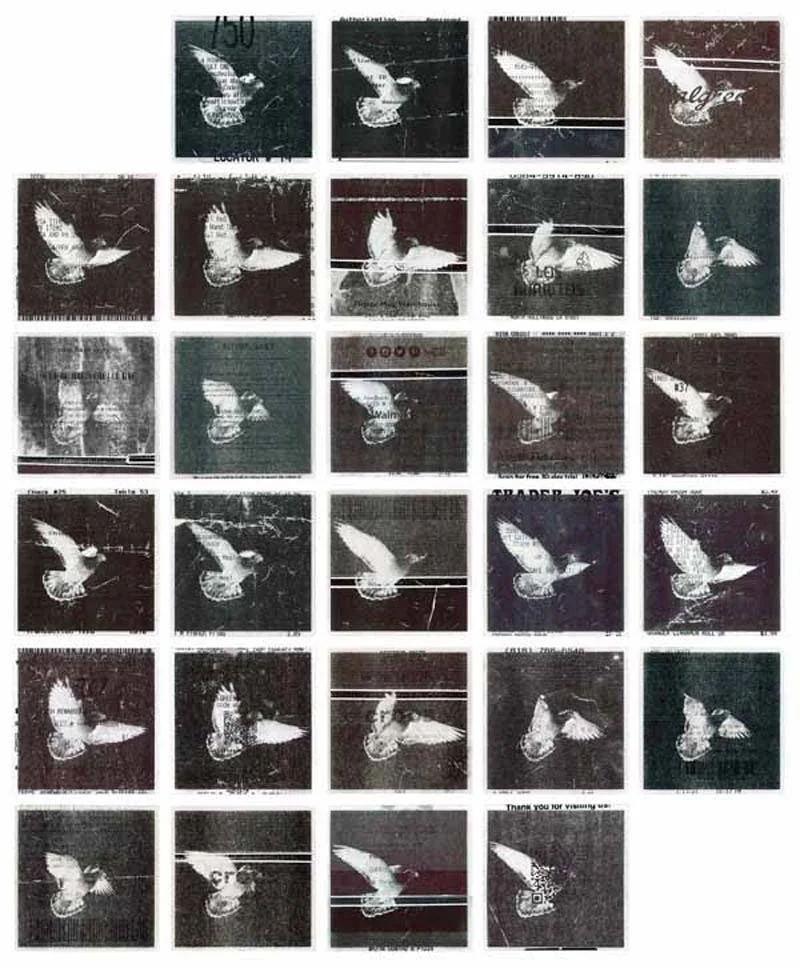
What projects are you at work on at the moment? And what themes or ideas are currently driving your work? My recent art is centered around looping videos that are composed of 12-30 images. These loops are printed individually, photographed, and then re-stitched together. Sometimes I print the images on receipts, sometimes I print them on clear stickers that I distribute around town. I’m also experimenting with 35mm slides as another way of projecting and recording my animations.
The images I use tend to be ordinary moments that gain intensity as they endlessly loop. There’s a runner who will never finish his race. That ballerina will never stop spinning. The chores will never be finished. But I also pull images from nature, whether it is the flight of birds and bugs or the opening and closing of flowers.
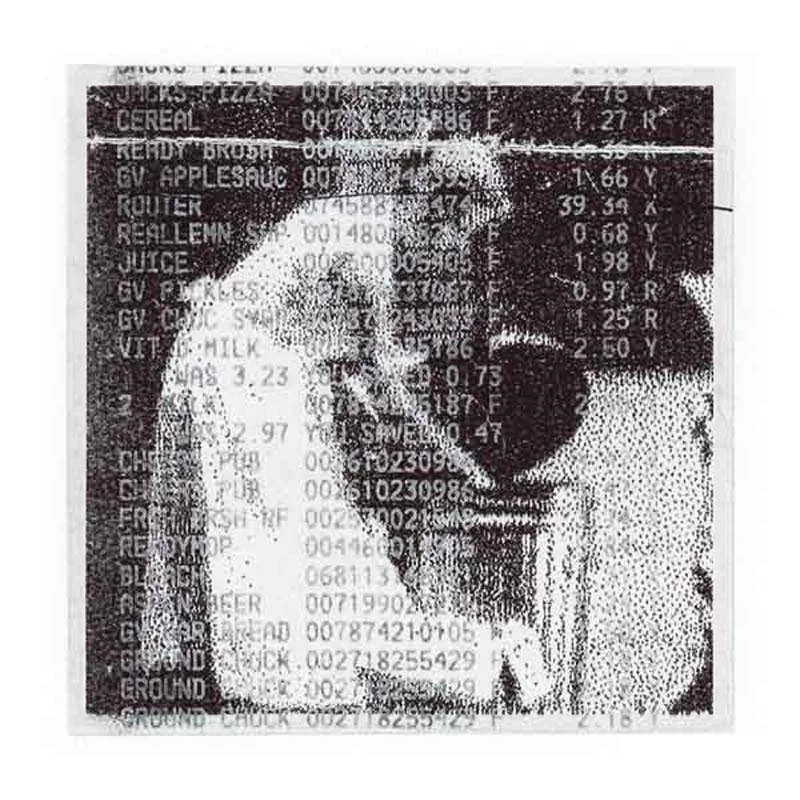
I don’t push the consumerism theme too hard, but the fact that my art is printed on receipts that record every purchase I’ve made – from fast food to deodorant – pulls my art back into the real world. Similarly, when I slap a sticker on a dumpster, it is an extension of my efforts to recognize the beauty hiding in the ordinary surroundings that we tend to ignore.
What do you hope people feel when they experience your art? What are you trying to express? There’s a moment of surprise when people see my receipt animations because it doesn’t register right away. They see the video and some grungy effect first, but when they realize it’s receipts, they get a little dopamine hit. I often show process in my videos, and that’s another reason people connect with me, because they appreciate the physical effort I’m putting in.
Which artists, past or present, would you like to meet? And why? I’d pick Andy Warhol because he was the first artist who changed my perception of what art could be. I remember seeing a Campbell’s Soup painting as a kid and being offended. Once I “got it,” it unlocked a whole new world of ideas.
Do you draw inspiration from music, art, or other disciplines? I usually have music playing in my studio. I’ve made a habit of listening to albums that I have written off or never heard of. That’s partly why I gravitate towards cassette tapes. For less than a dollar, I can pick up a tape at the thrift store and not feel guilty when it turns out bad. But occasionally you find a gem.
A great thing about living in Colorado is… I live in Loveland, Colorado, and we have good bike paths here. I can get pretty much anywhere around town by bike. This is great for exploring and finding new places to put my stickers.
Can you describe a project that challenged you creatively or emotionally—and how you worked through it? Your studio is supposed to be a safe place where you are protected from the turmoil of everyday stress. There was a time when I found myself making collages of distressed faces out of scraps from my thermal paper prints. I joked that my “inner demons” were coming out in my art, but that was more true than I wanted to admit. Rather than fight the demons, I embraced them, launching a Kickstarter campaign to share this darker-than-normal art with people. My openness about my mental health struggles connected with people, and I had deeper conversations than any other work I have done.
Tell us about important teachers/mentors/collaborators in your life. I went to college in Nebraska at Concordia University, where the art professors were deeply influenced by an artist named Reinhold Marxhausen, who started the art department. He made sound sculptures, found art, and photography that celebrated the beauty of everyday objects. He even appeared on David Letterman at one point. But his philosophy of intentional observation and finding beauty has always influenced me.
Sustainability in the art world is an important issue. Can you share a memory or reflection about the beauty and wonder of the natural world? Does being in nature inspire your art or your process? I think artists can be seduced by the idea of archival work that promises to last forever. What percentage of pre-made canvases, expensive brushes, and paints end up in landfills? There’s power in the ephemeral, precisely because you have to enjoy it while it lasts. When I’m making art outdoors, the spots I pick tend not to be high visibility. I’m looking for interesting surfaces, places that show the layers of time. Time and nature have a beautiful way of destroying human creations. It’s a battle of human restoration vs sun, rain, wind, temperature, and water. The walls and signage record the scars of this battle, and I find that very beautiful.
AI is changing everything - the way we see the world, creativity, art, our ideas of beauty and the way we communicate with each other and our imaginations. What are your reflections about AI and technology? What is the importance of human art and handmade creative works over industrialized creative practices? I believe that there is a backlash against AI coming. People will tire of the “perfect” images generated by AI, and it will revive interest in handmade, non-digital artwork. It won’t replace artists because, more than the artifacts, the real attraction behind all art is knowing that a human was behind it.
Exploring ideas, art and the creative process connects me to… like-minded humans who appreciate my non-traditional approach to making art.