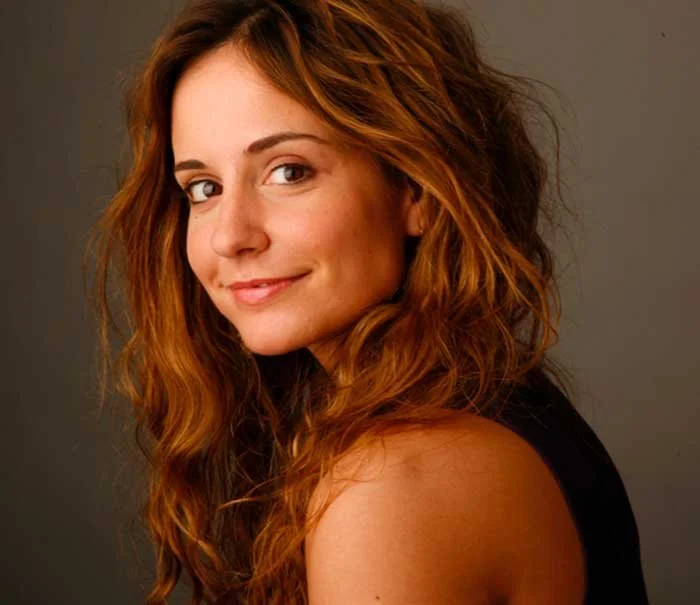


Justine Otto was born in Zabrze, Poland, and studied at the Städelschule in Frankfurt am Main, where she was appointed as a master student in Freie Malerei (Fine Art Painting). In 2014, she received the Emerging Artist Prize from the Phillips Collection in Washington, D.C.
Her work has been featured in numerous exhibitions both nationally and internationally, including at the Berlinische Galerie (Germany), Kunsthalle der Hypo Kulturstiftung in Munich (Germany), Neue Galerie Gladbeck (Germany), Museum Abtei Liesborn (Germany), Kunsthalle Jesuitenkirche in Aschaffenburg (Germany), Yeltsin Center in Yekaterinburg (Russia), Museum Franz Gertsch (Switzerland), Goethe-Institut in Washington, D.C. (USA), Kunsthalle Wilhelmshaven (Germany), Landesmuseum Darmstadt (Germany), Frauenmuseum Wiesbaden (Germany), Visual Arts Centre in Scunthorpe (UK), National Gallery in Bucharest (Romania), Stadtgalerie Kiel (Germany), Gyeongnam Art Museum in Changwon (South Korea), Museum Angerlehner (Austria), and the Torrance Art Museum (USA), among others. @ottojustine
In what ways did your experiences in Poland inform your artistic themes? I was born in Poland and spent the first nine years of my life there – during a time shaped by the socialist system. I remember the state of exception vividly: ration cards for meat, long lines, and a kind of scarcity that shaped how people lived and related to one another. When my mother and I moved to Germany (my father had fled two years earlier), I suddenly found myself in a completely different world – a capitalist system with full, colorful supermarket shelves.
I wouldn’t call it a shock, but it was a drastic shift. That experience of contrast – between two political, social, and visual systems – has left a deep imprint on me. It made me sensitive to rupture, to layers of meaning, to what lies beneath surfaces. It influences how I paint bodies, how I think about group behavior, and how I navigate ambiguity.
When did you first fall in love with art and realize you wanted to be an artist? For you, what is the importance of the arts? I honestly can’t remember a time when I wasn’t creating something. As a child, I spent hours painting or building small but elaborate gardens for birds. The moment I truly understood that art would shape my life came during school: I found myself carrying the art assignments home and obsessively working on them long after everyone else had stopped. Later, when I studied painting, I realized this isn’t just a profession – it’s a way of being. Painting is as essential to me as eating or sleeping.
Art is my way of thinking, of feeling, of translating the world. It allows me to explore the spaces between clarity and ambiguity, presence and absence. In painting, every stroke holds time – you can see each decision, each correction, and that makes it deeply human. Art is where chaos meets care.
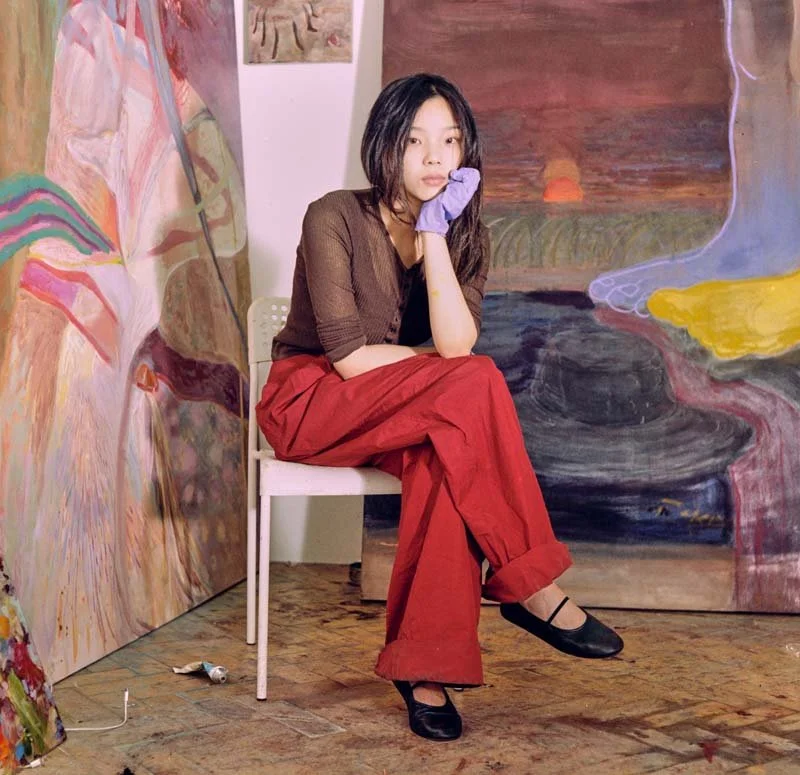
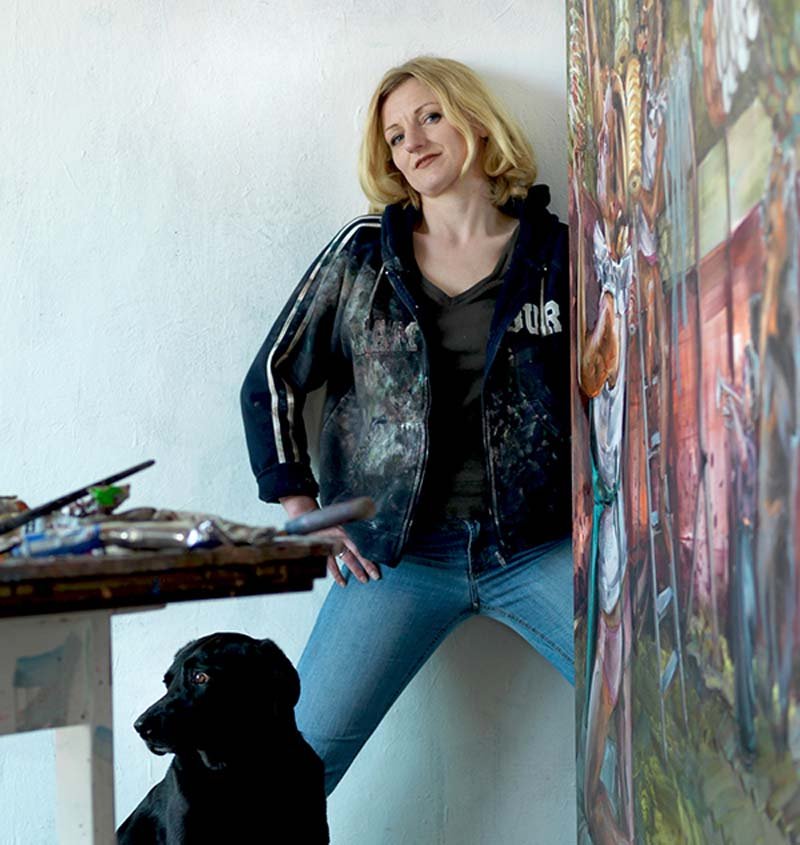
What does your typical day in the studio look like? Walk us through your studio and your most used materials and tools. My day usually begins with coffee and a walk with my dogs along the Elbe River. I often sit by the shore and let my thoughts wander. Once I arrive at the studio, I start slowly: answering emails, tidying up a bit, or drawing intuitively at a cluttered desk where I keep photos and scraps that often inspire me. Then there’s more coffee or tea – and eventually I start painting.
I work mainly with oil paint – sometimes using brushes, but often with my fingers or the palm of my hand. That physical contact with the surface is important to me. One essential tool in my process is oil sticks: they allow for an even more direct application. I can draw with them like with a pencil or blend them with a brush like traditional oil paint.
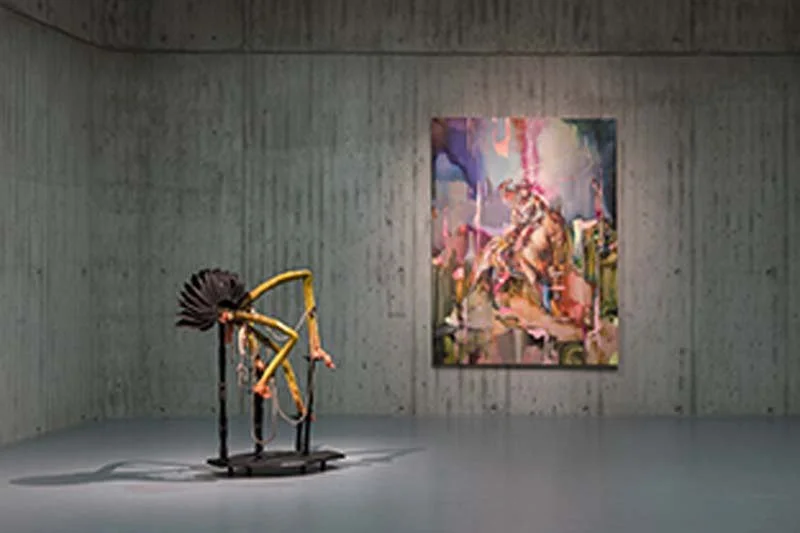
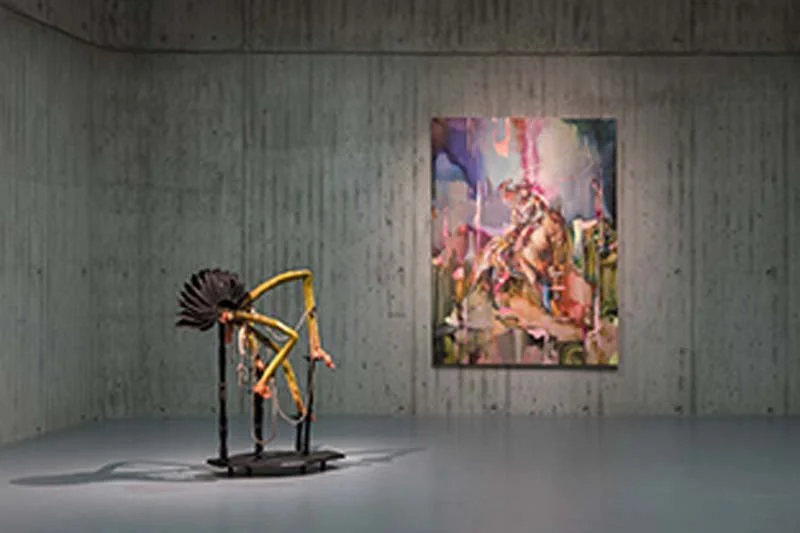
In addition to painting, I also create sculptures – often using materials like epoxy resin, soap, or found objects. There might still be something of the stage designer in me – I love when painting expands into space.
I usually begin in the afternoon and often continue late into the night, when the world becomes quiet. There are fewer distractions, fewer emails – and it’s easier to slip into the flow.
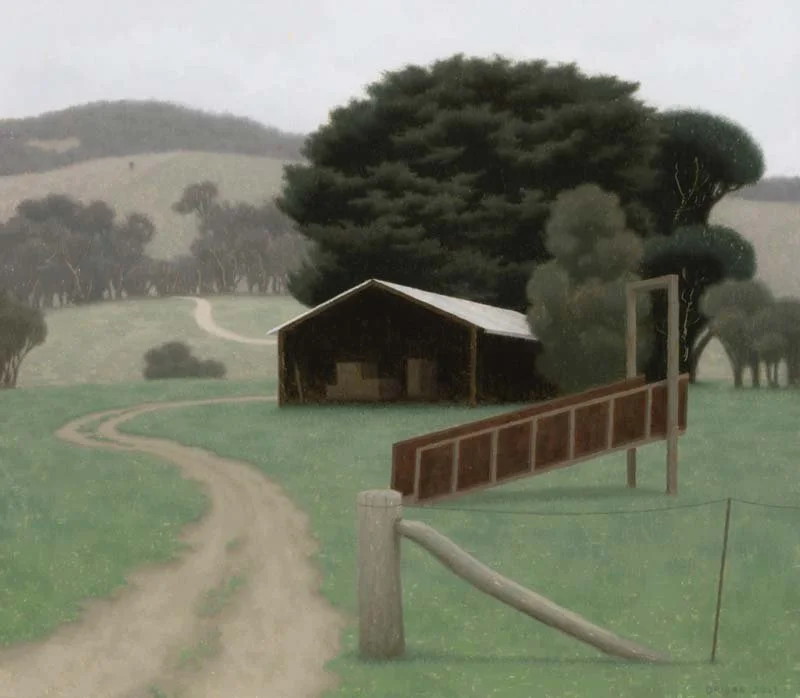
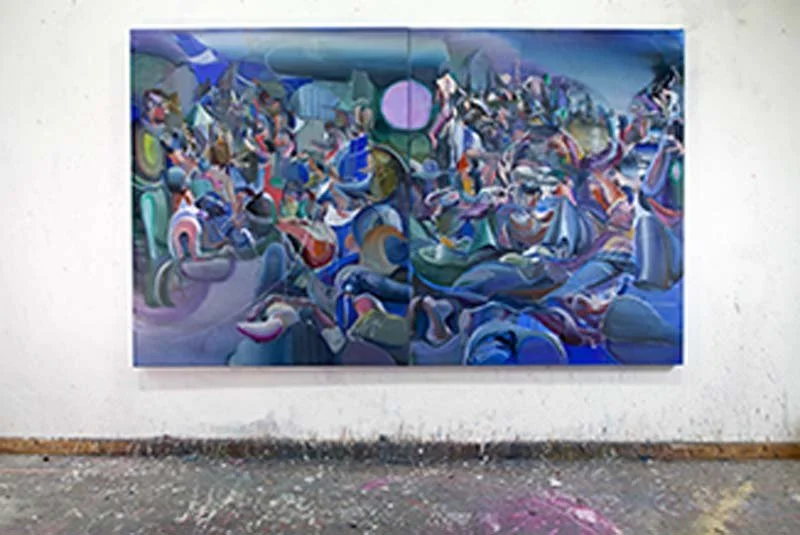
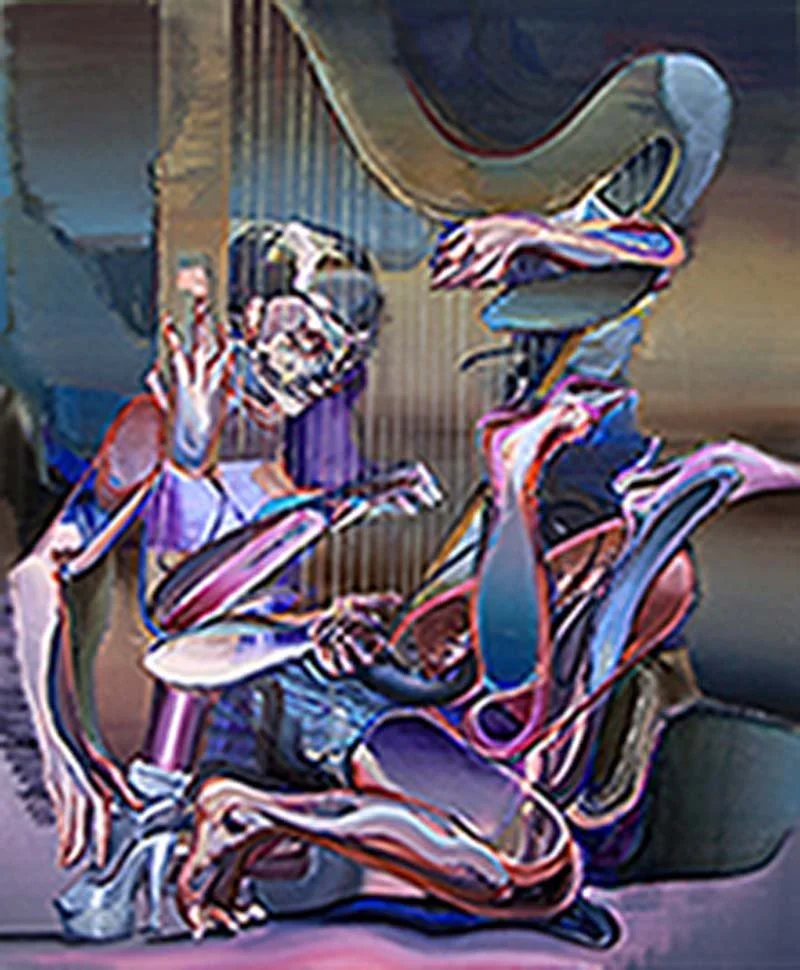
What projects are you at work on at the moment? And what themes or ideas are currently driving your work? I’m continuing my Crowds series – large-scale paintings of bodies in motion, often ambiguous and interwoven. I’m interested in group dynamics: how proximity can shift from comforting to threatening, how individuals blur into masses. The works hover between figuration and abstraction, between the seen and the sensed. It’s about rhythm, tension, vulnerability – and how form can express social behavior without words.
What do you hope people feel when they experience your art? What are you trying to express? I try not to expect anything specific from the viewer. First and foremost, I want to create strong paintings that explore the possibilities of the medium. But of course, I hope to connect with people who are able to engage with my visual language, who can feel something familiar in the unfamiliar, or unfamiliar in the familiar.
Which artists, past or present, would you like to meet? And why? I would love to meet Artemisia Gentileschi. As one of the first recognized female painters, she navigated a world that wasn’t made for her. I’d want to ask her how she lived, what she thought about art, and how she dealt with the challenges of her time.
Do you draw inspiration from music, art, or other disciplines? Absolutely. Music plays a big role in my process – many of my painting titles are borrowed from songs I listened to while working. Painting and music feel similar to me: layered, rhythmic, emotional. I also read a lot – recently, the work of Antonio Damasio has shaped the way I think about the interplay of emotion and reason.
A great thing about living in my city is… I don’t live in a city – I live in a biosphere reserve along the Elbe River. It’s a wide, open landscape with very few people. Nature gives me space to think, to breathe, to feel. I travel regularly to Berlin or Hamburg for exhibitions or to meet friends, but I always enjoy returning to the quiet of the floodplains.
Can you describe a project that challenged you creatively or emotionally—and how you worked through it? Every painting is a challenge. You never know if it will succeed. Sometimes, the best works emerge from the moment when I think the whole thing is falling apart. That’s often when I let go completely – and something raw and unexpected can surface. My sculptural works often bring similar challenges. Usually, I start with an idea – but then I have to figure out how to realize it. That’s where the adventure begins. There are so many materials, each with its own demands: they have to cure properly, they can crack, collapse, or break apart. It’s often even more complex than painting – but also deeply rewarding.
Tell us about important teachers/mentors/collaborators in your life. During my studies, I was deeply impressed by a fellow student from Greece – his name was Georgios. He was incredibly talented and had this almost architectural way of painting without any reference images. I admired how he could build entire compositions from nothing.
Encounters like that stay with you. And even now, I find it inspiring to visit other artists’ studios and see how they work.
Sustainability in the art world is an important issue. Can you share a memory or reflection about the beauty and wonder of the natural world? Does being in nature inspire your art or your process? Nature is incredibly important to me. It holds an immense richness of forms and colors – something essential for me as an artist who works between figuration and abstraction. Where I live, in a biosphere reserve along the Elbe river, there’s this interplay between wide-open plains, wild riverbanks, and countless small lakes – it often feels like a collage.
I love being in places where tourism hasn’t yet taken over everything – and here, that’s still possible. I can sit alone for hours by the riverbank, watching the light shift, letting my thoughts drift. That stillness and spaciousness deeply nurture my process and imagination.
AI is changing everything - the way we see the world, creativity, art, our ideas of beauty and the way we communicate with each other and our imaginations. What are your reflections about AI and technology? What is the importance of human art and handmade creative works over industrialized creative practices? AI can produce images at lightning speed – but it doesn’t understand the time embedded in a painting. Human art holds accumulated time: you see the process, the hesitation, the decision-making, the layers. That material presence – a brushstroke, a crack, a trace – is something you feel with your whole body when you stand in front of it.
Also, AI can’t predict the next turn my art will take. Honestly, I don’t even know that myself. My artistic process is full of detours, contradictions, and unexpected shifts – and that’s exactly what makes it alive.
Exploring ideas, art and the creative process connects me to… a better version of humanity.
Oh, if only we were all making art instead of war.