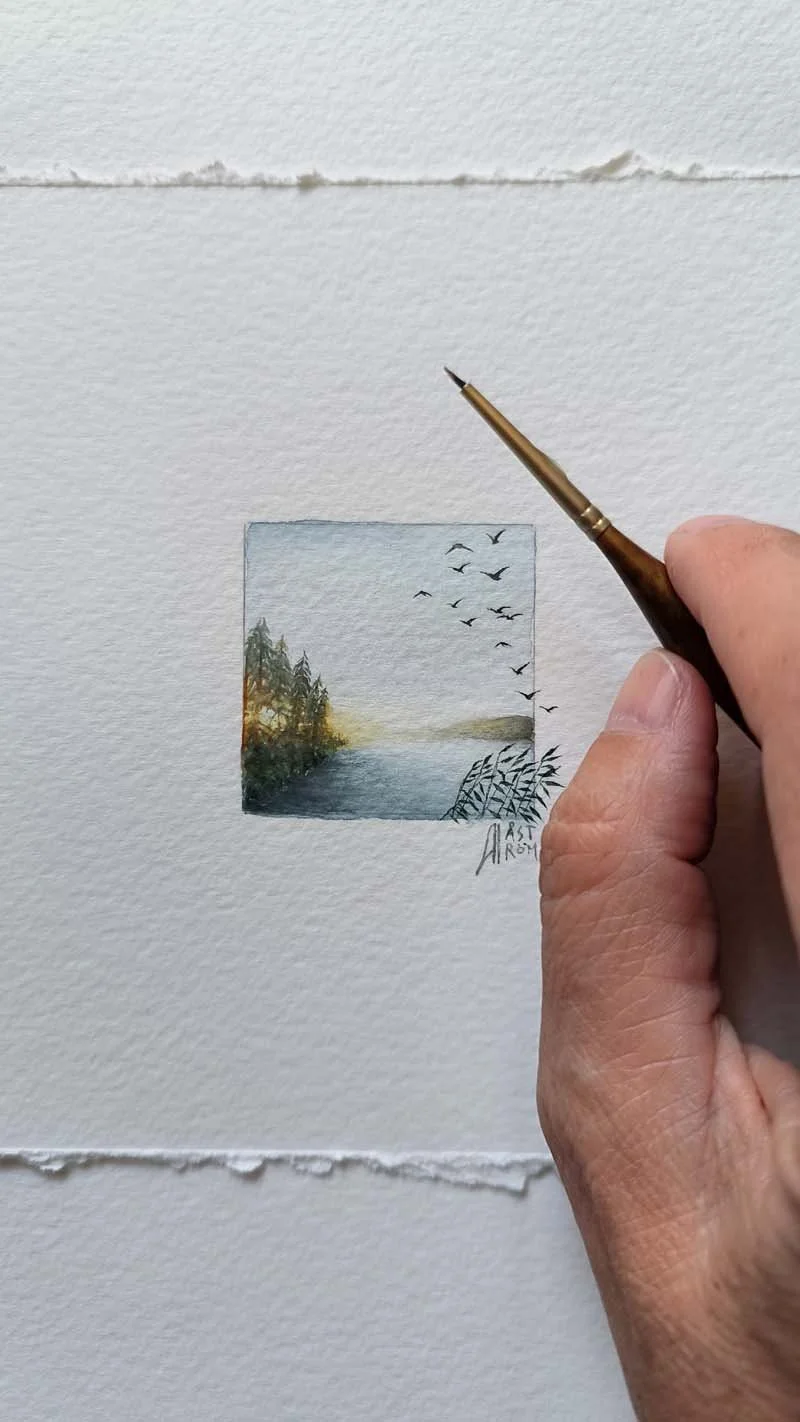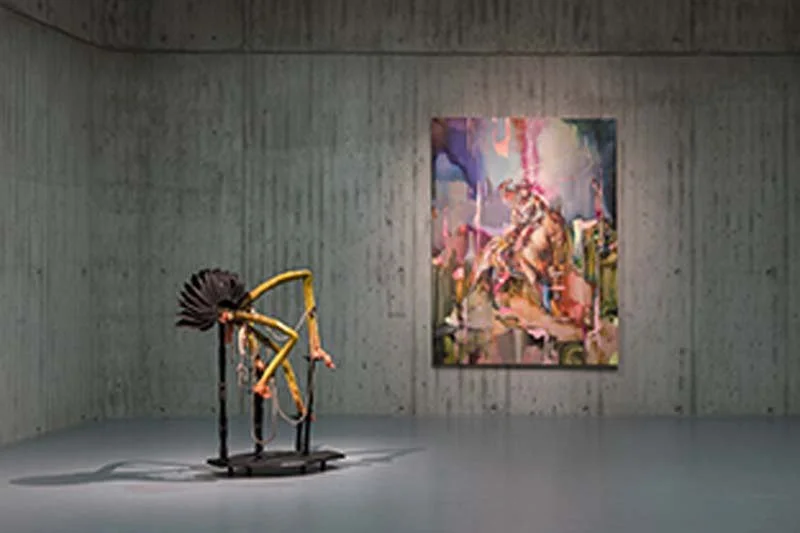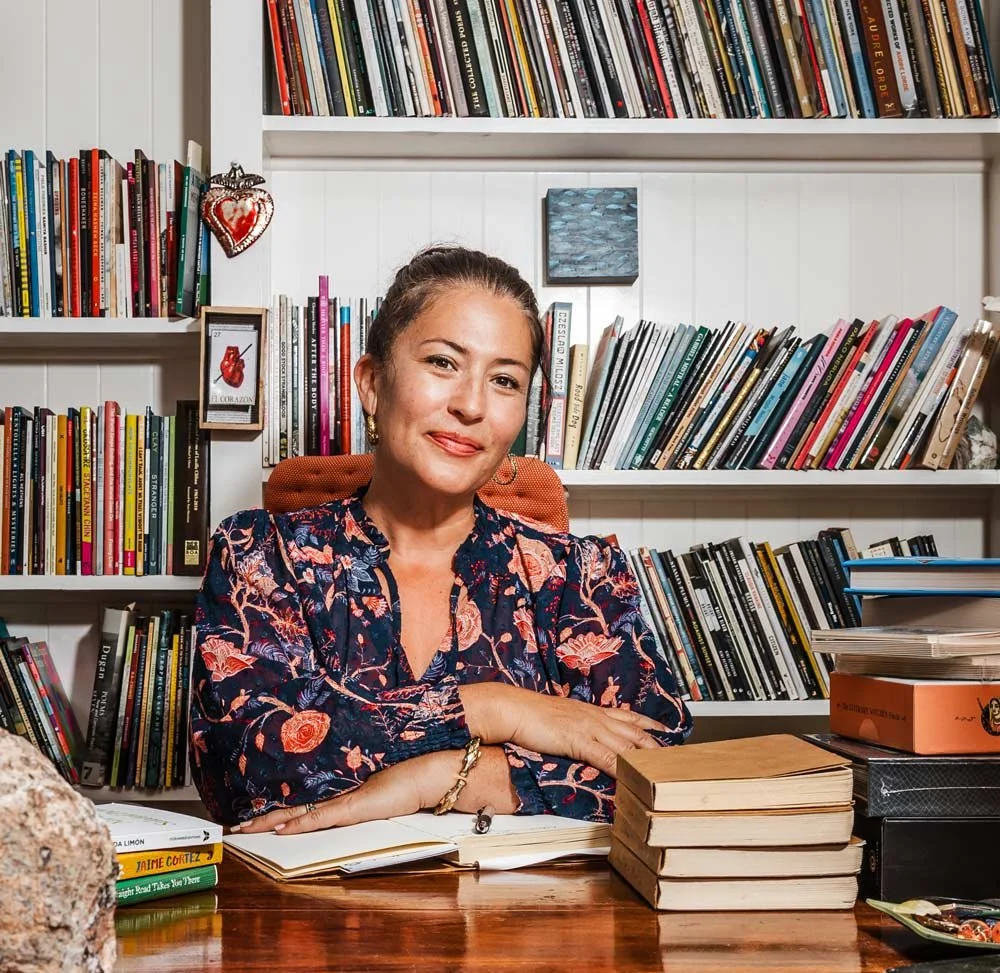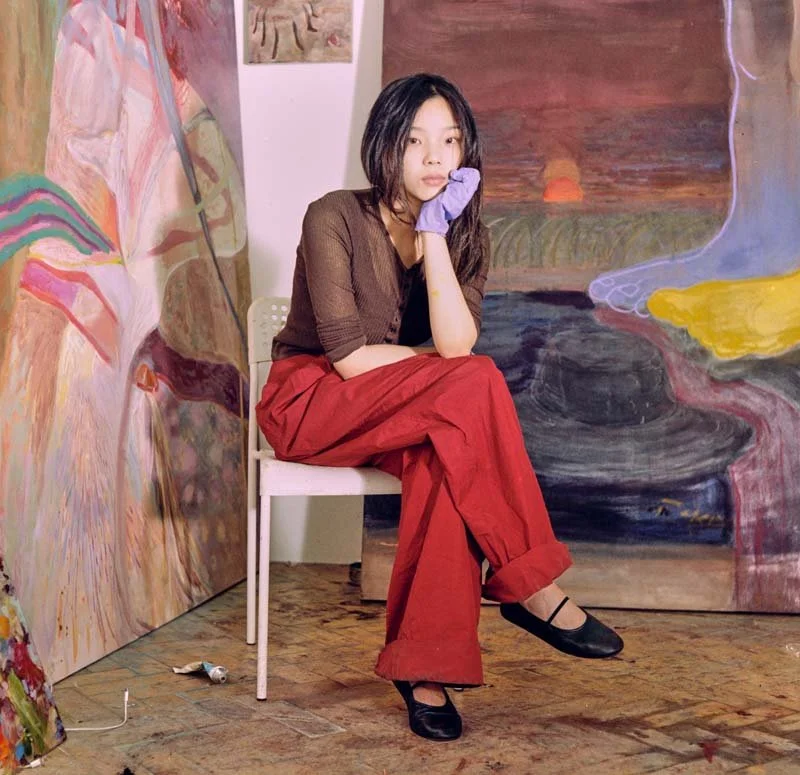


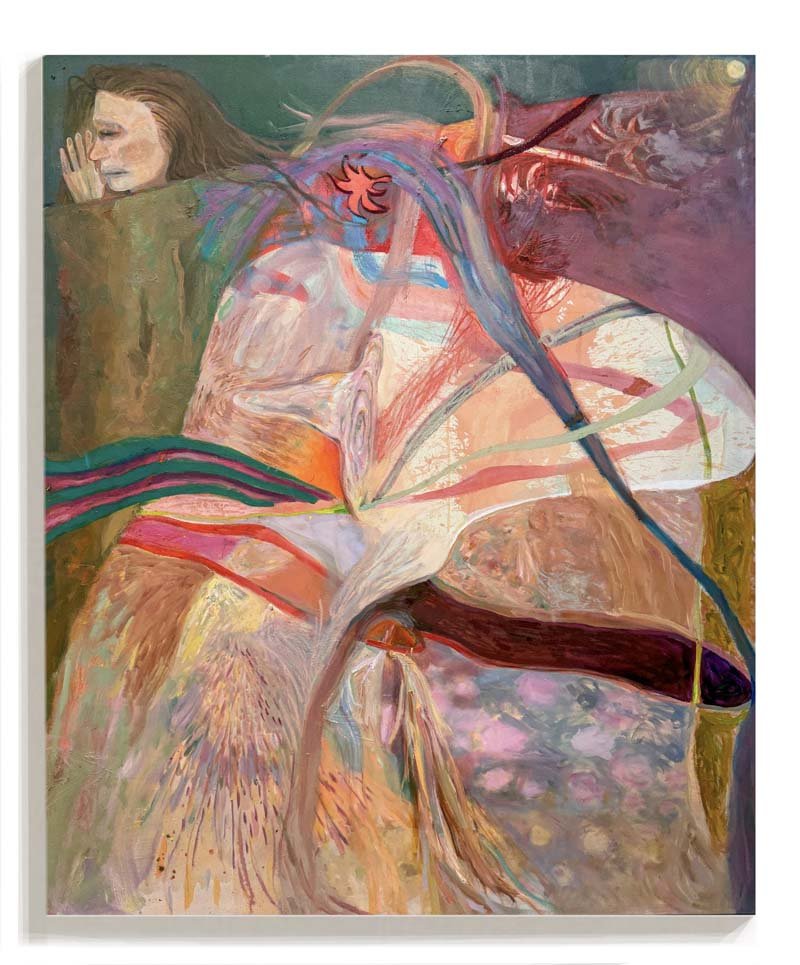
Yinuo Li’s works transform the canvas into a living entity, blending space and animated dimensions. She navigates the cracks of an irregular world, where reality and illusion blur boundaries. Her layered paint application mimics memory’s textures, merging microscopic and macroscopic elements. Yinuo views painting as translating the internal into the visual, shaping sensations, memories, and psychological spaces where metaphor becomes abstraction and logic yields to poetic expression. @n1ee_e
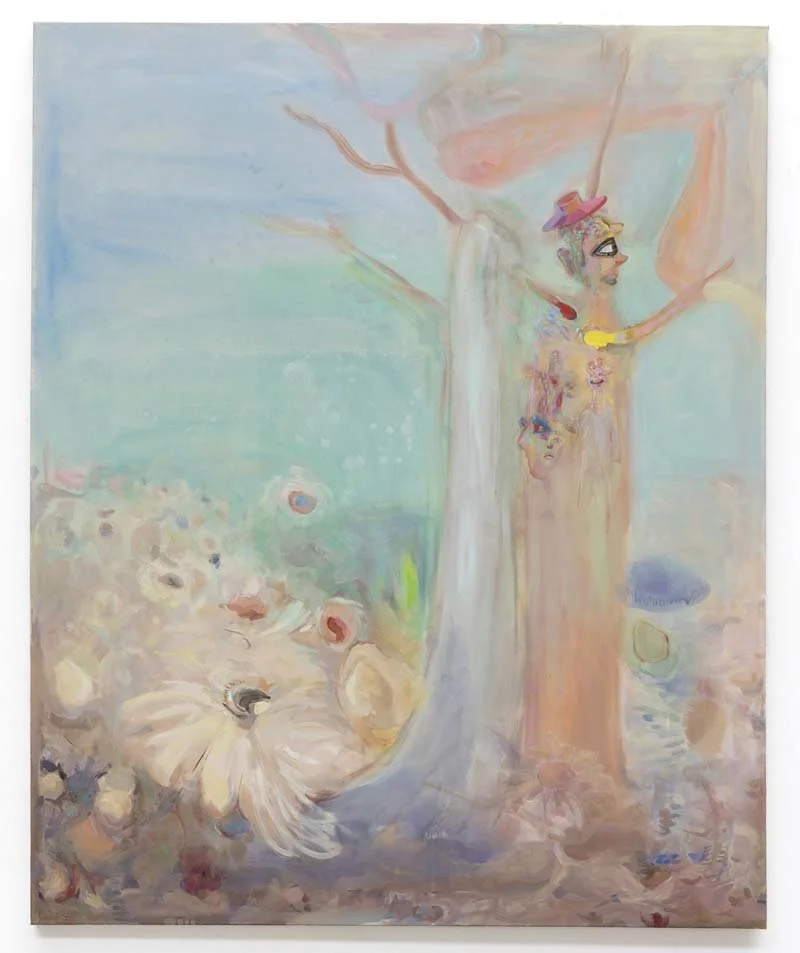
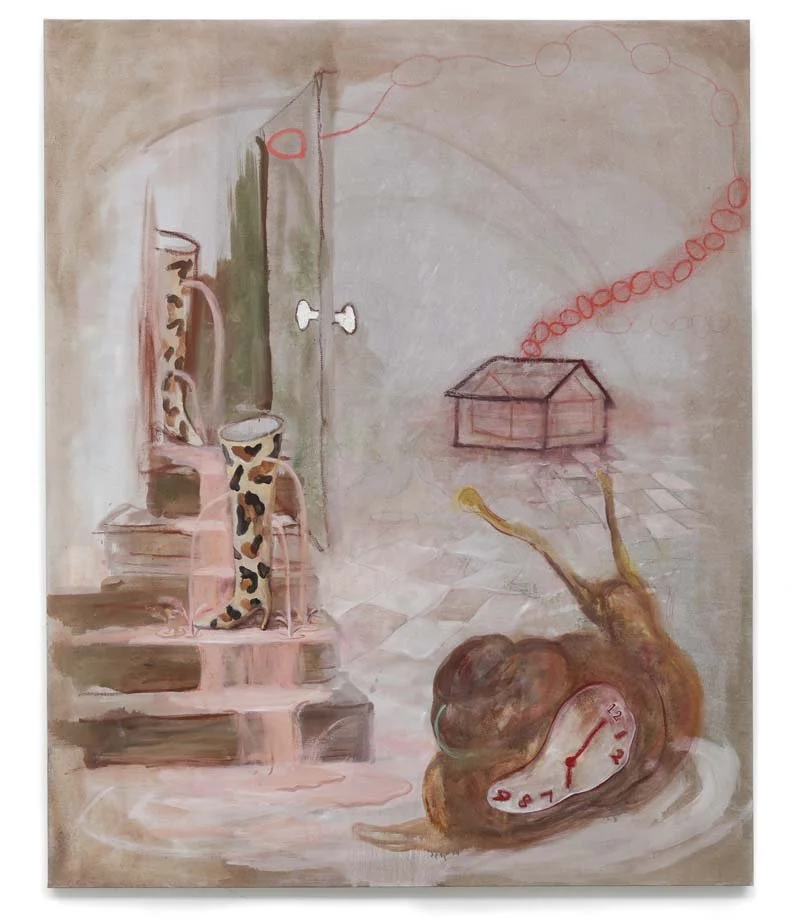
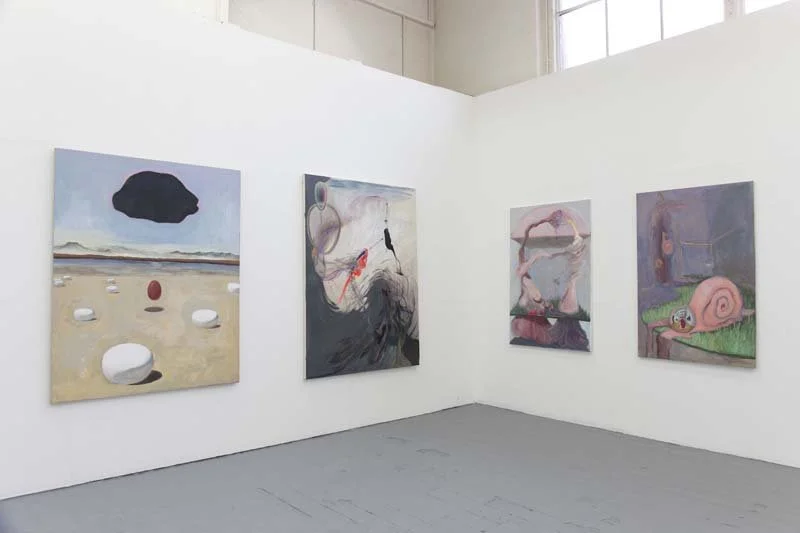
In what ways did your experiences in Jinan inform your artistic themes? I grew up in Jinan, a city known for its natural springs and quiet philosophical roots, yet one that has also transformed rapidly in recent decades. Being raised in a place shaped by both traditional ideas and urban acceleration made me especially attuned to opposing forces: the Daoist sense of yielding to natural rhythms and the modern pressure to move fast, produce, and perform.
This tension continues to inform my work. I’m drawn to the spaces where stability meets change, where the body’s internal pace negotiates with the speed of the world around it. For me, art isn’t about resisting motion or embracing stillness; it’s about discovering rhythm on one’s own terms.
This dynamic also reflects an inner friction shaped by my cultural experience—a Chinese upbringing grounded in quietness and restraint, and several years spent in the UK, where openness and outward expression are often emphasized. Rather than choosing between these modes, I try to hold space for both, letting contrast become form and friction become movement.
When did you first fall in love with art and realize you wanted to be an artist? For you, what is the importance of the arts? I started drawing when I was young, not out of a desire to be an artist but because it was something I naturally gravitated toward. It helped me process things I didn’t know how to talk about. At some point, I realized that making art wasn’t just something I enjoyed; it was something I kept returning to, especially when I needed to make sense of what I was feeling or experiencing.
I didn’t have a dramatic turning point where I decided to become an artist. It was more of a slow, continuous process. The more I made, the more I realized this is how I think, how I observe, how I connect to the world.
Art is important to me because it gives shape to things that are otherwise difficult to grasp, whether it’s an emotion, a memory, or a shift in perspective. It’s not about big statements. It’s more about paying attention and staying honest.
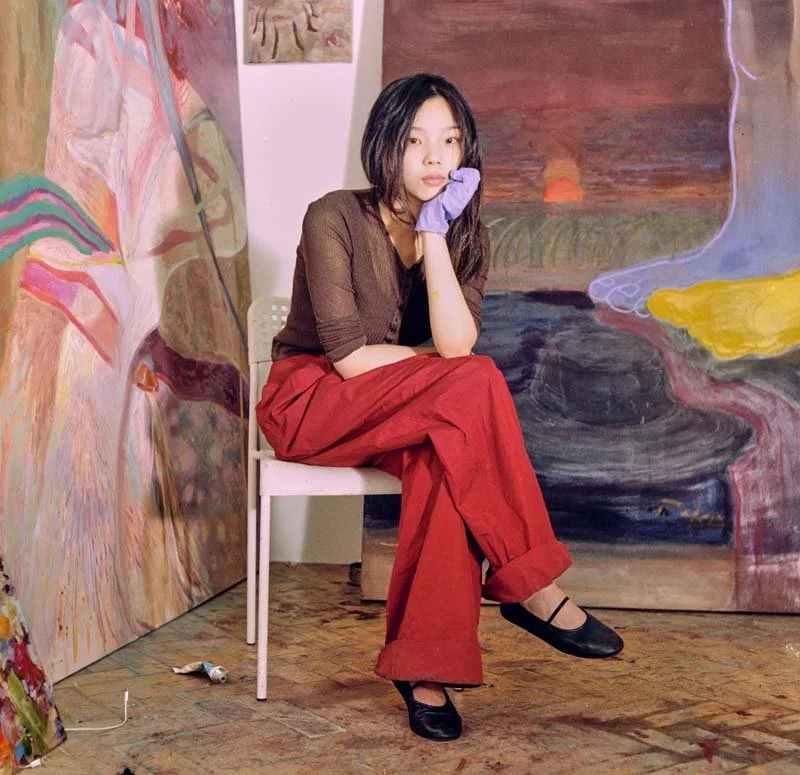
What does your typical day in the studio look like? Walk us through your studio and your most used materials and tools. I usually start my day with quick sketches using pastels, pencils, and watercolors on a B5 notebook to capture fragments of the previous night’s dreams. After midday, I shift to larger canvases, diluting fluorescent acrylics with water spray or thickening them with gel medium. I also use ammonia to trigger pigment fusion and sometimes bleach to deliberately erase certain areas, allowing unknown forms to emerge. Around me, there are always jars of paint, buckets of water, rags, and a small mirror I use to reverse the perspective of the composition.
What projects are you at work on at the moment? And what themes or ideas are currently driving your work? My recent work continues to develop some of the visual elements from my graduation project, such as bodies of water, spiral structures, and topographic maps. I’m now more focused on how these forms can be deconstructed and reassembled through the process of painting itself. For me, painting is a way of dialoguing with time. I work by layering, erasing, bleaching, and reapplying, allowing images to slowly emerge in a state of instability. Often, a painting isn’t so much “finished” as it is sedimented and deviated over time, gradually forming a surface that carries traces of memory.
I’m particularly sensitive to feelings that exist on the edge of perception, like the blur right after waking from a dream, emotional residue left in the body, or a kind of internal tension that resists language. These experiences are difficult to articulate verbally, but within the material process of painting, they can be organized and extended in a nonlinear way. I’m searching for a rhythm that doesn’t prioritize resolution, allowing the image to continually repair, dissolve, and loop back into itself.
What do you hope people feel when they experience your art? What are you trying to express? I hope viewers can experience a subtle sense of vertigo, as if standing at the threshold between dreaming and waking. It’s a space where certainty unravels, and vulnerability is not seen as a flaw but as a way of seeing. Each painting is an invitation, a pause that opens into the fracture between the real and the imagined, asking us to reconsider how we approach the world and how the world, in turn, might approach us.
Which artists, past or present, would you like to meet? And why? I’d love to talk to Frank Bowling about the role of accident in materials, how chance leaves its trace. I’d ask Phoebe Unwin how mystery can be nurtured rather than explained. And I’d like to sit with Philip Guston and simply ask how he got those seemingly clumsy shapes to start speaking.
Do you draw inspiration from music, art, or other disciplines? Beyond painting, I often turn to Taoist texts to search for clarity within structure, especially in times of inner chaos. I watch Wim Wenders’ films not for their plots, but to find a rhythm of living—somewhere in between the everyday and the drifting. When I paint, I often listen to slow jazz as a way of syncing my breath with the pace of the brush.
A great thing about living in London is… The best thing about the city I’m in is that I can start my day in my studio in Nine Elms, visit galleries across London, and return by evening carrying a dozen different conversations in my head, all pointing in different directions. It’s a reminder that painting still exists within an active, pluralistic ecosystem of thought and exchange.
Can you describe a project that challenged you creatively or emotionally—and how you worked through it? “Gibberish” was one of the most emotionally challenging works I’ve made. It started as a chaotic, fragmented image with no clear direction. I kept trying to make sense of it, to impose structure—but then I realized it felt like a quilt, something soft and layered that covered me during nights of insomnia. At the time, I was struggling with mental health, and the painting became less about clarity and more about containment.
Tell us about important teachers/mentors/collaborators in your life. Reading Sophie von Hellermann’s reflections helped shift my approach. She describes some pigments as stardust—merging, releasing energy, behaving like particles in motion. Her connection between labyrinths and constellations—between being lost and being guided—helped me accept that not everything needs resolution. I stopped cleaning up the image and began allowing the ambiguity, the “wrong” marks, and layered fragments to remain.
That process taught me to live with uncertainty. The painting became less a statement, and more a space to hold emotion—to sit with disorder, and still breathe through it.
Sustainability in the art world is an important issue. Can you share a memory or reflection about the beauty and wonder of the natural world? Does being in nature inspire your art or your process? As a child, I spent many summers by a slowly moving river. I remember the snails clinging tightly to damp stones, fragile yet persistent. Their quiet, enduring presence still appears in my paintings today. Water, with its softness and quiet determination, continues to shape how I think about force and change. It reminds me that small, patient forces can reshape entire landscapes.
That way of seeing has influenced how I work in the studio. I often reuse canvases and dilute my paints with large amounts of water, not only for the material effect but also to reduce environmental impact when it eventually washes down the sink. In some of my watercolor works, I make my own pigments by hand, grinding natural minerals and stones into fine powder, then binding them into paint. It’s a slow, tactile process that feels like a kind of collaboration with the earth. These small gestures allow me to stay connected to the materials I use and the ecosystems they come from.
AI is changing everything - the way we see the world, creativity, art, our ideas of beauty and the way we communicate with each other and our imaginations. What are your reflections about AI and technology? What is the importance of human art and handmade creative works over industrialized creative practices? Generative AI can rearrange images at astonishing speed, but it can’t feel the frustration of running out of paint at midnight or the sting of ammonia in your eyes. That kind of physical negotiation with materials leaves traces, pauses, hesitations, fingerprints, all carrying the weight of human time. AI might assist in early experimentation or function as a sketching companion, but the value of hand-made work lies in its slowness, its resistance to efficiency, and the ethical attention it demands. It’s a way of recording not just what is seen but what is lived.
That said, I don’t view AI and handcraft as opposites. Lately, I’ve been learning C4D for modeling and often use AI to help me understand certain material behaviors. It’s a tool, a generative one, and when used critically, it can expand the field of possibility. But for me, the heart of the work remains in the embodied process—in touch, friction, and time.
Exploring ideas, art and the creative process connects me to… a space where intuition, memory, and the rhythms of nature converge—where painting becomes both a vessel for emotional residue and a quiet field for the unconscious to unfold.