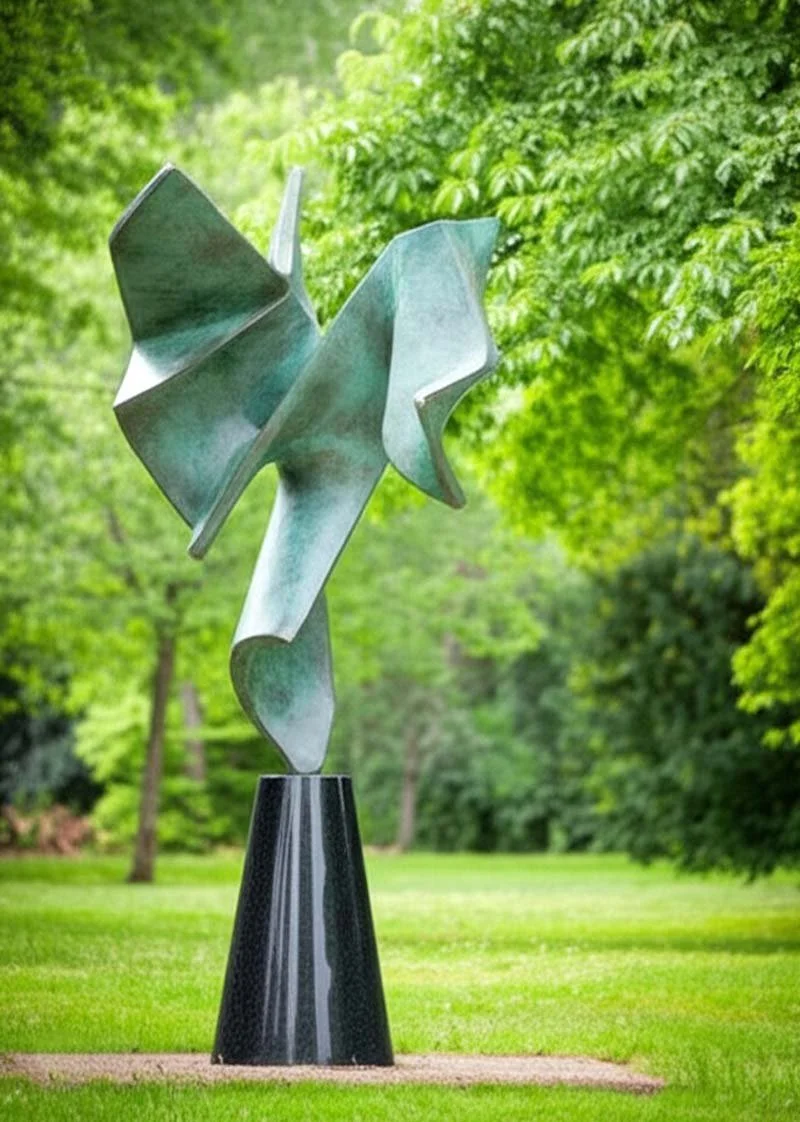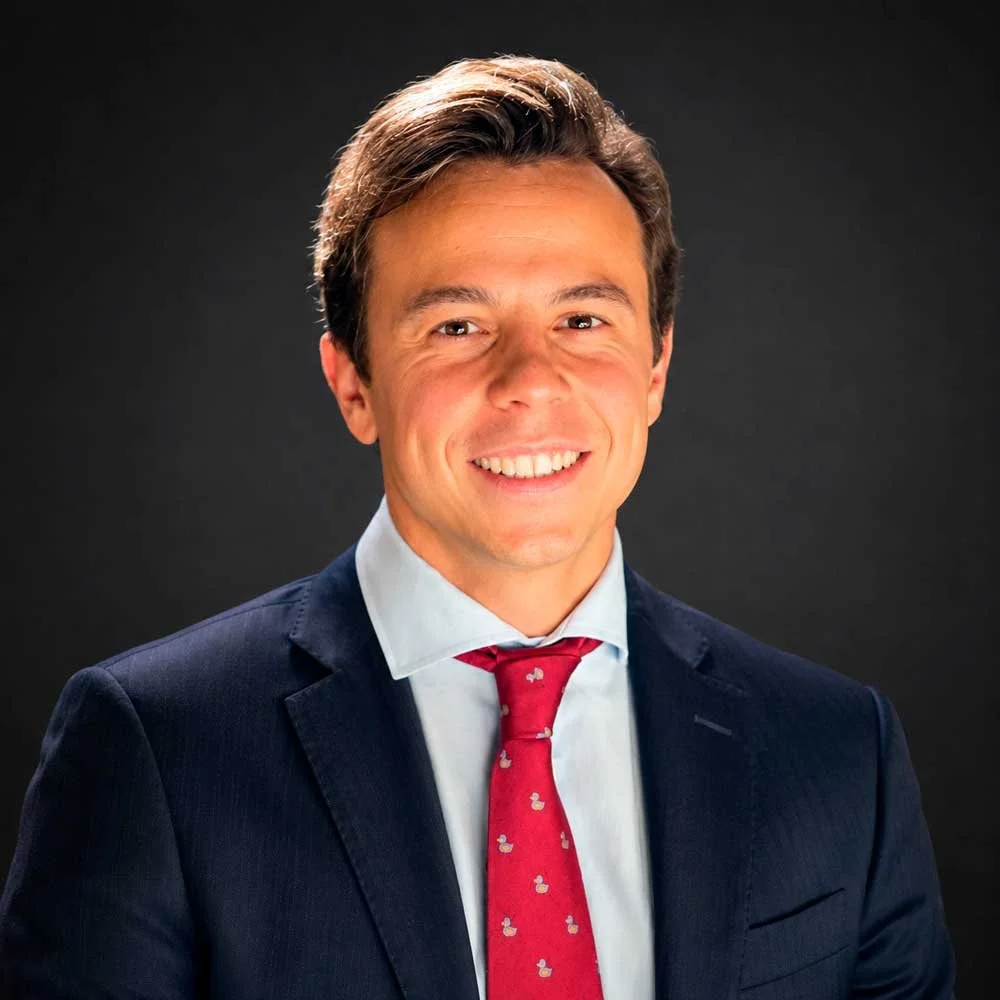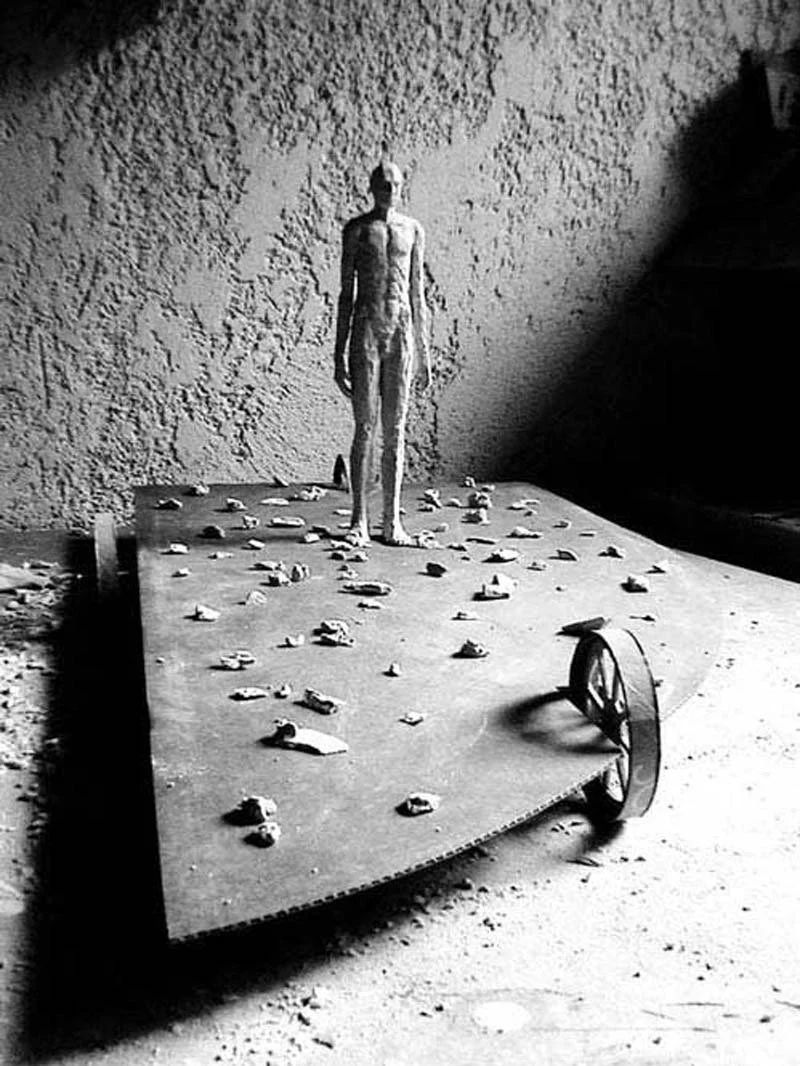


Christos Christou was born in Cyprus and studied Architecture, graduating in 1995 with a thesis entitled Myth-Historical Topography, a land-art project that marked his first step toward a new discipline: Art. Over the following three years, he worked in the office of stage designer Apostolos Vettas, focusing primarily on stage design and the planning of cultural events for the organization “Thessaloniki, Cultural Capital of Europe 1997.” In 1999, he was awarded a sculpture scholarship by the National Institute of Scholarships of Greece and continued his studies in sculpture at K.I.A.D. in Canterbury, England. He received a Master’s degree in Fine Art in 2000 and has been working as a sculptor ever since. @ch.n_christos

How did the cultural landscape of Cyprus shape your creative vision? I was born and raised on the island of Cyprus at a time when a civil war was taking place, which ended with the occupation of a great part of the island by foreign troops. As a child, I experienced the war and its consequences. In the texts of Greek tragedy, I found answers to the problems of existence and human nature. That’s why my work deals with the issues of identity, war, peace, displacement-place, existence-exile eros and death, through the perspective of a poetic interpretation of reality.
When did you first fall in love with art and realize you wanted to be an artist? For you, what is the importance of the arts? My first experience of art was observing as a child, before even going to school, the ink drawings from Greek mythology my grandfather(a carpenter) did when he was a 13-year-old student. They were very well executed, and it was my first urge to become an artist because it felt like an intriguing and natural process at the same time. I realized by trying that I had the ability to practice that craft. I had a strong relationship with literature, but I chose to follow a more practical course. By studying architecture and later by working in a stage designer’s studio, it became clear to me that I had to be a practitioner in the discipline of fine arts, where there is the freedom to express ideas, concepts, and poetic images.
For me, every art that has its root in Poetry is of vital importance because it opens a window in the reality we are experiencing towards the infinite, and it is the magnifying glass that gives in every aspect of life a meaning and a perspective. As Paul Klee has written, ‘art does not render the visible; rather, it makes visible’
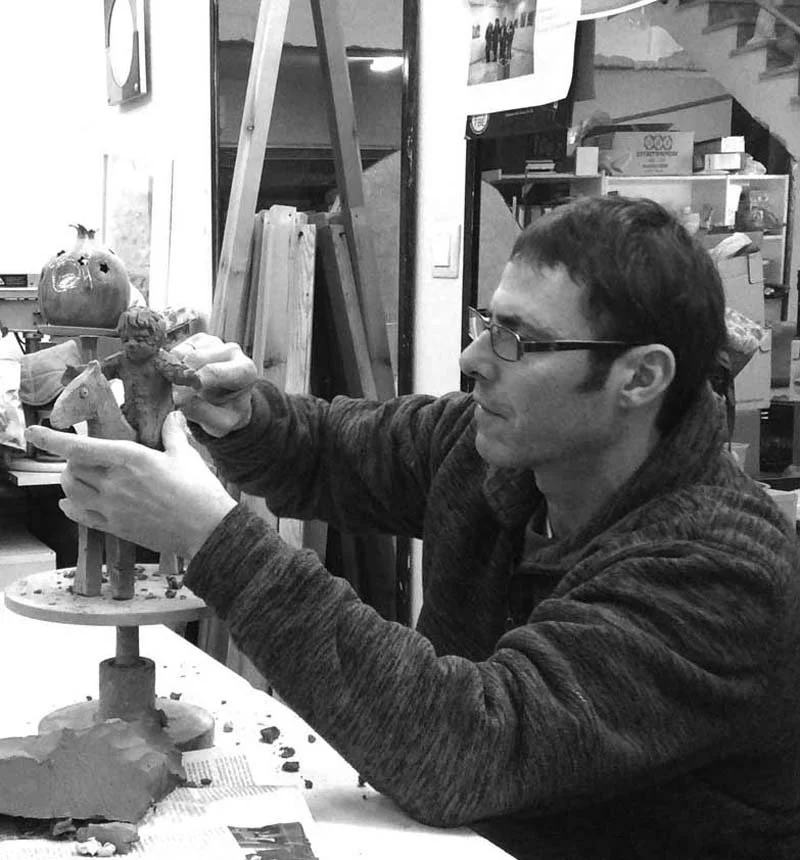
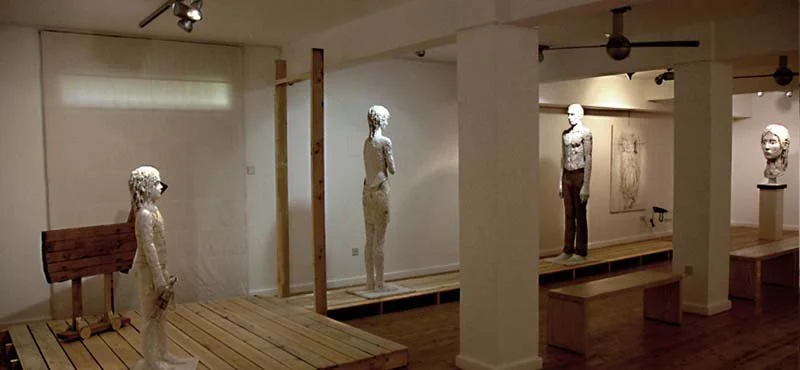
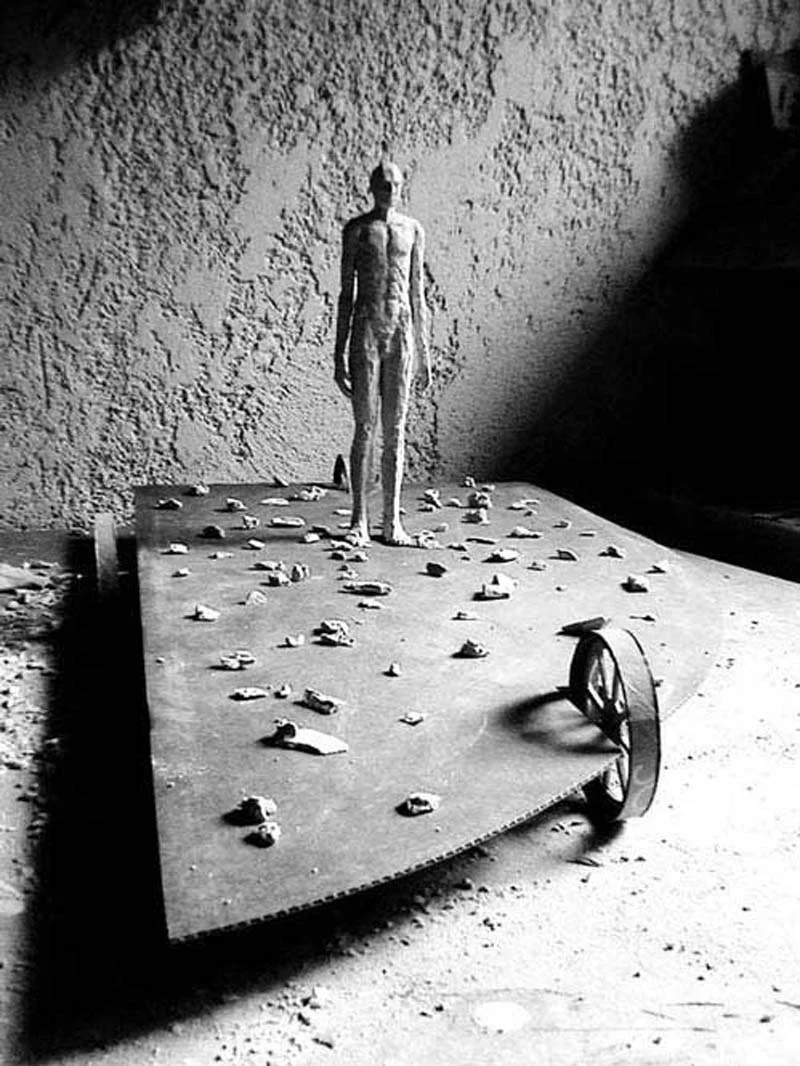
What does your typical day in the studio look like? Walk us through your studio and your most used materials and tools. When I work in the studio, I usually work on projects based on a narrative, and my first ideas are recorded in drawings, notes, and photographs. I spent too much time writing my storyboard, and most of the time, the works of art derive from this research. I work in plastecine, clay, and maquettes or models for small-scale works, and for my installations, I “construct” the large-scale figures in plaster on a metal structure. I am considered with how a figure is placed in real space so as to make the viewer part of the narrative and the composition in a “theatrical” space. I usually make large-scale drawings on paper as preparation for the sculptures on paper. I also use large-scale drawings executed on linen with gesso, ink, pencils, stencil, graphite, (any medium), as elements (like episodes) of a narrative.
What projects are you at work on at the moment? And what themes or ideas are currently driving your work? As I have mentioned before, I draw inspiration from my personal experience, but I speak about the real events through the filter of poetry using characters from mythology, archetypes, and symbols, so as to make my personal interpretation of reality one of universal value in order to have a dialogue with the viewer.If I want to speak about a historic event, I will use a poetic interpretation with archetypal characters (as it happens in Greek tragedy) which responds to the essence of the incident.
At this moment, I am doing research on a historic event of a shipwreck that took place in Famagusta of Cyprus, in 1572, when the city was then conquered by the Ottomans. There will be the idea of a floating figure, the sinking boat, the memory of the lost, but also the idea of the journey of a person towards the homeland as a metaphor for an eternal return to self-awareness.
What do you hope people feel when they experience your art? What are you trying to express? When people see my art, I want them not to experience the story or idea I was inspired by, but to be in an atmosphere outside the limits of the current reality, where there is a common place for communication, or at least to enjoy aesthetically the journey of artistic research. What is my concern is to speak in depth about the human condition of existing but avoiding the gap of despair. I believe that an artwork must leave behind the agony or fear, even if these two factors are at the starting point for creation.
Which artists, past or present, would you like to meet? And why? The artist I would meet first is Rodin, for being the non-academic connection between modern and traditional sculpture. Brancuzi for the atmosphere of his studio, for setting the bases of abstractionism by searching for the idealism in form. Giacometti for his vulnerability as an artist and for breaking the boundaries of sculpture by introducing the problematic of existentialism that is still present nowadays. There is the Greek sculptor Giannoulis Halepas (1851-1938), who was using a traditional narrative, without being abstract, but came to a modern, essential form of sculpture with a Greek and Mediterranean aesthetic. The Italian sculptor Arturo Martini, because he has a similar narrative to my art, and he progressed to a modern style with a reference to the past. I would also like to meet Morandi and Klee because they reached a level of perfection in their art, secretly, following their own path outside the avant-garde movements that were so revolutionary in the 20th century.
Do you draw inspiration from music, art, or other disciplines? All arts are connected with the human need to express the inner vibrations and spiritual needs; therefore, they are surely fields of inspiration. I am mostly inspired by a song with lyrics and less by musical theme because in a song, there is narrative and images. A visual work of art, a film, or a theatrical play is often a source of inspiration. I am also inspired by philosophy, literature, and History. Sometimes an archetypal character from literature, like Oedipus or Ulysses, is a subject of my sculpture, and I am trying to give them a “presence” in the material world.
A great thing about living in Thessaloniki is… the fact that you live amongst relics of the past that reach the Byzantine and Roman era, and some monuments, like churches, are still used. That, together with the uninterrupted for thousands of years, use of greek language makes me, as an artist, feel secure only if I step on the cultural traces of the past.
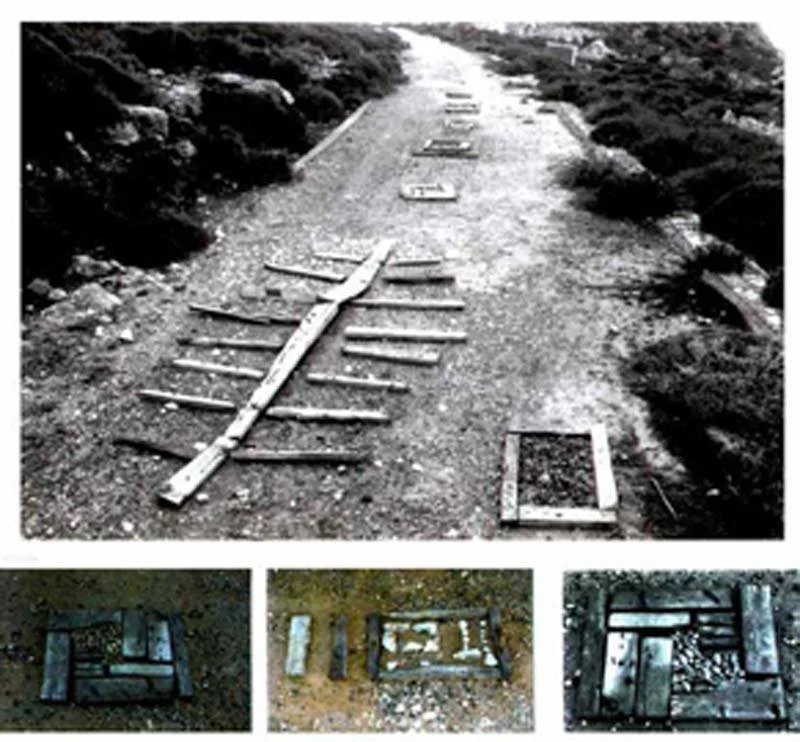
Can you describe a project that challenged you creatively or emotionally—and how you worked through it? Maybe the most challenging project I have worked on was the land art project, which was entitled ‘a Myth- Myth-Historical Topography’. Searching for my identity, I had to put aside my sentimental connection with the events that I had experienced and present a project that demanded the recording of the landscape with photographs and drawings. By decoding the syntax of the landscape, I proposed sculptures created by spatial and not descriptive elements based on a dialogue with the pre-existing traces. It took me two full years to complete the project, which was a projection of the history of Cyprus on the landscape of Cavo Greco. During that period, I designed, made installations on site, and finally presented my proposition in drawings, photographs, and maquettes.
Tell us about important teachers/mentors/collaborators in your life. I was trained as an architect, and I mostly learned the theory of art by reading and attending lectures on art in the school of architecture. There, we came across some limited knowledge of techniques in sculpture and painting, but the crucial point of my turn towards fine art was my collaboration with the stage designer and academic teacher Apostolos Vettas. Working in his Studio helped me to see where fine art and applied arts meet, and mainly how it is possible to create artistic images using a script or an idea.
Sustainability in the art world is an important issue. Can you share a memory or reflection about the beauty and wonder of the natural world? Does being in nature inspire your art or your process? Especially in a land art project, from my experience, there must be a strong vibration from the landscape that arouses thoughts and feelings or memories, and that is when something happens as a creative force that makes the artist respond to the natural beauty. The collective subconscious is the key factor to sense the Genius loci of a place, but in my case, intuition must be combined with objectivity and analysis to create a solid work of art. When I first visited Cavo Greco cape (also an archaeological site), I was struck by the rough, rocky landscape, which had an aura of primitivism, but there were also traces of human presence. There was human history going on with the forces of nature, and it was the perfect scenery to give a hypostasis to the ideas I was dealing with at that time.
AI is changing everything - the way we see the world, creativity, art, our ideas of beauty and the way we communicate with each other and our imaginations. What are your reflections about AI and technology? What is the importance of human art and handmade creative works over industrialized creative practices? I believe AI will be used excessively in the next years, especially in the visual arts, because it provides a “perfected” proposition, but it cannot replace the human need for creation and crafting. Art is firstly important for the creator, and most of the time it fills a psychological need and not a practical objective one.
Exploring ideas, art and the creative process connects me to…Exploring ideas, art, and the creative process connects me to the inner place of the soul, where there is a clarity that brings peace to the intellect.