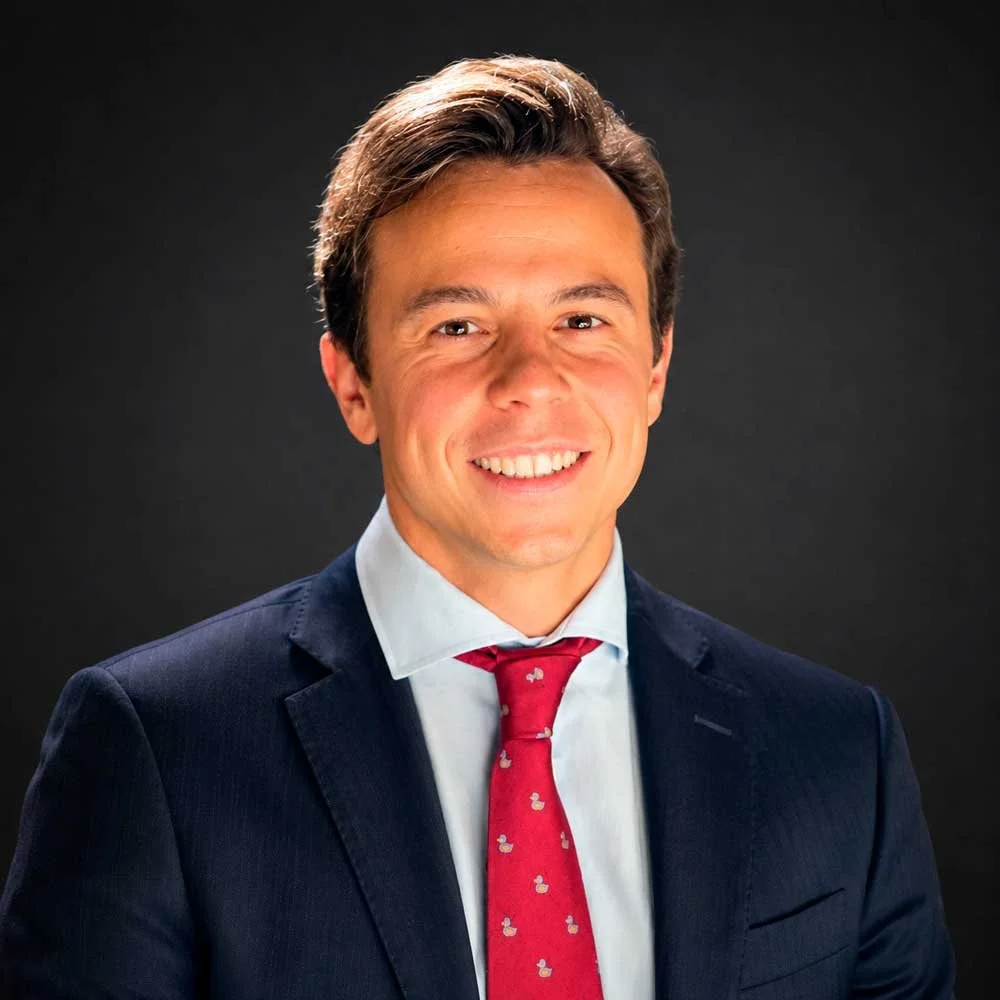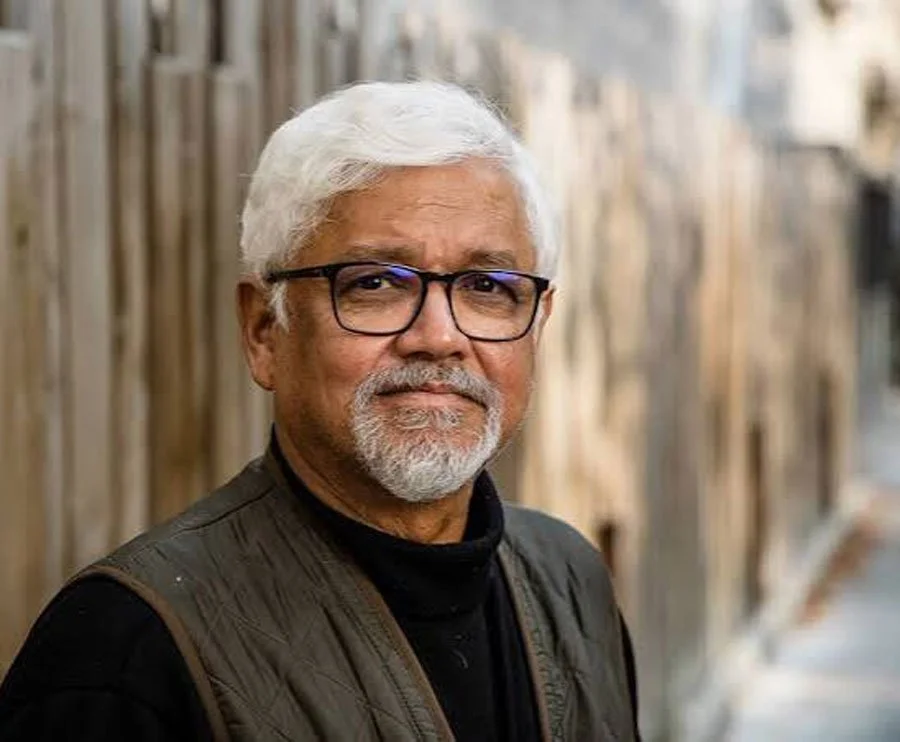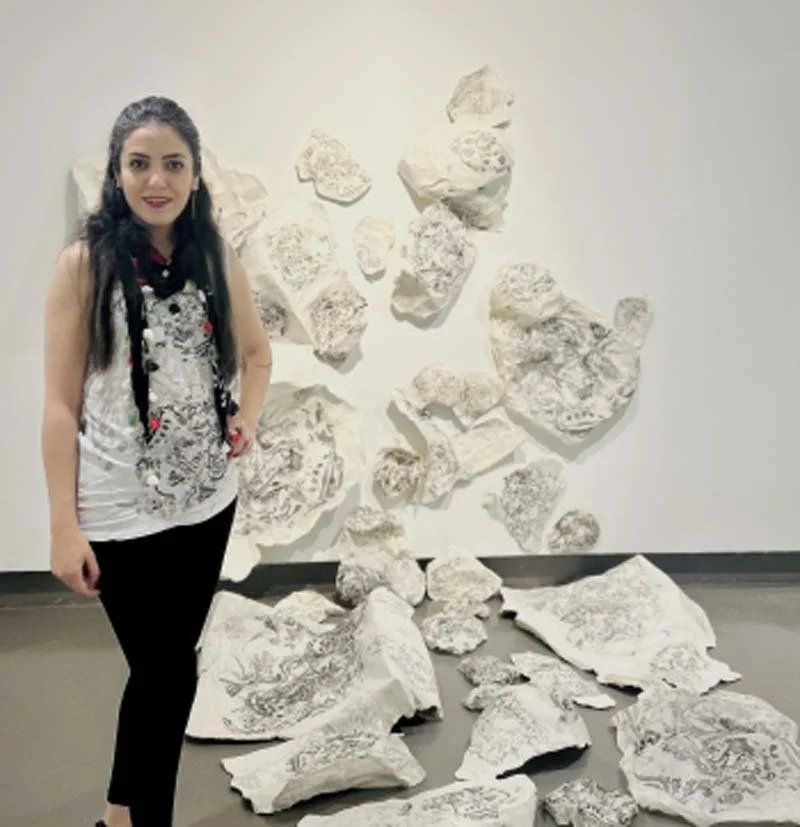


Azin Yousefiani is a visual artist originally from Kurdistan, Iran. She received her MA degree in painting from Tehran University, Iran, in 2019 and her BA degree in painting from Guilan University, Iran, in 2016. She is currently based in Atlanta, GA, completed her MFA degree at Georgia State University’s Ernest G. Welch School of Art & Design, and had her first solo Exhibition in America at the Ernest G. Welch School Gallery in 2025. She has taught different courses at GSU, including Drawing, 2D Design, and Printmaking. She also organized and curated different projects and several papermaking workshops in Iran and the USA. She uses paper-making, printmaking, textiles, and mixed-media techniques to transform, manipulate, and recreate her cultural fabric patterns in searching for a new identity in her new life environment in the USA.
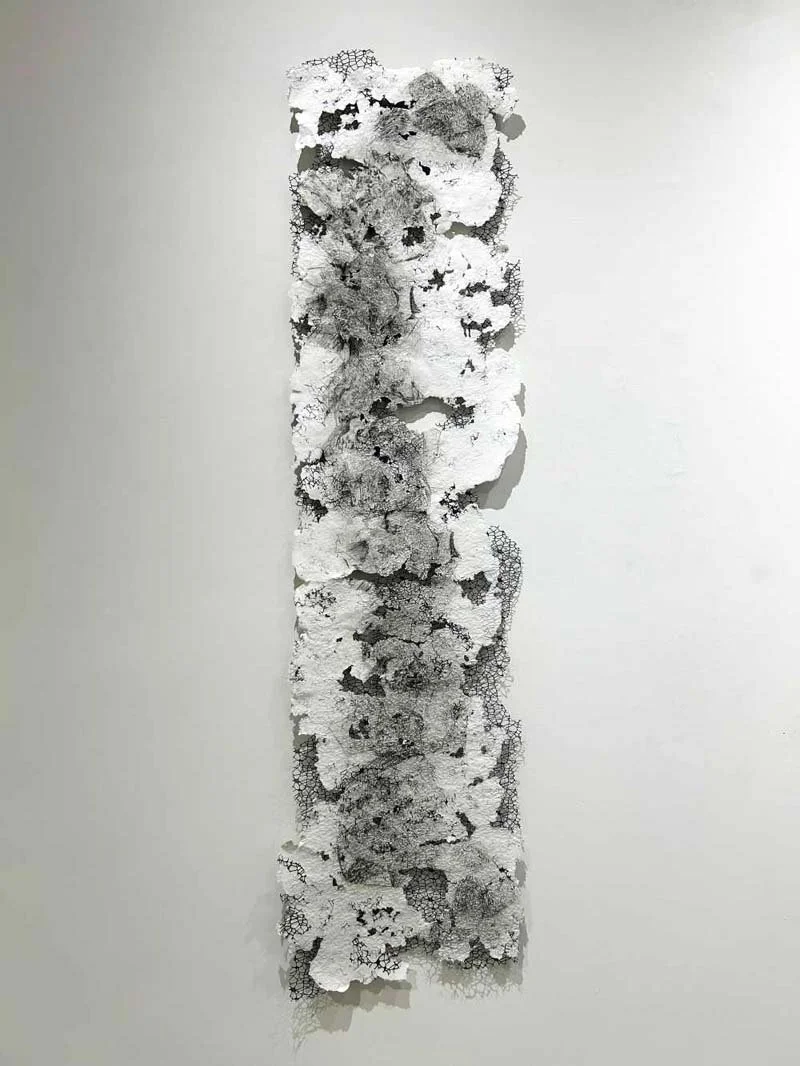
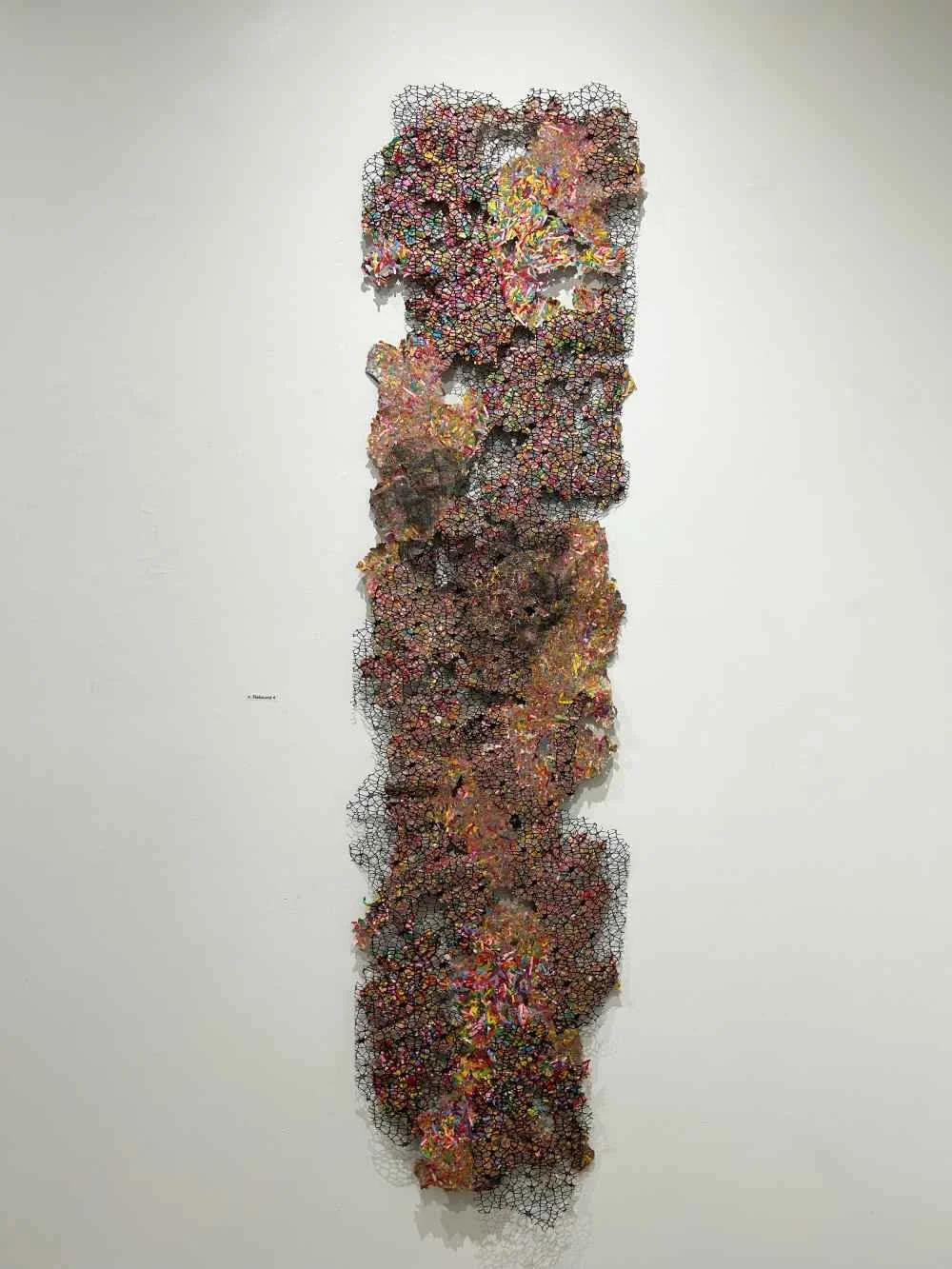
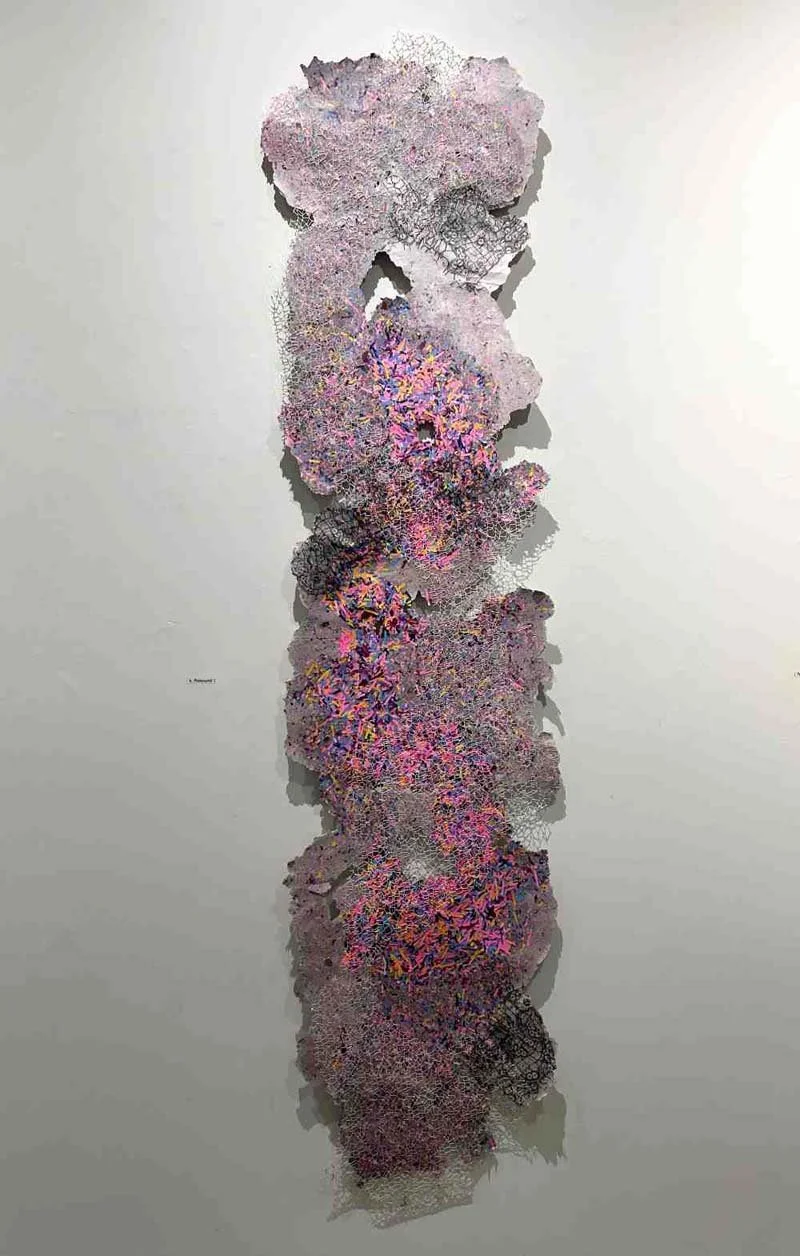
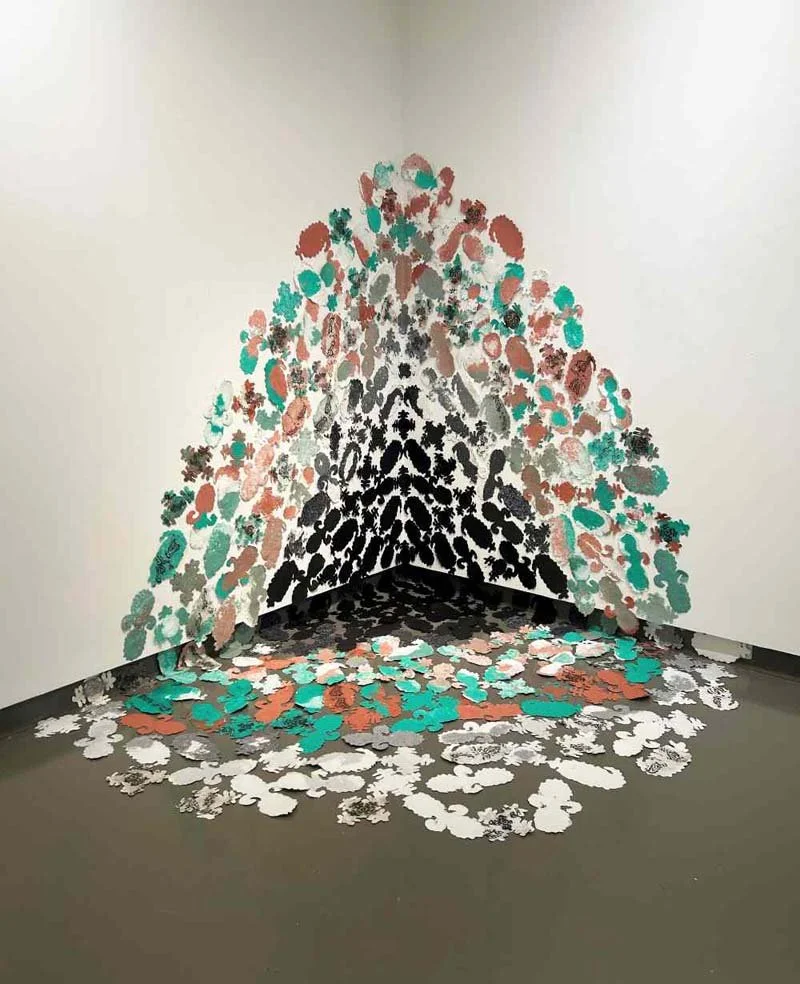
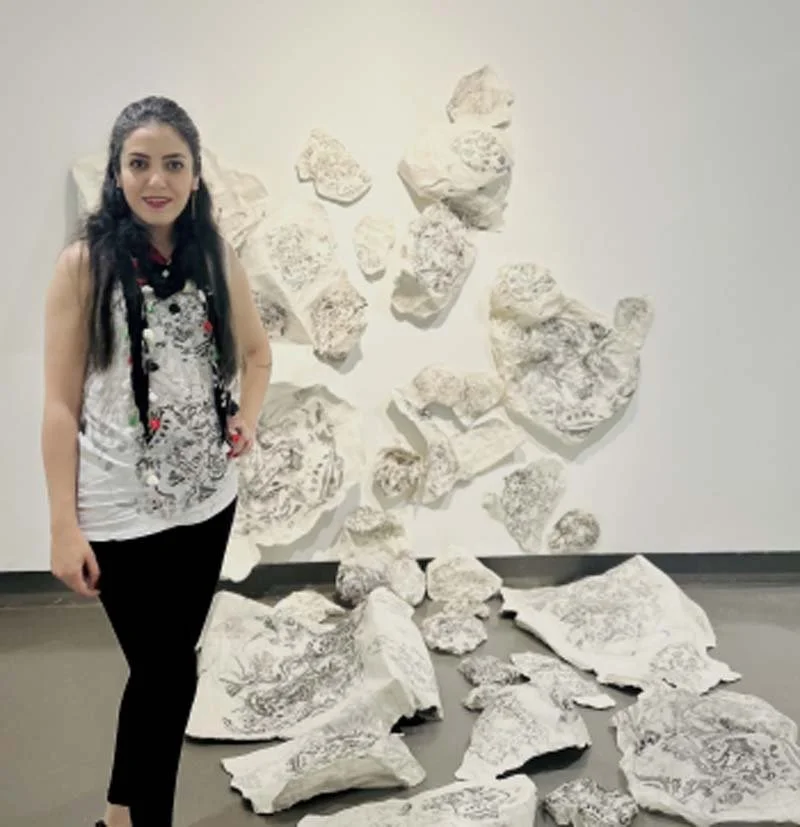
You were born in the province of Kurdistan in Iran. Can you describe how your early life there has been a source of inspiration? I was born in Sanandaj city in Kurdistan. For my entire life, I have continuously sought to discover where I fit in, and now that I have immigrated to the USA, I still have a lot of contradictory feelings about my past and my new identity here. I miss home, my family, our traditions, and celebrations with traditional shiny dresses and magnificent patterns that I translate into my works. I will always carry these memories like the missing pieces of a puzzle. I am embracing my past experience while adapting to a new, challenging life here. Sometimes I feel a big gap in my comprehension of American culture, including their different diet, clothing, problems, and lifestyles. The fusion of my cultural influences and my different understanding of this new culture with the essence of a new, unfamiliar world is a significant inspiration source for my artwork.
When did you first fall in love with art and realize you wanted to be an artist? For you, what is the importance of the arts? When I was four years old, I kept telling everyone that I wanted to be a painter in the future. There is no artist in my family, and I have always wondered what shaped the desire to be an artist from a very young age. For me, the essence of art is important. I keep telling stories with my works and patterns that I use. It's a story about a life filled with changes, insecurities, and uncertainty, yet I still choose to share my journey with my audience
What does your creative space look like? What are your most-used materials and tools? I have always used a variety of materials in my art projects. Five years ago, my studio was filled with vibrant paints and brushes. However, my studio has transformed over time, and now it brims with tools for making handmade paper and printmaking. You'll find plenty of plexiglass that I use for printing drypoints, reflecting my evolving artistic journey
What projects are you working on at the moment? And what themes or ideas are currently driving your work? Metanoia is the very recent project that I have worked on for my thesis exhibition at GSU. It explores my cultural identity as a new resident in the United States using Printmaking, handmade paper, fabric, mixed-media collage, and video. This exhibition investigates my shifted identity from my hometown, in Kurdistan, Iran, to this new environment through searching for a new visual language. My artworks juxtapose different forms and concepts regarding my cultural identity, in which a part of me is always missing, like a fragment of an ancient object. I have many contradictory feelings about the new version of myself, trying to compensate for my insecurities by using transformed patterns just like my transformed identity. Misinterpretation, separation, lack of intimacy, and mistranslation in an unfamiliar world are inspiring sources in my works that lead to a distortion of my identity in a new language translation.
What do you hope people feel when they experience your art? Identity transformation is a fundamental aspect of our lives, a journey that unites us all. Each of us undergoes changes that shape our sense of self and our connections to the world.
Do you draw inspiration from music, art, or other disciplines? I believe we are continually inspired by various sources, both consciously and unconsciously. For me, cultural music, poetry, and textiles play a vital role in inspiration.
What is unique about the place where you live? It's like being in a home that someone missed so much. A sense of intimacy that cannot be found anymore.
Tell us about important teachers/mentors/collaborators in your life. First of all, it is my family that I could not follow this path without their support. Mr. Saeed Ravanbakhsh, a wonderful mentor whom I had in Iran, played a significant role in my journey. I've also had the privilege of studying under many great professors here in America, including Craig Drennen, Tim Flowers, and Stephanie Kolpy, who have always supported me along the way.
How do you engage the natural world in your work? I make my papers in most of my artworks. I incorporate organic shapes that reflect nature, and the fabric patterns I manipulate are all fundamentally inspired by the natural world.
What’s your stance on the role of AI in creative fields? It is hard for me to answer the question about the future of AI and technology positively because sometimes it scares me. Despite these concerns, I firmly believe that authentic human art cannot be replaced by AI.
Exploring ideas, art and the creative process connects me to… To a memory that I was supposed to live.