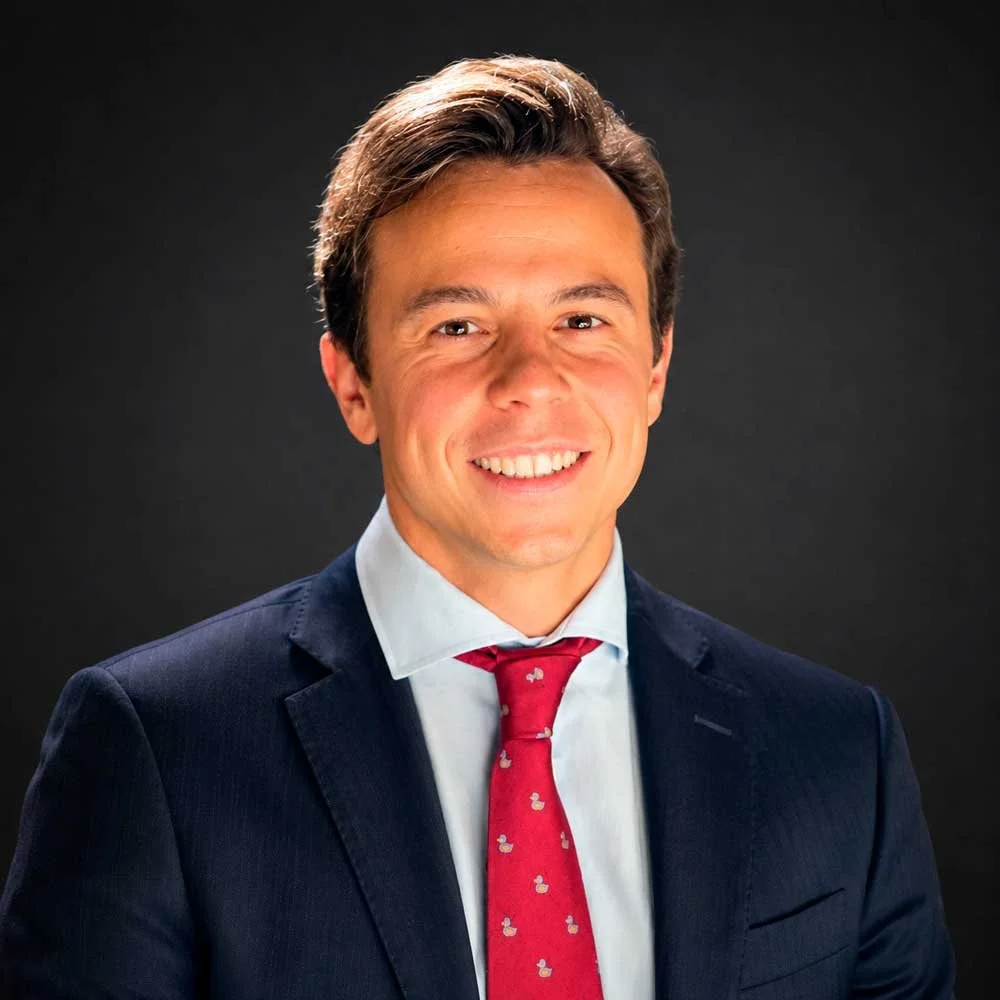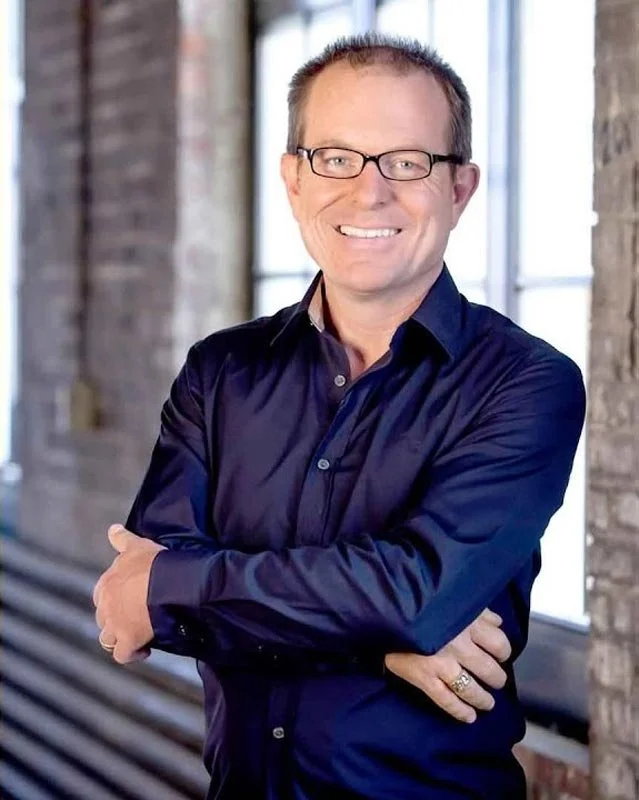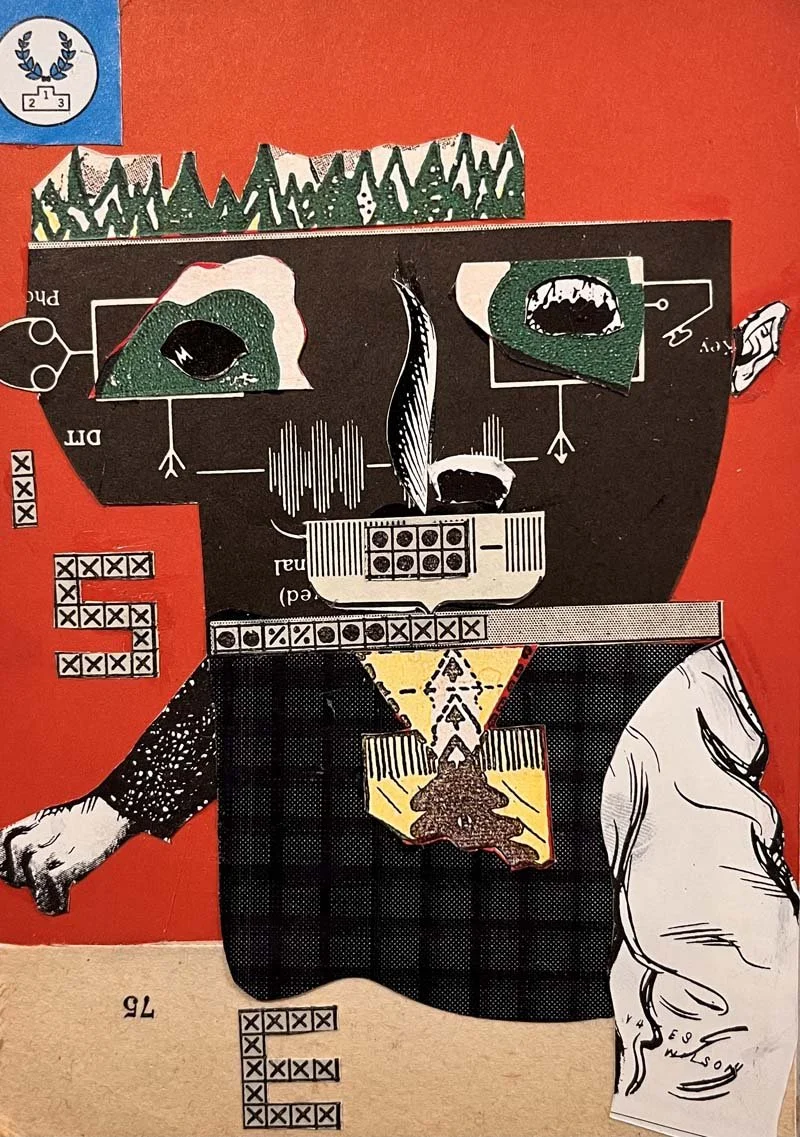


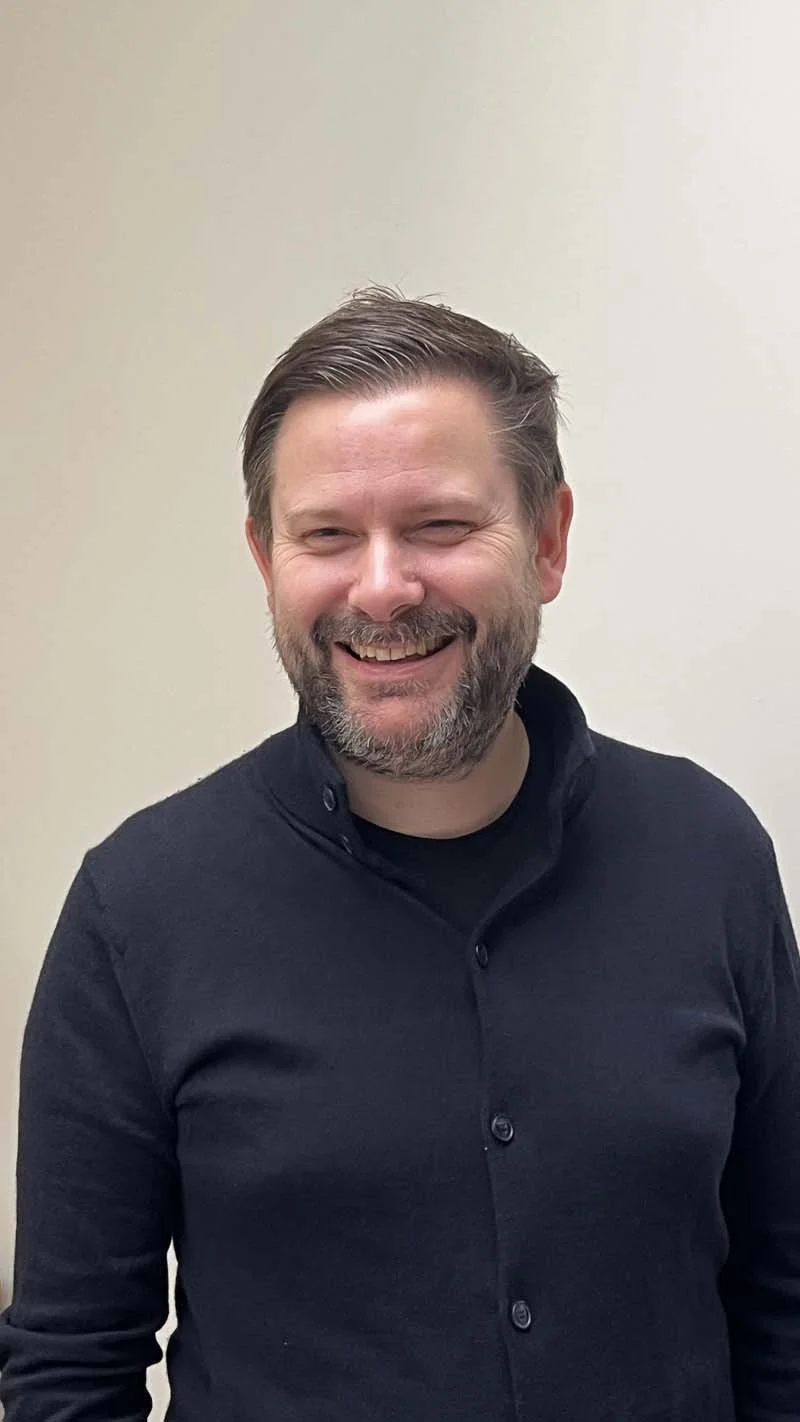
Mark Timmins was raised in Dudley in the West Midlands, UK, and went on to study Graphic Arts and Illustration at the Liverpool Art School. Today, his primary focus is collage and ink. His sketchbooks are central to my process, filled with ink drawings, handmade stamps, and textures that he often repurposes and combines with other visual elements. His collage illustrations have appeared on book covers and in magazines, most recently for The Critic Magazine. In January 2024, his rubber stamp prints were featured in Pressing Matters Magazine, and in July 2023, his works were included in The Misfits 2 group show at Pulp Gallery in Holyoke, USA. The inspiration for his work comes from his surroundings and his love of music; in his spare time, he enjoys singing and playing guitar. He currently lives in South West London with his partner and two children. @mark_timmins77
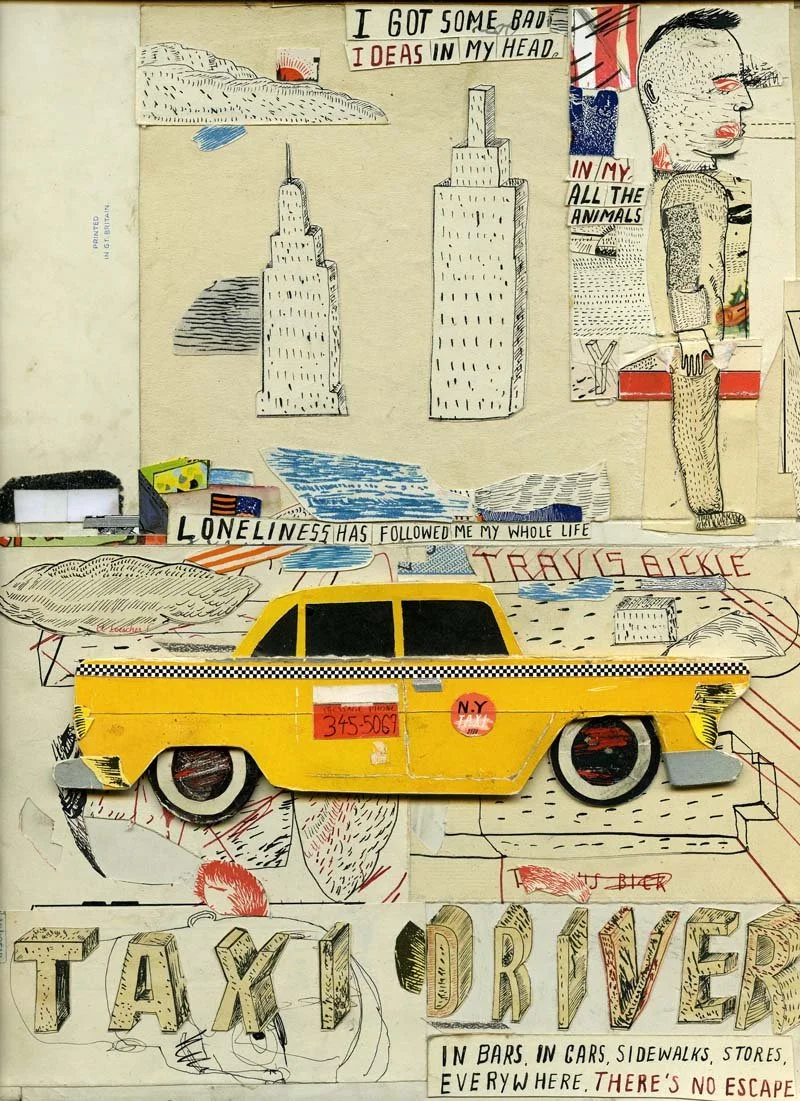
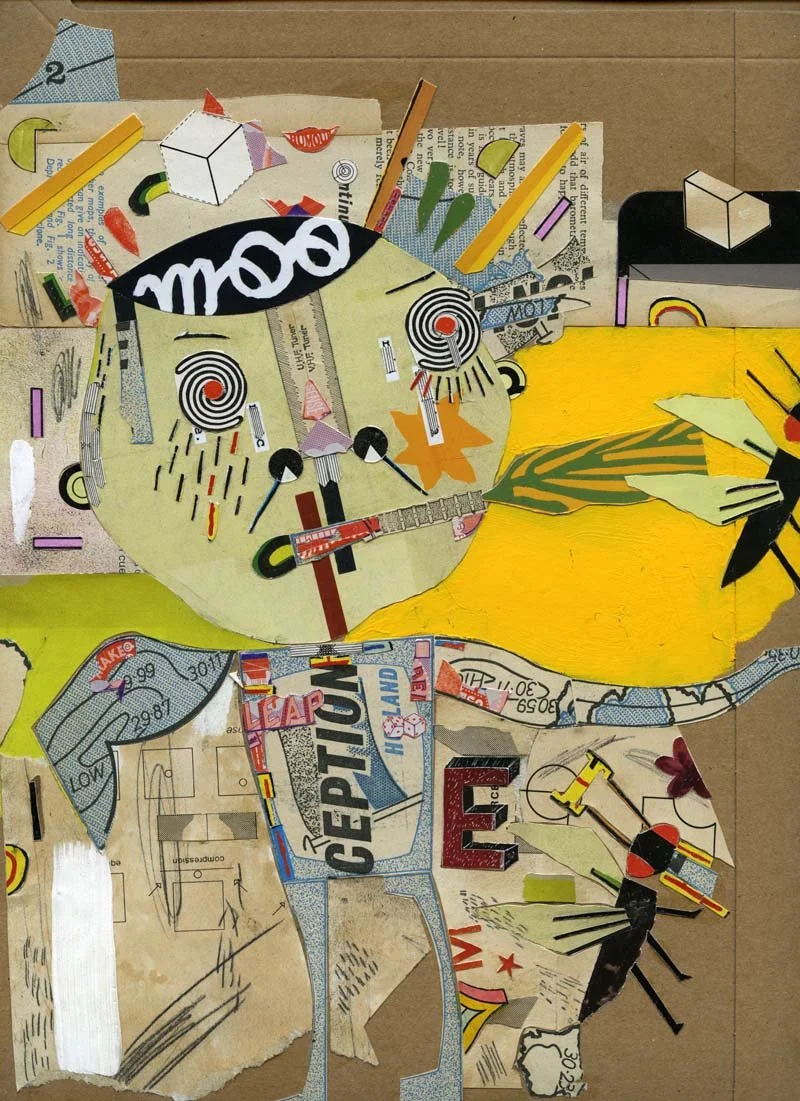
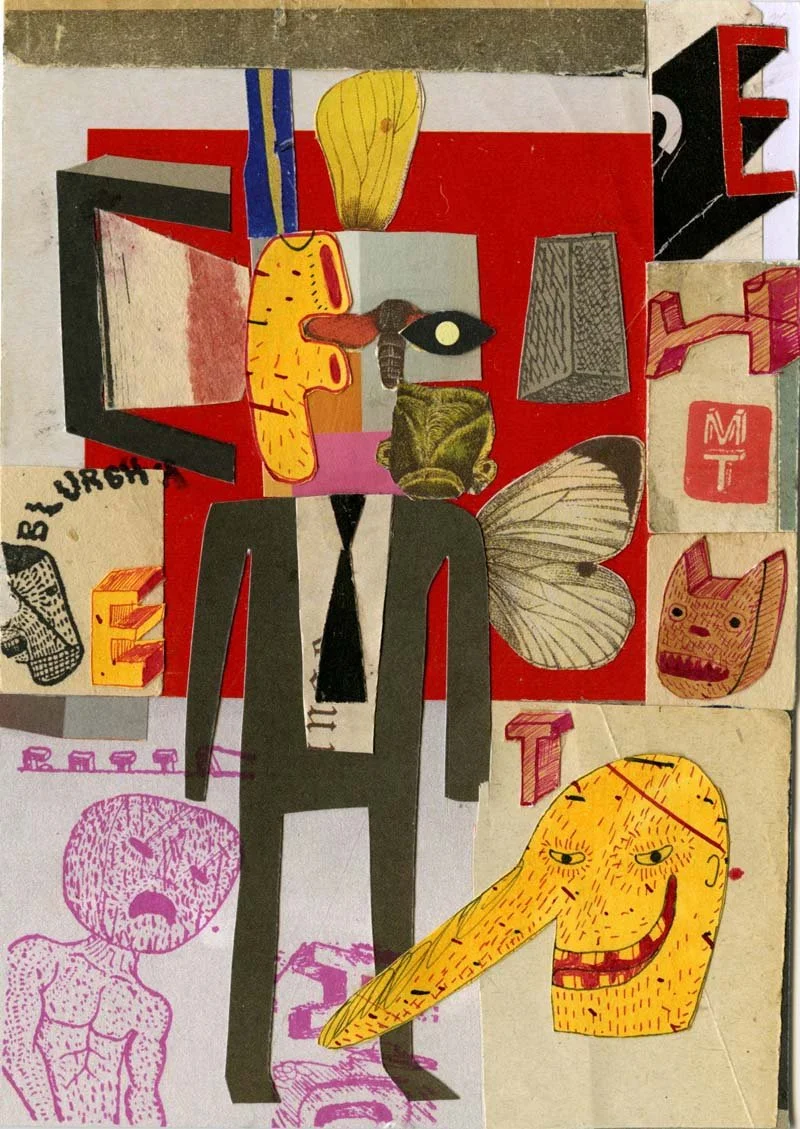
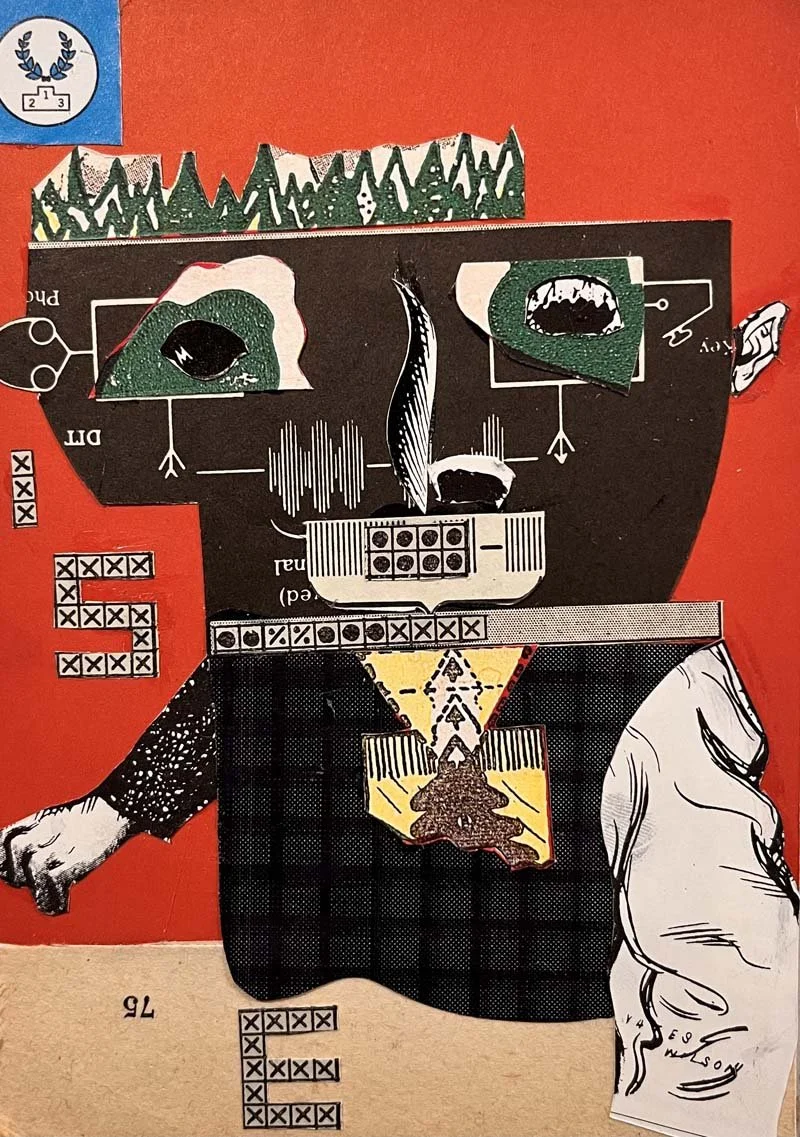
Where were you born and raised? How did it influence your art and your thinking about the world? I was born in Southampton but raised in Dudley in the West Midlands. Dudley is a fascinating town known for its rich industrial past; in fact, the anchor for the ill-fated Titanic was actually made there. Where I grew up has definitely influenced my art, especially the gritty, industrial edginess of the town. I'm also a big music fan, and the West Midlands had a hugely successful music scene during the late '80s and early '90s. I was particularly inspired by the album art of local alternative rock bands such as Pop Will Eat Itself, Ned's Atomic Dustbin, and The Wonder Stuff.
When did you first fall in love with art and realize you wanted to be an artist? For you, what is the importance of the arts? During my early teens, I used to frequently visit the Barber Institute gallery in Birmingham. For a relatively small gallery, it housed an incredibly impressive collection of art, ranging from Magritte and Van Gogh to Fernand Léger. I would definitely say that those frequent visits helped inspire me to become an artist. I feel it's incredibly important for anyone with a strong interest or talent in painting, sculpture, drawing, or graphic arts, especially from an early age, to visit galleries as often as possible. You can learn so much from simply observing and engaging with art in person.
What does your typical day in the studio look like? Walk us through your studio and your most used materials and tools. I don't currently have a dedicated studio, but I'm quite flexible in terms of workspace. I actually favour my kitchen table because there's so much natural light that comes through the skylight. I'll usually have my lightbox, scalpel, cutting mat, rapid-drying glue, fountain pens, old magazines, and vintage book papers spread out. After just a few hours, my workspace can get extremely messy!
Can you share details about your latest artistic endeavors? I've recently finished the album artwork for a London-based alternative folk musician. I started the piece back in January, and it's probably my biggest project to date. I'm really pleased with how it turned out, but unfortunately, I can't reveal any more details just yet.
Currently, I'm working on an illustration for a group show in Brighton this September. For this exhibition, artists are asked to pick their favourite film and then illustrate it. I'll be basing my illustration on a John Waters film. There are some amazing illustrators taking part, so this is very exciting for me!
How do you want your audience to experience your work? My collage work explores the dark and unsettling aspects of human nature, embracing the uncanny and the absurd. My aim is to provoke thought, evoke emotion, and entertain.
Are there any artists whose work you feel a deep kinship with, even if you’ve never met? I would have loved to have met graphic artists like Milton Glaser, Paul Rand, Saul Bass, and Henryk Tomaszewski. They were incredibly important and truly ahead of their time. I discovered their art in a little red book called 6 Chapters in Design, which was hugely influential to me.
Do you draw inspiration from music, art, or other disciplines? I listen to a lot of music when I create my art; bands like Sonic Youth or Mogwai are a great starting point. I enjoy many genres, but I really favour those discordant, quiet-to-loud bands. The music helps me loosen up a little. I don't like working in silence; I have to have something playing in the background
Living in London, what do you find creatively nourishing? I've been living in London for over twenty years, and it's a huge, buzzing, vibrant city with so much to offer in the arts. For me, the best part about London has to be the art galleries; there's really something for everyone.
Can you describe a project that challenged you creatively or emotionally—and how you worked through it? That album artwork I mentioned earlier was a huge project for me, and I threw everything at it. My collages are always created by hand, and a lot of work goes into each piece. With quite a few adjustments needed, I had to speed up the process, so I made the decision to scan the artwork into Photoshop. This was a massive challenge because I hadn't used a Mac or Photoshop in over ten years; it genuinely felt like I was learning from scratch. With a friend's help, I learned how to properly use selection tools to create layer masks and more. I had strongly resisted the Photoshop route, concerned my collage work would lose its tactile aesthetic. In the end, it worked out fine; I just kept plugging away at it.
Tell us about important teachers/mentors/collaborators in your life. I had some excellent tutors at the Liverpool Art School where I studied for my degree. They were practicing illustrators and graphic designers, making them very inspiring to be around. Recently, I collaborated with Tyler Ricky Thomas, a talented US graffiti artist. He reached out to me some time ago, very keen to work on a collaboration piece. I agreed and sent him one of my original collages to work his magic on. Seeing the finished artwork was a lovely feeling.
In what ways does the environment show up in your work? London can be quite overwhelming and energy-zapping, so it's important to escape the city's buzz. I like to get away to recharge, and there's nothing quite like visiting Pembrokeshire in South West Wales or the Snowdonia mountain range in North Wales. Both places are magical and beautiful, and being surrounded by the sea or mountains definitely has an impact on my art. I always feel energized on my return and inspired to create.
What is your relationship with technology as a creative tool, and how do you feel about the growing use of AI in the arts? I'm really not a fan of AI at all when it comes to art. I find a lot of the AI-generated work looks the same—it's hideous and cringey. I firmly believe we should all be creating art by hand; it's good for your brain and hands, and that's where all the fun is! There's nothing quite like cutting up ink drawings, creating a collage using old magazines, or adding fresh paint to a canvas.
Exploring ideas, art and the creative process connects me to… The hands-on thrill of turning disparate pieces into something new, a feeling echoed by experimental soundscapes.