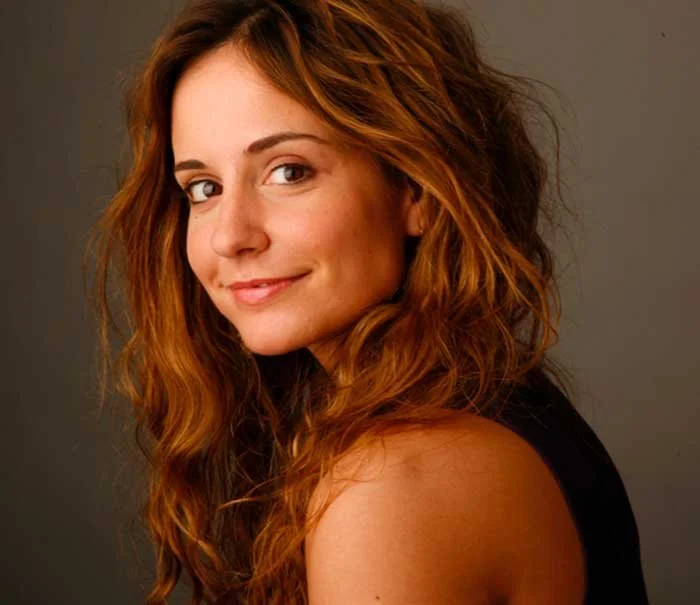


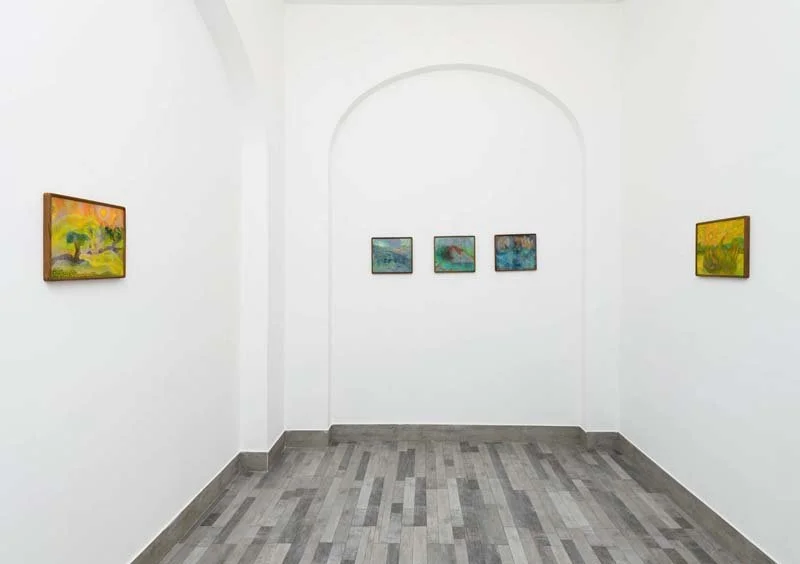
Xuanru Wang holds an MRes in Arts and Humanities from the Royal College of Art, completed in 2024. Xuanru’s work explores the human experience of love and pathos, inspired by Aby Warburg’s concept of the “Pathosformel.” Drawing on historical films, classical painting, and literary texts, her practice is like archaeology within art history, reaffirming timeless emotional memories. Highlights of recent exhibitions include ‘The Impossible Hand,’ MONTI8 Gallery, Rome, Italy; ‘Past Future,’ The Bomb Factory Art Foundation, London, UK; ‘The Torrent & The Fold,’ LBF Contemporary Gallery, London, UK.
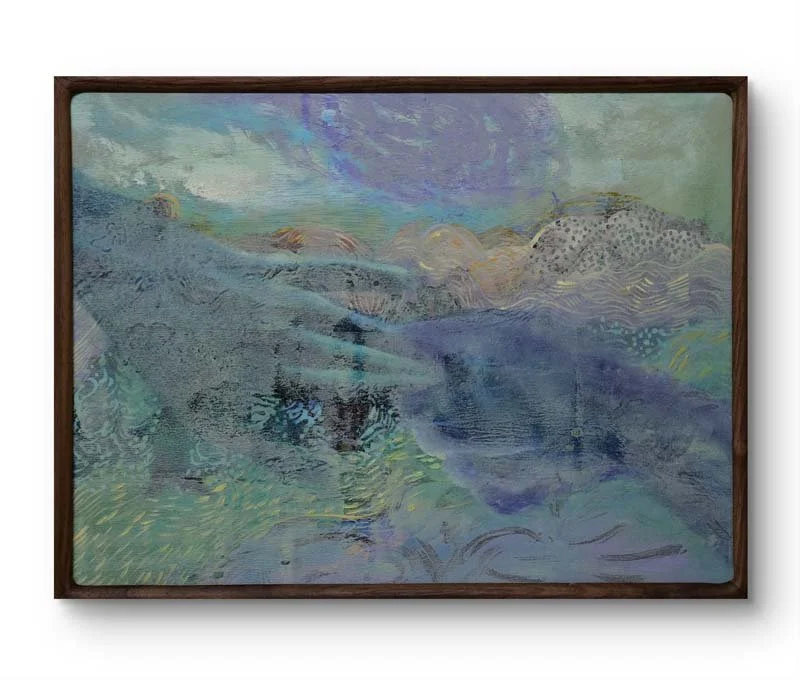
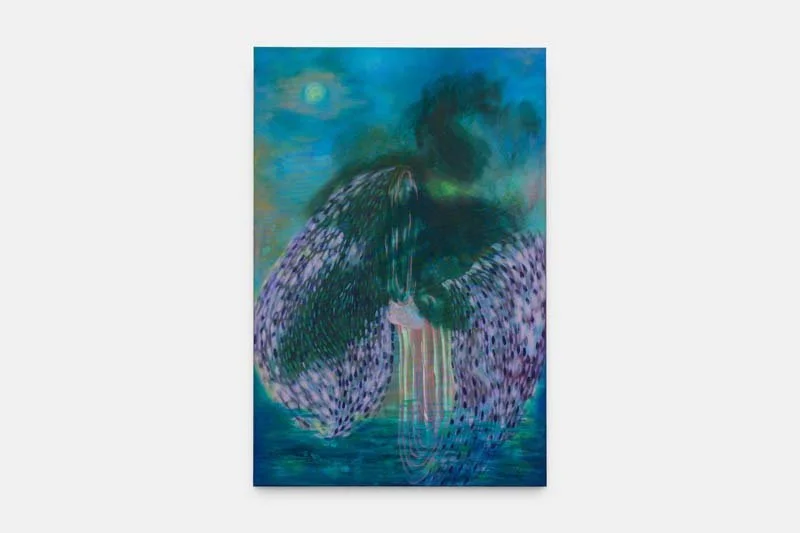
Where were you born and raised? How did it influence your art and your thinking about the world? I was born in Jingdezhen, a city in southern China. The subtropical monsoon climate and scenery here have profoundly shaped my aesthetic sensibility. I find myself unconsciously drawn to things that are damp, misty, and hazy, moss-green, sultry, and diffused. These sensory experiences often permeate my canvas.
At the same time, this city is renowned, both historically and today, for its porcelain production. Therefore, I was easily exposed to the lineage of Chinese art behind the history of Chinese porcelain from a young age. A multitude of classical visual imprints, such as the "blue-and-white porcelain colour" and "ink wash painting," are deeply ingrained in my visual memory in an intimately familiar way.
我出生于景德镇市,一个位于中国南方的城市。这里的亚热带季风气候和风景很大程度上影响了我的审美。我会不自觉地迷恋一些潮湿的、雾气朦胧的、苔藓绿的、闷热而弥散的事物。这些感觉经验很大程度上会被我转移到画布中。
同时,这座城市因为盛产瓷器而古今闻名。所以我从小就很容易接触到中国瓷器史背后的中国艺术脉络,这种大量诸如“青花瓷色”“水墨画”等等的古典视觉映像都以及其熟悉的方式隐藏在我的视觉记忆库中。
What sparked your initial interest in creating art, and when did that curiosity shift into a conscious decision to pursue it as your life’s work? My artistic journey began when I studied film in high school, and it quickly ignited a boundless passion within me. From that point on, I harboured a strong desire to become an artist, whether through making films or pursuing other creative avenues. In art, I discovered a sense of transcendence; it offered me a way to rise above the mundane reality of my life at the time.
For me, the significance of art also lies in providing a language that transcends conventional "language." This is because I've always been a very talkative and expressive person since childhood. However, as I grew older, I needed to process increasingly complex subjects. Everyday conversation often felt inadequate for truly reaching the core of the things I cared about, sometimes making me seem long-winded. Art, on the other hand, offered me another language. It allows me to circumvent the logic of ordinary dialogue, enabling me to speak about things with greater precision, or sometimes, in a more circuitous way.
我在上高中的时候开始学习电影艺术,很快这调动起了我极大的兴趣和热情。从那个时候开始我很想成为一名艺术家,不论是去拍电影还是做些别的都好。我在艺术中发现了一种超越性,它能让我超越当时生活的庸常。
对我来说,艺术的重要性还在于向我提供了一种超越“语言”的语言。这是因为我从小就是一个很爱说话和表达的人,但随着我年龄的增长,我需要去经历和处理越来越复杂的议题。而日常对话无法真正触及到我所关心的事物的内核,这往往显得我很喋喋不休。而艺术为我提供了另一种语言,可以绕开日常对话的逻辑,让我更精准或更迂回地去谈论。
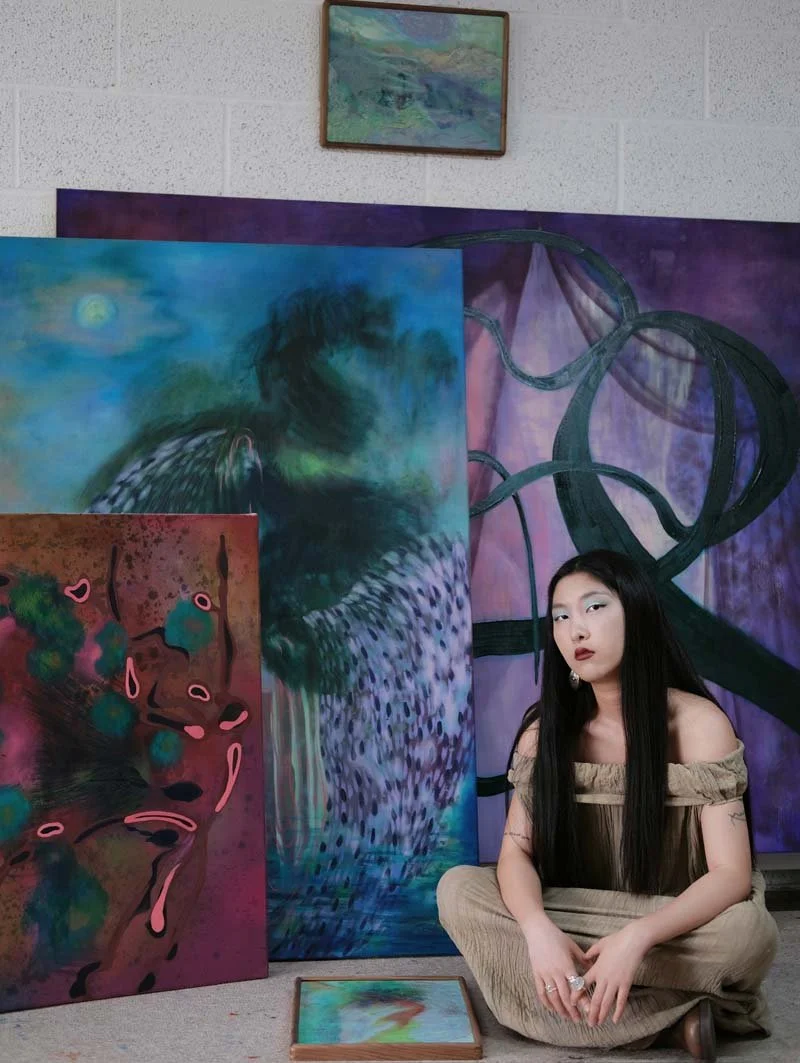
Tell us about a day in your creative space and your most familiar tools and materials. My studio has a large floor-to-ceiling window overlooking a vast green space where people often play soccer and walk their dogs. The studio floor is fully carpeted, but the carpet is now thoroughly stained with paint.
I typically work from the afternoon late into the night. I'm not someone who can immediately enter a painting state just by standing in front of the canvas. So whenever I enter the studio, I'll sit casually on the floor and zone out, emptying my mind. I need to let my eyes work without any specific purpose. Sometimes I sit by the window and gaze at the scenery for a long time, or sit on the floor flipping through books (I love reading, whether textual or visual; the medium of books itself brings me a great sense of security). I also frequently sit in front of my paintings, looking at them for extended periods without picking up a brush. Looking constitutes the longest part of my work in the studio.
Oil paint and drawing are my most frequently used mediums. My studio also houses many decks of tarot cards; they are a tool for dialogue with myself.
我的工作室有一面很大的落地窗,窗外是一大片绿地,经常有人们在那踢足球和遛狗。工作室里铺设了整片地毯,但地毯上现在已经布满了颜料。
我一般从下午开始工作到深夜。我不是一个站在画面前就能立刻进入绘画状态的人。所以每当我进入工作室,我会随便坐在地上,然后发呆,放空自己。我需要让我的眼睛不带有任何目的的进行工作。所以我有时候我会坐在窗前看很久风景,或者坐在地上翻书(我很喜欢看书,不论是文字的还是图像的,书籍这个媒介本身会给我带来很多安全感)。我也经常会坐在自己的画前,看很久而不动笔。“看”这个行动是我在工作室里最漫长的工作。
油画和素描是我最常用的材料。我的工作室里也会有很多副塔罗牌,它们是我自我对话的工具。
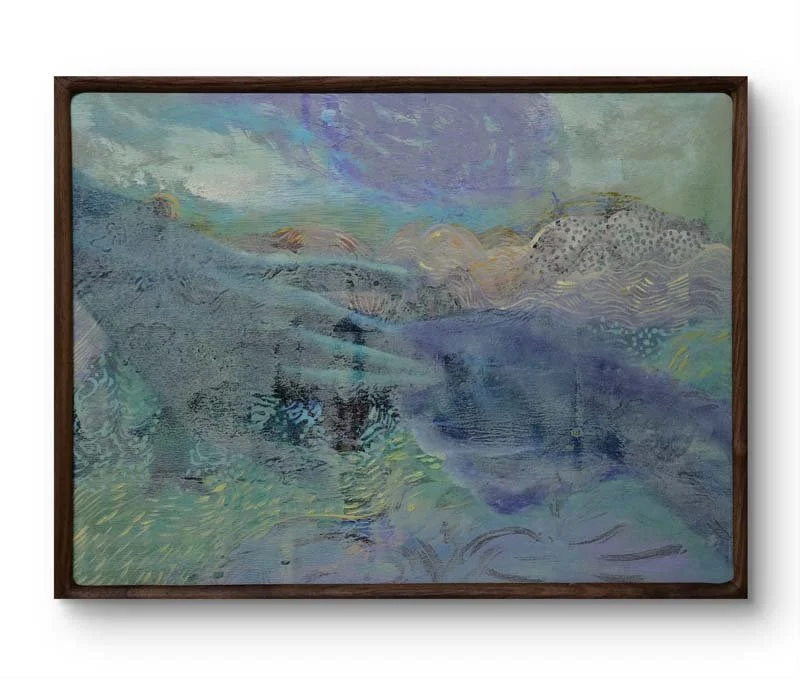
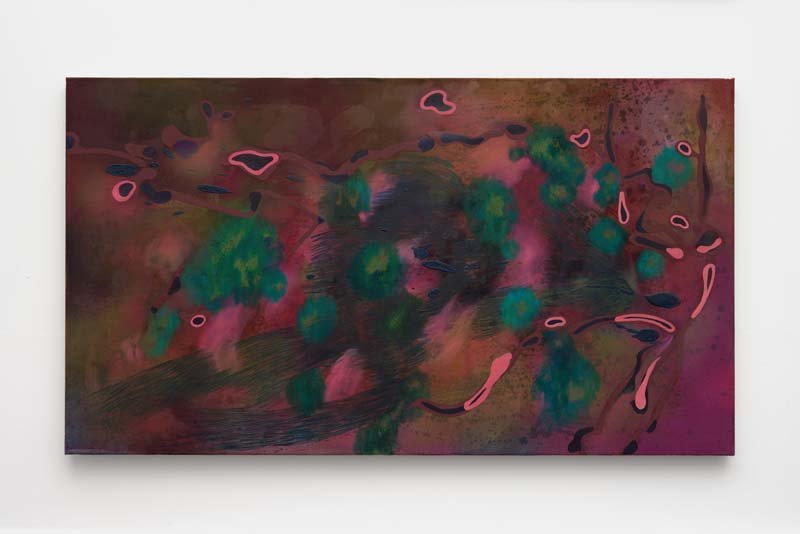
What projects are you working on at the moment? And what themes or ideas are currently driving your work? I'm currently experimenting with using translation as a methodology for creating abstract paintings. I've collected many lines of poetry that I deeply love; most of these verses carry a poignant melancholy, an emotional theme I've consistently explored. I attempt to abstract and visualize my sensory and emotional responses to these texts, then "translate" them onto the canvas. Two completed works from this series will be exhibited this July at the LBF Contemporary Gallery in London.
我最近在尝试以翻译作为方法来进行抽象绘画。我搜集了很多我很喜欢的诗句,这些诗句大多都是悲戚的,我一直以来都关注这种情感主题。我尝试将我对于这些文字的感觉抽象化、视觉化,并翻译在画布上。有两张已经完成的作品将于七月份在伦敦LBF Contemporary Gallery 展出。
What core experiences and values are you trying to transmit in your creations? I have no specific demands or expectations; any honest feeling evoked in the viewer is most welcome to me. I firmly believe that the world we co-inhabit cannot be truly shared or fully perceived by another. I do not require my work to be transmitted precisely to the audience. What I express may dissipate, transform, or intensify in the gaze of the other – this is beyond complete control.
I see the artwork as a unique material presence. It functions as a vessel, simultaneously carrying the creator and the viewer. Therefore, my only wish is for people to stand before my paintings and look, to look for as long as possible. If the emotional landscape I've constructed within the painting also unlocks a resonance for others, opening itself to them, then I would consider it a profound success. This evokes a feeling akin to the ancient sentiment: "sharing this moment across the vastness of time and space."
我并没有特定的要求或期待,任何诚实的感受我都很欢迎。我始终相信我们共同生活的这个世界是无法被真正的分享和感知的。我不会要求我的作品被精确传输给观众,我表达的东西也许会在他者的观看中流失、变异或强化,这是不能被完全控制的。
我认为艺术品本身是一种独特的物质性存在,它作为一种承载物,同时承载着创作者与观者。所以我只希望人们站在我的画前观看,尽可能看得久一些。如果画面中我所构筑的情境也向他人敞开了,那我会觉得很成功,这是一种近乎于“天涯共此时”的感动。
Which artists, past or present, would you like to meet? And why? J. M. W. Turner, Mark Rothko, Sanyu (常玉), and Berlinde De Bruyckere. Through their works, I perceive an abiding passion manifested in silence. Were I granted an encounter, I would choose to observe them as a hidden witness – never through direct discourse. To me, each embodies a reticence, keeping silence before the unsayable. I hope to behold their creative state absent all traces of my presence. It is within this unspoken communion, I believe, that I might draw nearest to the substance of their silence.
J. M. W. Turner、Mark Rothko、San Yu和Berlinde De Bruyckere。我在他们的作品中都能感受到一种恒久而又沉默的激情。如果可以见到这三位艺术家,我希望是以偷窥的方式,而不是面对面有实质性的交谈。这四位艺术家在我看来都是不善言谈的性格,或者是他们也在不同程度上选择对不可说的保持沉默。我希望在毫无存在感的情况下,去观看他们在创作时的状态,我想我会因此而靠近他们更多。
What other disciplines do you draw inspiration from? I've always been inspired by literature, movies and sculpture. I love to savor the illusion and substance constructed in words, the way the gaze moves and the lingering in the stillness of the gesture.
是的。我总是能在文学、电影和雕塑中获取灵感。我很喜欢去品味文字中构建出来的虚幻和实质、目光的游移方式和静止姿态里饱含的缠绵。
How has your city or town influenced your practice? I'm currently based in London, where there are so many art events and resources that it's easy for me to go to good exhibitions and meet talented people. This always allows me to grow and progress. Also, I somehow quite like the climate in London.
我目前常驻在伦敦,这里的艺术活动和资源很多,很方便我去观看好的展览,结识才华横溢的朋友们。这总是可以让我获得成长和进步。而且,我莫名其妙的挺喜欢伦敦的气候。
Can you describe a project that challenged you creatively or emotionally—and how you worked through it? While I was studying at RCA, I started an autotheoretical writing project called The Three Grace. It was my first attempt at using writing as a medium to practice, and the process was very difficult because I didn't know how I would balance my skills with my passion. In the end, I just let my passion to complete it.
我在RCA上学期间,曾开启过一个自理论写作的项目《The Three Grace》。这是我第一次尝试以文字为媒介去创作,过程非常艰难,因为我不知道应该如何去平衡创作技巧和创作激情之间的关系。于是我最后完全放任了激情去完成它。
Who do you credit with helping guide your artistic development? My tutor during the time at RCA, Jonathan Miles, has helped me with every bit of help and spotting I've done. It was only when I entered RCA that I started my painting attempts, so when I finished my first painting, I asked Jonathan to critique it. He said to me at the time that my painting could not be called a painting at the moment, only an illustration. I was so enlightened that I cut and destroyed the painting, and from there I began to think about what painting is, what an image is, and what it means for a work or practice to be “painterly”?
我在RCA期间的老师Jonathan Miles,他对我的每一次帮助和点播都让我受益匪浅。我是从进入RCA才开始了我的绘画尝试,所以当我完成了我的第一张画作后,我请Jonathan来点评。他当时对我说,我的画目前还不能被称为画,只能被称为插图。我当时茅塞顿开,割毁了那张画,并由此开始思考什么是绘画,什么是图像,绘画性是什么?
What’s your relationship with the natural world as a source of inspiration? I probably don't have a way to share it; I don't know how to describe the complexity and depth of the feeling. Nature has a great healing power over me, and being in nature removes a lot of my emotions, language, and perception of my existence. I love being in nature, and I need to do it regularly. The wind, the light, the intertwined shapes of plants, etc., in nature inspire my art practice and my imagination.
我可能没有办法分享出来,我不知道如何形容这种复杂而深刻的感受。自然对我有一种极大的疗愈力,置身于大自然中能够消除我的很多情绪、语言和对自身存在的感知。我很喜欢呆在自然里,而且我需要定时这样做。大自然中的风、光、植物交缠的形状等等都会激发我的创作灵感和想象。
How do you feel about the growing use of AI in the arts? What is your own relationship with AI and technology as creative tools? In my daily life, I generally only use AI as a tool and thought model. I think art should not only arouse the viewer's amazement, but also the viewer's touch. The importance of human art lies in “human beings”. Human art is a creation based on the physical body, senses, thoughts, and life experiences of “human beings”. In this chain of art practice, the handmade work magnifies and emphasizes the existence of the physical body, and at the same time consumes it. I think what is so moving about art is not only the creation itself, but also the consumption, the consumption of the artist's life. This balance is very real and important.
在日常生活中,我一般只把人工智能当作工具和思维模型来使用。我觉得艺术不仅仅是要引发观者的惊叹,也需要引发观者的动容。人类艺术的重要性在于“人类”,人类艺术是基于“人类”的肉身、感官、思想和生命经验所诞生的被造物。在这一套创造链条里,手工创作放大和强调了肉身的存在、同时也消耗着这具肉身。我觉得艺术的动人之处除了创造本身之外,还有消耗,对艺术家的生命消耗。这种平衡很真实,也很重要。
Exploring ideas, art and the creative process connects me to… The dynamic space in which I exist.
探索想法、艺术和创作过程将我与我生存的动态空间联系起来。