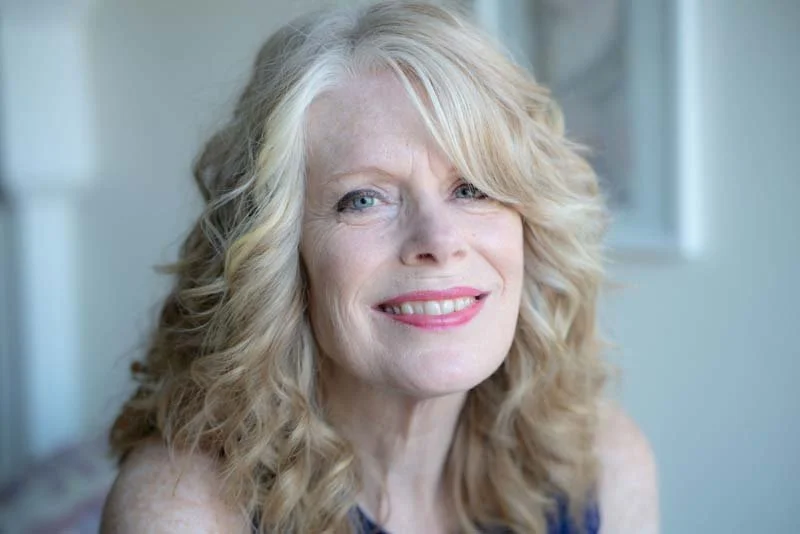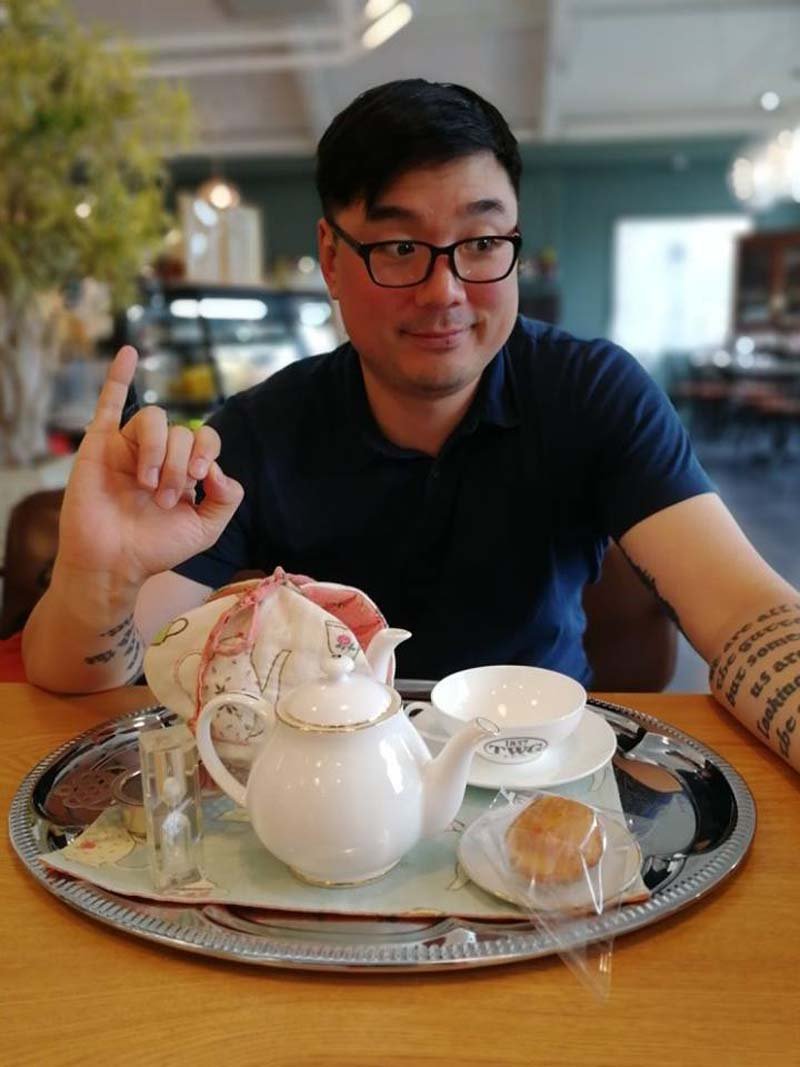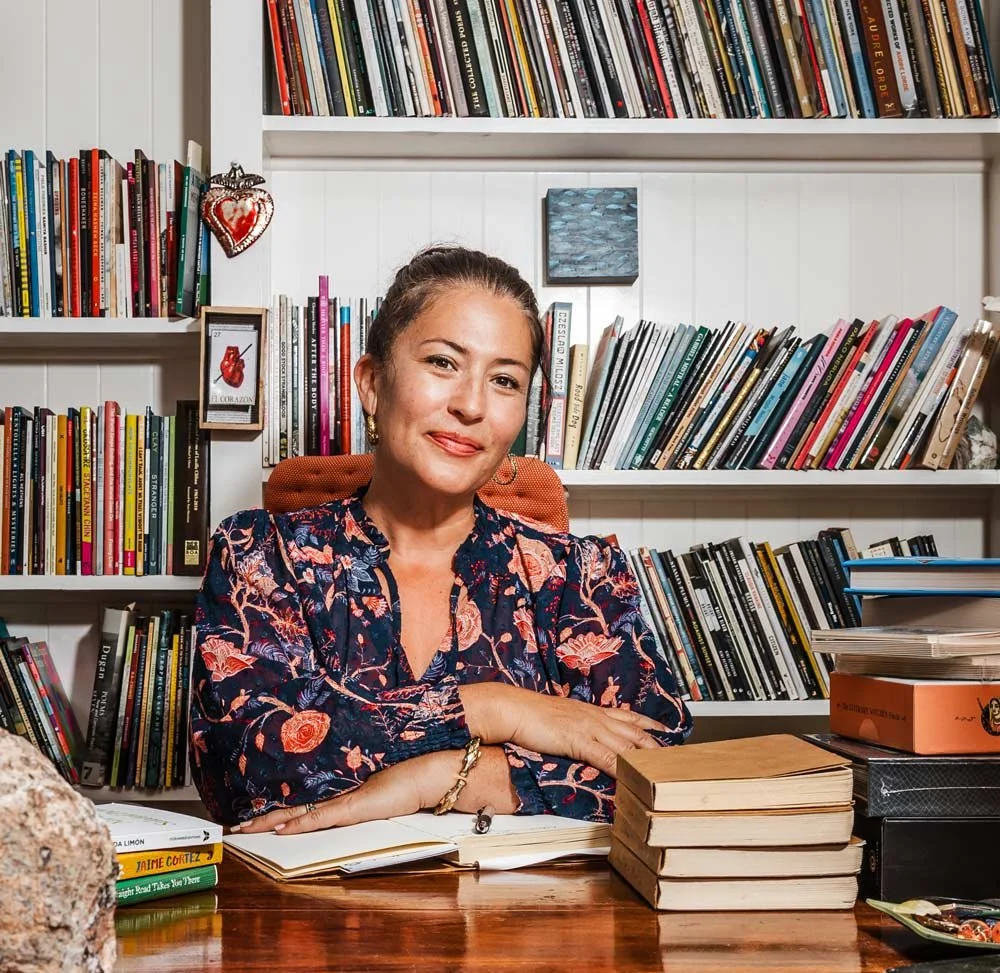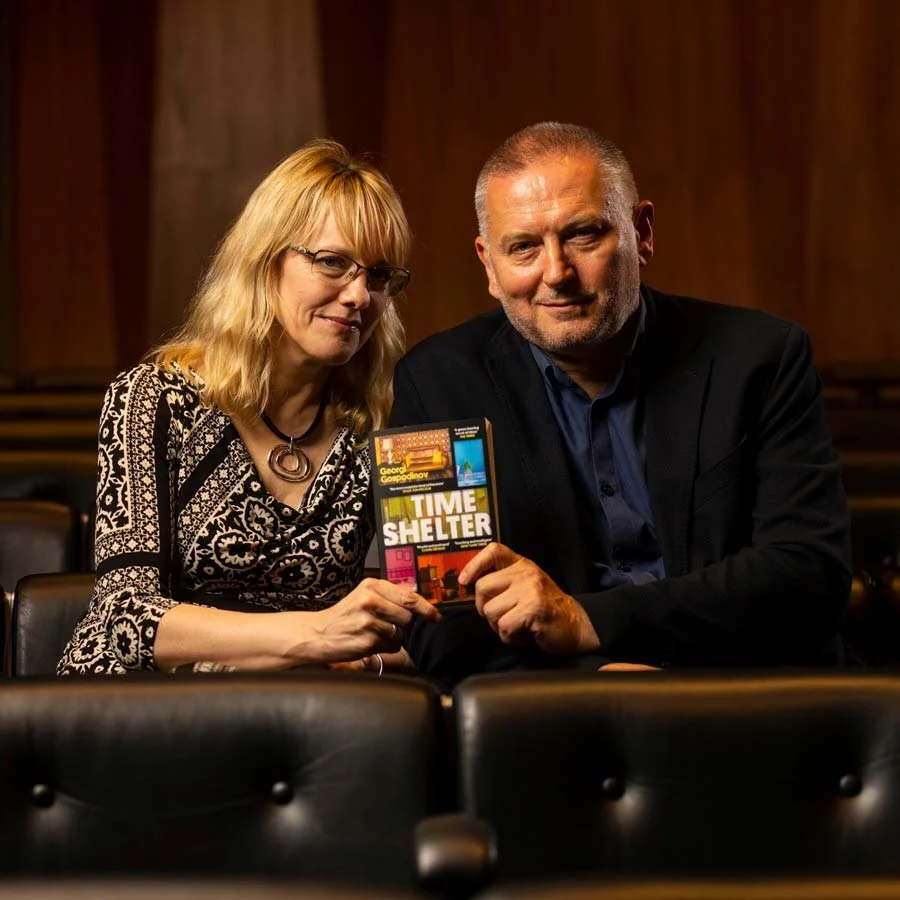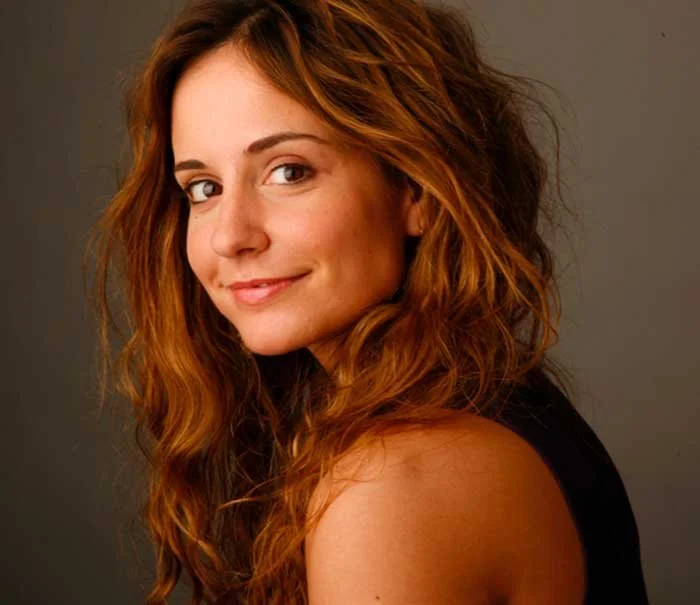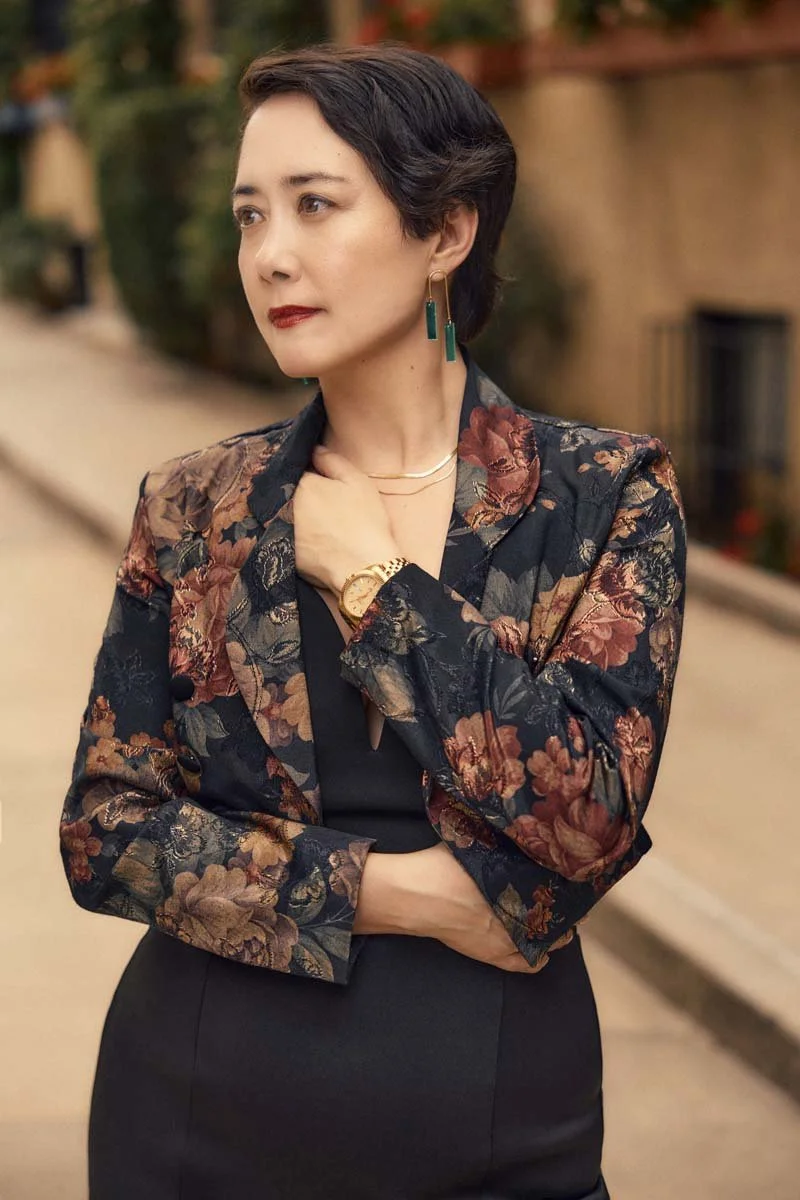


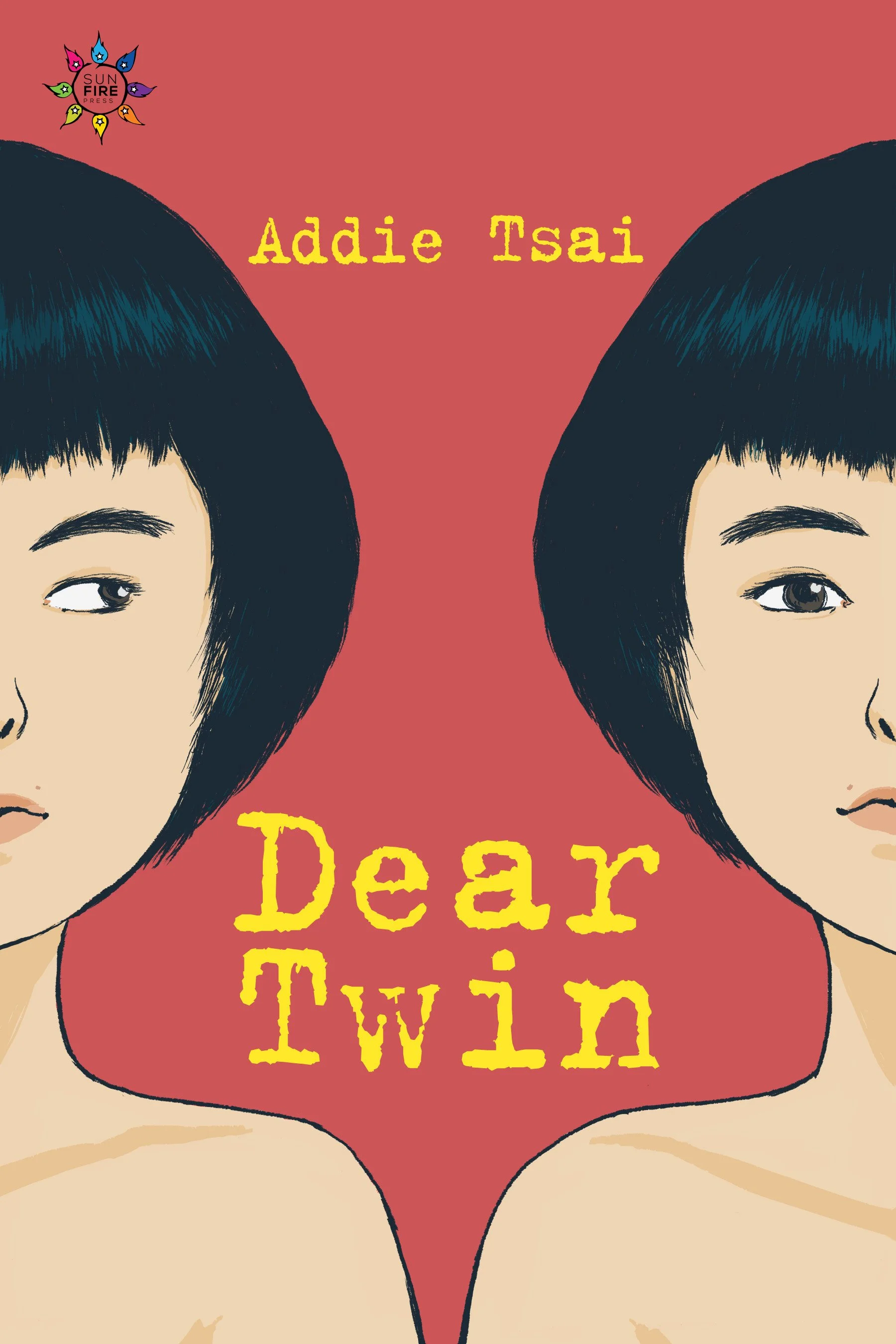
Addie Tsai (any/all) is the author of Dear Twin (2019), included in American Library Association’s Rainbow List in 2021, and Unwieldy Creatures (2022), a Shirley Jackson finalist for Best Novel. She collaborated with Dominic Walsh Dance Theater on Victor Frankenstein and Camille Claudel, among others. They are the founding editor-in-chief for just femme & dandy. Addie is an Assistant Teaching Professor of Creative Writing at William & Mary. She is the author of Straight White Men Can’t Dance: American Masculinity in Film and Popular Culture (Bloomsbury, 9/25). @addieisunwieldly
Where were you born and raised? How did it influence your writing and your thinking about the world? I was born and raised in Clear Lake City, a suburb south of Houston, noteworthy for being the headquarters for NASA, where my father worked his entire career. I've often felt that to grow up in the most diverse city in the United States while also navigating a life in the South as a person of color gave me a complex understanding of the world. I was fortunate to come of age as a writer in such an inclusive environment, while also living in Texas meant that I certainly wasn't shielded from what it means to be a marginalized person in this country. These tensions and dualities I often navigate within my writing. When you come of age as a writer outside of the havens of NYC and LA (and others), you're required to work and put yourself out there in a different way. I think where I was born and raised has everything to do with my work ethic, and understanding that if I want to continue to grow and shape my career, I'm going to have to work at it.
Were you the kind of kid who always had a book in hand? Which ones stood out? I've always loved reading. My father acted in a Chinese theater group my entire childhood and during the many hours he rehearsed (in a language I wasn't fluent in) I would read books. There was a lot I didn't learn directly from parents or other family members, and so I also reached out to books to help me with what I needed to learn as a child and adolescent. The book that made me want to be a writer was Lois Lowry's first novel, A Summer to Die.
You write in pretty much all genres—are there any routines or rituals that sustain your wide range of creativity? A typical writing day changes depending on the genre. But since I'm currently working on a novel, I'll answer for that genre. I resist thorough outlines because I worry that they'll prevent the act of discovery in the moment of drafting. I start with a general premise, what I call a frame (narrative style, POV, beginning and ending, etc.), and some very basic beats in a bulleted list, often at the bottom of the document I'm working from. I start first thing in the morning with either a tea or coffee - I'm a morning person by nature, but I also want my brain at its freshest, not burdened by other tasks, conversations, etc. - and I work on a particular section a day. It's possible I won't finish that section that day, but if I finish it early, I won't continue onward. It helps my writing brain to contain them that way. So, I either write until I tire myself, or until I've come to a clear stopping point in what I'm writing. For any writing project, the most I can write at a given point is six hours at a time. I'm just getting started on this new novel (and I've had to re-envision it more than any other book so far, oof!), so at the moment I'm working from Jami Attenberg's recommended 1000 words a day, which I find a helpful goal, especially in the early days of a project. I rarely edit as I go - I worry that it'll block me in the remaining work on a project. But I do sometimes start a day's work by reading the previous day's writing, and I might tinker, just slightly, with what I've written. But no major revisions until I have a draft.
Can you share how Unwieldy Creatures, your most successful work to date, evolved from idea to finished draft? I started Unwieldy Creatures, a queer Asian retelling of Frankenstein, at a small writing retreat outside of Santa Cruz, in the heart of the redwoods. It was a different writing process than I imagine I'll ever have again, because I was so intimately familiar with Frankenstein, the source text I was adapting to a contemporary (non-canon) retelling. My process, however, was fairly similar, except for one difference: I started each writing day with Frankenstein. I would read a chapter of Frankenstein, and then I would write my chapter that aligned with that part of the narrative. At some point, my novel diverged enough that it was no longer productive to continue the practice, but it was especially important as I was setting up my story, especially since I wanted to write a retelling that was faithful to Frankenstein, more so than many retellings feel the need to be. The novel was, in many ways, a love letter to Mary Shelley and her most famous work, and so I also used the rereading as a way to feel very close to Shelley's diction - I attempted a hybrid diction that was a braiding of her original with a more contemporary voice. I finished the novel during the height of COVID, and so my process then had a kind of shapelessness. It was a struggle. I felt underwater as I wrote it, as so many concerns of what was happening outside my door loomed large. For the revision process, I went through the novel page by page, and I wrote down each change I needed to make on a single post-it. At that point, I'd received feedback from a few different people, and I gave each person's feedback (as well as my own ideas for revision) a different colored post-it. I affixed each in columns on the back of my office door, and tackled each change in order, one by one.
Do you keep a journal or notebook? If so, what’s in it? I've gotten quite out of the practice of keeping a journal, although I sometimes have phases. Notes for works in progress, thoughts I'm working through either creatively or personally, ideas for projects, quotes that resonate, sometimes Polaroid self-portraits I've taken that I want to keep thinking about, in terms of craft or aesthetic.
How do you research and what role does research play in your writing? A lot of factors impact my ability to research, depending on what I need research for. Since research funds are rather limited, I largely depend on Internet research - Google, my institution's library databases, Internet Archive, and books in order to dig deeper, especially when it comes to my fiction. Because my books explore different aspects of the Asian diaspora, I also rely on YouTube, historical novels, and personal accounts of Asian landscapes at particular times in history to get a sense of them enough to bring them to life in my work. I organize them differently at different times - sometimes on Scrivener, sometimes as bookmarks on my browser, and sometimes on spreadsheets. I use this knowledge to inform the worlds I'm creating. But sometimes, research will be far less specific or wide-ranging. It might be a particular tree native to the landscape that will become important to the story, or I need to understand something logistical about something seemingly simple. Perhaps I want to get inside the mind of the character of an architect, and what might compel him towards one type of design versus another. And so on. Research moves fluidly throughout my work in different ways.
Which writer, living or dead, would you most like to have dinner with? James Baldwin.
Do you draw inspiration from music, art, or other disciplines? Yes - as an interdisciplinary writer and artist, I am interested in and draw inspiration from all artistic disciplines.
How do you see technology—especially AI—shaping the future of writing and literature? What has been your own relationship with technology as a writer? I will never intentionally touch generative AI in any way. I can certainly see the value in AI when it comes to the medical field, but I strongly resist it in the creative arts, for its burden on the environment and the electrical grid, and its existence being based on stealing from artists. I'm not interested in the output of a machine. For me, the point has never been perfection, but connecting with others and the magic that comes from an individual who expresses themselves creatively.
Tell us about some books you've recently enjoyed and your favorite books and writers of all time. Ralph Ellison's Invisible Man, James Baldwin's Giovanni's Room, Larissa Lai's The Salt Fish Girl, Jas Hammonds' We Deserve Monuments.
Exploring literature, the arts, and the creative process connects me to… Communities that are important and vital to me, and expands my understanding of myself and the world around me.