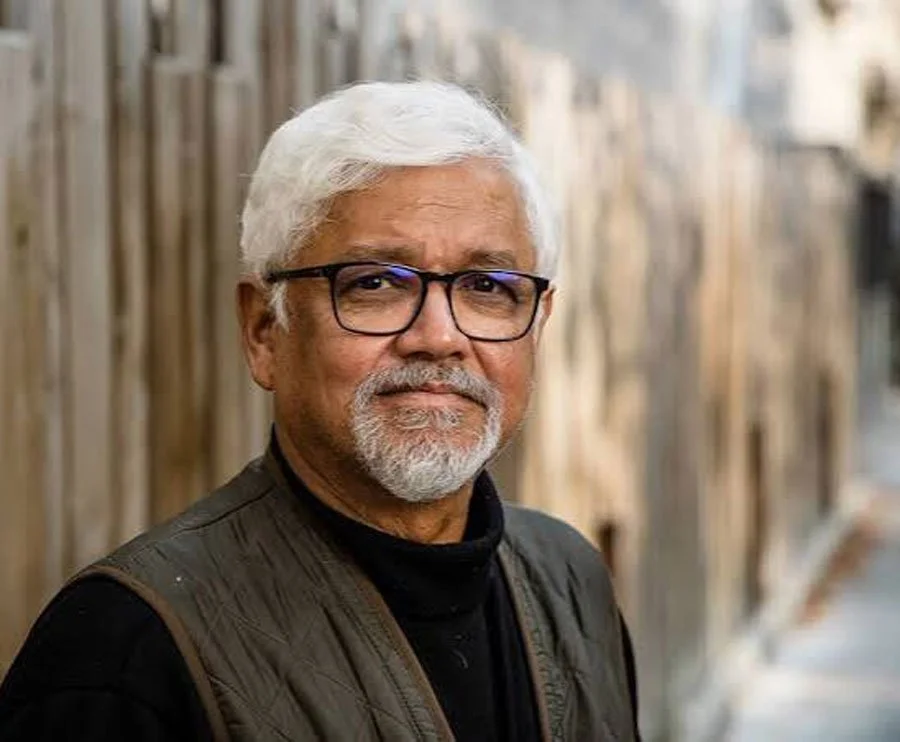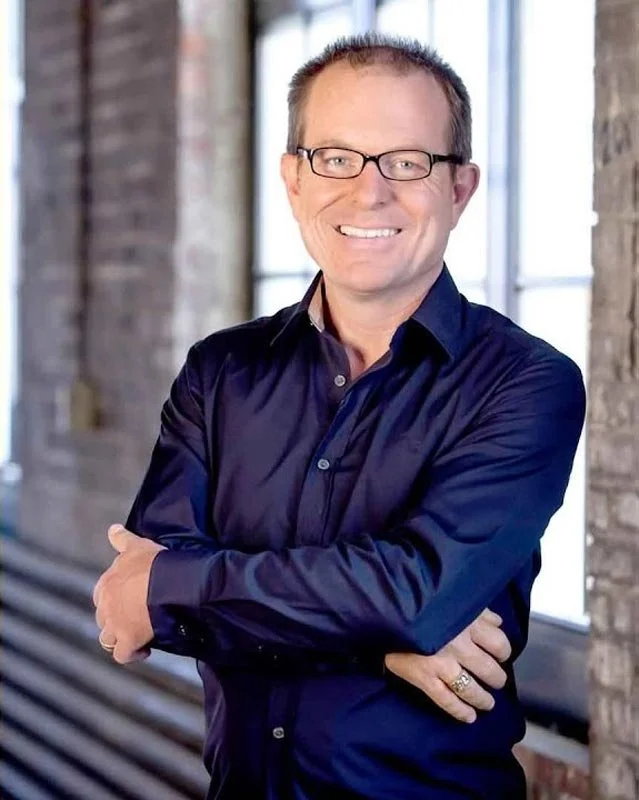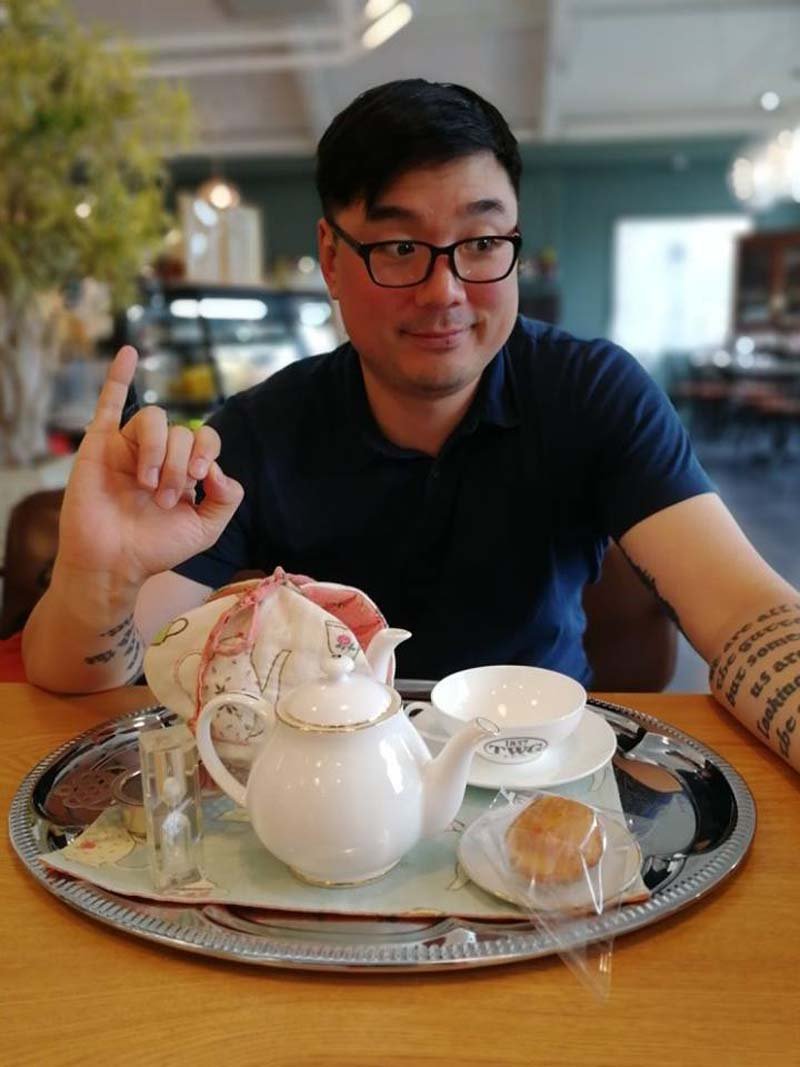


Eddie Kim is a Glasgow-based writer from Seattle. His poems have appeared in Poetry Northwest, The Margins, Narrative Magazine, The Collagist, Pinwheel, Lantern Review, South Dakota Review, and others. His poem “김장” won a “Best of the Net” award, and his poem “Telephone of the Wind” was featured on The Slowdown podcast. He is kimchi maker and founder of Gomo Kimchi, a kimchi shop/poetry library in Glasgow's Southside. @eddie.j.kim
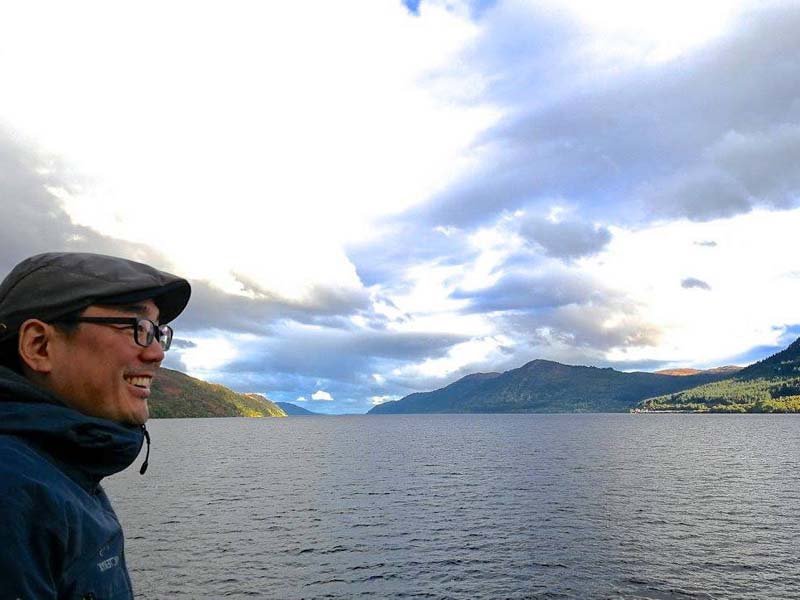
How does your childhood in Seattle, WA find its way into your work and your thinking about the world? I was born in Seattle and grew up in a suburb north of Seattle. Our family moved after I finished 3rd grade, and I grew up in Kotzebue, AK until the end of 7th grade.
This move, as well as being the child of immigrants, had a massive impact on me as a person and finds its way into my writing constantly, a common theme being notions of "home."
Growing up in suburbs and small towns, I fantasized about big cities, but I now find myself returning to a love of small towns in remote settings. The world feels increasingly disconnected, uncommunicative in any meaningful way on a day-to-day level, and I find this is worst in large cities. They're some of the loneliest, desolate places. I am idealizing small towns a bit, yes, but I've never felt more at ease than I have in small towns. When I lived in Fairbanks, AK where I went for my MFA, my days revolved around poetry, reading, conversation, community, connection, and dinner. In my heart, I'm always looking for a way to return to Alaska. In my mind, I know what that looks like, but I haven't made it there yet.
Now that I'm an immigrant myself, I find myself constantly questioning what makes a home. Place can be taken from you, as we're witnessing in Gaza, and have time and again throughout history. People can make a home for a time, but it also doesn't seem healthy or fair to make a person or persons home. Home is like love.
Having moved around a lot, I'm capable of making a home in a lot of different settings, but there isn't any one place I feel a sense of ownership over (the sense most people seem to consider when considering home), which makes the world my home (to take an idea from Edward Said). For me, home is an ability.
What drew you to poetry as a child, and how did it shape your love of language? To be perfectly honest, I didn't read too much in early elementary. Being told stories was my reading. My mother read to me a little in early childhood, but her English was limited, so it amounted to one or two kids’ books. That being said, she often told me Korean stories orally. My dad worked all day, but he was also a storyteller, as are many of my family members. This isn't to say my family didn't encourage reading; they did, I just wasn't read to a lot.
So, most of my reading came through school. I remember reading The Boxcar Children, and the notion of kids living on their own appealed to me. Bunnicula was a favorite. But, other than that, I didn't read a lot of books until I got to 4th grade. I joined a Battle of the Books team, and that really encouraged my reading in terms of habit. In school, we read “The Cask of Amontillado” by Poe, and that was the first time I dug into an author, even if I didn't really understand all the themes. I was drawn in by the dark humor and severity of it. I think it made me feel grown up. I loved Greek mythology and fables in general, probably because they most reflected the stories I'd been told.
I was a spontaneous reader. I liked picking up random books at people's houses and reading them, and I would either borrow the book if I liked it or eventually find a copy somewhere.
Describe your typical writing day. I like to discover as I write. I'll have some sort of idea or thought that propels the writing first, but that typically evolves as I write and usually ends up being different from what incited the writing.
When I write poetry, it feels like an explosion of sorts, a desperate need to share, explore, or get out a feeling––it's obsessive. When I write prose, I have a bit more room to meander and excavate as I write. I find the process therapeutic. Often, I end up digging up some subconscious memory or realizing the true impact of an experience. I enjoy that process. It's empowering. It feels special, vulnerable and haunting.
I do tend to edit a little as I go, but I try not to get too caught up in it for fear of losing momentum. So, there's an initial draft, where I want to get as many of the ideas down as I can, then I go through several revisions. I couldn't say I do a set number of drafts or that the process is very organized, and I couldn't tell you what draft any particular piece is on at any given time. They tend to blur as I pass through the piece. Anytime I read through, I'm tweaking something, and I read through many times. I will read through back to back, as well as give myself days or weeks between reads in an effort to return with a clearer mind. I try to just read a piece without touching it, but I can't help but change things as I do.
It's a hectic time in my life. I'm a kimchi maker in Glasgow, and I'm trying to make the business financially viable, which I'm doing by myself. My partner and I just had our first child, and we recently had to move flats. I found out last week that I need a root canal. Time is limited. I squeeze in writing wherever I can. Sometimes that's half an hour, sometimes that's five minutes, sometimes it's a line. Everything counts. I try not to get too down on myself. If I miss a day, I miss a day, but I try not to. I used to have a bad habit of believing there was no point unless I got a lot done, over romanticizing the writing process, but I don't have time for that these days. If I want to do it, I gotta make it a priority, and I gotta do it whenever I can find the time. So maybe I take a few minutes from lunch here or a few minutes from a nap there, maybe I have to stop mid-kimchi making to get a note for an idea down, but patience is key for me. I think a lot of ideas die from impatience and a lack of urgency. I realize this sounds contradictory, but they're intertwined for me.
Tell us a bit about what you’ve been working on and what that experience has been like. It's a new experience for me, as I've never really written prose. So the process behind this nonfiction project I'm working on is urgency through a lens of patience. I feel a sense of urgency to get this project completed because it's important to me, something I have been working toward for years. At the same time, as it's prose, I am being patient with myself to prevent burnout. It's a balance to keep things moving, but without getting so ahead of myself that the idea of the project outstrips the act of completing it. I'm really working on not forcing the work while pushing it, to stay diligent and focused on the process without trying to make things happen if there isn't anything there, allowing things to come to me. Again, perhaps that sounds contradictory, but I do feel if you practice process, things come to you when you least expect it––for me that usually means when it's least convenient (just about to fall asleep, in the middle of doing something, driving, etc.). I try to remember something a professor up in Fairbanks told us: "If I'm not exercising the muse, I'm at least feeding it." What that looks like is different for everyone. For me, that's reading, walks, doing things, music, conversations about writing/art, etc.
Do you keep a journal or notebook? If so, what’s in it? I have three notebooks: two small ones (one I keep on the nightstand, the other in my back pocket), and the third is a larger notebook I keep in my backpack. They're filled with lines, half lines, half thoughts, quotes, book recs, ideas, admin, food recipes, lists of various nature, career outlines scribbled out, dreams, titles, poems, poets, and places I want to visit.
How do you research and what role does research play in your writing? I wouldn't say I'm a huge researcher. I tend to research as I go. Sometimes, something that piques my interest drives me to research something which then leads to writing, but typically I find myself incorporating something I've heard or tangentially know some factoid about. I'll then research mid-writing to use it in a more nuanced way. I like to approach things with an intuitive mindset and go from there.
Which writer, living or dead, would you most like to have dinner with? James Baldwin.
Do you listen to music as you write? Are there other disciplines that inspire your process? Yes, definitely. I'm almost always listening to music when I write. Often, I'll listen to the same album or artist while I'm working on a particular project or piece. It helps me find a consistent mood or feeling I feel colors the work, whether explicitly or as an undertone. Sometimes, I'll listen to the same song on repeat for the duration of writing a piece. Typically, I listen to different types of instrumental music while I write, but not as a rule. Mostly because lyrics can become a distraction. If I know the song well, it's less of an issue.
Problematic as they can be, I do love the atmosphere in a museum for inspiration or just writing (usually with headphones in), though I don't do it as often as I would like. The quiet, and being surrounded by art, feels nourishing.
AI and technology are changing the ways we think about creativity and art. For you, what’s at stake when machines become storytellers—and what should remain human? I'm a bit of a Luddite at times, so I'm highly skeptical of AI, particularly when it comes to creating art. I heard someone say somewhere that AI was supposed to do the things we don't want to do, so we can create art, not have AI create art for us. And that speaks to me.
It seems inherently capitalistic and commercial to use AI to create art. I don't think the point of making art is to make it quickly or efficiently.
If humans aren't at the center of the creative process, I don't really see the point. Just one drone dancing for another. Creating art is a conversation, a dialogue between the artist and me, me and the reader, etc., a way to communicate a piece of ourselves and share a feeling, a story, a perspective, something unexplainable or unsayable by other means. Or maybe the work is an exploration of craft and technique. Could I enjoy something created by AI? Sure, but is consuming a work the only point? Regardless, to have AI do that for you seems like living via The Sims, it feels incomplete.
However, I will completely admit that there are surely ways AI can help in terms of accessibility and offering people who struggle to share their stories and experiences by traditional means. I'm open to that, but it's not my place to keep that gate.
Tell us about some books you've recently enjoyed and your favorite books and writers of all time. The temptation here is to cherry-pick a list of books I think will impress people, which is what I did. Then I got self-conscious that perhaps some of the books were too old to be on a "recent" list because I'm a slow reader. I also wanted to support my friends whose work I love who've recently published books. The list became unruly.
I've been in awe of Victoria Chang's book Obit, Han Kang's White, Jane Wong's Meet Me Tonight In Atlantic City & How to Not Be Afraid of Everything, Michelle Peñaloza's Former Possessions of the Spanish Empire, Candice Chung's Chinese Parents Don't Say I Love You, Muriel Leung's Imagine Us, the Swarm, Jason Koo's No Rest, Quenton Baker's Ballast, Paul Hlava Ceballos's Banana, and basically anything by Don Mee Choi. Through concision, metaphor, musicality, craft, form, hybridity, and audacity, these books expand my thinking of the written word. They push language and storytelling into new realms. They're both teacher and friend.
One of my all-time favorite books is When My Brother Was an Aztec by Natalie Diaz.
Other writers I often return to are Wislawa Szymborska, Matthew Olzmann, Lucille Clifton, James Wright, Theodore Roethke, Langston Hughes, Li-Young Lee, Louise Glück, Pablo Neruda, Rilke, and Richard Hugo.
If you ask me this question on another day, I'll likely give you a completely different list.
Exploring literature, the arts, and the creative process connects me to… My past, present, and future on a quantum level, allowing me to burrow and wonder at the vastness of life through a pinhole of mundanity and splendor.