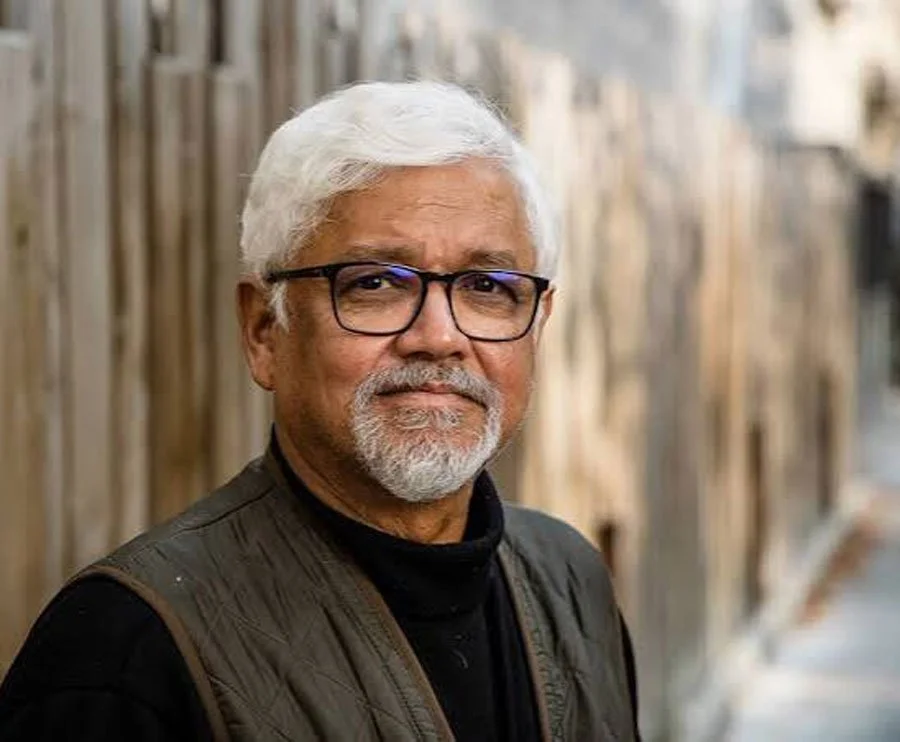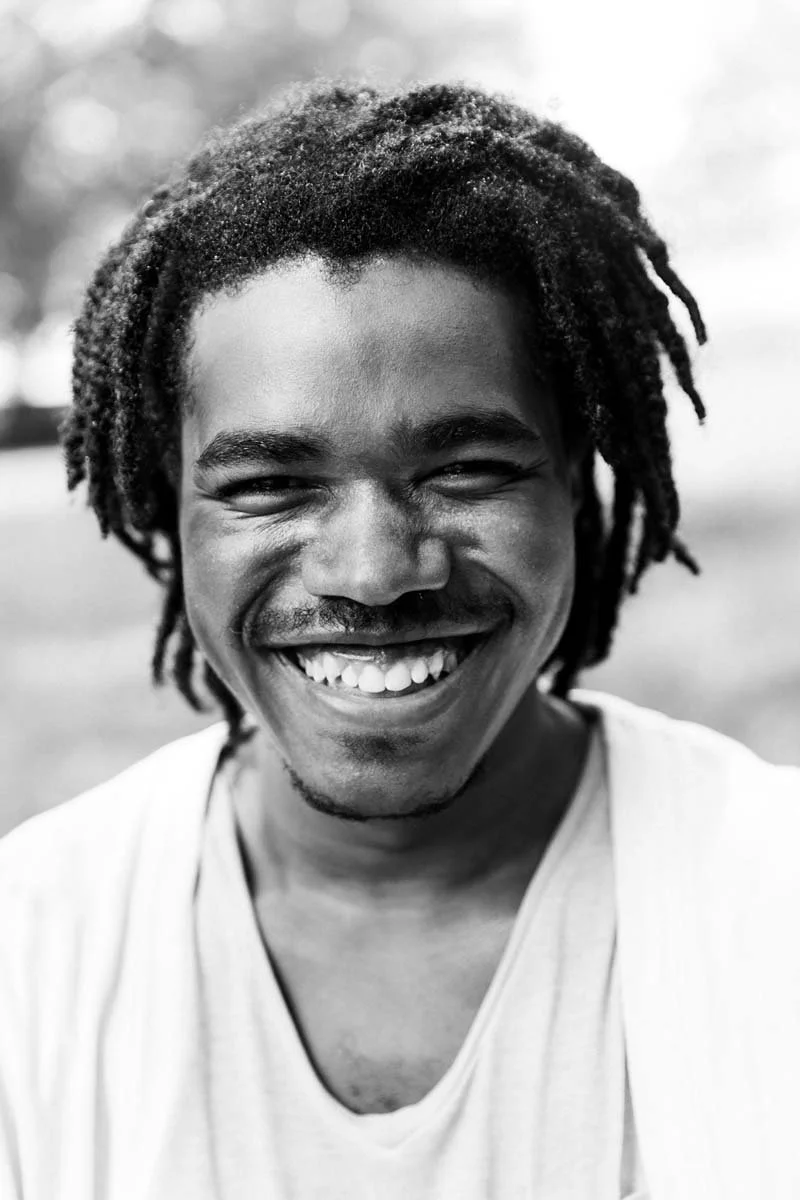


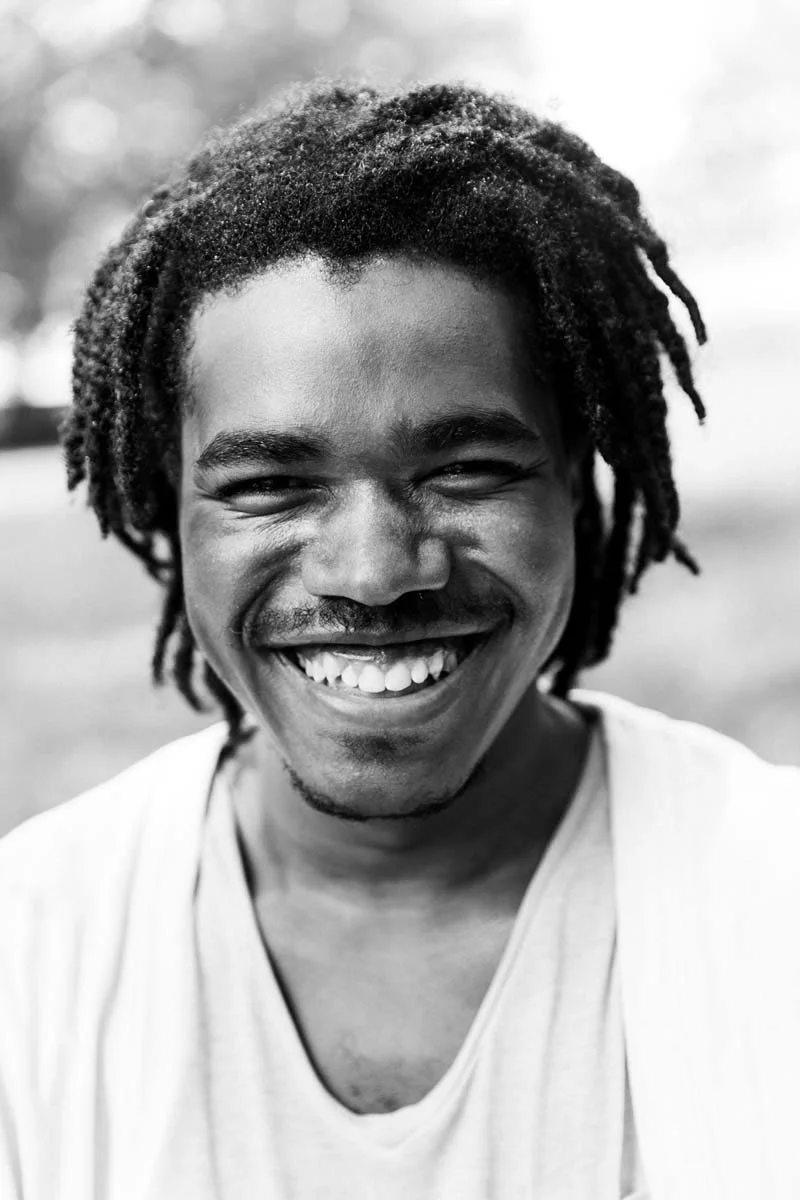
Nkosi Nkululeko’s work is published in Chess Life Online, Massachusetts Review, Ploughshares, Poem-A-Day, Poet Lore, The Offing, Oxford Poetry, and his square poems are featured in ANMLY, Hayden’s Ferry Review, and The Nation. He is the winner of Michigan Quarterly Review’s Page Davidson Clayton Prize for Emerging Poets, and the recipient of fellowships from Poets House, Saltonstall Foundation for the Arts, Callaloo, and the Watering Hole. He is anthologized in Bettering American Vol. 3 and Furious Flower: Seeding the Future of African American Poetry. Nkosi is a chess, music, and poetry teacher from Harlem. @musicmannkosi319
Where were you born and raised? How did it influence your writing and your thinking about the world? I was born and raised in Harlem, New York. Both my mother and father were artists, and by extension, were part of a large community of artists who practiced different mediums such as visual arts, dance, poetry, music, acting, and more. My understanding of the world was almost exclusively through a creative lens. Artistic expression was THE primary way of interpreting the nature of the world, so my comprehension of history was heavily informed by my knowledge of which creatives were alive and how they spoke against the injustices of their time. I was enrolled in so many after-school programs as a child. From Harlem School of the Arts to the Children's Art Carnival, and plenty of others as the years went on. Poetry was always a part of my life, but the Performing and Visual Arts were a foundational playground that set the tone for my creative exploration thereafter. I would say that dipping into different mediums allowed me to practice adaptation. Even as I developed my preferences, my love for formal poetry is a reflection, I think, of studying the structure of a variety of fields.
How did reading shape your childhood? Were there any particular titles that changed everything? I was a pretty avid reader, with a preference for Sci-Fi novels, manga, comics, and chess books. I tend to build my library around my interests, so when I started gaining a serious interest in music, I ate up the biographies of jazz musicians. I loved vampire narratives by authors like Anne Rice and such, but Octavia E. Butler's Fledgling was one of those books that swept me into a world relentlessly. Before then, I took to books from the Animorphs series, Artemis Fowl, and the detective stories of Sherlock Holmes. Too Marvelous for Words: The Life and Genius of Art Tatum, Ain't Misbehavin', and the biography on Fats Waller were memorable experiences for me. I wore out the spine of How Fischer Plays Chess by David Levy and Profile of a Prodigy by Frank Brady. I'm starting to dip into my chess era, where I read almost nothing but chess biographies, but prior to getting the chess bug, I found that the strange books were what called to me. The ones that made me imagine. My mom normalized audiobooks in our house, especially while cleaning. Lots of Toni Morrison; lots of Walter Mosley; lots of everything.
When and how do you usually find time to write? Are there any daily rhythms or rituals you keep to? It's hardly structured. I do find that I write more consistently during a train or bus ride. It's a place to ruminate, to observe (both the inside and outside), to mentally wander. It's hard for me to sit down at a desk and write unless I have something already sketched out. Earlier this year, I walked through Central Park after work every other day and wrote, but on my downtime, I'm usually reading a book on chess theory or game collection. I may go some weeks without writing but I'm almost always reading something. When I was obsessing over square poems, I literally could not remember a day I did not have my notebook, experimenting with the poetic form and writing notes about several intersecting thoughts on the matter. As I'm writing this, maybe I'd say a typical writing day is full of notes of poetic ideas. Editing is one of my favorite parts of writing. When I'm in the "zone" I complete pieces relatively fast, but I love when a poem takes time.
Tell us about the creative process behind your most well-known work or your current writing project. Over the last few years, I've been obsessed with the square poem, a poetic form where a poem is to be read horizontally and vertically. I have a chapbook coming out soon with these poems scaffolding the project. Several of my personal notebooks are full of notes and methods on this form and how other multi-directional forms are related. It's kind of hard to summarize in one answer, but I would say that going back and learning the basics about parts of speech and sentence structure opened my eyes to how a contrapuntal or palindrome functions. Exploring word order and grammatical moods focuses my eye on the microscopic choices of so many poems. Some poets typically begin a line with a pronoun; others end a line with a gerund; another may use caesuras throughout their work, thereby enabling a variety of ways to play with the reading of a line. To write in the square poem form (and other forms) forced me to read widely and see how even standard lyric poems perform multidirectional readings. I have numerous reading exercises I do that help me discover new ways of approaching the form. When thinking about the "creative process," it is always expanding, but the thing that remains constant is the importance of reading widely, comparing the sentence structures, and seeing what the similarities or differences tell me.
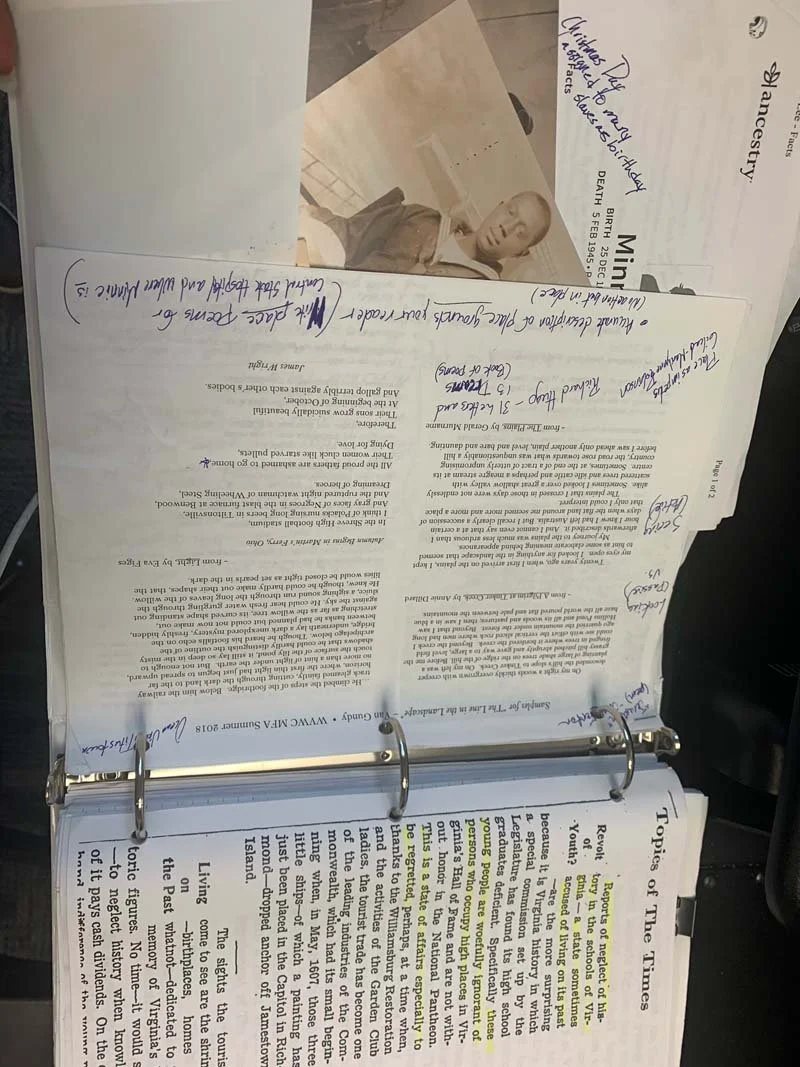
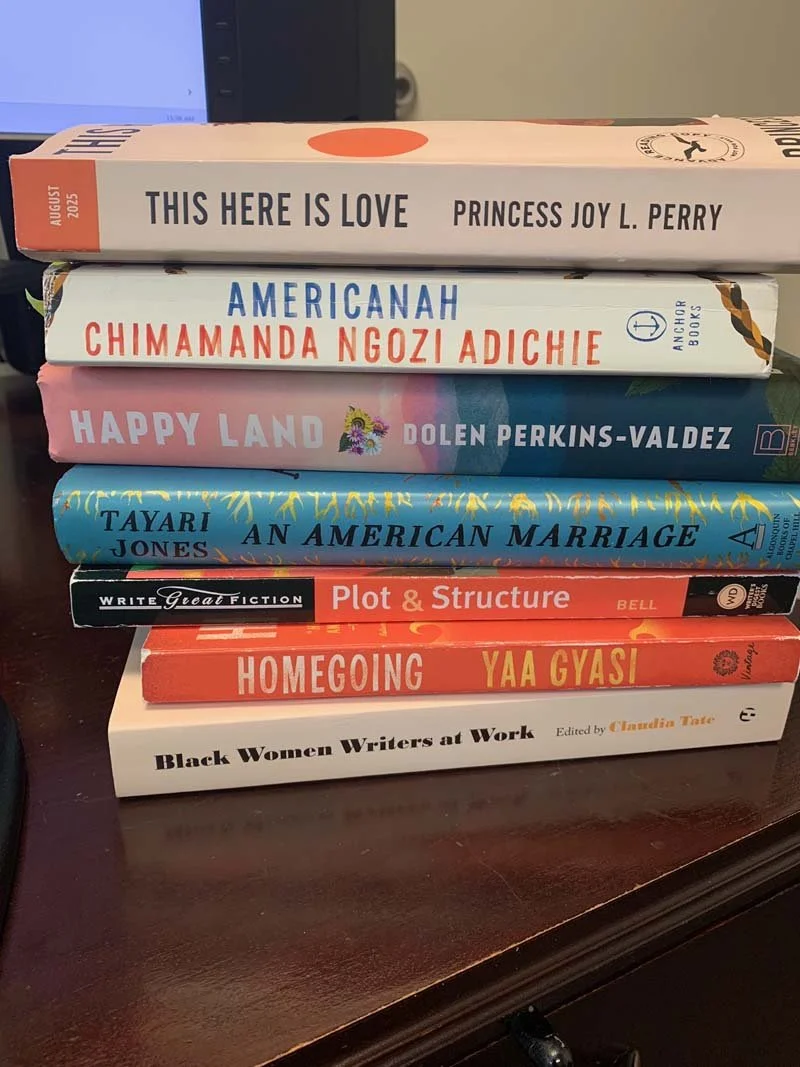
Do you keep a journal or notebook? If so, what’s in it? I mentioned before that I have a ton of notes and methods on poetic forms. It ranges from notes to diagrams of these ideas. It's my chance to pretend I'm a mathematician of some sort. Surprisingly, pretending to be a mathematical researcher has led me to some interesting places in my notebooks.
What kinds of sources or materials do you turn to in your research? What role does research play in your writing? It plays a huge role. I remember Tyehimba Jess saying to me many years ago, "Study your history. Find something you dig that not too many other people are talking about. Find its metaphors that echo throughout time and stretch them."
My parents and former teachers share this sentiment. I grew up trying things out as they came to me and the more I appreciated research and its importance to any work, the more I became the kind of writer that was unable to write unless I read tons. But now, I started thinking that that inhibition should be looked at as patience. I find myself reading about subjects in separate fields in order to find the commonality. I don't have something to say every day, but staying idle is not an option. Sitting in silence, amongst the trees, watching a bird is not being idle either. That's also a kind of research before looking up the kind of tree it perched on.
Which writer, living or dead, would you most like to have dinner with? I feel spoiled. I'm honored to be part of a literary community where so many of my literary heroes casually break bread with their students. Maybe I'd say Jay Wright.
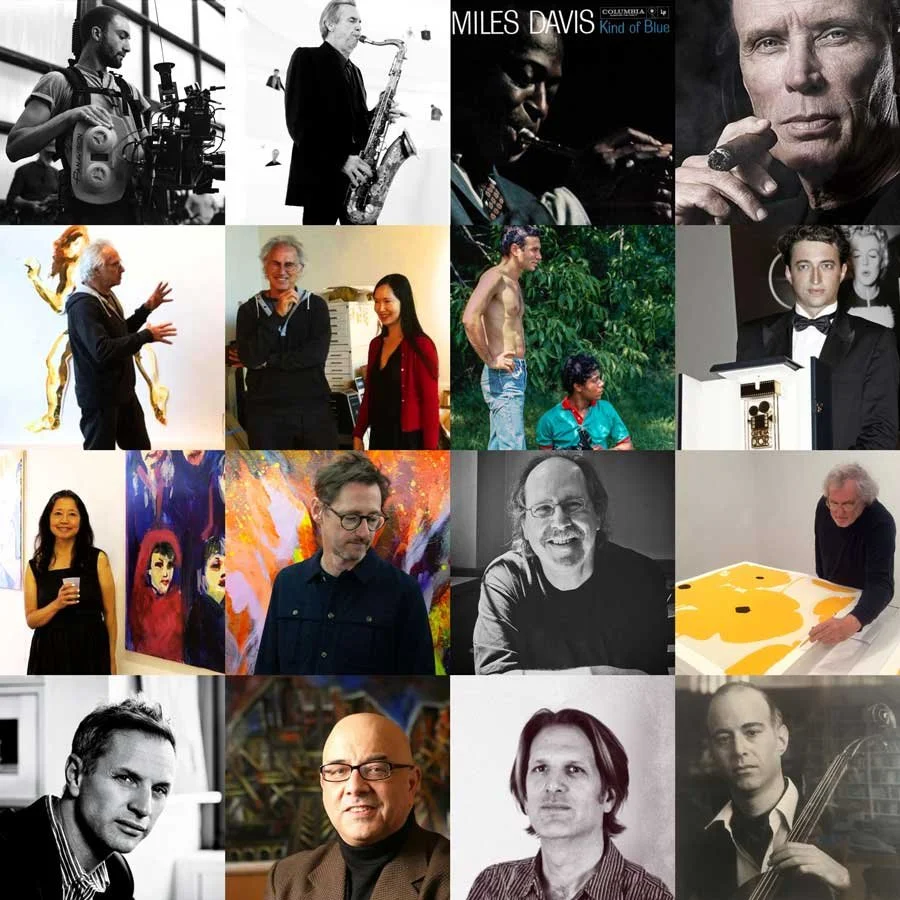
Can you describe how your music inspires your writing? It always does. I don't typically write with music on, but I'm always listening to albums. Miles Davis' "Miles in Berlin" and "Miles Davis Quintet: Live in Europe 1967" are two albums that specifically get me in a zone to think about craft. I hear some artists going to work and some artists going to play. Both inspire me to maintain that devotion to practice.
How has your view of writing changed with the rise of AI? And why is it important that humans remain at the center of the creative process? All I can confidently say on this subject is that poems and art are the closest things to humans that an inanimate object could be. I find the humanness in its flaw made with the intention of communicating something beautiful about one's experience in this life. Leaving those choices up to something else removes that experience. As a chess player, I can 100% learn from a chess engine, but chess writers and coaches constantly remind us to not become dependent on it. Allowing it to think for us will give the illusion of intelligence and power, but when you're on your own, interacting with another human without having explored your own inner knowledge in relation to others, you'll have nothing to say at the board.
Tell us about some books you've recently enjoyed and your favorite books and writers of all time. I recently checked out Basho's The Narrow Road to the Deep North, and currently working through Haiku by Kenneth Matsuda, The Inner Game of Tennis by W. Timothy Gallwey, The Magic Tactics of Mikhail Tal by Kursten Muller & Raymund Stolze, The Life and Games of Mikhail Tal by Mikhail Tal and I'm in the midst of Phillip B. Williams' Ours.
I'd say Gaston Bachelard's The Poetics of Space, Terrance Hayes' How to Be Drawn, Robin Coste Lewis' Voyage of the Sable Venus and Tyehimba Jess' Olio heavily impacted me. Favorite books of all time is quite a question. So many other books were and are important to me for different reasons. I know I'll look back at this answer and wish I added another book.
Exploring literature, the arts, and the creative process connects me to… Me to the outer and inner world of self. The creative process in writing is similar, for me, to the creative process of chess. In the beginning, I wanted to create something cool, interesting, complicated. When I return to the moments that excite me the most, I find myself back at the fundamentals of each craft. When I'm content with understanding the basics of a game or the root of my emotion and memory, I discover so much. All of it was staring at me in the face! I did not need to create something out of thin air. I needed to find what was already there, waiting to be sewn together.