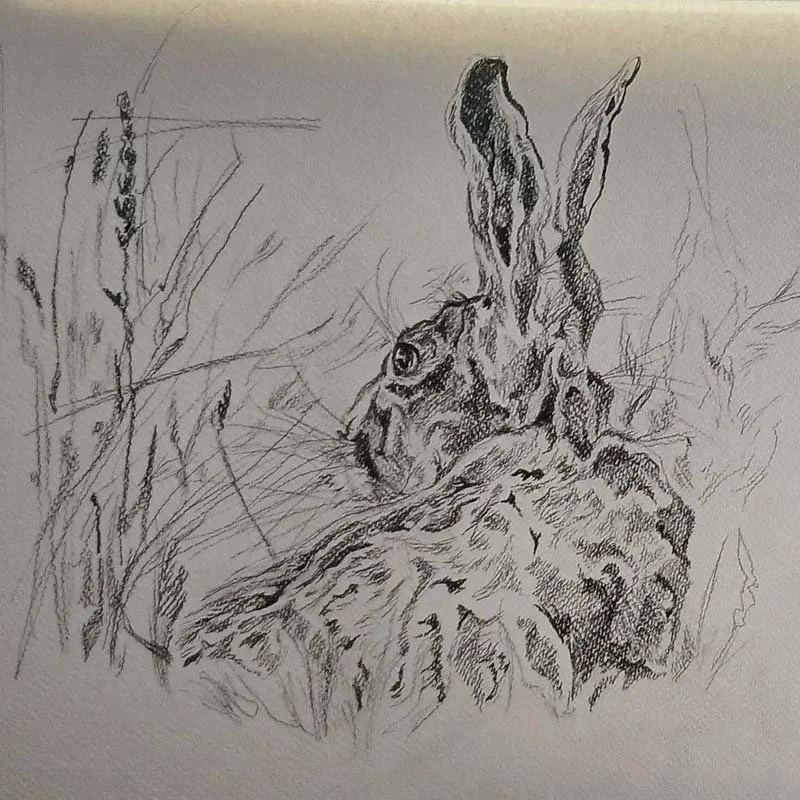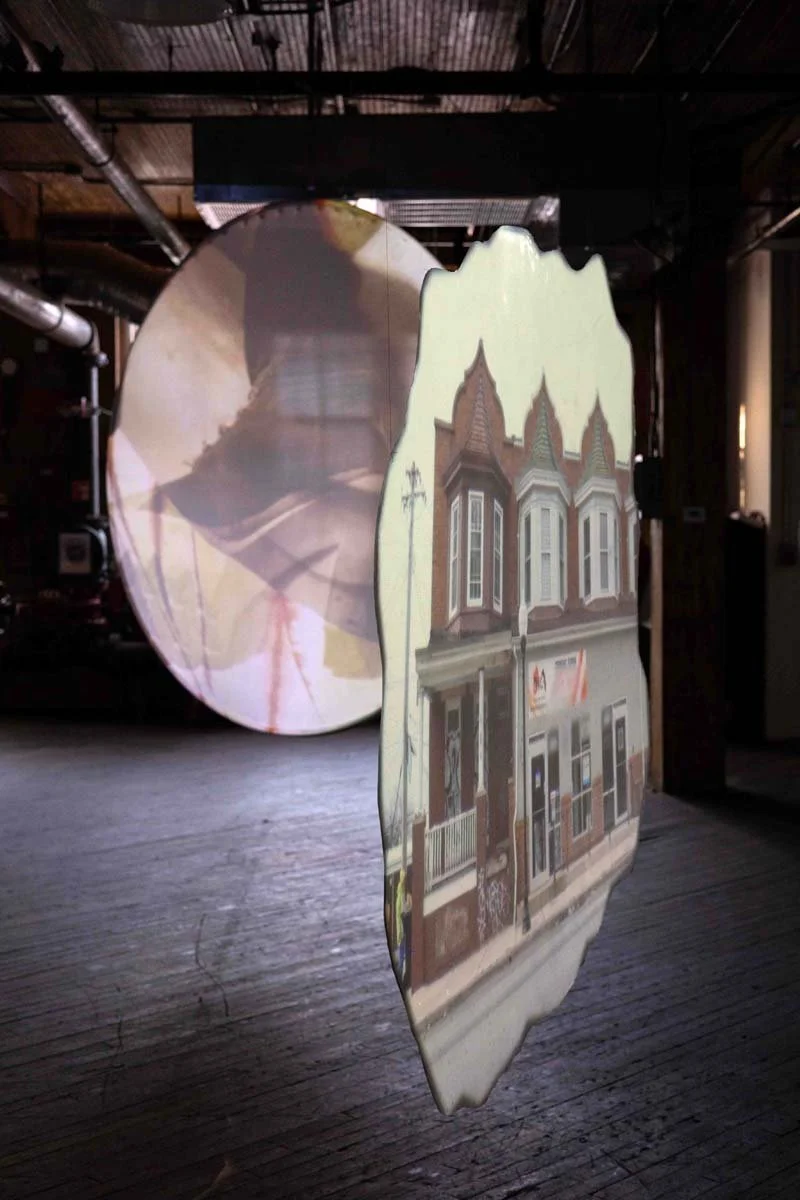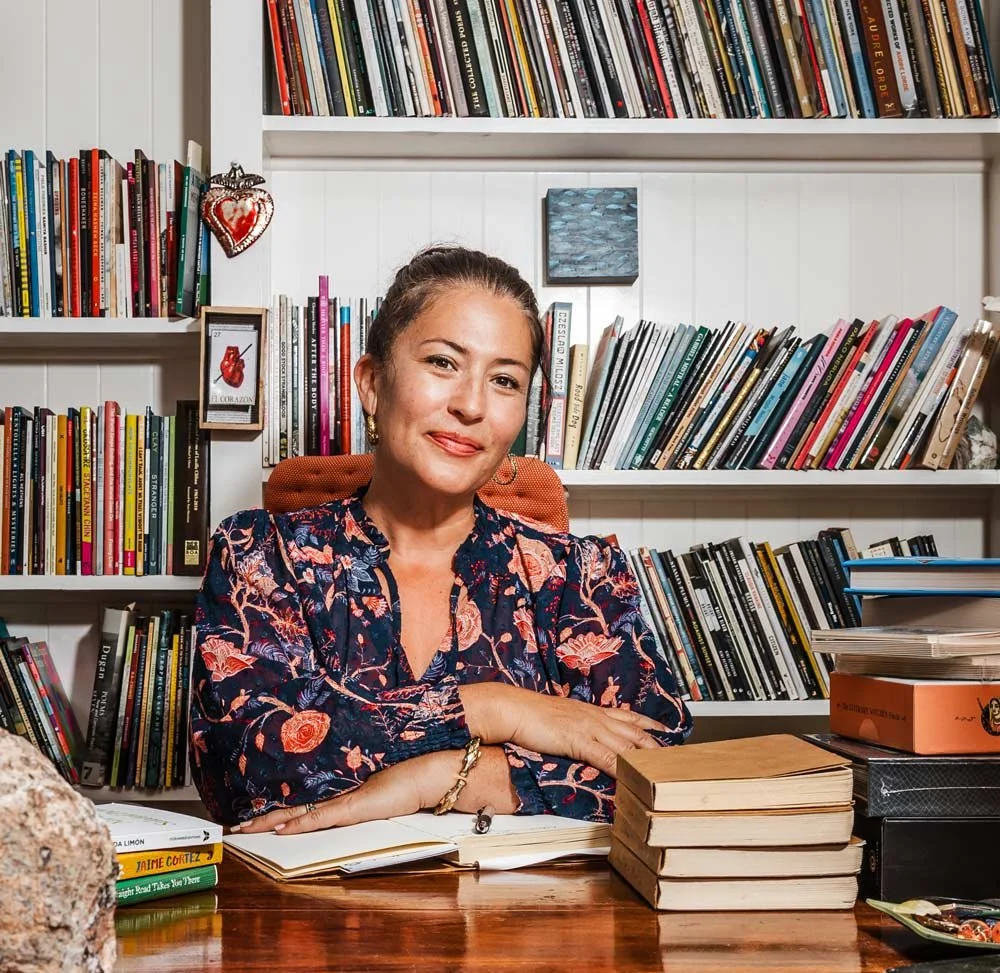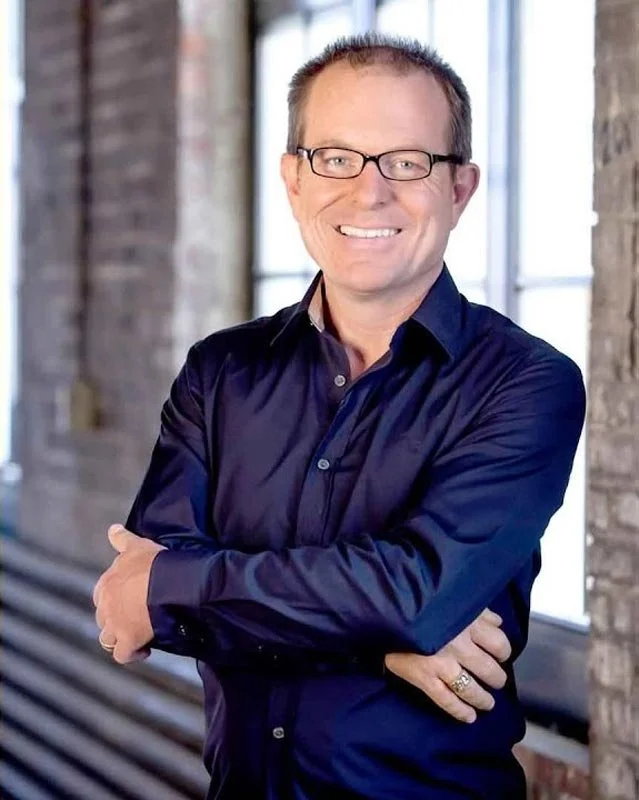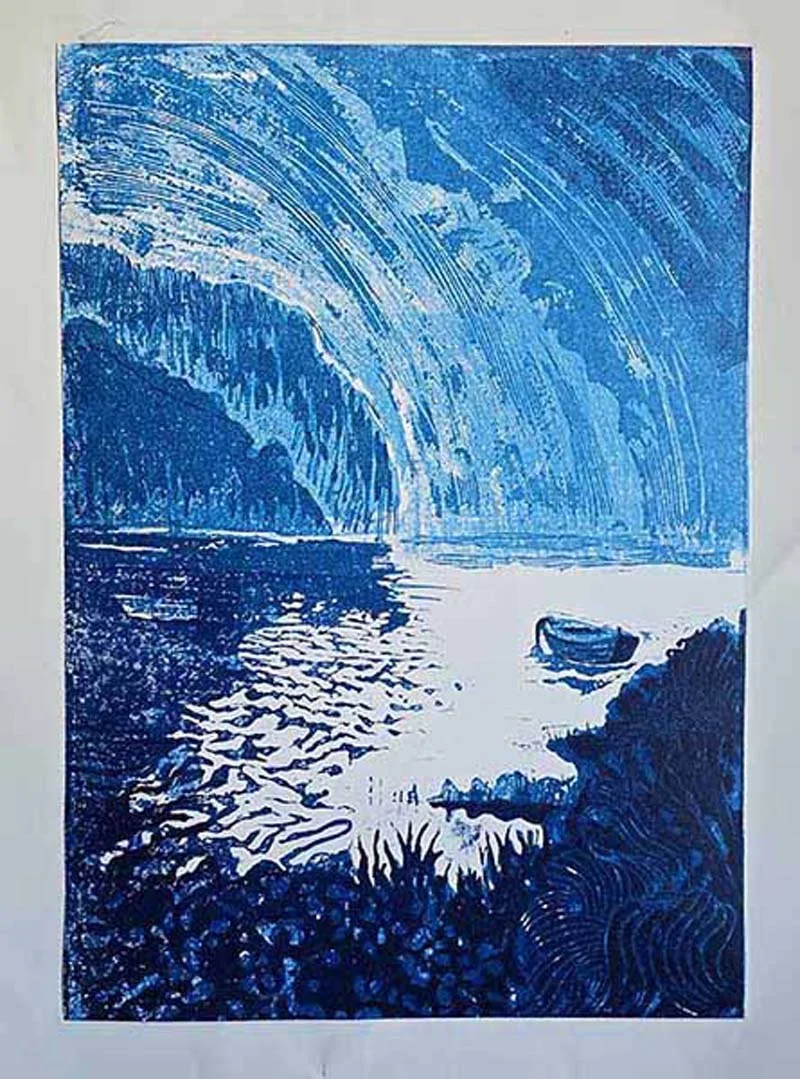


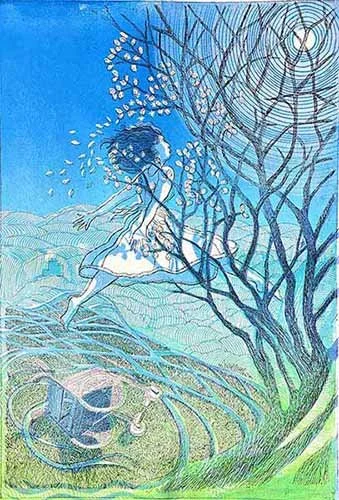
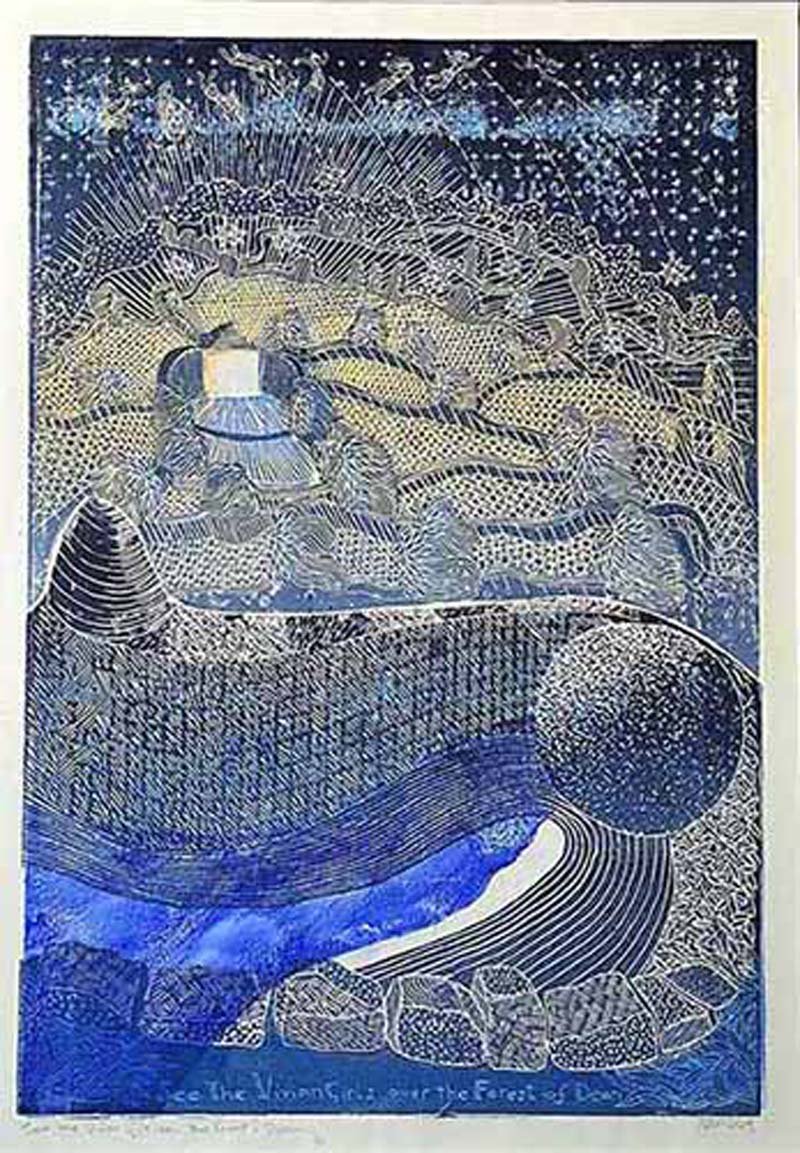
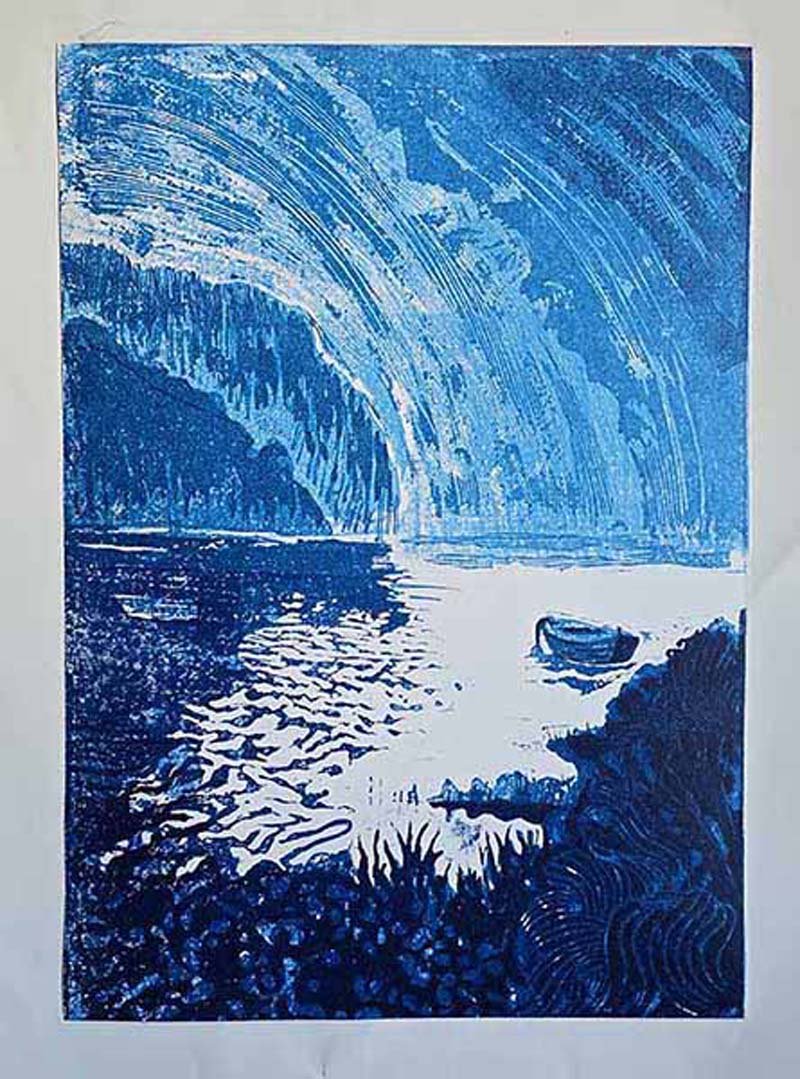
Adam Howard is a printmaker specializing in linocut techniques, with eight years of experience in the field. His process is distinct, using three or four different plates to create layered, dynamic prints. To add texture and depth, Howard then applies caustic soda paste, which etches into the lino, leaving behind the expressive brushstrokes that give their work a painterly quality. This technique allows for a unique fusion of printmaking precision and the fluidity of painting. @ah_linocuts
You were born in Nigeria. How has your upbringing there influenced your artistic perspective? I was born in Kano, Nigeria and lived in Nigeria until I was 11 years old. It was the most important part of my childhood. With my two sisters, we led a wild existence, mostly in remote areas of the country. My father was a Forester and worked for the Nigerian Government. Nigeria left me with a feeling for the strength of the natural environment. Daunting at times in its power, but with a sense of gentleness that never left me. As the son of a colonial family, I feel now I was an invader there. The gentleness and kindness of all I met there surprise me to this day. I regret having lost the language I spoke when I was a child, but I have such strong memories of the time that they still guide me to this day.
When did you first fall in love with art and realize you wanted to be an artist? For you, what is the importance of the arts? I painted watercolours as a child and always loved the act of doing them. I was always disappointed, though, as it did not look like the thing I had painted. I trained as a watercolour painter with an artist as his assistant and began to fall in love with the practical daily process of paper, drawing, mixing colours, and which colours worked with others. When I started painting for myself and unlearned the desire that the painting look like the subject, I fell in love even deeper! If art is important, it's that it leads you somewhere you didn't know you needed to go. Like a water diviner finding water with a hazel twig
What does your typical day in the studio look like? Walk us through your studio and your most used materials and tools. I print with three or four plates, so I am usually printing something on the press, leaving it to dry ( a week), and working on a second or third piece. I paint with varnish ( a resist), then I use caustic soda as a solvent to dissolve the unpainted Lino, leaving a relief printing surface. I also emboss the paper after I have printed the flat colours. I have recently begun to embroider the paper down onto canvas or sacking, which gives the whole piece far more texturality than just the printing.
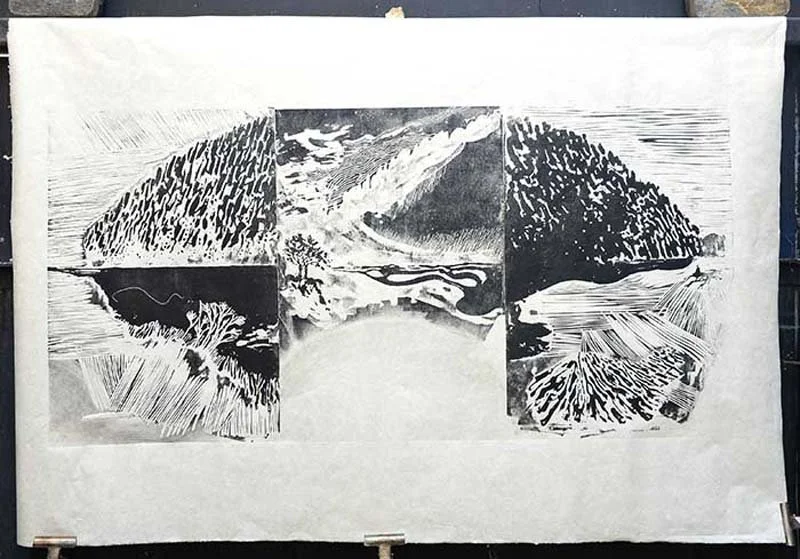
What projects are you at work on at the moment? And what themes or ideas are currently driving your work? I am working on reprinting the separate plates that usually print onto each other, but printing them side by side. This breaks the narrative of the original print in a way that I cannot plan for and creates a completely new world, which people are free to interpret as they see fit. My themes are mythology and folk stories.
What do you hope people feel when they experience your art? What are you trying to express? To slip out of this world for a brief while. I think it helps, and it reminds everyone that things aren't always as they seem
Which artists, past or present, would you like to meet? And why? I would just like to watch John Singer Sargent paint watercolours. All day, forever. I would like to meet Gwen John and ask how she gets so much passion to flow out of "quiet" paintings. There is some magic going on there
Do you draw inspiration from music, art, or other disciplines? I spend as much time as possible out in the fields and forests. I feel at ease and unhurried there. I like Haiku poetry as it seems to fit with what I do. Not sure why!
A great thing about living in London is… I draw great inspiration from the studio I work in. Artichoke studio in Loughborough Junction in London is one of those places where the people combine with the room itself to create a world where good things happen
Can you describe a project that challenged you creatively or emotionally—and how you worked through it? Sometimes a picture comes together very quickly, and the path to complete it is very clear. Often, though, the route is not clear at all. I think that is a very good situation. I print versions and look for mistakes. The picture has something to say for itself, and I need to listen to that quiet voice.
Tell us about important teachers/mentors/collaborators in your life. I was apprenticed to David Purser, a watercolour painter. He was a very demanding teacher who had a huge reservoir of experience, which he was generous enough to share with me. From him I learnt that working hard on something , sometimes redoing it completely, is the best way to get what you are looking for . Don't wait.
Sustainability in the art world is an important issue. Can you share a memory or reflection about the beauty and wonder of the natural world? Does being in nature inspire your art or your process? Different landscapes cast different light and shadow in my heart. Deep cool rivers in summer, sparse heathland in autumn, forests on the South Downs in spring. Clocks stop ticking , and time means less; the world seems it might just stop.
AI is changing everything - the way we see the world, creativity, art, our ideas of beauty and the way we communicate with each other and our imaginations. What are your reflections about AI and technology? What is the importance of human art and handmade creative works over industrialized creative practices? I like AI. It can feel like a collaborator, and I treat it with respect. Despite all the servers it requires to produce its results, it feels more like a friend in the room than technology. I like printmaking because I like the process. I like the materials , acids , blades , paper, and presses. I think it would be interesting if AI could feel some of those things too.
Exploring ideas, art and the creative process connects me to…Something I can't see but I feel is there. I more I let the process of work( accidents, spills, bad registration, others pointing out something I don't see) take over, the closer I seem to get to knowing what to do next.