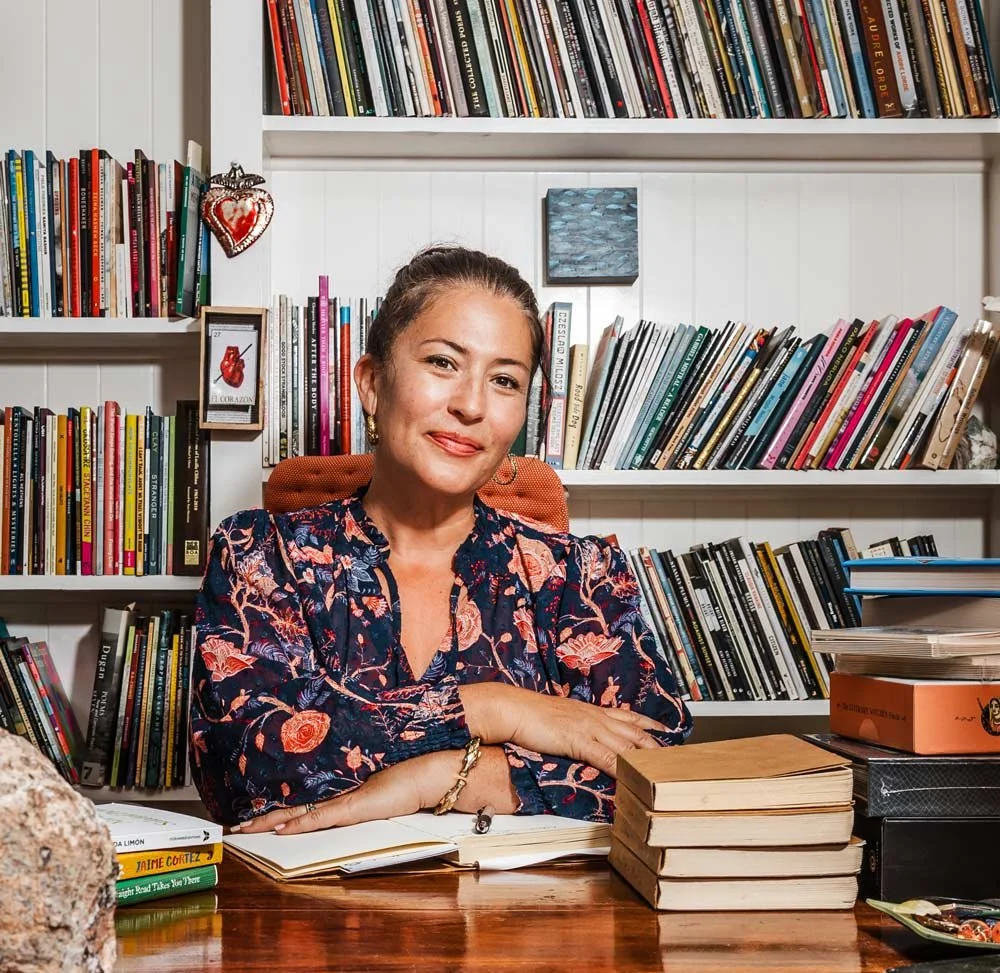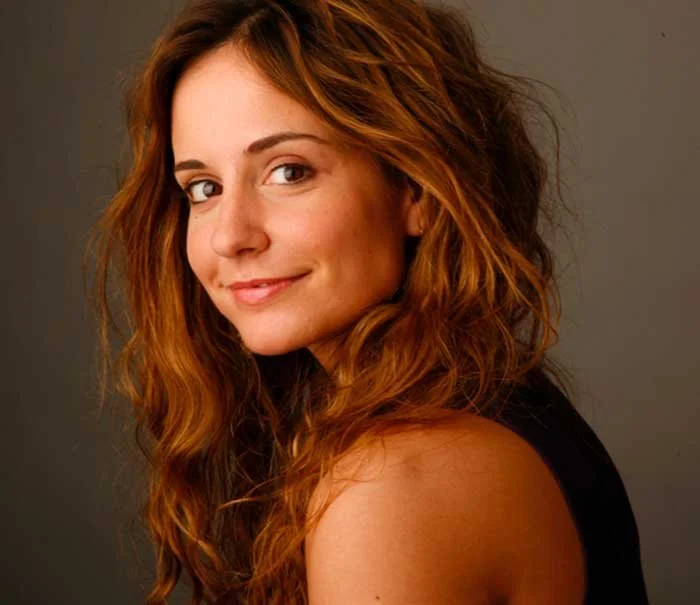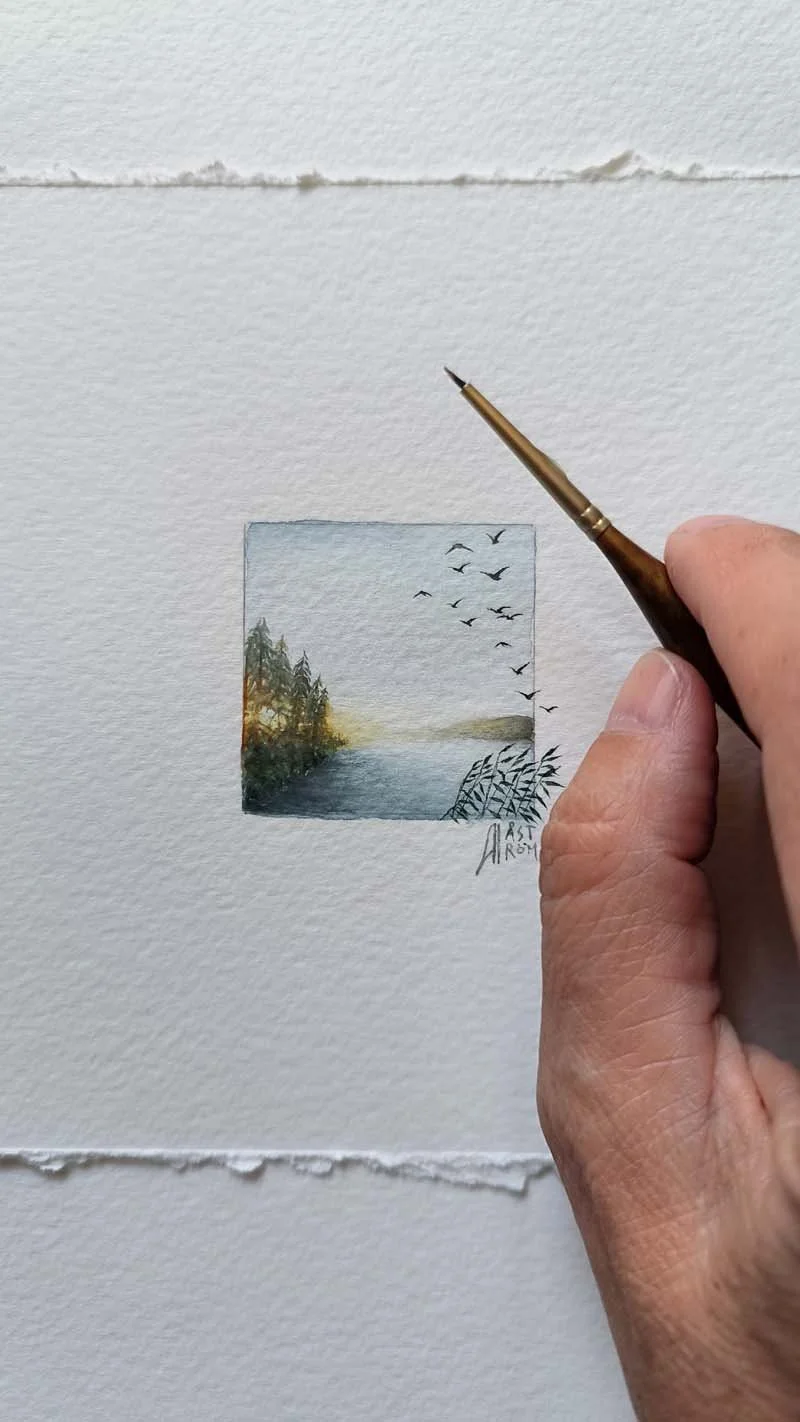


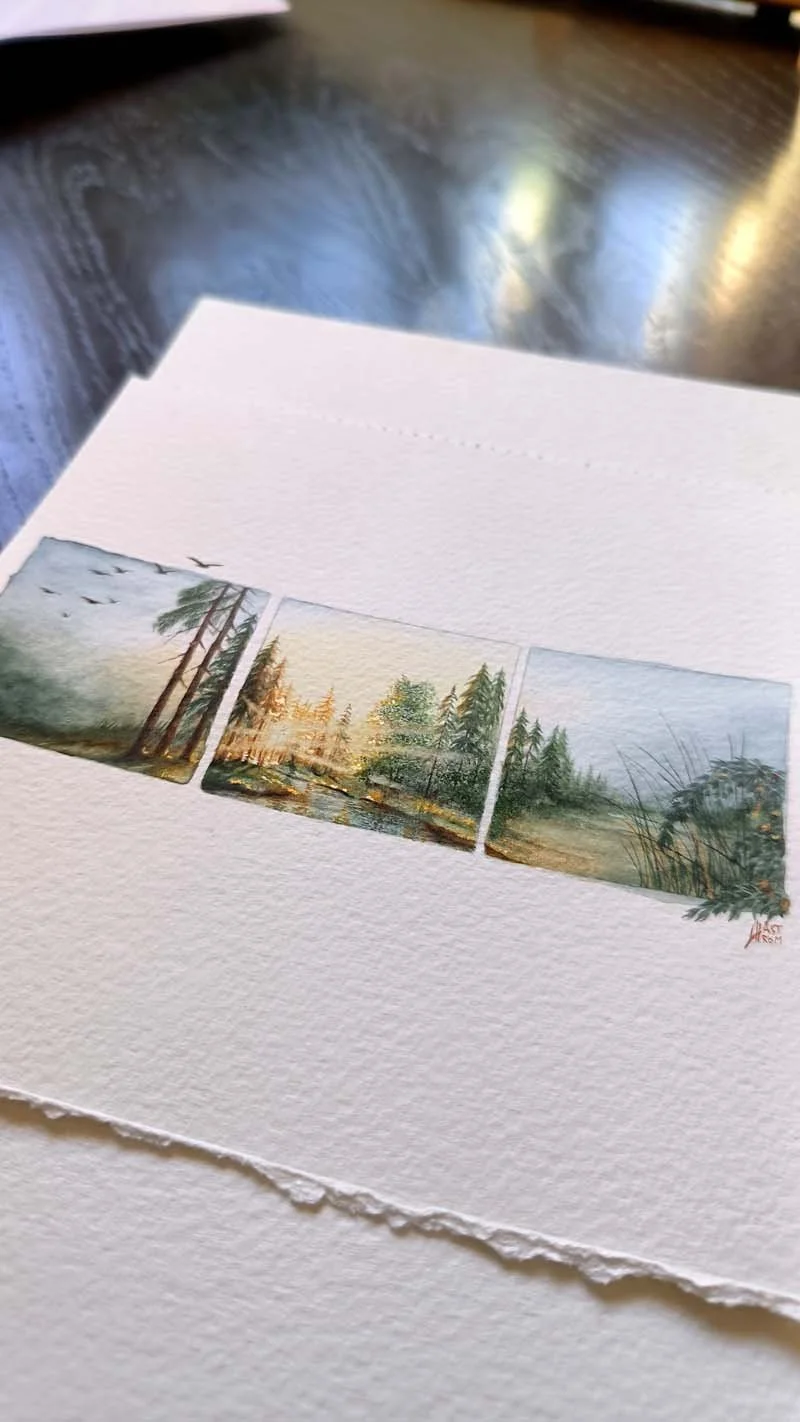
Anna Åström is a TinyArt painter and poet– born in Sweden in 1972, living in Spain. She paints watercolor miniatures loyal to the traditional technique with the paper as the only white and the water as the only light – all with a brush. She’s been exhibiting art since 1986 - tiny watercolor paintings for 10 years, and she’s represented by two art galleries in Europe. She has published several illustrated poetry books in Swedish, Spanish, and English. @annaastrom_art
Growing up in Sweden, what aspects of that environment have permeated your artwork? Two things give me a special energy – zest of life – Nature and Creation.
I grew up in a very small village surrounded by immense forests of high pine trees, whispering beech trees, animals, and myths. I remember the stream with the invisible bottomless well and the black lake with water lilies where we bathed during clear summer nights and skated in winter. I remember the little orphaned sheep that we had to bottle-feed in the spring and the vast meadows lit up by thousands and thousands of dandelions… Infinite memories that I keep and care for like little treasures, and that serve as inspiration for my work every day.
When did you first fall in love with art and realize you wanted to be an artist? For you, what is the importance of the arts? My father had a huge workshop where I was always welcome, and as a child, I used to spend hours and hours drawing, painting, cutting, composing… Creating…
When I was 14, I had the opportunity to present my paintings in a collective exhibition for the first time, and two years later did my first solo exhibition. At that time, I painted with acrylic and big (at least bigger than now), and it was a combination of paintings and poems.
The idea of painting miniatures came about in the following way: I hadn’t held a brush for several years – I had changed country, had my two children, and started my jewelry workshop. Everything in my life was going great, but for whatever reason, I was not feeling very “up” – suddenly, I was having a hard time seeing the beauty in each moment and enjoying the day-to-day.
One weekend, I was going to Stockholm to visit my little sister, who had just moved to a new flat, and I wanted to give her something special. It occurred to me that I could paint something. I mentioned it to my mother and she said: “Let it be something small because her flat is so tiny.”
I made a very small watercolor painting and the experience filled me – I suddenly felt that special energy again – so when I came back from that trip I left a fixed space for the watercolors on my desk and a promise myself to always find some daily time to capture a small image on paper; an image giving harmony to me when I paint it and to the person who’s looking at it.
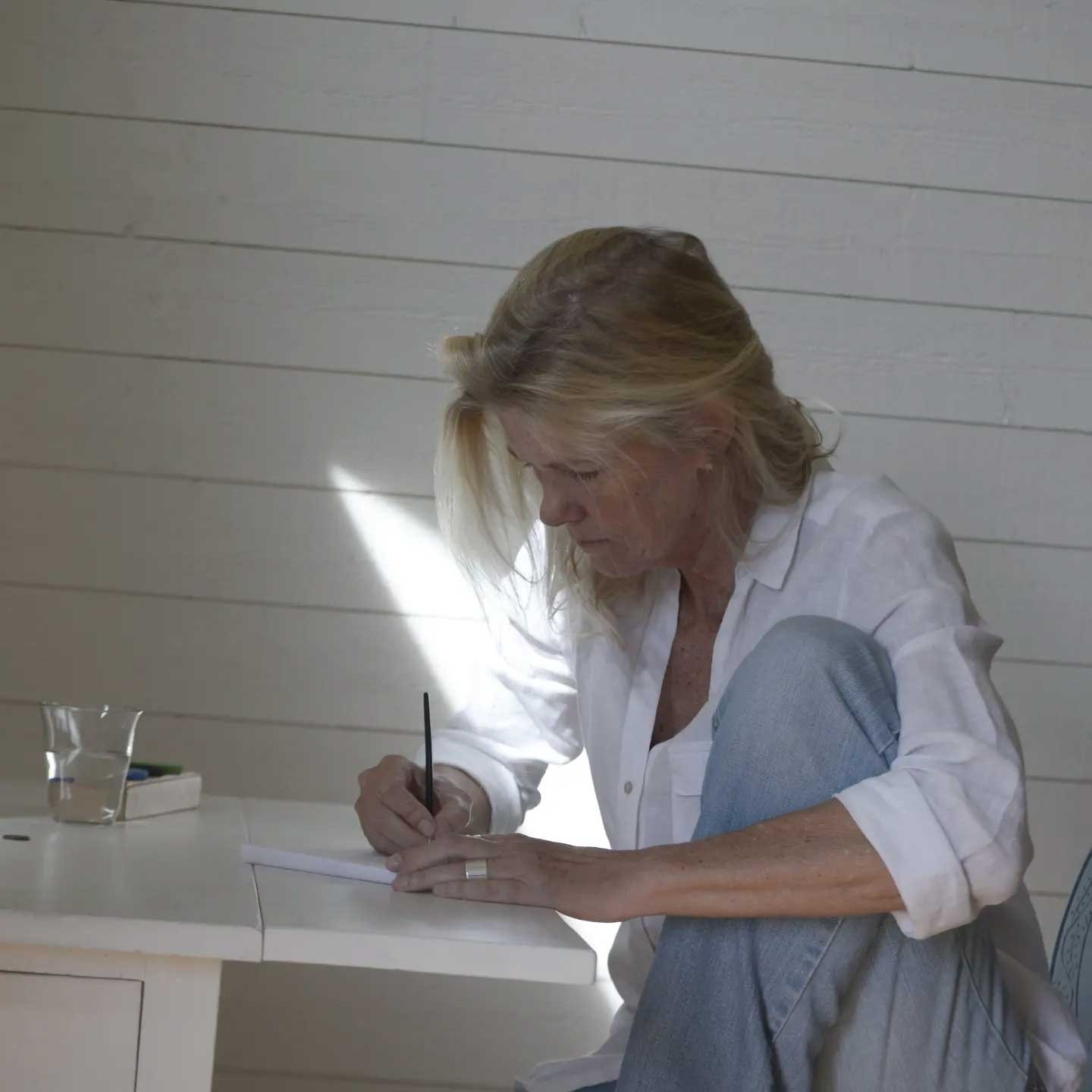
What does your typical day in the studio look like? Walk us through your studio and your most used materials and tools. Now I have my workshop in the shade of old oak trees where I paint and write. The good thing about painting small is that I always find the perfect corner where I feel the right peace to pick up the magnifying glass and the brush and create the perfect little world for someone.
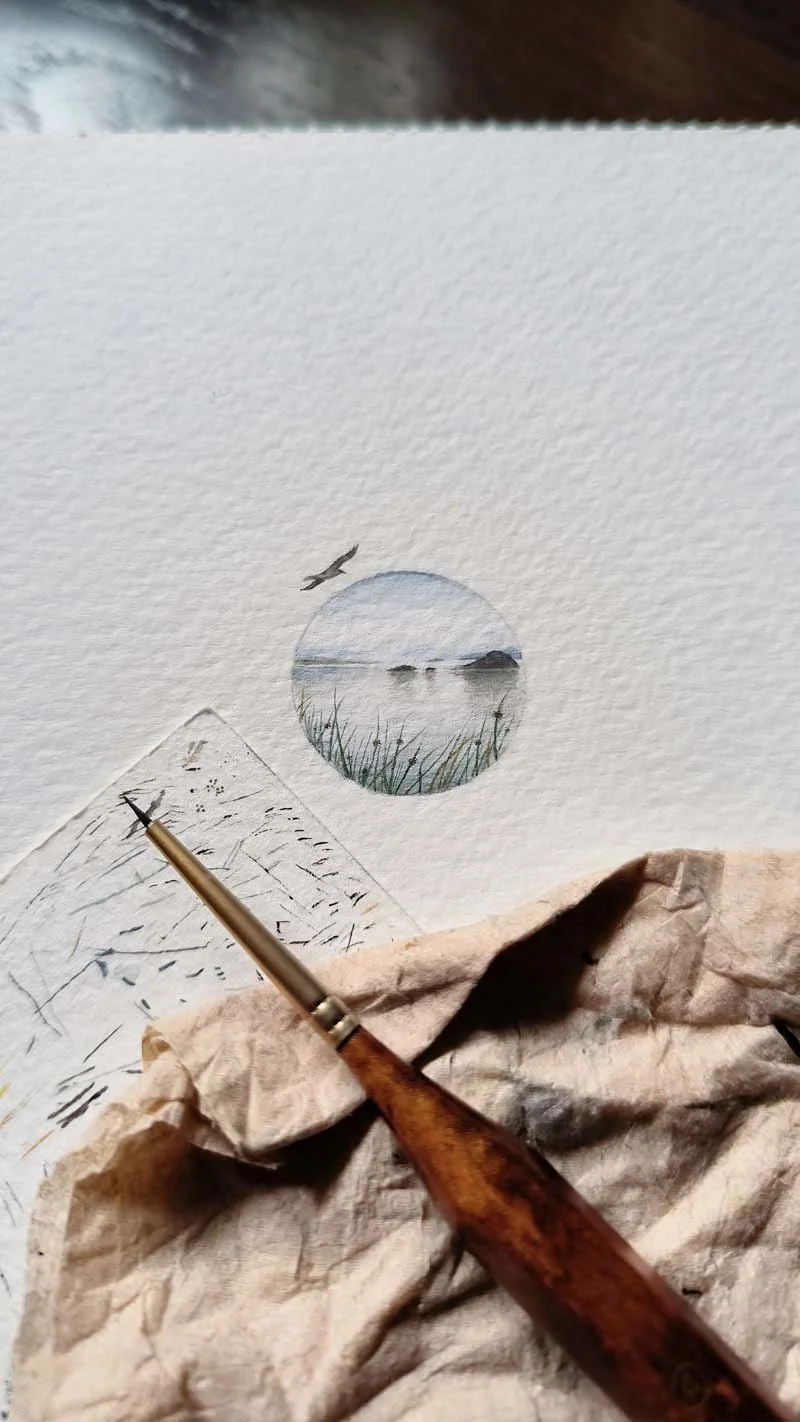
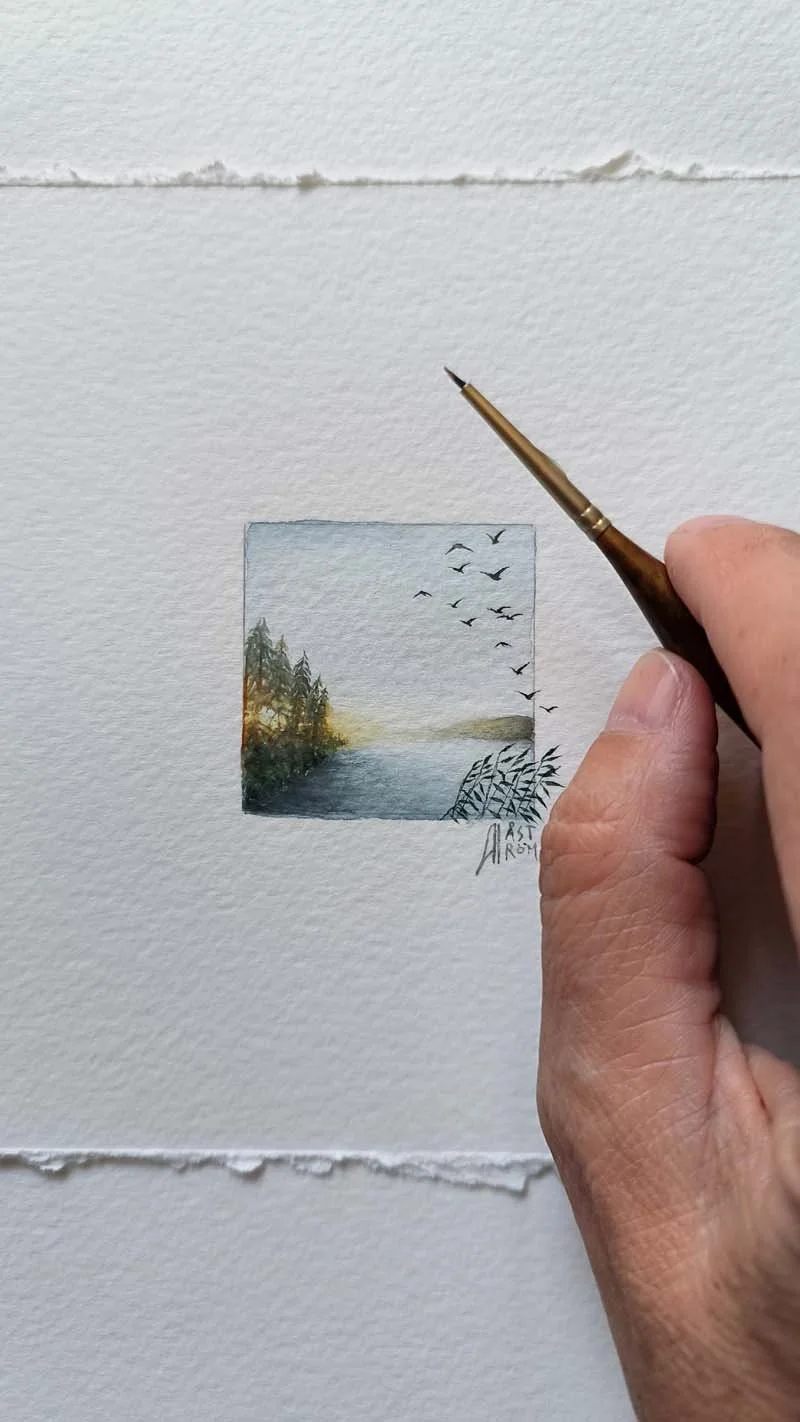
I paint watercolor miniatures loyal to the traditional technique with the paper as the only white and the water as the only light – all with a brush.
Painting miniatures is very similar to meditation – it requires exceptional concentration. For me, it was a challenge not only because of the size but also because of how to think/how to paint. With acrylic, I started with the background and built up the image little by little – the details, the figures… With watercolor miniatures, it is the other way around – every detail has to be in my head from the beginning. It requires all my attention because I can’t draw beforehand, as the pencil tip doesn’t allow it – it’s too thick. I visualize the image I have in mind and follow the invisible lines with the brush.
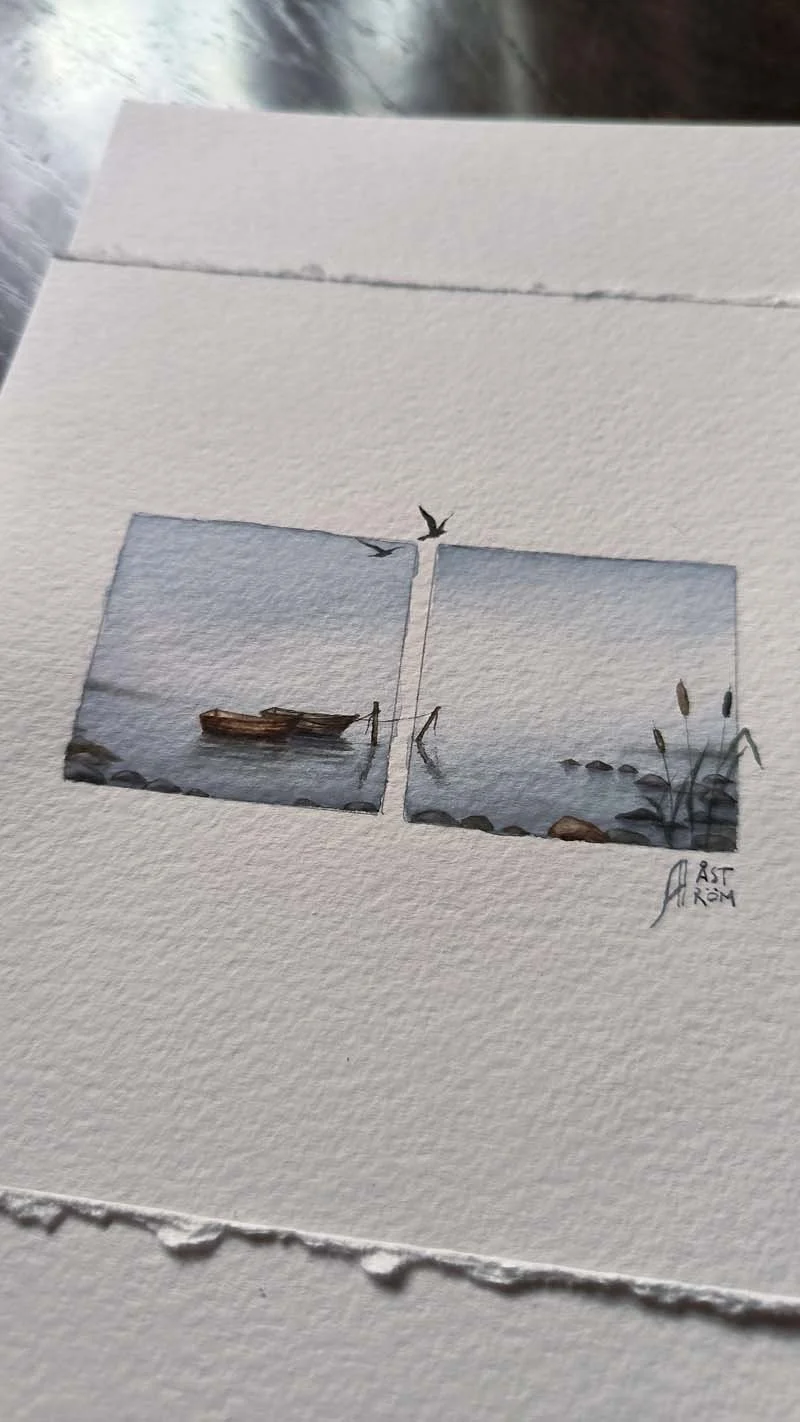
I usually make round tinies in the same size as a 1€-coin (23 mm diameter) or 4×4 cm. Even if they are so small, it takes me quite a while to paint each tiny world, and at the same time, each exhibition requires quite a few works due to its size, so the preparation time for an exhibition or art fair is several months. That means that I usually paint, for example, autumn in springtime and summer during the winter.
What projects are you at work on at the moment? And what themes or ideas are currently driving your work? Right now I'm preparing two exhibitions: the first in Amsterdam in October, and the next will be in Montpellier.
What do you hope people feel when they experience your art? What are you trying to express? My intention with the miniatures is to give peace and calm to the eyes and soul. At my exhibitions, there are always magnifying glasses available for visitors to observe the miniatures with time and tranquility. A woman once told me: ´It is so special to see your tinies – I feel as if I am peeking through a secret peephole that only I have discovered.´
My dream is to reach more people – to make them see the big in the small – the magnificent in the tiny. Give to their trees leaves, to their birds feathers, and to their feelings colors. Give to their hours minutes, and to their minutes seconds. I think that would help make the world a little better every moment.
Do you draw inspiration from music, art, or other disciplines? I always find inspiration in nature, and I often use photographs when looking for a new image to paint.
A great thing about living in Madrid is… Well... Madrid is an incredibly culturally rich city, but I'm still happiest in the countryside.
Can you describe a project that challenged you creatively or emotionally—and how you worked through it? Very occasionally, once a year or maybe every two years, she makes a very special – exclusive – work of approximately 1 meter wide: it is one big crane made of several thousand small cranes. Each little crane is unique and measures 3 to 9 mm, flying all in the same direction. Depending on the daily time she can dedicate to this work, it takes between 2 to 4 months to finish. The first time she made this work, it was for an exhibition she called «Every little detail matters». Apart from this crane of cranes, she had a series of miniatures with themes: «Every starling matters», «Every drop matters», «Every smile matters», «Every grain of sand matters»,..
I think that each and every one of us who walks on this earth has a responsibility towards the planet and towards the future in every small gesture we make.
Tell us about important teachers/mentors/collaborators in your life. I had an art teacher, Peder Govenius, who had traveled a lot during his life, and he was fantastic at telling stories - at diverting my thoughts from the performance demands I placed on myself and instead letting my imagination fly away among inspiring images.
Sustainability in the art world is an important issue. Can you share a memory or reflection about the beauty and wonder of the natural world? Does being in nature inspire your art or your process? Nature is my greatest source of inspiration and also of my zest for life.
AI is changing everything - the way we see the world, creativity, art, our ideas of beauty and the way we communicate with each other and our imaginations. What are your reflections about AI and technology? What is the importance of human art and handmade creative works over industrialized creative practices? I'm terrified of what AI could do to our society in the future, but I can't see it taking over an artist's work - the human and emotional feeling that a work of art gives is largely a communication between people... I at least hope that this phenomenon cannot be created by a computer.
Exploring ideas, art and the creative process connects me to… It connects me to life!