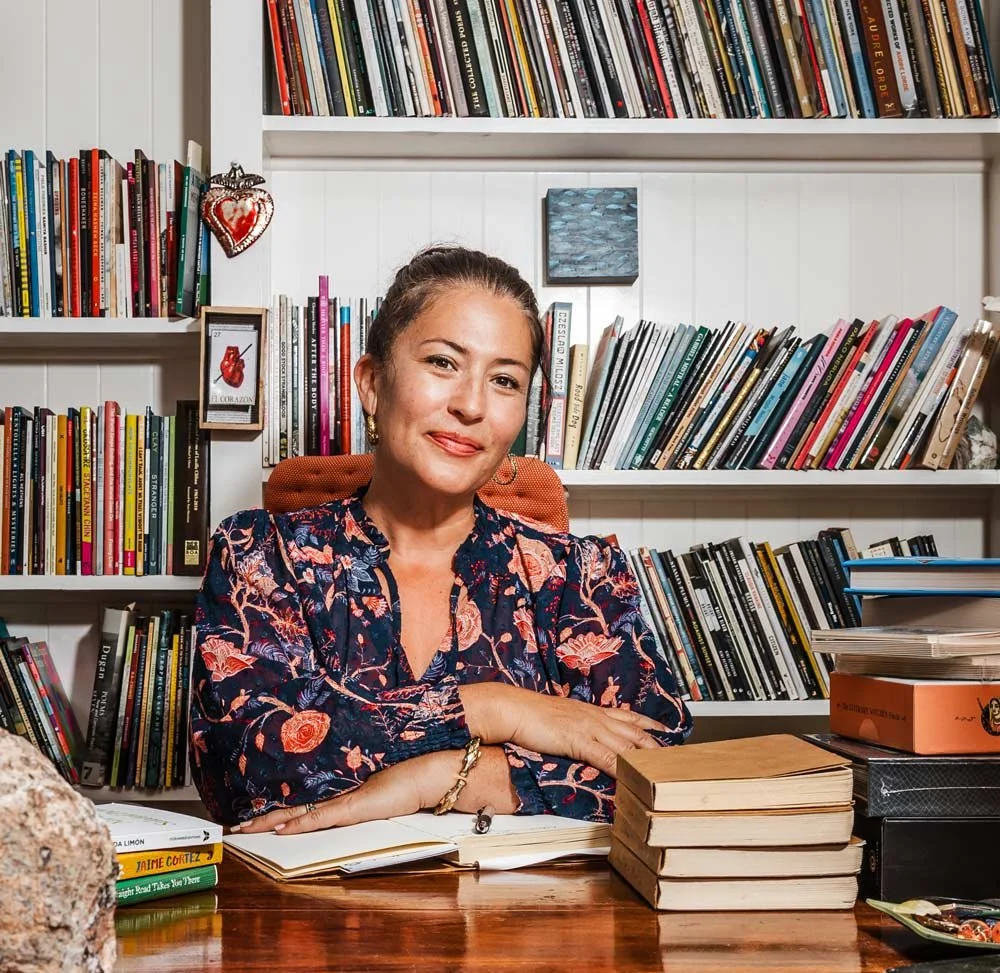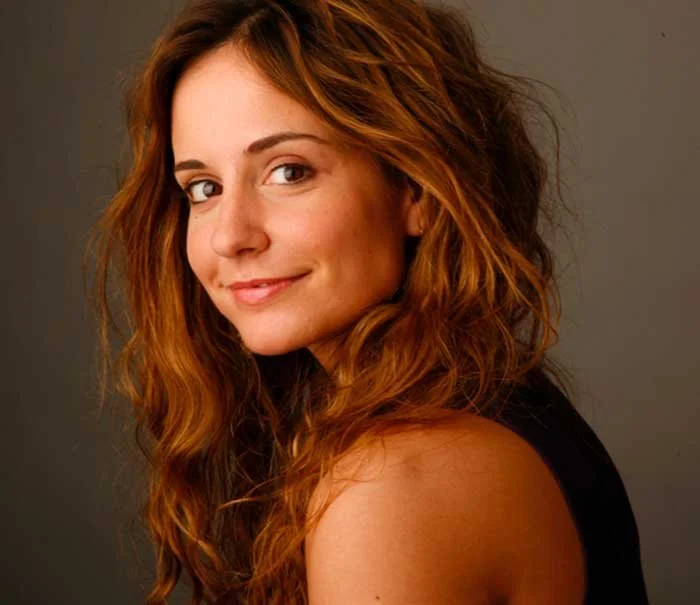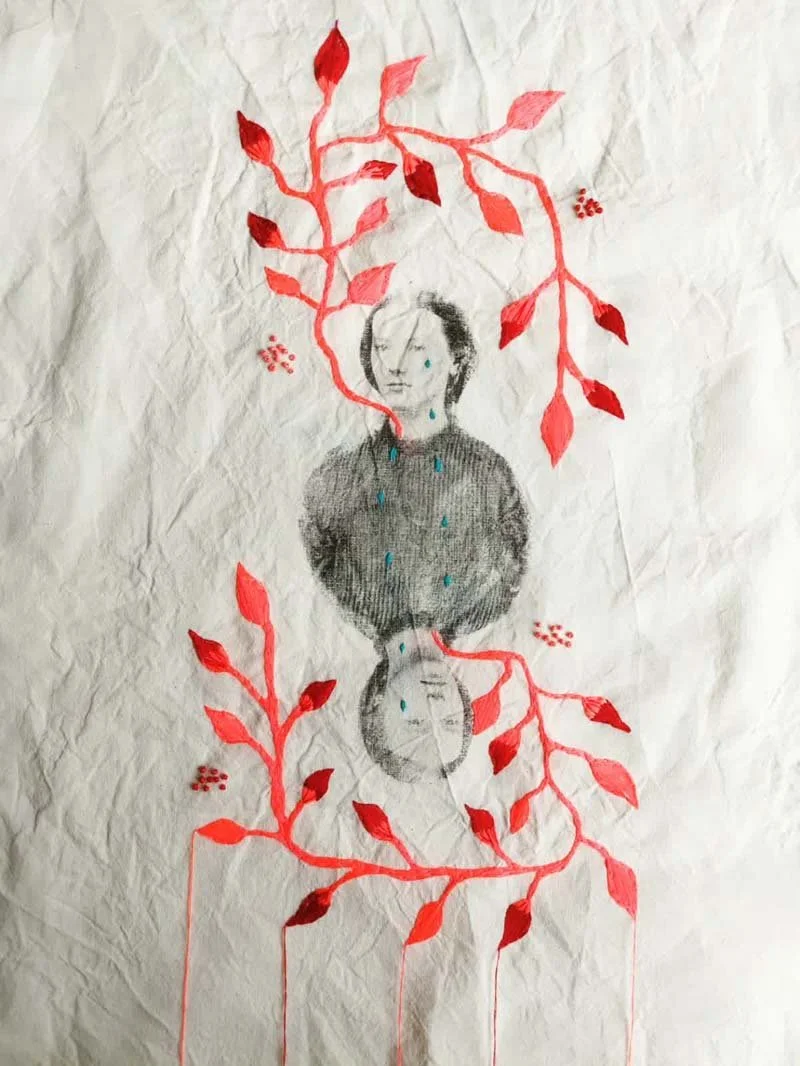


Margarita Brum was born in 1980 in Montevideo, Uruguay. She is a trained photographer and audiovisual producer who has also pursued courses in silkscreen printing and clothing. As an artist, she is currently exploring the intersections between textile art and collage.
Her work has been featured in printed books, music records, magazines, and communication campaigns. In 2023, she received a special mention in the IX National Illustration Award (MEC, Uruguay). In 2024, she was invited by Elle magazine, China edition, to illustrate a cover for its 36th anniversary.
She has participated in both local and international exhibitions. She believes that collage is a very free technique, as it borrows from multiple procedures and cultural expressions—such as photography, illustration, painting, the written press, and graphic advertising—and gives them new purpose and meaning through fragmentation, cutting, and recomposition of the original.
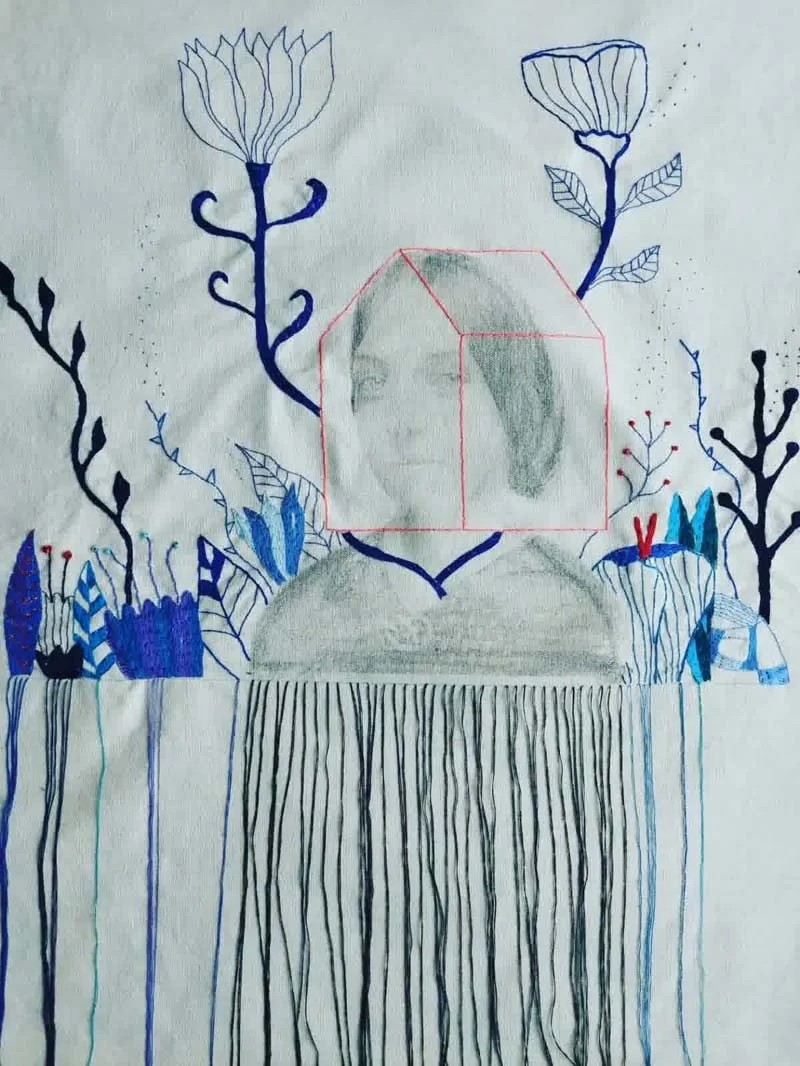
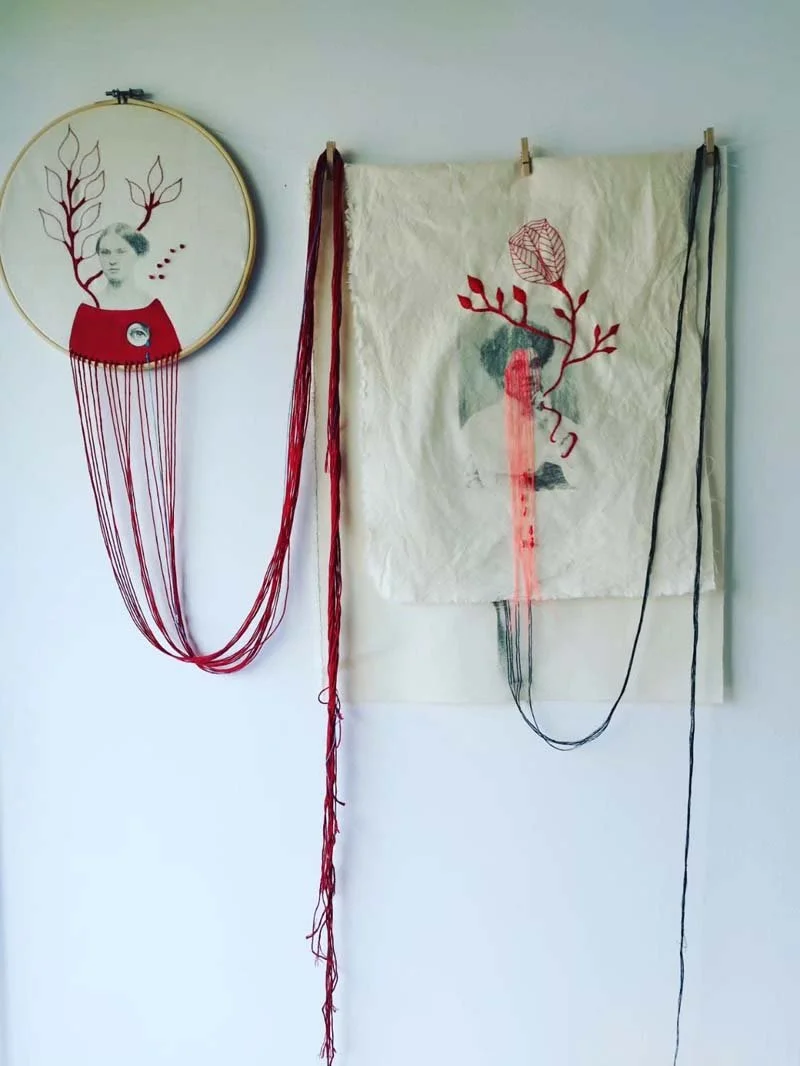
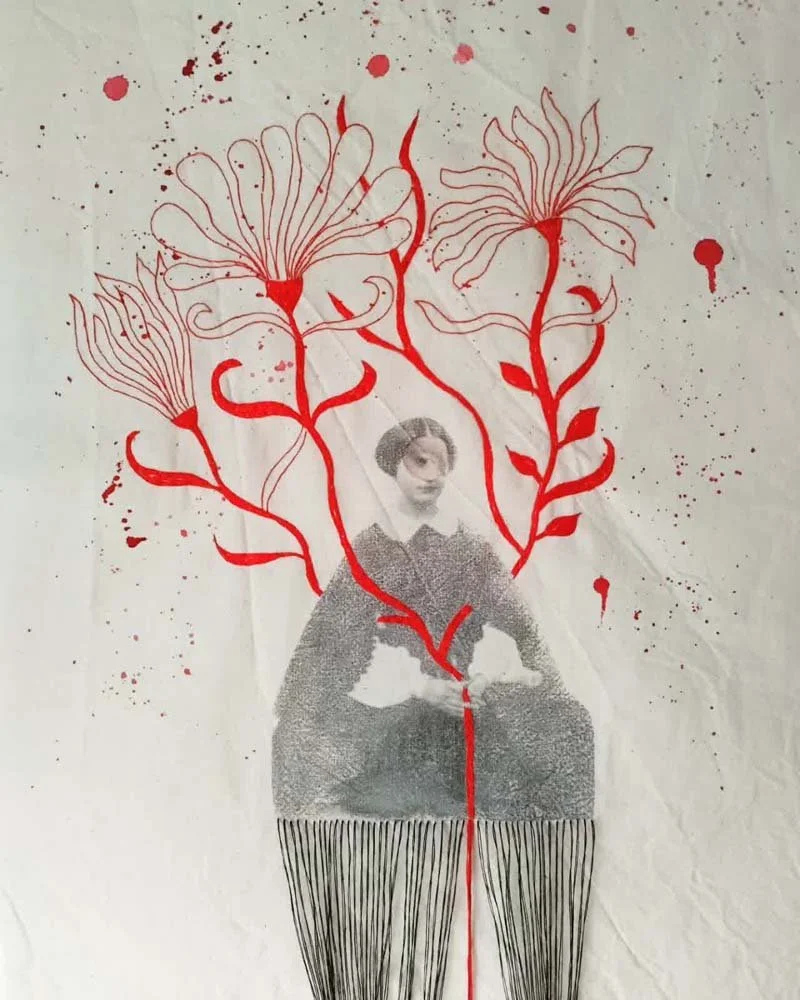
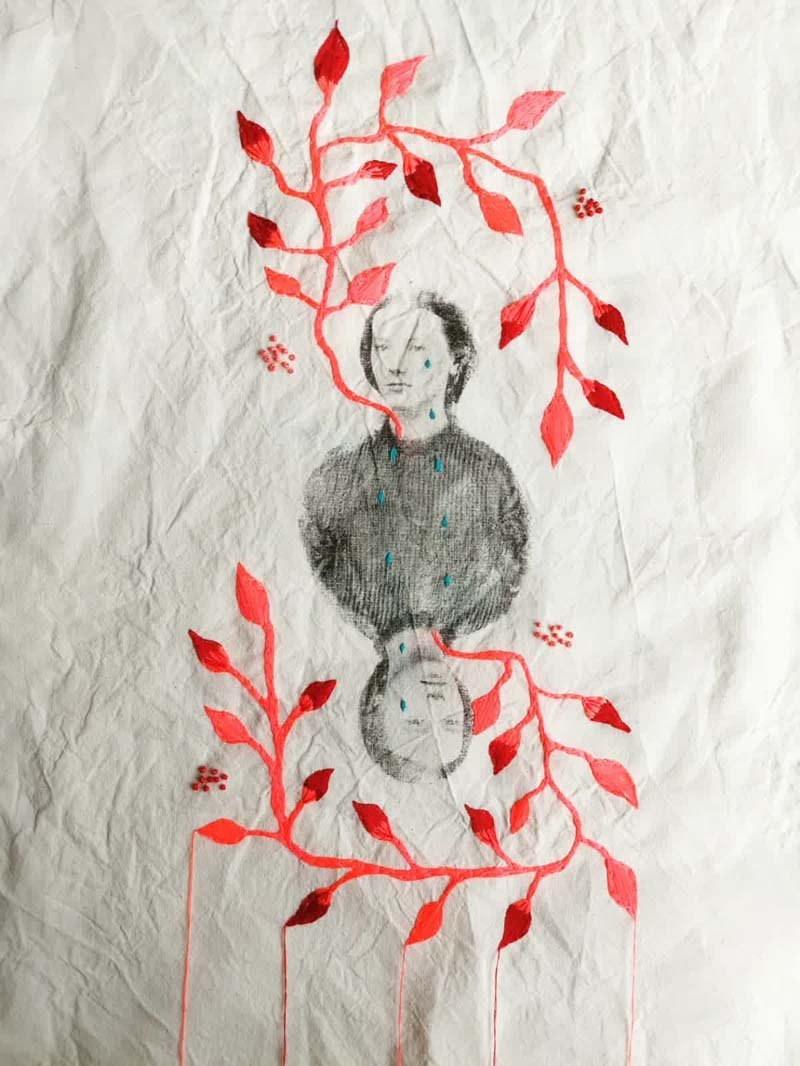
She is particularly interested in the mixture of materials and surfaces, and in the contrast between elements within a collage that may seem initially incompatible but ultimately achieve a sense of harmony. In her work, she enjoys combining textiles with paper, using inks, threads, cuttings, old photos, and acrylic paint. Often, she incorporates embroidery or stitching into her pieces, valuing the visible traces of manual manipulation and the tangible quality of analog work. @criaturacorazon
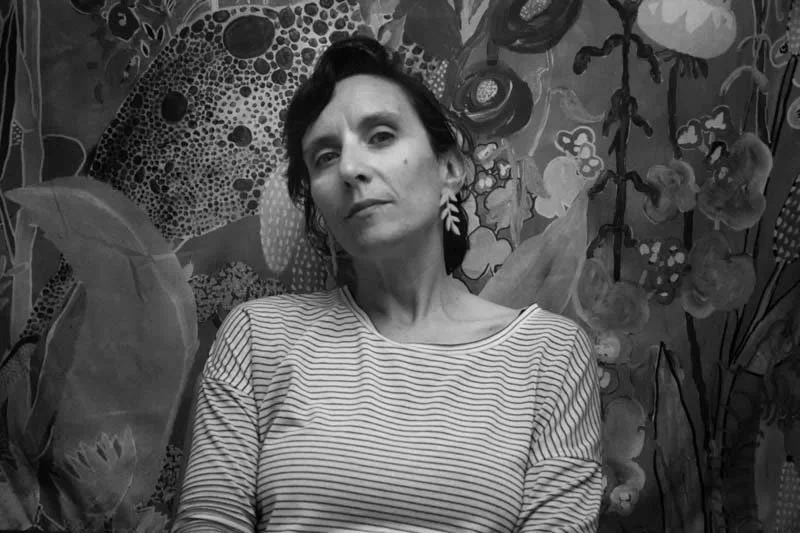
How did the cultural landscape of your hometown shape your creative vision? I was born in Montevideo, the capital of Uruguay, a small country in South America. Until I was 18, I lived in a seaside area, near the beach and surrounded by nature, a semi-rural area where there was a lot of space to play, large gardens, and very few cars on the streets.
Growing up in a country a little on the margins of the world makes you very aware of the influence of the world's great powers on your life, on the politics of your country, on the distribution of wealth, and on the culture and stereotypes you consume.
When did you first fall in love with art and realize you wanted to be an artist? For you, what is the importance of the arts? I think it was in adolescence, when I started studying photography, that I made clothes and asked my friends and sisters to photograph them. There, I can locate a possible beginning, but it was a gradual process, with oscillations and stages in which I investigated more deeply in this or that technique. Art in general has always been present in my life.
I believe that art is fundamental for the human species; it is something that differentiates us from the rest of the animals, the capacity for reflection, representation, synthesis, analysis of what we see, feel, dream, suffer, and the need to communicate and share all that with other humans. There is a human drive to communicate about what surrounds us in less "informative" ways, whether it is in a song, a sculpture, or any form of artistic expression.
What does your typical day in the studio look like? Walk us through your studio and your most used materials and tools. I am a little governed by the schedules of my 8-year-old son and his activities, so some days of the week I start working at 9 and others from 1 pm. The end time depends on my enthusiasm for what I am doing; sometimes it is 10 at night, and I continue to stitch.
In my workshop, the materials and tools of my two great veins coexist, on the one hand, everything related to collage, and on the other, what is related to textile art and also its eventual crosses. So I have boxes and boxes with cutouts of different types of paper, old photos, hundreds of magazines and books to cut out, lots of scissors, and rubber sticks. Also, many threads and needles, baskets with canvas and other types of fabrics, paints, brushes, enamels, markers, etc.
What projects are you at work on at the moment? And what themes or ideas are currently driving your work? Now I'm working on the textile pieces that I'm going to exhibit next year in Switzerland in a gallery I work with. I often revisit the same themes, which have to do with the impossibility of representing memory and the mental-sentimental processes of evocation of the past.
What do you hope people feel when they experience your art? What are you trying to express? Usually, my work is born from a photo that already exists, that is, from a memory that precedes me. It may or may not be of my family, but it was born from a moment that someone decided to photograph and treasure. That intangible presence of the memory of others invades my work in some way, and I think that when someone looks at my pieces, they are also curious to know who those people are, they imagine possible contexts, perhaps they connect with their own memories, with a sense of nostalgia, and with the impossibility of completing the story.
Which artists, past or present, would you like to meet? And why? I am fascinated by Leonora Carrington's work, and the trajectory of her life is incredible to me, from her origin as an English aristocrat to her exile in Mexico, on the one hand, the renunciations she made and the convictions that guided her.
Do you draw inspiration from music, art, or other disciplines? Music and literature are two very important sources of inspiration, the word whether read or sung, a verse in a song or a paragraph in a book, many times they are the kick-off to a compositional idea that I will later develop.
A great thing about living in Montevideo is… its scale. Montevideo is a city that can be explored on foot; it is friendly in that sense. It is an open city, with wide views of the Río de la Plata; it is a city that does not suffocate you, for now.
Can you describe a project that challenged you creatively or emotionally—and how you worked through it? In general, the projects that I do on commission because I need more time for research and reflection to find a compositional synthesis that suits me. I recently finished working on an audiovisual project in which I had to make some animated collages from archive photographs that I didn't always like or thought were good, then work with that material and, at the same time, look for other images, textures, and colors to incorporate to finally achieve a composition that satisfies me. It was not easy.
Tell us about important teachers/mentors/collaborators in your life. My academic training began with photography and continued with a career in audiovisual production. I also took technical courses in screen printing and clothing. But if I had to mention teachers who were important in my training, they would be my first two photography teachers and some from film school. As for collaborators, I work on the animation part of my collage pieces with Sebastián Cerveñansky. The times I directed video clips or other types of audiovisual pieces, I always did it in tandem with him.
Sustainability in the art world is an important issue. Can you share a memory or reflection about the beauty and wonder of the natural world? Does being in nature inspire your art or your process? I believe that the beauty of nature is being destroyed by our consumerist voracity, which seems infinite. If we continue to consume shoes, clothes, cars, phones, etc, etc, at the rate we are going, we will not have beauty left to appreciate. We will have to look at old photos and keep the representations we can make of an extinct world.
A few days ago, the leaders of the major powers met in a forum to define policies on plastic production and did not reach any agreement on how to implement its reduction.
The carbon footprint of the first 15 months of Israel's war in Gaza is greater than the annual planet-warming emissions of a hundred individual countries, exacerbating the global climate emergency.
These are just examples of the level of damage we are producing, but the reality is that as individuals, we feel powerless if politicians and businessmen who can really twist a destiny that looks terrible do not act ethically with urgency.
AI is changing everything - the way we see the world, creativity, art, our ideas of beauty and the way we communicate with each other and our imaginations. What are your reflections about AI and technology? What is the importance of human art and handmade creative works over industrialized creative practices? I don't really know enough to have a finished opinion, but what I can tell you is that I have never used AI, not even to ask a question to the GPT chat, but I hope that as a species we have not invented the tool that completely dehumanizes us. I am concerned about the use of AI manipulation in the generation of fake news, because not all people have the same tools to detect deception. About the use of AI in art, it may sound conservative, but the evidence of human manipulation, the stroke, the imperfections, those vestiges are what make art move me, knowing that behind that work there is a person, with his sensitivity, his head, and his body, producing that.
Exploring ideas, art and the creative process connects me to… playing. There is a somewhat childish spontaneity in the stage of exploring and testing, then comes conceptualization and rationalization, but in the initial stages, there is something more spontaneous and intuitive that I link to playing.