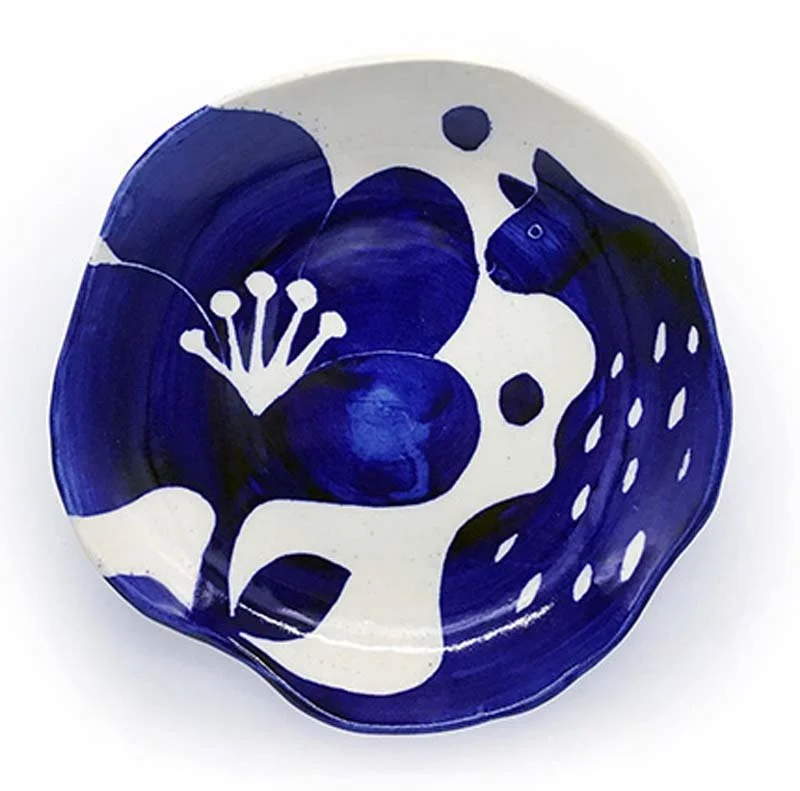


Takashi Tsushima, Fukuoka-based illustrator and artist active in Japan and abroad, creates works with animal and nature themes, collaborating with brands such as ARKET, across advertising, books, packaging, apparel, picture books, and ceramics. @marutsu817
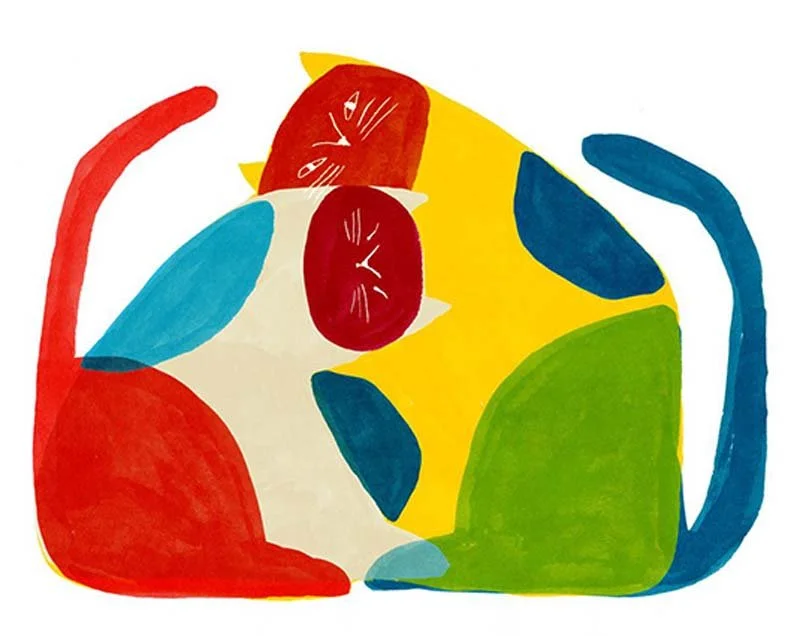


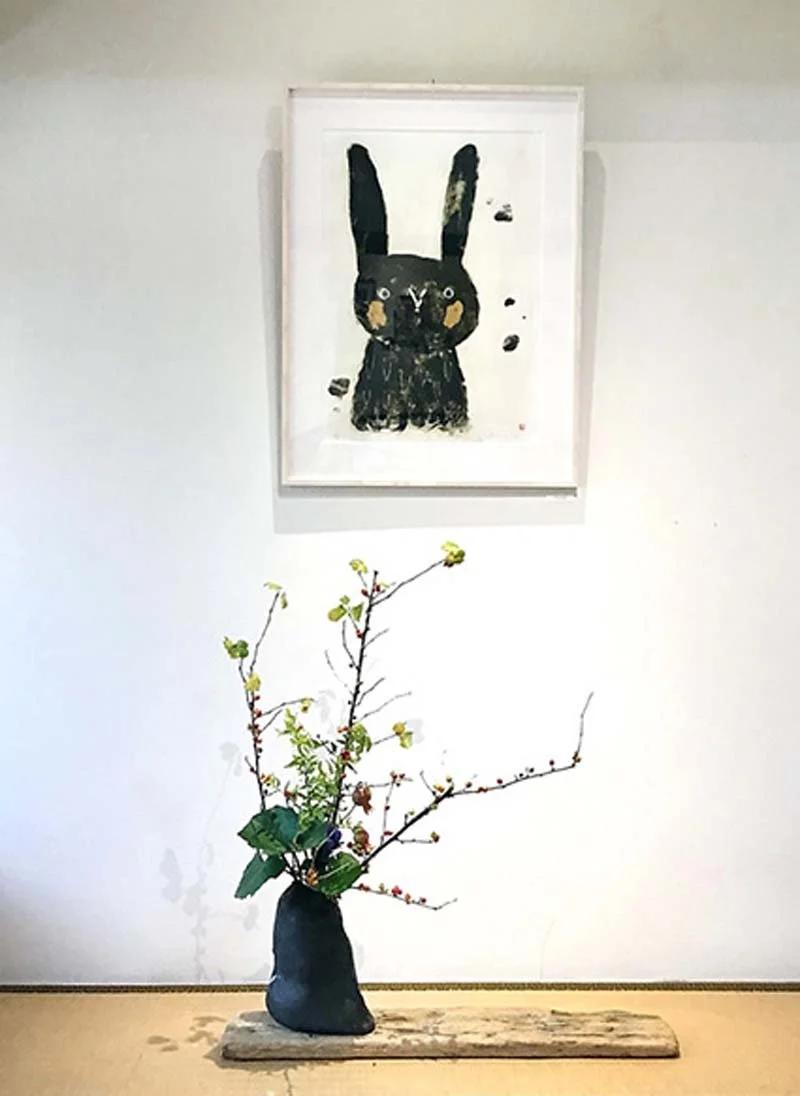
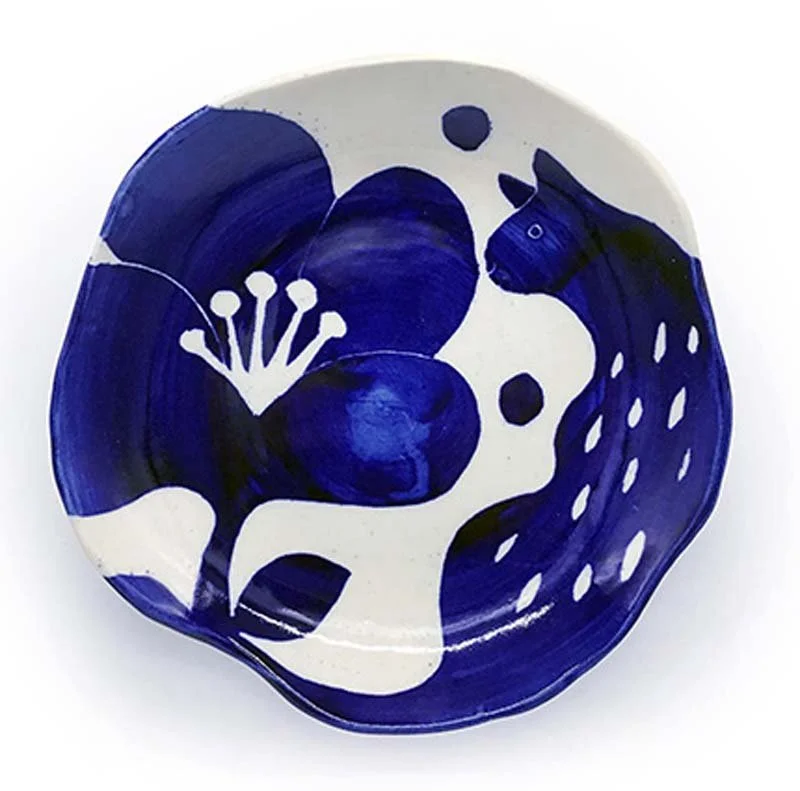
In what ways did your experiences in Japan inform your artistic themes? I was born and raised in Fukuoka, Japan. Fukuoka is a very compact and convenient city, where you can reach the urban areas, mountains, or the sea by bicycle. Growing up in an environment where I could feel nature, seasonal changes, and connections with people up close may have influenced me to create works centered on animals and nature.
When did you first fall in love with art and realize you wanted to be an artist? For you, what is the importance of the arts? I have loved drawing since I was a child. Rather than aspiring to be an artist, I originally aimed to become a manga artist, but although I enjoyed drawing, I wasn’t good at creating stories, so I couldn’t become a manga artist. I then looked for work where drawing alone could stand on its own and discovered the profession of an illustrator, and that’s how I became one. After that, I expanded my practice beyond illustration to include original artworks, painting on ceramics, and katazome, a traditional Japanese dyeing technique.
For me, the importance of art is that it is not strictly necessary for human life. However, when it exists, it allows people to live with a deeper sense of happiness and fulfillment.
What does your typical day in the studio look like? Walk us through your studio and your most used materials and tools. My typical day is centered around the hours from about 11 p.m. to 3 a.m., which I consider the most important time of the day. While my family and the rest of the world are asleep, I focus on work, read books, watch movies, or engage in creative activities. The absence of noise and distractions often allows moments of doing nothing to bring inspiration. I also spend time painting on paper, designing painted ceramics, and carving stencils for katazome dyeing.
In my studio, I mostly work on a computer, creating illustrations with software like Photoshop and printing them on washi paper or plaster-coated paper (Fresco Giclée) using a special printer capable of giclée printing. Therefore, my computer, washi paper, and plaster-coated paper are essential tools for my work.
What projects are you at work on at the moment? And what themes or ideas are currently driving your work? At the moment, I am working on creating pieces for a solo exhibition this autumn at a Zen temple.
Whenever I hold an exhibition, I try to ensure that my new works show at least a small change compared to my previous pieces.
This year, the exhibition is titled “That Voice is Still Audible”, and I hope it can serve as an opportunity to awaken the “voices of the heart” that may have been forgotten.
What do you hope people feel when they experience your art? What are you trying to express? Many of the motifs in my paintings are animals, but I don’t have any particular attachment to them. While I draw animals, I often feel as though I am actually drawing “people.”
When depicting human forms, the shapes and movements themselves convey direct meaning, but by borrowing the forms of animals, I may be able to express the subtleties of human emotions. I don’t consciously think about it while creating, yet when I look back at the works I have made and those I plan to make, I feel this is the case.
If people can experience even a little kindness, joy, calmness, or happiness through my artworks and designs, that brings me great joy.
Which artists, past or present, would you like to meet? And why? Among Western artists, I would like to meet Henri Matisse, Paul Klee, and Marc Chagall. I would love to hear their thoughts and opinions on color.
Among Japanese artists, I would like to meet Jakuchu Ito and Sengai Gibon. I would like to ask them what insights or understanding allowed them to express living things so vividly and simply.
Do you draw inspiration from music, art, or other disciplines? Of course, I draw inspiration from music, art, and various other fields. Recently, I have been visiting elementary schools to lead workshops where children and I create large abstract paintings together. By working alongside the children, I am inspired by their free and bwold expressions and use of color, which provides me with a great deal of creative stimulation.
A great thing about living in Fukuoka is… Fukuoka is a very compact and convenient city. You can reach the urban areas, mountains, and the sea by bicycle, and the close proximity of the city and nature makes it a comfortable place to live. Additionally, the food is delicious, and the people who live there are kind and cheerful, which is also very appealing.
Can you describe a project that challenged you creatively or emotionally—and how you worked through it? In Fukuoka City, special school lunch delivery trucks powered by hydrogen and designed with environmental considerations have been deployed. Initially, I was asked to design a truck featuring the winning artwork from a call for submissions by middle school art club students, themed “an eco-friendly future city.” However, this approach would have only showcased a single student’s work, leaving the other students’ efforts unrecognized and making the project less enjoyable for me as well.
To address this, I had each student draw a single imaginary “hydrogen flower.” I then digitally cut out each flower in Photoshop and collaged them into a single image, creating a “field of hydrogen flowers” contributed by all the students. I further collaged this flower field into a design I created, resulting in the final artwork titled “A Bird and Nature Made from a Field of Hydrogen Flowers.” This project became a successful collaborative effort with many middle school students.
Currently, three school lunch delivery trucks printed with this artwork are running throughout Fukuoka City.
Tell us about important teachers/mentors/collaborators in your life. Since my teenage years and continuing to the present, I have been fortunate to be mentored by the Japanese artist Uzō Hiramatsu. Through his work and words, he has taught me many things about approaching art and the important aspects of life. Had I not met him, my current environment and path would be very different. He is very approachable and casual in his interactions, yet I hold deep respect and gratitude for him.
Sustainability in the art world is an important issue. Can you share a memory or reflection about the beauty and wonder of the natural world? Does being in nature inspire your art or your process? In the past, I have faced life-threatening illness three times. During those times, looking out from the hospital at the mountains, rivers, and sea, and listening to the voices of birds and insects, I felt a strange sense of comfort, as if I were becoming part of this natural world. Of course, the thought of dying was frightening, but imagining that I would continue to exist as a transformed part of nature eased that fear. This feeling remains with me to this day.
Therefore, I feel that my creative process carries the sense that “all living things exist within me, and I am also a part of them.”
AI is changing everything - the way we see the world, creativity, art, our ideas of beauty and the way we communicate with each other and our imaginations. What are your reflections about AI and technology? What is the importance of human art and handmade creative works over industrialized creative practices? With the advent of AI, I feel that we are entering an era in which society will be built around AI, and the question now is how humans and AI will coexist. AI technology is truly remarkable, but it is ultimately a tool for humans to use, and humans should never be controlled by AI.
With AI’s emergence, it has become clearer what AI can and cannot do. Humans inevitably make errors when drawing, creating, performing music, or printing. Yet it is only humans who can perceive beauty, comfort, and interest within those errors. Furthermore, Japan is a high-context culture, and the subtle perceptions that cannot be expressed in words are difficult for AI to grasp.
In Japan, there is an aesthetic sense called “wabi-sabi,” which appreciates imperfection and finds profound beauty and richness of the heart. The creativity in human-made art and handcrafted works carries expressions that AI, no matter how much it learns, cannot reproduce. The ability to perceive that is becoming increasingly important. I hope that the advent of AI will actually help refine human sensibilities even further.
Exploring ideas, art and the creative process connects me to… It connects me, through my work, to people somewhere in the world who can feel a little bit of happiness.