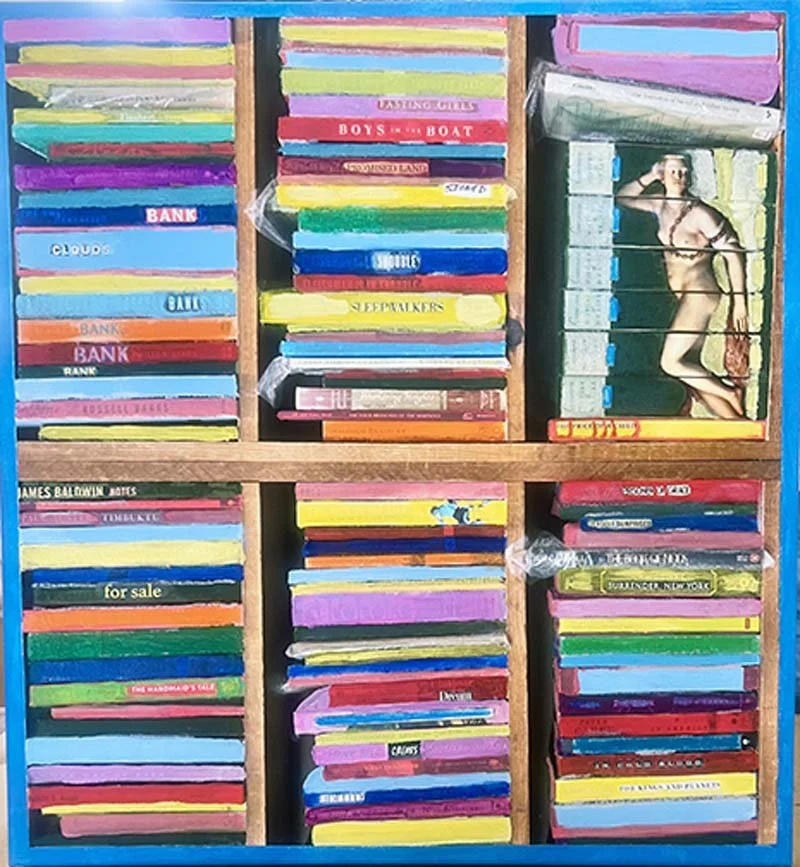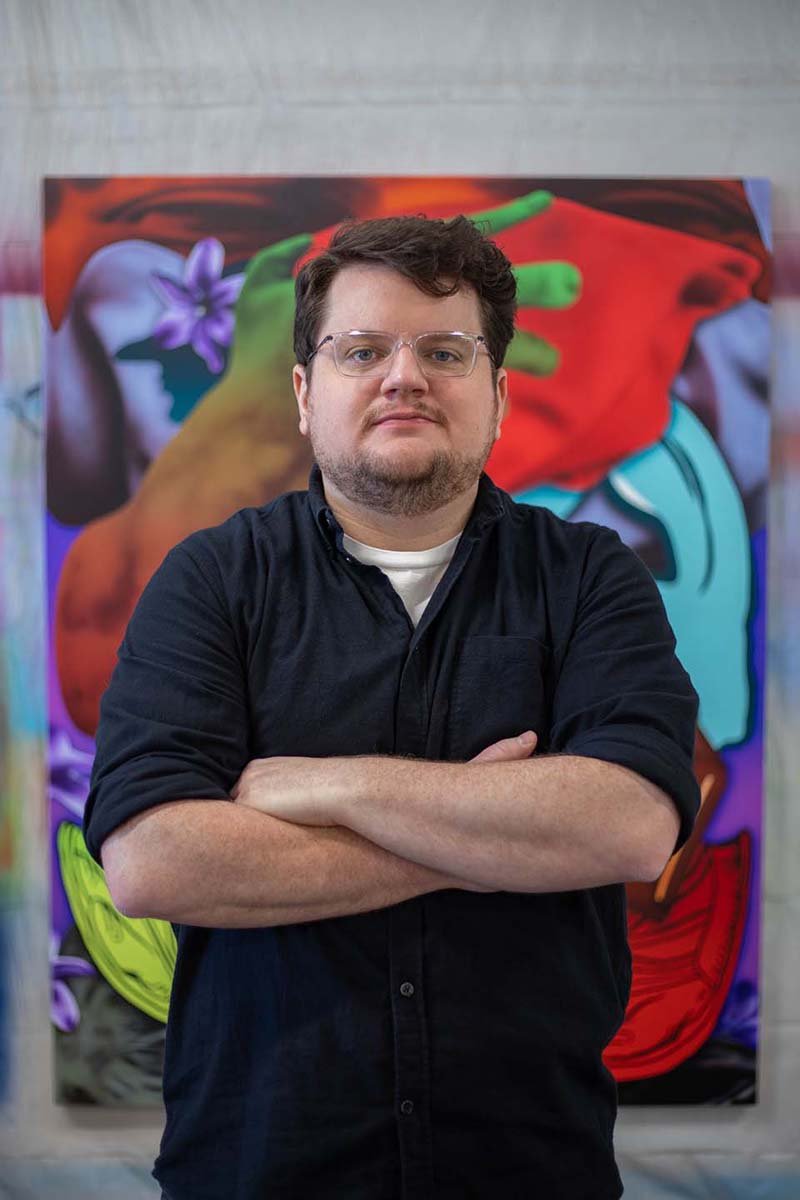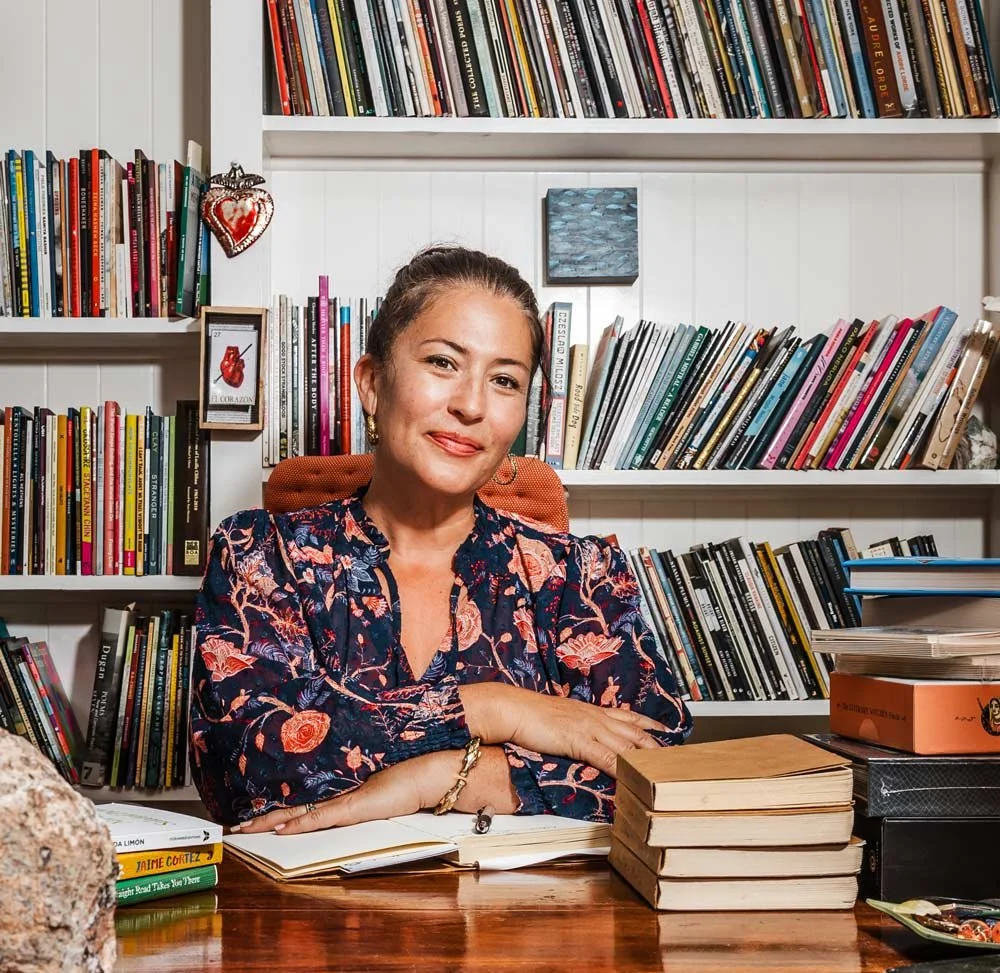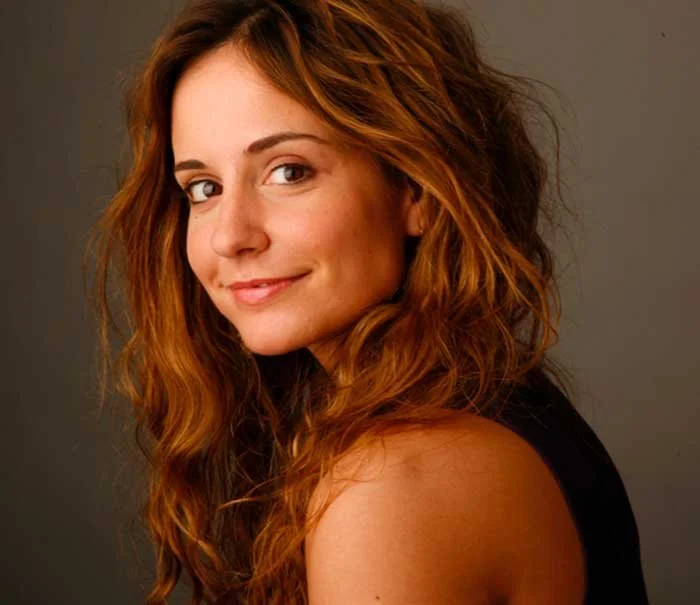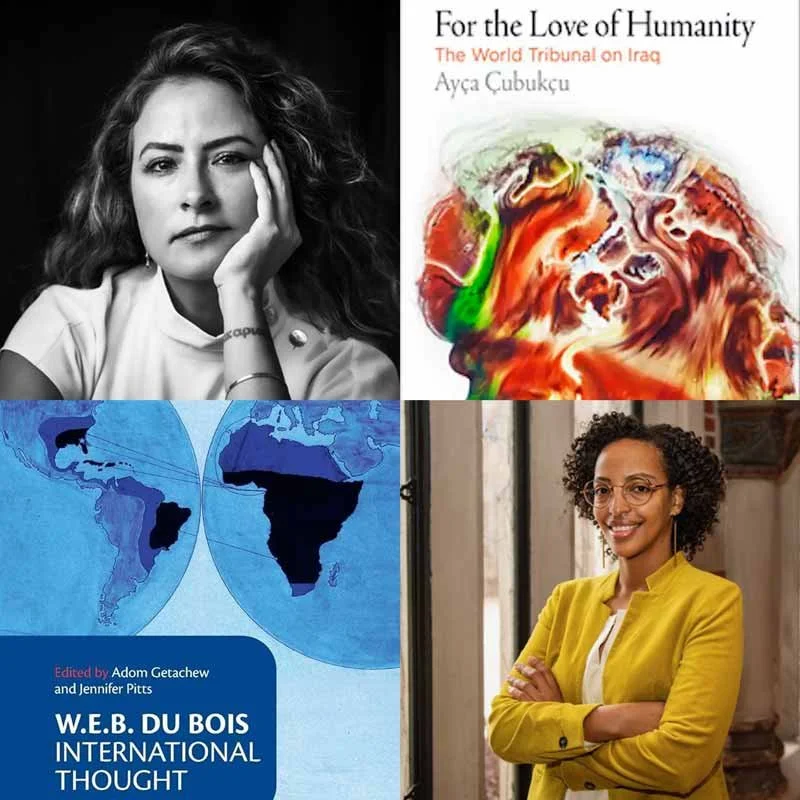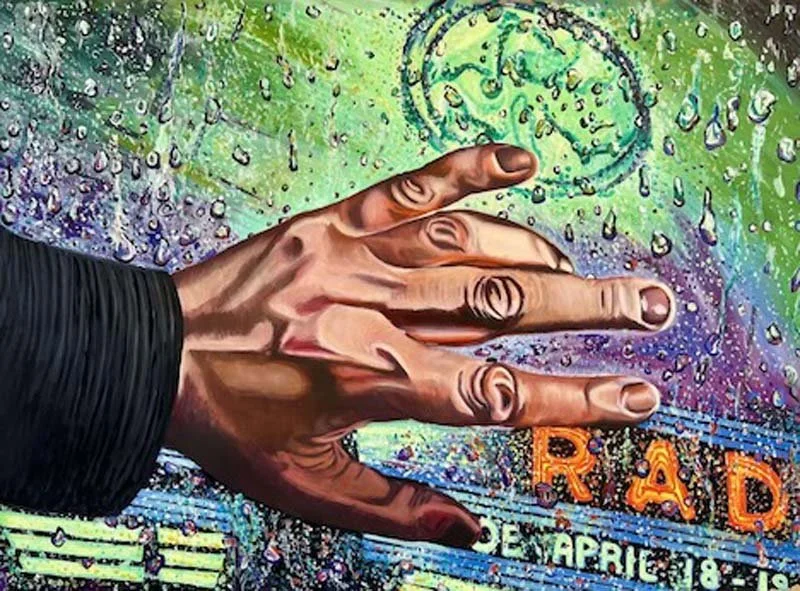


Artist Joan LeMay excavates the energetic core of her subjects as an act of connection and projection. Her paintings appear on album, magazine, and book covers, and have been exhibited internationally. LeMay’s art book with writer Alex Pappademas, QUANTUM CRIMINALS: RAMBLERS, WILD GAMBLERS, AND OTHER SOLE SURVIVORS FROM THE SONGS OF STEELY DAN, (University of Texas Press 2023) was called “weird and wondrous” by the New York Times and “one of the sharpest, funniest, and best books ever about any rock artist” by Rolling Stone. Their follow-up about the Grateful Dead, FRIENDS OF THE DEVIL, is forthcoming from Random House. @joanlemay
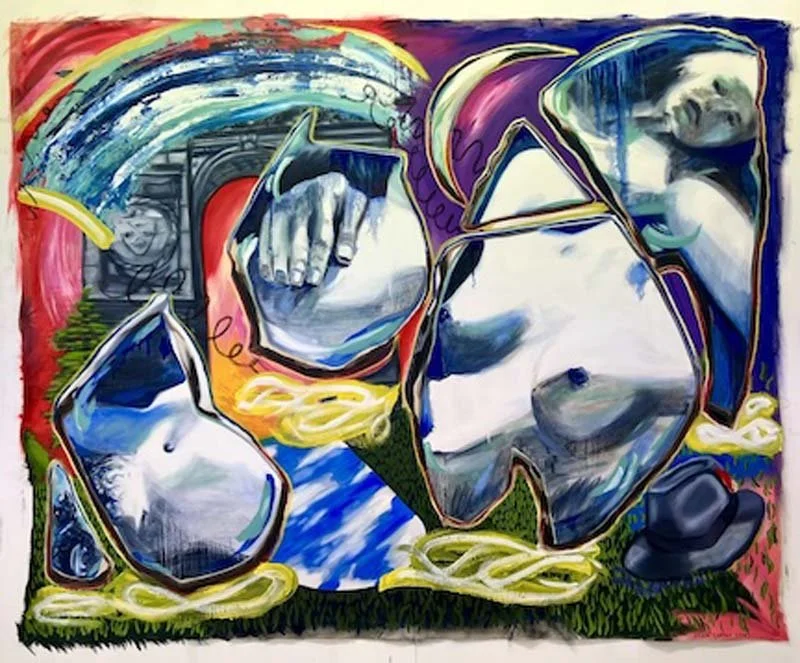
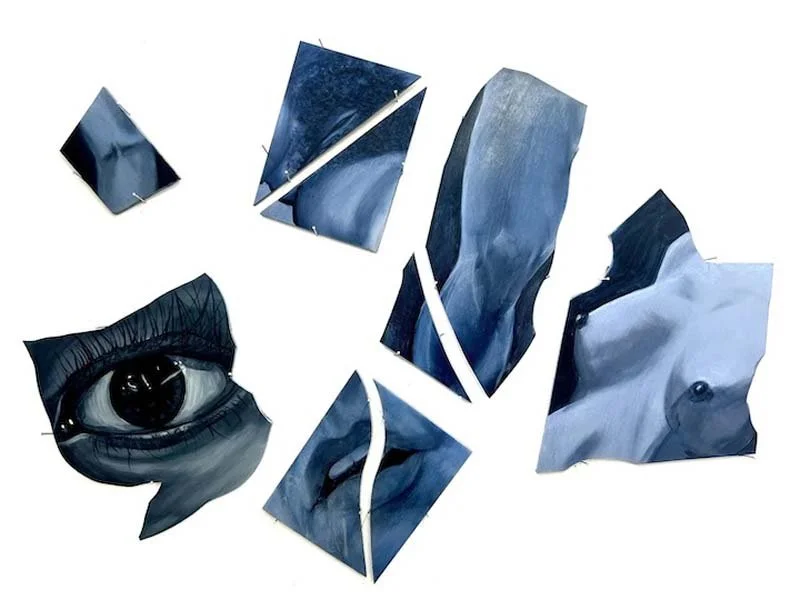
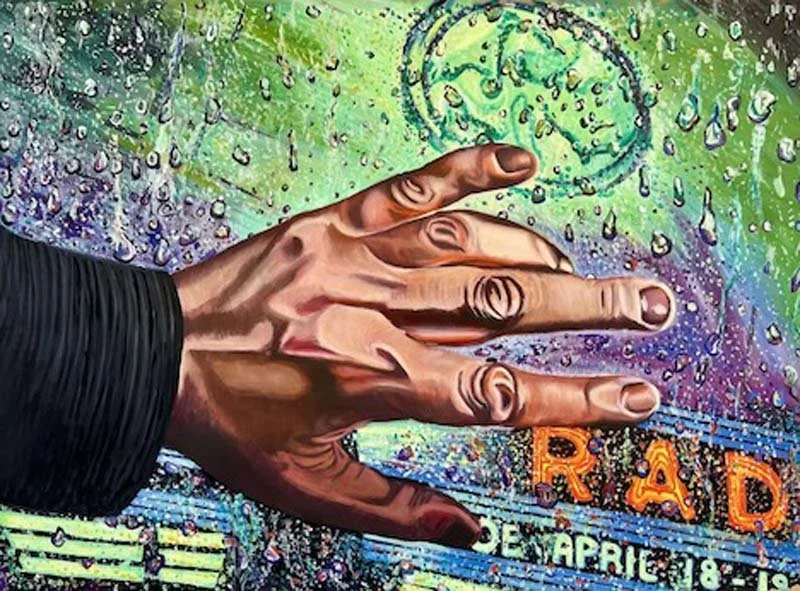
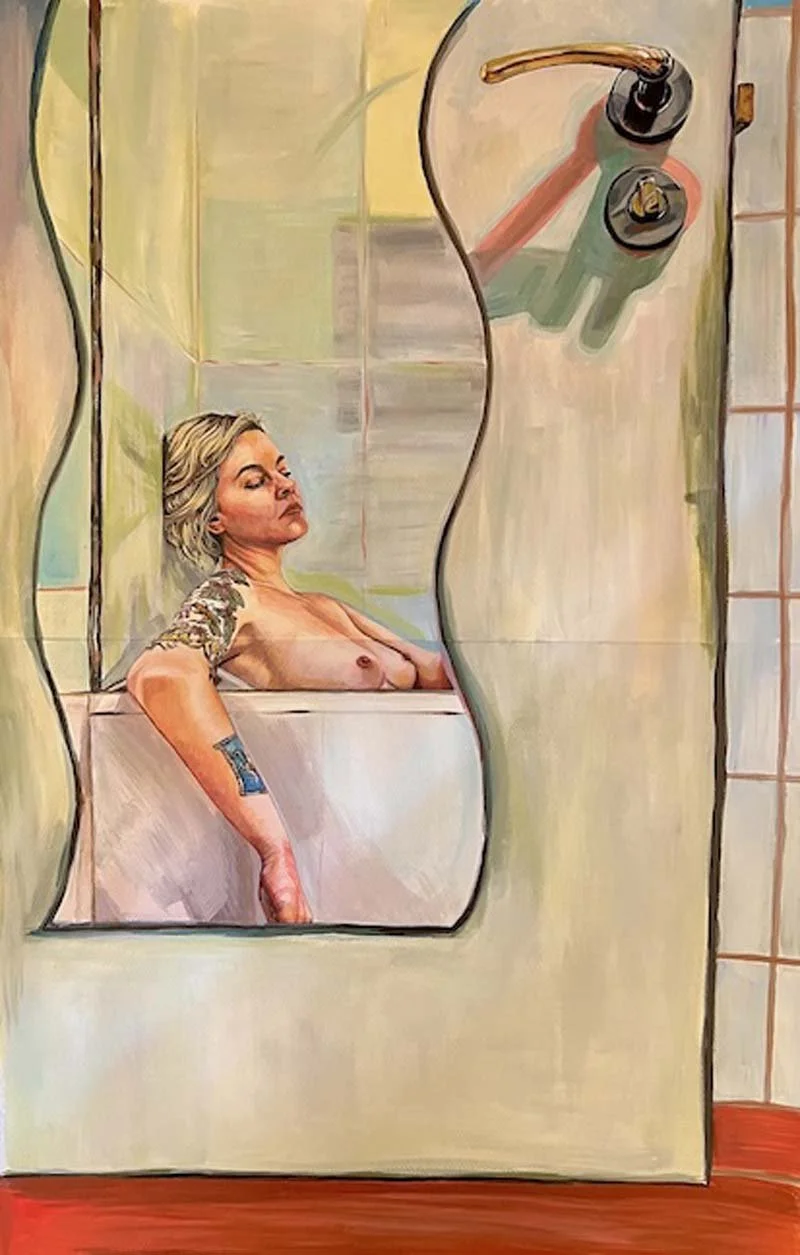
How did the social dynamics of Houston influence your artistic expression? I'm a fifth-generation Texan born and raised in Houston, which meant that I grew up going to the Menil Collection, the Rothko Chapel, the Cy Twombly Gallery, the MFAH and CAMH, and the Orange Show. It also meant that I grew up steadily realizing that I had a different ideology than that of the dominant culture, aka I quickly aligned myself with Texas Punk. Sprawling Houston in the 90s was creatively wild; the stuff of legends. We had to make our own fun, and we did. I drew, painted, wrote, painted, played music, made (internationally distributed) fanzines, promoted bands, and put on shows. The visual arts and communications side of the music scene was the container for the first publicly disseminated art I ever really made: show posters and zine art. My foundational celebration of artists then informs my work today. Plus, the "if you build it, they will come" ethos of that DIY subculture made it possible for me to believe in myself as an artist and curate and stage exhibitions. My first published book directly started as a fanzine–and in the back of my mind, I am always chasing the feeling of immersion and escape I got as a teen standing in front of a Magritte at the Menil or in front of Fugazi at D&I Colonial Hall.
When did you first fall in love with art and realize you wanted to be an artist? For you, what is the importance of the arts? I’ve always had health challenges, and starting at age two and for much of my childhood, I had to take four 30-minute-long asthma treatments per day out of a nebulizer machine to help me breathe. I would sit and draw and write at the kitchen table while I was tethered by a mask and a tube to this thing. I don’t remember ever not drawing; I can’t imagine it. The arts are what make life worth living–what is humanity without art? Something awful, that’s what. Something devoid of love, of feeling, of communication, of care, of bonds, of everything. Unthinkable.
What does your typical day in the studio look like? Walk us through your studio and your most used materials and tools. My studio is in my apartment because I live in NYC. I’ve always been scrappy, and I also deeply value being able to wake up and stare at what I’m working on first thing in the morning. For me, the fewer barriers there are between you and your workspace, the better. My days vary widely–I just finished making over a hundred paintings for a new book project, and throughout that process, I also worked on commissioned portraits, book covers, magazine covers, and more surrealistic, figural paintings for myself. I am a devotee of Hobein Acryla Gouache and Golden Acrylics. I love oils, but rarely use them these days because of the drying time. I also have toolboxes full of everything you could ever want to use for drawing–Blackwings, a zillion types of charcoal, and conte crayons. Fabriano and Arches papers are the best.
What projects are you at work on at the moment? And what themes or ideas are currently driving your work? Having just completed a number of larger commercial projects, I’m leaning into making a new body of work for a show. I’m thinking a lot about the Charleston Trust–Vanessa Bell and Duncan Grant–and continuing to build on themes around Roman and Greek statuary, ancient pottery, the figure, my own figure, and several specific Magritte paintings that I’ve been fixated on for quite a while. I’m also rethinking my marketing strategy and general direction, which is something working artists don’t talk about enough. We have to be businesspeople on top of everything else.
What do you hope people feel when they experience your art? What are you trying to express? I want people to light up and be drawn into my work–I want them to connect with the energy in my subjects and have that energy remind them of who they really are inside.
Which artists, past or present, would you like to meet? And why? I'd love to sit at a table with Alice Neel, who is my north star. She was unflinching in her approach, and that candor is true generosity, both to the sitter and viewer. I'd also love to meet Hockney, just to thank him. I wouldn't bother him with any questions--he's written so much and has given us all so much to go on. I'd like to get a one-hour drafting lesson from Sargent.
Do you draw inspiration from music, art, or other disciplines? Everything informs everything else, and anyone who thinks otherwise does not have their eyes open as an artist or a person in the world. All disciplines are like religions in that their core is the same: getting to the recognition of the divine in each other and ourselves.
A great thing about living in NYC is… This is my second time living in NYC, and I am never leaving again unless I am fleeing the country in an emergency kind of way, which is not out of the question in the future, given the rapid rise of American fascism. There is nowhere like NYC. The creative community I have here is profound. My friends have my soul. I'm lucky to have friends all over who also have my soul, but in New York...the energy is palpable. The sense of possibility is everywhere because the city is one of extremes, and the chaos and vibrancy inherent in that spectrum give me the juice to stay afloat emotionally.
Can you describe a project that challenged you creatively or emotionally—and how you worked through it? I try to find the creative and emotional challenge in every project I take on, whether it is a commercial job, a commissioned portrait, or a large painting that comes from my gut. The jobs that are the least creative are the most emotionally challenging, and the jobs that are the least emotionally challenging demand the most creativity. There is always gold in them hills. You’re not doing anyone any favors if you phone anything in, ever.
Tell us about important teachers/mentors/collaborators in your life. I owe much of the structure of my life to my dear friend, the director/producer/writer/visual artist Jessica Hopper, who has over the decades been my boss, my editor, my flashlight in the dark, and nine million other things. My dear friend, the painter and performance artist Derek Erdman, really got me back into painting about 23 years ago; I was no good, but he told me to keep going. Today, I am deeply influenced by many, including my musical collaborators in the two bands I’m in (Viennetta, with actor JB Rote and musician Joan Sullivan, and Bull Thieves, with writer and visual artist Lance Scott Walker and drummer Liana Katz). The musician/actress/poet/visual artist/visionary Jennifer Charles is my dear friend and family and the high priestess of an entire creative world that I am so lucky to live in and I really do not know and do not want to know what my life or creativity would be without her, and I am daily deeply inspired and dazzled by the actor/visual artist/musician/writer Kevin Corrigan, who has my heart. My friend, the painter Sarm Micciche, is a beacon, as is my friend, the painter Mel Messer. There are so many others.
Sustainability in the art world is an important issue. Can you share a memory or reflection about the beauty and wonder of the natural world? Does being in nature inspire your art or your process? My work has less to do with the natural world and more about interiority, but that itself is part of the natural world.
AI is changing everything - the way we see the world, creativity, art, our ideas of beauty and the way we communicate with each other and our imaginations. What are your reflections about AI and technology? What is the importance of human art and handmade creative works over industrialized creative practices? I am not into it. I never even learned Photoshop, and I do illustration commercially. We need to make art with our hands. We need to create stories with our minds. The more we give up our autonomy and agency to systems designed to extract and atrophy the labor of thinkers for the purpose of furthering the aims of the oligarchy, the more we rob ourselves. AI can be an interesting tool for more rapidly executing human ideation, sure, but we are in the super baby wild west of it, and more than anything, I am already pre-mourning what will continue to be lost, even while there are, sure, some gains. This is going to be messy, it's going to be nasty, and like anything in late capitalism, it will be a hard fight to harness these newly developing powers for good and not evil. Not to mention the fact that those in power are way more interested in using up all of the planet's energy and water to protect their data centers than they are in making functional systems that support and sustain human life on this fragile planet. Overall, I give it a big fart sound.
Exploring ideas, art and the creative process connects me to…: the divine forces that flow through each of us.