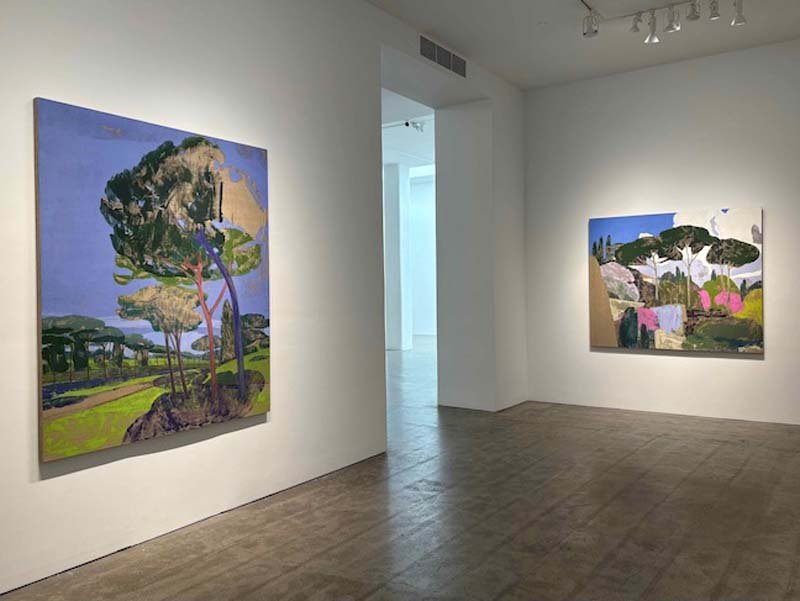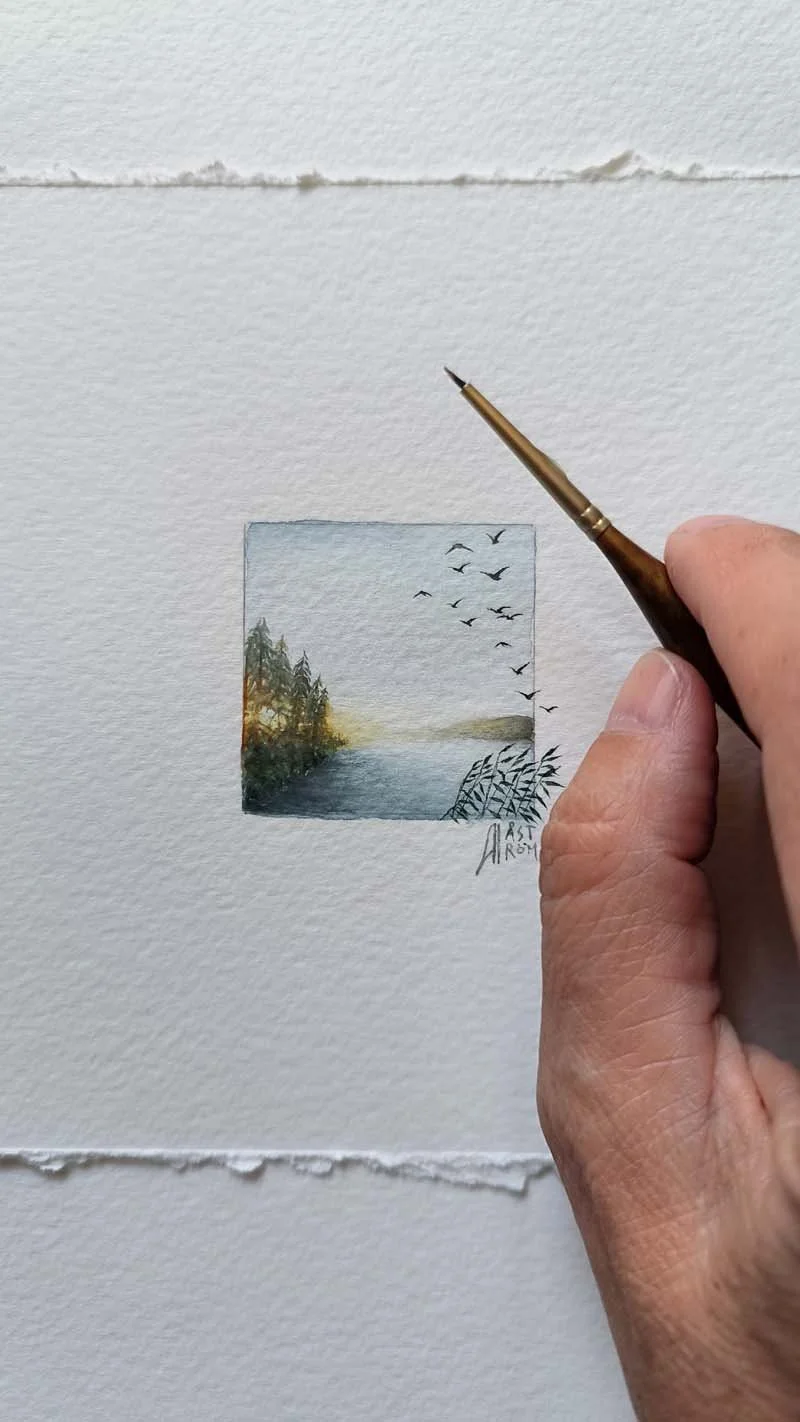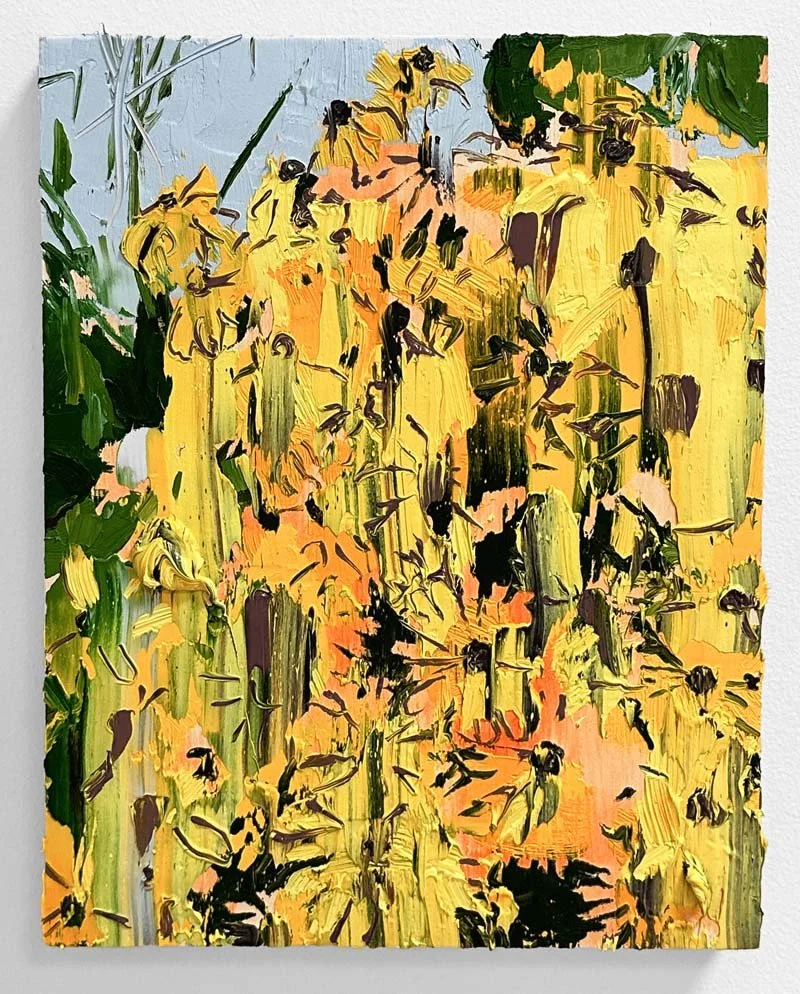


For the past 30 years, Mary Temple has made paintings that occupy the space between spaces of intuition and conception, between abstraction and depiction. Beginning with the natural world, Temple responds to light and shadow, shape and color. Not a landscape painter, but a painter of experiences and observations of the evanescent, she communicates fleeting and specific encounters with natural environments. Works are painted alla prima, with the goal of correlating the pleasure of the painterly process with that of witnessing the sublime.
Temple has exhibited her work internationally and throughout the United States. She has completed commissioned projects for solo and group institutional exhibitions that include the San Francisco Museum of Modern Art, SF, CA; SculptureCenter, LIC, Queens, NY; Massachusetts Museum of Contemporary Art, North Adams, MA; The Aldrich Contemporary Art Museum, Ridgefield, CT; Rice Gallery, Houston, TX; Western Bridge, Seattle, WA; The Drawing Center, NY, NY; Bunkamura Museum, Tokyo, Japan and many others.
The artist’s work is held in private, corporate and institutional collections internationally, among those are the Archives of American Art, Smithsonian Institution, Washington, D.C.; the Pennsylvania Academy of the Fine Arts, Philadelphia, PA; The GSA, Houston, TX; MTA Arts for Transit and NYC Cultural Affairs; NYC Percent for the Arts; the Fondation Francés, Senlis, France; the Salomon Foundation for Contemporary Art, Annecy, France; Bank of America, Charlotte, NC; Credit Suisse, Zürich Switzerland; Fidelity Investments Corporate Art Collection, Boston MA; the Charles and Mary Kaplan Family Foundation, Washington, DC, and NYU Langone Medical Center, NY, NY to locate a few.
Temple is the recipient of a 2024 Surf Point Foundation residency, a 2019 MacDowell Colony Fellowship, the 2010 Saint-Gaudens Memorial Fellowship, the 2010 Basil Alkazzi Award for Excellence in Painting, a 2010 and 2007 NYFA Fellowship in Painting, and was NYFA's Lily Auchincloss Fellow in Painting in 2007. Her work has been reviewed in The New York Times, Artforum, Art in America, Brooklyn Rail, Hyperallergic, and ARTNews, among other publications.
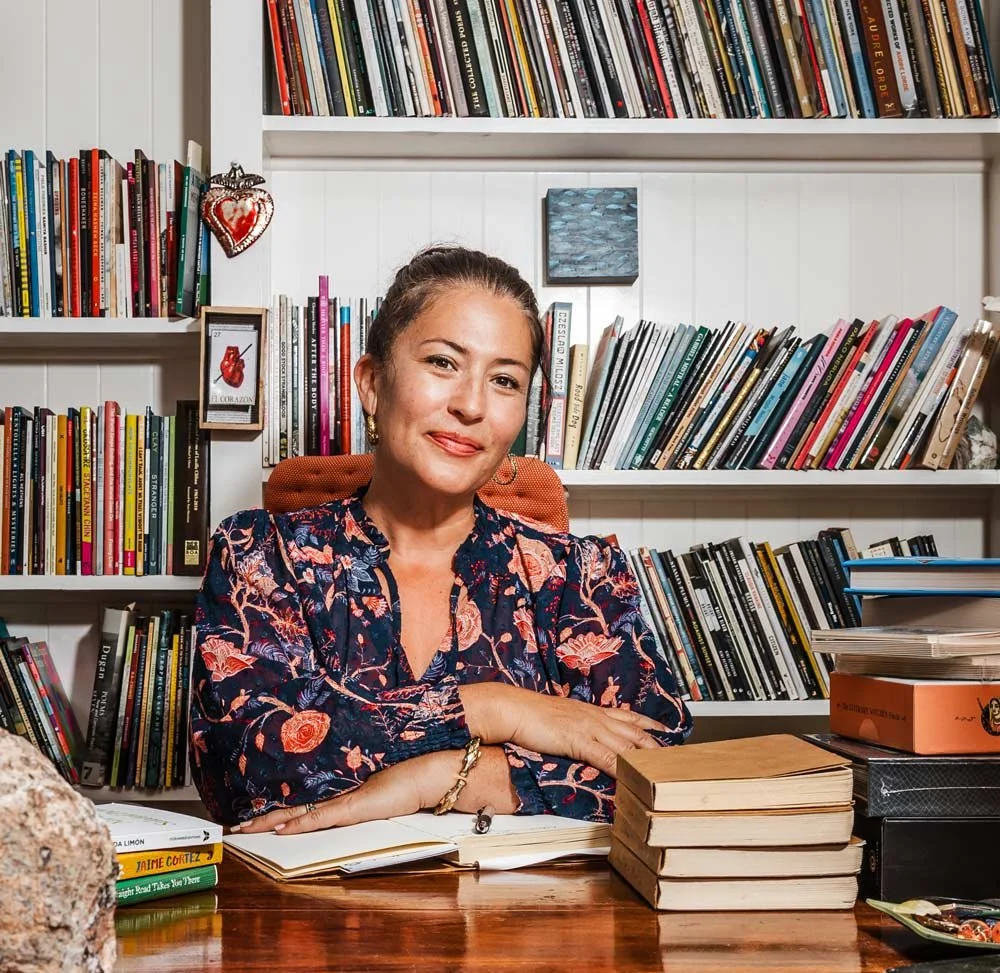
Mary Temple was born in Phoenix, Arizona, and has lived and worked in NYC since 1996. @mary_temple_studio
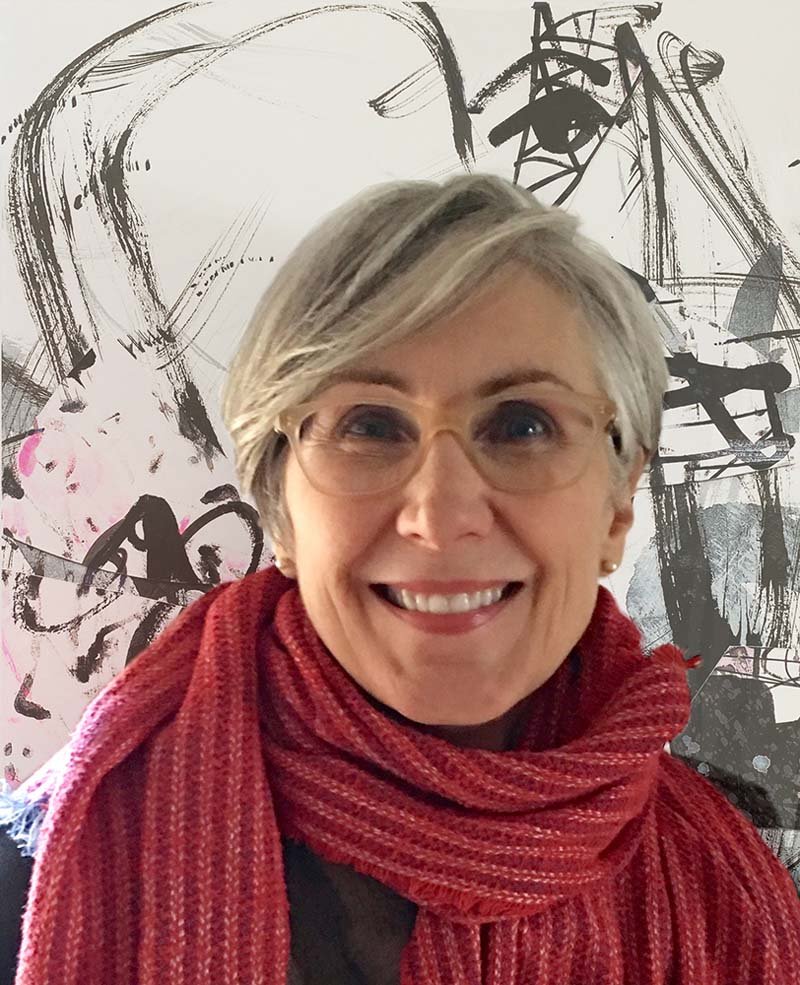
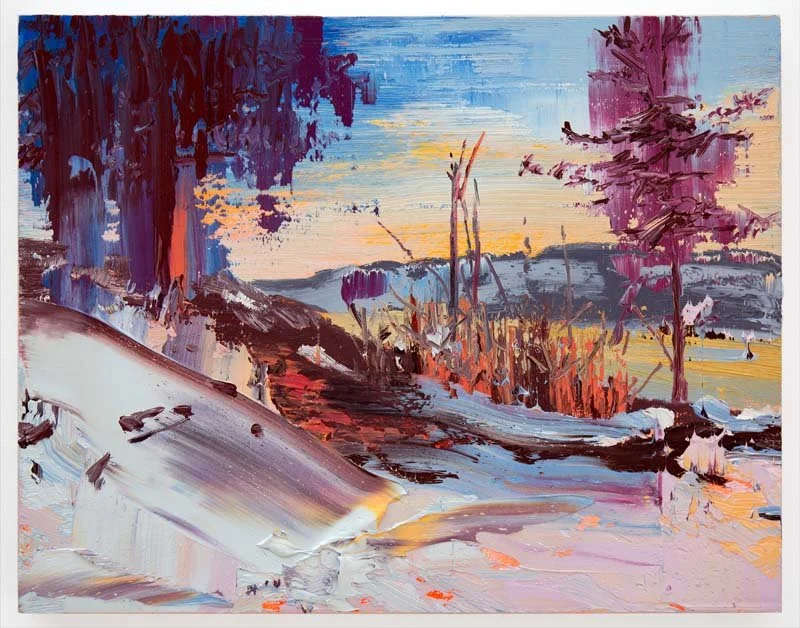
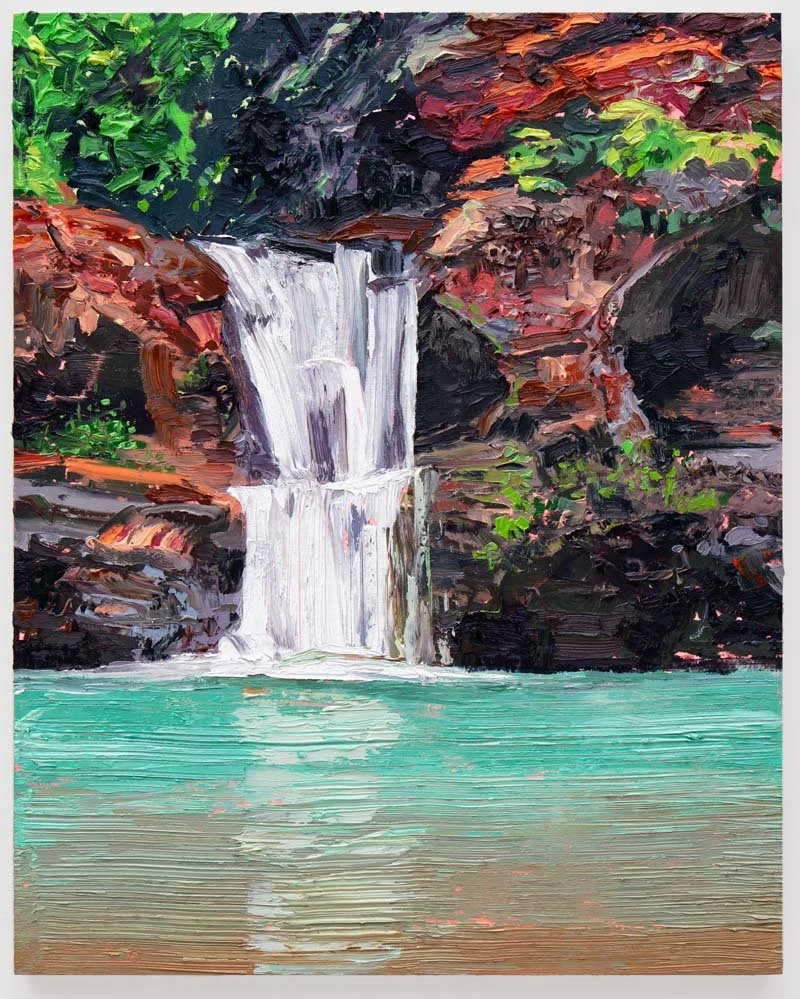
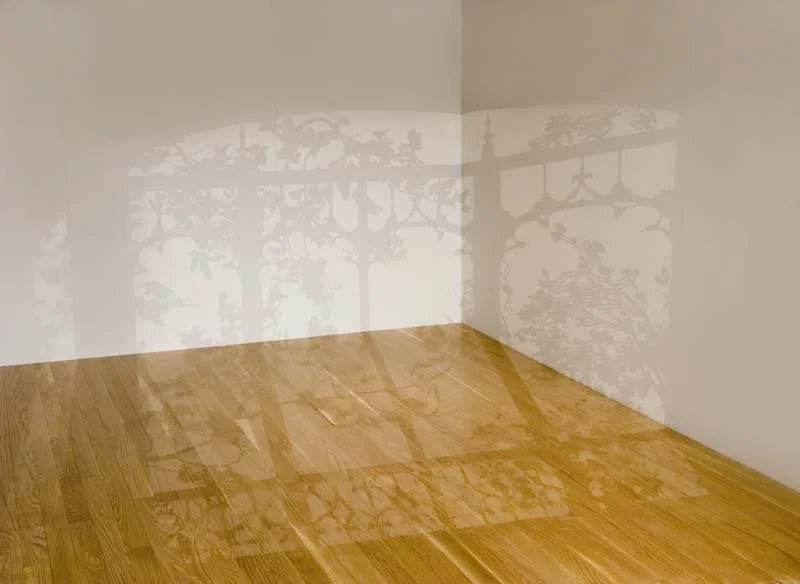
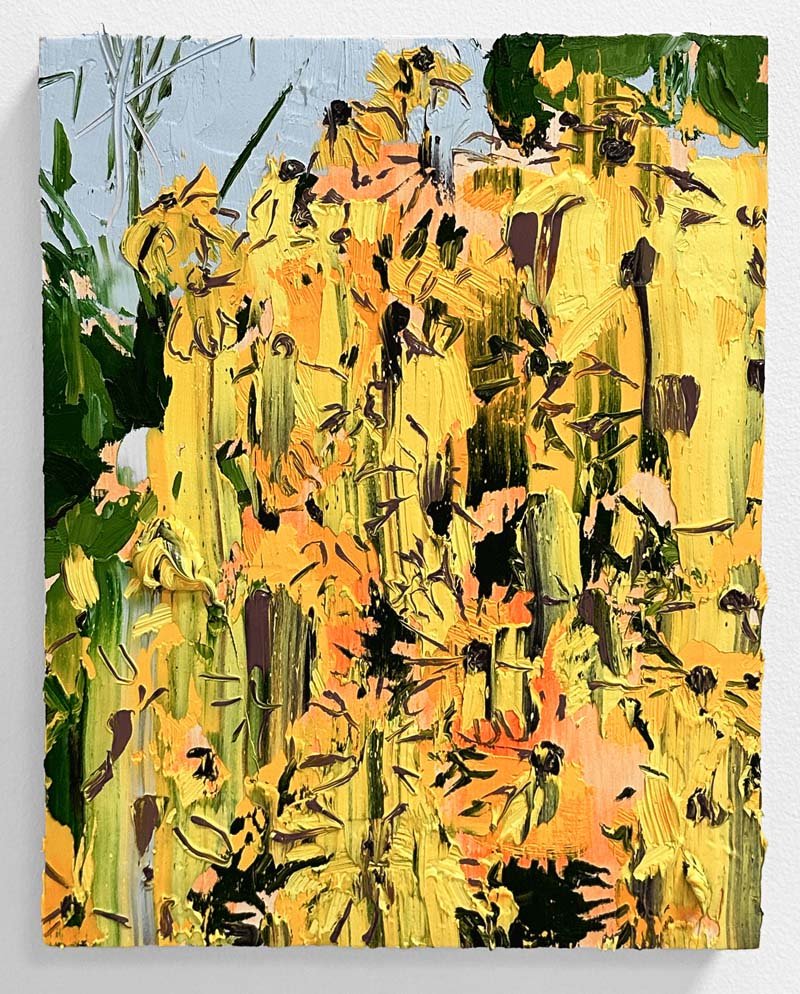
Can you describe how your early life in Arizona has been a source of inspiration? I was born in Phoenix, Arizona. Growing up in the desert sensitized me to delicate color shifts and qualities of light. Although the summer sun makes the desert a harsh environment, visually, the color palettes are extremely delicate and sublime. Studying that environment, as I did even before I became a painter, helped me to learn to see. My Light Installation series came directly from experiencing the desert sun sifting through architecture. It wasn’t until I moved to NYC that I started making them, but I immediately knew that they originated from the memory of desert light.
When did you first fall in love with art and realize you wanted to be an artist? For you, what is the importance of the arts? I didn’t know I would be an artist until my junior year in undergraduate studies, when, after completing most of my coursework for a clinical psychology degree, I took a drawing and art history class to fulfill some humanities requirements. I was astonished by how much it meant to me. I immediately passionately wanted to know more. Everything shifted. I took more classes the following semester, then changed my major to art, and devoured it as only the recently converted do! I’m still that way—insatiably going to see exhibits, discussing with artist friends what we’ve seen. I feel so grateful to be consumed by the studio most days.
The arts are important because they reveal and underscore things that we understand nonverbally in our deepest beings. When this revelation occurs, we are filled with the knowledge that we are not alone. Nietzsche said that the inability to communicate one’s thoughts is the most terrible of all kinds of loneliness, which is why we make art. Both are necessary components—the making and the viewing, so that the circle of connection can be continuously fortified.
What does your typical day in the studio look like? Walk us through your studio and your most used materials and tools. I make alla prima paintings that normally require a long, uninterrupted workday to complete. I begin early and work late. There is quite a bit of preparation that happens the day before I start the painting. On the day of the painting, I rough in a drawing of the image on a gessoed panel or canvas, usually in high chroma acrylic colors. I then work to build up the environment in oils—the image may read as a representational landscape early in the day. But at some point, I know I have to cross the Rubicon and change things enough that the order I’ve established will not be the form of the final painting. This is when I finally feel that painting has begun; at this point, everything is in flux, and only then can I find the path, previously unknown to me, for the piece.
My tools are traditional, oil, acrylic, and gouache paints, brushes, and anything at hand that I can run over the surface to deconstruct it before the reconstruction begins, i.e., large palette knives, cardboard, squeegees.
What projects are you at work on at the moment? And what themes or ideas are currently driving your work? I’m making paintings of places I visit—the world around me. I want to communicate what it’s like to be alive right this very moment—I was here, I saw this, and it mattered to me. At this time, I’m making a series of paintings of the National Parks I visited with my family when I was young. The current administration has made deep funding cuts to our park systems and has even tried to sell off protected lands. I see these works as a dissent and objection to those actions and a call to protect our nation’s natural resources.
What do you hope people feel when they experience your art? What are you trying to express? I want the viewer to be able to find themselves in the work. That is, I hope they will recognize something in it that they already understand deeply—a substantive non-lingual veracity. Which is counterintuitive, because we’re taught that artwork is meant to be novel, to surprise us. Masterpieces do that, but they affect us deeply because they articulate something we understand on a concrete level as genuine.
Which artists, past or present, would you like to meet? And why? Alice Neel. She was the first artist I responded to in the way I just described. When I saw her work (in reproduction), I felt like she was speaking to me personally. It was profound. When I found clips of her interviews and read about her life, I understood what a generous and brilliant person she was. She loved humanity, and that tender care and intelligence show in each of her paintings. I love that she knew what she wanted to paint and did exactly that, even though it was extremely unfashionable at the time.
Do you draw inspiration from music, art, or other disciplines? Of course! It’s so important to me to connect to other artists through dance, theater, writing, film, and most of all music and visual art. It is the reason I moved from Arizona to New York City thirty years ago. I knew I needed to be present before paintings, not only study them in reproduction. Paintings are made to be stood in front of and devoured!
A great thing about living in my New York City is… I see live dance, theater, readings, and music on a regular basis, but most importantly, several times a week, I go to galleries and museums to see current shows. For a painter, there is no substitute for being there. You only get little tastes of the thing from images.
Can you describe a project that challenged you creatively or emotionally—and how you worked through it? In 2005, I mounted my first museum show. I had an idea that I wanted to create a shard of light that hit the outside of the building and then pierced the interior structure, raking each wall it bisected until it finally landed on the floor of the furthest gallery. This would be a trompe-l'oeil painting on the existing exterior and interior walls, in addition to a hand-stained hardwood floor, which would be installed in the large gallery space. I did all the exterior and interior painting myself, some of it through snowstorms. I painted the floor in my studio, then deconstructed it and reinstalled it in the museum. It was super challenging because it was before I had staff to help me, and I just kind of had to figure things out as I went. I learned a lot from the project, and it is still one of my favorite installations.
Tell us about important teachers/mentors/collaborators in your life. I went to a state school, but had great teachers who knew their craft, and that is what I wanted out of school. I like to work solitarily; I don't really do collaborations.
Sustainability in the art world is an important issue. Can you share a memory or reflection about the beauty and wonder of the natural world? Does being in nature inspire your art or your process? The series I’m making now about the natural wonders within our nation’s park system is a continuation of my longstanding interest in making work as a response to the natural world. One of my most memorable experiences in nature was a visit to one of the Seven Natural Wonders of the World, in my home state—a hike I made down the Grand Canyon in 1993. Beginning at sunrise, I descended the 14.2-mile North Kaibab Trail all the way to the canyon floor, where I swam in the 45-degree water of the Colorado River. I then climbed back out of the canyon, reaching the rim just before sunset. (I should add that I trained for this hike for months; the heat and lack of water sources make it inadvisable otherwise.)
Experiencing the changing colors of the strata visible in the walls of limestone in the ever-shifting light, as well as the impressive cliff formations, was sublime and beyond description. I’ve never tried to paint that experience. It haunts me.
AI is changing everything - the way we see the world, creativity, art, our ideas of beauty and the way we communicate with each other and our imaginations. What are your reflections about AI and technology? What is the importance of human art and handmade creative works over industrialized creative practices? The writer George Saunders has said that "the heart rises in a certain way when it encounters another heart on the page." I believe this is true in painting, too. So, although AI can compile a string of words and mimic images, it is not sentient. And it is the living, the heartbeat, that we respond to in art.
Exploring ideas, art and the creative process connects me to… other living beings of all sorts. This endeavor is all about connection—human, animal, plant, earth, and sky.