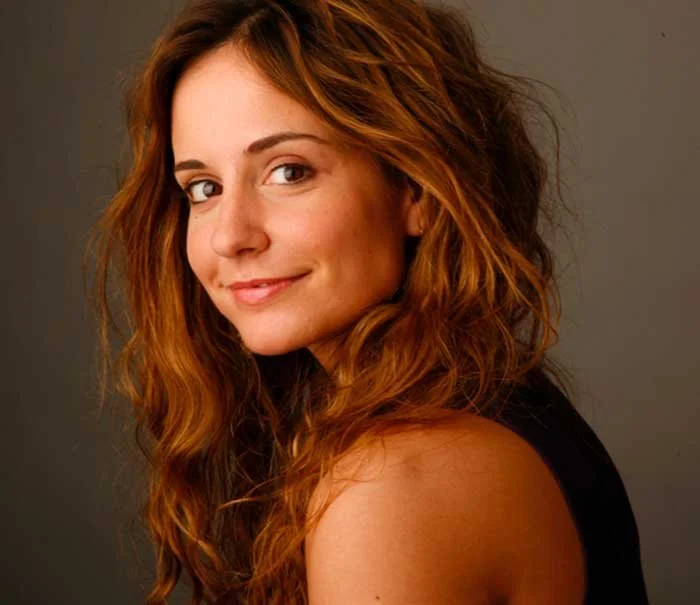
Moira Cameron is a British artist who holds a BA in Fine Art from Ravensbourne College of Art and an MFA from Chelsea College of Art. Born into a family of artists, her creative path was shaped early, and her artistic calling was never in question. Her work has been exhibited internationally, including in London, New York, Japan, Indianapolis, and
Switzerland. Cameron spent decades in collaborative artistic practice, initially with her late husband, Pop artist David Spiller, and later with their son, Xavier Baxter. Now returning to her solo work, she is revisiting and reimagining early student paintings, drawing deeply
from art history and long-standing historical-themed influences. @moiracameronn
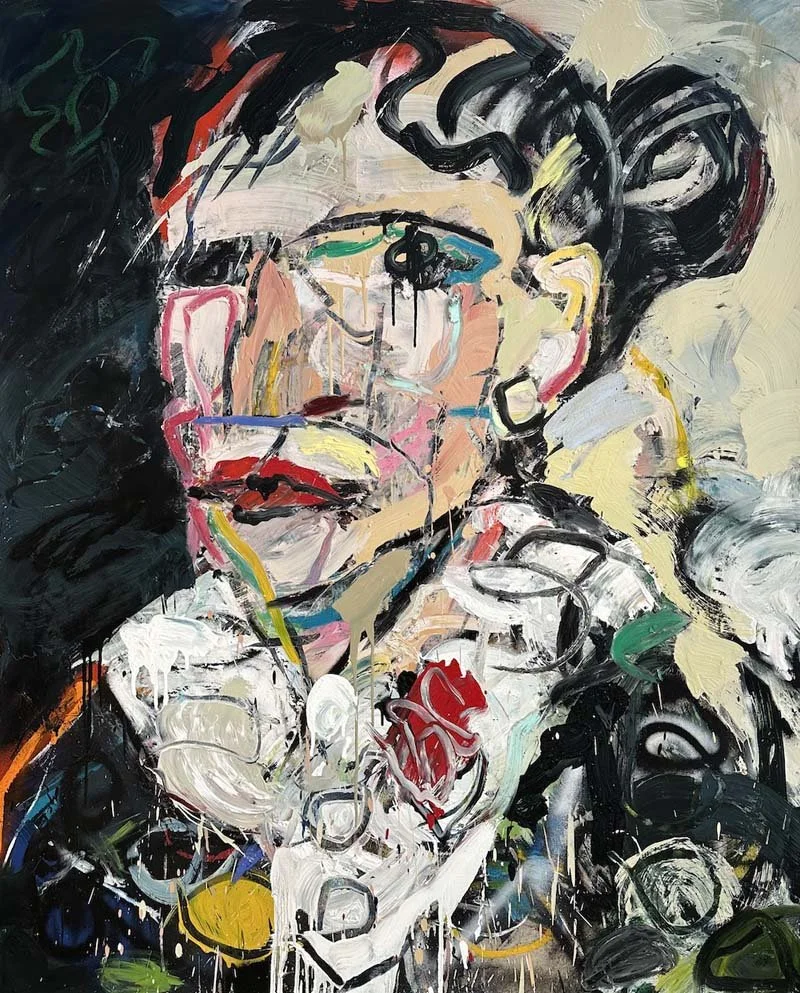
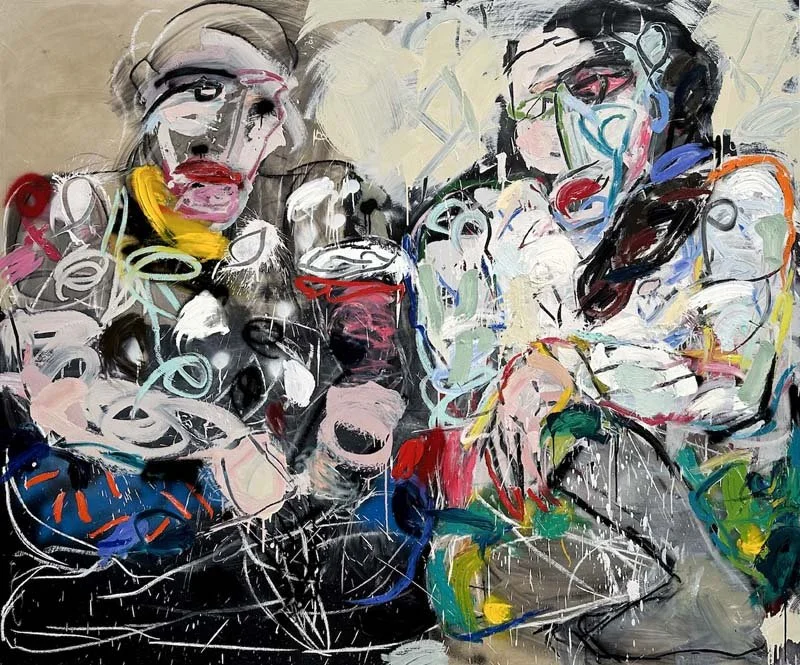
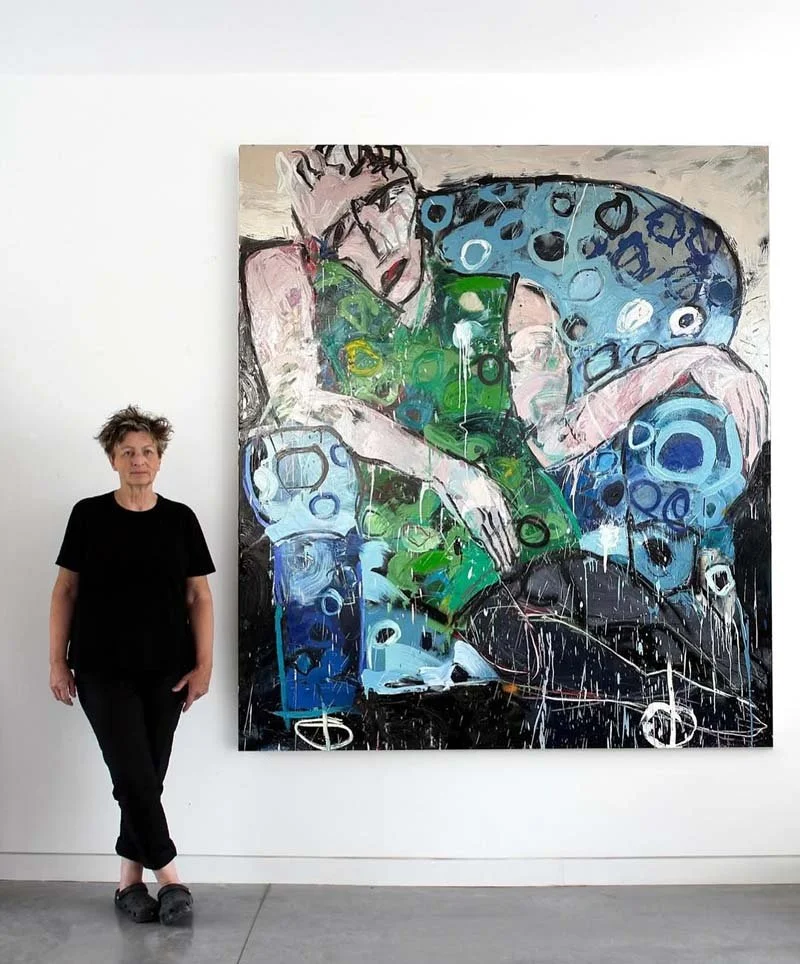
Can you describe how your early life in the UK has been a source of inspiration? I was born and raised in London, a city that has had a profound impact on both my art and the way I perceive the world. Growing up in such a vibrant, multicultural environment exposed me to a constant flow of visual stimulation and cultural exchange. London’s rich artistic landscape, ranging from the timeless masterpieces in the National Gallery to the raw, expressive street art in places like Camden, helped shape my visual language from an early age. Being surrounded by such contrasts taught me to appreciate both tradition and rebellion in art, and to understand that creativity thrives in diversity. The city's energy, complexity, and layered history continue to influence how I think, feel, and create
When did you first fall in love with art and realize you wanted to be an artist? For you, what is the importance of the arts? I've always been in love with art; there was never a moment when it felt like a question. From a very young age, I was constantly drawing, and it was clear to me early on that this was what I wanted to pursue. I couldn't wait to leave school and focus entirely on art, and I was lucky enough to go to art college at 16. Art has always felt essential to me. From the beginning of humanity, it’s been a vital part of our existence. The visual creations people made are both monumental and intimate; they speak to something deep within us and have the power to nurture the soul. Art is not just
expression; its connection, history, emotion, and identity all wrapped into one.
What does your typical day in the studio look like? Walk us through your studio and your most used materials and tools. My studio is at the Oval in London, it’s a lovely, light-filled space with high walls and
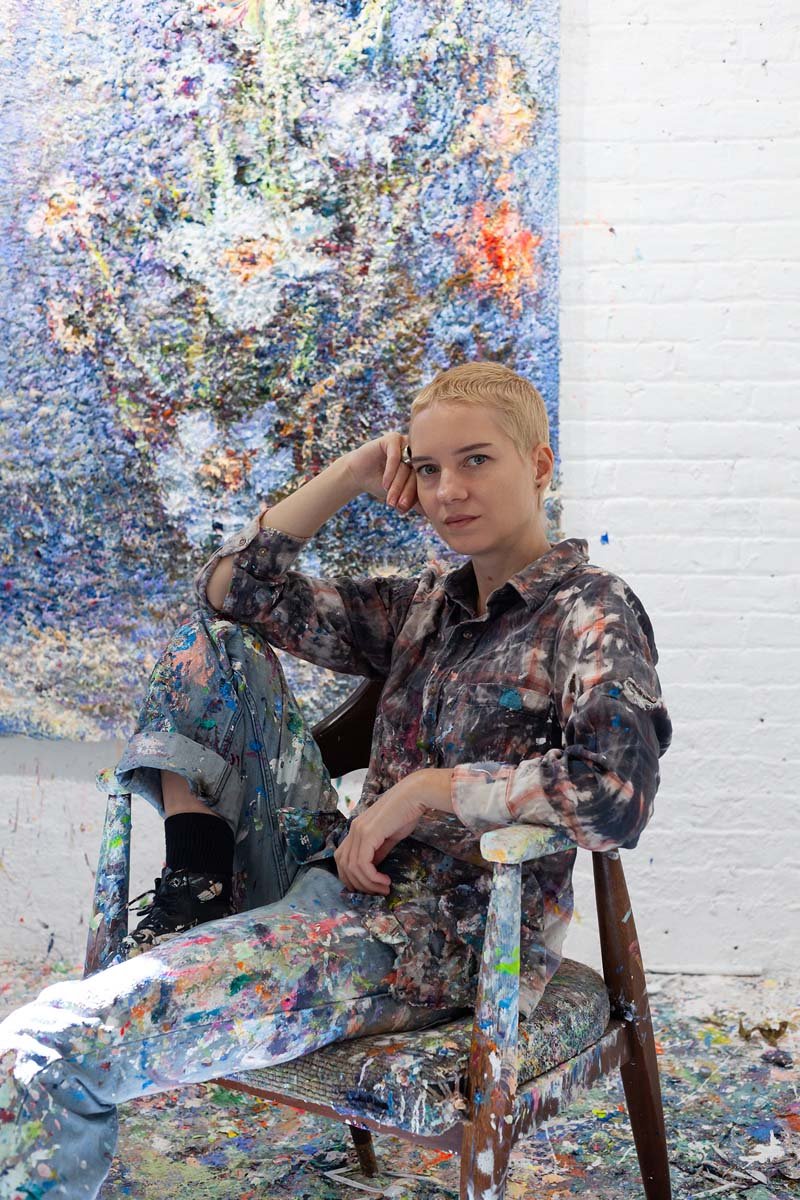
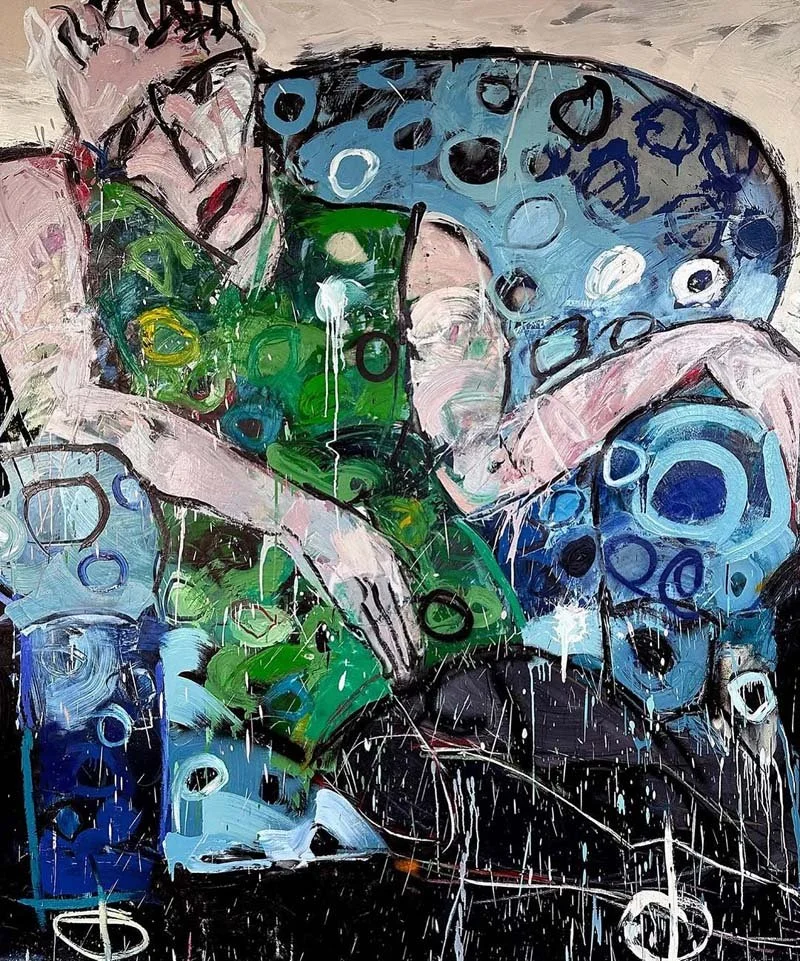
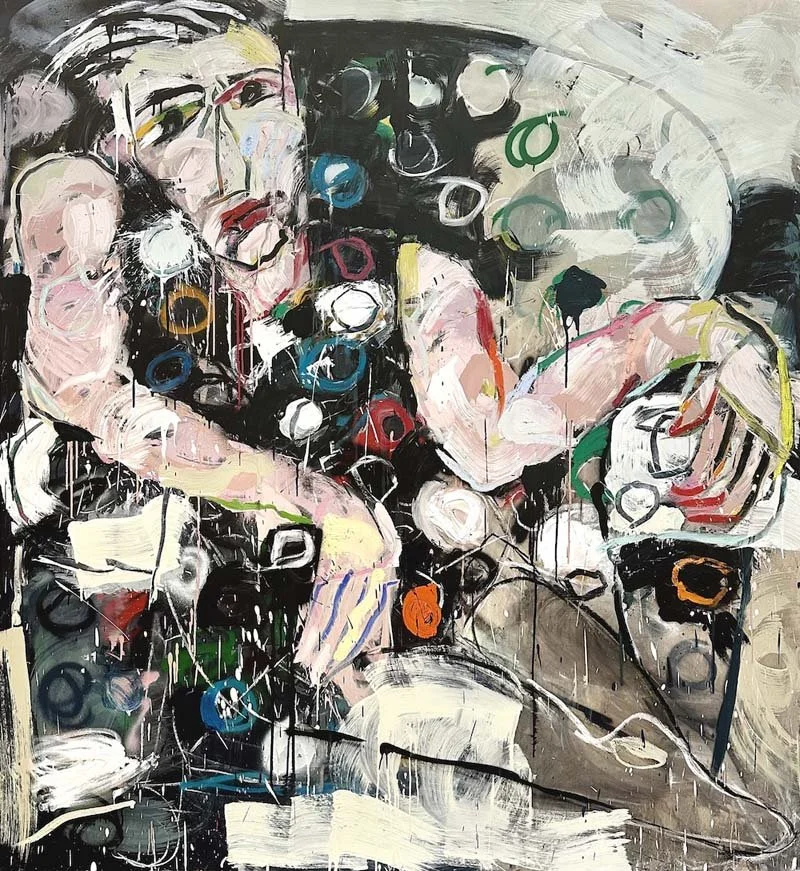
skylights that flood the room with natural light. The atmosphere is incredibly important to me, and the quality of light here is just perfect; it allows me to see the true tones and depth of the colours I’m working with. A typical day in the studio starts by spending a bit of time just looking at the work in progress. I find that observation, really seeing, is as important as painting itself. I’ll sketch the figure or portrait on the canvas in chalk before I begin painting, often making notes to myself of how I feel that day. I work primarily in oil on canvas. Oil paint has a richness and physicality that I love, and it allows me to build up layers, blend, and scrape back in ways that feel intuitive and expressive. My tools are simple but well-used: a wide range of brushes, palette knives, scrapers, and rags. Each tool allows me to create different textures and marks, and I often alternate between them to keep the energy and movement alive on the canvas. My process is quite physical; there’s a lot of movement and momentum when I’m working. I try to get energy encapsulated onto the canvas, to let the work breathe and evolve without over-controlling it. Some days are about intense bursts of painting, while others are more contemplative, just quietly being with the work.
What projects are you at work on at the moment? And what themes or ideas are currently driving your work? I’m currently painting in a studio in New York City and have been exploring inspiration found specifically at The Met, rather than drawing from works I’ve seen in London or Paris. Lately, I’ve been especially drawn to Vermeer’s Study of a Young Woman. There’s something compelling about her; her features are subtly androgynous, and her gaze feels like a snapshot through time. I’m interested in her posture, the muted palette, and the
stillness she holds. A current theme in my work is the act of repainting portraits by other artists, reimagining them through my own lens. I find myself wondering about the lives of these women, and in painting them again, I feel I’m re-immortalizing their presence. There’s a blurred line between these reinterpretations and the autobiographical self-portraits,
a merging of identities across time. I’ve been thinking a lot about the Van
Gogh quote: “As an artist, you are only a link in a chain.” That idea resonates with me deeply right now.
What do you hope people feel when they experience your art? What are you trying to express? I hope people can feel the energy and emotional urgency through the paint, the intensity of the mark-making, the physicality of the process, and the immediacy of what I’m trying to
communicate. At the same time, I want there to be a stillness beneath it all, a moment of quiet reflection. My work is a comment on life; my own lived experience, but also the lives and struggles of characters from the history of art who I am inspired by. There’s a duality I’m interested in exploring: the tension between movement and stillness, presence and
absence, collapse and endurance. I often return to themes of exhaustion and resilience, not just as physical states, but as emotional and spiritual conditions. These are deeply human truths that I think many people carry, even if silently. If someone standing in front of my work can feel seen, or even vaguely understood, then I think the work has done its job.
Which artists, past or present, would you like to meet? And why? There are several artists I’d love to meet, but one of the first would have to be Picasso. Not just because of his place in art history, but because of his relentless relationship with paint itself. He was fearless, constantly breaking his own rules, reinventing form, pushing material and subject matter to extremes. I’d want to ask him about that kind of bravery in the studio, and how he kept chasing urgency and vitality without being paralyzed by expectation. I’d also be drawn to someone like Francis Bacon, whose work carries that same intensity; his figures are almost torn apart by emotion. The paint is brutal and honest, and yet there’s something deeply vulnerable underneath, using paint to express
psychological and emotional reality rather than physical likeness. Ultimately, I’m drawn to artists who wrestle with the contradictions of being human and use paint to hold those contradictions. People who don’t just depict life, but confront it.
Do you draw inspiration from music, art, or other disciplines? I gather inspiration from other artists, especially the masters. There’s a depth and timelessness in their work that continues to challenge and move me. But I’m also drawn to contemporary artists whose use of scale, subject matter, or emotional force feels bold and urgent. I respond mostly to work that holds emotional weight, where you can sense the artist reaching for something deeper, even if it’s messy or unresolved. Music is a big influence as well. I’m less drawn to melody and more to mood or lyrics that hit something raw. Even a single line can shift my mindset in the studio. Artists like Eminem, for example, his anger, vulnerability, and unfiltered storytelling. There’s a certain emotional honesty in his work that I try to reach for in my own, through paint. Film and literature are also important to me. Ultimately, I’m drawn to any medium that isn’t afraid to feel deeply or to expose something vulnerable. Whether it’s a painting, a song, a scene, or a sentence, it’s that emotional residue that stays with me, and it’s what I hope my own work can offer in return.
A great thing about living in my city/town is… The great thing about living in London is the constant access to arts and culture; it’s
everywhere. From world-class museums and galleries to underground spaces and pop-up shows, there’s always something happening. You can stumble upon an old master one day and a provocative contemporary voice the next. That mix keeps me creatively energized. At the same time, despite being such a dense, busy city, London still has pockets of open space; parks, canals, quiet corners, where you can slow down, reflect, and reset. That balance between stimulation and stillness is something I really value, both in life and in my practice.
Can you describe a project that challenged you creatively or emotionally—and how you worked through it? Some challenging periods for me, both creatively and emotionally, have been when I was
caring for unwell relatives. A time of extreme intensity, where life felt overwhelming and deeply real. There were moments of exhaustion, humour, fear, and resilience. I wasn’t always able to be in the studio in a traditional sense, but the emotional content of that time soaked into everything. What I learned is that life lived, with all its complexity, is where the work really begins. I had to let go of the idea that productivity only looks like time painting. Instead, I started thinking deeply. And when I did return to the studio, the work came out more urgent, more honest. I wasn’t trying to impress or perfect, I was trying to say something true. These experiences reshaped my life and how I work. It taught me that creativity doesn’t exist outside of life; it moves through it. And often, the most emotionally demanding times are also the most creatively transformative, even if you only realize it after the fact.
Tell us about important teachers/mentors/collaborators in your life. While I’ve learned a lot from the people around me, family, friends, and loved ones. I’ve also been shaped by my experience with formal teaching, often by reacting against it. There were moments in my education where I felt boxed in by certain expectations or traditions, and that resistance actually became a powerful force. It pushed me to define my own path, to question what I was being told, and to move in the opposite direction when something didn’t feel true to me. Rather than being discouraged by that friction, I used it as fuel. It helped me develop a stronger voice and a more personal relationship with my work. That sense of striving for independence, authenticity, and emotional depth still drives me today. Sometimes it’s the resistance, not the guidance, that teaches you the most. All of these relationships have shaped not only who I am as a person, but also the kind of work I make. They remind me that art isn’t separate from life; it’s an extension of it.
Sustainability in the art world is an important issue. Can you share a memory or reflection about the beauty and wonder of the natural world? Does being in nature inspire your art or your process? I’ve always been more of a city person, drawn to the energy, movement, and complexity of urban life. So I wouldn’t say nature is a direct inspiration for my work. But I do recognize and value the peace it offers. Being in nature gives me a kind of quiet I don’t find in the city. It allows space to think more slowly, to pause, and to reset. That stillness and smallness can be just as important to the creative process as the making itself. When it
comes to sustainability, I’m very mindful not to waste materials. I use every bit of paint, repurpose surfaces when I can, and try to make conscious decisions in the studio. It’s a small but important way to respect the resources I rely on. For me, sustainability isn’t just about nature; it’s about being thoughtful with what we have and not taking any of it for granted.
AI is changing everything - the way we see the world, creativity, art, our ideas of beauty and the way we communicate with each other and our imaginations. What are your reflections about AI and technology? What is the importance of human art and handmade creative works over industrialized creative practices? I see AI as a useful tool that can assist, speed things up, and even open new creative pathways. But I don’t believe they can replicate the soul that humans bring to art. There’s something deeply personal and unpredictable in the way we make, how memory, emotion, physical presence, and even struggle get layered into a piece. That rawness, that lived experience,
is something I don’t think machines can truly access or reproduce. AI can mimic style, it can generate images, but often it feels like pastiche, a surface-level imitation without the emotional weight or innovation that comes from real human curiosity and conflict. The best art doesn’t just follow trends, it challenges, questions, and surprises. It reflects vulnerability, contradiction, and risk. I cannot see those things being programmed. There’s a difference between creating with something and being replaced by it. I think handmade creative work is more important than ever because it’s uniquely human. The marks we make, the decisions we wrestle with, the imperfections we leave behind, those are what make art alive.
Exploring ideas, art and the creative process connects me to life itself… to emotion, thought, memory, and a deeper sense of self. Making sense of things that often feel too complex or chaotic to put into words. I access parts of myself and my world; it’s about being present, being honest, and staying connected to what it means to be human.