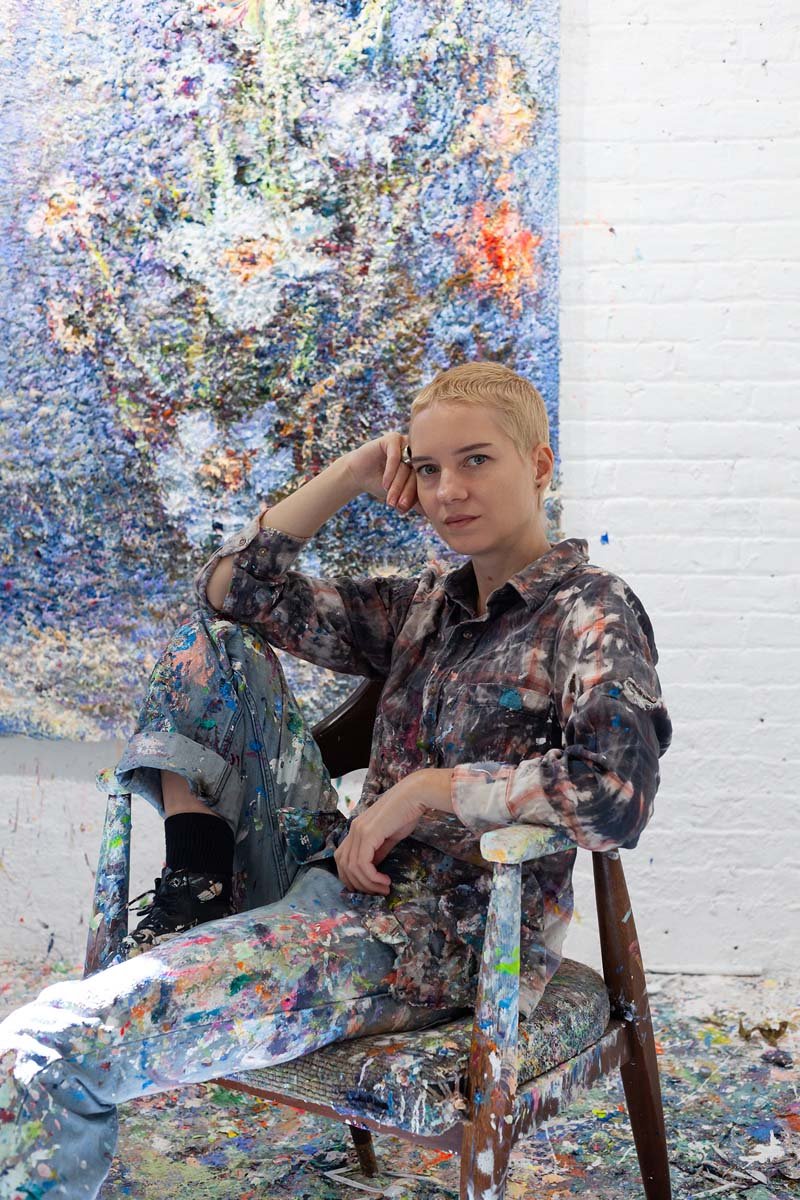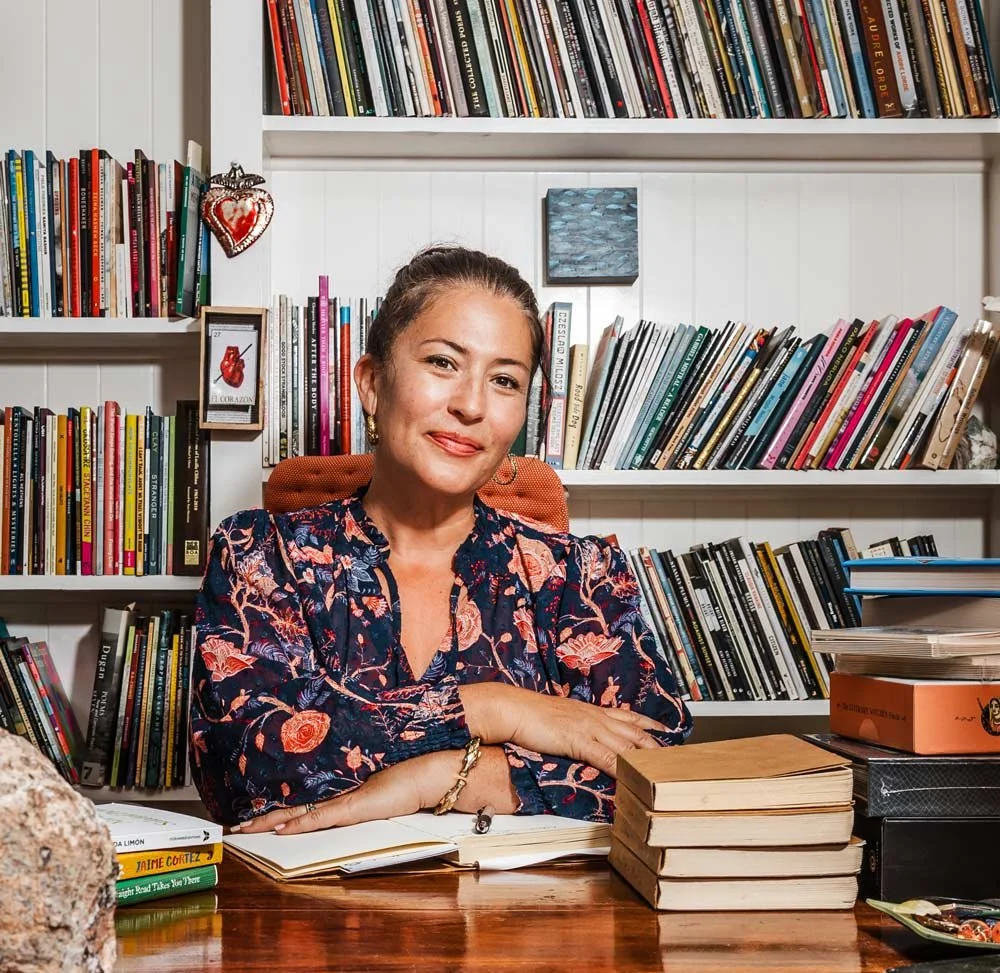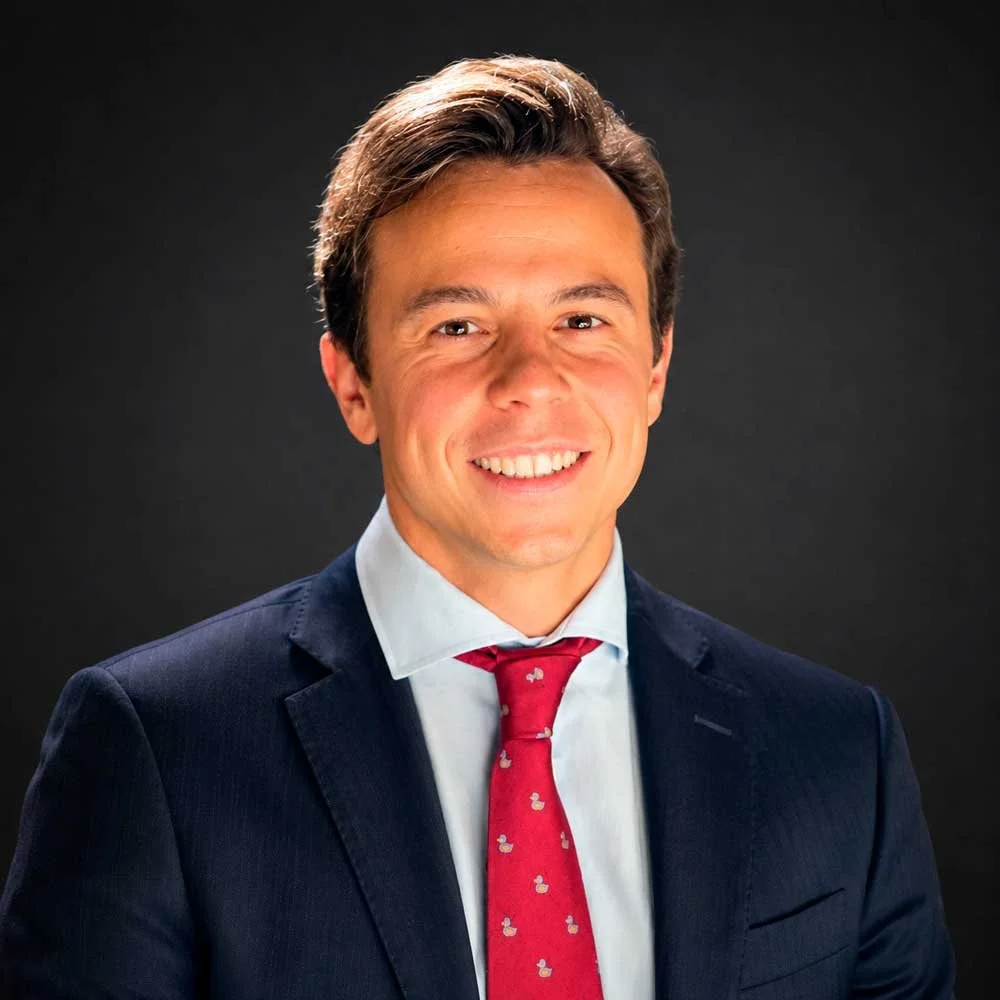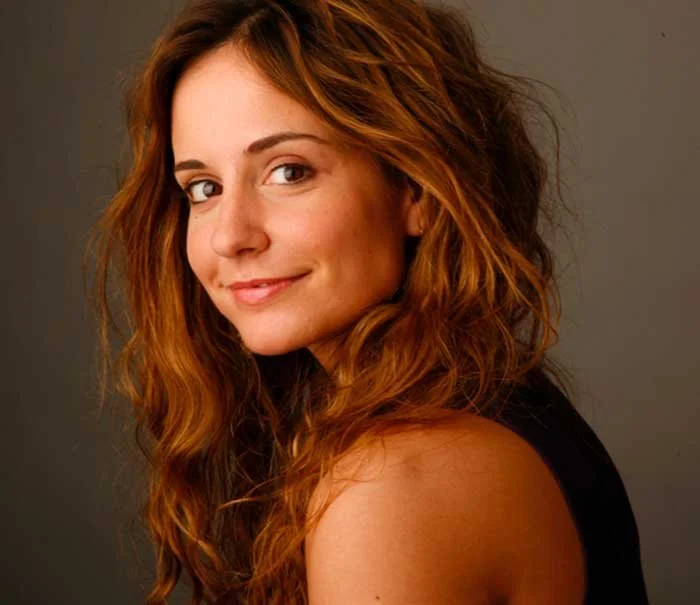


Liz Murphy is an abstract expressionist painter and mentor based just outside New York City. Born in Surrey, England, and trained in graphic design at Kingston University, she built a career as a designer, illustrator, and interior designer before turning fully to painting in 2018.
Her work, recognized for its depth, energy, and layered contrasts, has been exhibited internationally and collected in homes and public spaces worldwide. Through her workshops, retreats, and mentoring programs, Liz guides artists to deepen their practice through the pillars of color, contrast, and composition - tools that reflect not only painting but life itself.
Rooted in a story of reinvention and authenticity, her creative philosophy is simple: art can be both anchor and compass, carrying us home to ourselves. @lizmuprhystudio
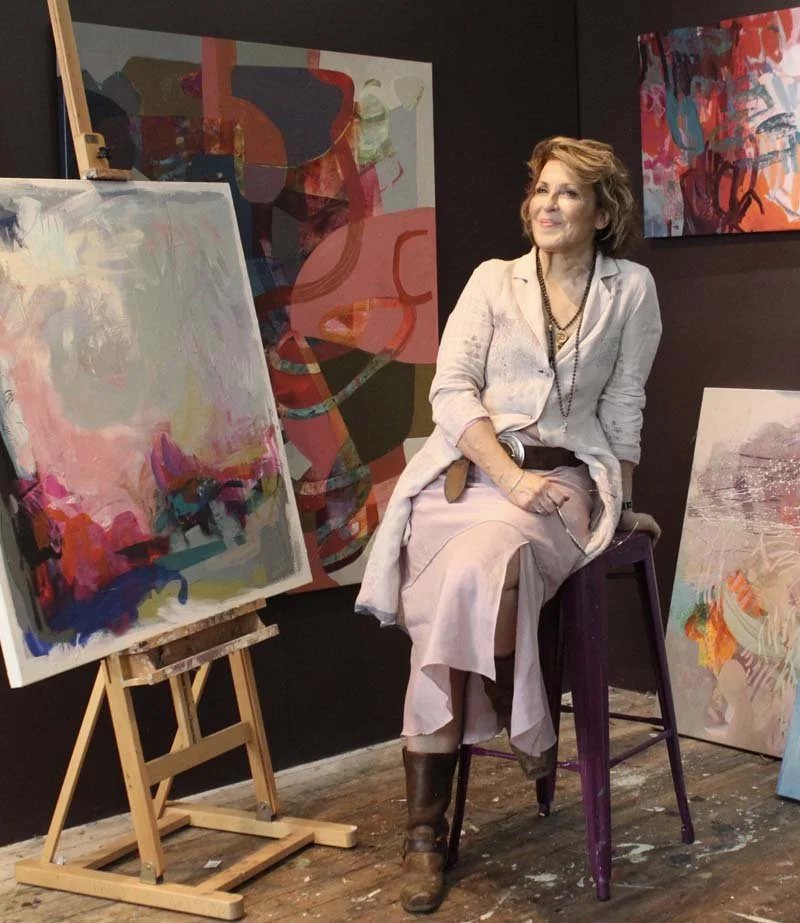
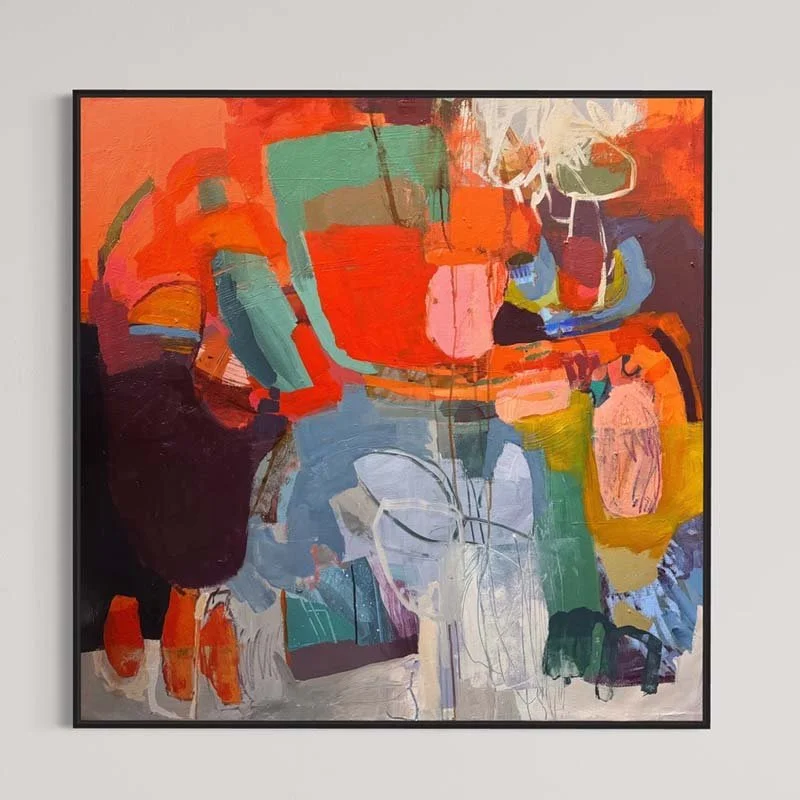
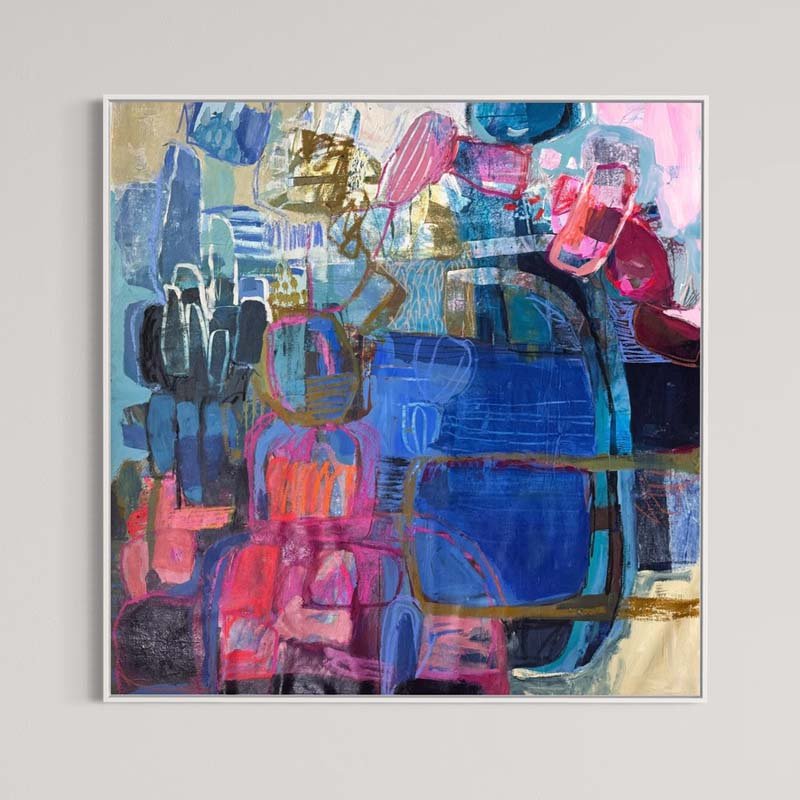
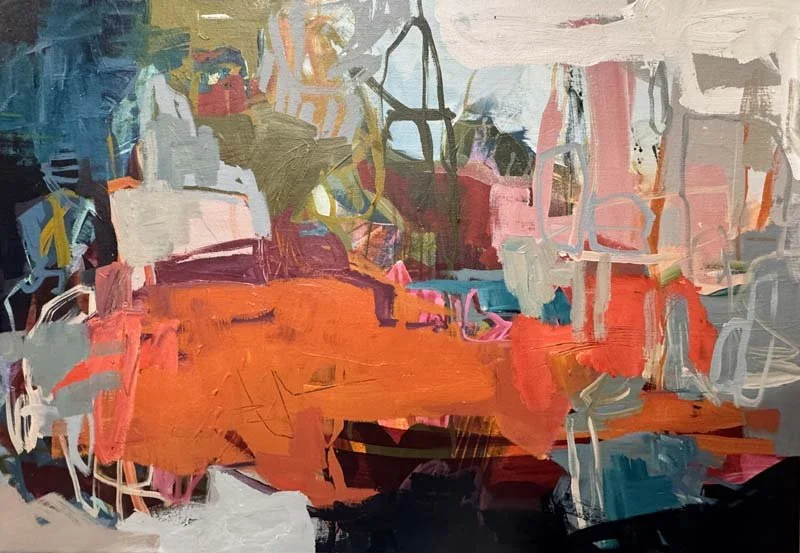
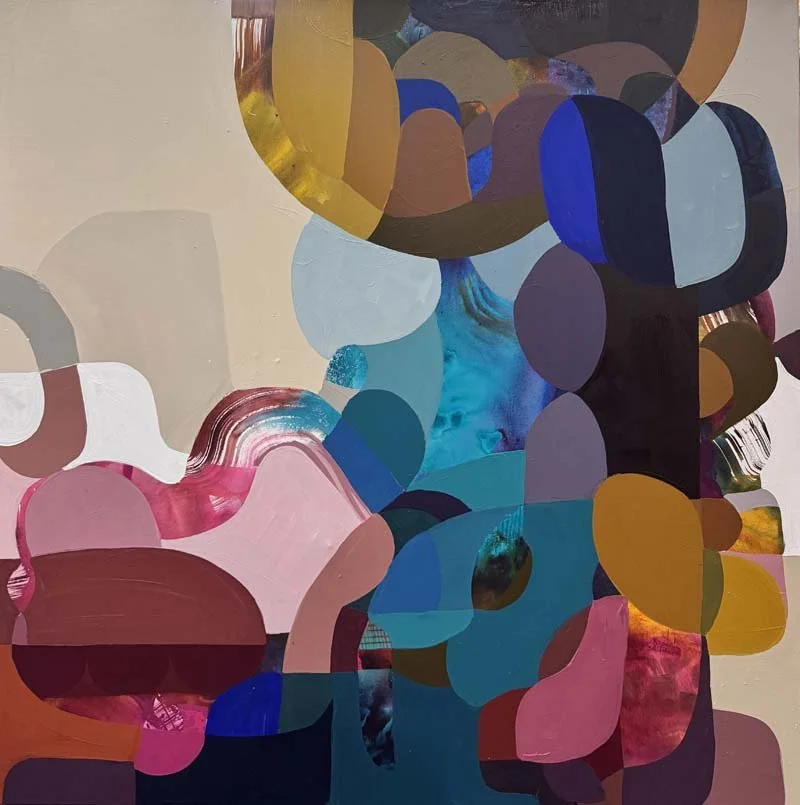
How did your formative years contribute to your artistic development? I can honestly say I’ve lived a life of contrasts. My childhood was full of chaos, disruption, and dysfunction, yet I stayed in the same house in the safe Surrey suburbs for nearly 30 years. On the outside, it all looked normal, ordinary, even privileged, but behind closed doors, it was anything but. As a little girl, I lived through my parents’ bitter and violent divorce, was separated from my twin, nursed my mother through her terminal illness, and lost my first two loves - one to a medical accident and the other to suicide, all before the age of 24. With six decades of hindsight, I can now see how those early fractures shaped the way I moved through the world and the choices I made, ultimately forcing me to find a way back to myself.
For a long time, I never really knew it was okay to discover, let alone have needs and know who I was at my core. Other people’s needs and drama always took precedence. I learned resilience, but deep down I just wanted to belong, to matter, and to feel safe. Rather than following my heart, I made decisions from my head.
Contrast kept showing up. From the fast-paced, competitive world of graphic design to a disingenuous marriage and the role of a pastor’s wife, I swung from one extreme to another. Running a large London church with my husband was certainly a dramatic shift from the design world. Despite being surrounded by hundreds of people, I felt utterly alone. Even the man I thought was the most honest person I’d ever met became the one who betrayed me most.
My life continued in extremes: poverty in ministry, isolation in a cold Scottish village, and later the privilege of expat life in Tiburon, California, one of the wealthiest towns in America. Through it all, my inner world was in constant flip-flop, swaying between emotional highs and lows I mistakenly thought were normal.
It wasn’t until I had distance from childhood trauma, and then faced both betrayal and cancer, that I realized none of it was truly me. I had been adrift for so long that I needed to find a way home.
That is when Abstract Expressionism entered my life. Painting became my medicine. It gave me a way to show up as I am, to lean into contrasts within and around me, to layer history, beauty, and ugliness, chaos and resolution, freedom and structure side by side.
When did you first fall in love with art and realize you wanted to be an artist? For you, what is the importance of the arts? I fell in love with art as a child. It was the one place where I felt completely myself. I defined and validated myself. Growing up in a chaotic home, art became both my refuge and my way of making sense of the world. I would lose myself in drawing, painting, and creating - it was where time disappeared and I felt most alive. For years, I worked in design, illustration, and interiors, but it wasn’t until much later, after a season of personal upheaval and reinvention, that I finally allowed myself to claim the word “artist.” In many ways, art had been waiting for me all along.
For me, the arts are essential because they give shape to what words cannot always hold. Art has the power to heal, to anchor, to connect us with parts of ourselves we’ve forgotten or hidden. It invites us to slow down, to notice, to feel. On a broader level, the arts are what give culture its heartbeat. They hold history, tell our collective stories, and remind us that beauty and truth matter. On a personal level, art is my way home to myself, and I believe it can be that for others, too.
What does your typical day in the studio look like? Walk us through your studio and your most used materials and tools. Being my own boss gives me the freedom to work when and how I want, but I’ve learned that I also need structure. Over time, I’ve come to appreciate that my time is best served in certain areas, so I now have a small team I meet with at the start of each week. Together, we map out priorities and keep things moving.
To keep some structure, I try to time block my days, which are usually divided between back-end work, writing programs and teaching modules, and responding to collectors and hands-on studio time. I am a night owl by nature, so I often work late into the night when the world feels quiet and I can lose myself in painting.
Balance is key, and I am continually working on creating a better rhythm between the business side and the creative side. In the studio, my most used tools are acrylic paints (I love Nova Color and Golden), large brushes, palette knives, and sometimes my hands. I also work with sketchbooks to map ideas, test palettes, and keep the flow moving. My space is a place where order and chaos meet structure - to support the freedom I crave, it is organized and yet covered in paint.
What projects are you at work on at the moment? And what themes or ideas are currently driving your work? I’m heading into a busy fall teaching season, with students flying in from as far away as New Zealand to work with me in the studio. I’ll also be opening my doors during our community’s Open Studio event before traveling to New Orleans and California to teach. Alongside that, I’m writing content for new online programs and developing more in-person Elite teaching workshops for advanced artists.
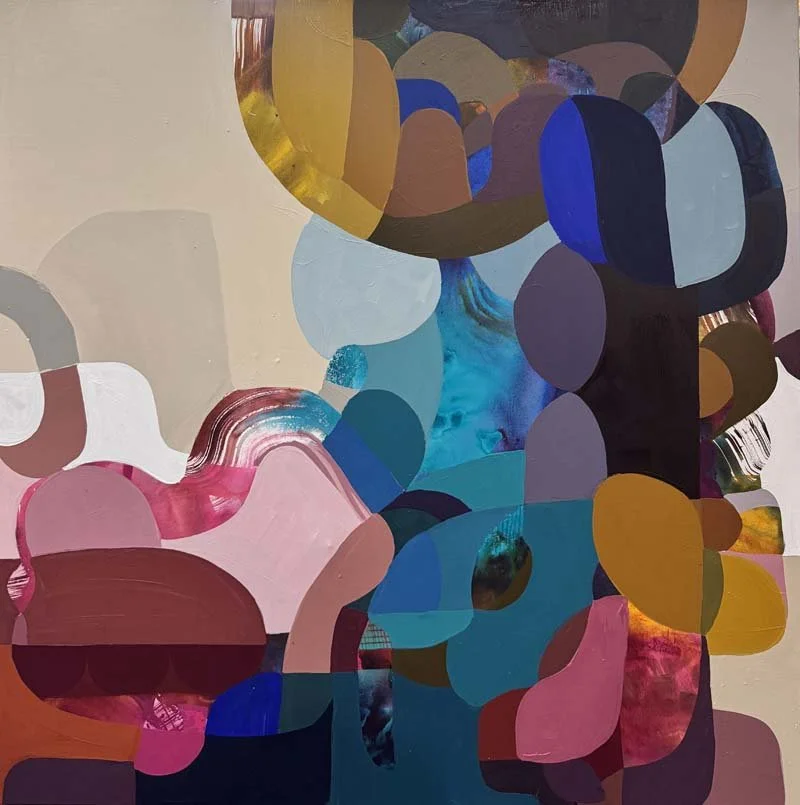
On the creative side, having finished a sequence of commissioned pieces for a chalet in France and various other collectors, I’ve just begun a new body of work for my upcoming solo show in April. The themes I’m exploring right now revolve around contrast — chaos and stillness, light and shadow, structure and freedom. I’m drawn to the ways these tensions mirror life itself, and how layering paint allows me to hold both beauty and fracture in the same space.
What do you hope people feel when they experience your art? What are you trying to express? I hope people feel a sense of recognition - that moment when something stirs inside and they can’t quite explain why. My work is less about telling a viewer what to see and more about inviting them into a space where they can feel their own emotions, memories, and truths.
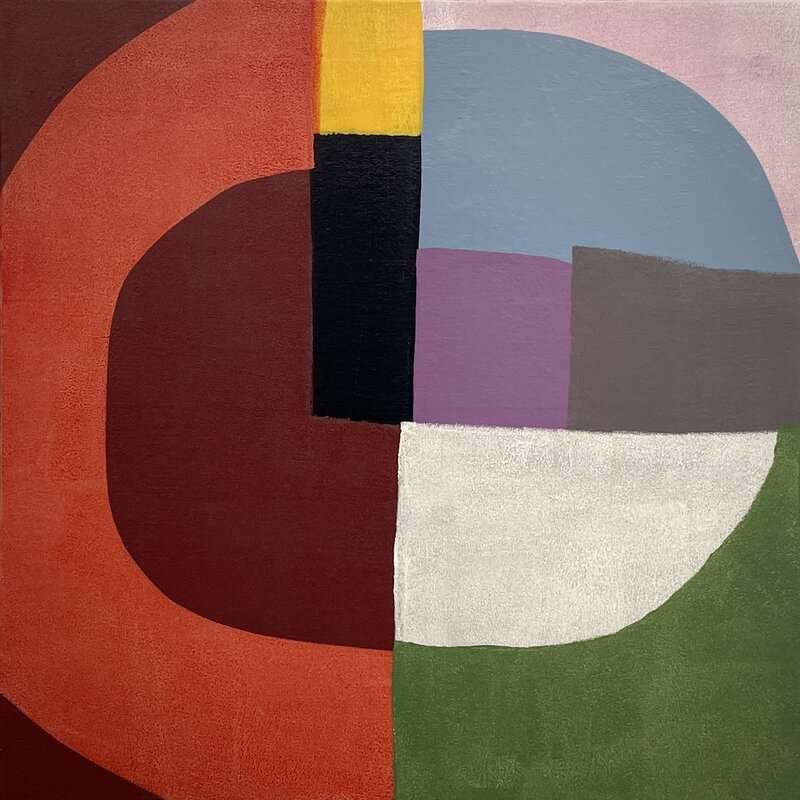
Through abstraction, I express contrasts: freedom and restraint, chaos and calm, beauty and fracture. My paintings are layered with history, marks added and erased, colors colliding and resolving: much like life itself. I want that tension and release to be felt on the canvas.
At the heart of it, my work is about authenticity. Painting is the place where I can tell the truth without words, where vulnerability and strength live side by side. My hope is that people who stand in front of my art feel less alone in their own contradictions, and more connected to what is real- the essence that connects our humanity.
Which artists, past or present, would you like to meet? And why? Oh so many: Paul Klee, Kandinski, Lee Krasner, Joan Mitchel, Charles Eames, Mark Rothco, Alexander Calder, George Nelson, Louise Nelson to name but a few
Do you draw inspiration from music, art, or other disciplines? Yes, absolutely. Music is a constant companion in my studio - it shapes the energy of my mark-making and often guides the rhythm of how I paint. Different sounds bring out different movements and moods on the canvas.
Design also plays a huge role in my aesthetic. With a background in graphic design and interiors, I’m always aware of balance, proportion, and spatial relationships. Those principles naturally filter into my compositions - the way forms sit next to each other, the tension between order and chaos, and how color shifts the mood of a space.
I also love interiors. I’m fascinated by how art lives within a room and interacts with its environment. For me, it isn’t just about a painting as an object, but how it contributes to the energy and story of the space it inhabits.
A great thing about living in New York is… I live just outside NYC in a cosmopolitan town, which gives me access to both culture and intensity as well as nature and the space to breathe. I can be a hermit, but I also know I need connection. I also value and appreciate having a relevant clientele on my doorstep.
Can you describe a project that challenged you creatively or emotionally—and how you worked through it? Designing the Uplands Center in Walton, New York, was probably THE most challenging and rewarding project I’ve ever worked on. It’s a retreat and healing center set in the Catskills, and the vision was to create a space that felt both restorative and inspiring, practical yet soulful. The challenge was holding all of those intentions at once - balancing design aesthetics with the emotional needs of the people who would be using the space.
Creatively, it pushed me to think beyond individual rooms and instead design an experience - how people would move through the house, where they would gather, and how light and color could influence their sense of calm. Emotionally, I had to step back and trust the process, because a project on that scale brings endless decisions and details.
I worked through it by returning to what I know: creating harmony out of contrasts and focusing on authenticity. Every choice - from furnishings to palettes - was made with the question: Does this support healing and connection? Seeing the space come alive and serve people in the way we envisioned was worth every challenge.
Tell us about important teachers/mentors/collaborators in your life. My High School art teachers changed my life. They saw my talent and guided me to follow my heart. I have worked with Nicholas Wilton Art2Life and a couple of other artists along the way who showed and demonstrated aspects that inspired and made me reflect on my own beliefs and approaches.
Sustainability in the art world is an important issue. Can you share a memory or reflection about the beauty and wonder of the natural world? Does being in nature inspire your art or your process? Yes, most definitely. I love to be in nature, to receive her essence, infuse it, and then express it in my work. I have taught a number of workshops where this is the theme. It will be a constant source of inspiration for me
AI is changing everything - the way we see the world, creativity, art, our ideas of beauty and the way we communicate with each other and our imaginations. What are your reflections about AI and technology? What is the importance of human art and handmade creative works over industrialized creative practices? AI is changing everything - the way we see the world, how we create, how we define beauty, and even how we communicate with one another. It’s extraordinary in many ways, but it also raises important questions about authenticity and what it means to be human.
For me, the arts have always been about more than output. They are about presence, vulnerability, and connection. A painting made by hand carries the marks of the person who made it - the pauses, the hesitations, the courage to keep going when it feels unresolved. Those qualities can’t be replicated by a machine, because they come from lived experience, emotion, and imperfection.
Technology can enhance and expand creativity, but I believe human-made work will always matter because it holds a piece of the maker’s truth. In a world where so much is automated, handmade art becomes even more vital - a reminder that beauty is not only in the finished product, but in the story, the struggle, and the soul behind it.
Exploring ideas, art and the creative process connects me to… my truest self - the part of me that is honest, curious, and fully alive.