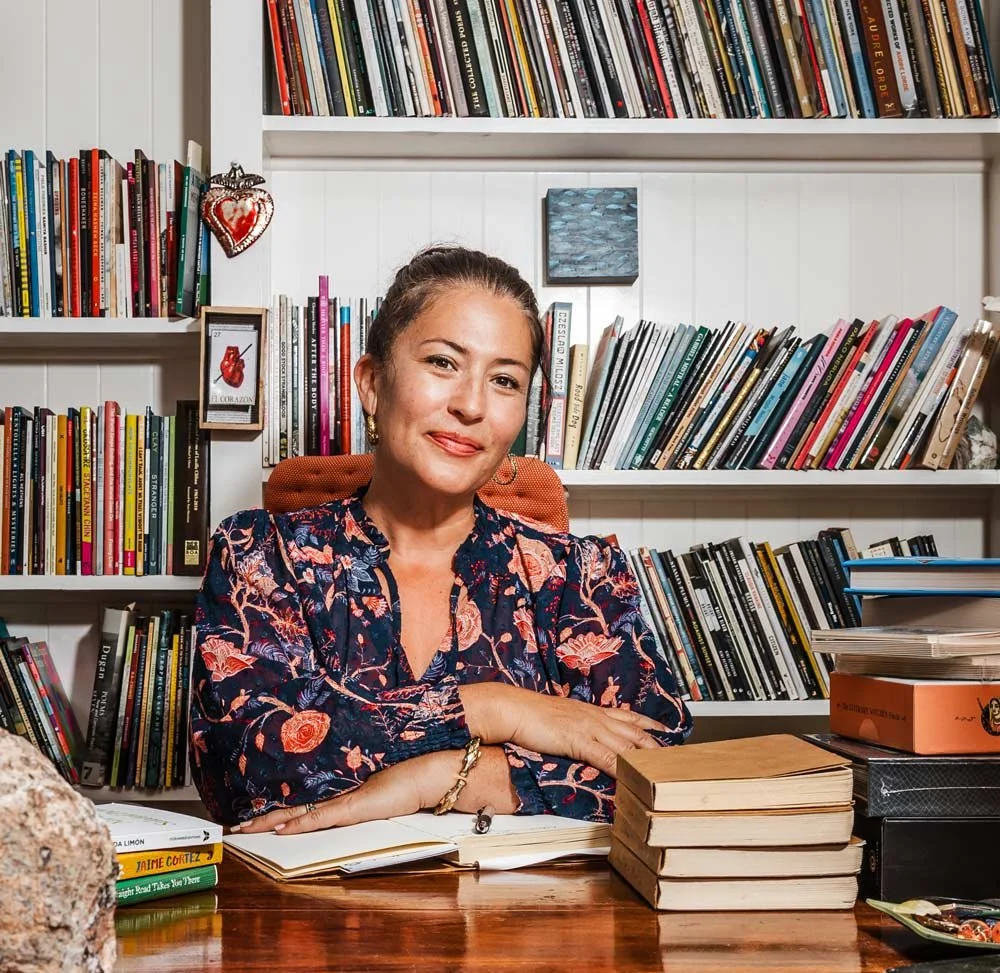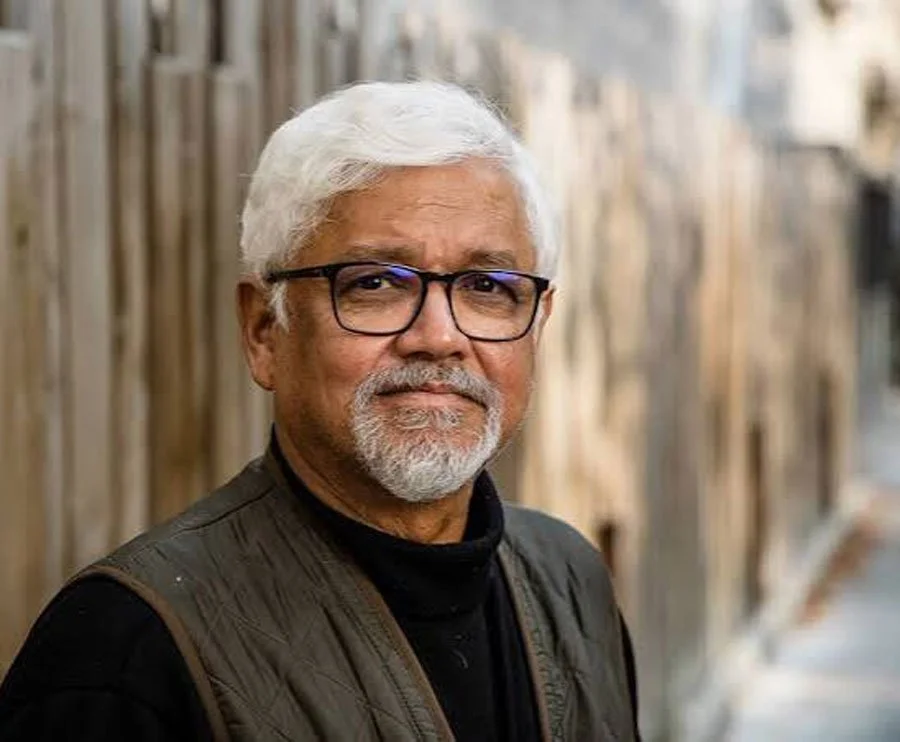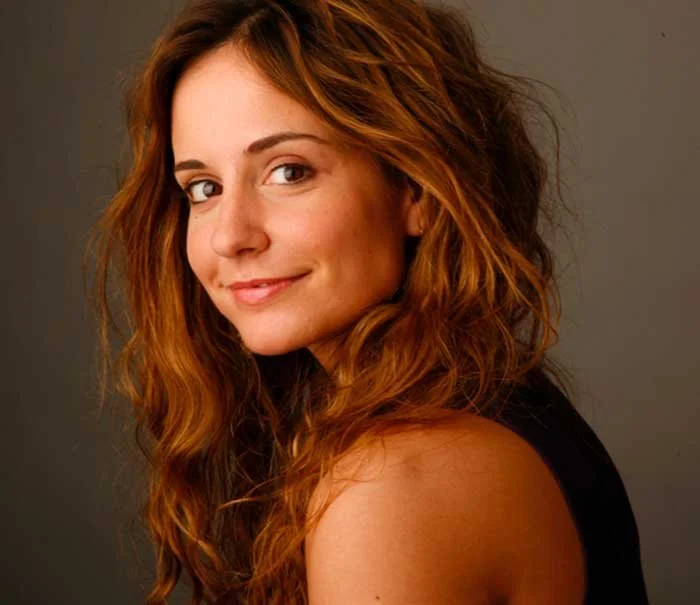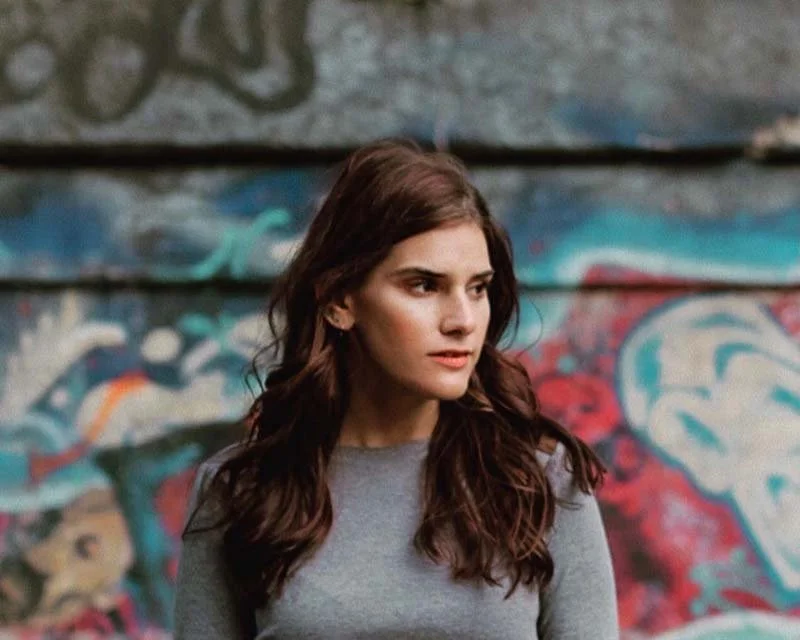


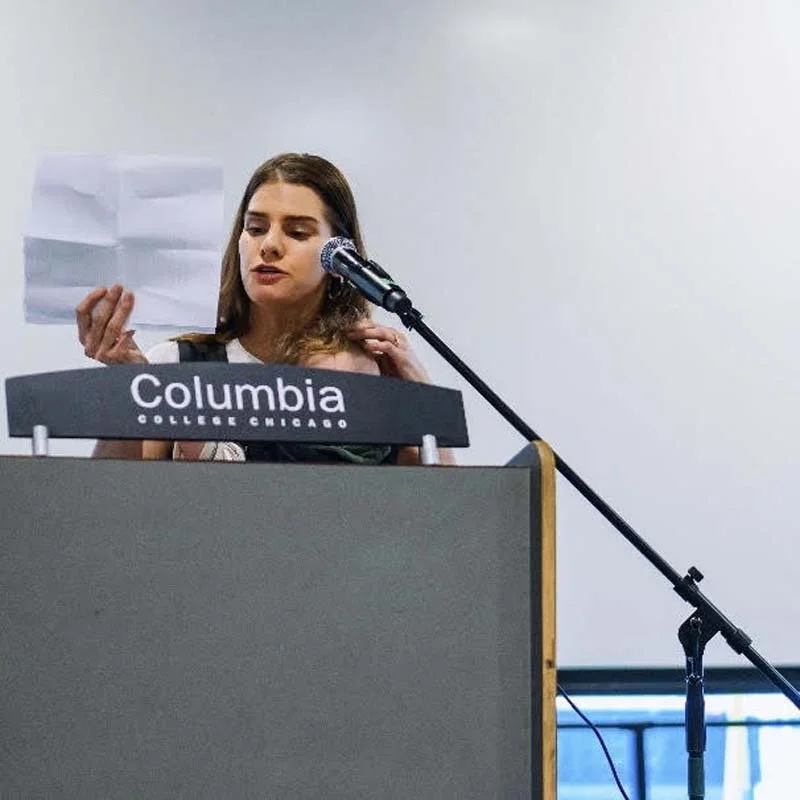
Kate Wisel is the author of Driving in Cars with Homeless Men, winner of the 2019 Drue Heinz Literature Prize, selected by Min Jin Lee. She also worked as a research assistant on the book Soulless: The Case Against R. Kelly. She teaches at Carroll University. She is a screenwriter in the Writers Guild of America and is adapting her book into a television series. She is represented by Stephanie Delman at Trellis Literary Management. For film/TV, she is represented by Hilary Zaitz Michael at WME. @thesnackaisle
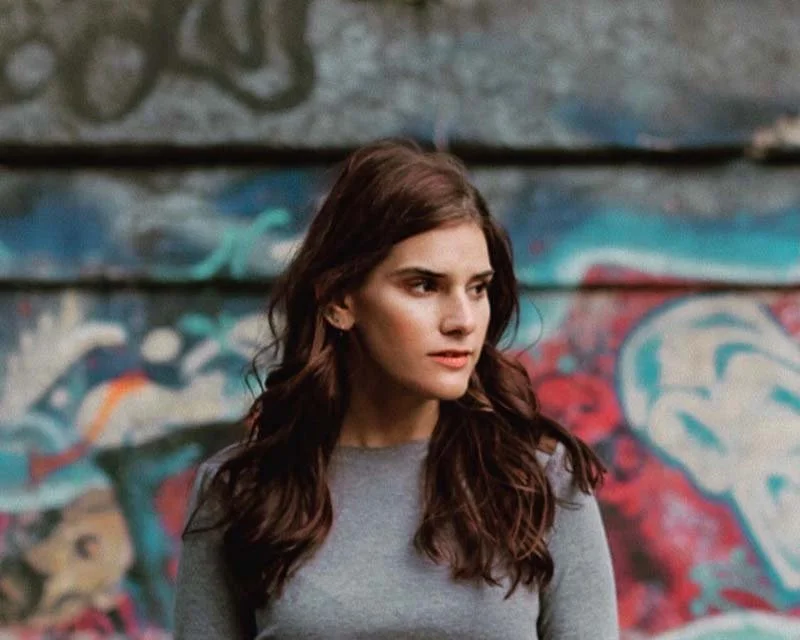
Where were you born and raised? What role has your hometown—or homes—played in your development as a writer? I’m originally from Boston, but more than my geographical place of origin, I was raised by a chef and my mom owned a restaurant, and it’s only in retrospect that I can see how similar my writing and thinking process is to my dad’s. In a news article about his restaurant Rocco’s, from the eighties, he lays out the highly specific three-day endeavor of building a gumbo. He talks about waiting for the meat to arrive and unwrapping it like a present. The way the ingredients guided him, the physical feel of chopping vegetables and how that spoke to the needs of the gumbo. He said he’d let it sit then think some more. He then talked about being inspired by a trip to New Orleans and about marrying unlike flavors. That despite his classical training in Paris, he became unimpressed by the trend of Nouvelle cuisine at the time, and the purpose of the gumbo was to take care of the people who ate it. So, in terms of influence, my instincts as a writer mirror the process of cooking. And I was raised to witness and revere that process as not just a job but as a spiritual discipline. In the kitchen is really where and how I was raised.
What kind of reader were you as a child? What books made you fall in love with reading as a child? I had to find my own books even though there were a lot of books in my house. Some of the classics like Tolstoy and Hemingway, Bob Dylan and JFK biographies, Tom Wolfe, Wally Lamb. And then my mom’s side was Irish Catholic, so my earliest memories of reading were of the Bible. The inherent mystery of that text stays with me still, and as a kid I had a lot of deeper questions. I loved the language and recitations of the bible but hated the priest’s exegesis. The mystery didn’t need to be instructive, just evoked. To me it was an epic, a choir of voices made up of men, not a moral code. No one was going to tell me how to act—I was more interested in why people did what they did and what that meant. So, I was a voracious but intellectually restless reader. All I wanted was for someone to tell me the truth, and I looked to books because I thought the adults I knew were liars and hypocrites. And I think if you’re that kind of kid, you just want to know you exist. Through other consciousnesses, you find we all have the same struggles, questions, and fears, and we’re all the same.
So, I loved books down to The Babysitter’s Club. When I started reading books like The House on Mango Street, The Diary of Anne Frank, The Giver, it felt so much like defying the rules of physics. They were black holes that warp your sense of time and don’t follow the constraints of the speed of light. Everything I read was a signpost. Proust taught me that time is non-linear. Brenda Shaughnessy said, “The past is so horribly fast.” Franz Wright said, “There is hope in the past.” In Jennifer Egan’s A Visit from the Goon Squad, it’s as if she predicts the future of technology. I liked being taken out of the physical world and the gift was a greater context. There are other dimensions all around us that are too small or big for us to perceive with our eyes. To occupy that space reminded me of what I loved about the mystery of the bible, but it excluded the didactic nature of Catholicism.
Are there any rhythms or rituals that structure your writing process? Over time, I’ve learned to be adaptable with my writing days and to expand my view of what a writing day consists of. The way I take notes is, in general, psychotic. Sometimes I’ll pull over on the side of the road or find myself in the kitchen with a toothbrush, jotting something down. I value experiences—so if I’m in another city or in a fun phase doing interesting things, I don’t feel pressure to sit down and write. The process is collecting what I remember, trusting that what filters through is important, and slotting whatever struck me into what I’m writing. A year ago, I was taking walks while listening to the soundtrack of my script, which helped me enter scenes in a three-dimensional way, and I’d bring it back to the page. I just closed this document to add a dialogue tag to my script, so I focus in the most disorganized way, but I trust my instincts, and my favorite thing is to scan the seemingly unlike pieces I’ve pulled into a story and locate the surprising way disparate observations or bursts of imagination, how the lines I repeat in my head speak to each other. Sometimes, a whole story comes tumbling out, and you ride it to the end like surfing a wave. Other times, you write slowly and confusedly, and then something clicks because you've experienced something years later that feels like the missing key. Either way is the path I trust, because it’s brought me to what I need to know.
Tell us about the creative process behind your most well-known work or your current writing project. My current project is writing for TV. Screenwriting is technical—you’re slotting information into a preassigned format, and I always feel freer and more creative with constraints. It must be why trust fund babies tend to be more existentially unsatisfied; within the limits of what you can’t do or have, your life takes on a more specific shape and purpose. By default, the form of screenwriting cuts to the quick. The ratio of time is per page, so there’s simply no room for the writing to drag. Plus, you’re writing for actors, so it’s direct and captures essence in a way that’s more like…This is the kind of guy who’d do this, you know that guy, and now he’s holding court at the bar, saying this, and pair-skating is on the flat-screen. Or…She turns on the faucet, blood rains down, she squeezes it from her hair...we’re in a dream. It’s associative, and the concision more closely resembles poetry, and I love to labor over a line. I’m more interested in the way characters interact with their physical world and what that suggests more than translating through exposition the interiority of the mind. Plus, what could be better than the emotional transition of a brilliant cut? There’s an entire story that exists in one great cut.
Do you keep a journal or notebook? If so, what’s in it? A lot of times, I’ll use my Notes App, which is like the Emotional Support Animal of notebooks in that it goes with me everywhere. The notes are usually brief, a gut reaction or thought because I’ve been taken by something that’s in front of me. Then I might know where the note goes, which is a high, and I’ll transfer the notes to a document which is useful. I’m less precious with notes than I was before, because I trust what I remember, that’s fate. Then I have a paper notebook where I write a stream of thought without letting the pen die on the page, and eventually the censorship dies down and inevitably, I’ll work something out that I wasn’t able to solve or acknowledge before.
How do you research and what role does research play in your writing? One time, my editor said they didn’t serve Pepsi at Panera—they serve Coke, which was an incredible note, but I guess I’m not a great researcher because I’m not as interested in facts. Verisimilitude is important in a story to a point. I want things to feel real but bent. I’m only using historical accuracy as a vehicle for an inner experience or truth. So, if I’m going to research something, it’s usually because I’m interested in it myself or want to portray the essence of a time, place or conflict on the page.
Which writer, living or dead, would you most like to have dinner with? I'd have dinner with any dead writer so they could tell me what it's like to be dead.
Do you draw inspiration from music, art, or other disciplines? Yes, completely. I love learning about what's happening in quantum physics because it asks the same central questions as any art form. I was an assistant to a music critic, so I was always listening to albums to gather reviews, which, like the books that felt sent to me, would infiltrate my thoughts and writing. I went with my baby and husband to the Milwaukee Art Museum, and the way my son babbled like he was in a heated argument with certain paintings was so funny and reminded me of how simple and profound it is to look at something. Billie Piper makes shows and movies that go so far into a woman’s psyche and are a masterclass in dark comedy and panic. Mathew Klam writes fiction that rambles into the best non-sequiturs ever. The documentary The Store tells the story of Neiman-Marcus in Texas during the holiday season of 1983, and it’s basically a Christopher Guest movie. I also love Couples Therapy with Orna Guralnik, which is more of a lesson in storytelling as the sessions are cut together with a rate of revelation that creates complex character studies and shows cause and effect, which is something I’m always thinking about, even in every sentence. I am constantly thinking about other disciplines to enter my own.
AI and technology are changing the place that stories occupy in our lives and memories. How do you see technology—especially AI—shaping the future of writing? So tricky. There's a lawsuit going on with OpenAI that I'm part of (in a very small way). Without consent, OpenAI learned authors’ texts to train their language models. This brings about so many questions: authorship, ownership, and creativity. I think the question of whether AI is good or bad is irrelevant, because it's happening now and will change things in ways we can only imagine. Storytelling is fundamental to our existence, and I think the only thing that could turn a robot into a human is if they shared the fear of death. But this brings about the question of consciousness. Panpsychism argues that objects can be conscious; we just don't scientifically understand that yet. So, if an object could tell me a story that saves you, a story about truth and compassion, I would listen. But then I'd hope that object would be compensated for their work.
Who are some writers you’ve been reading recently, and who are your favorite writers of all time? Every book I'm drawn to seems to come at exactly the right time and leads me to the exact right questions, unlocking something. The Elegant Universe by physicist Brian Greene and Mind Magic by neurosurgeon Mark Doty. Linked story collections like A Visit from the Goon Squad, Jesus’ Son, and We the Animals were formative and taught me about story order. I've recently loved studying Kenneth Lonergan scripts. What the Living Do and Magdalene by Marie Howe changed me. Certain poems by Danez Smith are structurally incredible. Madwoman by Chelsea Bieker reads like a thriller and spins around so many topics I’ve been thinking about lately: addiction, consumerism, the isolation of motherhood, the way male violence reverberates through women’s lives and corrupts their wellbeing and connections to each other, to life itself. If you’re paying attention, I feel like books get sent to you.
Exploring literature, the arts, and the creative process connects me to… You.