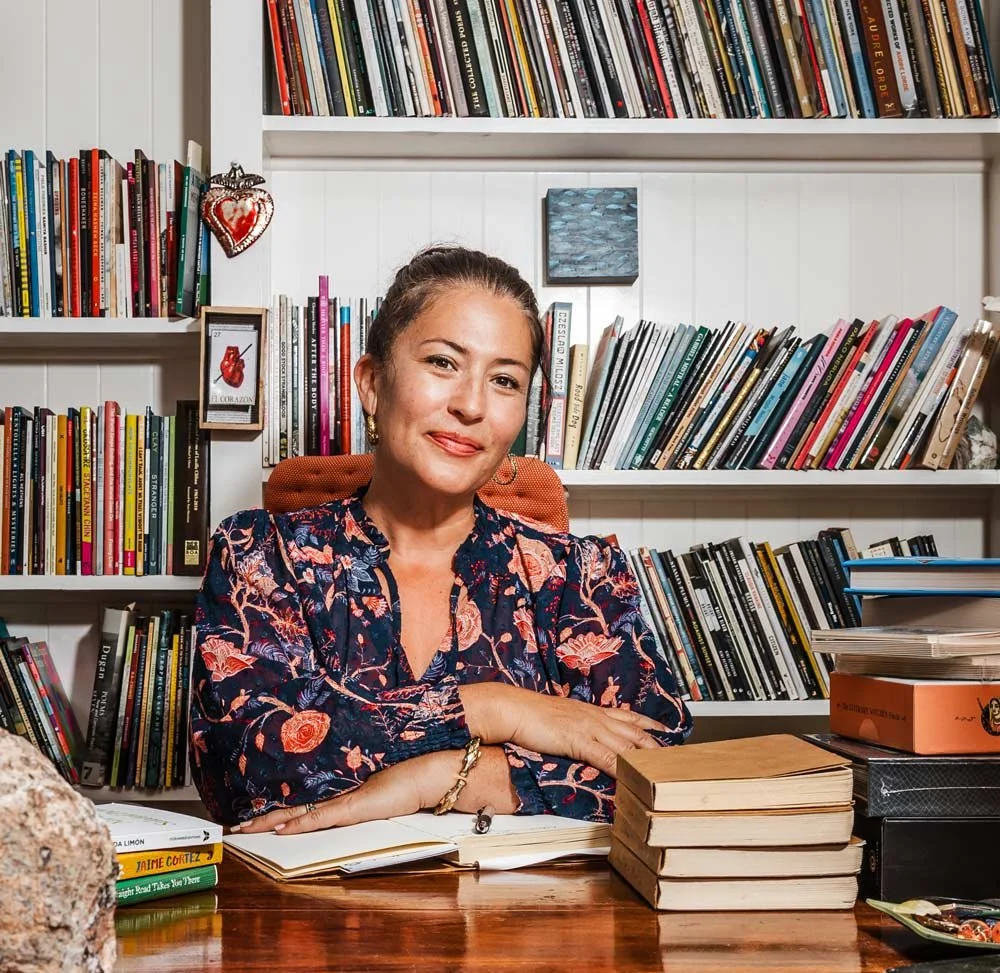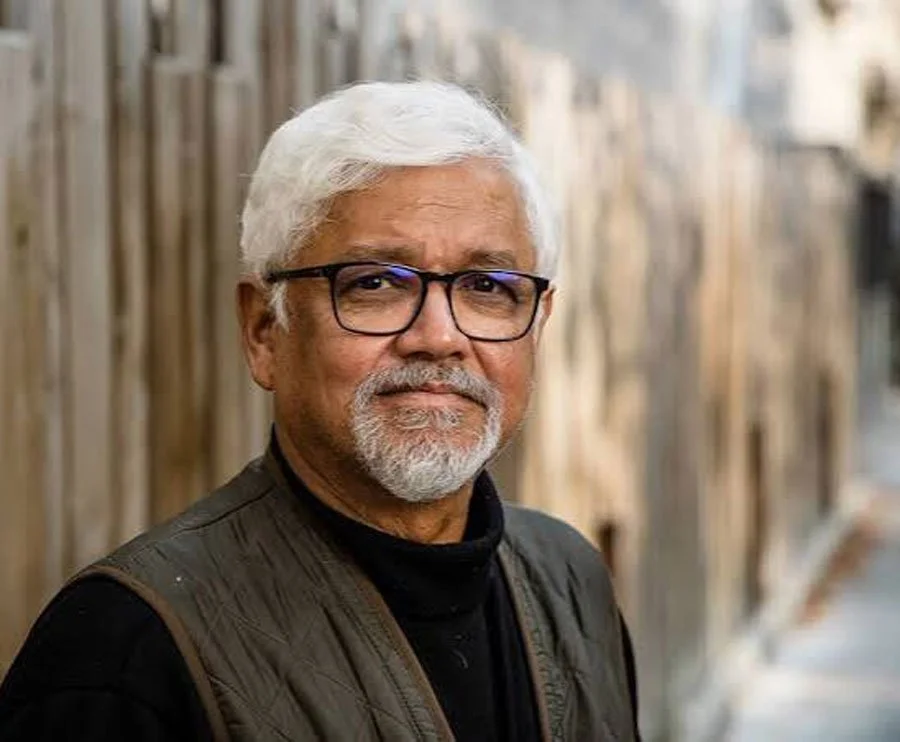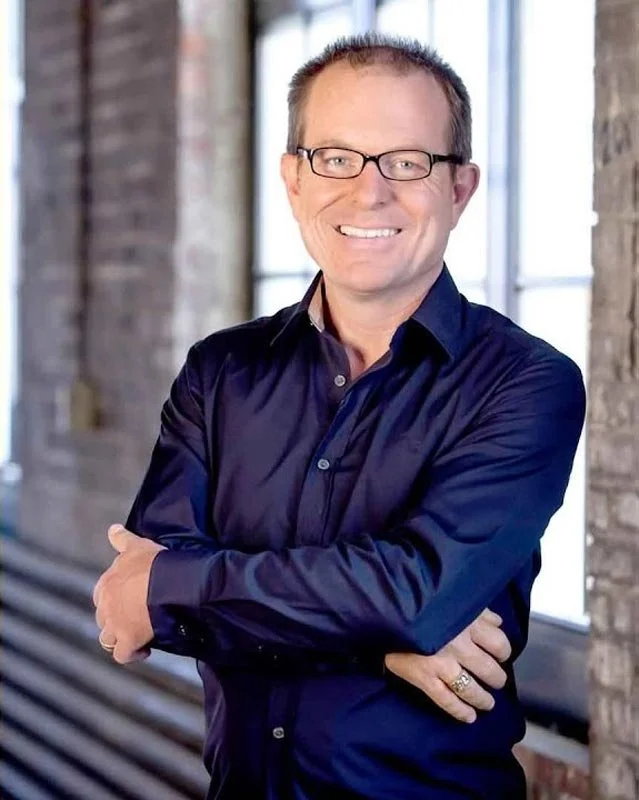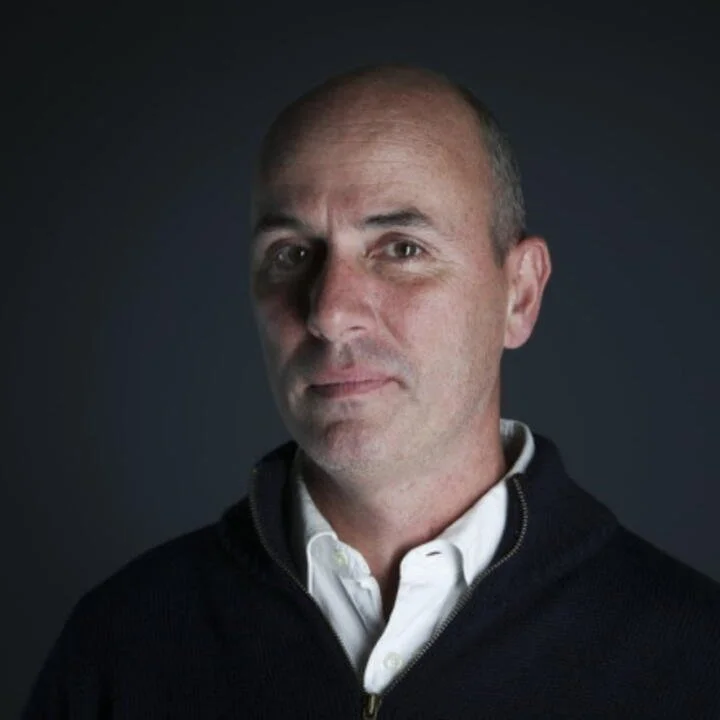


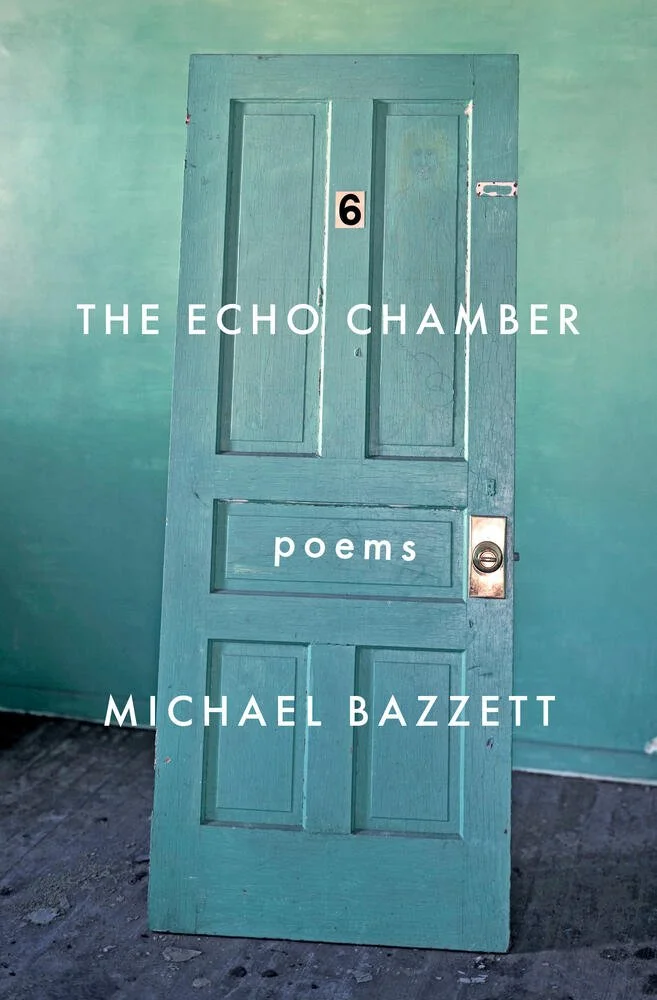
Michael Bazzett is the author of five collections of poetry, including The Echo Chamber (Milkweed Editions, 2021) and Cloudwatcher, winner of the Stern Prize, (Copper Canyon), forthcoming in early 2026. His verse translation of the creation epic of the Maya, The Popol Vuh (Milkweed, 2018), was named by the NY Times as one of the best poetry books of 2018, and his translation of the selected poems of Humberto Ak'abal, If Today Were Tomorrow, was longlisted for the National Translation Award. The recipient of fellowships from the National Endowment for the Arts in both Poetry and Translation, he has recently published work in GRANTA, The Nation, The American Poetry Review, The Paris Review, The London Magazine, Poetry Magazine, and The Sun.
Where were you born and raised? How did it influence your writing and your thinking about the world? I grew up in the Midwest, born in Chicago, and moved to Rochester, Minnesota during first grade. When I was a boy, I used to spend hours on the wooded hill behind my house, climbing the paths that all led to the same spot: the abandoned limestone quarry carved into the hilltop. There were fossils there, and running a finger across the ridges of ancient shell or the segmented body of a trilobite thrilled me. I had no idea that an aesthetic was being formed. I didn’t know that people growing up among the cornfields of southern Minnesota could end up as poets. But I did know my mundane world of asphalt streets, maple trees, and split-level ranch houses was only a thin veneer laid over what used to be the bed of a huge inland sea. I knew the world existed in layers, and that the world we see is not all there is.
What kind of reader were you as a child? What books made you fall in love with reading as a child? I would read anything, and I did. I was one of seven children and the house was full of books and magazines. I loved The Great Brain books and A. Conan Doyle, in particular. Robinson Crusoe, too.
Can you walk us through your daily writing rhythm or rituals? That somewhat depends upon the season, as I teach, and my summers look very different from the school year. The through-line, though, is that I'm a steady nibbler during the academic calendar, and shift to whole composition, exploration, and discovery in the summer months. I've never outlined a poem. I feel like any poem worth writing is smarter than me, so I simply try to follow its intelligence and instincts and coax it onto the page.
Tell us about the creative process behind your most recent poetry collection, The Echo Chamber. The Echo Chamber grew very organically out of my teaching and reading life. I teach a high school class on mythology, called Myth and Memory. It’s concerned with how these old stories still exist with us. In fact, when people refer to the gender binary, the glyphs that we default to are shorthand for Mars and Venus, or Ares and Aphrodite. They’re actually hieroglyphs. The circle is the shield, and what looks like an arrow is a spear coming out behind it, so it’s leading with protective armoring with the potential for attack. And the other circle has a cross, which is a handle on a looking glass. That has connotations of vanity, but also self-reflection. Also, if you tilt the mirror, you begin to alter someone’s perception of reality. You can see those glyphs as symbols in Macbeth. Lady Macbeth is holding the mirror and Macbeth is holding the dagger doing things, but who is in control of that reality, who actually has agency? We see how those symbols can be inverted. Even in the slaying of Medusa, Jason uses his shield as a mirror so that he can move backwards and slay the Medusa. His power comes from blending the binary and using both symbols.
It was in the midst of a discussion on that when a student brought up the myth of Echo. The student had confused Echo with Narcissus, and we started talking about that story. It hit me that the classic motif of the narcissistic feedback loop fits so well with how algorithms work. Social media and online shopping track us, especially if you’re not careful with your cookies and browser privacy and all of that. When we look at the world today, we see some version of us being marketed back to ourselves. The fact that that needs transparency or the stillness of the pool – it triggered something in me. I found it so fascinating. We think that meditative stillness is always good, but if you realize that the world is moving water – it’s Heraclitus’ river – you can see yourself in the movement. The world is always shifting and moving, and we can see not just ourselves but how our projections live on the surface, and there’s more depth below. This line of thinking opened up a new layer of Ovid’s Metamorphoses, and I knew I needed to write about that. I’ve always been fascinated by the idea that Echo and Narcissus would’ve been the perfect couple. Echo can only repeat; she was made to be with a narcissist. They weren’t able to connect or come together because they were trapped in their own loops.
Do you keep a journal or notebook? If so, what’s in it? I keep a half dozen simultaneously, writing down little scraps and images that strike me. A lot of back-of-the-envelope notes, as well. Whatever's at hand. I don't so much write poems as listen for them.
What role does research play in your writing? How do you go about your research? I rely heavily on imagination, yet research can serve as a wonderful spur. Mostly, I just enjoy being around stacks of books. I really like going to the public library, for instance, and getting sixteen books that have something to say about the Minotaur, for instance, and then taking notes for a few hours, little hooks that might catch the cloud of an idea later on...
Which writer, living or dead, would you most like to have dinner with? Wisława Szymborska. If José Saramago could join us, too, that would be lovely.
Do you draw inspiration from music, art, or other disciplines? I'd say my three main modes of outsider aesthetic influence might be photography (Alec Soth is a favorite), stand-up comedy (Mitch Hedberg is a favorite), and philosophy. I also listen to a lot of music...
I don’t usually write to music, though. I’m too susceptible; I find it can give what I’m writing a false, unearned resonance, like slipping a poem into Garamond to make it “better.” But there are two songs that are rhythmic enough, each in their own way, that I sometimes put on a loop when I’m revising. There’s something about the cadence and the breath in them that works for me, that creates a kind of chamber that keeps the outside world at bay. And though I’ve heard “writing about music is like dancing about architecture,” (a quote so apt, it’s attributed to no less than a dozen people), here goes:
“Spiegel im Spiegel,” 1978—Arvo Pärt
The piece—in English, “Mirror in the Mirror”—begins with a simple ascending arpeggio, little triads that subtly alter, reflected back and forth like light on water, a mirror looking into a mirror. The melody stretches over and through the scales, extending like a long breath. The left hand on the piano arrives, eventually and sparingly, to ground the upward yearning, trees reaching toward light from the roots. The work is minimal in its composition, yet never fails to tug me out of my momentary preoccupations into a broader sense of time, drawing me into eternity through the little window of now. There are many beautiful recordings, but Angèle Dubeau’s version is a good place to begin, I think. If you put it on and close your eyes, everything will soon feel softer.
“Fleurette Africaine,” 1962—Duke Ellington
Mingus starts the song with a spiraling, skeletal stuttering on the upright bass, a sleeping animal rousing itself, a little tousled. It’s all very organic, the rise and fall of a breathing body. Ellington’s piano wanders in, elegant, stately. Max Roach’s drumming is the nest—he drums around the song as much as into it—weaving the thatch that holds the bird that sings the song.
AI and technology are changing the ways we write and engage poetry. What are your hopes or concerns about the role of AI in creative expression? And why is it important that humans remain at the center of the creative process? I am not an AI optimist, in large part because I've witnessed (anecdotally, over my last three decades in a high school English classroom) how the arrival of technology (and its accompanying forms of social media) have fragmented and shallowed my students attention span, atrophied their reading stamina, and reduced the footprint of their "memory palace" to that of an outhouse. This is not their fault, of course. It's their context. Yet the blithe refrain that AI is "just a tool" seems intent on ignoring the fact that tools are not neutral implements. If a tool is defined as a device created and employed to carry out a specific function, then truth serum is a tool. A gun is a tool. The atomic bomb is a tool. Generative AI exists for one reason: to further capture our attention, data-scrape it, and monetize it. That's it. It was created illegally and unethically, and the resource-hungry platforms it's built upon are an ecological disaster. When you take a tool like ChatGPT — something built to respond instantly, fluently, flatteringly — and place it into young, forming minds, the risk isn’t just misinformation or dependency. It’s the shaping of thought itself. As a teacher, I can vouch for the fact that it trains students to expect frictionless knowledge instead of wrestling with uncertainty. It encourages them to seek polished answers rather than wrestle with messy, ambiguous realities. Perhaps worst of all, it habituates them to surrendering their attention without ever fully realizing the cost. And that surrender isn't just intellectual — it’s emotional, even spiritual. Their habits of attention, of wonder, of struggle — the very roots of who they might become — are being quietly redirected toward systems built to monetize their every click, their every question. Marshall McLuhan famously said that "we shape our tools, and thereafter they shape us." If you don't make up your mind, somebody else will.
Tell us about some books you've recently enjoyed and your favorite books and writers of all time. Ah, the literary family tree question! I love it. I just finished Alejandro Zambra's The Private Lives of Trees, and it was marvelous. A slender novel that's simultaneously very big, so that would be the most recent leaf to uncurl from a branch.
Oddly, when I started sending poems around in earnest twenty-five years ago, I discovered a number of 'influences' after the fact. Charles Simic, James Tate, Francis Ponge, George Saunders. I actually started reading all of the above after people noted a perceived influence on my work. Sometimes, as a high school teacher, I reread texts so often I feel out of the loop, so it’s been a wonderful way to discover writers with a shared sensibility. I guess these after-the-fact influences that arrive via the zeitgeist would be the roots, feeding the tree from below.
But, as far as the tree itself:
There would be a Polish branch, where Wislawa Szymborska and Zbigniew Herbert would roost, with glinting eyes and the intelligence of crows. (I think my soul might be Polish.) And there would be a dusty evergreen Portuguese branch where José Saramago & Fernando Pessoa would settle into the lavender dusk, like owls. Virginia Woolf’s syntax would inform the pattern of the branches. Emily Dickinson would form the heartwood of the trunk, Homer the pith. (I think I’ve spent more hours reading Dickinson than any other poet.) Whitman would be photosynthesis itself, transforming sunlight into food. The Scottish poet Robin Robertson would be a broken limb, heartwood opened to the light.
And so many leaves: Langston Hughes, Antonio Machado, Elizabeth Bishop, Pablo Neruda, Lucille Clifton, Paul Celan, Jane Kenyon, Octavio Paz, Jorge Luis Borges, Robert Hass, James Baldwin, Li Po, Jack Gilbert, Louise Glück, Gwendolyn Brooks, Mark Strand, Don Paterson, Kay Ryan, Li-Young Lee, Delmore Schwartz, Yeats, et al., into ∞
Russell Edson would be in the tree, just sitting there, wearing a cardigan.
Novelists are big for me: Ishiguro, Saramago, Ellison, Garcia Marquez, Gordimer, Woolf, Morrison. I love the deadpan creepiness and psychological resonance of Patricia Highsmith. And Pu Songling’s Strange Tales from a Chinese Studio is a book I return to again and again. I love the imagination of Ray Bradbury. The brilliant wreck of Philip K. Dick. I’ll end with Heaney, as his three-word definition of poetry is taped to my wall: Exact, Truthful, Melodious.
Exploring literature, the arts, and the creative process connects me to… Trees. Trees are the lungs of the earth, exhaling their oxygen into my blood, and I exhale CO2 symbiotically back. When I'm engaged in the currents of creativity, the state of flow, I feel wonderfully porous. And things that seemed static and only nominally alive suddenly present themselves as reciprocally connected partners, as kin.