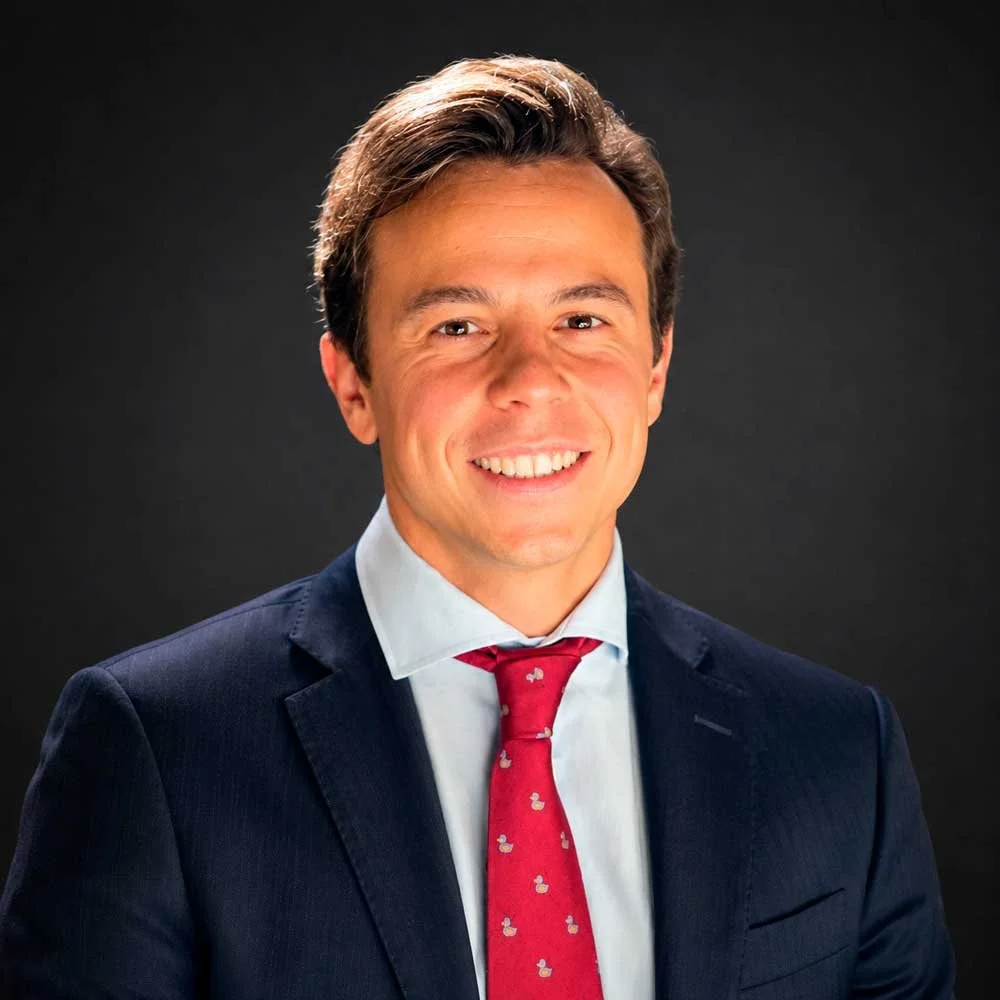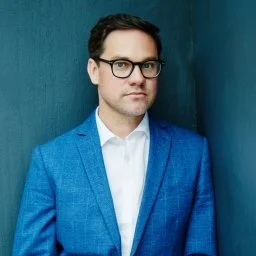


Nathan Dunne is the author of the memoir When Nothing Feels Real. As a journalist and critic, he has contributed to many publications, including The Washington Post, The Atlantic, The Boston Globe, The Guardian, Slate, and Artforum. @nathanadunne
You were born in Brisbane, Australia and moved to India. How did those childhood experiences shape the way you think and write about the world? After my family moved to India, we lived in a run-down part of Bangalore with no electricity, TV, or a working toilet. My parents were Protestant missionaries, and there was a pervading sense of being on a divine mission. God was always present: at the dinner table, rickshaw station, or cheese shop. Each year during the Diwali festival, our family gathered on the roof to watch the fireworks. In the morning, I joined the local children to collect the colorful paper shells.
Without modern distractions, I grew up hearing Bible stories, many of which seemed simple at first but over time revealed worlds of character, violence, and ambition. Growing up in this way made me look closely at what drives our decisions, whether out of ideology, faith, or fear.
What kind of reader were you as a child? What books made you fall in love with reading as a child? I was a voracious reader, beginning with Dr Suess and The Screwtape Letters. Robert Louis Stevenson had me with Robinson Crusoe and Treasure Island, both of which were deeply appealing in their sense of adventure. It was curious to learn, years later, that these fantastic romps were, in fact, condensed versions of the originals. So there was a real pleasure in graduating to read the longer versions.
Meeting Farmer Oak in Thomas Hardy’s Far from the Madding Crowd at thirteen was transportive, the effect of which has stayed with me like a thorn under the skin of my palm. Hardy was florid and rich, but also quiet, and his weird Wessex world of horse-drawn carts and cowshed intrigues was pure escape from the hot landscapes I knew in India and Australia.
Can you walk us through your daily writing rhythm or rituals? Much of the writing advice I heard initially was that it’s best to get up and start writing straight away. Be at your desk in a half-sleep and get the words down before the postman knocks and the day disappears. But I’ve never found this approach productive. I need my brain and fingertips to warm up slowly, and only when I’m sufficiently caffeinated - thank you lapsang tea - do I get anything done.
I write by hand, and so once I’ve sharpened my pencils, there’s usually a pocket of time between 11 and 2 when the work of the day gets done. On some days, if there is momentum with a particular scene or chapter, I return in the evening to continue. Often though, I end up eating dried apricots and editing whatever text is fresh.
What was it like to work on your memoir, When Nothing Feels Real? What did you discover about yourself through that process? I started writing When Nothing Feels Real in 2019. The biggest challenge was trying to balance the book’s two strands: my personal story with the medical literature and reporting. Often during the long drafting process, I would get feedback that it was “between two stools.” I hated that phrase. It’s so abstract. The ask was for more clarity and precision, but it was communicated via the proverb to “fall between two stools” - a person attempts to sit on two stools and misses both.
Editing was hugely important in achieving the right blend and balance of the material. My memoir is about living with a mental illness called depersonalisation, whose symptoms are difficult to describe in concrete terms. So a certain precision of language was key in communicating my experience of the illness.
Do you keep a journal or notebook? If so, what’s in it? I have a pile of cheap black notebooks and rotate between them. One is for writing drafts, one for note-taking, and the other for free-writing, which I use to begin my day. I’ve found free-writing to be very helpful. I write for 5-10 minutes without stopping. Anything that comes to mind, however nonsensical and non-grammatical gets onto the page. Something about the pure abandon of preciousness and aesthetics liberates me just enough to get down to some more thoughtful and crafted writing afterwards.
All of my notebooks are messy, full of scribbles, not at all elegant. I used to hate how terrible they looked, but a few years ago I saw the novelist Muriel Spark’s handwritten diary in an archive, and it was akin to a child shitting in the bath. She did not care. She was free. No one was looking (at least not yet). And so when I become self-conscious about my scribbling, I always think of Ms. Spark.
How do you research and what role does research play in your writing? I love doing research, too much in fact. Research in the first instance, for me, is simply reading, and I could read, take notes, and copy out phrases forever. I find it incredibly joyful. What comes after the research - deciding what to do with it, how to make it work in the text - is something else altogether. That part is patchy, slow, and often torturous. The revelation is that much of the research is irrelevant to what I needed, and what follows is a sickening feeling of time wasted. But I try to give myself a break. Often, what at first feels like wasted time can reveal itself to be incredibly useful down the track.
Wherever possible, I try and go to a physical library or archive when doing research. Often, the book I think that I want is actually the one right next to the one I’m looking for.
Who’s the one writer you’d invite to your dream dinner party? The late British poet Peter Redgrove. He wrote some of the strangest and most fascinating lines of text I’ve ever read. He was of the same generation as Ted Hughes, or thereabouts, and yet to my taste Redgrove is far the better writer. Redgrove was obsessed with the natural elements, and in poem after poem, he tries to get at the core of what it feels like to be inside nature. He was a genuinely odd character, with strange fetishes and preoccupations. His biography, A Lucid Dreamer by Neil Roberts (Jonathan Cape, 2012), is masterful, but I wanted it to be twice as long. At dinner, I’d ask the poet how he did it all, and why.
Do you draw inspiration from music, art, or other disciplines? I am drawn to religious art for the drama and color. Piero della Francesca and the Flemish painter Rogier van der Weyden are favorites. But I’m most inspired by professional athletes. Sports are unforgiving on the body, and there are no shortcuts (unless involved in a doping scandal). We don’t often talk about writing in terms of physicality, of what is required of the body. But physical stamina is so important to sustain long hours at the desk. Athletes also have a clarity of outcome that writing often doesn’t: you win or lose. I’m a huge tennis fan, and even if you’re the best in the world, like Novak Djokovic or Aryna Sabalenka, if you win the match of the day, you are very likely to lose soon after. Athletes, like writers, always have to fight.
AI is rapidly changing our relationship with writing, with authorship, with creativity at large. As a writer, how do you think we should respond to the rise of machine-generated content? I feel less apocalyptic about AI than other writers and artists I know. It’s obviously a crime for Silicon Valley to steal our work, and it’s depressing that college students copy-and-paste essays on Da Vinci and Montaigne. But I think AI itself, with the right guardrails, can be liberating for writers. Much of contemporary literature is in the tradition of the literary realism that comes out of the nineteenth century (Bleak House, Madame Bovary), and so maybe when AI is able to imitate that realism successfully, literature will be forced to become weirder, to embrace more of the experiments associated with Modernism (Joyce, Gertrude Stein, etc). If everyone can write a decent detective novel or family saga with the help of AI, then it will require a whole new form to keep us interested. Maybe I’m wrong, and all literature with now be a copy of a copy, but I think using AI as a tool could potentially generate new forms.
Tell us about some books you've recently enjoyed and your favorite books and writers of all time. I always go back to Mary Gaitskill’s two short story collections: Bad Behavior and Because They Wanted To. I mean…Holy shit! Have you read those? The moves she makes, conceptually and with all-that-style, are astonishing. The beauty of those books at the sentence level is a true marvel, and so when I need to tune my ear to a higher church, I always grab one and re-read.
I just finished reading The Invisible Kingdom by Meghan O’Rourke, which I found masterful in the way it speaks to chronic illness through personal testimony and how it blends years of thoughtful, finely-honed research. Inspiring.
Exploring literature, the arts, and the creative process connects me to… People. People are life, even if they hate you or you hate them. If you spill your drink on my fresh trousers at the Paris Review party or a dive bar in Ohio, then I’ll be upset (but not that upset). If you recommend a book and I hate it, there’s still a connection, albeit a bad one. I need connection to bother, to keep going. I suspect we all do.