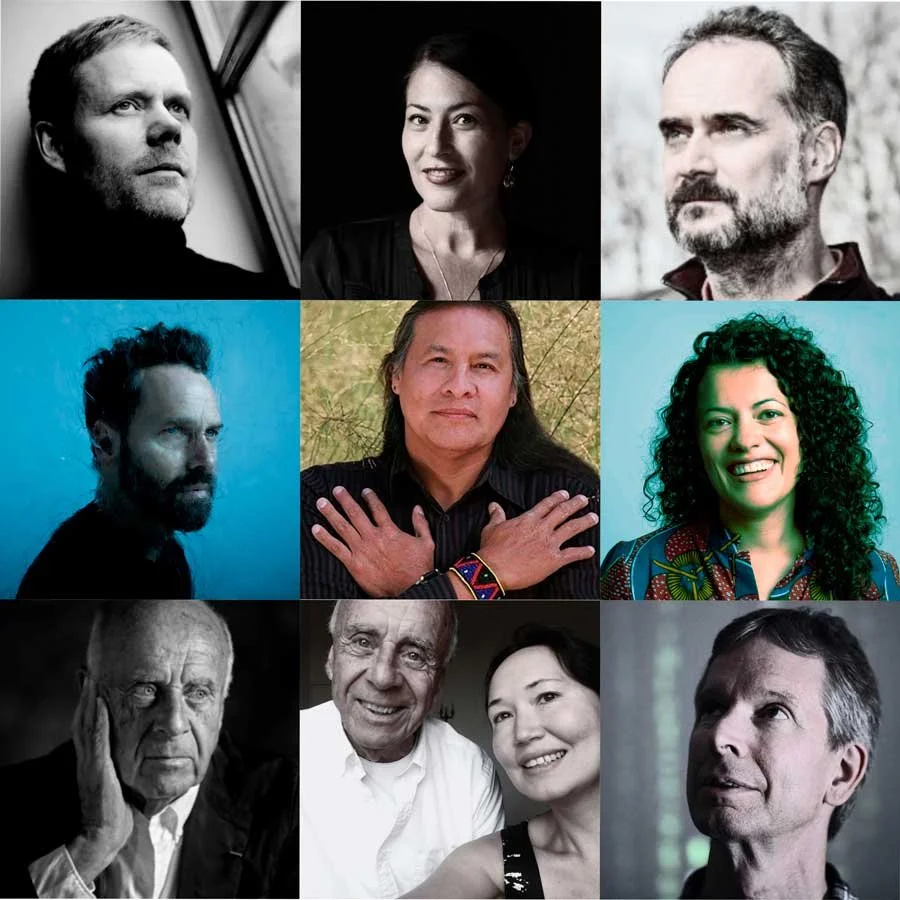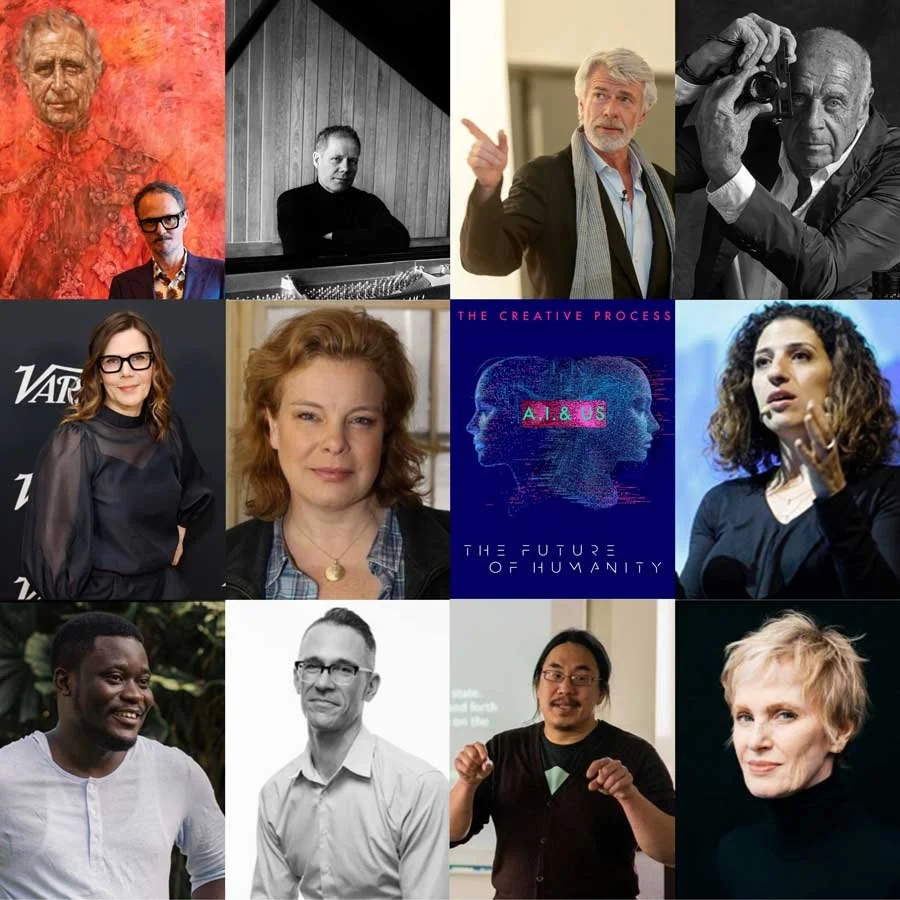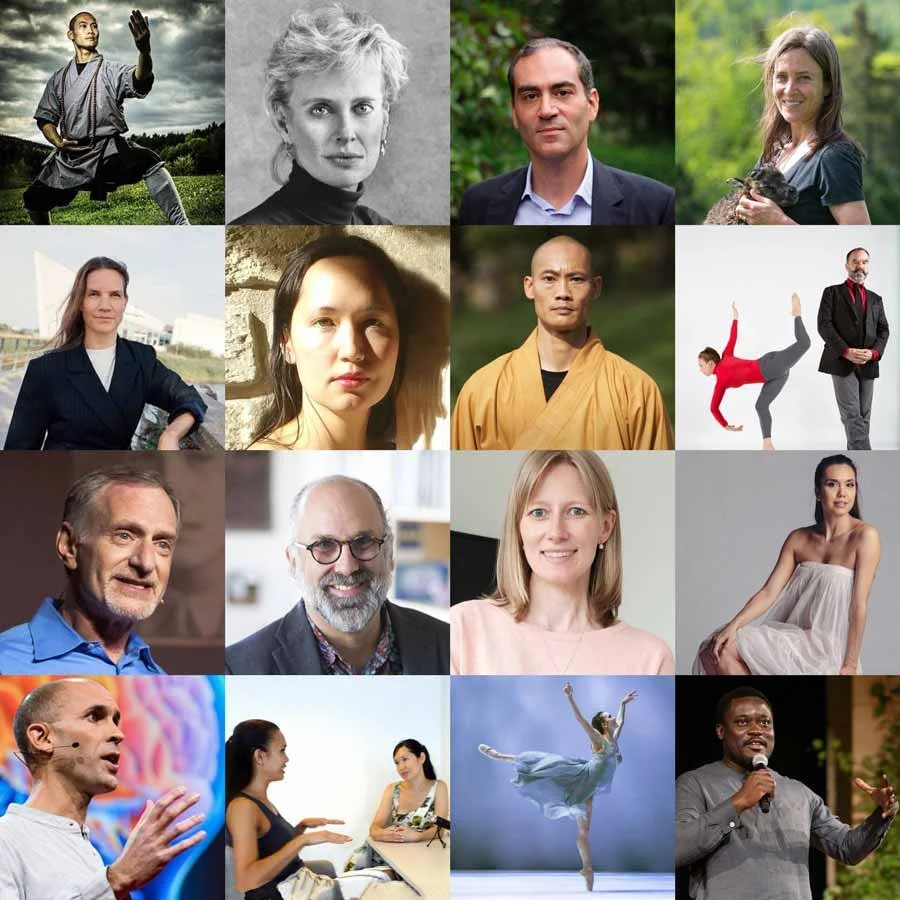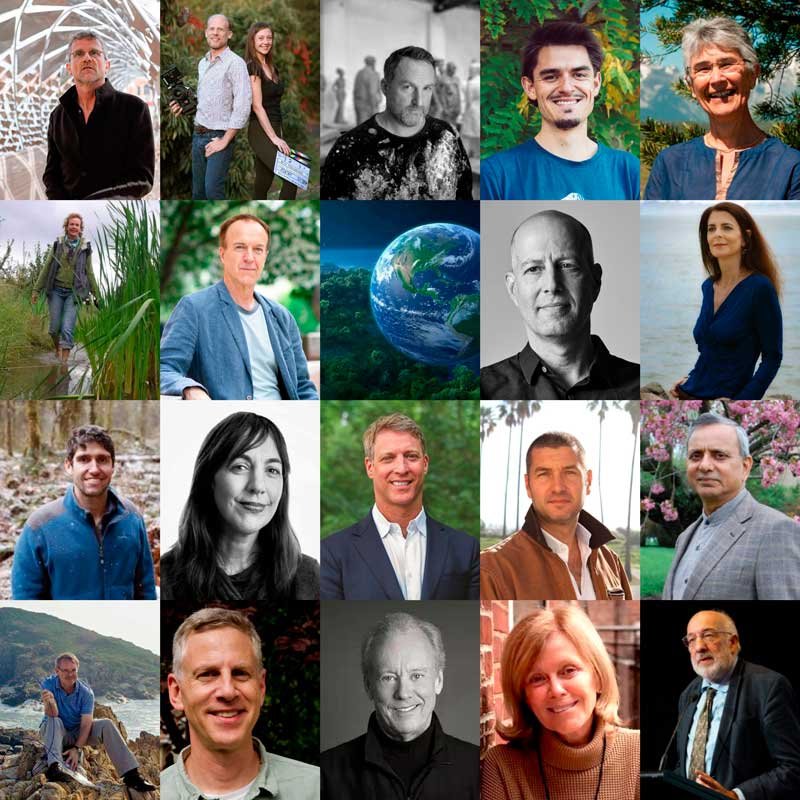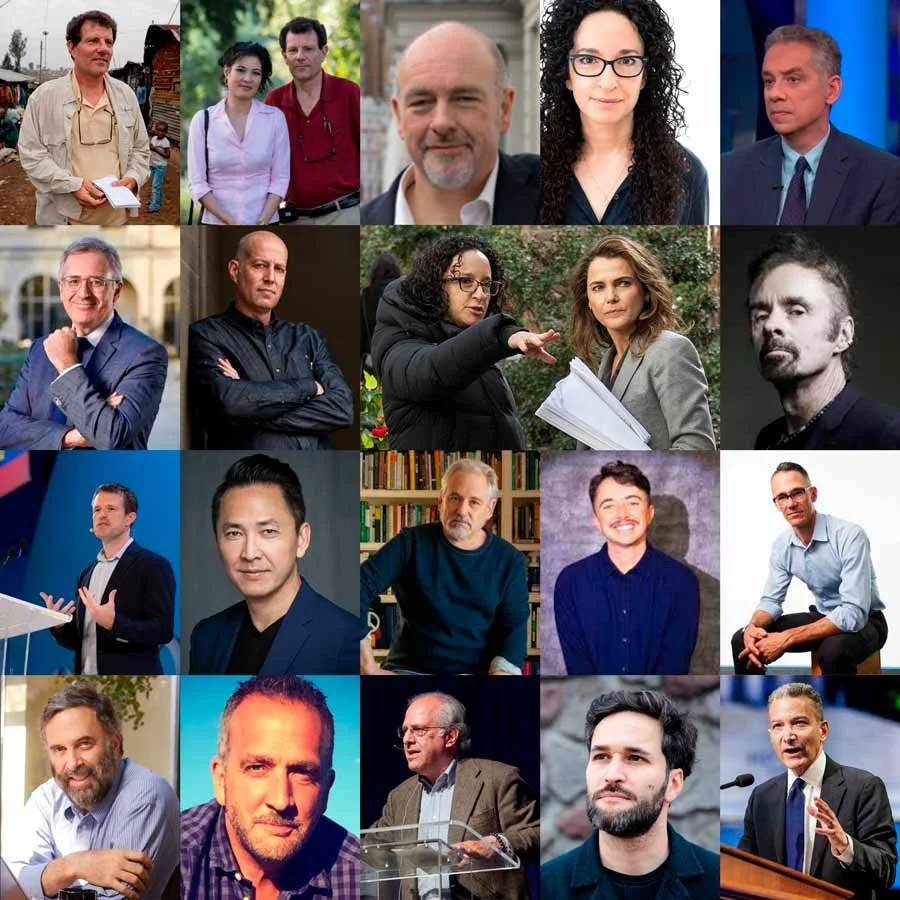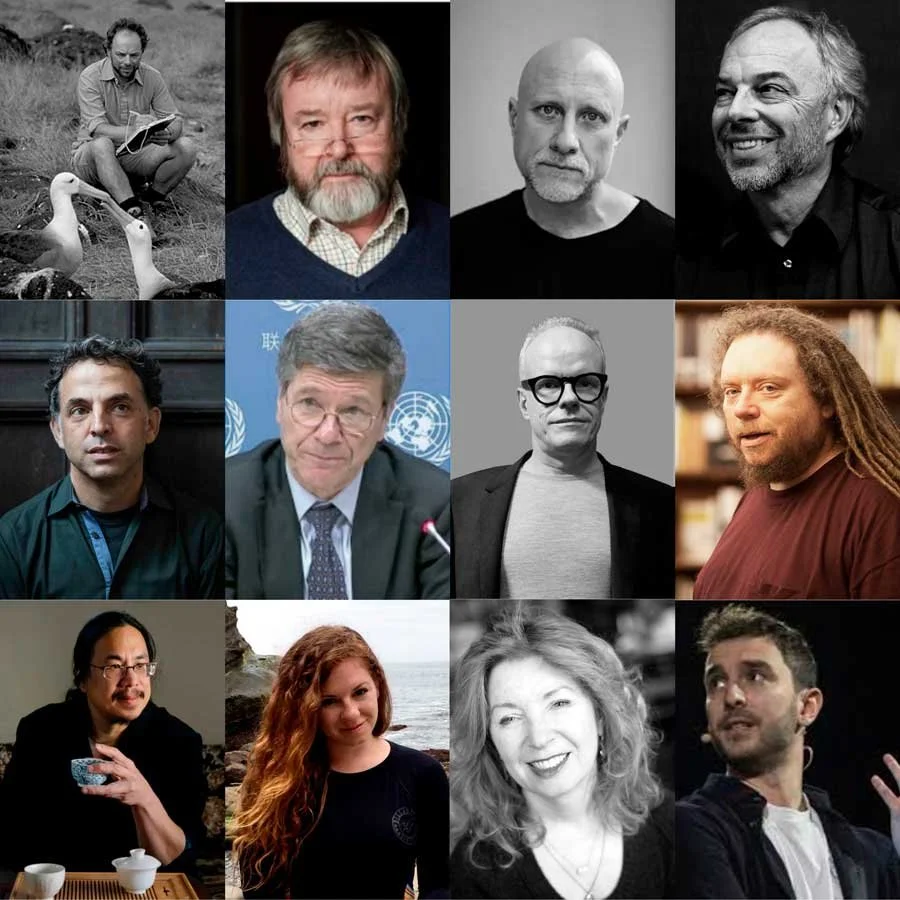


Look closely at the screen in front of you. It is no longer just a passive device; it is actively shaping your perception. Today, we investigate the cognitive and ethical costs of offloading our reason to algorithms and ask what happens when our tools begin to train us? We explore the rise of surveillance capitalism with those documenting the shift—technologists Jaron Lanier, Henry Ajder, and Antonella Wilby. We hear from those fighting to preserve our essence and agency—philosophers Iain McGilchrist and C. Thi Nguyen, economist Jeffrey Sachs and ecologist Carl Safina. Grounding us in the power of expression, are artists and writers Trevor Paglen, April Gornik, Etgar Keret, and Hans Ulrich Obrist. In these original interviews for The Creative Process, our guests remind us that we must never surrender our messy, human reality to artificial perfection.
TREVOR PAGLEN
Artist · Author of How to See Like a Machine: Images After AI
2026 LG Guggenheim Award Recipient
There's a word for this brain rot, and I think that's very real. And there's studies coming out now that are really showing that the more and more of our cognitive labor that we offload to AI systems like ChatGPT or what have you, the less creative we become, the less critical we become, the less of our human faculties for reason we use. There's something sad about that, but there's also something dangerous about that because that leaves us very open to being manipulated. Surveillance capitalism kind of economy of extracting data from every possible moment of everyday life in order to extract value. The sensor systems that we're surrounded with are not simply passive devices that are recording us, but are increasingly becoming active sculptors of our experience of reality. Playing dirty, for lack of a better word. If we look at the entire history of the human experience, if you saw some text or you heard some spoken language, you could 100 percent reliably infer that there was a human that created that. So our experience of having that text or that image generated for us is very akin to the experience of a magical trick. And we pre subconsciously want to attribute some kind of intelligence to what's going on on the other side. And so I'm trying to think about these other media strategies, whether that's UFO photography or psychological operations, magic, neuroscience, and take them seriously as contributing factors to the changing visual culture.
JARON LANIER
Computer Scientist · Co-founder of Virtual Reality · Composer
Author of Dawn of the New Everything: Encounters with Reality & Virtual Reality · Prime Unifying Scientist at Microsoft's Office of the CTO
AI is obviously the dominant topic in tech lately, and I think occasionally there's AI that's nonsense, and occasionally there's AI that's great, you know, I love finding new proteins for medicine and so on. What I meant when I said there is no AI is that I don't think we serve ourselves well when we put our own technology up on a pedestal as if it were a new God that we created. I think we're really getting a little too full of ourselves to think. Well, when we do that, I think we confuse ourselves too easily. This goes back to Alan Turing, the main founder of computer science, who had this idea of the Turing test, in the test you can't tell whether the computer has gotten more human-like or the human has gotten more computer-like, because people are very prone to becoming more computer-like. When we're on social media, we let ourselves be guided by the algorithms so that we start to become dumb, like the algorithms want us to. And you see that all the time. It's really degraded our psychologies and our society.
TREVOR PAGLEN
Artist · Geographer · MacArthur Fellow
Well, that's a tremendously complicated question to answer. I have a few initial thoughts. The first thought is that I think we're in the middle of a revolution in our relationship to images widely understood. That is definitely a bigger deal than the invention of perspective and almost certainly a bigger deal than the invention of photography. Those are two literally world-changing moments in our collective visual culture. And what's more, in the last fifteen, twenty years or so, we've had two of these revolutions. I think first is the advent of computer vision. On one hand we're seeing the rise of a visual culture that is constituted by images and technologies that are not only about us looking at them, but are about looking at us. So the media that you're interacting with is increasingly profiling you, showing you images or media that is designed to maximally engage you. I wonder what happens when that disappears. And I think we're already seeing much of that. You know, it's very easy now to dismiss images as being fake or photoshopped or what have you. But I think we're moving towards a world in which we simply cannot trust much of the media that we see, and we don't trust it on an intuitive level. And that can have enormous consequences. On one hand, you can have a crisis of reality. That also begs the question of what are the means through which we decide to trust certain forms of media and not others, if we cannot trust them simply because we believe that they're tethered to reality. And my fear is that that mechanism that we use to trust images then becomes vibes. We want to trust images or media that show us things that we're predisposed to believe, and so that it is this furthering of this reality fracturing, for lack of a better word.
HENRY AJDER
AI · Synthetic Media Advisor (Adobe · Meta · European Commission · World Economic Forum) BBC Presenter · Founder of Latent Space Advisory · Intellectual Forum Senior Research Associate · University of Cambridge
Having worked in this space since the inception of deepfakes in late 2017, for some time it was possible with just a few hours a day to really be on top of the key technical developments, use cases, malicious and positive. Now, particularly since the explosion of generative AI, ChatGPT, DALL-E 2, all of these kinds of tools that emerged in 2022, I don't really think anyone can say that they are on top of everything because there are so many people developing, so many businesses being built, so many use cases around the world. The disinformation and use of deepfakes in the political sphere to deceive, to try and persuade, has really become a lot more established, and really matches some of the fears held five, six years ago, but at the time were more speculative than they were instantiated in what was actually happening. I've always really said, well, look, we've got some fairly narrow examples of deepfakes and AI generated content being deployed, but it's nowhere near on the scale or the effectiveness required to actually have that massive impact. This year, it's no longer a question of are deepfakes going to be used, it's now are they actually going to have the impact that people fear they will? We really are starting to see a maturation of AI generated content in these kinds of attack vectors, we would say, or these threat vectors. The question though, is this actually changing voters minds? Is this actually going to have a concrete result on the outcomes of elections or the perceptions of a government, about a politician? The jury is still out on this at the moment. There's a lot of correlation, causation challenges there, but I think it's fairly safe to say that both state actors and malicious domestic actors are starting to become aware of how these tools can be used maliciously.
I feel potentially something I'm concerned about, and I guess by extension I would like to preserve a real sense of empathy and humility, which comes with understanding that the world is messy, that people are messy, that defects and imperfections exist, that things don't always necessarily go the way you want, even as much as you wish they could. Imperfection is part of life. My concern is that AI generated content which smooths and perfects a version of reality fundamentally gives you no room for error and detaches you from the reality of growth and life and how people work. Things don't always have to be exactly perfect to how you want them to be or how other people want them to be, and that involves having some humility about yourself as a messy creature, as we all are. I hope that's retained, I'm sure it will in some senses, but I do see this smoothed and shaped reality that AI is enabling as potentially creating more of a disconnect between that imperfect, messy, but also quite beautiful world and this polished but ultimately plastic version of reality that increasingly is becoming the default for some people over the fleshy, messy human side of things.
HANS ULRICH OBRIST
Artistic Director of Serpentine Galleries · Author of Life in Progress
Curator of the Holy See Pavilion at the 61st Venice Biennale
Tim Berners Lee who invented the World Wide Web says, in this digital age, we have to fight the loss of net neutrality. Because initially the World Wide Web was actually conceived as an instrument for everyone, and he was very concerned that now a fast internet is only done for people who can pay and there is lower internet for people who can't pay. That's a loss of net neutrality, and I think this idea, you know, there are lots of challenges with technologies today. There is surveillance capitalism, there is at the same time, of course, the filter bubble. There is the fact that artificial intelligence is sometimes also as hostile as artificial stupidity. And through that, these very primitive bots can have very detrimental influence on elections, can actually endanger the democratic process.
So there's all these downsides of technology. But there is of course also a great potential for a more, for mondialité, for that type of dialogue. And there is also a great potential to bring more people to art, to have a more inclusive, more democratic art outcome through technology. So I think we need to circumvent and avoid these pitfalls and these dangers, and at the same time reinforce the positive energy and hopefully develop something with technology which makes it a positive element. And I think that's something we are doing very strongly at The Serpentine now with Ben, with Kay, and our entire teams. And think about the fact that it's for everyone because this idea of net neutrality, we are also in that sense for net neutrality.
ANTONELLA WILBY
National Geographic Explorer · National Science Foundation Research Fellow · Contextual Robotics Institute, UCSD
But we also have baked into these data sets our own human biases, which we can't just say the algorithm is independent of us because it's simply not. And if we're not careful, we can make really terrible decisions. There are things where these things are being used in algorithms to determine who gets parole, for example, is something that I can't speak a lot about because it's not my area of expertise. But I do think we need to be really, really careful about outsourcing things to a technology and assuming the technology is neutral. Because that's really, really dangerous because it's actually not, it actually does encode our own human biases because it's developed by us. That's a whole rabbit hole. And I don't really work, there are a lot of people far better qualified than me to talk about the ethics of AI and facial recognition.
One of the things I've chosen to do is just work in a space where I believe that technology can just simply help us for good, and that is pushing ourselves past the limits that humans have to explore dangerous places. We can only physically go so far in the ocean. We can only physically go so far out into space, but we can still use robots and technology in our own innovation to push those human limits. And that's where my passion for technology lies because there are a lot of problems with a lot of different things, but I think this is one of the areas that you can argue it is more purely used for good. And one of my older mentors, I think he might've been paraphrasing someone else, but the exploration is the essence of the human spirit and it really is. And that's an area where I think technology is really used for good.
C. THI NGUYEN
Philosopher · Author of The Score · Games: Agency as Art
The thing I'm worried about in particular is a transition point where something in the world is keeping track of some very thin thing that's easy to measure. And then because that measurement is so prominent, it starts to dominate what we target. So of my favorite examples from the book it took me a long time to realize this was going on was screen time. Screen time is something that's very easy to track. It's very easy to recognize, and your apps will tell you when you're doing screen time. And I immediately got into this thing of oh, my goal is to decrease my children's screen time. That's a thing I'm supposed to do, there's an easy, measurable quality, and there's even a built-in mechanical system to track it. And I should worry about that.
And then it took me a while to realize that that number was so far from what I actually cared about, because sometimes screen time for my kid is playing God awful clicker games that are completely addictive and uncreative. Sometimes screen time for my kid is watching repetitive ASMR videos that I'm creeped out by, sometimes screen time for my kid is building logic gates and castles in Minecraft and designing new architectures. Sometimes screen time for my kid is learning chess and sometimes screen time for my kid is, we've gotten him an animation app and he's making frame by frame animations of what he's dreaming into the app.
CARL SAFINA
Ecologist · Founding President of Safina Center
NYTimes Bestselling Author of Becoming Wild · Song for the Blue Ocean · Beyond Words: What Animals Think and Feel · Alfie & Me
There's a balance somewhere to be struck between let's just say mechanization nevermind AI. This goes back literally to the Luddites who were violently opposing the mechanization of the weaving industry because they were weavers, and society has to try to figure out what a society is for and what a culture is for. Is it to include people or to sell things to people and keep them on the fringes. I think there are a lot of jobs that are mechanized and a lot of functions that are mechanized that humans cannot really do with human dignity. But there are also a lot of people who are seeing their livelihoods, their meaningful livelihoods eroded by mechanization, including artificial intelligence, and no thought is really given. I think to balancing that I don't see it reflected in discussions about policies. What I see is just a huge push by the people developing the technologies to get the corporations who produce things to use the technologies and not care about employment levels. In the culture and in society I don't know where the balance should be, but it's not where it is.
JARON LANIER
Computer Scientist · Author · Co-founder of Virtual Reality · Composer
I'm really surprised at how poor social VR is. The term virtual reality, the reality in there was supposed to mean social. That was the original intent of the term. I still like the stuff. I still enjoy putting on a headset and I think some of them have gotten good in some ways. The styles of interaction that are available are inferior to what we could do in the 80s. Because in the 80s, the graphics were so bad that we had to really focus on haptics and on sound. And so those were done pretty well, and now the graphics are both cheap and higher quality. And in a way, people have gotten lazy, I think, about interaction. And a lot of the interactions are I think really uninteresting. I think the most interesting thing about virtuality is being in there with your body and really moving. And now, of course, it's done with cameras and other kinds of sensors.
JEFFREY SACHS
President of UN Sustainable Development Solutions Network
Director of Center for Sustainable Development · Columbia University
We need to change how we're using electricity. Probably we're all going to be and should be driving electric vehicles sooner rather than later. That's going to be another step, of course, we also have to use our voice to our politicians who are looking for votes to tell them we're not voting for you. Unless you start taking care of us as citizens, we are endangered. Forest fires, freak tornadoes, superstorms, floods, rising sea levels, droughts, heat waves. Stop it already you guys, they're really, really irresponsible. And so there's a lot of dirty business going on with this dirty energy, and that's something that we should know as well. So yes, we can be responsible in our own behavior. We can be responsible in our own communities, whether it's on campus, in our classrooms, in business sector. We can be responsible as citizens in our politics. We have to do all of those things, and it's not easy to make this transformation. It starts with the understanding of the problem and then asking the question: I want to contribute, how should I contribute? And then think about all the different ways that one participates in society. Because that's a lot of ways, and it can be educating your friends, also your parents, your children, so that everybody is gaining a responsibility and is sharing in the effort.
ETGAR KERET
Filmmaker · Author of Autocorrect · The Seven Good Years
Winner of Cannes Film Festival’s Caméra d’Or
I'm saying the moment that you say, I make all the decisions, I'll just outsource the story decision, then you become a slave. And then our current enslavement, it's really very, very tricky to catch because the only thing we do is that we outsource our decision making. We outsource our imagination and we sit and when we have the reward, we look on the phone and the phone will make it interesting to us, but it seems that all the time we're making decisions because when you go to Instagram, you can always say, I want to see the next movie. And then you feel that you choose. But if you'd be a slave and I say, Mia, what would you want to do? Build me a pyramid or clean my house, then you can have the illusion of freedom, but you don't have freedom. And the idea is that we don't feel enslaved because the feeling of enslavement usually comes from recognizing another ego and another intention. Now with AI we don't feel that, it's not like we say this asshole, he hates me. It’s just this big machine moving forward and pushing us. And if it pushes us, it has nothing against me. So I have nothing against it and I can't even recognize it.
When I decided that I want to open this storytelling program, it came from the idea that I feel that telling your story today is a life skill. You cannot be free if you can’t do anything on your own. But in the bottom line, you succumb to the story that it's giving to you. And by the way, one of the things that parts of the story it’s giving to you, it's a story telling you that it's important how fast you do things. That's the story that it's giving to you, and that's not the story that you should take. I can tell you another thing. Doing things fast. You know why we need to do things fast is to survive. But now because of AI, we don't need any help surviving, we can survive slow. So you should just see it as if a burden had been taken off your shoulders and not that the AI is running faster than you.
APRIL GORNIK
Artist · Environmentalist · Co-founder of The Church · Arts & Creativity Center · Co-director of Sag Harbor Cinema Board
There was a point at which Oppenheimer and others were talking to Congress and the UN. And people that could affect positive change about the importance of making sure that the world agreed that nuclear mutual destruction would not happen. Just getting that agreement to start a conversation about how to restrict the use of and development of nuclear weaponry was critical to making the world not use nuclear weapons on itself. And there's a huge difference in AI now, because instead of having the conversation that you just described, which would be scientists talking to artists and creatives and religious leaders, to try hone down what could be altered, what could be damaged, how we could threaten ourselves inadvertently and unconsciously by allowing AI to develop without some kind of understanding of its power, because everything is a corporatocracy now, all governments that I can think of in the world are all corporatocracies.
Everybody's trying to cash in on it before the proper research is done. And it's just a nightmare. If you watch this interview, you'll see they're well reasoned arguments rather than hearing me say, it's a nightmare and sounding like somebody who's simply scared of it. There's some really good points to be made about trying to get a global understanding of what we're just about to step into, or maybe we're too far into it to draw back. But it's not too late to at least help people understand it and have a better consciousness of it. And by people I mean governments.
IAIN McGILCHRIST
Psychiatrist · Neuroscience Researcher · Philosopher · Literary Scholar
Author of The Matter With Things · Delivered the 2026 Boyle Lecture on God, the Brain, and the Nature of Truth
The trouble with the mindset behind AI is that it's often driven by a desire for greater utility, and that's fine in a way, but giving us power to use the world, which is really what that means, is only as good as the wisdom of the people who are using it. If they're using it without any wisdom, then they will help destroy us and destroy the world. I fear that without having a much better and deeper grounded understanding of the things you were mentioning. The spiritual realm of imagination, which is not the same as fantasy, by the way. Fantasy yes takes us away from reality perhaps. But imagination is the only way in which we can feel our way into the reality of things.
We need to be more than anything. We need to refocus where we are going and why we are doing it. And that might actually mean forgoing certain developments in AI because they're not all innocent. If you create the means whereby we can effectively brainwash, enslave, and degrade and dehumanize human beings in the interests of those who have power and money, that is not a morally neutral act that has already been the source of something that may well turn out to be destructive and yes, even evil. So I think there's a huge weight of moral duty on people who are in this world.
We're going somewhere that we don't know what the consequences will be, and we ought to be circumspect. And that means doubting, questioning. And at the moment there's an enormous amount of enthusiasm for certain developments, and it's not permitted to raise a voice of question and doubt. But as Hannah Arendt, a great philosopher of the 20th century—she fled from Nazi Germany because of the persecution of Jews—she pointed out. When you stop being able to doubt things, you've embarked on a tyranny.
JEFFREY SACHS
Economist · Author · President of UN Sustainable Development Solutions Network · Director of Center for Sustainable Development · Columbia University
Well, I want you to get involved because it's your future, it's your time. You understand the digital world better than all of us as parents and grandparents. The world that you are going to be steering and leading. So please work hard at understanding the issues because that's really important.
It's not a matter just of hunch or guesswork, oh, I know. Or, oh, that's boring. I don't want to learn about climate change. I don't want to learn about biodiversity. I don't want to learn about other countries. That's not the right attitude.
This requires constant, endless thinking, study, making friends with people in other countries, comparing, understanding this is really important, but then with the understanding, get experience, get involved. Work on problem solving. Whatever you're doing, whether you're in business or whether you are an activist, or any other way or as a student get involved, work on solving particular problems, gain experience in doing that. Keep open-minded, but understand it is our opportunity. It's our need.
To help make a better world. And I put a lot of hope and we have to put a lot of hope in today's young people. Their eyes are open. They know that there's a lot of important things to do, but I see them absolutely intent on doing it.