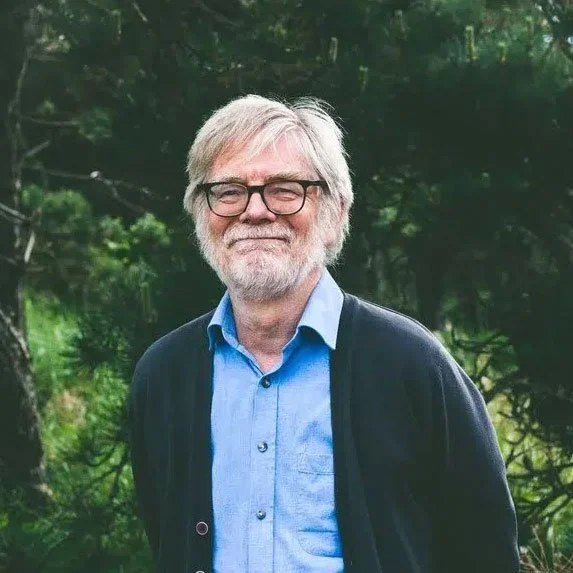


Why veteran environmental journalist Fred Pearce believes optimism, not despair, is the key to saving our planet
Observing the world and talking to people around the world, I find a huge amount of spirit, optimism and hope among communities around the world. That really helps, and it is fabulous to also see how nature recovers from almost the worst things that we are doing. But my second reason is that we have to have hope, otherwise we will kind of all give up. I mean, if it is as bad as some people say, we might as well head for the hills and just have a party until it is all over. You know, there would be nothing that we could do. And it seems to me that that kind of pessimism is a recipe for disaster. We have to find hope. We have to find, if you like, doors that we can push open, things that we can attempt. What I do say is that the way forward is to innovate, to think creatively. To embrace new technology but also to embrace nature's ability to respond to the damage that we have done and above all to retain a sense of guarded optimism. A sense that we can fix this, but we have to act in order to do it.
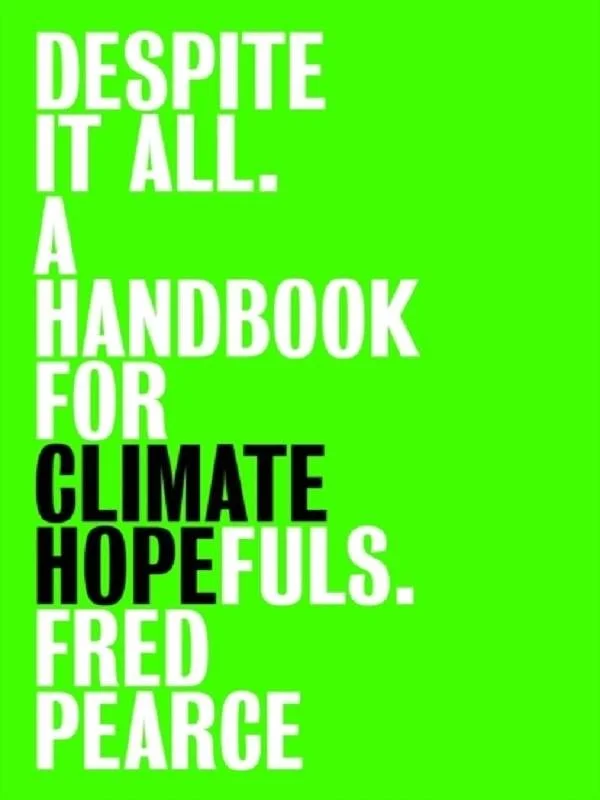
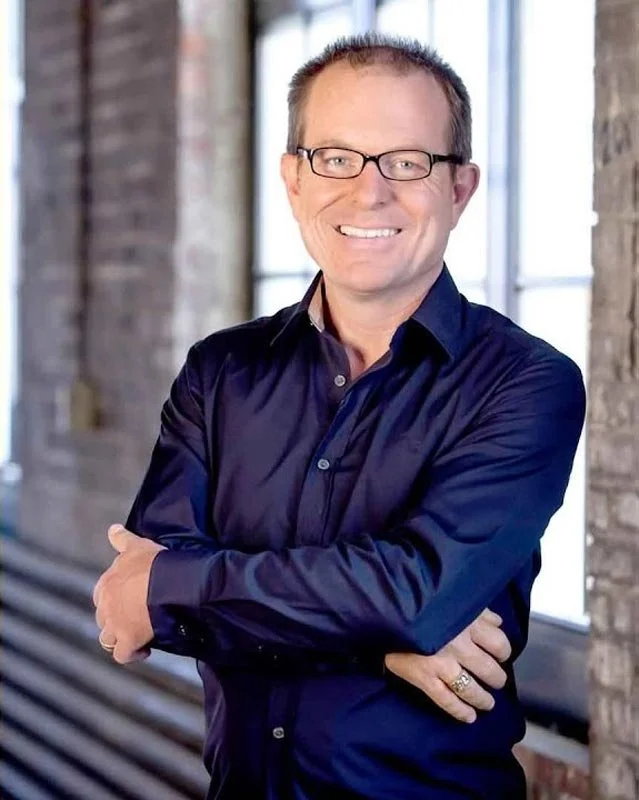
If you follow the news about the environment, it’s easy to feel a sense of impending doom. We hear about accelerating extinctions, collapsing water cycles, and climate tipping points. But my guest today, veteran environmental journalist Fred Pearce, says that if you look at the "ground-truth"—the stories of nature and people he has encountered—there is a surprising, even radical, case for hope. His work has taken him to more than eighty countries, from the logging concessions of Borneo to the radioactive exclusion zones of Chernobyl. He is the environment consultant for New Scientist and a regular contributor to The Guardian.
In his latest work, Despite It All: A Handbook for Climate Hopefuls, he challenges the prevailing narrative of environmental collapse. He argues that the "population bomb" is being defused, that we are approaching "peak stuff" in developed nations, and that nature possesses a staggering capacity for resilience that we often ignore. He says that a "Good Anthropocene" is not only possible but is already beginning to take shape through a combination of ancient wisdom and modern technical fixes. We’ll talk today about his life as a journalist and why pessimism may be the greatest enemy of progress.
THE CREATIVE PROCESS · ONE PLANET PODCAST
Fred Pearce, welcome to One Planet Podcast and The Creative Process.
FRED PEARCE
Great to be with you.
THE CREATIVE PROCESS · ONE PLANET PODCAST
So, just to familiarize our listeners, in the course of your work, you have reported from, as you said, over 80 countries, often finding hope where others see only ruin. Looking back at your childhood in England, growing up in a country that was recovering from the Second World War, post-war reconstruction, smog—all of that taught you to look past some of these doom-laden stories and see the potential for human and natural resilience?
FRED PEARCE
I think it is traveling the world that gives me hope. I am an environment journalist. I have been writing for 40 years about all the bad stuff that we are doing, very often the predictions of doom. So I come at this from two points. First of all, observing the world and talking to people around the world, I find a huge amount of spirit, optimism and hope among communities around the world. That really helps. And it is fabulous to also see how nature recovers from almost the worst things that we are doing.
But my second reason is that we have to have hope, otherwise we will kind of all give up. I mean, if it is as bad as some people say, we might as well head for the hills and just have a party until it is all over. You know, there would be nothing that we could do. And it seems to me that kind of pessimism is a recipe for disaster. We have to find hope. We have to find, if you like, doors that we can push open, things that we can attempt.
I am not in the book arguing that we are not in a huge crisis as a species and as a planet in many ways. I have written about climate change since before it was an issue. Just the scale of it—it touches absolutely everybody and everywhere, and that is a real existential crisis. I am not in any way trying to diminish that or the biodiversity crisis similarly, but we have to look for things that we can do which will help things along. If we see that nature can recover, given the chance, we should give nature the chance, and that will allow our biodiversity to grow, at least to stabilize. We have to give nature the chance to evolve and adapt to the things that we are doing. We are certainly not going to leave a pristine world at any point, but nature is quite good at that.
Nature has been doing that for hundreds of millions of years, adapting to crises of one sort or another. We have to find the things that we can do, the creative things that we can do as individuals and as communities, and hopefully as a kind of global community. Even in these—it is difficult to say this now because there is not a sort of global community that is acting together, but we need to discover and find ways of fostering that. I am not denying where we are. But I am saying that if we are going to get out of this, we have to look for solutions and we have to have some faith in those solutions. I do not think that is being Panglossian; I think that is being really realistic.
THE CREATIVE PROCESS · ONE PLANET PODCAST
So I believe you have selected a passage that illuminates your life in writing and environmental journalism.
FRED PEARCE
Yes, this is just a passage from the introduction to the book.
We are, many scientists agree, in a new geological era. The Anthropocene, they call it. Humans are the dominant force shaping our planet's atmosphere, oceans, rivers and soils. Things are not going well. We need to do some urgent fixing, or our time on the planet may prove all too transient. So is there hope? Can we make good on our crowded planet? Despite It All, can we conjure up a good Anthropocene? Now most environmentalists almost reflexively think not. They see the Anthropocene as a dystopian world with a climate out of control, nature in a nosedive to obliteration, ourselves likely to follow before long. They are not alone in their pessimism. Former British Astronomer Royal Martin Rees gives humanity only a 50/50 chance of surviving the 21st century. While I agree that oblivion is one possible outcome and there is plenty to be scared about, plenty that feels unstoppable, I refuse to be too despondent. We fixed stuff before.
You might say fixing stuff defines us as a species. As the ecologist Ruth DeFries of Columbia University put it in a book, humanity thrives in the face of natural crisis. Our ingenuity has brought humanity back from the brink time and again. We have kept slipping the bonds, and she calls it The Big Ratchet—problems prompt solutions that create new problems that prompt new solutions. That is the ratchet. Some of these solutions are technical fixes, no harm in that. In recent decades, we have sealed up the ozone hole. We have curbed acid rain. We have banished ubiquitous toxic nasties, such as brain-eating lead in petrol, and staved off mass hunger by making farm fertilizer from nitrogen in the air.
History does not ensure that the same will keep happening, of course, but many things that appear unstoppable can be halted and reversed: the advance of farming into natural ecosystems to the rise in human numbers and our seemingly unquenchable appetite for more stuff. As I show in the book, all can, and in some cases are, being halted. Top of the agenda right now, of course, is the climate crisis, and we are on the case with solar and wind power and electric vehicles. Indeed, many economists say that low-carbon energy generation has already become so good and so cheap that even Donald Trump's executive orders cannot hold it back anymore, especially when China seems hell-bent on conquering the world with low-carbon tech.
But tech is not our only hope. We humans have another powerful ally for remaking the planet: the living world itself. We often think of nature as fragile and doomed in our hands, but I see it as dynamic, resilient and unlikely to fold under our onslaught. It has survived huge asteroid hits and ice ages, and it is bursting through pavements, regenerating forests, taking back abandoned farmland, capturing carbon dioxide and even supercharging evolution to replace lost species. That process has its limits, I am sure. However, all is not lost, and I would hate pessimism to be our downfall.
THE CREATIVE PROCESS · ONE PLANET PODCAST
It is so important. The book is full of positive messages—those real-world examples that, unlike a lot of us, you have been able to see across all the different iterations. You talk about some of them, like eliminating famine for the most part. I mean, of course it still exists, but the ozone layer, all these are huge wins that we have been able to achieve, and it is important to focus on the positive. As you say, community is a really important word here because so often it has been put onto us as individuals: what is your carbon footprint? You can feel weighed down, like the whole weight of the world is just on your individual carbon footprint.
It is also about not always waiting for the legal system to actually follow through. There are a lot of great community solutions in your book, nature-based solutions that do not ask for any financial compensation; nature just is naturally a circular economy. Your friend, the late scientist James Lovelock, author of the Gaia hypothesis, said of you that you are one of the few people to understand the world as it really is. You have talked about learning from people around the world, and I just want to mention some of the journeys that you chart in Despite It All and across your body of work. It is really, in a way, a culmination. I do not want to say culmination, because you are always publishing and there will be another book after this, but it covers many of the themes that you have touched on in previous books as well, like The Coming Population Crash or Fallout. It brings together all these threads, but talking about learning from people, you talk about...
READ MORE [ + ]
being a rookie reporter in Borneo in the 1990s, or learning from the Wapichan people in Guyana or the Maasai cattle herders in Kenya or the Sami reindeer herders in Scandinavia, and you go to China and the Holy Hills, or learn from the Bedouin sheep herders in Jordan. How has your definition of nature evolved through those encounters?
Well, humans have lived with nature for a long time. That is how we are where we are. And we have kind of got into a rather destructive relationship in recent times, I agree. But we have within us, we have cultures, we have ethics, we have folklore, I think, which still teaches us a lot about how we can continue to live with nature.
It seems to me self-evident that the indigenous communities and, if you like, strong self-contained communities around the world are the people that are best at not just protecting nature, but living with nature and using nature and having a working relationship with nature which is not destructive. We often have a sense that rural communities are the problem, and it seems to me that rural communities in large parts of the world are the solution. And indigenous communities are not the only groups that do that, but many rural farming communities know best how to work with their land and not destroy it.
Sometimes economic factors get in the way or outsiders come in or land grabbers move in. I have written a lot about those kinds of things and mess things up. But at a sort of cultural, almost a psychological level, people do know how to look after nature and that is something which needs to be encouraged. So when people, as environmentalists, I am afraid, have done for quite a long time—they are doing it less now, but for a long time have blamed rural communities for destroying their natural environment. It seems to me they get it entirely wrong. Most communities, most of the time, are the best protectors of their environment and where they have more rights to their land.
And so this becomes a social justice issue, an ecological justice issue where they have access and control over their land and control over their resources. They are the best protectors of land. And I have seen this in many parts of the world, in the Wapichan community that you mentioned in Guyana. But you see it in the indigenous. I mean, if you look at a map of Brazil and mark the forested areas and mark the indigenous reserves, they are more or less the same thing because it is the indigenous people that are doing the protecting of the forests.
So I have always argued with environmentalists and environmental regulators that they should not be in the business of taking land and resources away from local communities. They should be empowering local communities and having faith in local communities, and hope to think about taking that onto a wider scale. If we have these, if you like, global commons as people sometimes talk about, but if you have local commons that communities collectively manage or have a collective control over, then maybe we should be trying to translate that approach to, if you like, the global commons, the biodiversity, the state of the oceans, ultimately the climate as well.
And it is not that we can just cut and paste indigenous methods, but some of the indigenous ethics are exactly what we need, and they are about cooperation and about everybody having a say and about just being decent citizens in many ways and having a sense of responsibility toward the world that we are in. So at an ethical level, you know, I think that is where the solutions lie, and a couple of the chapters in the book are all about that. I equally think that we need technical solutions. We need sometimes just to stand back and let nature do its thing. Nature is brilliant at restoring and recovering, and we need to provide space for nature to do that.
So I wrote a whole book, really, A Trillion Trees, about how if we want to foster new forests and help us, knowing that they will help with biodiversity, climate change and water resources and many of the big issues that are threatening us, we should not go around planting trees. We should go around creating space for nature to restore itself for the natural regeneration of forests, because at the end of the day, forests know much better how to regenerate than we know. We are pretty bad at planting forests. Most of what we plant does not survive. Nature is rather better. So we have to give nature room, be a bit humble. I think recognize that humans created a lot of problems and maybe we will not always be the best at solving them, but we need to sometimes stand back and let nature do it for us.
You have written a lot about rewilding, talking about creating those green spaces in cities as well. Like it is not just, oh, there is the forest out there, let's visit it once a month or once a year. We need it in our cities to help combat these heatwaves and everything. And of course, not just planting alien species that do not belong there. You also discuss finding ways in different environments. So it is really interesting that they also evolve. I think that A Trillion Trees is a great book.
And people should know Despite It All is exciting. It is very positive. It shows we have been making progress, but then we have to, of course, be proactive about what we do. And sometimes I think if you are an environmentalist or someone who—obviously we should all care about the planet—it is hard to decide, like you cannot do everything right. If you had one thing that you could fix, which I guess in a way your body of work, each book is kind of focusing on one area, what would be that area that you would focus on? Or where do you see the most hope and progress?
I think it is the ability of nature to recover. If we are talking about a planet which is going to continue to provide the life support systems that we need for nature and for humans—and essentially those are both the same—we need to maximize nature's ability to do its thing. We live on a planet where nature has been evolving and adapting and moving on and changing constantly for hundreds of millions of years. I am in favor of rewilding, absolutely, but I am not in favor of rewilding when it is trying to put back what was there before and just plant stuff and tend it and treat it like a garden.
We have to let nature run wild, if you like. The wilding bit really matters, because nature will do it best but also because you cannot go back. We have changed the planet in many ways: toxic landscapes, deforested landscapes completely messed up, monocultures. And the climate, of course, has changed absolutely everywhere, and rain and weather systems more generally changed. We have to allow nature to adapt to all that.
I sometimes come across—I do not want to be a critical environmentalist because I am an environmentalist, but I think there are some difficult nostrums knocking around in the environmental field. Some people are so involved in wanting to maintain existing ecosystems, regarding them as somehow perfected. You know, you go back to pristine nature and go back to where things were before, but I do not think that is possible anymore. If you think about climate change, as the climate zones move around—and they are, and they already have, and they are going to be doing it for a good while yet—we have to not stop nature moving to keep up, but encourage it and allow it to keep up.
And that inevitably involves species moving into places where they were not before, and being seen as alien species, being seen as invasive species, being seen as somehow other. You can see these species moving across the landscape as kind of bad, or you can see them as good. You can see them as the method by which nature is adapting and evolving to cope with what humans have done. And we know that nature constantly moves on anyway. Even in an apparently unchanging ecosystem, if you look closely at it, you will see species are coming and going, and the nature of relationships between species often changes as well. And yes, sometimes something bad happens and a few species become extinct, but then others move in and take over and perhaps expand.
So we have got, I think, to get away from a view that many people have that nature is somehow perfected and should not change, to a view of nature as an ongoing, evolving process which constantly changes. It does it if we do not touch it, and it most certainly does it if we do touch it. So again, it is not always that we will do things very differently, but we will have to have a new way of thinking about these things. I think we have to think about nature as a dynamic process, a constantly changing process, and we have to encourage it.
So to answer your question, I think it is nature's adaptability, nature's ability to evolve, which is my fundamental reason for having hope. But I also have hope in humanity as well. It is very strange. Politics has been going on in the last little while, and we did not go into that necessarily, but some of it has freaked even me out, and I have seen a lot over 40 years. The kind of political positions that are being taken up now on climate change are just absolutely crazy. But I still do have hope.
I believe, for instance, people want to go back to fossil fuels—or some people, Donald Trump and so on, want to go back to fossil fuels and they say all this green stuff is nonsense. We have got so far with changing technology now that renewable energy for much of the world, and especially solar power, is cheaper than anything else. So I think we have kind of got over it. We have gone beyond the tipping point in human society, in the energy systems, if you like, where we are going to be moving on to the greener, less environmentally destructive methods of generating our energy.
We can argue about exactly how that happened, but I remember one of the first conferences I went to was the Earth Summit in Rio de Janeiro in 1992. Back then, wind power was just a few wind turbines on a hill in California, literally, unless you count windmills in the Netherlands or something. Essentially, that was it. Solar power was something which had been developed for powering satellites in space and was still hugely expensive, and nobody really had an idea about how to bring down the costs at that point. Electric vehicles—nobody was talking about electric vehicles. And yet now here we are, 30 years later, and these things are all top of the agenda.
Solar power is cheaper than almost any other source of energy for large parts of the world, certainly. All investment in new energy systems is now 90% going toward renewable energy, wind power. I mean, I live in Britain, which is an island surrounded by wind turbines offshore as well as a lot of onshore stuff on the hills. Wind power is taking off in Europe because, well, we are pretty windy here, so it is a great source. I am staggered by the change that we have had in 30 years. If you had asked me in 1992 if we could get here now, I would have taken that as a big victory.
Now we know that we are still not cutting the burning of fossil fuels by very much. China has begun to do it, and I am sure that with time we will. So we have got a long way to go, and there are some nasty climate tipping points that we could hit which could mess things up. I absolutely do not think that we have solved the problem of climate change yet, but I can see the way that we are doing it.
I can see the advances that we have made technically and, you know, economically stuff is happening. Oh, definitely. And you mentioned China. Up until a few years ago, it was one of the world's biggest polluters. Of course, now it is the world's first electro-state and investing massively in renewable energy.
It is still the world's biggest polluter, but it is moving on. It seems to me that China now sees renewable energy and has done—I mean, this is not sudden, they have been thinking about this for 20 years. You can look back and see how they started investing in green energy 20 years ago in a way that no other country did. So China is in a period of transition, and if you want to look geopolitically, it seems to me that renewable energy is part of China's—what you might think of as a takeover as the dominant economic force on the planet. It is still second to the US as an economic entity, but as the US retreats currently—at any rate under the current administration—back into fossil fuels, that is the past, that is 20th century.
China is moving on, developing renewable energy, especially solar power, and exporting it around the world. Both as an idea and as a technology coming out of its factories, renewable energy is going to be part of, to put it crudely, the Chinese takeover. I say that with some trepidation because the politics of China does not look great to me in many respects, but in this respect, they took a decision that green energy was the way to go and that green energy could be part of their geopolitical strategy for becoming the dominant force on the planet. I am sure they do think like that, and boy, it is working.
Yes. And also a source of its soft power footprint around the world. In terms of China planning ahead and seeing the future of renewable energy, solar panels and EV cars, going back over 20 years ago, you know, these renewable technologies that were developed in the United States but have been held back by the fossil fuel lobbies so not rolled out to the extent that they really could be leading this, on so many levels. We do not necessarily have to, you know—Trump is a topic unto himself, but you write about beginning this book at the beginning of Trump's second presidency, a second term.
No, I mean, I can see that there are, if you like, some countervailing forces around that we cannot ignore. But I do think that they are short-term and that they will not play out in the long term.
I do not want to spend my life worrying. I want to spend my life looking for solutions. Really important. I mean, most of us are living in cities; you know, by 2050, 75% of us will live in cities. Talking about tech fixes, they need to become circular hubs to survive as we look into the future. So as AI automates urban logistics or vertical farming, you discussed some of these.
Yeah, I mean, cities themselves are generally more efficient ways of living. They allow us to collect up our waste and manage that better than you can do if you are in very dispersed communities. They give many benefits for transport and for high-density living, which can reduce our impact on the planet. So cities, despite having a rather bad reputation environmentally, I think can be part of the solution.
What are your reflections on the possibilities for the cities of the future? As we talk about, you know, dealing with heatwaves or rising sea levels or pollution, and how technology becomes a part of it, improving our transportation systems instead of just becoming, in the future, a kind of high-tech version of inequality.
I think it is going to play out in different ways. I mean, you can imagine a world in which we live in very high-density cities that create more space for nature out in the countryside, if you like, dividing things up so that we have human zones and agricultural zones and then wider nature zones. E.O. Wilson wrote that book about how we need to give half the world back to nature.
I suspect it will not be quite like that. I think we are going to also find ways of living better in more dispersed landscapes. You know, many people do not want to live in a high-rise city. They want to live out in the countryside where they have got nice views and can go for country walks and smell the grass and so on. And we know that living with nature is great for our psyches; it is good for our mental health. And none of that is going to go away for sure. So I do not foresee a world in which we cut ourselves off from nature, but we are going to have to be much more creative about how we live with it without being destructive of it.
We are predominantly an urban species now, and we have to remember that the countryside is depopulating now on a quite large scale. Not just in the rich world, but even in poorer countries, people move to the cities for work and so on. But even if you go to many parts of Africa, you will find that the countryside is depopulating. I was brought up in Kent, a rural county in England, which seemed moderately busy. It seems emptier now when I go back; there seem to be fewer people around.
They are richer, but there are fewer of them around. If you went back 100 or 200 years, all the fields would have people in them, and they would be running up and down the lanes, and the population density was far greater. So we have seen across the world—from the rich world a couple of hundred years ago, and increasingly in poorer parts of the world as they urbanize and develop—a depopulation of the countryside as people move to cities. And they are not moving to cities necessarily because they want to, but because that is where the work is and perhaps that is where their friends are and so on.
So I think we have not kind of worked that out yet, because most of us still yearn for a bit of countryside. And I hope, if we are going to have a good Anthropocene, which I believe we can, we are going to have to rethink that relationship and find ways that we can, if you like, live better lives by having greater rather than less contact with nature.
I think that it does, obviously; it makes us happier to be around nature. And one of those solutions, of course, you reported on this, are these regenerative agricultural movements. And it is positive as a kind of solution that if we all became regenerative farmers, then we could draw down the carbon that we have put into the atmosphere. Do you see a future where more of us are just informed about the land and are smallholders or whatever and are practicing regenerative agriculture? I mean, that would require a change to our education models and a real commitment from everyone.
I cannot quite see that happening, but I can believe that it is possible. I have just in the last couple of weeks been writing reports about how people are using low-cost seismic systems, the kind of things that we used to use for detecting earthquakes and then for plumbing the depths to find oil and gas. That is how we find hydrocarbons deep underground, by seismic work.
But somebody is using this to produce 3D maps of our soils on farms so that farmers, who generally only have a hazy idea of exactly what happens beneath the surface of their fields and often throw a lot of fertilizer and pesticides and herbicides onto their land because they do not know what is happening below just to be sure, can use their soils much better. They are suggesting that if we could map the world's soils in a much better way using low-tech systems, then we could use our soils much better and need far fewer inputs, including irrigation water, which is another threatened resource, and just run our farms orders of magnitude more efficiently.
There are always technologies that are coming up. And incidentally, they say that you can do that using a mobile phone because your mobile phone has an accelerometer on it, which you can use as a seismic monitor. The developers of this have told me you could literally stamp around on your field, put your mobile phone on the ground, and their app would give you a 3D map of what was in the soil beneath, offering the ability for even the poorest farmers to understand their soils better.
Almost every poor farmer has a mobile phone these days to do that. The potential here, you know, this is another technical fix that we have barely begun to think about yet, but could have transformative effects. I suppose one of the reasons why optimism is there for me is that I think we have only scratched the surface of how we can do things more efficiently. The Industrial Revolution was all about, if you like, blasting things out of the ground, burning things, building great factories and sort of doing stuff in a really dirty, wasteful manner.
We have only begun to think about how to do things much more efficiently and get the things that we need to have a reasonable life for ourselves using orders of magnitude fewer resources and less energy. I think we have got a long way to go on that. But already I talk in a chapter in the book about peak stuff. We are finding ways of manufacturing the things that we want using 50, 60, 70, 90% less materials than we used to, and changing our lifestyles in ways that require fewer resources.
[00:30:00]
That is one of those areas where I do think that AI can perhaps manage or make more efficient supply chains or our construction system, which accounts for so much of our carbon footprint. It can create efficiencies in that. It is not my domain, but I feel like we could harness the collective wisdom of that.
Me too. I do not know either, but I am hopeful. I think certainly in dealing with AI, we need to be looking for the benefits.
As you also identify, it does use a tremendous amount of energy. Talking about tech fixes, you write about the Jevons paradox, where efficiency paradoxically leads to more use. Oh, we made that saving, so now we can use more energy. So how do you think we can ensure that peak stuff leads to a decent life for all?
It is hard to know, but in the rich parts of the world where we have a reasonable living and our basic needs are kind of met—and I quite recognize that that is not true for everybody—we can back off. Our lifestyles are changing, actually, I think in ways that marketing people have noticed. Perhaps our environmentalists have not, but we now do not so much value and boast about our possessions, whether we have the latest car or a bigger house or whatever. We think more about our lifestyles. But quite often we are moving toward things that are, if you like, less planetary destructive but more nourishing for our psyche.
I do find us moving toward that, but I also worry when we talk about the future of work. Maybe when we are not seen as valuable in the face of AI, those experiences will just be, again, open to the lucky few. Gosh, I was speaking to some philosophers saying in the future, it will just be a few people who will be able to go out and have experiences.
I recognize that, and one thing that worries me is the sort of lack of democratic control and oversight, or indeed knowledge really, of how advancing tech works. Because they advance so fast, we have less time to think about them and assimilate them and decide what we want and what we do not want. Hence the debates going on around the world about social media and what they mean for children. We really have not got a clue about where to go on that. I guess we are going to have some rather high-profile experiments before we kind of reach a settled view.
But one of the problems of the modern world is that things move so fast that we do not have time for considered, socially democratic—not necessarily votes, but just a lot of people talking about things—ways of reaching decisions about what we want to ban, what we want to encourage, what we want to invest in and so on. That is a big problem. The risks of going badly awry are certainly always there. Perhaps AI is the most obvious one currently, but I am sure there are others out there.
I do of course want to focus on the positive, but we cannot ignore that you are writing from the UK, and we are just talking about the UK now. I was speaking with Michel Forst, who is the UN Special Rapporteur for Environmental Defenders. I was surprised to learn, because we always think about so many great environmentalists from the UK, and you know, this idea of environmental stewardship is one that has been championed. But I guess UK arrests of environmental protesters is nearly three times the global average rate, and it is only Australia that has a higher rate of arrests. So what do you feel are the mechanisms that should exist or that need to be strengthened to hold governments accountable for violating these rights? And how do you square that with our obligations to take urgent climate action while protecting civil liberties, especially for protesters?
Yeah, I think it is difficult. I mean, it is a rather unexpected sort of drawing in and reduction of civil rights to express opinions and be disruptive. And, you know, humans have always done that. But we have to create space and maintain space for people to have an ongoing dialogue—but more than a dialogue, a real active interchange about how we want to go. Otherwise dissident voices get shut down and wrong moves cannot be corrected because there is no voice shouting for correction. That is all part of a democratic process, and it seems to me that almost everywhere we go, democratic processes improve the way that things are decided.
But it is a fractured world in that regard. I think the lines are getting drawn in sometimes rather dangerous ways. In Britain, in recent times, that has particularly applied to environmental activists. If they try and disrupt anything or indeed even lift a placard which is inflammatory, they are kind of getting locked up and held in jail for quite a long time before they eventually go to trial, where jurors will very often find them not guilty because there is still, I think, a sense in Britain that individuals should have rights to be troublesome.
And even, we should just say, peaceful.
I am a child of the sixties and seventies. You know, I was brought up in a world where that was kind of what everybody did, and certainly I did. So maybe that is a generational thing, but I do not think so. I think the desire to allow a noisy opposition to whatever the current flavor of government is, is important and will remain important. We will see. I hope so, certainly.
Hand in hand with the fourth estate. We have to hold people accountable.
Absolutely. Well, as a journalist, I guess I would say that, wouldn't I? But absolutely, yes.
There are so many interesting stories that you have written here and also in your book, Fallout: Disasters, Lies, and the Legacy of the Nuclear Age. There is one, you know, where you go to Chernobyl, and you are talking about the rewilding of areas that is kind of surprising. Just tell us that story. I mean, what is it like to sit at a table in a nuclear wasteland, you know, drinking vodka flavored with radioactive herbs?
Well, it was a fascinating journey. You think of the exclusion zone as an area where nobody dares go because it is far too radioactive. And while there is radioactivity there, even now 40 years after the accident, it is a bit muted. If you go there for short periods of time, like I did, they still monitor you as you go into the exclusion zone to see if you have got radioactive while you are in there. I am not quite sure what happens or what they do if you are—do they not let you out or what?—but anyway, they monitor things.
But I discovered there are quite a lot of scientists working there. There are obviously people working to keep the sarcophagus, the old power plant, safe and protected. But there are also people who went back there, the people who used to live there and were told to leave. You know, we talk about an area sort of 50 miles across.
So quite a large area. And there were a lot of people, most of whom did not go back, but some snuck back completely unofficially. They have some official recognition now; nobody is trying to get rid of them anymore. But they live lifestyles which you might regard as extremely worrying. They go fishing in the lake. I saw people fishing in a lake less than three miles from the stricken power station. They eat the berries in the woods because the forests have been regrowing fast there.
Nature really likes the fact that there are not that many people around. So nature has been—you know, wolf packs that were not there before. Bears move in, wildlife is flourishing and the forests are more extensive than they were before the accident because they have taken over farmland, essentially. And you know, there is a lot of stuff to eat there, and people go out into the woods and they eat it. I had an evening session with one of these people who picked the berries and used them to flavor his vodka. So he poured us out some vodka, and we drank the vodka. It was very nice.
I would not want to do that every day of my life because I am a bit risk-averse. But he said, "Look, everybody says we should be dead. But look, I am 75 and, you know, I am great. I still go out every day and go fishing. What is wrong with that?" Well, it is hard to argue with that other than to know that maybe he has been lucky, but people are not dying in droves if they went back. So we need to keep things like that in proportion.
I would not want to repopulate that area. There is no great move to do it, but wildlife is loving it. Now, maybe the wildlife has a short but a merry life. I mean, around the world, I think we have created a lot of toxic landscapes, and where those toxic landscapes have resulted in people moving out, nature moves in. Nature is, in the main, far more worried about having lots of people around doing stuff than it is about a few toxins, even if they are radioactive. Now I am not suggesting that we contaminate the world with radiation in order to foster nature, but the Chernobyl exclusion zone is quite a good test case for how that happens.
I have seen it in other radioactive areas that have become exclusion zones as well. I went to one in Russia. As far as I know, I was the first Western journalist to be able to go back into the site of a really bad accident that happened near the Ural Mountains back in the 1950s. Well, nature was doing pretty well there as well. And equally, after the Japanese nuclear disaster at Fukushima, nature is running wild in the area that people do not go back to.
It makes me think about it because there are a lot of predictions about future ghost cities because we will have a lot of climate migration. Many of these really populous cities that you think of, even very successful cities—we already see people migrating due to climate change. It makes me wonder what those cities will be like in the future. I mean, obviously there are cities like New York that will build seawalls and all this stuff, but a lot of cities will not be able to do that kind of mitigation, and I just try to project into the future.
I think for the next few decades, at any rate, cities will be able to build their seawalls. The problem will be identifying where they need to do it before the floods come in. I mean, half of New York was flooded a few years back because they had not really thought about the fact that they were at increased risk from rising sea levels and then hurricanes coming in and the cumulative effect of these things. But with good planning, I think most cities will find the resources to protect themselves.
But I think lots of rural areas will be threatened by rising sea levels. You know, even if we stop global warming, we have reached the point where ice caps will carry on melting, and sea levels are going to rise for hundreds of years now, whatever we do. So there are large areas that are, if you like, ultimately doomed. And this is clearly tragic. I mean, we come across many Pacific Island states which will disappear entirely beneath the waves, almost certainly. And some of their governments talk about, well, if we stop global warming at 1.5 degrees, roughly where we are now, then maybe we can be saved. So one of the problems with climate change is that it has these long-term impacts that are very scary to think about, and undoubtedly some of those tipping points are going to get crossed.
And of course, you have written not just about sea level rise; you wrote When the Rivers Run Dry and the larger story about water in this book. In Despite It All, you talk about some of those inspiring eco-restoration projects on dams. But in terms of the bigger picture of the story of water, it is often when the water comes to the door that it is one of the messengers that delivers the bad news of climate change, you know? What are your wider reflections on AI demands on water supplies, or what do you think has changed since you wrote When the Rivers Run Dry, and how will we deal with water scarcity?
Well, I think that the water issues remain much as they were when I wrote When the Rivers Run Dry, in that we still use water with quite stupendous inefficiency. I mean, you can think about how much water you use to, you know, flush your toilet. That is a small part of the overall water that we use as a community, but it shows the way that we kind of waste water as individuals. But in farming and irrigated agriculture, some of the driest countries in the world use 95% of their water to irrigate their crops. Because the countries are dry, the crops will not grow if they are not irrigated, but most of the water is wasted in one form or another. It evaporates from fields or seeps underground or is just badly used. It is a classic example of a resource that could be used much more efficiently with smart technology measuring exactly how much water individual plants need. And all that is high tech which is there to be developed.
So my main feeling about water is that it seems to me that water supply and our use of water is really a demand-side problem rather than a supply-side problem. Like many resources on the planet, we just use them so wastefully that the really low-hanging fruit in terms of solving our water problems is about reducing how much we need and how much we use. One of the first things that Donald Trump did after he got reelected as president for the second time was to abolish the regulations on reducing water use in showers. I mean, how crazy can you get? We need more of those regulations, clearly. That is just a small example, but the way we use water at every level in society, from the individual home to agricultural landscapes to our urban areas, is crazily wasteful.
I live in London, where I forget the latest number, but at least a quarter of the water that gets taken out of the River Thames and put into water mains to come to houses like mine just leaks away because the pipes are more than 100 years old and they just leak a lot. Whereas in Singapore—a similar kind of urban area, rather newer, but where they have real water shortages because it is an island state and they do not have many indigenous sources of water—they have got their leakage rates down to 5%. It can be done. So that is just one example of a resource that we do not think much of until it runs out, and then we blame the suppliers or climate change or something, when what we really need to do is reconsider how we use that resource. To me, that is a source of hope, because if we use things so badly, then we can use things so much better.
Yeah, exactly. It is really scary statistics. I guess that 36% of cities will experience a water crisis by 2050 or water scarcity. And I mean, probably you have experienced some of this.
I was writing just a few weeks ago about Iran, which has messed up its water system almost more than anybody else in the world. In Tehran, the capital city, they are now talking about moving the city because there is no way of providing it with water. But even there, they have messed up; they put dams in the wrong places so that the dams are empty half the time, so they do not supply water.
Meanwhile, they are overusing underground water resources in a crazy way, pumping water out until there is none left. Iran, when it was Persia, used to have one of the most brilliant low-tech but effective technological systems for supplying water to rural communities and farms using shallow tunnels known as qanats. They would deliver water by gravity from deep in the hillsides, and they were sustainable because you were not pumping; you would only take as much water as was there at that particular level. Those qanat tunnels are marvels of engineering, some of them many kilometers long, buried deep into the hillsides.
Many of those have now dried out because people introduced electric pumps and pulled down the water tables. So large areas of Iran are now running out of water, both urban and rural areas. The country is, in many respects, water bankrupt. And yet, not so long ago, it was a beacon for how to manage water in an arid landscape. They just forgot how to do it or the economic pressures changed and farmers and cities just did everything wrong. Again, that gives me hope. It suggests that we once knew how to do things well and we could do things well again, that there are solutions. But the pessimistic side of me says, well, when are we going to get this together and do it?
And I saw your reporting recently. It was about some of these—I always thought it was positive or I was not sure. But you wrote about these solar water panels in India; they draw the water out from the atmosphere.
Yeah, that is a real worrying thing. I mean, solar power is great. Excellent. You know, if farmers want to pump water up from underground to irrigate their fields, they no longer have to plug into the grid. Instead, they can use solar panels and do everything kind of on the farm, which sounds brilliant. No fossil fuels burn to generate the electricity, and the farmers are much more in control of what they do.
But the trouble is the cheapness. Because solar power is effectively free once you have got the panels, they just keep pumping and they keep pumping and they keep pumping their water. India has for a long time had a problem with water tables going down because everybody has been overpumping the water to grow crops. One of the things about the Green Revolution crops that were developed half a century ago was that yes, they fed the world by increasing farm yields, but they also require a lot of inputs—not just fertilizers and pesticides, but also water. So a lot of our water problems in rural areas are due to these new, very thirsty crops.
This problem, which already existed, has got substantially worse now that many farmers are using solar panels, which means that they have free power so they can pump and pump and pump. They are pushing the water tables down lower and lower and lower until, of course, the water eventually runs out, and then the whole village is dry. That is a big problem because how do you control that? What is your management system for encouraging farmers to moderate their water use? Water is a difficult resource to manage effectively.
I wonder about the future of agriculture because some people have said to me that we will have to be talking about crops that take more water, that consume more water to grow. We may face a future where we have to tell farmers what they may plant, and I do not know, is that feasible? But I mean, we may face that future.
Telling farmers what to do probably generally around the world does not work very well in my experience. I mean, you can encourage them by changing price regimes. Iran, for instance, could discourage farmers from growing thirsty crops like rice through state policies, and encourage them to grow crops which take less water but can make more money in the marketplace. You can change the economics of those kinds of things.
But there are technological solutions out there. Technologists and plant breeders are working on crops that require less water. When the original Green Revolution was developed, the world's population was doubling every 25 or 30 years. Nobody knew how to double world food production, which is what we needed to do.
So there was a revolution in plant breeding to produce these high-yielding crop varieties of wheat, barley, oats and rice especially. But nobody thought too much about the inputs. If you had to put in more fertilizer, you put in more fertilizer because the priority was to increase yields on every farm in the world. Now, yes, world population is still growing, but it is growing less fast. Those big famines that we once worried about because there simply was not food have more or less gone away. When we have famines, it is usually to do with wars or some other factor. So the pressure to increase farming is off. Also, we waste huge amounts of food.
You know, if we reduced the wastage rates, we would have plenty of food for everybody. But one way or another, the pressure is off to actually grow more crops. What we need to do is grow crops more efficiently. So scientists are turning their minds to that. Better irrigation systems—sprinkler systems or spray systems rather than flooding the fields—but also the crops themselves, so that they are engineered to require less water. And that is a work in progress, but it is happening. I have visited agricultural research stations around the world where this is a top priority. Now they are not talking about increasing yields; they are talking about reducing inputs.
[00:50:00]
And you mentioned there, of course, what some people phrase as a population crisis. But what you have written is early on you were talking about The Coming Population Crash. We often hear about the finite resources on our planet, but you write that the feminist revolution is the ultimate environmental strategy and that you argue that personal liberty and concern for the environment do not have to be in opposition.
When did you realize that trusting people works a lot better than coercion?
I think it became apparent for me in the 1990s, really. I mean, I went to one of the big population conferences in the 1980s where environmentalists were there saying we have to coerce people into having fewer children, that there have to be sort of police state tactics. They applauded and indeed gave the world population prize to the architect of China’s one-child policy, where if you had more than one child, you had a forced abortion, forced sterilization.
And that was seen as, if you like, a positive move to reduce the growing world population back in the mid-century. It is true. I mean, essentially what had happened is that people once needed to have four or five children in order to ensure that two of them grew up because of a high childhood mortality rate, lots of diseases and so on.
And during the 20th century, we rapidly moved to a period where you did not need to do that because hygiene conditions were better. Medical work was better. Most children that were born got to grow up and could have children of their own. So suddenly you did not need to have four or five children to produce the next generation. Two was usually enough. And it took a while, you know, for it to catch on really, and from their life experience to realize that.
But what has happened in the last 30 to 40 years is that people are having far fewer children. Family size is now typically about two, slightly over two globally, and in many places we are much below it.
But globally, we are now at a replacement population level. So population growth, which is still continuing because there are a lot of young people still having families, is going to level off. By later this century, we are going to have, you know, there will be a couple billion more people perhaps before that happens.
But it will happen, and it is happening as fast as you could imagine it happening. So, if you like, the population bomb is being replaced by worries about aging societies. You have got many more old people and many fewer young people, fewer people of working age, and a generalized worry that is now about population implosion. Aging parts of Europe are now seeing falls in their population.
In most of Europe, the number of people of working age who are born in the country is falling. Which is a very important reason why economies have been encouraging—until politics took over—encouraging migrants to come into the country. Because, you know, we need the workforce. And that has caused huge political tensions, but it is part of the politics of how population has changed.
So the population debate has changed radically, but I guess the bottom line is that what was the number one environmental peril as many people saw it half a century ago—the ever-rising human numbers and their ever-rising demands on the planet—has been replaced by a much different debate. Not that we have too many people, or that we have too few people, but that the issues are about aging, about how societies function when, for the first time in the history of our species, there are more old people than young people.
It is a very new world, and we are going to take a while to sort of adjust to that. But what I really liked about that whole story was that it did not take, if you like, population police and military people coming into people’s homes and telling them they could not have children, and forced abortions and mass sterilizations of the kind that happened in India 50 years ago.
The population bomb did not get defused by that. It got defused by people, individual people taking individual decisions about their own lives. And that gives me kind of wider hope that we do not need draconian policies to solve our environmental problems. We just need a little bit of time and patience and compassion sometimes.
No, that is very true. And also quelled by the cost of living crisis and cost of childcare crisis. So it is.
Well, you are absolutely right. People have taken decisions about how many children they have based on lifestyle choices, which have to do with exactly those kinds of issues. But I think, in general, they are between whether you have one child or two rather than whether you have four or five.
The rich countries in the rich world have seen declining birth rates as much as poor countries. It is a universal phenomenon which seems to happen irrespectively of local economic pressures. And it is happening simply because people realize that, well, you know, two is enough.
Yeah. And looking back to not quite your childhood, but to your beginnings, to your time studying geography at the University of Cambridge or your early days at New Scientist in the seventies.
It—New Scientist was the eighties, but yeah.
So...
But I was a journalist from the mid-seventies on. Yeah.
Well, yeah, also tell us about your beginnings. You talked a little bit about growing up in Kent, but at that time, who were those teachers, the mentors, scientists who inspired you to not just document the bad news, but to hunt for that human ingenuity?
I do not know, I was a bit of a loner in many ways. I am not sure that I had mentors that inspired me, but I was certainly interested in geography as a topic from a very early age and I studied geography at Cambridge. I did not actually do much studying.
I spent most of my time working on student newspapers, which is much more exciting and political. I am a rather bad student. I do not take very well to being sat down in a class and told to learn things. And I much prefer to find things out myself and to ask my own questions and then go and get the answers, which is a great skill for a journalist. At least I hope it is. So I never finished my first degree in Cambridge. I just left after two years because I wanted to go off and be a journalist. So I think I learned things in my own kind of way, and I have carried on doing that.
I think as an environment journalist, I have constantly wanted to question the norms, the, if you like, environmental standard story about the way that we are destroying the world. I have constantly not necessarily trashed that view, but questioned it. So I remember very clearly, I mentioned earlier in our conversation going to the Earth Summit in Rio in 1992, and I think you could say that was a sort of moment at which the world’s governments, at least in theory, accepted a sort of environmentalist view of the world, or that it was an important part of policy making.
They needed to address environmental issues. So they all turned up there and I think there was general agreement. They signed a treaty on climate change. They signed a treaty on biodiversity. They very nearly signed on forests and discussed most of the other issues that we are still talking about today that had been raised by groups like Greenpeace and Friends of the Earth and so on over the previous 20 or 30 years.
So at that point I thought, okay, no, that is fine. And I agree with most of that, but if you like, the interesting stuff that is going to happen now is going to be questioning some of those things. Is it really true? So quite a common story being told then was how the deserts were expanding because people were destroying the soils.
They were overgrazing; all these livestock farmers were dreadful people who were destroying the landscape and creating deserts in Africa and elsewhere. And I wondered about that and I asked a few questions, and I could not find any good research that would suggest that was happening really.
I found researchers who said, well, actually no, these livestock owners are actually rather good for the land. Their livestock often improved biodiversity on the grasses, and they are not really destroying it. What actually was happening was it was a drought which had a short-term effect.
And since then much of Africa has been recovering ecologically. Places like Niger and Mali and other places on the edge of the Sahara are much greener than they were half a century ago, despite the farmers still being there. So I began to ask those kind of questions and some stories were environmental narratives, if you like, the simple desertification story did not seem to me to add up, and I wrote a lot of articles about that.
But some did. It was quite clear that the ozone hole was being destroyed by chlorofluorocarbons and other chemicals that we were pumping into the atmosphere. And another source of good news was that governments finally got it together and signed the Montreal Protocol, and we are in the process of healing the ozone layer.
And the more I have looked into climate change, the more scared I have become by it as a fact, or the more clear I become that, you know, this is, if you like, old science. We have known for 200 years that carbon dioxide was a greenhouse gas which trapped heat in the atmosphere. And if you put too much into the atmosphere, the atmosphere would warm.
And lo and behold, it has been happening. It took a while for people to get their heads around it, or rather to get their heads around how important it was as an issue. But the science for that seems absolutely baked in, absolutely clear. The scale of what we have been doing seems to become ever more apparent.
So you know, I mean, there are some areas around climate change. For instance, everybody used to say that climate change would cause large areas to dry out and we would have a sort of desertification of large areas of the planet. Actually, we are not quite seeing that because the extra carbon dioxide in the atmosphere fertilizes, or until now at any rate, has been fertilizing grasslands and some forests and they have actually been becoming greener.
So some areas around the edge of deserts have become greener, partly because they are better managed by humans, but in large part because this extra CO2 is encouraging plant growth. So there are certain, if you like, subplots in the climate change story which require questioning and do not quite add up.
But the big story undoubtedly is absolutely true. The more questions I ask—I mean, in some areas the more questions you ask, the less certain you are about a particular argument. And as a journalist, it is my job not to be a sort of dyed-in-the-wool environmentalist, but to ask valid questions and put out the answers. But while some stories kind of do not add up always, the climate change story undoubtedly does.
You are talking about what you were saying, reporting on Rio, with experienced storytellers and experienced data collectors, that at that stage a lot of indigenous people were not invited; farmers were not really invited to the table so much.
So what is your experience of going out in the field, working with translators, you know, getting to know the local cultures and overcoming trust or distrust or cultural barriers? How does that work and how do you unpack the story that is really going on?
What I find is generally local people know their local circumstances and have local solutions. Sometimes they can enact them, sometimes they cannot. Because there are outside forces, other white people moving in, or they do not own the land so they cannot farm it in the way they want to, or the prices they are being offered for crops are so ridiculous that they would be mad to say no.
You know, stuff gets in the way. But the local knowledge that regular people have—I am not talking about indigenous communities with long traditions of knowledge about their plants and so on, I am just talking about regular rural people living in rural areas, and in urban areas too, come to that.
But rural people are closer to their environment. They know a lot and they have a lot of solutions, and they would probably do more if they had the chance or the control over their land and how they live their lives. So I trust in local people. And often outsiders coming in can become part of the problem.
And I include environmentalists often in that. So in parts of Africa and indeed elsewhere, where environmentalists come in, they say the locals are the problem. You are destroying all the forests. We are going to come in and create a national park, and we are going to put a fence around it and keep you out or throw you out.
And an awful lot of that has happened over the years, and usually that becomes a recipe for further deforestation, whereas the local communities would have protected the forest far better; the evidence for that is pretty good. Now, a lot of, if you like, progressively minded environmental scientists have done a lot of work exploring and looking at the data, not just locally, but how communities manage their resources. And really the data is in, and communities do it better than outsiders, and that frequently includes outside environmentalists.
And I do not mean to bang on a lot about AI, but it does seem alongside the environmental crisis, the other big challenge that we face as it is changing, you know, your domain, journalism. It is changing with all its misinformation, disinformation, influencing elections, and you talk about...
About, say, the loneliness epidemic and all these kind of social changes that it is causing. I mean, what are your reflections now on the future of journalism? The ability to do that on-the-ground reporting being replaced now maybe by this world of data and simulations, how can we hold onto our humanity in the face of such rapid change?
Well, we have to do journalism better so that it is something that AI cannot do. I mean, AI does not generate anything new. All AI does is scour the internet landscape with some keywords and some key thoughts and hoover up what is there, scrape what is there, and turn it into—if we are talking about factual material—to turn it into whatever looks like what people are saying.
It does not think in that sense. It is highly artificial intelligence. We probably all have our examples of ridiculous things that we found at the top of our Google search giving statements that, well, how can that possibly be true?
And it probably has one source somewhere, but the source may have been crazy. My favorite was one which could not translate acres into hectares. It just got the formula wrong. Now, I do not believe that AI does not know the formula, but something that AI scraped out of the internet did not know; somebody had written some wrong data and AI did not think, hang on, that is not right.
It just reproduced it. So I was told that there were one and a half acres in a hectare, whereas there are two and a half roughly. So we all have our examples like that. As regards journalism, well, a famous British journalist here came up with the phrase “churnalism,” which described a lot of journalism which is not much more than reproducing press releases.
And not asking any questions at all, probably, or only one or two very simple ones. And then writing up your article, moving on to the next one. And that way you could produce four or five articles in a day with no problem. And that was very useful for publishers because they did not need to employ as many journalists.
Now journalism of that kind, which is not applying much brainpower to the source material, could clearly be done by AI. But journalism in the form that is asking hard questions or thinking hard about the answers or synthesizing things in a way that nobody has done before, putting two and two together and genuinely making four.
I think there will be a need for that, put it that way. So if I was in my thirties now, I would probably think, okay, well I can probably keep going because people will still want my stuff. If I was in my twenties and starting out, I might think I will never get far enough up the ladder to be able to have that creative input.
I will get stuck in churnalism, and AI will be doing it before I know where I am. So I think the future for a lot of journalists could be very difficult because a lot of basic jobs are already being taken over by AI. Some publishers are already using AI for that sort of humdrum journalism.
But journalism in the sense of, if you like, intelligent content and thinking through to produce material, I think will always have value. I certainly hope so, because I am not finished yet.
There is another thing that you really addressed in terms of the tech fix of the dematerialization of our world. Like if you have a smartphone that can do so many functions that in the past you had to have so many other manufactured objects for. But there is another side to that. Do you ever fear that we might dematerialize our connection to nature itself? You know, if it is managing our relationship to the planet, we lose some of that tactile wisdom of the past that you found at these places, like the sacred groves of Ghana.
Yes. And not just nature, other human beings. Very often if we are sat in front of our phone all day—there has been some interesting research suggesting that people are spending a little less time, or some age groups are spending a little less time, on social media. Maybe going out a bit more.
Deciding that they crave human contact and indeed contact with nature. And the two are not necessarily different. If you are not tied to a desk because you have got a phone and you can work from your phone and so on, you could spend more time walking in the park with your phone and you are not stuck in front of a PC in an office.
I am sure people will want direct contact with nature, as they will with direct contact with friends. That is not going to change. But the way that we do it may alter sometimes.
Of being, you know, someone who would like to learn from the world, not necessarily having these mentors, but seeing how the world works. That is really essential. Now we are hearing that in the future—we already see AI being incorporated into our education models. You know, we talk about the future of perhaps AI teachers. What was something that cannot be compressed and scraped that you have learned?
What were those landscapes that taught you the most?
Well, I mean, the further I get from home, usually the better. I mean, there are certain societies that really stand out as kind of being different. You know, that is just my own personal reaction; you do not really feel the difference until you visit them. In India, I always feel a very strong, very vibrant culture, and a very different culture is still alive and kicking.
I feel that in Japan as well, actually in different kinds of ways. Other people would have different reactions. I am sure going to America feels quite alien sometimes to me now as well.
It is always that human contact. I mean, I have felt this for a long time because ever since the development of the internet as a way of interacting with or learning about the world, editors are much less happy to send you out. When I was briefly a news editor at New Scientist in the 1980s, I used to happily send my journalists out and more or less guarantee their expenses. You know, spend two or three weeks in China without them having agreed exactly what the story was.
We just thought it would be a good idea to go and see what they could find out. And we had a sort of checklist of things that they might explore, but I did not want to know what the story was before they went. Now nobody does that anymore. And I find editors much—well, why do you need to go?
Surely you can talk to somebody on, you know, send an email and go to the website, and you can. Well, you could do a certain amount that way, but you know, AI could do that.
And when it comes to it, you kind of need to go and explore and expose yourself to what you did not expect. Often you go with an idea of one story, and then something else shows up which you had no idea about at all.
And that becomes a story for another day. And you have to expose yourself to surprise, to be open to surprise, and be open to have your mind changed about things. And that will happen. It will happen more in places where you are less connected to. But as a general rule, always go.
I mean, I would hate to report a conference without going to the conference, by just looking at the papers. I would want to go so I could talk to people in the coffee room and all that. So even at that trivial level, still less going into, you know, spending several days in the Indian countryside talking to people about whatever was worrying them without having a list of questions that I wanted answered.
You know, that is the way you learn about the world.
[01:10:00]
THE CREATIVE PROCESS
It is really important to maintain that spirit of curiosity and creative connection with the earth. And I am wondering, I know that as you are writing your articles and even your books, you might like to keep out certain elements of spirituality and culture that might not fit within an environmentalist narrative, that you want to be open to all if you are writing a scientific-themed book. But what were some of those stories or people that blew you away in terms of, this is a different way of having respect for the earth, listening, speaking the language of the earth?
FRED PEARCE
I find some elements of spirituality difficult to connect with. So when I was a couple of years ago with the Menominee, a tribe in Wisconsin in the US who have a great record of managing their forests. I mean, they have got a sawmill and they sell timber, and it is great timber because they manage their forest very well, but they still have more forests than when they started.
So it is a highly effective, functioning system, and these are not individually owned bits of forest. It is collectively owned by the tribe. They have got about a quarter of a million acres. And essentially they manage this brilliantly well, and I can write about that.
Outside state foresters will come in to ask them basically how they do it. What forest management system means you are producing so much money from your forest and you still have a better forest than we have got?
You know, what do you do? What is your secret? And I can write about that. And then I start to talk to them, and they say, well, we have this tradition. You learn that they have their own language which they are trying to revive, and they think that is really important in order to encourage their children to stick with, if you like, tribal ways in an ethical sense and how they manage their forests and so on.
So that is important, and I can get that and I can write about that. And then they start telling you about the spirits of the forest, you know, the wolf. It turns out they individually have—they are either from the wolf clan or they are from one of the bird clans, and there were four clans. In that sense I can write that, but I do not get it. I cannot quite get exactly how that works, where that comes from or how it is sustained in a modern world.
I understand that it is important to them because they tell me it is important, but at that point it is quite hard. Because I cannot actually conceptualize it properly coming from outside, I cannot quite communicate that. You do reach points like that. I think there are often practical things and even cultural things you can report because you can understand them and they relate to—everybody can feel some of that.
Everybody will have sort of moments when financial imperatives and cultural imperatives interact, and people kind of know when that happens to them. But then you get into these other spiritual areas, and that is harder for me and harder, therefore, to communicate.
THE CREATIVE PROCESS
Yes, and Native Americans and other indigenous people, of course, have these different belief systems, seeing themselves very much as stewards of the earth. Believing that the tree is them and they are the tree, and putting huge importance on that ancestral wisdom and respect for all living things, including plants, rivers, mountains, the earth and the sun. And it is really interesting to see how there is this sacred continuity that is embedded in their language itself.
I think that goes back to what you were saying, how different people have relationships with the earth. They feel it as a wider family. It is because you have two daughters and you have that relationship that may be sacred to you and special and unique to you. I kind of understand it within that context. So as you think about the future, what you pass on to your daughters as you think about the kind of world we are leaving for the next generation, you know, what has given your life meaning, what has been important for you to pass on and what would you like young people to know, preserve and remember?
FRED PEARCE
I think young people need to know that we have solved problems before. Humanity is highly innovative. We are a relatively new species on this planet. We have probably been going only for a couple of hundred thousand years, so we have seen a lot. We have seen ice ages; we have lived through those. We have seen huge volcanic cataclysms that have darkened the earth for several years and brought our species close to the brink of extinction, some would say.
But we have come through, adapted and responded. If our numbers go up, we have invented agriculture so we could grow more food. The Industrial Revolution has had a huge environmental downside, but it has allowed us to support many more people on the planet. The challenge we now face is to green the Industrial Revolution, to have the benefits of the past two centuries without the downside, which undoubtedly could be calamitous. And in the case of climate change, it is already producing huge stresses.
I cannot guarantee success. I cannot say, sure, we will fix it again. This time we may do something with the climate that is literally unrecoverable and hugely damaging for ourselves. What I do say is that the way forward is to innovate, to think creatively. To embrace new technology, but also to embrace nature's ability to respond to the damage that we have done and, above all, to retain a sense of guarded optimism. A sense that we can fix this, but we have to act in order to do it.
THE CREATIVE PROCESS
Exactly. Yes. Well, you certainly opened up possibilities and allowed us to think that another world is possible through your journalism. So thank you, Fred Pearce, for your commitment to environmental journalism and sharing stories that show us that Despite It All, we have reasons to be hopeful. By showing us solutions through community endeavors, we can preserve our quality of life, planetary health and create a better future for all. We all live on one planet we call home. Thank you for adding your voice to One Planet Podcast and The Creative Process.
FRED PEARCE
Thank you so much.