

Then I started to write about the interrogation sessions. I didn't have any idea if I could publish them, but I knew that writing is jumping over the death row. I knew they couldn't shut down my mind. I had all these notes about returning and the interrogation sessions because I was facing the whole ideological core of the regime. Exactly four days after Jina Mahsa Amini was killed by the morality police, I got summoned. They told me they would send me to prison for three to five years. We realized that to tell the full, human side of the story of our people, we needed a book. We needed to go deep because we always suffered from the impartiality that Western media imposed on us. We tried to turn all those years of suffering from the coverage of our country into this book.
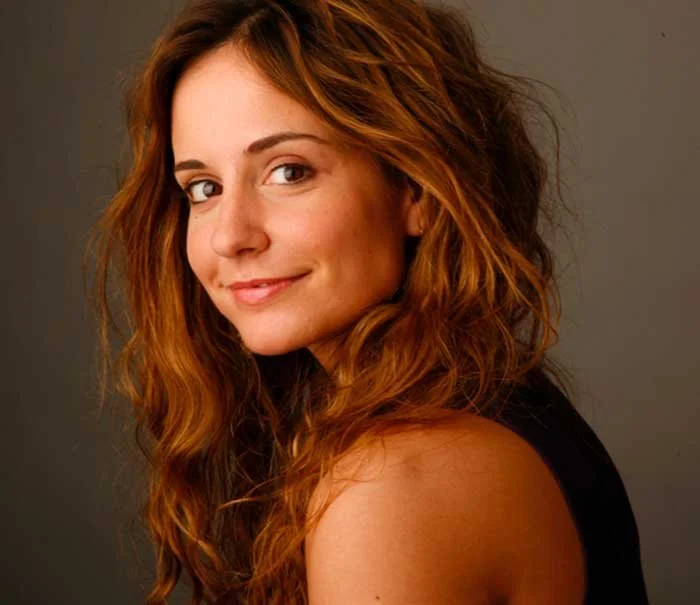
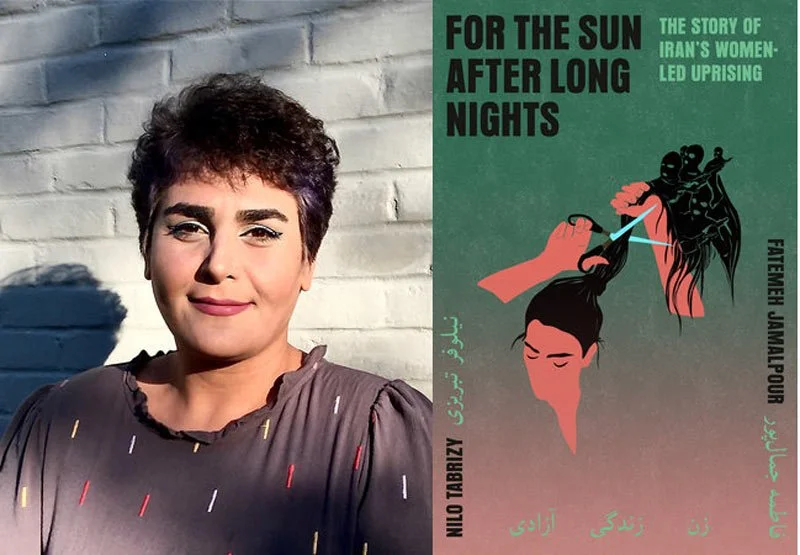
In this episode of the Speaking Out of Place podcast, Professor David Palumbo-Liu speaks with journalist Fatemeh Jamalpour about her book, For the Sun After Long Nights, which she wrote with fellow journalist Nilo Tabrizy. In September 2022, the world learned of the murder of a young Kurdish woman in Iran, Mahsa Jina Amini. Her death, while a captive of the Iranian state, sparked the Woman, Life, Freedom protests. Fatemeh and Nilo’s book frames those protests in the deep tradition of Iranian women leading political movements for rights and freedom, that date back at least a century. They also provide incredibly detailed and moving accounts of the everyday lives of people in Iran who are part of a collective movement under the most oppressive and violent conditions imaginable. Fatemeh talks about the significance of the many ethnic minorities in Iran, the unique role of Gen Z in the protests, and the many ways that women’s bodies have become a powerful weapon in the fight for collective freedom, in places as diverse as prisons and illegal music concerts. Clearing up myths and lies about Iran and the resistance, this is an especially important episode of Speaking Out of Place.
Speaking Out of Place is produced in collaboration with The Creative Process and is made with support from Stanford University.
DAVID PALUMBO-LIU
This is truly a remarkable book in so many ways, and I have so many questions. It teaches us so much about Iran and the longstanding struggle for freedom over decades and decades. It's really impressive and a very effective blending of your voices, you and Nilo, who I'll be interviewing later on this month. But let's start with you telling us a little bit about yourself. I read that you studied psychology. Then as a literature professor, I was very pleased to see you talk about how much you love literature. But you ended up a journalist. Could you tell us a little bit about how you became a journalist?
FATEMEH JAMALPOUR
Thank you for having me. I grew up in a really small town in southwest Iran with a really strict family. The only fun place in our small town was the public library. The only windows outside of my world were books. I escaped from the home and all of those religious illusions on us to freedom and a better life by reading books and then later newspapers during the reformist time. After about two decades of the Islamic Republic in power, a reformist candidate was elected and we had a short time of freedom.
The moment that I heard about the freedom of speech and democracy, I realized that by doing journalism I could be the voice of the women around me who were suppressed in many ways. Telling other people's stories was the way to fight for justice.
DAVID PALUMBO-LIU
That was one of the things that struck me when I read your book, that there were these moments of opening up, but they're very fragile. All sorts of things can happen, but then you can't count on them. It was very impressive how people continue to struggle even with that instability. So how did you and Nilo meet? I was startled when I read your book. You've only actually met once physically, right? Tell us about this relationship. How did you get to know her and then how did you decide to collaborate?
FATEMEH JAMALPOUR
In 2016, I came to the US to study for my second master's of journalism at Northwestern. After I finished my studies, I decided to return to Iran. All the people said that I was crazy and should stay in the US, but I wanted to do in-field reporting. I spent one month staying in New York taking a United Nations Fellowship, so I sent many emails to editors and journalists at The New York Times, The Washington Post and The Wall Street Journal.
I explained that I wanted to return to Iran and asked if they wanted a video journalist. That was how Nilo and I met. During that time, we both talked about how Western media covers Iran and how we suffer from the coverage of our country. I talked about censorship and how I got arrested before. We connected in many ways, with the love for our country and our passion for journalism.
When I came back to Iran, the regime never issued my credentials to work for foreign media, despite having a job offer from The New York Times. They said I was a feminist and not qualified to work for foreign media.
DAVID PALUMBO-LIU
Oh my gosh.
FATEMEH JAMALPOUR
Yeah. I studied hard to get that job offer, and it was just denied. But Nilo and I stayed in touch. Whenever a protest happened in Iran, we talked daily about our love for poetry and Iranian cinema. When the movement happened, we had those years of sisterhood together. It was a totally organic connection and sisterhood that made it happen.
DAVID PALUMBO-LIU
I remember reading both you and Nilo talking about the impossibility of being totally objective in journalism. This is a myth. Dominant powers create their sense of objectivity and impose it upon everybody else, but of course we're human beings. We can't help but be involved in the subject. We can be professional and ethical and try to keep a distance, but for something like this, it's impossible to be a robot. Your commitment makes you a better reporter.
I was thinking about all the details that both of you put into your reporting that might escape somebody else. Just what somebody's wearing or the music they're listening to is part of the event. It would be odd not to have it there because it contains so much important information. How did you decide to work together? I encourage everybody to read the book, but one of the reasons I want people to read it besides the amazing information and history is the blending of voices. Tell us about how you thought this collaboration was the best way to present the story you wanted to tell.
FATEMEH JAMALPOUR
When I started writing for the book, it was a few months before the movement. I had returned to Iran. I was a BBC journalist, but my father got cancer, so I had to choose between journalism and my family. I chose my family and returned to Iran. Many security forces from the Ministry of Intelligence and the IRGC were waiting for me at the airport. They filmed me and arrested me like a real criminal. I was laughing nervously about how seriously they took me because in my eyes, I was only a journalist coming to take care of her father.
Then I started to write about the interrogation sessions. I didn't have any idea if I could publish them, but I knew that writing is jumping over the death row. I knew they couldn't shut down my mind. I had all these notes about returning and the interrogation sessions because I was facing the whole ideological core of the regime. Exactly four days after Jina Mahsa Amini was killed by the morality police, I got summoned. They told me they would send me to prison for three to five years.
I opened my laptop, sent an email to Nilo and asked, "Do you want to cover this protest together?" It led to an article in The Paris Review about the first days of the protest. We realized that to tell the full, human side of the story of our people, we needed a book. We needed to go deep because we always suffered from the impartiality that Western media imposed on us. We tried to turn all those years of suffering from the coverage of our country into this book.
DAVID PALUMBO-LIU
I'm so glad you wrote the book because not only does it cover the contemporary and recent past so vividly with these stories from all these different populations, but it gives a rich history of the struggle in Iran. Could you talk about the centrality of women to all these movements for liberation? That was the one throughline: the amazing bravery, courage and commitment of women for liberation.
FATEMEH JAMALPOUR
After the Woman, Life, Freedom movement happened in Iran, the media covered it as if Iranian women had just started to fight. That was not true. Even before the movement demanding the vote in the West, it happened in Iran. Our struggle for voting rights, optional coverage and the right to education goes back a century to the Constitutional period. When the founder of the Islamic Republic mandated the hijab for women, millions of women came to the streets and protested for six days. We rarely hear about those efforts in Western media. We realized that to tell the whole story, we needed to go back because we stand on the shoulders of those women. It was a continuous fight.
DAVID PALUMBO-LIU
What do you think is the most important starting point for us to think of? 1979 or 1920?
FATEMEH JAMALPOUR
I think the Constitutional time, when people demanded justice, rights and citizenship. But we didn't want a gender-blind history. Each time we talk about history, we show its effects on the people of our family. When the Islamic Republic got into power, Khomeini rejected the Family Protection Law. It meant that Iranian men could have four wives without getting permission from their first wives, and my aunt was a victim of this law.
An extraordinary woman who contributed to the Constitutional Revolution was a Bakhtiari woman from my nomadic people. People consider Iran an exclusively Persian, Shia-dominated country, but it's not true. We have Kurdish people, Turkic people, Arab people, Gilaks and Baluch. It's a really diverse country. Each of those minorities has a long history of fighting for agency. We tried to represent all these histories to show this diversity, which is often ignored by Western media.
DAVID PALUMBO-LIU
You do such a good job explaining that. The Woman, Life, Freedom movement comes from the Kurds, especially on the borderlands. You talk about how they're the most vulnerable, furthest away from media coverage, so the regime uses them to create fear. When you combine complex ethnic minorities with the issue of gender, you have doubly vulnerable populations.
As you explained, the movement was also driven by harsh economic situations in the cities and rural areas. It was a comprehensive protest about denials of not just rights but livelihoods. You mentioned the impact on families. Here, we think of the 1950s and 60s and the portrayal of the Shah as the great modernizer. What we don't hear much about is the repression of civil and political rights. The hope of the overthrow of the Shah led to a theocratic regime that built on the power women had in the revolution, then completely betrayed them.
Your book puts this together by talking not only about the historical facts but the human consequences. I remember at another part, you're in London and a friend says, "Why would you go back to that broken country? You can be free here." You said something that really struck me: "I love that broken country. There's a difference between my personal freedom and collective liberation." Could you talk more about how you joined yourself into this complex collective?
FATEMEH JAMALPOUR
To give a small example of how sisterhood and believing in collective freedom affected my life, I can say when I returned from the BBC, got arrested and was under interrogation, sisters helped me. A female friend gave me a room in her home. Further back, after the revolution, they banned women from entering stadiums to watch soccer with their families. Once, I went to cover the women protesting in front of a stadium demanding their rights. We thought it would be a historical day, but they arrested me and many female protesters. They beat us harshly, but then we got together in the detention center and ran an online campaign demanding they let women into the stadium. Finally, the regime gave up, and now women can go to the stadium.
All of those fights were collective. These experiences represent how sisterhood and collective fights empower me and push all of us forward. One time, my friend in prison was on a hunger strike, which is a common way for political prisoners to protest. I told friends in Germany to ask her family to ask her to end her hunger, and it worked. I believe that together we are stronger and can do the impossible, like this book. Nilo and I, from inside and outside the country, passed through the wall the regime tried to make between us. It was the power of sisterhood.
READ MORE [ + ]
The stories from the detention centers and the prisons are horrific and yet also inspiring. The story you're talking about is of a woman who refuses special privileges, goes on a hunger strike for the collective and nearly dies. It goes back to people helping each other exercise in prison. You talk about one woman who was a marathon runner and used her 20 minutes once a week to run in the short space in prison. The resilience is incomprehensible.
The other thing that struck me was the ways the regime exerts its power in big, violent ways, but also in subtle ways like not letting you go to a soccer match. How did you get people to talk? I can't imagine people being willing to speak with punishments so severe.
I think they do risk it. During all these years, the people who accept to talk with me know the danger. Even last month for my piece in The Sunday Times, I interviewed political prisoners inside. Most of us realize that we must stand; if we retreat, those religious fundamentalists come back. Totalitarianism is totalitarianism, whether it's in Iran or anywhere else.
You wrote very powerfully about the young people. Iran currently has a very young population. Talk about Generation Z and their bravery.
My youngest brother is Gen Z. When I returned from the US in 2018, he moved to Tehran to live with me. He was always playing online games. In the November 2019 protests, the regime shut down the internet for the first time. We didn't know what was happening. They killed 1,500 protesters and after a week opened the internet again.
During those dark days, I heard his voice and realized he had the internet and was playing an online game. I wished they were more political. Then the Woman, Life, Freedom movement happened, and we saw all those Gen Z youth risking everything, fighting security forces in the streets. According to statistics, 30 million young Iranians play online games. They could fight the Islamic Republic agents because those girls were used to playing strategic games. They knew the strategy.
The regime executed a young gamer and brought him on national TV to confess he was corrupted by online gaming. They wanted to make a lesson of him, but it didn't work. For the anniversary of the movement, my brother got arrested. He sent me photos of his beaten body, but he said he was proud of himself. They're fighting despite the threat of execution.
My millennial generation believed in reform. In 2009, we shouted, "Where is my vote?" because the regime cheated on the election results. But over time, we realized there is no reform in this regime. This new generation decided to live the life they want, paying the expenses. They are cohabiting together and partying in public.
There are many heartbreaking moments in the book. There's a young woman who is killed, and you talk about her artwork and music. You also pointed out how the regime goes after young people with no families because they have nobody to mourn them, and mourning is a political act. This poor young orphan is murdered alongside a friend. The friend's parents come and mourn both young men together as if the orphan is their son. Any notion of the individual is integrated into a collective, a national family. The regime monitors and prevents funerals because people feel recommitment. Could you talk about how people incorporate grief into the struggle?
Having ceremonies has been a tool to fight repression since the 1979 revolution. The regime is afraid of any collective gathering. They tried to force Jina's family to bury her body quickly, but the family didn't let them.
Families of victims turn their grief and anger into resistance. They tried to silence the mother of a seven-year-old boy killed during the protests by shutting down her speakers, but she started shouting that the regime killed her son. Families use social media to seek justice. When I wrote about Nika, a 16-year-old girl killed on the first day of the protests, I followed her family on Instagram. They post about her favorite food and honor her life. Despite the regime shutting down their pages, they open new ones and go to the places their loved ones were killed, demanding justice. People run marathons in their names and paint their portraits across cities. We know that remembering is fighting and trying not to forget is resistance.
What do you think the North American press gets wrong about Iran? Can you correct some of the misconceptions?
The most important thing to highlight is that the majority of Iranian people are secular now. According to statistics, 80 percent of the population is against the regime. The media ignores the society's movement toward secularism. During the Israel-Iran war, media outlets only covered pro-regime rallies because that was the only way the regime gave them visas.
I suffer from seeing pictures of my country that look like 1980. My normal social media feed is an Iranian woman running in the street in a sports bra in the religious city of Mashhad. I want people to know that Iranian people are different from the regime and do not support it.
You have a line about women using their bodies as weapons, and I watched the amazing concert put on by Parisa. Can you talk about how women use their bodies to perform acts of resistance and about this amazing concert?
After 1979, when the hijab became obligatory, many Iranian women protested. They said the one who tells us how to cover ourselves is the one who tells us how to think. We are getting control over our bodies and agency back in public. During the protests, our body is our only weapon and shield. The regime blinded 500 protesters by shooting at their eyes. Millions of women are walking out without a hijab in public. Every time an Iranian woman walks in public without a hijab, it's a revolution in itself.
After 1979, they banned women from singing and banned pop and hip-hop music. Even nowadays on national TV, they don't show musical instruments. But they couldn't silence women's voices. Parisa had a really professional setup in a beautiful old palace in the center of Iran. She recorded her concert and released it. After that, they arrested her, her musicians and even the owner of the palace. But the concert got millions of views on social media, and they cannot shut us down.
Could you describe the kinds of songs she's singing?
One is a really famous revolutionary song from the Constitutional period that she re-sang: "From the blood of the youth of our homeland, the tulip grows." It poetically represents resilience. They can kill a revolutionary but not a revolution. They can kill all those young people, but the flower will rise from their graves.
DAVID PALUMBO-LIU
The last question I had was to ask about you. What are you doing these days and what are you planning to do?
FATEMEH JAMALPOUR
That's the hardest question. I'm trying to do journalism. During the Israel-Iran war, I sent many pictures to Western media about the situation in Evin prison, where the regime holds opposition figures, journalists and activists. I knew the regime would use this excuse to suppress political prisoners, but the media never responded. Finally, I was able to publish a story in The Sunday Times after pitching ten times to various media. Journalism here is mostly about networking and connections. As someone in exile, I don't have many resources, and they told me my expertise on Iran is too narrow.
DAVID PALUMBO-LIU
Yours is such an important voice. I'm so impressed by your courage and I urge everybody to read this book. It changed my understanding and appreciation of the struggle there. You and Nilo give a really rich historical account of Iran, and the human dimension is covered in such a moving, vivid way. Thank you so much. I'm grateful for you being on the podcast. Please come back anytime.
FATEMEH JAMALPOUR
It's my honor. Thank you so much for having me. Thank you for your support and your solidarity.