

Storytelling, which is a very whole person kind of activity, is one that delivers all kinds of truths. Facts are just the ground upon which we build the edifices that we actually live in. It's on the factual ground of reality that we build our cathedrals and our castles that we live in. And those are not just made of facts. They're made of other kinds of truths that make the stories of who we are, the cities we live in and the nations we live in, the languages we speak—these are made of fact and fiction together, and those are the stories that define our lives.
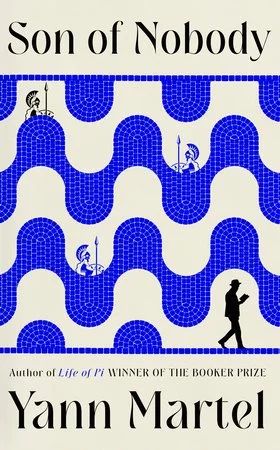
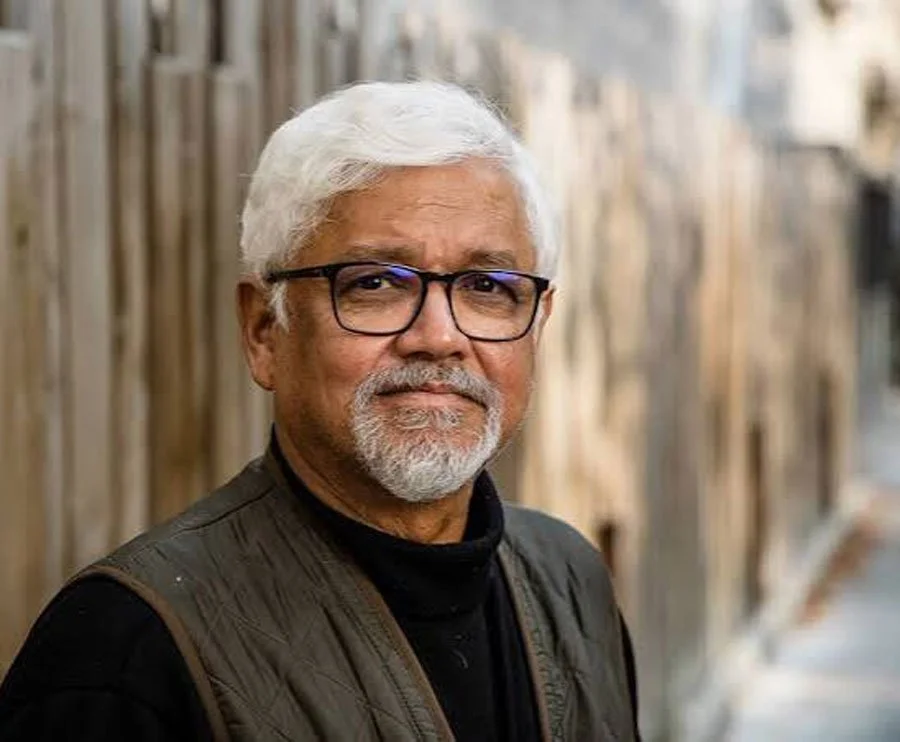
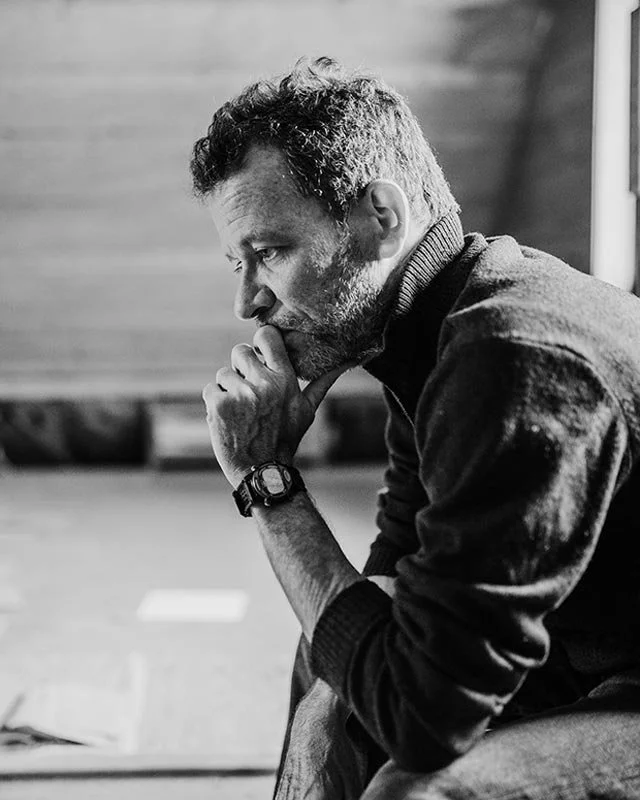
My guest today is Yann Martel, the internationally acclaimed author best known for his Booker Prize-winning Life of Pi and weaving philosophy, imagination, and profound human questions into unforgettable stories. His new novel, Son of Nobody, is a feat of literary imagination. Written in Homer-esque verses and layered with footnotes, the book draws us into the voice of a Greek storyteller while simultaneously mirroring our own present moment. It’s a work rich with history and intertextual echoes—ancient stories resurfacing in modern life, reminding us how deeply the past still speaks through us.
At its heart, Son of Nobody is a meditation on life, death, grief, and the fragile ways our human vanity can cloud our search for meaning. Through myth, memory, and philosophical storytelling, Martel explores what it means to long for home, to wrestle with ambition, and to confront loss. It’s a deeply moving reflection on how ancient tales—told and retold across centuries—can still teach us compassion, humility, and perhaps the courage to recognize that we can be nobody and still matter. It’s a beautiful, sometimes haunting story about what we can learn from the past when it comes to homesickness, love, grief, and ambition—and about remembering to value what we have before the search for more blinds us to it. Yann Martel, welcome back to The Creative Process.
YANN MARTEL
Hello. That's a very good summary. God, there's nothing else left to say, I would say. Very good.
THE CREATIVE PROCESS
It moved me so much. During our last conversation, I had a little preview because it was during the creative process of the book. I was so excited to know it has come out and to read it and just want to share that with our listeners. We had a wide-ranging conversation last time, and so I want to start this time with some easy questions first, and then we can discuss the deeper stuff.
So Son of Nobody, is that book, a dialogue with history, what remains, death, love and what we do with this one life we are given? And how we live on through what we leave behind? So, easy question, Yann: why do you think we are here and what do you think happens when we die?
YANN MARTEL
Well, that's a philosophical question that I think the Greeks started asking 3,000 years ago and we're still trying to answer. It comes down to the fact that we have such a surfeit of rationality. I think a dog, a cat, a tortoise never asks itself that question. It just is. And lives, day by day, hour by hour. We have this extraordinary capacity to reflect, and it doesn't necessarily serve us well. You know, sometimes we're plagued by depression, features that rarely afflict animals. And it's a very difficult question to answer, especially if you're too beholden to rationality.
That's one point that I make consciously, unconsciously, and most of the things I write question the usefulness of rationality. Not that you want to be irrational or crazy, but too much rationality defeats its purpose because reason itself only gives reasonable answers and we are not ultimately reasonable creatures. Hence why in most of what I write, I defend what I'd call magical thinking. This idea of going beyond rationality, not giving up on rationality, but going beyond it. Because you have to go beyond it to answer that question of why we are here. You have to find some kind of faith object, religious or not, doesn't matter.
That's not the point here. But you need to find some faith object that guides you and gives you the answer to that question of why we are here. And I think that answer easily goes into that realm that we could very broadly categorize as the domain of love. You need to find some faith object that is a source of love and that will direct you.
And that could be as high as a god, some sort of god. It could be a cause like environmentalism, could be a person, someone you love. And it could be something as banal as a sports team, a football team or a hockey team. But you need something like that that goes beyond the border of reason to draw you towards it and give meaning to your life.
THE CREATIVE PROCESS
I think so. The non-linear way—I mean in a way it's linear—but you have these different footnotes and then the poetry and how they're in dialogue. I think that really speaks to how we experience the world. We think we experience it in a linear sense.
But what you're so often touching upon and really exploring in your books is that the past lives alongside the present. Our dreams and our myths have their fingerprints on our experience of reality. I think the sliver of us that's logical—neuroscientists study this—I'm not sure how much of it is and how much of it's this internal music that we really live in much of the time.
YANN MARTEL
Well, rationality is a powerful tool you don't want to do without it. For example, we're using computers right now. It's a phenomenal tool that's bringing us in contact and we can have this wonderful dialogue. So you don't want to do without that, but as you said, it's a mistake to overestimate its value.
And as for the past, you know, we forget that the future is born of two things. It is born of the past. The future is the child of two parents, the past and the present. In a sense, yesterday is still today and today is still beholden to yesterday. You don't want to do without it. If only because it's kind of interesting, it's kind of hard to see beyond yourself in today's world because it's such a crazy world right now.
Although it is actually crazy all the time. But if there's something, I think calming if we go to the past, because then it kind of feels settled, which is not true. In fact, what it is that it is filtered, the past through our vision is filtered out and we start seeing things that we don't necessarily see today. And that people yesterday didn't see when their today was today.
So there's a filtering and as for making sense of it all, that's where storytelling comes in. And it also goes beyond rationale with storytelling. What we do is we take disparate elements, we create a unified whole. We create a narration. And the essence of a story is that in some ways it makes sense. Even a claimed absurdist work, let's say like Waiting for Godot or the Russian nihilists. In fact, it's not true that nihilism doesn't really exist as a movement, I don't think. Because inherently in telling a story you make sense of things. And what stories do is they take disparate elements and make sense of it.
And that is, once again, something that is beyond logic. Beyond rationality. There's no particular sense why you'd want to create a story. Once again, to go back to animals, they have no stories. A dog has no stories. It has routine.
Like our dog, we have a dog, you know, every morning expects food. It expects a walk. It expects a degree of kindness from us, but it knows if it strays somewhere it will get, maybe someone will growl at it. Those are not stories. Those are just habits. It lives in habits, territoriality, dominance. These are the habits of animals. We go way beyond that. But to weave something beyond habits, you need stories that take disparate elements and create a narrative.
THE CREATIVE PROCESS
I think so. And you made animals live in a way that we could understand them. I have no problems with that. You give them personalities in that way. So I want to believe they have dream lives. If I look at an octopus, I do, or birds building nests.
I'm not going to go into my whole thing, but I think it's important for us not to think of us on some kind of high level and they're so low down there because as you say, we can learn so much from them. They certainly love, they certainly have family bonds and stuff.
But talking about love, you mentioned, of course there are many kinds of love threaded throughout Son of Nobody: that love of family, the love of learning of language itself and the origins of language and culture, like when the world seemed more fresh and new. I'd love to explore that with you.
READ MORE [ + ]
That’s one thing that drew me to the Greek myths. I remember as a child, I grew up on the Greek myths, like a lot of literate people. You know, you read not the original sources, but you read retellings of it. So when I was a kid, I read a British writer named Roger Lancelyn Green and also Edith Hamilton.
She and he retold these Greek myths. What's extraordinarily attractive about them is that they're, first of all, extraordinarily imaginative. All the Greek myths are so startlingly imaginative in a way you don't see in other stories later on from other cultures, and they still remain very pertinent because they constantly ask us the meaning of life.
You know, we talked about love. In the Greek myths, there's incessant claims of love. It asks us to question attraction incessantly. In Greek myths, there's attraction and the problems with that—a domination, obliteration, pursuits that are unacceptable. There's all kinds of things that ask us to question what it means to be human.
What do we want out of it without too much of a cultural barrier the way there are sometimes in other sort of myths? One thing, one work I often compare when I talk about Homer's Iliad, I end up talking about Dante's Divine Comedy. Another fantastic book, the defining road trip. Yet, oddly enough, you don't often—certainly in my life—I don't often meet other readers who talk about Dante, who refer to Dante's Divine Comedy, even though it is a road trip.
And that's very modern, because we travel so much, you'd think people would constantly refer to Dante's Divine Comedy, and it's full of evil characters. We're attracted to evil because we learn from it. Why is it Dante's Divine Comedy doesn't have the echo that Homer's Iliad and Greek myths generally have? I think it's because a barrier exists in Dante, which is Catholicism and Christianity.
A lot of people nowadays start reading Divine Comedy and say, "Well, there's all this Christianity here that gets in my way because I am not Christian. I'm either something else or I'm just not religious at all." And it gets in the way. What's attractive about the Greek myths is it doesn't seem to have that cultural barrier, despite the appalling sexism of Greek culture at the time.
Despite the completely different way they operated, there seems to be a proximity and I think it has to do with the fact that the Greeks right from the start were people who asked questions. They asked questions about existence, and they're the same questions at the origin of Greek philosophy, which ask: What is justice? What is reality? What is beauty? These are kinds of questions that still speak to us nowadays.
And they asked it in a way that, as I said, it didn't seem to be fettered by cultural barriers. So that’s why I easily go back to them. I got lost in your question here, but that's one of the reasons I keep on going back to Greek myths is they still seem very current. There doesn't seem to be a wall between them and us.
You can find the seeds of these myths in our modern songs, right? It's that oral tradition and the way you inhabit the voice. I can’t imagine the challenge of that, but it is very fresh and has an immediacy I really appreciate.
I’d like to discuss translation, because writing about the past is a work of translation, as is writing about different spiritual traditions and cultures. Making those ways of seeing the world new to us who might feel excluded from them is a work of translation.
As I read Son of Nobody, I thought of the writers and translators in your life. Your parents translated your writing, your wife is a writer, and the conflict between Harlow Donne and his wife Gail is that they inhabit different worlds. They are separated physically, but they can't quite inhabit fictive worlds together. It’s wonderful that you were raised in a family of writers and have this commitment to the truth of fiction.
Yeah, you touch on many things here. Let's address translation. We live in a multilingual world. English dominates for various reasons, mainly historical, and there's an inherent flexibility to English that other languages lack. But many of the things that I've accessed have been through translation.
Through those heroic efforts that translators make to bring something from one language into another, which is a lovely feat. I worked from French as my mother tongue, but I always went to school in English and spoke French with my parents. I lived 10 years in Paris in the 16ème arrondissement and so I admire translators. Translation brought a lot to me, very obviously in this case, with The Iliad.
The reason that this book was written was because I read The Iliad in a translation that spoke to me. The one that really created this book was by the American translator Stephen Mitchell. I’d read a translation he'd done of the Bhagavad Gita, a thrilling translation. I think I've also read his letters of Rilke.
Translating The Iliad has been a sport for literally hundreds of years now. There are so many translations you can find because it's this monument. But how do you do it? There are complexities to the text and nuances that mustn't be missed. This one is particularly lean and mean. Stephen Mitchell scoured away things that have been added by the centuries to get to the original telling.
He's a poet himself, so it's a very lyrical, fast-moving translation. Other translations are perhaps more scholarly or academically accurate, but the hot breath of the bard isn't to be heard quite as easily. Thank God I came upon Mitchell, because it really spoke to me. Events in this myth spoke to me more directly than they would've if it had been a slightly more academic one.
For example, the epithets in Homer's Iliad—horse-taming, wine-dark sea—the Bard used those to round out his meter as he's delivering his tale orally. He needs to stick to the dactylic hexameter in the ancient Greek. Well, they're necessary for oral delivery, but if you're reading on the page in English, you don't need these epithets. Mitchell cut a lot of these out, which makes for a leaner text that flows more quickly.
Because of this wonderful translation, this text came alive to me. Same thing with Dante's Divine Comedy. I read it in this wonderful translation by another American poet, John Ciardi. It's a fluid translation and it brought to life this epic, astonishing text.
I’d also worked on translations with my parents. They translated Life of Pi, and I remember spending hours delving on microscopic details of how we translate this from English into French. It's a wonderful pleasure living between languages. Every language can do what it needs to do; sometimes it just needs a different turn of expression.
I remember working on the French translation of Son of Nobody with my Quebec publisher. We discussed a particular sentence and he'd say, "Ah, this is much better in French than in English." I was thinking, "Well, no, actually it's better in English because I wrote it in English." But it's funny—he thought it was better in French because he's closer to it.
I speak no Russian, yet I’ve read all my Russians in English and I think it speaks wonderfully. Of course, a Russian speaker would say you lose so much. Well, you don't know what you don't know. But if the text comes alive and it speaks to you, it’s wonderful what translation can do. You just have to give it time to grow.
It is wonderful what translation can teach you about writing and imagination. Another recurring theme of your work is that it's all just an interpretation. Sometimes we get fixed on the idea of one truth, but we come to it from so many levels. Fiction and the arts help us harmonize our understanding. Within each word is an entire world.
Absolutely. Listen, everyone knows what a lie is. Even children know what is false or not true. But the converse isn't as easy. Falsehood is clear; truth is not. Truth means many things. Of course, there are factual truths. Paris is the capital of France. That’s an actual factual truth that you cannot go around.
Those aren't the only kinds of truths out there. If I played you Beethoven's Sixth and I asked if it is true, that’d be a puzzling question. You'd say it's true that you're hearing Beethoven's Sixth, but there are other kinds of truths. There are psychological truths, aesthetic truths, and emotional truths. All those put together compose truth.
You can't reduce truth to factuality. Storytelling is a very "whole person" kind of activity that delivers all kinds of truths. That's where the realm of religion—defined extremely broadly—comes in. I don't mean organized religion at all. I often conflate art-making and the seeking of the divine. Both are examples of magical thinking.
Facts are just the ground upon which we build the edifices that we actually live in. It's on the factual ground of reality that we build our cathedrals and our castles. Those are not just made of facts; they're made of other kinds of truths that make the stories of who we are—the cities we live in, the nations we live in, and the languages we speak.
Indeed. We shouldn't neglect the fact that Son of Nobody is also a story about war. The Iliad is a story about war, and you contrast the ancient warrior, who looks his enemy in the eye, with the "horizontal," modern soldier. Technology distances us from warfare and makes this terror anonymous. Tell us why it was important to write this from the point of view of the Psoad.
What's lovely about The Iliad is that it's about a war. War can be a real war, like the Trojan War, but it also applies to any conflict—like Harlow and Gail's relationship falling apart. We must learn to live with war. But how do you do it? In The Iliad, every time someone is killed, that person is given a name, whose son he is, where he lived, and a little characteristic.
He is given a tiny obituary before he's eliminated, and that makes those stories very moving. Whereas war nowadays is so technologically driven that it's reduced to numbers. The Battle of the Somme and Verdun killed 400,000 men. The Holocaust slaughtered 6 million Jews. The problem with numbers is they mean nothing to us.
We understand as individuals, and we only understand individuals in terms of their stories, not in terms of numbers. What's moving about The Iliad is how individual deaths move the story forward. For example, the whole story turns on the death of Achilles' close friend Patroclus. If you think of modern wars, there are so many deaths you just can't keep track, which desensitizes us.
The way to make war meaningful is to make it personal. In Son of Nobody, the top of the page is verse fragments and the bottom is footnotes. Through these, we learn about the world of the Psoad and Harlow Donne's relationship falling apart. Those are all personalized because that's how you feel things through the individual story.
The parallel to me between this ancient mythical war and the modern world is not in contemporary war between Russia and Ukraine, but in the individual story of a relationship falling apart. That's how you make Old Wars speak—through the individual.
It's fascinating how it echoes back. I read it in a nonlinear way to see how they're in dialogue. I liked that interchange between time periods and how Harlow escapes into the past to avoid the present. Knowing you traveled through Iran, what are your reflections on the conflicts we're living through now?
I'm a citizen like any other; being a writer doesn't necessarily give me any greater insights. I would say there are occasionally righteous wars and often illegitimate wars. Either way, they are extraordinarily taxing on the human spirit because innocent people die. It's not a question of being entirely anti-war, because people are always going to split up. We can't all get along with everyone.
Then it's a question of how we wage wars—either on the individual level or wars writ large. Few people would argue that the Second World War wasn't a necessary war. It's hard to see how it would've been better if we had not fought and let Hitler take over all of Europe. You can’t really quantify the future by saying fewer people died, so it’s better.
I didn't live in Iran, but I traveled through it. It's a real country with a wonderful, sociable people who speak Farsi. The Iranians are not Arabs; they are Muslims with their own language and a tradition of hospitality which you really feel when you backpack there. I feel keenly for those cities that are bombarded.
Do I like the Iranian regime? Absolutely not. I don't celebrate the death of anyone, but I don’t trust President Trump in directing a war. To do nothing means this regime lives on, but to murder someone is not given to anyone to do. However, taking down that regime may be an act of self-defense for the Iranian people, though you're on dodgy legal grounds.
If you're asking me specifically of the war against Iran right now, I'm happy that this regime is no longer being tolerated, but the consequences of taking it down may turn out to be intolerable. I worry where it's going. Iran is not Iraq—it is not an artificial state set up by colonizers. Iran is overwhelmingly Farsi speakers who will remain one people.
I trust they will sort themselves out, but we can't do too much damage to them. Destroying oil-producing infrastructure is stupid because that's how they make their money. We want a regime that's less autocratic and bloodthirsty, but we must spare the average citizen. God, what a long-winded answer. Sorry.
No, it is a very considered answer. You write about the Bible, and Harlow commented that the Bible isn't strictly a book of peace, but often a book about war. The Iliad is full of violence, but deep down, it is a poem about love and loyalty. I hadn't thought about it in exactly that way.
Well, The Iliad is quite literally the West's first book. The Greeks invented writing around 1,300 BC—something known as Linear B—but that was used purely for bookkeeping and commercial transactions. Then there was the Greek Dark Ages. Out of that, they reinvented written language by tinkering with the Phoenician alphabet.
This unleashed literacy. The very first extended text they wrote down was Homer's Iliad. The first word in The Iliad is menin, which means wrath or anger. It's a book about poor anger management. Agamemnon is angry, Achilles is angry, Helen is angry. Everyone is angry at everyone. All these men are angry, and women are just victimized by it.
I thought, "Wow, what a way for a people to present themselves." But between these angry shouting men, there are men who quietly whisper, "Doesn't this all suck? What is wrong with us?" Then, a few hundred years later, this other story appears in the Gospels—Matthew, Mark, Luke and John—about this other man who is the polar opposite.
His speech is radically different. It's all about love. These two myths—Jesus and The Iliad—are who we are as a people. They are our parents. We are so capable of polar opposites: extraordinary acts of kindness and vaccination, yet extraordinary acts of hatred and genocide. These polarities are defined by these two mythical texts.
When I say Jesus is a myth, I don't mean he's untrue, but he's not necessarily factually true. We know very little factually about Jesus. No birth certificate, no death certificate. We know about him as a baby, a 12-year-old in Jerusalem, and then his three-year ministry in his thirties. What he did when he was 25 is lost.
No one who ever met Jesus wrote something down that has survived. He only survived like The Iliad—through storytelling for 50 years before the Gospels were written. Yet no one's going to deny his importance. That truthfulness does not come through facts. Just as the fact that The Iliad is a fiction doesn't stop it from influencing us.
You point out that the lack of factuality is perhaps the key to its universality. It's important to see these foundational myths through modern eyes. We are emotional beings, and we can see how modern warfare is being dictated by feeling, unfortunately.
Subjective.
Exactly. That is the power of retelling these myths. Did you feel like you were reinterpreting myth or acting as a caretaker?
Not a caretaker, because I don't think myths need caretaking. It's more a question of being in dialogue with them. When I saw the movie Troy with Brad Pitt, a character gets killed who survives in the myth. I realized then that you can't tinker with factual history, but myth is open for discussion.
Myth offers elements that you are invited to play with to make meaningful to you. That applies to Little Red Riding Hood as much as The Iliad. Art can make things relatable because it speaks in metaphorical terms that you can personalize. So I don't think I'm a caretaker of anything. I'm just in dialogue.
Some of the questions in the Trojan War don't make sense—all these Greeks fighting for 10 years over one man's wife? Why didn't the Trojans just return her and spare their city? The fact that it is strange and contradictory is exactly what keeps it lively. In Son of Nobody, I am simply continuing that dialogue.
It's a novel and a meditation on grief and the stories we tell ourselves to distract from it. How have stories helped you understand grief? I know your father died toward the end of writing this book. What do you do with the sadness of mortals?
Once again, we come to the limits of rationality. You can be as rational as you want, but rationality has no answer for why your father died or why there is human suffering. To answer the fundamental question of suffering, you have to go back to magical thinking. Rationality on its own will only give you rational answers that won't satisfy you.
What art can do is properly express human suffering. Words are wonderful at describing thoughts and emotions. A step further, religion can put grief in a greater context. It allows evil to exist on a huge canvas where it somehow makes sense. Religion also does away with the borderline called death.
For most of us, death is a wall. The religious mind happily goes beyond that, saying it's only a little threshold. Why should existence operate in rational ways? Who's not to say that magical thinking, that irrationality, that the imagination is not the actual portal to the divine?
Accepting the mystery starts to have a soothing effect. Rationality is not good at letting go; it is dogged. But when it comes to philosophical questions like suffering and death, doggedness doesn't serve you well. At one point you have to let go and say, "I am too limited. Let me accept the mystery."
I'm wondering how your spiritual beliefs have evolved over time.
They changed radically with Life of Pi. I'm originally from Quebec, which traditionally was Catholic. In the early sixties, there was "The Quiet Revolution" where Quebecers nearly as one person said, "Why are we so Catholic? This is holding us back." Quebec went from being regressive to being the most secular, liberal province in Canada.
I grew up where religion had no place. It was an anthropological thing. What replaced it was art. My parents taught me that if I wanted to understand life, I should read books, go to museums, and listen to music. But in my thirties, I was starting to run on empty. Rationale was eating away at my capacity.
I discovered that while my magical thinking of art-making was great, it didn't address the greater questions of existence. In India, I wondered why religion was still around when rationale has shown it's nonsense. Science gave us vaccination, not gods. But clearly people still believe.
I wrote Life of Pi and it changed my approach to spirituality. I realized that if you look at Gods with a rational mind, they will indeed disappear. You must remove those glasses. Pi chooses to believe beyond rationality. You have to have faith first, and then rationality is truly useful.
I'm not an organized religion kind of person. The Catholic Church in Canada literally murdered hundreds of indigenous children through willful negligence in residential schools. I cannot stand the Catholic Church. However, the quest for the divine—the idea that there's more to life than what we can understand through rationality—absolutely interests me.
The big development since we last spoke is the rollout of AI. Some people are using AI chatbots as spiritual advisors now. What are your reflections on the importance of reading in the age of AI?
It's the latest feat of technology that is either going to ruin things or solve things. Eventually we'll get used to it. I personally don't use AI to write because I enjoy the process. Right now, AI language is too florid and over the top. It is like special effects in movies—at one point, we don't want them anymore.
We like that human element. Even if AI music sounds good, people will eventually want real music made by humans. We're going to want human writing that is imperfect, and precisely because it's imperfect, is more human. I think it'll just be another tool. I personally don't feel threatened by it.
What does nature mean to you? Could you share an experience with animals where you really felt connected to who we're meant to be in the world?
As a child in Costa Rica, I saw animals as playthings. But an animal is not a plaything. I have a cat and a dog now, but we also have a tortoise. It remains a wild animal, and that's what I'm most attracted to because I can't access it or anthropomorphize it the way I can the others.
Animals to me are wonderful literary devices because we project so much onto them. As a citizen, my tortoise is an ambassador of the wild. It asks me to step out of my humanity and interact with something whose language I do not speak. Animals ask us to become diplomats. We share the same planet and are co-responsible for allowing them to thrive.
What are your reflections on the future of education?
Education is everything. I am the result of the good teachers I had. The good ones came into my dark mind and lit a candle so I could start seeing. My children use screens at school, and it's easy to demonize that, but you can access extraordinary amounts of facts visualized in compelling ways.
I'm not given to pessimism. The good teachers will still get through to our children. We live in a world of technology, so they might as well learn early on how to deal with it.
</details>
THE CREATIVE PROCESS
So, who and what would you put in your museum of memory and how have they given your life meaning? You can include anything. People, places, you can build a little exhibit for us.
YANN MARTEL
Wow, that would be a big one. Well, to start with, people like my parents, I had the luck of having really loving parents who loved me without judgment, praised everything I managed to achieve. And barely punished me for any things I didn't do well. When I started writing, they respected that.
Whereas I would think, God, if my children started writing, I'd say make sure you get a daytime job. You know, my parents didn't say that. They validated what I did, and that's very important. It's very easy to snuff that little flame of creativity. My parents didn't, they fanned it very gently. I'd say my parents for sure.
Also the places I lived. I had the luck of traveling a lot as a child with my parents who worked for the Canadian Foreign Service. So I lived in Costa Rica as a child. I lived in Paris. I visited Spain repeatedly when they were posted there. I lived in Mexico City. And that connected me to different cultures, different ways of being.
Sometimes different books, different kinds of books that hadn't been translated to English or weren't distributed as widely in Canada. So it connected me, these travels to different ways of being and that served me very well as a writer. So I'd say the places I lived along the way. People that I met down to details.
I remember for example, for Life of Pi in India, meeting a man named Mr. Adirubasamy. In fact, I put him in the author's note. He's actually a person I met in Pondicherry who had that wonderful open-mindedness that Hindus can have. Because after all, Hinduism is not actually polytheistic. There's one core divine reality, but it's expressed in many, many, many gods.
And because of that, they're very accepting of other gods. They just think they can join the pantheon of Hindu Gods. So Jesus is just another version of Krishna, for example. Well, he had that wonderful open-mindedness, that lack of judgment, and that struck me. I was struck by this man who was very religious, but in no way was he judgmental, which you don't usually associate with very religious people, certainly not in the West. You tend to think of them as being thundering with their judgments. Here was a man who was very open, so in a very small way, he sent me going on Life of Pi by just being so gentle and open and not judgmental. So I put him in that new scene. Also the books that I've read, books that have changed me.
I remember a book that I read when I was maybe 10 years old, called Le Petit Chose by Alphonse Daudet. It's the first time I read crying, reading a book. I was so moved by it that I initially thought how ridiculous I'm crying over a story that's pathetic. So I remember I went to the bathroom to cry, but it told me how moving the written word can be.
That's one small thing that set me on being a writer. And then as I said, you know, great books that I read like The Iliad in a good translation. When I wrote Life of Pi, I read a lot of illuminating books on zoo biology, on survival at sea. One book I received as an award when I was, I think must have been 11 years old.
I was living in France. I got a good grade I guess, and they gave me a book at the end of the year, and it was a book called Survive the Savage Sea. I hope to say that 10 times over. It was a survival at sea story told by a Scottish farmer who decided to travel around the world with his children. And so he bought a yacht.
He used to be in the Merchant Marine and west of Ecuador, in the Pacific, their ship sank and he and his family and a Welsh hitchhiker they picked up in the Panama Canal survived for a month at sea, I think it was 38 days or something. And he eventually wrote about it in this book called Survive the Savage Sea. And I read it as a kid, really liked it.
And then later on I wanted to write Life of Pi, I remembered that book, so maybe that book laid the seed. So I went back to reread the book and it was a wonderful trove of details on how to survive at sea. So, that book I put in that museum. So any number of books like that, that sort of like my teachers did, illuminated my dark mind with a candle. So I put a great number of books, also paintings. I've always liked painting. My parents used to drag me to museums when I was a kid and I hated it. And then one day I discovered, hey, I really like it actually.
Precisely as paintings are non-narrative or not as narrative as books are. It's a refreshing opposite to what stories can do. So I always love, whenever I travel for books, for example, I end up going to art museums. I'll be doing that when I go to Australia. They have wonderful art museums. I'll go there and look at the art there.
So I put any number of museums I've been to, any number of artists. To name one, for example, Picasso. I love Pablo Picasso. He's over famous, but for a good reason. He's an astonishing artist. If you go through his career, it's amazing what he's done, how his monumental paintings really have an overwhelming effect.
THE CREATIVE PROCESS
Well that's quite an exhibit. Thank you so much for sharing with us such important insights, the fragments of your life. Thank you Yann Martel for the ways in which you shared that the past continues to inform the present, how reality is more than what we can see and touch, and how the foundations of our culture are built on myth and dreams. Your books remind us to connect with what's important in life and to do more with the one life we are given. Thank you for adding your voice to The Creative Process.