

In the book I spend a bunch of time basically teaching skills and teaching frameworks of thinking. Not to indoctrinate, it's not a framework like an ideology where you need to believe exactly these things. This is a lot more about how does one use their minds effectively to solve problems that have been solved before. Of course, I work on things that have to do with investment and climate and the future of the economy and automation. The main things I'm trying to teach in the book are skills around creativity, critical thinking, community compassion and frameworks around how to go and use that on problems that should be relatively portable to a bunch of problems that are meaningful to you. The way that education needs to change is that people need to actively be working on things that truly matter to them so that over time they end up being able to go make that difference.
I have a really simple litmus test rule of thumb, which is you are hearing people talking, is this the actual person that does the damn thing? Spend most of your time with the people that actually build, those people have build integrity. Ideological differences are not the things that dominate. Quality of contribution is the thing that dominates. Most of these conversational, ideological things are about tearing things down. And builders are always building off of builders.
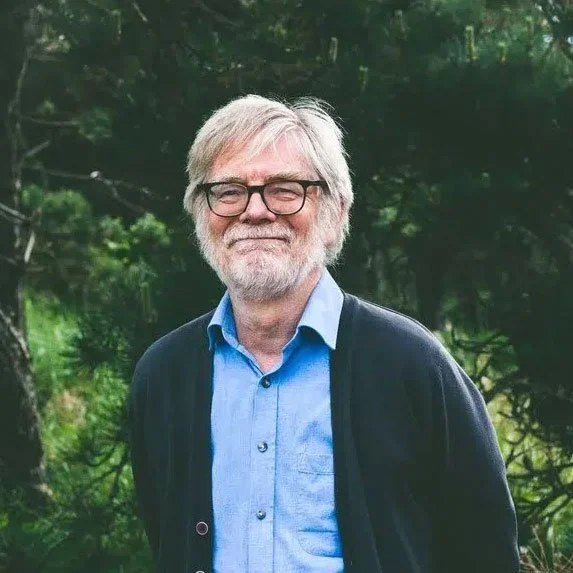
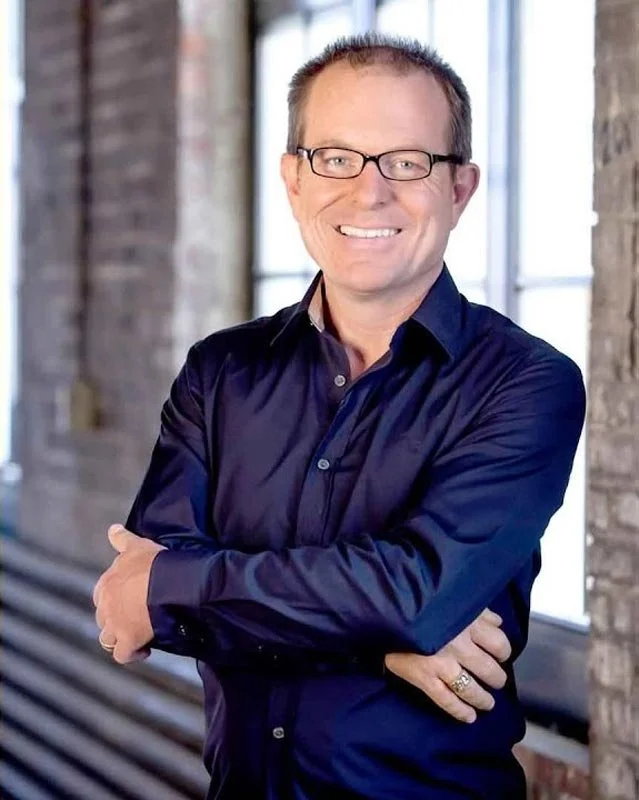
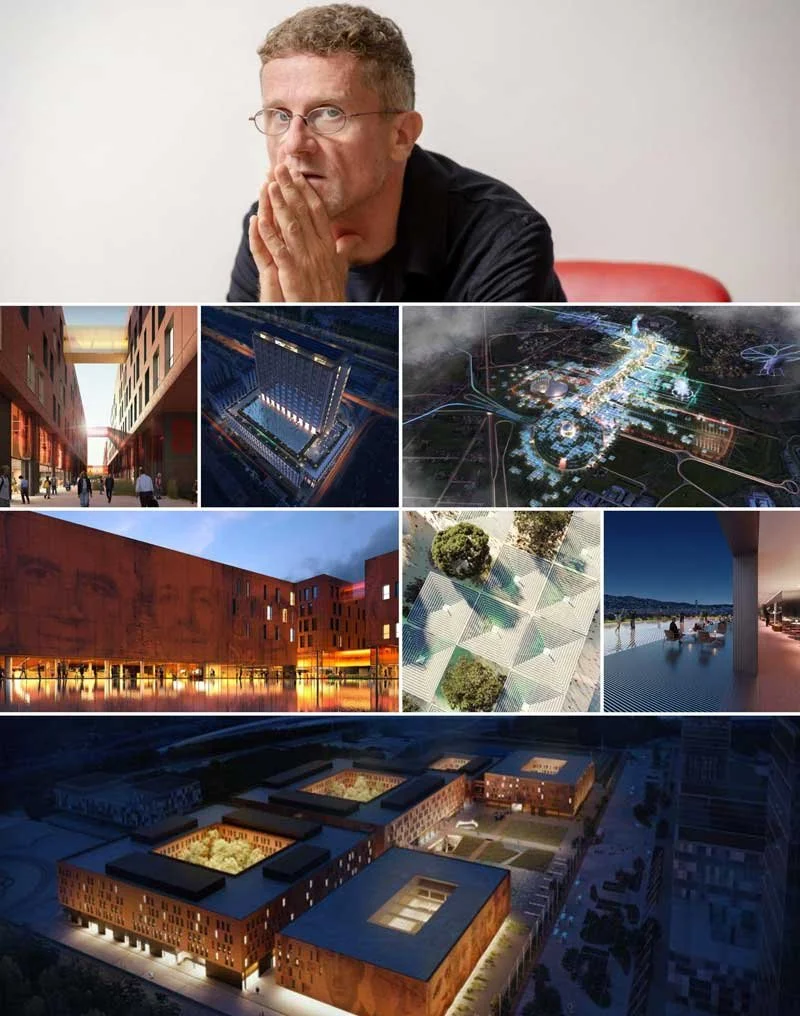
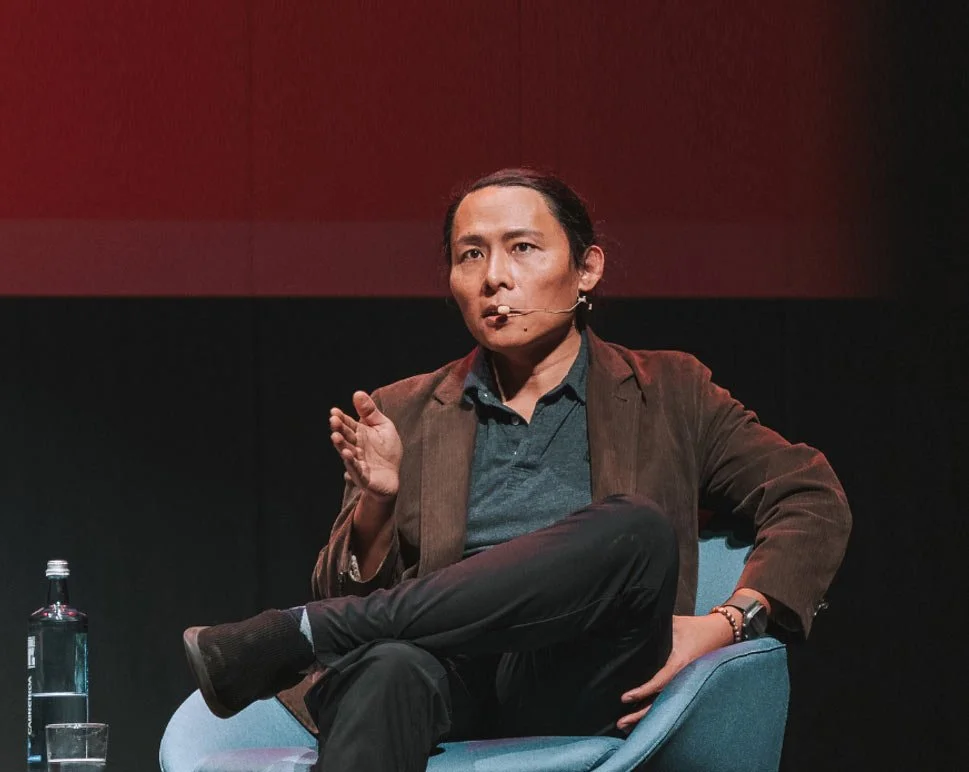
Tom Chi is a physicist, designer, inventor, and investor whose work has shaped everything from Google Glass and rapid prototyping at Google X to some of the most ambitious climate technologies being built today. He’s now the founding partner of At One Ventures, where he invests in deep-tech companies focused on a bold goal: a world where humanity is a net positive to nature.
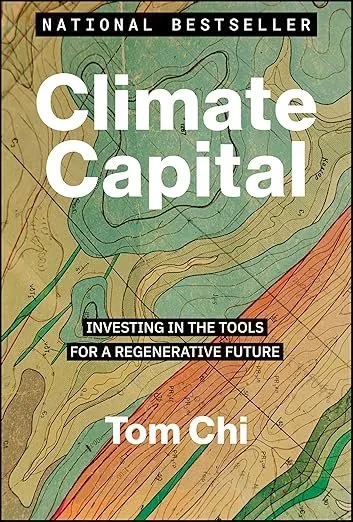
Tom’s new book, Climate Capital: Investing in the Tools for a Regenerative Future, reframes economics itself—not as a fixed law, but as a design discipline that can be reimagined to align with the physical realities of our planet. Drawing on science, systems thinking, and lessons from nature, the book offers a grounded, practical framework for moving beyond both climate doom and empty optimism—and toward real, regenerative solutions. Today’s conversation is about what Tom calls the 4Cs: Capital, Compassion, Climate, and Community—but also about agency, responsibility, and what becomes possible when we stop treating the future as something that happens to us and start designing it deliberately.
TOM CHI
Thank you for having me. I'm excited for the conversation.
THE CREATIVE PROCESS · ONE PLANET PODCAST
So Climate Capital has already earned glowing, early endorsements. Christiana Musk calls it a toolkit for rethinking how we design for humanity and nature. Tristan Harris, who we've had also on our show, hails it as a masterclass in systems thinking and visionary investing. And Bola Olusanya praises its ability to turn complex climate solutions into actionable practice. As you sat down to write, who was your intended reader?
TOM CHI
I mean, I guess I'll say what the publisher doesn't want me to say, which is, yeah, I was trying to reach kind of everybody, as many people as possible because what I'm seeing is there's a very broad sense of hopelessness about the future and I think that is a purposeful tactic actually because the more people that feel hopeless, then the less people are able broadly to be able to go change anything about the future. So hopelessness and powerlessness tends to, you know, benefit the folks that are already in power or just kind of keep the systems as they are. And however you feel about wealth distribution, power, all that sort of thing, I think we can agree that the systems can't stay as they are because the way that we're doing things are basically choking out the earth and doing things to the climate that are going to, you know, continue this push of destabilization all around the planet.
And we are seeing it, of course, in the local destabilization of climate related experience like temperature, humidity, rainfall patterns, all that sort of thing. But those things that sound relatively mundane end up having really huge impacts because agricultural areas aren't productive anymore. You know, human beings are getting displaced in mass because of fire, flood, stronger hurricanes, all that sort of thing. So the relatively kind of mild changes become destabilization all the way across. And the longer that we do it, then the original destabilization less and less mild. So if we're already at this level of breakdown over the level of destabilization we've had so far, then yeah, we need to stop as soon as possible.
THE CREATIVE PROCESS · ONE PLANET PODCAST
Exactly. I don't believe climate science or systems science is inherently difficult to understand. While there are certainly many moving parts, framing the issue merely as a two-degree change minimizes the reality. It fails to help us see all the interconnected elements. We need to dissect that and truly understand the design flaws in this system and how we are engaging with the natural world. How do we begin to fix that?
TOM CHI
Yeah, I think it's actually a, you know, communication failure and specifically, and look, I know where it came from and if I was in those shoes, I can understand why they pushed it the way that they pushed it. But basically these average temperature rise scenarios by the year 2100 is kind of the main way that the IPCC models are being communicated. And the thing that is lost there, and the reason I call it a miscommunication, is that the volatility is increasing way faster than the averages are. Like what a one degree increase might mean on a particular spot on earth is six degrees hotter in the summer, four degrees colder in the winter. Like that's actually closer to what it means that the bands of volatility are expanding substantially more than the averages. And our life experience of the breakdown isn't going to come from, oh, every single day of the year it's half a degree warmer than it was. Like, that would probably not even be noticeable to most people.
Or if it was, it'd be very mildly noticeable. Since the volatility actually is the driving curve of what the human experience of climate destabilization is going to be, we miss the chance to actually communicate the main thing that's going to happen.
The main thing that's going to happen is one degree in some places is going to be six degrees hotter in the summer, four degrees colder in the winter. Two degrees might be eight degrees hotter in the summer, you know, four degrees colder in the winter, right? Like, we are missing that. The extremes, the edges of the extremes are going to keep expanding, expanding, expanding. And they're going to be expanding at a higher rate than the averages are evolving. The averages purposely polish out all the detail and the detail here is actually the lived experience of climate destabilization. And because we've missed centering then we have missed communicating what this actually means to human life. A zero degree change with increasing volatility bars could still also destroy all of human civilization. It's not a small nudge, right? Just imagine you go from the volatility that you are to three times the volatility and the average temperature still stays the same. Could completely destabilize your farmland, could completely destabilize the soils underneath your town, could subside a bunch of things, could be very destabilized by increasing volatility bars and that has been happening along with the warming.
THE CREATIVE PROCESS
And yet, because this is a book focused on climate agency, the overwhelming statistics are not an argument to do nothing. You argue that there are numerous ways we can get involved. Once we reclaim our agency and fully understand the problem, we can identify ways to engage individually rather than submitting to the climate anxiety most of us are feeling right now.
TOM CHI
I think there's an important distinction here, which is it's never a problem to know what is actually happening, right? So like, whether the odds are against you or the odds are for you, or things like seem to generally be in place or totally chaotic, it is way better to know what's actually real because that's going to allow you to go work with what's actually real. People kind of smooth it over with the average numbers. That to me is not actually real. And if people are already feeling distressed about those average numbers, then yeah, that is basically the powerlessness algorithm winning. A separate thought then can I communicate the real thing? Now we should communicate the real thing. The real thing is that the volatility is increasing faster than the averages. The volatility will be the edge of distress and the edge of chaos for folks in terms of how they practically experience climate destabilization.
With all that in mind, which are all true things, then we can talk about what are the practical ways that people can step up, improve the ecological resilience, the community resilience. Like, a lot of the systems that need to run in situations of breakdown, we can already work on all of those systems. That's all within our power. There's plenty of powerful things to do on the other side of knowing what's actually happening, but it's useful to state what's actually happening clearly.
THE CREATIVE PROCESS
Absolutely, that is the first crucial step. You also argue that economics is fundamentally a design discipline and not a natural law. When did you realize that the way our economy operates is ultimately a design flaw that could be redesigned?
TOM CHI
Well, I'm glad that you're saying that because I must say that there was 50 to a hundred years of folks that did not believe that and they labeled their own discipline the dismal science, which if you go talk with economists, at least when I was coming up then, a lot of economists like want to have their name next to some fancy law. Similar to the way that, you know, physicists oftentimes get their name next to, you know, Ampère's Law or the Boltzmann Constant or whatever, right? Like they discover some deep physical truth about the universe and they get to put their name next to it. And generally speaking in academic areas, this is called physics envy because people like the immortality of it. Here's the thing, not a science at all. The fact that, you know, you had a hundred years of people believe that they're in the dismal science and a bunch of them with physics envy wanting to have their name next to some permanent equation that governs all of human behavior, that's wild as hell. That doesn't make any sense.
And the way that you can tell is that in science then you typically are studying a repeatable, natural phenomenon that resolves and reveals itself in a highly stable way. In economics, we got ideas on how to go and put the economy together. But if there are any stable laws, then apparently nobody's discovered them yet because the global economy keeps crashing every seven, eight years. Right? What I'm seeing instead is no, you first have a category error of thinking that you're doing a science when you're actually doing a design discipline. And if you just start with that category error, you're already going to make a ton of mistakes. But like once you make those mistakes, if you continue to believe that you have a science, you'll be like, well, we just need to stick with the theory a little closer. Of course, it's not working at all.
Right. You have the best economists in the world trying to manage this stuff and nobody can easily glide path the numbers that they want into the areas that they want. In science and engineering, we can, like, when we go and understand a natural phenomenon well we can go make a spaceship go and navigate a super complex path throughout the solar system in order to go gravity whip out to some distant thing. We can get that within like meters of tolerance because we actually do understand how it works. That's another way that you can tell that economics is not a science in that way. Right? If it was, then we could go land a dot on a dot if we needed to. In practice, human behavior is a lot more complex than the sorts of things that we're able to scribble down, you know, and kind of pretend that's scientific. We do have a discipline that goes and deals with the diversity of human behavior quite well, which is called design.
Lots of folks, you know, of different shapes and sizes and backgrounds are able to go use all the design features of an airport and get around. Most people can work their way through an airport even without understanding the language, right? That is basically design succeeding and a bunch of imperfect fits. At the end of the day, design, even though it seems less formal than science, actually can be worked on in a relatively systematic and formal way because you can always deploy a design, work out whether it hits the core metrics that you want in terms of what you wanted the design to enable people to do and also what you wanted the net output of that design to be. And then you can keep tracking and iterating until your design is really close to that. Other thing about design is design fits differently in different places.
So if you want to go design a refrigerator for Korea, you're going to have like a special compartment or shelf for kimchi because it has a very specific requirement for temperature and humidity, right? You don't need that if you're going to go ship a refrigerator to Latin America. You don't need that if you're going to go ship a refrigerator to, you know, Iceland or something. That's not necessarily a problem. That is the correct design feature for that society. Similarly, we have a bunch of different countries and economies that are in different states of development. We have a bunch of different cultural backgrounds and approaches to work and history of industry and education in all these different countries. It would make sense, just like a refrigerator needs a kimchi shelf sometimes and doesn't need it at other times, that their local economic policies should speak to what that populace actually needs. As opposed to some adherence to underlying science that doesn't exist around economics. There is no one size that fits all, there is just a bunch of designs that really serve the populace and then when they stop, the designer iterates.
READ MORE [ + ]
Let's discuss the future of education. We clearly have widespread problems with financial literacy, but we also face critical gaps in environmental and design literacy, areas deeply important to you. How would you design a curriculum to address this? What fundamental skills would you incorporate so that individuals, regardless of age, are genuinely future-proof and climate-ready?
Yeah, there's a lot that needs to be reformed about the education system. And some of it was already not working, but that's been exacerbated by recent developments. So if you kind of look at the reading, writing, arithmetic sort of curriculum that had been the staple for most of the 20th century, then there was a lot of things that were kind of being learned in a superficial way or rotely memorized. And I'm going to say both of those are just useless ways of learning in the 21st century, right? Like we have a lot of tools to be able to go look up particular things as opposed to need to memorize it. If you superficially understand how a thing works, then you're not able to bring anything new and synthesize in any way that would help you even be a good collaborator with, you know, information retrieval things.
The best search engines or the latest AI, what have you. Like, you're not a good thought partner in that particular case. So I think the way we have been educating doesn't really get us there to what we need to do in the future. The things to go adjust about it is you get a lot more from experientially working on something that matters to you. And going through the entire lived experience of it, which oftentimes is a multidisciplinary experience where, hey, I want to go do this important thing for my community. Well, in order to go do that, I need to build this thing. Okay, shoot. Well, I need to physically learn how to do some woodworking. Well, that's interesting, right? Because maybe I want to make a new market stall at the farmer's market, I need to go get some plywood, some two-by-fours, learn how to work with it. Oh, in addition, I'm probably going to need to learn some business skills.
Because I'm going to have to work off of a budget in order to go make sure that I'm able to build this within budget and I'm building this market stall because I'm trying to get, you know, help a couple farmers that I met that want to have a stall at the farmer's market. I want to go and get their produce here. So I now need to think about the transport logistics there and the cost structure of that. And I need to think about how much this can sell for in that market setting. And I probably want to do some testing and all of a sudden you are touching some things that are about engineering, some things that are about business, some things that are about marketing and commerce. Some things that are about the lived experience of like being at a market stall and talking with customers, right? And depending on educational lens, somebody might say, well, that's four entirely different subjects.
Exactly.
You don't learn that in any particular subject in school. Like why would you? That's way too many things. It's uncontrolled when that argument comes forward, the thing that's being missed though is something that is so much deeper than the superficial learning that most people are getting. It's so much deeper when enough stuff comes into play that it becomes a real thing that you have accomplished and done in the world. Different to just finish some assignments and turn them in. Literally thousands of students before you turned in exactly those same assignments. And maybe they got their answers a little bit more right or a little bit less right? It ultimately doesn't matter. And I think students kind of understand that turning in their homework doesn't change the world in any deep way.
If you're lucky, it changes you a little bit. But when you have a chance to go work on something that makes a park inside of your town cleaner and easier to play in, you know, helps to go bring some fresh food to a market stall or like helps in some way that matters to you, then the depth of learning ends up being 10 times greater and people have a passion for it that they come back to. They keep on growing that learning as opposed to, oh, that was the week seven module in the semester and I forgot it already. It's already week 11, right. I passed the test. It was fine. I think we need to be paying attention to depth of education, not just subject education or what we believe to be breadth of education. Real depth, iterative, in the real world on things that you care about. That's the stuff that is going to be the glue that is currently missing and it's also going to be the glue for the future tools that we are going to be using, whether folks employ a lot of AI or a little, like, we are going to need to have that sort of skill in every person.
Precisely. This global view and an understanding of how the systemic pieces work together is vital. Engaging in local projects builds that awareness because when we lack an understanding of how things are actually made, it severely delays our transition to sustainable practices like the circular economy. It becomes too easy to write it off as someone else's problem. We assume we can simply export our plastic waste, let it become an island somewhere out of sight and out of mind. This mentality, coupled with the constant replacement of our technology year after year, completely disconnects us from acknowledging our actual environmental footprint.
Yeah, so the powerlessness is the point, right? Like it is easier for the systems, you know, to stay as they are and the people in power to stay as they are. The influences to stay as they are if everybody feels powerless. And the toll of it is enormous. On one hand, if you are one of the people that are already in power, and look, I'm saying this in maybe a little bit of an odd way in that like I've been successful in launching a bunch of product through a bunch of big tech companies. I know that I am part of the existing power structure as well. I also know that the existing power structure is not one that is going to serve everybody's needs in the long run. And given that, then I think I can be part of an existing power structure but also be not so enriched by it that I feel like there's no need to change or no possibility of change. So I'm very happy for the system to change even if I've been part of, you know, the benefit of it so far, and to the extent that it is going to change, then getting rid of that sense of powerlessness, you know, for all the people that can make a difference in their lives is one of the main things to get out of the system.
Basically, we gotta get that kind of overwhelming powerlessness, on like depression, anxiety, the cost of that for so many people that need to experience it just for a tiny group to continue to run the power system like it is, it's a completely unacceptable cost. And I don't think that people understand that until they actually experience the difference between kind of the passive, like TV watching, infinite scrolling, you know, way that they can live their life versus the first couple times that they actually change something meaningfully for their community, right? Like if they're the ones that built the thing, or they're the ones that helped to organize the thing, or they're the ones that helped to clean up the thing, for the first time ever all these lights turn on and they're like, oh my gosh, my life could have been here the whole time. And I've been just kind of in this numbed out, you know, powerless kind of zone and imagine neutral, like it's below neutral. The zone that most people are in. When you actually can be in the creative act, you know, when you can be in that process of what I call the build, then it's not neutral anymore.
It's massively positive. So to be able to go from the slight drag, the numbed out, you know, force of depression, anxiety, powerlessness, which let's say is on a scale of negative a hundred, is like a negative 20 feeling up to like a positive a hundred feeling, it is such a wake up call that people don't want to stop once they realize that they can. And what I'm hoping to do through the book and a bunch of this work is I want to have a bunch of people experience that move from like the negative 20 zone to the plus 40 zone, to the plus 30 zone. Even that much of a swing will completely change how you feel about the possibilities of life.
I agree with you entirely. A profound reawakening and shift in perspective is sorely needed to course-correct, especially within education. As you mentioned, learning by doing is non-negotiable; younger generations must step out of the classroom and actively engage with the physical world if they are going to design a better future. Let's pivot to practical solutions. The majority of us live in urban areas and by 2050, roughly 75% of the global population will be residing in cities. This density will intensify the urban heat island effect, making neighborhoods significantly hotter, sometimes a 10-degree difference compared to nearby rural areas. As you consider the extensive adaptations required—whether through our municipal waste systems or transportation networks—what are your core reflections on the necessary transformation of the future city?
Yeah, I mean, cities are in a very good position to lead actually, because there's so many people and so much access to capital. You know, kind of the metabolic rate of change driven by human activity is way higher in cities than it is in any other place. So when they have a clear intention, then a city can transform in a relatively small amount of time. And I'm glad you listed out some of the future issues with cities that you did because yeah, literally all of it can be addressed at a relatively local, block by block level. But you know, to the extent that people have yards at all, you know, we have a backyard here, then you can go plant things. You can plant things that help local pollinators. You can go plant things that help to create more shade, which lessens the urban heat island effect. We've seen that when trees are brought back and plants are brought back to a neighborhood block, it tends to improve the value of the real estate in that area by 10% or more.
I think that's something that a block could get behind. They're like, hey, I have a bunch of value kind of tied up in the house I own, the condo that I own, the apartment that I own. And honestly, it'd just be nicer to live on a tree lined block as opposed to one that is wall to wall concrete and asphalt. So I think something like that is actually quite approachable relative to some other things that people can do. The reason that cities are so compelling for fast change as well is there's a lot of things that you can do that would just personally improve your living experience and also improve the collective living experience, right? So people are making their roofs a little bit more reflective either by painting them white or you put a little coating thing on it that actually helps in terms of how much it costs you to do air conditioning in the summer. So you're saving money for yourself, you're reflecting a bunch of light back as opposed to having it like bake a dark roof and kind of heat up the area around it and you've done something that is collectively useful and you've also done something that is personally useful.
Like patching any leaks in your home in terms of where drafts can come in and like waste a bunch of heating or cooling. Again, useful for you, useful for the collective. I'll say that in cities, there are a bunch of activities that you can do that have that kind of collective benefit whether you're intending it or not. So I love cities as a place to start. There's things that people can do at the household level. Like one of the biggest changes that you can do to reduce your greenhouse gas footprint in a short amount of time in any given house is that if you go to your hot water heater and turn it down to the temperature that you like to take showers at, then you don't end up mixing hot with cold. You just turn on hot and you get in the shower. And honestly, I like that because there's literally no possibility of scalding yourself either. A lot of folks have hot water heaters that if they just got into the hot side of it, they would scald themselves.
I was like, what's the point here? You're wasting energy heating it beyond the point that you want to physically touch, then you're wasting more energy to cool it down with other water. That's crazy. And that tends to be constantly being used whether you're using hot water or not because a lot of hot water are tanks that are initially heated up with natural gas. So you're needing to maintain this ambient temperature the whole time. And the larger the differential, the less efficient it is from the physics perspective, right? You have more heat loss to the environment when you have your thing at scalding temperatures. So you will end up saving, like, I think it's about like 500 to 700 pounds of CO2 a year just by turning that knob down. And you might need to experiment a little bit. Oh, I turned it down too far and this is colder than I'd like to take showers at. Sure. Turn it up a notch.
We can definitely tolerate minor adjustments; we don't always need to maximize our personal comfort at the environment's expense.
I will say that we don't always need to be comfortable to the max, but I will say that there's a very large number of changes that actually make your life better and have a way lower ecological footprint. Like I changed all of my lights to LED lights.
Yes, absolutely.
They basically have eight times less power usage than incandescent. Now I can make any room in the house any color of the rainbow that I want and I can have it respond to music and I can have it do all these amazing things that were not possible with incandescent lights while spending on the order of, you know, eight to 10 times less energy. So I'm going to tell you that we're at a point in history where cleaning things up for your own environment and your own experience is oftentimes not a degradation. It is something that's just actively better.
That mirrors how nature operates—naturally making adaptations that are both highly functional and aesthetic. I would love to explore how this design-centric thinking applies to governance. If governments truly understood economics as a design problem, as you have identified, what is a policy shift that seems entirely obvious to you but currently feels impossible to implement?
The thing is, is that you should tax what you want less of and use less tax on what you want more of. So one of the biggest disconnects is we differentially tax labor more than we tax capital. I don't know if that's what we are trying to do. That is what we seem to be doing everywhere. But if we want to go and support a thriving working population because a thriving working population is the original source of national wealth and GDP growth and all these other metrics that people apparently care about, then yes, you should reinvestigate how much you want to tax labor. That's the thing that you actually want to be happening, right? And if you are wanting that to happen, why are you taxing it so aggressively? Now, of course there has been a theory, you know, since Reagan, Thatcher, Milton Friedman, this kind of trickle down economics.
Well, what if we just gave all the tax cuts to the rich? And the rich are the folks that invest their capital everywhere, but they also pay less on the capital investments that they do. So, whoops. That's already a little weird. And also you'll find that the rich are not consistently investing all of their capital in really wise ways, right? Like most capital amongst wealthy people operates off of what I call the less bad place theory. So let's say you have like $4 billion in some sort of investment that has been returning you in aggregate 3.3% per year. And now you found a place where you could make 3.5% per year. Boom, you moved billions of dollars. Now is that the wisest way to deploy billions of dollars for the health and success of the society or the nation around you?
Of course not. It was just a 0.2% increase that you found somehow. And a lot of times the diligence doesn't even go that deep in terms of, well, how did they get that extra 0.2%? Sometimes it's clustered into things that support economic behavior and activities that you would not support, right? If somebody were to just tell you, well, your dollars actually flooded in here and here's some of the things that happened in the world because your dollars moved in that way, then I think a lot of billionaires and honestly even regular people doing regular investing would not be super happy with everything their dollars are doing. But we kind of look away and we say, what's a less bad place for making 0.2% more per year? And this is how most money works. And the rich will tell you, well, we're the best capital allocators.
That's why we're so rich. But I'm going to tell you that, no, not exactly. Like they are focused on some of the things that they're focused on and the things that they're focused on, they may be a better capital allocator than most people, but I'm going to tell you that there's a lot of things that they aren't focused on that their money is also in and they are a less good capital allocator, you know, or maybe average in those cases. And a way smarter thing would be for more people to be involved with making the decisions because the prosperous society on the other side of it is for more people to be prosperous. To the extent that you have more of the people that you're trying to serve in the decision process, you're more likely to actually be able to serve those needs. Sometimes when a billionaire wants to care about a thing, then they need to do like a fact finding mission where it's like, I want to support this, you know, these people in this African country, I literally don't know anything about it.
I guess let's take a couple trips and that's if they have the foresight to even do that. A lot of them do it like three steps removed through NGOs and other organizations. I'm going to say this is relatively uninformed capital allocation and it would be smarter for more people to be in this decision process. Now people are trying to fix it post facto because they're like, let's just presume that the wealth accumulation into a tiny set of people owning most of the wealth of the world.
Let's assume that's fine now, we're going to go fix it through us trying to take trips to Zimbabwe or whatever in order to go understand what's happening on the ground a little bit better. That to me is just like a bandaid on a really bad set of assumptions. And in practice, the world would be wiser if more folks are involved in the wise processes that help their lives to be successful. A large populace having successful lives is the way that you make kind of everything else work. Like anything where a small group of people end up being the only ones that can have successful lives, a very unstable system. You end up needing to spend a lot of money on defense, you know, security systems like mass surveillance, to be able to prevent any kind of divergence from the norm because any divergence from the norm might be the start of the breakdown of an unstable system.
Yes. I think that we all should be more involved, and that speaks to education and the need for multidisciplinary works and the need to bring people who are not necessarily, as you say, the talkers, but the makers and the doers. We're talking from farmers to workers. I know that your dad was a postal worker. There are all these people who understand how the world works. You identified that during COVID, we suddenly became aware of all these essential workers that we depended upon but never took a moment to pause and realize we really needed them. How do we ensure their real-world experience becomes a part of the conversation? I think we know that in the back of our minds, but these invisible parts of society are not always welcome to have a seat at the table.
I think it's really simple actually, because number one, there's a lot more people that actually know how to do a real job than there are people that are super wealthy in power, fully disconnected from having to work a full day in a long time. Look, I mean, if you are a hyper wealthy person that is just very excited about a thing and you do work a bunch of hours, that's great. But you also need to understand that you don't need that to survive. A lot of people absolutely do need it to survive whether you work hard or not. Given that there are so many more people that are like that than the folks that we are currently allowing to make all the decisions, then I have a really simple litmus test rule of thumb, which is you are hearing people talking, is this the actual person that does the damn thing? Or is this a person that is like talking about some abstract policy, about somebody's ideology on how a thing should be done better than it's currently being done?
And I'm just going to say, you will do a lot better to have a higher percentage of people in your media consumption be the people that actually do the damn thing, right? Like, you will have both a much deeper appreciation on what it takes to go do it well and you will also have way more of a realistic understanding of what it means to be able to go change or improve those systems. And it won't be based off of some ideology. So if somebody is saying, oh, this is based off of woke ideology, or the response to woke ideology, I'm just going to tell you regardless of how that's coming out, you are stating an ideological position, not a practical operating skill. And like as much as we've created all this political division in the world, and again I don't actually believe it's real. I don't believe the political division is real because I spend time primarily in red states in the US. I work on agriculture and manufacturing. It's mostly red states that actually have that.
And the people that I'm around vote a hundred percent differently than me, they would be the folks that, in a lot of like political shows would be considered, oh, these are the enemies, if you will. These are the people that don't believe in your political ideology. They're trying to destroy your life, blah, blah, blah. This is the narrative everywhere. But I'm going to tell you that I'm in those settings and these people love me and they love me, not because I'm like giving them these great talking points politically, they love me because it's obvious that I'm a person that builds things and makes them work. And this is what I call build integrity. Everybody that actually needs to build things that have to actually work end up needing to build integrity in their career. If you're a civil engineer and you build a bridge and it falls down after a week, you don't get to be a civil engineer for very long. That's the end of your career right there. Because like that would not have any build integrity for you to say, this is a great bridge, guys.
You know, let's build it. And for it to fall down after a week. A lot of the talkers don't need to have any build integrity, right? You look at what they said today and you look at what they said six months ago and it's complete diametric opposites and it's like, well, you contradicted yourself. Oh, well, you know, back then a lot of people were talking about this, so I had to talk about that and I guess I didn't totally form my beliefs about it, but you know, I have this ideological lens, so I said it this way. And look, they don't even have enough self-awareness to say these words that I'm saying, but it's exactly what they're doing. And I'm going to tell you that this is all the mechanics of driving powerlessness. If you're spending a lot of time listening to people that are driving the mechanics of powerlessness, you just have to step back.
And I'm not saying that some of those can't be great people that actually believe the words that they're saying, but I will say that there's a big difference between hearing somebody talking about pottery and working with people that know how to make pottery. There's a big difference between hearing about somebody that is doing carpentry and working with people that know how to do carpentry, right? Be around the people that actually know how to do the damn thing, and I'm talking about some physical build skills, but it's true for other build skills as well. If you are an accountant and you can help a business financially operate great, that is also a very concrete skill that is real compared to the talking about the skill. So spend most of your time with the people that actually build, those people have build integrity and ideological differences are not the things that dominate. Quality of contribution is the thing that dominates.
If you're a good carpenter and you're framing up houses like excellently, a bunch of people are wanting to learn from you. They don't look at you and say, oh, that's competition. They basically say like, oh my God, this guy's got not only build integrity but they're great at this. Let's go hang out. Let's go build on what they're building. As opposed to most of these conversational, ideological things are about tearing things down. And builders are always building off of builders.
Completely. Especially in this crucial decade, we need more builders. We know there is a lot of paralysis and polarization caused by the talkers, paralyzing us through our emotions or dividing us into tribes. We've seen with the rise of the BRICS countries that people are shifting towards an understanding of China. There are flaws and obviously there have been build projects that weren't always successful and I'm not diminishing any of that. But they are builders and engineers who get things done. They also get them done in other countries through exchange, building things instead of going to war. I think that mentality seems to be behind this kind of global shift.
I'm not a big booster of China either. I was born in Taiwan, and spent a lot of my, you know, like the memory of my life is China basically antagonizing. But I will tell you that, yeah, they are building a lot more. And while the US is kind of at the moment just chasing its own tail or imploding depending on whose lens you want to take here, but we're obviously not advancing economically in any interesting way right now. We are in an administration that is very skeptical. It's like, look at this green new scam, and all these dollars that are being wasted on things that are less economical. And well, number one, it's all just completely untrue, right? The lowest LCOE in terms of cost of energy generation now exist in renewables. And when you add storage to it, it still undercuts most fossil fuels in most settings. So it's super not true, but in comparison, China basically during that same time period where America was hemming and hawing about whether these technologies can make a difference or not, China jumps out to a huge lead on solar panel production, EV production, battery production, where they're going to end up supplying the whole world on technologies that all three of them were invented in the US. US inventors, you know, basically had a 50 year headstart on China here, 60 year headstart, and then we just chased our own tail for half a century.
Yes, and the embedded fossil fuel lobby network probably had a lot to do with slowing down electric vehicle and solar energy investment and production in the US. You mentioned that you spend a lot of time in red states working in the agri-industry with farmers. We know from the state of soil on US farms today that we critically need to increase soil health from all these years of using pesticides so crops get back to producing real nutrients for people's health. There are positives and negatives about AI, but you write about some of the positives regarding scaling up regenerative agriculture. How do you see AI helping us do that?
I think there's a very simple frame for it, which is we had this high input chemistry based approach to agriculture, we mostly did agriculture mechanically. For example, if you wanted to go weed a field, you would go out there and you would physically weed a field. You would pull the weeds out, right? And then go in a bag and maybe you thresh it up for compost or if it dries out, you can burn it or whatever. We were mechanically doing that labor. Then we basically had like, you know, 70 years of replacing mechanical labor with chemistry where we said, you don't need to weed things anymore. We have these herbicides, we can spray glyphosate on everything. We developed these new technologies so we can GMO our crops to be resistant to glyphosate. So we can spray everywhere. You don't need to invest in your soils. We can just give you fertilizer. And we basically had 50, 60 years depending on where you are in the world, 70 for the very longest places in the world, where we were using this high input agriculture that was based on chemistry. The thing that advanced robotics and AI can provide in this setting is we can move back to mechanical management of things. Mechanical management of things will be cheaper than all the input costs of all this chemistry. And it also means we're not spraying poison all over our food.
Yes, cancer.
Like a thing that you should think about, right? Look, yeah. Glyphosate, yes, very provably causes cancer. Like Bayer, Monsanto is dealing with billions of dollars in lawsuits that they're losing because of the cancer causing properties, but they make so much money on it that they're just going to run the business anyway. It doesn't matter to them that they lost billions in glyphosate cancer suits if they make 10 billion off of it. Well, let's just keep on going then. We're in this weird doldrum right now where it can't be the best for human health to go and spray, you know, various types of poisons on everything. It's definitely not good for ecological health. We see this in terms of the massive reduction in insect biodiversity, which then is right at the base of the food chain in terms of feeding the birds and a bunch of other things that are higher up in the food chain.
And because of that, we're seeing major loss of wildlife everywhere, because we're just spraying poison kind of everywhere. And we hopefully wash it off by the time it gets in our mouths. But it's definitely not washed off in the field and it's affecting the biodiversity of both the field and the surrounding areas very negatively. There has to be some point in human history where we stop spraying poison on all the food.
STUDENT INTERLUDE: ELIZA DISBROW, University of Washington '26 · International Studies/European Civilization [+]
Hello, my name is Eliza Disbrow. I'm a recent graduate from the University of Washington majoring in international studies with an emphasis in European studies. Many years ago when I was in elementary school, I watched a video in my science class on water consumption. In this animated clip, two siblings discover the ways their family personally overuses water in the home while coming up with easy solutions for children to decrease their water usage—for example, turning off the sink when washing your face or brushing your teeth, fully loading a dishwasher over hand washing dishes and more. I implemented, from what I can recall, all of the recommendations and I still conscientiously consume water in my daily life.
As a child, I thought I was single-handedly solving every global water crisis, which later developed into carrying the weight of climate change on my back. Growing up meant shifting from that individualistic childish frame of mind to something more realistic. Collective action, which includes massive infrastructural changes and proper regulations on corporations, is the only way to properly combat climate change. Though of course a major reason as to why these changes haven't been implemented is the financial burden. It will cost money and time to change systems to ones that are more environmentally savvy. And who wants that? Well, I would argue most do, except for those whose pockets would be the most impacted.
Tom Chi spoke in a TED Talk at TED Countdown's AI for nature and climate about the ways that AI and robots can enable massive scale shifts towards innovation. These robots could enact the level of change necessary to stop and maybe even reverse the worst of what climate change can and has done. But these technological advances are not just for the environment, but work to benefit the economy, which to some is a much larger motivator. Chi mentions how the agricultural industry alone could change as we know it with robots able to plant thousands of seeds a day and tend hundreds of acres of land in a fraction of the time it would take a person. These are the large-scale changes that need to occur to positively impact the environment, not just turning off the faucet when brushing your teeth or changing the wattage of your light bulbs. And now back to the interview.
I believe that you invest in companies like honeybee vaccines. You're talking about the reduction in pollinators. I think most people realize how magical honeybees are, but they don't truly realize that we are killing them off. When you're looking at all these net positives to nature opportunities, you obviously have to narrow it down. Could you describe your framework and how you bring that to investors? How do investors get it wrong and how do you guide them? The First Vaccine: Commercially Scaling Nature’s Protection
Well, like we were talking about earlier in the interview, then you have to start with the truth. So the reason that we got into the first vaccine to be able to prevent colony collapse for honeybees. If you look at all of life on earth, the majority of biomass on earth, so the majority of biological material from biological organisms on earth, is in the plant kingdom. And if you look at plants, 80% of all plant species are angiosperms. So these are flowering plants that require pollination. Many of them are obligate mutualists, they, their pollinator, then the species goes extinct, right? They can also pollinate by the wind and sometimes there's natural processes that help pollinate. That's great. But for most angiosperms, you're going to have a pollinator. And the absence of the pollinator will represent either a major decline in that species or an extinction in that species.
Honeybees are very widespread pollinator and because of that, they're an important pollinator in the world. They're not the only pollinator in the world. There's a lot of other species of bees that are more solitary that aren't in hives. There's also flies, there's rodents, there's birds, there's a bunch of different types of pollinators just honeybees. But honeybees are ones that we actually commercially care enough about that we can develop new capabilities for taking care of pollinators broadly. And it turns out that the vaccine that we worked on for honeybees is not only useful for honeybees, but it appears to be valuable for kind of all arthropods. We're already modifying it to be able to be effective in dealing with diseases on shrimp farms. Could also imagine continuing to modify it to be able to go and help a bunch of the other pollinators that we might be accidentally extincting through our agricultural practice. Now that said, if I were to start the entire investment chain by saying, hey everybody, there's this pollinating fly that you've never heard of or like, you know, a solitary bee that you've never heard of, but we really need it to go and support these three species of plant that you never heard of. That doesn't be really hard to get kind of the investment energy behind it and get any interesting development on this technology.
But if I say, hey, we're getting a bunch of colony collapse, we're actually moving toward very dangerous conditions for North American beekeeping because of what we do with almonds. And at the beginning of every year where we basically bring the majority of the North American bee population all together, which means there's more possibility of them exchanging diseases. And right now we are losing enough colonies that we do a thing which is called splitting the hive, which basically means we're having less and less genetic diversity all jammed together in one place where infectious disease can spread. This is kind of the layout for a major collapse in that industry, we've been seeing it little by little. You can go and track like the overwintering losses and the hive losses, you know, it's tracked, a number of national surveys. It's been just getting worse and worse and worse. And because of it then there is interesting commercial energy in trying to go develop something to go help these insects. But in the process we have on purpose created something that might be helpful for all insects. Now we at least know how to scientifically do it and engineering produce it, when before we didn't have that at all.
So, honeybees are not the only pollinator. They are one that is commercially important enough that we can go hang the hat off of a business on it and then we can use that to go solve way bigger problems. In terms of the actual business acumen here, if you were to go follow the ways that the honeybee situation has been evolving, then there will be a point where major collapse makes this one of the most valuable products that you could ever imagine happening. Like, one in three bites are pollinated by honeybees right now. And imagine all the growers whose basically livelihoods stop at the point that the pollination services stop. There's going to be huge demand at the breakdown point. And up until then, then you prepare for it. Because when you have these kind of outsized economic outcomes, then it's because you anticipated something that was likely to happen. And I think the further breakdown of the economic honeybee population is very likely to happen. And the vaccines that we backed are going to be, for lack of a less crass term, like extremely lucrative. But I'm also happy that we're doing that because it's scientifically and engineering useful to go and know how to take care of arthropods.
Exactly. We're not going to survive on this planet unless they survive. We just have to get serious about it and talk about the things that make people care. I know that coral reefs are really important to you. I think that was your way into this second half of your career.
Yeah, so I was an exec in Silicon Valley. I run a couple multi-billion dollar businesses and also I'm a person who's technical enough to have done a lot of primary invention. So I'm named a venture on 77 patents. But that's just an intro to say I had enough money to be able to get a vacation home out in Hawaii, which I got back in 2005. You know, that house was extremely close to like a two minute walk from an astoundingly beautiful coral reef. And when you live next to a coral reef, then it's not like some big to-do, like I don't need to go grab scuba tanks or anything. I just had a snorkel on a hook next to the door like whenever I'd have a break in the day, just grab the snorkel, be out in the water within two minutes and surrounded by, to this day, the most beautiful things I've ever seen with my own eyes personally. And then in the year 2011, I basically watched that reef go from every color of the rainbow to gray and brown and no life in less than eight weeks. And it was extremely painful to experience. I think when you visit a on vacation, then it's a sounding, maybe you get some nice pictures, some nice memories, but that's all it is.
It's like a little vacation when you live next to a reef. It became like an extended part of the neighborhood. Like I knew where different organisms lived. I knew who liked to hunt with who, I knew who was a visitor from out of town that, you know, everybody would like ally look at. I would like congratulate them whenever like a couple had a bunch of kids, you'd see all the little ones swimming around and watching that whole thing die was basically like watching all your friends and neighbors die or move away. And I don't know how to explain the feeling other than it just left a huge hole in my heart. When I went and with coral scientist and marine biologist about it, you know, proceeded to inform me that not only had my reef died that year, but many others had and that we were on trajectory to go and wipe out coral reefs as an ecosystem from planet Earth by the year 2055. And it struck me that the pain that I had lived through was about to be lived through by the entire civilization at the planetary level.
It led to the thought, well, somebody should do something about this. And after I looked around enough, because I know there's actually been a lot of like harsh talk on executives because executives are some of these wealthy people that are getting like runaway salaries and all that sort of thing. And I will say that a bunch of the wealth can be undeserved in those situations. But there are absolutely executives that have good executive skill. One of the skills as an executive that one needs to have is to be able to go look at a situation and say, will this set of people in this time with this budget succeed at the goal or not? And when I was looking at the set of people and the time we had and the budgets that we were applying toward these planetary problems, I was like, we're not going to make it. Like definitely in the coral reefs are going to be extinct, a lot of other things that really matter are going to be lost just given these people and this time and this approach. And that's not to be harsh on these people. Honestly, most of the people that are doing any work on this have tremendous like care and belief and are working really hard. But that's still a different statement than the executive assessment of whether it's going to converge or not and it wasn't going to converge.
Basically had to reflect on my career relatively deeply because I don't have experience in the thing. Look, I have a lot of experience in inventing and commercializing technical solutions on the hardware and software side. I spent my whole career doing that. I know I can do that, but I had not worked in environment or investing in a full-time serious way. So it was like a relatively large leap. But I also understood that given the theories of change and how people were working and the pace at which we were making any inroads on the problem, we weren't going to make it. So we needed a lot more people to get over to the side of actually solving these problems in the build as opposed to just talking about it as if winning some ideological argument was the same thing as actually innovating the physical economy to being something that is compatible with nature. That's what the actual task is. The actual task is we're going to need to upgrade our industry and economy. But this cycle, in doing it, we also need to be thinking about how it affects climate. Because if we don't, it's going to be way more costly to have not addressed it.
It'll destroy the infrastructure that we build if we don't address climate. Most of the time when we build infrastructure, we're thinking like 75 a hundred years. And if you don't think about climate stuff in the way that we're rebuilding industry and infrastructure right now, the stuff's not even going to last 30 years. To me, it stops even being ideological at all. It's like a fully practical question of does your bridge hold up? And your bridge is literally not going to hold up in terms of your industry design and your infrastructure design. If you don't take climate into account at this point, because climate's getting destabilized anyway, at minimum, you need to be taking into account the right adaptations for the way the world is changing. But since you're reinventing and reimagining anyway, why not go after the bigger prize of why not make the industry, you know, faster, cheaper, better and greener, right? Like, it can just be a categorically superior outcome if we actually focused on that as opposed to the quickest shortcuts.
Exactly. And as you write about, we can also learn so much from nature as a designer. Broadening out on that point of coral reefs, our oceans in general are not healthy. They cool our planet. I know we are moving towards a global plastic treaty. There are some innovations, perhaps with AlphaFold, that can solve plastics in the ocean, but how do we fundamentally redefine our relationship with consumption and waste? What are some of the solutions on the table that could, even if it takes time, reduce the amount of plastics in our manufacturing process and delivery of goods process?
Well look, there's a lot to say about that and let me just quickly comment on the alpha fold thing, which is, I really do think the deep mind folks are fantastic researchers. They've really broken incredible ground, but there's a huge difference between being able to go intellectually solve a thing and putting the stuff in place that would actually physically change the reality on the ground. What about solving microplastics inside of a computer ends up actually changing the physical outcome? Now you don't need to answer that question because the whole point of it is just to say you can intellectually solve a thing perfectly and you could have zero steps done on the operational play through and the operational play through has always been the harder part period. So why are you glamorizing the intellectual solving of it so much?
Point is really what's the right point to intervene on a question like this? I will put on my physics hat for a second. In physics, we have a property that we call entropy, which in colloquial parlance could be roughly equivalent to the word disorder. Basically entropy increases in any closed system over time as second law of thermodynamics. Whenever we work on a problem, we ask the question, are we entering it at the right point in the entropy curve? If you wait until plastics have been polluting rivers and streams and got out into the ocean and got smashed around by waves and sunlight and all that sort of thing until their tiny little microplastics that are 50 microns across, you know, 300 microns across, floating around in the ocean, then the entropy is insanely high. And when entropy is high, then the energy and effort required to go deal with the problem is insanely high. Now, if you were to skew way earlier in that process to the roughly 100 extruder nozzles around the world that are doing the original extrusion of this plastic. Then look, there are more than a hundred extruder nozzles in the world, but the hundred that are working the most and doing the most production, that's like 90% of the problem.
There's a bunch of smaller plastics manufacturers. But if you just went after the a hundred upstream, these are very ordered, there's way less entropy. You could just change the material that's going through it, or you could change how the extruder is extruding it to go produce a thing that is more compatible with the environment downstream, because you've chosen better materials, you've worked with those materials in a wiser way. That is a way more tractable problem to change how a hundred extruder nozzles work than to go deal with quadrillions of little bits of plastic in the ocean.
That's so precise. You make it really understandable for the average person who might just see it as an immense problem. What are the other things on your wishlist?
Well, well, I mean, I think if people read the book then this is what I generally try to do. I don't want to be a person that's like, here's all the answers to everything. Because even if at a particular point in time, I happen to be right about a bunch of those answers, that ultimately doesn't matter. Because 10 years from now, then the situation will have changed and we might need slightly updated answers or different answers. Right? So giving anybody an answer to any problem, even if you're a smart person that has worked on it hard and your answer might be right. It's honestly not that important, which maybe I'm undermining all the talkers. Because you know, even the best talkers are like, well, I was right about the thing. Yeah, I actually, maybe I do mean to undermine all of the talkers. The thing that is way more important is, let me share the ways of thinking that are going to help you to be more effective at a problem.
Right? So being able to go up to the right point in the entropy curve, that's a useful idea for any problem. Like by the time the thing is exploded and Pandora's box is open and everything's breaking everywhere, then there's a thousand fronts to go fight on. But if you could scoot back all the way to the point, oh, let's tighten the hinge on the box. Oh, great. Everything's fine then. Right? One spot of intervention. And in the book I spend a bunch of time basically teaching skills and teaching frameworks of thinking. Not to indoctrinate, because it's not a framework like an ideology where you need to believe exactly these things. This is a lot more about how does one use their minds effectively to solve problems that have been solved before. And you fill in the blank on what you care about in the world and what you want to solve. Of course, I work on things that have to do with investment and climate and the future of the economy and automation. So I'm going to use examples like that in the book, which are all hot topics of today, which is why I guess a publisher would want to publish anything that I'm writing.
On the flip side of it, I will tell you the main things I'm trying to teach in the book are skills around creativity, critical thinking, community compassion, and frameworks around how to go and use that on problems that should be relatively portable to a bunch of problems that are meaningful to you. Because like we said at the very beginning of the interview, the way that education needs to change is that people need to actively be working on things that truly matter to them and making a difference on them doing that in an iterative way so that over time they end up being able to go make that difference. And it's going to be multidisciplinary. It's going to be the application of real skill and effort as opposed to just thinking you have the right talkie solution to a problem. Because again, once all the dust on talking is done, still somebody needs to go build the damn thing. And honestly, even if the talking didn't happen and all we did was build the damn thing, we'd be in a better spot. Like the fact that we're able to go and monetize all this talking, that's really just an artifact of these digital systems.
Basically made a thing where it's easier to aggregate money and power by talking right, as opposed to building. Right. And that's honestly a relatively big error. Like, a podcaster shouldn't make $200 million. Like just to blab about stuff. Look, I worked on the team and helped to staff the team that built the Waymo self-driving car. Those people are making more like 200K a year. So how is it that we're paying a talker $200 million we're paying the actual people that can build a self-driving car 200K, like, we're completely out of whack in terms of what we've decided to prioritize and monetize in this world. And look, talking is easier for other people to make money on, advertisers can just jam right in there. There's nothing that you can do when you're programming a robot where an advertiser can jam in there and you can get all this like $5,000 for an ad read while you're trying to go program a microcontroller, right? Like, hopefully not.
Well, especially if AI is spying on us.
Yeah. We have massively empowered the things that make money more easily, as opposed to the things that are actually providing the most value to life and to the needs of the greatest number of people.
We've been talking about education, but who were those people and systems you learned from? Who were those teachers or collaborators that showed you a path, opened your mind and gave you the skills to nurture your own thinking and develop individually?
The thing I'm going to say is that I think literally everything can be a teacher. And this is like a paraphrase of like a idea from Confucius, but basically the idea is that you can literally learn from everybody. There's people that have done the things that you aspire to do and you can learn from them. People that are peers with you that are trying to do the same thing around the same time as you and you can learn from them because they're going to try it slightly different way than you. And collectively you get to learn from them. There's people that have gotten outcomes that are categorically not the outcomes that you want. And you can learn from that too. I'm going to say that literally everything will teach you how to go do this, but there is a distinction that you can make that accelerates the learning, which I mentioned earlier in this interview, which is, is this person a builder or a talker?
If they're a builder, let me see how they build. If they're a talker, then yeah, discount everything by 90%. Maybe they're right, maybe they're not right. But again, even being totally right about a thing is not the same thing as actually getting the damn thing done on the ground. Even if DeepMind works out the molecular pathways by which we could go address microplastic pollution with blah, blah, blah, do you even get the thing out there in the environment to go address it at that large a physical scale, a way harder problem than showing the evolution of some molecular species over a couple of reactions. Honestly, that's a easy problem compared to the operational problem, the build problem. So spend most of your time around builders. There's actually a lot more of them than the talkers. And they're a lot more important. Right now we're in a very upside down world where this tiny amount of talkers that don't end up having any build integrity because they can change their mind with the ideological fashion like every couple months. Somehow we've decided to go compensate them a thousand times more than the people that actually know how to build things.
But I'm going to tell you that the future will be built by the builders period, full stop. You want to be part of the future, be around the builders. The talkers, you're going to have lots of occasions to hear from the talkers because we have a entertainment and media system that goes and emphasizes them the most. And I'll tell you, not every builder's a great talker. You bring them onto the podcast and they want to get back to the details of the build. And that might be at a level of detail that a lot of people are not able to wrap their heads around. But as you become more of a builder, whatever your build discipline is, and maybe it is physically working with wood or metal, maybe it is working with circuits or software, maybe it is doing the finance side, maybe it's doing the marketing side, maybe it's doing the design and product work. There's a lot of ways to be a builder, but they all have the attribute of you will end up needing to have build integrity. You'll end up needing to stand by the thing that you made.
I think that is both the solution to the anxiety that people feel. Because there is something that is deeply settling about I know I can change my reality through something I can make right? Like that is grounding in a way that no news that you can get from talkers is going to ground you. And especially when there's counter talkers that are trying to undo the words of other talkers. That's just a morass. And honestly it's the most antagonizing form of entertainment because it could only be called entertainment. It's not news, we've somehow become like addicted to a type of antagonizing entertainment as opposed to the grounded property of walking into the shop today and walking out of the shop having built X, Y and Z. Walk into, you know, the business today and I walk out of the business knowing that we can serve this community better because of our most recent set of AB tests and customer interviews.
Like, having that kind of grounded skill is so much more powerful and clarifying than anything that can happen in the conversation. The more that you can find that skill in yourself, whatever the flavor it takes and be around more people that do that, then the more grounded and real and capable your life is going to become. Both for the things that you need to support for in your own family and for your own personal welfare, but also for your community and beyond. You are going to be one of those people that they can call upon to build the future that they're wanting to have or rebuild in the face of the many sort of destabilizations and crises that we will absolutely experience.
I think that is absolutely true. I deeply believe in learning by doing. Coming from a family background in film and theater, that is also about making. Of course it's the entertainment side, but it's communities getting together, working on a deadline and working to a budget collectively. We have those skills at our fingertips, we've just forgotten them. It's an act of remembering and that's why I think Climate Capital is really important because we can all be a part of this transition. You talk about the talkers and the storytellers, but something else we face now is the division of misinformation and disinformation. I worry about the future of journalism. It is important to be informed and get accurate information out there. If we don't have accurate or empowering environmental journalism and narratives that help people get involved, that feeds into the apathy. I wonder what your reflections are on the future of journalism. I also want to know your reflections on the future of AI and what that is going to be like over the next 10 years. I know those are big questions, but I have to ask.
I think they actually have relatively simple answers, which is for the future of AI, the main thing we need to go and decide as a society is who is this for? Because if AI is for the benefit of the great majority of people in the world, then we're going to approach developing it in a particular way. And when we have something that creates a lot of distress for a large number of people. Recently, Grok allowed you to undress pictures of like women and children completely without their consent. I was like, that's a very large number of people. That's the more than half the people. If we've decided that AI is for as many people as we can to succeed and prosper and have better realized lives, then that would be like, oh, let's just kill that immediately. The hell are we doing that? Like literally hurts more than half of the people. And the fact that we didn't basically means like, yo, we need to have the conversation on who is this for? If the actual answer of who is this for to have a tiny set of billionaires become ultra billionaires.
I think yes, there will be the political will to be like, no, let's just stop it. The hell are we doing this? Right? I think that the cover story that a bunch of the folks that have been developing it has been, we're trying to do this for everybody, but the litmus test is whenever they launch a thing that clearly isn't helping everybody. In extreme examples, convincing somebody to commit suicide or assist them in the process of committing suicide, I think we need to press the pause button and be like, hold on a second. Who are we making this all for? And there is a story in the book about the government of Singapore and their approach to self-driving cars, which I think that illustrates this perfectly, which is in Singapore, they want to adopt self-driving cars. But for a very specific reason, which is they did an analysis of the largest segments of the population that had low paying jobs.
And the largest single segment was cab drivers. And actually back in 2013, they were meeting with me because they had already created a vocational retraining program for anybody that was in cab driving to like upgrade their profession, graduate to a profession that is more lucrative, all that sort of thing. And as they were getting people through that program and the total number of cab drivers in Singapore started to shrink, that's when they wanted to back build them with self-driving cars. It's honestly not even that different than what we're doing everywhere else. They just reverse the order. In the US we say, hey man, automation is coming. You might lose your job. Watch out. And that basically says automation first, human impact second. And in Singapore, they're like, we know this is one of the groups that is already kind of economically on the margins. We want to bring 'em into the center, upgrade their careers and then let's fill the everything that we're missing in with the automation.
And just that flip and priorities is a complete flip of everything. Look, there will be a bunch of people that feed you the line that I'm doing this for all of humanity. Well let's go see the evidence then. Like, show me the places where you flipped the priorities the way that Singapore did around self-driving cars. I will start to believe you a bit more. And then on the other side of that, like, let's see how those flipped priorities lead to different results. Right? And if those results are in line with the thing you've been telling me the whole time, then great. Now you've deepened the trust. As soon as you do something that like screws with privacy or offends 70% of the people like by undressing all the women and children, then like, yo, we gotta stop. That the trust is lost. And I think we need to be able to hold the folks to account.
Like one of the other thing that's suggested in the book is using technology to organize mass consumer boycott. Because right now a lot of things are happening with impunity, are doing things that are clearly worse for the customers and everybody around them, but they're doing it with impunity because there literally is no feedback mechanism. They give some of those spoils to shareholders in dividend or an increased stock price, they don't hold them to account either. The only thing that would hold them to account is, hey, you did this offensive thing. We're all going to stop buying your product. And that will get executives back in line within a week. How many times do you want to take a 10% hit to sales? A 20% hit to sales? You're out of the CEO role if that happens two quarters in a row.
So you actually don't need that many consumer boycotts to remove executives that are being irresponsible. And this is in comparison to the way that we've been trying to do it with cop, like 70% of the official seats in COP belong to oil companies. Have we seen the COP series like lead to deep re investigations on how they do business and changes there? No, not really. The biggest change to the oil and gas industry has been fracking and horizontal drilling, and that was really more to do more of what they wanted to do is not anything to do with environment or like successful feedback from the regular populace or the environmental movement.
It is probably terrible parenting advice, but I was born in Taiwan, but we immigrated when I was two because I was so young and I had two sisters that are already in school then. Basically, nobody took care of me in terms of teaching me anything between the ages of two and five. So when I actually got to school, I didn't read, write, or speak any language. My name is Tom, because on the first day of school, they were just trying to label my cubby hold to put my jacket and backpack and then they need to put a name over every cubbyhole. I couldn't understand the question, what is your name? So they just named me on the spot there. Like my name's obviously, and, you know, I want to use name, it's, but whatever. But like, yeah, my language skills were so bad that I couldn't understand the question. What is your name? At the age of five. Sounds like a terrible approach to education, but what it meant is that for original years of my life, I only thought in pictures and numbers, which when you work on physical things and you build physical things, it's very useful to think in pictures and numbers.
A lot of times when you just try to reason through the words, it doesn't make sense Because the words are less accurate than the actual physical form of the thing. And when you think through the physical form of a thing, it's like, oh, this would be here. This would lever so and so then we'd have like a little latch here that would keep so-and-so from slipping past this. And I can see the whole thing as my brain is very well developed in thinking in pictures and numbers. I can like a CAD program. Even before I learned cad, I could turn stuff around in my head and move it around in very interesting ways. And that was the only language I had, which meant that I ended up being good at art because I can draw what I can see in my mind. I ended up being good at inventing things because I can literally per them in my mind in a bunch of ways before I go down to the shop and make the thing, you know, with my hands. And yeah, being good at math means, yeah, I ended up being good at a lot of technical subjects like physics, engineering, and now finance.
Finance is the easiest math of all the maths. So that's mostly addition, subtraction, a little bit exponential, so there's nothing to it. The thing I was saying earlier in the interview was absolutely true of me, which is because I was having less of a sense of language and the ways that other people were trying to structure my learning, I spent a lot more time working on the things that I was just intrinsically passionate about. I ended up caring more about my education than a lot of folks did. Because I was caring to learn how to build the thing. Because I wanted to build something. I wanted to make my foot in the woods. I wanted to make a, you know, a crossbow as I was going around in the woods. Like I was building stuff that was just intrinsically meaningful to me and learning multiple subjects in the process of doing it outside of a formal setting, but in a build setting where you need to have build integrity, like if you're going to be in that treehouse and the thing's going to fall down, that's not good. Build integrity, you're going to hurt yourself. So even as a kid, I needed to go learn how to shore up a structure. You need to learn how to work with wood, with metal, you know, appropriately.
That is so important. Sometimes I wonder about how the way language changes adds meaning to things that might not have actual meaning, as you talked about with greenwashing. It might be terrible parenting advice, but it sounds incredibly useful. People talk about meditation or simply learning by looking. I would love to have that opportunity to just stop, see, and appreciate that there are all these different ways of communicating. Much like how the animal world experiences things through vibrations or magnetic fields. If we could try to appreciate all these other ways that aren't routed through the logic of explaining—but have their own reasoning and internal sense—we could solve a lot of these problems when we aren't so obsessed with words.
I think you're saying the actual most important word. Which is, there is a verb, which is to appreciate, and it is one of the fastest ways to learn as opposed to acquisition of facts, you know, like, quote unquote mastery of material. Most things in the world that are interesting are actually more complex than the greatest masters have ever done. When we say, oh, we've mastered working with glass or whatever, it's like, well, I don't know. Look at what nature does with, you know, silica particles in comparison. It's insane. Look at a diatom compared to what we can make with glass. And it's like, okay, what your definition of mastery is. It's a real low bar compared to appreciation. When you appreciate things that have succeeded on this planet for a hundred million years, 200 million years, 50 million years, something way beyond mastery in there.
Appreciation is a learnable and buildable skill, just like most verbs are. To the extent that we are able to slow down, appreciate, and ask deep questions about how these things are working, then that is one of the facets we can possibly learn.
THE CREATIVE PROCESS · ONE PLANET PODCAST
If you could send a very brief message to a person living a hundred years from now, or a message to young people today, what would you like them to know, preserve and remember?
TOM CHI
The thing I'd want them to know is that, really what we talked about in the thing, which is there's going to be a lot of people that are talkers, but you really want to stay with the people that are in the build. If you can stay around those people and really focus on deepening your skills in a powerful way. Then that is ultimately going to lead to the most purposeful, fulfilled life because you'll be able to actually change the world around you as opposed to just be a passive observer of it.
THE CREATIVE PROCESS · ONE PLANET PODCAST
Thank you, Tom Chi, for the clarity you bring to a space that so often feels overwhelmed by noise, fear or false trade-offs. And thank you for putting these solutions into the world. Your work reminds us that capital doesn't have to be extractive and that economics doesn't have to be disconnected from reality. The future isn't something we wait for. It's something we actively build. Choice by choice, investment by investment, system by system, we can all be a part of building a regenerative future. We all live on one planet we call home. Thank you for adding your voice to One Planet Podcast and The Creative Process.
TOM CHI
Awesome. Thank you so much.