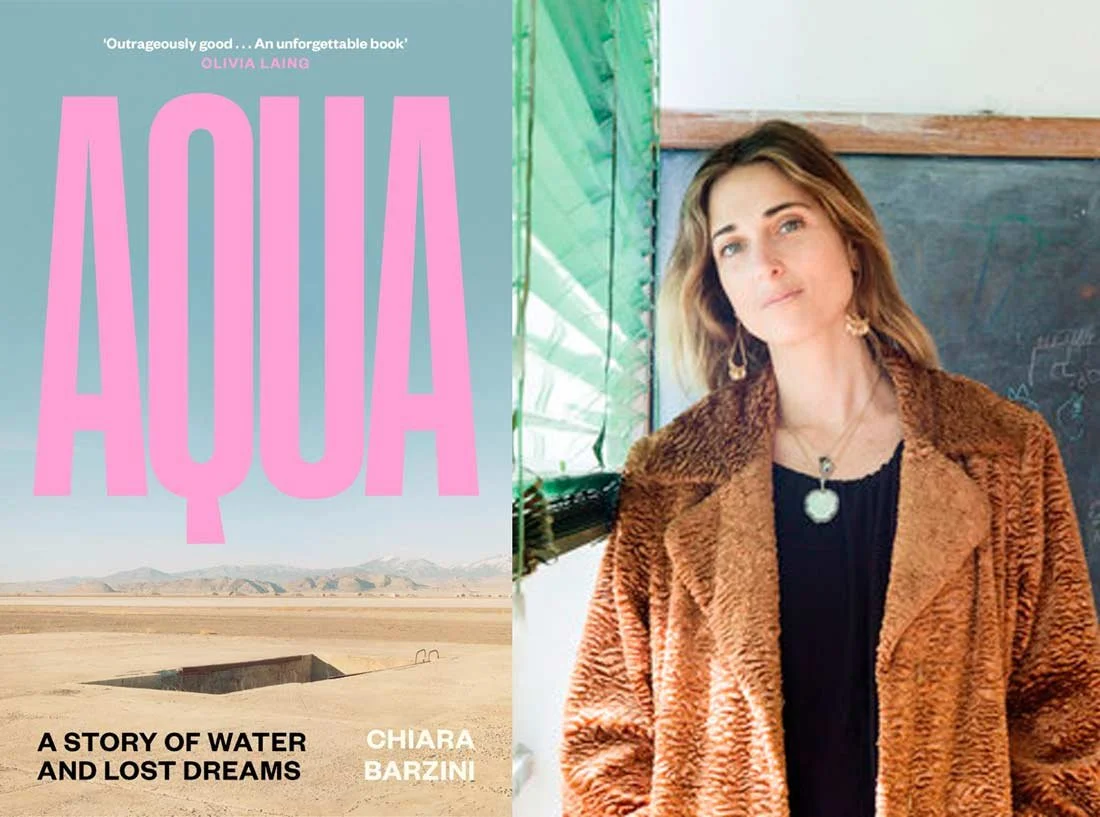


Well, I think first of all that in order to have disillusion, you need to have illusion and I really want to sort of take a stand in the name of being a delusional person, you know? I do think illusions are necessary to our sense of creativity, and we need to fall in love with extreme projects, and we need to have ideas that are sometimes unsustainable. We need to dream big in order to be creative and feel alive. The illusions that are a part of Aqua are larger illusions. They're illusions that have to do with my adult life. They're connected to nature and the presence or absence of water, the illusion that we can keep sustaining a city even though the water has run out.
And connecting those with larger illusions that have to do with film and creating projects that are my own but are also intrinsically of the city itself. Los Angeles is a dream city in many ways, and you kind of have to try and have your own dream without getting bruised too badly. So in a book about water, the main stories that have come up that I wasn't expecting to discover in such a dense way were stories about theft, obviously, and nature being sort of dried up in places that I didn't know about. So when I embarked upon this journey to follow the aqueduct, I didn't think I would find some of these stories. Where the water went, who owned it and what they did with it became very much part of what I was becoming obsessed with.
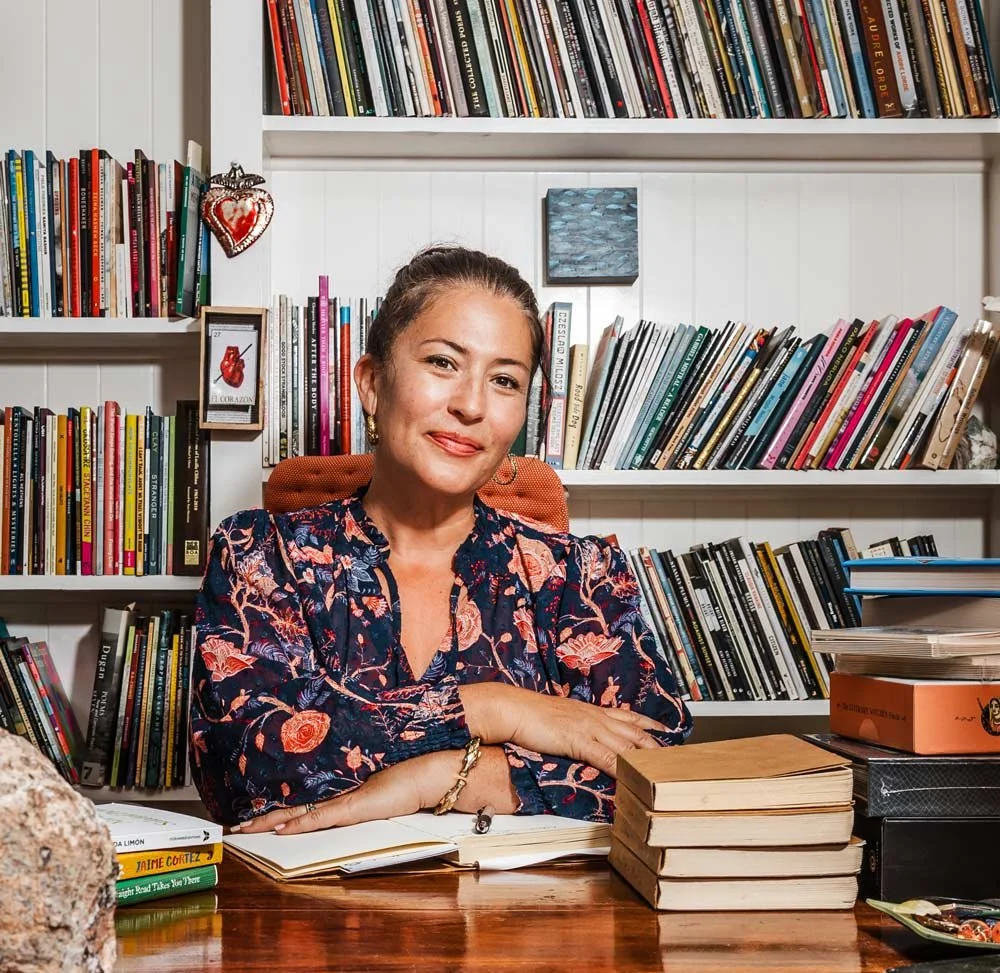
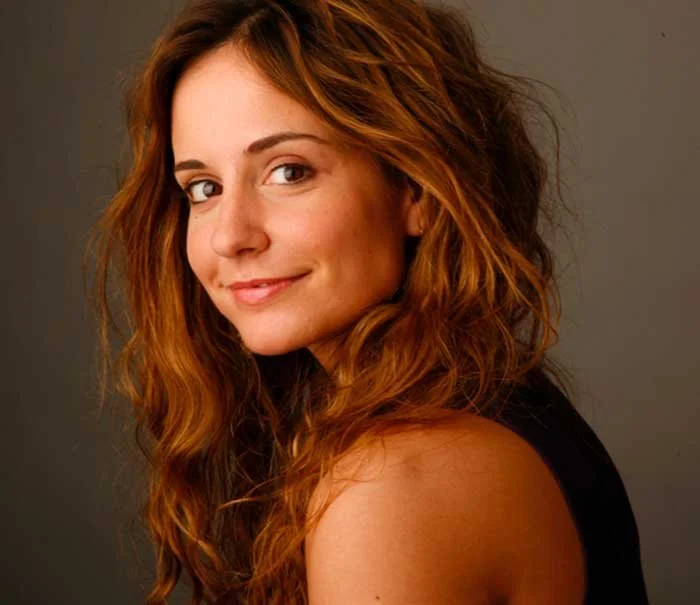
My guest today, Chiara Barzini, has spent her life navigating the literal and cultural fault lines between Italy and California. Today we will discuss her book, Aqua: A Story of Water and Lost Dreams, and her life as an artist living between two countries. In her acclaimed 2017 novel, Things That Happened Before the Earthquake, she wrote about arriving in the San Fernando Valley just weeks after a catastrophic natural disaster and the illusions of the '90s.
In Aqua, she examines nature, the California water crisis and the broken dreams of the Hollywood machine. We talk about family, film, art as an act of faith and our collective ecological coming of age, where the end of empire meets the end of abundance, and the consequences of hypercapitalism and colonialism. What does it mean to stare our illusions in the eye and find the courage to imagine a better future?
Chiara Barzini, welcome to The Creative Process and One Planet Podcast.
CHIARA BARZINI
Thank you, Mia. I'm really very honored to be here. I love your podcast.
THE CREATIVE PROCESS
Well, thank you. We want to dive right into Aqua, the theme. I love water. I'm so inspired by water. But in your life, there are rivers running through your life, and of course, in Aqua itself, the Tiber, Los Angeles River. Before we branch out to those, could we go back a little bit to the source, those people and places that formed you?Who is Chiara Barzini—mother, daughter, dreamer, writer and filmmaker? You're many things. Do you remember the young Chiara and what it was like to be her and experience the world for the first time?
CHIARA BARZINI
Yes, I was very lucky that I actually grew up very close to nature and close to water and close to a sort of rural part of Rome that today completely has been— But at the time there was a kind of Etruscan area not far from my house called the Park of Veio, which was very, very magical and very formative. Sorry, there's a Roman ambulance in the background.
THE CREATIVE PROCESS
So I have to say, kind of like the beginnings of your books. There's always a kind of crisis or disaster.
CHIARA BARZINI
There's always a crisis. There's constantly a crisis, absolutely. So I think that that kind of access to the city and the countryside merging into each other really was formative for the young Chiara, and always finding a way of paying attention to nature within urban contexts and vice versa.
And of course, I was so enthralled by these Etruscan stories that were so close to my house but from thousands of years earlier. So I was very curious about the sense of magic that permeated everything that they left behind. I think a sense of kinship towards lost civilizations and their incursions with contemporary nature and cities is definitely one of the most formative feelings that I can evoke from my childhood.
THE CREATIVE PROCESS
Yes, it's true. I think it's something that I can relate to. Talking about the extent of the Roman Empire. I'm looking at Roman ruins just across the street from me. the travels of the Romans, they have left these wonders. In our minds when we live in these older cities, we're living among the ruins. We're living with history.
It's something going to Los Angeles (maybe the newness isn't really new because it erased other cultures and other histories). But going to Los Angeles, which appears so new. The sense of an end of empire, which is really also at the heart of Aqua, is something maybe Americans can't hold in their mind. We are really at this stage where they are trying to understand it, and we see it's the cause of so much panic. There's a lot that your book explores. But I’d love to stay in the subject of family. You go back to what we love so much in your coming-of-age novel, Things That Happened Before the Earthquake, where it's a personal story. It's not a only story of some vast resource or diminishing resource. It's our relationship with it.
CHIARA BARZINI
Yeah. In terms of the Earthquake, I think that was sort of the moment when I realized that I had fallen in love with Los Angeles and all of its contradictions. You know, one of the greatest cities that is absolutely at the mercy of its own nature, that's definitely Los Angeles.

So when I was living there as a teenager in those early '90s years which inspired the memoir or the novel that's heavily memoiristic, I realized in hindsight what an impact that nature did have on my way of perceiving the city. But when you're a teenager, you're sort of stuck in that moment of survival, and you're not taking in all of the elements.
So high school was, in and of itself, such an adventure that I didn't really have time to absorb the rest of the story, and that was something that I had a privilege of doing much later in life as a kind of reckoning. And it was something that actually made me fall in love with the city all over again.
THE CREATIVE PROCESS
Yes, I mean, I don't have any great knowledge of Los Angeles. And we should say, when you talk about Los Angeles, it's really Los Angeles and environs. It's really what lies beyond, you know, this great expanse, you know, the romance of it through films or through writing, that is really my experience of it. It always seems so wonderful in films. It always seems so dramatic in books. And then there is also disappointment—
CHIARA BARZINI
Well, I think first of all that in order to have disillusion, you need to have illusion and I really want to sort of take a stand in the name of being a delusional person, you know? I do think illusions are necessary to our sense of creativity, and we need to fall in love with extreme projects, and we need to have ideas that are sometimes unsustainable.
We need to dream big in order to be creative and feel alive. So of course, that comes with a risk. Anytime the ego is involved, and illusions I think do have to do with ego and with a sense of asserting yourself in the world, you're putting yourself out there for various kinds of disappointments.
I think that with the first book, with the novel, I wasn't so much dealing with my own illusions and delusions as much as the ones that belonged to my parents when they moved to Los Angeles. And I had the advantage of being able to look at those from the point of view of someone who didn't really have anything at stake, you know?
I was the daughter that was taken onto an absurd trip in the early '90s and sort of eradicated from Rome and thrown into the San Fernando Valley during earthquakes and riots and such a thriving and crazy time for the city. But it wasn't my dream that was on the line, I was only a teenager and my dreams were still very murky at the time.
But I did have ideas of what I thought Los Angeles would be that were not met with exactly the sort of identical dreamscape that I had imagined. Of course, I grew up watching 90210 and Baywatch and having a European point of view about what the City of Angels was. But I was confronted with something very different.
Illusions that are a part of Aqua are larger illusions. They're illusions that have to do with my adult life. They're connected to nature and the presence or absence of water, the illusion that we can keep sustaining a city even though the water has run out.
And connecting those with larger illusions that have to do with film and creating projects that are my own but are also intrinsically of the city itself. Los Angeles is a dream city in many ways, and you kind of have to try and have your own dream without getting bruised too badly. Which I think, this is sort of the essence of this book about illusions and delusions mainly.
THE CREATIVE PROCESS
Yes, I love the way you do it, because you have to have a space for dreams, and also because not all of our dreams of abundance, we don't have to forget all of them. Now we're looking at a future of green hydrogen-powered flight using renewable energy. These are real plans that we can create in the world. So we can still pursue that life within reason. And you write about learning to live in the era of limitations.
Your first novel memoir had so many elements of your life dealing with that, a period in your life when you were young. You're just finding out about the world, and now, of course, you're a mother and thinking about all these questions about the future. Obviously, they are so much more charged for you about what kind of future we're giving the next generation. Have we really depleted all the groundwater and there's nothing left or not much left?
CHIARA BARZINI
Yeah. That's always on my mind in terms of being able to preserve a sense of innocence around childhood. I feel very bad and responsible for the children of our generation as parents because I feel like our anxiety is spilling over onto them in such a profound way.
Not just anxiety about the Earth and what is happening ecologically, but it's also a very strong political anxiety, and we're making them responsible very early on for some complex ideas that maybe they don't have time or they're not equipped to absorb them or integrate them as well as we'd like them to. So I think they feel very responsible and charged, and that does make me worry a little bit.
THE CREATIVE PROCESS
So one thing I thought about was the way you wove it. That was beautifully done. Because within your own family, something that you know about is a kind of wild or free life where you can pursue dreams that might not be realistic. But if you believe them—I can't remember the phrase you used, but where you feel like if you wish hard enough, you can get a mini pony.
And your father's dream of the Hollywood dream. And bringing his whole family along in this collective—I don't want to say delusion because actually those are the same people like Mulholland, for whatever he did, which it's important to mention, who has put his name all over Los Angeles and is responsible for stealing the water. You know, that could seem like a crazy dream, but if enough people come with you, then it's really no longer crazy. You just make this kind of magical thinking very real for us. And I was nostalgic for this time when we had more time.
CHIARA BARZINI
I mean, that's a theme obviously for all of us, the time when we had more time. Time is going so fast and there was still a sense of unbridled possibilities and innocence, I think, in our own youth, or a kind of innocence. And even capitalism hadn't shown its extremely ugly side in such a complete way yet.
In fact, it was still, especially a European looking onto the very first world of America, it still had an allure of endless possibilities. It was sexy. It was adventurous. It was pioneeristic. If we look at where capitalism is today, it's completely the opposite of that.
It has an element of bullying and of ferocity and of inhumaneness, which obviously already was very present in the '80s. But I think there was still a sense of mystery tied up into it, a sense of miraculous. We weren't exactly aware of what the machinery behind these dreams that were being created looked like and who the people involved in it were truly and how they were paying for it or what the kind of hidden truth behind the Wizard of Oz, I guess, in some way.
THE CREATIVE PROCESS
There's so much wisdom in that. I do return to that often because in our maturity, eventually we all have to look behind that curtain and meet our heroes or understand what we're dealing with.
CHIARA BARZINI
Looking behind the curtain is something that happens also with age and with wisdom and with your body changing and your needs changing and all of that. As life goes on, I think naturally it's just one reality check after another and one disillusion after another, definitely.
But I think there was also something where I felt embarrassed to show or to tell, to admit how much I was still clinging on to these old ideas of miracles, of enchantments, beloved or coveted objects appearing out of nowhere. The illusion was drastically peeled away. But it's also, I think you have to really look at it, and sometimes we do it very late in life. I feel like I should have woken up a little earlier, but you know, whenever you do wake up, it's just good to wake up…