

As a psychotherapist, I've worked with thousands of people over my 53 years of practice, and I have had to learn to love each and every one of them. There is something about opening your heart and stopping judging and arguing, and listening again, inquiring until you find what is most lovable about another person, and that is a very difficult thing to do. We're all inclined to reject one another, even the people we love. It is very difficult to systematically seek to accord the other respect, your attention, your care, your capacity for appreciating and valuing what is good in them and what is possible for them in the future.
So that's again, another way of loving. It is about seeing the potential in another person, seeing how they are suppressing certain aspects of themselves, how they have been led to hide their light under a bushel, to not step up to the plate, to not fully become what they're capable of being. And to know that we can touch them in a very small way sometimes to help them begin to see that this is possible for them, that there is all this hidden life and this hidden capacity for their loving their life and themselves and others.
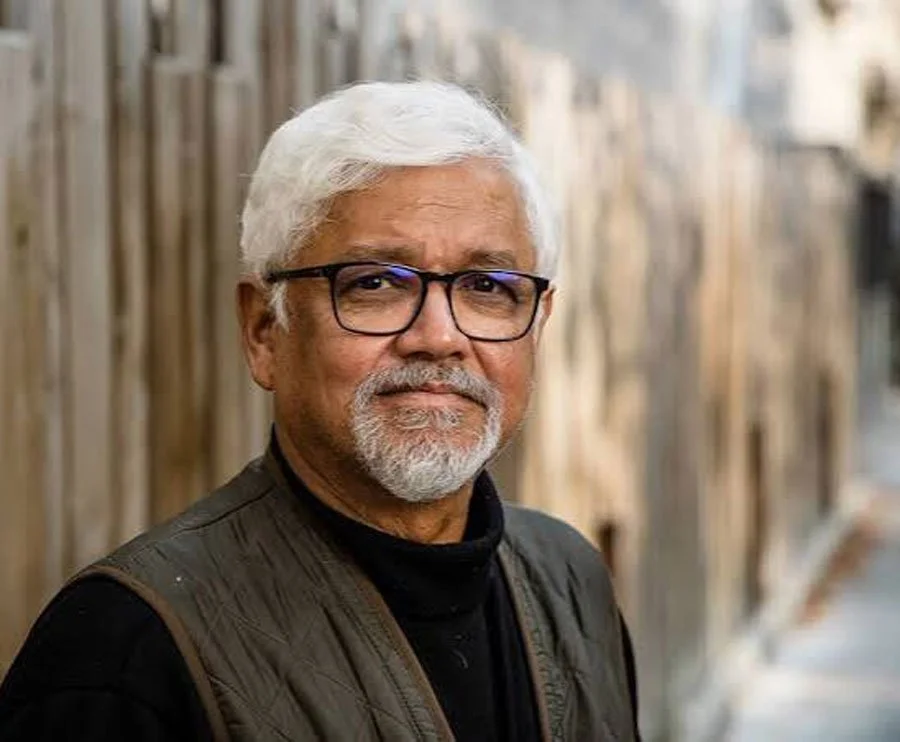
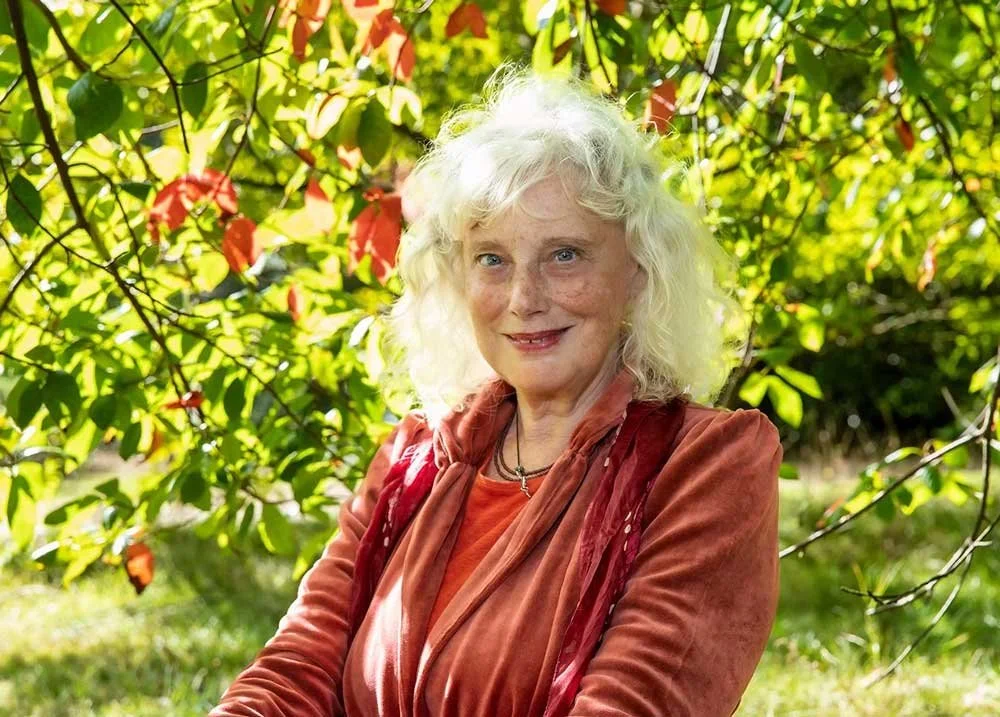
Emmy van Deurzen is a philosopher, a therapist and a pioneer who has spent five decades mapping the architecture of human existence. Born in the Netherlands and trained in the radical psychiatric wards of France, she came to London in 1977 to work alongside R.D. Laing, only to realize the anti-psychiatry movement had kind of lost its way. She decided to build something new. Today, she's the founder of the New School of Psychotherapy and Counselling and the leading voice of existential therapy in the United Kingdom and founded the Existential Movement.
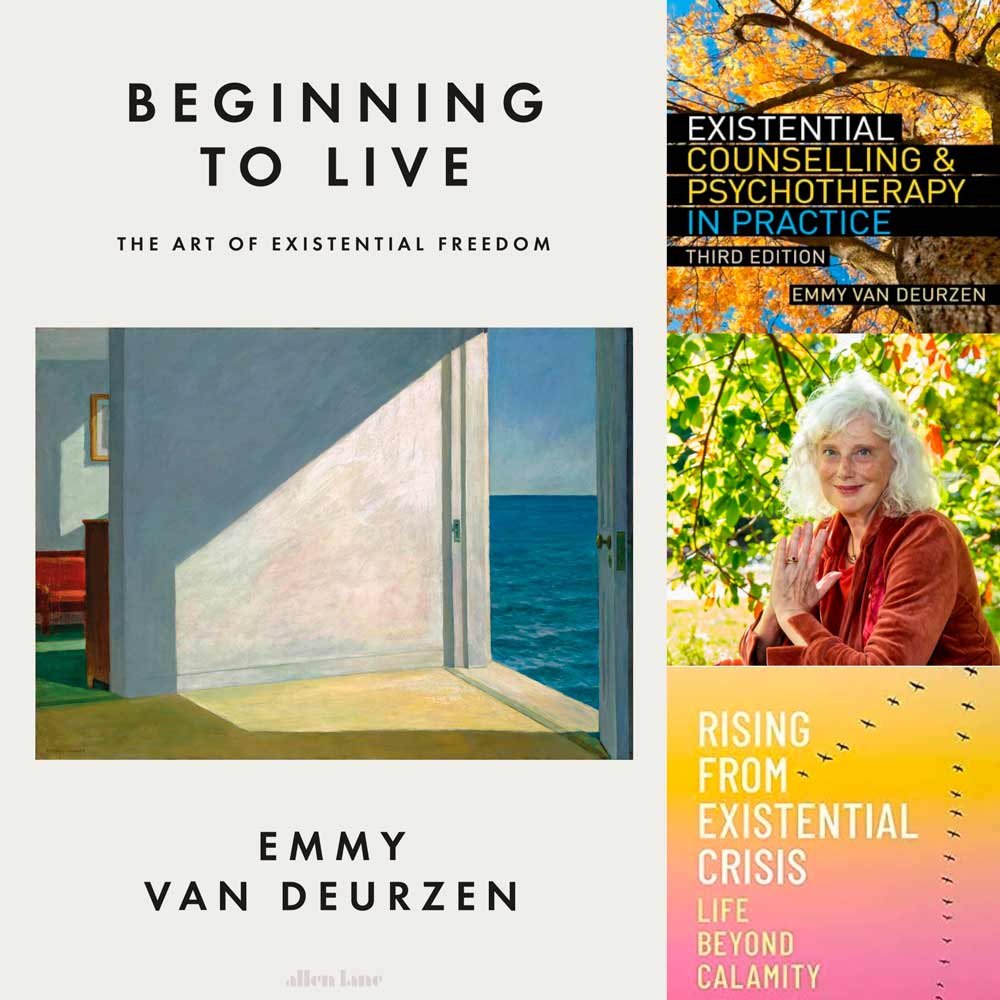
Her work challenges the medical model of mental illness, suggesting instead that our crises are not diseases to be cured but philosophical crossroads to be understood. Her latest book is a distillation of that life's work. Beginning To Live: The Art of Existential Freedom is her first book written for a general audience, offering a guide on how to reclaim our freedom and find meaning in the face of suffering. Emmy van Deurzen, welcome to The Creative Process.
EMMY VAN DEURZEN
Thank you, Mia. That was a lovely introduction.
THE CREATIVE PROCESS
Well, thank you. I have to say I haven't had the chance of having that one-on-one experience with you, but through your book I have, and your other works. I feel like you've expanded my sense of existential freedom and my knowledge of myself, so thank you.
EMMY VAN DEURZEN
That's wonderful.
THE CREATIVE PROCESS
You address many kinds of freedom in your book. It could be called Freedom or Paths to Freedom. Freedom of the senses, of feeling, of thinking. You write, "It's all about stopping being afraid to live to the full and slowly learning to befriend your life." So for you, Emmy, freedom is...
EMMY VAN DEURZEN
Freedom is many things, but it is first and foremost a capacity to take one's space and to take one's place in the world, and to be aware of one's capacity to take different paths and to make different choices, and therefore to take charge of one's life. And it always comes with taking responsibility for the choices we make and the consequences of those choices as well.
THE CREATIVE PROCESS
Yes, it's not all, you know, a big party where we just do whatever we like. If I have absolute freedom for myself but it causes to limit other people's freedom, then that's not freedom, I mean, in the truest sense, in the way I believe. So there's a responsibility in that freedom, which is very... There's a more ethical, creative dimension, you know, as a whole human experience and that freedom that we have to be respectful of others.
And I guess of all these different paths to freedom, you begin with the discussion of our bodies and the world. That's something we might forget if we're in therapy. It's like we think about our past, our traumas or things, and we forget about this body of ours, that it's alive and needs to be free. But of all those kinds of freedoms, what is the freedom that for you maybe requires or required the most effort for you to practice it every day?
EMMY VAN DEURZEN
All of them really. I have to remind myself every day to be cautious and attuned to my body. And as I grow older, that changes again and I can't take things for granted. And I have to counteract some of that, and I have to discover new ways of being free and not being quite so deeply attached to the body maybe than I was before.
I am constantly still learning in my relationships and as my life expands, knowing more and more people, being in more and more different situations. I have to constantly learn to respond in a different way, to attune to my feelings and to try to resonate with the other. But to also pay attention to myself and to make sure that I have a kind of safe space inside of myself, and that I remain friends with myself, that I don't allow the world to impinge on me but remain kind of at ease in it, to find a kind of inner peace.
And that links to that spiritual freedom, which is really the ultimate objective in some ways, to feel that you are guiding your own life, navigating around the obstacles and going in the right kind of direction to feel that you're doing something of value with every day of your life, every moment in a way. And that comes very much from being tuned in to be aware and to be able to learn all the time, I think. So it is quite a commitment to try to be free.
THE CREATIVE PROCESS
Yes. It's awareness, you know? I mean, we're now entering a new future and I know you've selected a passage you want to share with our listeners where children—because I've... This is the passage from the beginning of your book, one of your earlier memories. They don't have the same kind of freedoms. They have different freedoms, but they don't have the same kind. They're kind of maybe enslaved to the algorithm where choices are being made for them. So, you grew up just in the shadow of the Second World War and all the restrictions of...
EMMY VAN DEURZEN
Yes. Yes, there were lots of restrictions in my childhood because the Second World War had destroyed so much of the Netherlands where I was born, and that involved, for instance, seeing the ruins of a country around you and also seeing the rebuilding constantly of that country.
But it also meant that the housing stock had been reduced so much that there was no space for people, and that I lived until I was 17 in a really tiny one-bedroom flat, and that my freedom was severely obstructed very physically in that way.
Fortunately, at that time in the '50s in the Netherlands, children were able to roam freely outdoors. There was hardly any traffic in our neighborhood. We could run around after school every day of our lives. And because I grew up by the seaside, I was able to benefit from the sea, the beach and the dunes, which are very large at the southwest of The Hague where I grew up. So I had an amazing access to the natural world but a very restricted safety in the house I lived in. So that was quite an opposition in some ways. I felt much, much freer outdoors than I did indoors.
THE CREATIVE PROCESS
Well, as it should be, but it obviously set your imagination going, to know... You have the experience of freedom. We only, as you also write, we only kind of appreciate it when those freedoms are taken away from us or when we feel a bit more restricted. If we have constant freedom, we don't always appreciate it. And before you share this passage from the introduction of your book, I was moved when you talked about your parents' memory of liberation. You said about, of all the descriptions or experiences of freedom, that that was the true experience of revival and beginning to live again. So I thought that was a beautiful contrast.
EMMY VAN DEURZEN
Yes. Because they told us so many stories about the five years of suffering they went through, and they were deprived of everything for those five years. You know, there was no transport anymore in the end, there was no fuel and there was no food. So they went through what is known as the Hunger Winter, where they starved, and spoke about that feeling and the dangers they experienced of my father being shot in the street and my mother working with dying children as a nurse. It was very acute, my awareness of that danger and of that oppression.
And as children do, they don't make distinctions between the stories they hear and their lives as they are. So it was for me as if I was living in that dangerous universe. And when they spoke to me about the story of their liberation, of finally feeling that all that pressure was falling away and that life would open up again and become possible again, I could feel the yearning for that feeling in myself from very early on.
Because I was aware that I was, too, in an oppressed situation, dealing with people who had been through so much suffering and who had a lot of emotion. And an older sister who was responding to those pressures in a very acute way, often with no room really for my self-expression, meant I had to cope. I had to create a very safe space in my mind in order to feel that I had any freedom at all. So it was nature and my inner world. It was much harder to create a safe space in the social world. Of course, as soon as I went to school, that stood me in good stead because it seemed easy. I found it very easy to be with my peers and to be with teachers. That was not so difficult as it had been, it continued to be, to listen to people's pain at home and to find that if I cried...
SHOW FULL INTERVIEW (12:00+) ▼
...that made things worse, and there was no space for that really. And I found it very difficult to not cry because I was acutely aware of all this pain around me, not just in my own family but also in many of the families in the block of flats where I lived. That was actually a block of flats that had been built very quickly after the Second World War for people who had been hurt in the Second World War.
So I had a much higher number of war survivors around me from the start, and that had a big impact.
So really you were learning the roots or the foundation, I think, of caregiving, of giving therapy or helping others heal maybe just through listening. But as you said, you didn't have that freedom to quite be a full child. You know, that innocent time of play.
You didn't get that full experience, but you were learning in a way the tools of your trade, it seems.
I was. I very much was my mother's carer in some ways. Every day when we did the washing up together, she would tell me about her troubles and about her fears very often. I learned to listen to that and to respond to her from a very, very young age, and she used to praise me for that, and she used to predict that I would become a social worker.
Later on, of course, when I studied to be a psychotherapist, that wasn't considered to be a very good thing that one's mother told you, “You're my guardian angel, and you've been sent to me to help me through my troubles.” That's a very dangerous thing to tell a child, and it took me a long time to get away from that identification. I don't think you ever completely get away from something that intense. And I just learned to be a psychotherapist, and I found it completely natural to do that job.
Well, it is a pressure when you become, in a sense, at least partially a parent to your parent or helping in that way. But, you know, I think that as long as it's not too heavy the burden, children do like that kind of... we all want that sense of purpose. I mean, your book is about finding the sense of purpose where we are living fulfilled lives.
So for her to have noticed, you know, maybe she nudged you towards it, but for her to notice those qualities in you, even without their own circumstances that caused you to, you know, fill in the gaps for love and care, it's a nice thing to know.
Sometimes people, it takes them their whole life to realize what they're actually good at, what they love doing. Yeah.
It was a great gift she gave me. It gave me a sense that I had a purpose in life, and I knew that I had to apply this to other people around me as well. So it was, you know, not something I ever doubted really. I always knew that I wanted to do something for the world, and I wanted to help people. And I always knew I didn't want, like her, to be a nurse because the physical elements of that I didn't find particularly attractive. It was very much emotional support that I was good at.
Yes. And we've been delaying. I want listeners to hear it directly in your own words.
I will read a couple of pages of the introduction.
When I was a little girl of three or four, I was given a yellow balloon at a birthday party. It was a solid, old-fashioned rubber balloon which had been filled with helium, and it was larger than any balloon I had ever seen before. It was magnificent. It was the first balloon I owned. It floated up high. I held it tightly on its string, and it bounced along with me as I skipped around our home. It delighted me because it seemed like a creature that was alive and had a mind of its own. I adopted it as if it were my pet or my soft toy, and I called it Flops and spoke to it like a friend. Not having many toys and not being spoiled with many material possessions, I became quickly attached to my balloon and looked after it carefully for many days.
It was still going strong after a week or so, sitting quietly in the top corner of the tiny bedroom I shared with my sister, waiting for me to play with it and seemingly watching over me. I talked to Flops every morning as I got up and every evening as I went to bed. Flops had become my best friend. I had no conception of the limits of its life and gave it my affection without stint.
My older sister teased and mocked me about my devotion to what to her was nothing but a bit of party loot, and she probably rightly in some way thought me very foolish. She said that if I really wanted to bring my balloon to life, I should draw two eyes, a nose and a mouth on it. She pulled Flops down from the ceiling, laughing mischievously, and handed me a ballpoint pen. Inevitably, as soon as I attempted to draw eyes on Flops, my beautiful yellow balloon burst with a bang, flew across the room and spattered the ceiling. I broke into sobs and felt inconsolable. I couldn't believe that Flops had gone, disintegrated. It felt like a grave loss. I truly grieved for my balloon.
I learned about the fragility of life and the dangers of attachments. My grief was mixed with disillusionment and disappointment and flavored with a growing sense of mistrust in my sister, who was obviously not on my side. Her laughter at my misadventure continued to ring in my ears for many years, but I mainly felt remorse, regret and guilt for having failed to keep my Flops safe and alive. I knew in my bones that I would never have such a beautiful balloon again, and indeed, I never did.
My parents made light of the experience, refusing to be moved by my tears. They said, not unwisely, it would teach me to appreciate and take care of what was mine and to think for myself about the risks and dangers on my path of listening to other people. This lesson has stayed with me throughout my life. It was the beginning of my understanding of the dangers and responsibilities of freedom.
It's so important. I mean, on the one hand, it could be lighthearted. I mean, I remember the joys of when I first saw that film, The Red Balloon, and I think that all of us... I didn't have such a traumatic experience with a balloon, but I had a little doll or friend in that way.
But we can understand it. And yet, this is a kind of startling awareness, almost like an early awareness of death, you know?
It is. It is. It is the awareness that things don't last. If you are exposed to what I was exposed to, you know, a certain amount of poverty and a certain amount of danger and fear, that looms quite large. If you feel assured that there will be other sources of the same thing, perhaps it won't hit you quite in the same way.
So it depends on the context where you encounter that. And different children will react very differently to the death of a pet, for instance. Because for some of them, their pet has become everything, an absolute friend, a necessity. For others, it's one amongst many pets or they have lots of other things in their lives, and maybe they've become quite casual about it.
So from very early on, children are differentiated in how they have these experiences, but all of us do have these experiences. All of us are confronted with death, as you say, very rightly.
Yeah. And you discuss the many teachers you've had both directly or indirectly through history, through their writings, whether it is Sartre or Viktor Frankl and others. I want to get later onto R.D. Laing and all these. That freedom is a sense of, now what do I do with it? You know, it's not...
And I actually have a feeling that animals also have this sense of freedom, and we won't know exactly. It's not that they're just automatic creatures on autopilot. They also maybe have this burden, but we'll just never quite know. But so now, what are we going to do with this time that we're given?
And so we should remind ourselves every day, and your work is a great reminder of that. It's interesting the way parents or even, I remember my grandfather, they go through these different experiences and they're just trying to give you lessons of life. Or maybe your parents weren't prepared for the Second World War, and they wanted, well, you have to be prepared. You don't take things for granted. I mean, I remember my—
And you have to toughen up. That was the message, definitely. Don't be so sensitive. There are worse things in this world.
Which is a nice thing. I remember my grandfather telling me when I was three, and he wasn't a doomsdayer, but he lived through the Depression and all these things. Three years old, telling me the vicissitudes of life, and I thought that's a bit heavy for three years old. But he's trying to tell you to be grateful.
A favor. He did you a great favor. There are too many parents and grandparents who spare the children too much. We need to give them this knowledge. We need to pass this on to them, but hopefully in a way that they can absorb and that doesn't traumatize them.
Yeah. It's just saying, be grateful for everything. I'm wondering about language because you've inhabited obviously different countries. The Netherlands, studied in France, now in the UK and probably you also have a knowledge of German and obviously Dutch.
I don't know all the languages that you've inhabited. How do you feel that has, you know, formed your ways of viewing the world? You know, as you become fluent in these other languages, of course it opens up... You talk about multilingual people who have roots in the air.
What an excellent question that is. I have long thought about that because shifting your language, as you know only too well because I happen to know you're fluent in at least three languages, shifting your language on an everyday basis is nothing short of a crisis in one's life. It is a huge challenge. Because at that moment, when you find yourself in a new country, not conversant with the language as the people around you, you lose your confidence of being equal to other people.
You become inferior in some way. You become like a child again in some way. You regress back to whatever age your knowledge of that language is at, as it were. So it takes enormous effort at that point to access your understanding of the world beyond language.
Because if you keep translating from one language to another, it becomes impossible. You become paralyzed. That takes too long. At one point, you learn to shift away from your mother tongue towards somewhere in the back of your mind where your mother tongue has created an understanding of concepts and of grammar and of relationships and all sorts of things, and you start putting new words to those things.
And when you do that several times, what you find is that you have a brain that is not just multilingual but that has created something beyond language. And I think that is exactly what we need to learn to tune into when we do psychotherapy. It is to get away from the surface level, which is the language level of life, to the deep level of our actual understanding of how the world works.
And to enable people to get ahold of their understanding of how that world works is already to teach them to be in a dialogue with themselves, in a dialogue with the past, in a dialogue with the different environments that they are in. So that is enormously important, and I think I learned a great deal from living in different countries and having to be completely fluent in different languages.
And also from having the ongoing experience that I will always, in some ways, be considered an outsider now wherever I go. Because if I go back to the Netherlands, I'm still an outsider because I've been away from the Netherlands since 1970. And, you know, people look for your accent. They look for your lack of knowledge about certain bits of history or geography. There is a sort of maladjustment in you that teaches you to overcome it in some way.
And so I believe that all these slight problems in our lives are what awaken us to our freedom to find a path across, to build bridges between who we are and who other people are, between what we've learned in one set of circumstances and what is happening now. To make these connections, to make these bridges, that is what creates a wider and wider framework of reference that gives meaning to life. From that, we get a sense of our capacity to be free, to be flexible, to adjust to all these different places and times and people and concepts and new challenges all the time.
Yes. We become connected to our past, present and future, but also that deeper sense of our own inner mythology and that sense of history. And in a way, what you're talking about, one of the ways that we connect to it—you talk about the four worlds—is through language.
But it also creates problems. So I think I've been grateful for those times when I am not the most fluent. But then I remember, let me read the language of gestures here because people don't always say what they really mean. So it reminds you to strip away that language sense, the verbal and written language sense, and see and feel and sense. So I think it's very important.
A powerful point. This is exactly what you need to do when language fails you. You start to observe what people mean in other ways, and you do learn these things without getting taught. You figure out where a person is at and what their mood is, and what this gesture means in one country and what it means in another country, and how welcome you are or how suspicious people are of you.
All of that becomes second nature. And of course, this is true for most people because most people go through a crisis like that. When you leave your parental home and you strike out in the world, whether you move to a different town or a different country makes very little difference. You will have to adjust to an unknown situation, and therefore those skills will start building up.
Yes. And so often we do learn through crisis, and you've been very open about early crises in your life. You know, obviously, the initial wound they say is often family, but then first love regarding your own first experience of intimacy that kind of set you back when you were 15 and 17. So you made two attempts on your life...
After my very intimate boyfriend of two years, who we had been very committed to the relationship, decided to ghost me and leave me to work out what was happening for a very long time. And this affected me very deeply. I was so desperate for that connection in my life.
And I had also been raised in the belief that there was one person for every person, and I strongly believed I had found that person and that this was it, and that if he did not want me anymore, probably I wasn't a worthy person and nobody would want me. And really, I wasn't capable of loving and being loved, and that was a very bad thing.
This also happened in 1969 after I had become acutely aware of the turmoil in the world, was very preoccupied with the war in Vietnam, with the war in the Czech Republic. I was also very aware of the problems with nature. I had a very acute interest in the Club of Rome, which had started just a bit before that, and they were coming out with some very alarming messages about what was happening to the natural world. So it felt to me like a catastrophe. It was as if everything was telling me that this world had no room for me, it had no future for me and it would be better off without me, and I would be better off without it. I was quite serious about that.
Yes, and so we have this idea... It's so interesting that you're already, in terms of your awareness of love, you're already thinking of the world. So you're saying to yourself, metaphorically or it felt very real, the world was ending. And so of course he was a bit older too, so...
He was five years older, which is a lot at that time.
It is a lot. When you met when you were 15, and then the correspondence. I know how things form through correspondence.
Because the imagination is such a complete love, right?
Yes, exactly. You spend your time, you know, exploring your feelings and conveying them to the other, and reading their letters again and again, and interpreting every word and asking yourself what it means. And you create this whole universe which then suddenly gets ripped apart, leaving you with dust in your hands.
Because you're curating your life too, and you're distilling what you know and you're putting it out in the envelope like this little vessel sent out into the world.
Like this happened to me through actual correspondence in the post, which is not what everyone experiences these days. It's quite different, isn't it?
It's very romantic. And so over the years, because you had some husbands, and so you have had a mature love, you had that very early love, and we're so happy that that didn't vanquish you.
You learned from this crisis, as you said. How did you put it? You phrased it so it was the event that seems like a catastrophe, but it saved you.
Absolutely because it gave me my freedom that I'd never had before really. I went from looking after my mother to looking after my boyfriend, and then he left and I was confronted with that empty space, and then suddenly I had my freedom. But at first, that was overwhelming, and it felt like emptiness, and it is often like that. People who discover their freedom often experience it as emptiness, and they feel deeply anxious in that emptiness.
But once you discover that you can make something of that, that this is now a space within which you can create, and this is what I discovered with the help of many good people around me, really, teachers, the head of my school. I discovered my creativity. I discovered that my writing could be published in the school journal, that my paintings were good enough to be considered valid as it were, that my songwriting was good enough to play the guitar and sing my songs, that my ideas about life were worthwhile enough to start talking to the other students in the school.
So, you know, talking about love there, I mean, how have, over the years, has your view of love changed or your expanded experience of love changed?
Enormously. I have been through many different phases with that. And of course, love is differentiated very much from how you love one person or how you love another person, how you love one thing or another thing, how you love yourself. So the love for my dog is very different to the love for my husband and is very different to the way in which I loved my parents. And it is an enormous privilege, I think, if you get to love in many, many ways.
I now believe that love is key to the whole thing, that loving your own body, your own presence in the world, loving nature, not just in a general way but in a very specific way. You know, loving specific trees or specific phenomena of mist rolling in, or wind, or rain, or the sunshine. Specific things and also general things. To love other people in so many different ways.
You know, as a psychotherapist, I've worked with thousands of people over my 53 years of practice, and I have had to learn to love each and every one of them. There is something about opening your heart and stopping judging and arguing, and listening again, inquiring until you find what is most lovable about another person, and that is a very difficult thing to do. We're all inclined to reject one another, even the people we love. It is very difficult to systematically seek to accord the other respect, your attention, your care, your capacity for appreciating and valuing what is good in them and what is possible for them in the future.
So that's again, another way of loving. It is about seeing the potential in another person, seeing how they are suppressing certain aspects of themselves, how they have been led to hide their light under a bushel, to not step up to the plate, to not fully become what they're capable of being. And to know that we can touch them in a very small way sometimes to help them begin to see that this is possible for them, that there is all this hidden life and this hidden capacity for their loving their life and themselves and others and the things they do, and what is possible for them, that this is a transformation that is brought about by understanding, attention, care and indeed love.
Exactly. We're almost kind of trained. You talk about the ideal educational models. That's something we think a lot about here too, because we're an educational initiative. But yeah, so many of those dreams or the sense of love, or that greater capacity of what one might be, not just success, but what is it to live a full and fulfilled life? What is it to live a good life? It's kind of trained out of us. You know, it depends on what educational system we grew up in, but our dreams might be put down as foolishness or inaccessible or just what makes us interesting might be told we should hide it.
That's what you're saying. So just walk us through, like, say, if someone came in to you, you know, and you've met them for the first time. You write about these questions that you ask them about what they love, what they fear, ideas about freedom, life and death, fate, synchronicity and their beliefs and maybe prayer or purpose.
But when you have someone in consultation for a first time, how do you do that tuning in? How do you do that listening to find out why they're there and how you, with their participation, can help them?
Well, it's a quite practical thing. It's a structural thing for the first session. My sort of system of the four layers of life and the contradictions and conflicts in that works for me, so I know that I need to find out about how a person is in the world at each of those levels. And I also know I need to know how that is true for them in a dynamic way, how that has been true for them historically, where they started from, how they have been challenged in life and how they have made decisions about how to respond to those challenges.
A bit like the way you are interviewing me, you're doing the same thing. You're asking me about where I started from, you're figuring out what things I've had to confront, and how I have made choices along the way and what I've learned from that. And that is terrifically important to enable the person, maybe for the first time, to become aware of all the learning they've done in their lifetime.
They come to you with a problem, with a sense of stuckness, or with a sense of pathology, or with a sense of dissatisfaction in life and frustration in life. But actually, as soon as they begin to open up about where they've been, how they've been, how things have changed over the years, all the things they know, all the things they've seen, all the things they felt, they begin to realize how much they have learned and how much strength they have really accumulated that they can draw on in dealing with the problems that are now visited upon them.
That they have this capacity they have underestimated all this time, and they can tune into that, and they can use it, and they can open their minds to all sorts of new possibilities and play with that, and enjoy playing with that. I like to think of it as I help them rejoin the dance of life and enjoy being in that process of being alive again.
Yes. It's a beautiful image, the dance of life, because it is a choreography, living. We don't realize. And I'm a painter.
Ah. I'm not surprised.
But I love dance. You talk about the importance of community and that connection that people have. So when we understand that, whatever trauma that dance might have been, it might have been a painful thing.
Dance can be hard, too, many years of practice until you get it right. But then you become fluid, so that pain can be part of the beauty, the difficult things that we overcome. And it's so nice to have these positive metaphors even for the difficult things, because let's face it, also, a lot of art is just about conflict, too.
But through those stories about conflict, we are also learning. So I like that, you know, life is a learning process, and to reinforce what they've already learned. Because we are the stories we tell ourselves, but we can also change those stories and become more than the stories we tell ourselves.
Because it is a story that is in the telling at the moment, it's not finished by definition. You know, as long as we are alive, life is an unfinished work of art. It is an unfinished story. It is an unfinished canvas. It is open to change and transformation, and that is something people often forget.
This is true until the last minute. I have worked with people who were dying and who were in their 70s or 80s, yeah, 90s too. And at that moment, sometimes people despair and they think, "I've done it all wrong, and my life has not been worthwhile." But by taking time to sit with that and revisit that life, uncover things they had just thrown away and forgotten the value of, they realize just how much they have passed on or how much they've taken from certain experiences and how much wisdom they have gathered that they were unaware of.
So we can, at any time in life, change what we have created in our life or harvest what is there and which we had neglected up to now to see the value of. And that is a wonderful part of being a psychotherapist, to work with people on distilling the goodness from their life as well as dealing with the hardship and dealing with the problems and with the pain and overcoming all of that. It ends up being about distilling what has come out of that and making that into something special, something that is enough to make any life worthwhile.
It's so strange. You have worked with people at the end of their life and maybe who've had these disappointments, or maybe they've had this great life and they want to just make sure that goodbye is done right. I had an interview not long ago with a Scottish writer, A.L. Kennedy. She was telling me about the Alfred Wolfson technique. I hadn't known about that voice technique, about how those soldiers who are dying on the battlefield, they would cry out.
Their life is going, and they're, at that moment they're becoming their most essential self. This is what you're talking about, getting to their true voice.
It is.
A fully expressed voice. And what Alfred Wolfson couldn't understand, it was compelling because you have these recordings of everyone who had this experience, who were able to witness that. They were like, you would be drawn to this. You'd want to go out to them, not just to save them, but there was something pure about it. And what he couldn't understand was why would people live their whole life and only wait until the last moment to speak in their most fully expressed voice? It's a weird thing when you've heard that.
Well, that's both true and totally understandable because it's true that it needs pressure and compression for that essence that we have. Some people might call it the soul or the spirit or the principle of life or something like that. The essence of that is sort of purified as you live your life and as you suffer, and all your illusions gradually fall away and you become purer and purer.
So in a way, it needs that pressure, and it only happens fully at the end when your life is completed, whether that is on the battlefield or in a bed makes no difference. But I also am completely with you that it is a shame that people do not realize there is this in our essence. This amazing aliveness feels eternal or that feels as if it is still going somewhere even after death, and that people try to capture and call things and tell us exactly what happens to that and all that.
Well, none of us truly know whether that is something that remains after death, but it is certainly there at death. It is certainly there for people who allow themselves to do the work to seek to be in touch with that early on in life so that they can live this deep, meaningful life of enjoying that because that is connected to other people's essences as well.
I don't believe in a separate soul. I believe that we are all connected to something beyond beings, and that when we distill this inside of ourselves, we are immediately connected up to that in other people too, and we know it when we communicate at that level with another person. It is a very deep level of communication where words are really redundant.
Yeah, it becomes that, whether you want to use the word, a certain resonance or a telepathy or whatever, that connection that you get with family or anyone that you've been close to.
I was so desperate for that connection in my life. And I had also been raised in the belief that there was one person for every person, and I strongly believed I had found that person and that this was it, and that if he did not want me anymore, probably I wasn't a worthy person and nobody would want me. And really, I wasn't capable of loving and being loved, and that was a very bad thing.
This also happened in 1969 after I had become acutely aware of the turmoil in the world. I was very preoccupied with the war in Vietnam and with the war in the Czech Republic. I was also very aware of the problems with nature. I had a very acute interest in the Club of Rome, which had started just a bit before that, and they were coming out with some very alarming messages about what was happening to the natural world. So it felt to me like a catastrophe. It was as if everything was telling me that this world had no room for me, it had no future for me, and it would be better off without me, and I would be better off without it. I was quite serious about that.
Yes, and so we have this idea... It's so interesting that you're already, in terms of your awareness of love, thinking of the world. So you're saying to yourself, metaphorically or it felt very real, the world was ending. And so of course he was a bit older too, so...
He was five years older, which is a lot at that age.
Exactly. It's a lot when you met when you were 15, and then the correspondence.
I don't mean to say that, but I know how things form through correspondence. Yes. Yes, very deeply. It is, because the imagination is such a complete love, right? Yes, exactly. Exactly. Your time with exploring your feelings and conveying them to the other, and reading their letters again and again, and interpreting every word and asking yourself what it means. And you create this whole universe which then suddenly gets ripped apart, leaving you with dust in your hands.
Yes. It's because you're curating your life too, and you're distilling what you know and you're putting it out in the envelope like this little vessel sent out into the world. Like this happened to me through actual correspondence in the post, which is not what everyone experiences these days. It's quite different, isn't it?
It's very romantic. And so over the years, because you had some husbands and so you have had a mature love, you had that very early love, and we're so happy that that didn't vanquish you. You learned from this crisis, as you said. How did you put it? You phrased it so it was the event that seems like a catastrophe, but it saved you.
Absolutely, because it gave me my freedom that I'd never had before really. I went from looking after my mother to looking after my boyfriend, and then he left and I was confronted with that empty space. Then suddenly I had my freedom. But at first, that was overwhelming and it felt like emptiness, and it is often like that. People who discover their freedom often experience it as emptiness, and they feel deeply anxious in that emptiness.
Once you discover that you can make something of that, this is now a space within which you can create, and this is what I discovered with the help of many good people around me really, teachers, the head of my school. I discovered my creativity. I discovered that my writing could be published in the school journal, that my paintings were good enough to be considered valid as it were, that my songwriting was good enough to play the guitar and sing my songs, that my ideas about life were worthwhile enough to start talking to the other students in the school.
Yeah. So, you know, talking about love there, I mean, how has, over the years, your view of love changed or your expanded experience of love changed?
Enormously. I have been through many different phases with that. And of course, love is differentiated very much from how you love one person or how you love another person, how you love one thing or another thing, how you love yourself. So the love for my dog is very different to the love for my husband and is very different to the way in which I loved my parents. And it is an enormous privilege, I think, if you get to love in many, many ways.
I now believe that love is key to the whole thing, that loving your own body, your own presence in the world, loving nature, not just in a general way but in a very specific way. You know, loving specific trees or specific phenomena of mist rolling in or wind or rain or the sunshine. Specific things and also general things. To love other people in so many different ways.
You know, as a psychotherapist, I've worked with thousands of people over my 53 years of practice, and I have had to learn to love each and every one of them. There is something about opening your heart and stopping judging and arguing, and listening again, inquiring until you find what is most lovable about another person, and that is a very difficult thing to do. We're all inclined to reject one another, even the people we love. It is very difficult to systematically seek to accord the other respect, your attention, your care, your capacity for appreciating and valuing what is good in them and what is possible for them in the future.
So that's again, another way of loving. It is about seeing the potential in another person, seeing how they are suppressing certain aspects of themselves, how they have been led to hide their light under a bushel, to not step up to the plate, to not fully become what they're capable of being. And to know that we can touch them in a very small way sometimes to help them begin to see that this is possible for them, that there is all this hidden life and this hidden capacity for their loving their life and themselves and others and the things they do. And what is possible for them, that this is a transformation that is brought about by understanding, attention, care and indeed love.
Exactly. We're almost kind of trained. You talk about the ideal educational models. That's something we think a lot about here too because we're an educational initiative. But yeah, so many of those dreams or the sense of love or that greater capacity of what one might be, not just success but what is it to live a full and fulfilled life? What is it to live a good life? It's kind of trained out of us. You know, it depends on what educational system we grew up in, but our dreams might be put down as foolishness or inaccessible, or just what makes us interesting might be told we should hide it.
That's what you're saying. So just walk us through, say, if someone came into you, you know, and you've met them for the first time. You write about these questions that you ask them about what they love, what they fear, ideas about freedom, life and death and fate, synchronicity, and their beliefs and maybe prayer or purpose.
But when you have someone in consultation for a first time, how do you do that tuning in? How do you do that listening to find out why they're there and how you, with their participation, can help them?
Well, it's a quite practical thing. It's a structural thing for the first session. My sort of system of the four layers of life and the contradictions and conflicts in that, so I know that I need to find out about how a person is in the world at each of those levels. And I also know I need to know how that is true for them in a dynamic way, how that has been true for them historically, where they started from, and how they have been challenged in life, and how they have made decisions about how to respond to those challenges.
A bit like the way you are interviewing me, you're doing the same thing. You're asking me about where I started from, you're figuring out what things I've had to confront, and how I have made choices along the way, and what I've learned from that. And that is terrifically important to enable the person, maybe for the first time, to become aware of all the learning they've done in their lifetime. They come to you with a problem, with a sense of stuckness, or with a sense of pathology, or with a sense of dissatisfaction in life and frustration in life.
But actually, as soon as they begin to open up about where they've been, how they've been, how things have changed over the years, all the things they know, all the things they've seen, all the things they felt, they begin to realize how much they have learned and how much strength they have really accumulated that they can draw on in dealing with the problems that are now visited upon them. That they have this capacity they have underestimated all this time, and they can tune into that, and they can use it, and they can open their minds to all sorts of new possibilities and play with that, and enjoy playing with that. I like to think of it as I help them rejoin the dance of life and enjoying being in that, of being alive again.
Yes. It's a beautiful image, the dance of life, because it is a choreography, and living, we don't realize, and I'm a painter you see...
Ah, I'm not surprised.
But no, I love dance. You talk about the importance of community and that connection that people have. So when we understand that, whatever trauma that dance might have been, it might have been a painful thing. Dance can be hard too, many years of practice until you get it right. But then you become fluid, so that pain can be part of the beauty, the difficult things that we overcome. And it's so nice to have these positive metaphors even for the difficult things, because let's face it, also a lot of art is about conflict too.
But through those stories about conflict, we were also learning. So I like that life is a learning process and to reinforce what they've already learned. Because we are the stories we tell ourselves, but we can also change those stories and become more than the stories we tell ourselves.
Because it is a story that is in the telling at the moment, it's not finished by definition. You know, as long as we are alive, life is an unfinished work of art. It is an unfinished story. It is an unfinished canvas. It is open to change and transformation, and that is something people often forget. This is true until the last minute. I have worked with people who were dying and who were in their 70s or 80s, yeah, 90s too. And at that moment, sometimes people despair and they think, “I've done it all wrong, and my life has not been worthwhile.”
But by taking time to sit with that and revisit that life, they uncover things they had just thrown away and forgotten the value of, and they realize just how much they have passed on or how much they've taken from certain experiences and how much wisdom they have gathered that they were unaware of. So we can, at any time in life, change what we have created in our life or harvest what is there and which we had neglected up to now to see the value of.
And that is a wonderful part of being a psychotherapist, to work with people on them distilling the goodness from their life as well as dealing with the hardship and dealing with the problems and with the pain and overcoming all of that. It ends up being about distilling what has come out of that and making that into something special, something that is enough to make any life worthwhile.
It's so strange. You have worked with people at the end of their life and maybe who've had these disappointments, or maybe they've had this great life and they want to just make sure that goodbye is done right. I had an interview not long ago with a Scottish writer, A.L. Kennedy. She was telling me about the Alfred Wolfson technique. I hadn't known about that voice technique, about how those soldiers who are dying on the battlefield, they would cry out. Their life is going, and at that moment they're becoming their most essential self. This is what you're talking about, getting to their true voice.
It is.
Their fully expressed voice. And what Alfred Wolfson couldn't understand, it was compelling because you have these recordings of everyone who had this experience, who were able to witness that. They were like, you would be drawn to this. You'd want to go out to them, not just to save them, but there was something pure about it. And what he couldn't understand was why would people live their whole life and only wait until the last moment to speak in their most fully expressed voice? It's a weird thing when you've heard that.
Well, that's both true and totally understandable because it's true that it needs pressure and compression for that essence that we have, some people might call the soul or the spirit or the principle of life or something like that. The essence of that is sort of purified as you live your life and as you suffer, and all your illusions gradually fall away and you become purer and purer.
So in a way, it needs that pressure, and it only happens fully at the end when your life is completed, whether that is on the battlefield or in a bed makes no difference. But I also am completely with you that it is a shame that people do not realize there is this in our essence, this amazing aliveness that feels eternal or that feels as if it is still going somewhere even after death. And people try to capture and call things and tell us exactly what happens to that and all that. Well, none of us truly know whether that is something that remains after death, but it is certainly there at death.
It is certainly there for people who allow themselves to do the work to seek to be in touch with that early on in life so that they can live this deep, meaningful life of enjoying that because that is connected to other people's essences as well. I don't believe in a separate soul. I believe that we are all connected to something beyond beings, and that when we distill this inside of ourselves, we are immediately connected up to that in other people too, and we know it when we communicate at that level with another person. It is a very deep level of communication where words are really redundant.
Yes, it becomes that, whether you want to use the word, a certain resonance or a telepathy or whatever, that connection that you get with family or anyone that you've been close to.
The oneness, right?
We've kind of skipped a little bit of your trajectory, because a lot of this wisdom came through the years, through your studying and learning alongside different people. We didn't finish with your time in France and then later coming to England. I want to talk about some of these techniques that have become part of your body of work, whether it's those embodied methods or the psychodrama and Gestalt, how that compares to, say, cerebral psychoanalysis and what are the stages of finding your way to the existential movement?
Yes. So, I have certainly trained in some of those embodied psychotherapy approaches as well as in psychoanalytic approaches quite early on, and that made a big difference to the way I experienced myself. I, you can probably imagine, was quite a disembodied child because I wasn't able to have a space of my own in my childhood. So to reclaim my bodily existence, I think even more importantly, to reclaim my place in the world, were very important things to do, but with that also comes an awareness of the emotion that goes with all of that.
So to access your emotions, learn to be conversant with all the different shadings of each emotion and to understand what they tell you about what matters to you, what is of value to you, what you fear, what you dread, what you want to move away from, to feel you can arrive at mastery over that, is an amazing gift in any human life and transforms the way you think about emotional response.
It becomes a richness and something that doesn't have to get out of control ever, but that always is there with you to give you that deep sense of experiential reality, of being truly alive, of things mattering in the world, of you mattering in the world, of it mattering what you choose to do with your life. All of that comes from experiencing as well as knowing things. It all goes together. So, in my book, I talk about learning about the senses, tuning into all the five senses, tuning into the interoception of what's going on inside of your body, the senses being about what's going on outside in the world and also getting to know each of your emotions, also getting more at ease with your thoughts and realizing how you can winnow your thoughts and select out some of the thoughts that are not very inspired and hold on to the thought process that is helpful and that allows you to work things out for yourself.
Those are all amazing tools that change life completely. Also tuning into your intuitions and asking yourself what it is that is good in the world and what it is that is true in the world and what your sense of direction of where you want to go in life is, all of those things are equally important and equally difficult to come to terms with really because we don't teach our children to do these things unfortunately. We teach them to hold their own, you know, being an autonomous, physically functioning body in the world. We teach them to get on with their peers, with their superiors, with their parents and possibly with younger children not so much.
But we don't teach them how to be themselves, how to listen to themselves, how to be with their sensations, with their emotions, with their thoughts. What do we do about values? I think our cultures are very confused about values. We get very mixed messages about values all the time. We all grow up worldwide, not just in the West, worldwide, we all grow up with the expectation of being able to consume a lot in the world rather than actively contribute in the world or at least to be able to consume as much as we contribute to the world. There is a strange expectation that everything will always be okay or done for us or made all right when it doesn't feel all right.
I think we just need to learn much, much better how each of us can be more of a contributor to society, how each of us can give much more of the amazing talents each of us has hidden away and to make that happen more in the world. To not have a world where people live in fear and hide away and try to have as much fun as they can, but a world in which each of us is being encouraged to give something to the world, to pass something on and to have the wonderful experience of knowing that you've made a difference.
Yes, I think in a lot of countries moral ethical teachings are not really part of the curriculum. Philosophy, it depends on which country you're in, but philosophy, psychology, these things are more explored at a later level at university and then it becomes academic.
And I think that it's really important. And you say, of course, there are really I think enlightened educational models that really do encourage all the sense of creativity and play and the humanities in all the broader sense. But I think it's not as widespread as it should be.
One thing I really appreciated all my teachers. I feel very lucky, but the psychology and the emotional experiences of others wasn't something within the normal curriculum that we were asked to think about. I feel like we can so often be harmed by early experiences and the emotional intelligence is something we're really missing in our educational models.
This is a broad problem, and as you pointed out, since you brought that up, the humanities are on the way out. They are less and less important in our cultures and the technologies are more and more valued. But really, we need to counterbalance this very, very badly and very actively. We're going to need all of those abilities and those skills that we know are there and apply them to our adolescent children and our teenagers and apply them to how we function in society instead of it all being about producing stuff, consuming stuff, increasing profits and increasing technology and going with progress.
I think there is a real risk of our progress not going in the right direction. I'm not just talking about climate change and the resources in the physical environment. I'm talking about the resources in human beings and how we are diminishing what human beings are capable of by making human beings more into robots, into AIs. It is a very weird thing to be doing when we should be showing the difference between that more and more, and we should enable people to learn how to develop instincts, their emotions, their intuitions, their hidden capacities, their capacity for love, their capacity for creativity, their capacity for truth-finding, their capacity for critical thinking. There are so many ways in which we could do better. If we want to create a better world, we must get on and do that.
It's completely true, and I've been saying this for a while. We make this assumption when we say AI that we are talking about artificial intelligence, but of course, there are many other AIs. We could start talking about authentic intelligence, ancestral intelligence, animal intelligence, artistic intelligence.
So we need to evolutionarily address all those intelligences, and that AI is one of them, and then think of AI maybe as assistive intelligence but not the only one trusted at all.
Yes, I like that.
But first, give the children that chance to have that garden of innocence, to have that sense of play. And what we're seeing, which is wonderful that we are seeing legislation around the world being adopted that does curtail access to certain things like social media, and I know that, of course, we're lucky in Europe that we are a little bit more in tune to the governance and guardrails that we need to have away from that screen time and AI.
As long as we're on this topic, the many ways AI and technology broadly is changing the way we communicate with ourselves, our imaginations, even our relationships. You know, people are falling in love with these entities. Sad to say, but they are. How do you reflect on AI?
Well, younger people today just have no conception of how much sheer knowledge and power is available to them that can be used in very beneficial ways, but it definitely comes with having to be aware of how confusing it is, and you making the point of people falling in love. What we're finding in our profession is that some of our clients go to AI and they say, “Should I or should I not leave my wife or my husband? What should I do?” overall, over time. And then your AI friend comes back to you and takes your side and is uncritical and doesn't have any ethical thinking. And so you end up being gradually railroaded in the direction that you wanted to go in the first place.
But you really needed somebody to stand up to you and challenge you and say, “Let's look at that again. Let's think about that from a different perspective. What about this side to it?” Well, AI cannot quite do that yet. It doesn't have a sense of perspective. By the way, it has a lack of ethical understanding. Now, maybe in the future all those things will be improved, but I don't think that it will ever be completely safe to trust it. And therefore, I think we're going to need more philosophy, more humanities, more places and spaces where people can have those kinds of conversations with other people.
We need to train people to be more wary, more aware of what to look out for because otherwise a lot of people are going to go down at the deep end, and they'll end up making decisions they will regret.
Yes, and we have seen people who have been persuaded to commit suicide or do other harmful actions. Militarized AI is something that's quite frightening and we know it's in use.
We collaborate with the Center for European Policy Studies on some projects, so they have some influence on the EU AI Act and its implementation. But the potential for medicine and these things we know are very interesting and in some ways education, but we have to educate people to be educated in it.
Right. We have to stay in control. To be in control. It's every single one of us who has to stay on top of AI and use it rather than be used by it. It's going to require a lot of training in yourself.
Yes, it's funny that faith that people give in something that's not human because maybe people don't give them enough attention. So...
I'm not sure. I'm not sure it's only that.
Many different reasons...
There's a deeper reason, I think, which is what we were talking about earlier, that we're all in some ways longing for that sort of bigger meaning, that sort of essence of ourselves, and we're all looking for God, for some creature that carries greater wisdom and that will always understand and take our side. I very much fear this is what is happening. People are beginning to see AI representing that level of wisdom and knowledge. It seems omniscient and it seems, well, omnipresent. It's always there.
With a therapist, you can only come once a week at best or, well, maybe in psychoanalysis twice or three times. But with AI, any minute of the day. So what happens, you become addicted to that. You become dependent. Dependency on your AI therapist is managed by your absence, by you having a life of your own. But the dependency on AI is not managed in any form or shape. You can be with it. You can hear its calming voice any second of the day. Think about what that does to a person in need.
Yes. The potential for narcissism. I know you don't like to use labels per se, you want to find what's good, but you know, we have to say they are good at convincing the person is the center of the world, that constant reinforcement. I can see it. As though we weren't already growing narcissistic through social media and everything else.
So that will get worse. My needs are always being tended to by this online presence. So what does it do to me? And if that is something that is pleasant to me and I become dependent on it, and I can't be independent, I can't go out on a journey on my own to another country without my mobile phone because I need that reinforcement, then we have a problem.
Yes, because you write about people, loners in your book. People who, oh gosh, McCandless, that fellow who went out into the wild. And you couldn't really understand it with the way the world is, and that was quite a few years ago now, but that McCandless. But there are people now, there are movements of people who take to a van and just go out into the wilderness.
You can see why people would want to escape, but now you can do it and have the illusion of company. So it's strange what happens.
You talk about the spiritual world, the existential, the spiritual freedom and the disappearance of the structures of religion, that we have thrown the baby out with the bathwater. What do you believe we have lost?
Well, we have lost connection with ourselves, I think, and we have lost our connection with each other in a very close way, and we have definitely lost our connection with the trust that everything we do and feel and think has a meaning at a bigger level. We have ended up reducing our lives in so many ways.
We have ended up feeling as if we can't believe in anything anymore, as if nothing is eternal, as if nothing is infinite. But weirdly, at the same time, we know through the way astrophysics is going and astronomy is going and biology is going that actually we now have proof that humanity is inserted in a vast network beyond our comprehension with totally predictable patterns and probably all sorts of hidden forces we can't even dream about yet because our vision and our research is so limited and only entails one range of what we can investigate.
And in a hundred years' time, we will know so much more, and people will look back and say, “Oh, in those days, they thought there was only the Earth, and everything else was empty.” And now we know the universe is full of consciousness, and it is full of learning, and it is like a vast system that we're all tuned into.
That's what I think will happen. That will give us a very different, new understanding of what it means to be alive and what it means to have consciousness and have this amazing gift of understanding and working things out.
Yes, I really like to reflect on the mind of the universe. I mean, I think that we can't always see. You talk about expanding the five senses. We can't always know, but we know that these are systems. We know that the ocean is alive as a living system, and now we're discovering the soil beneath our feet, the mycelial networks and everything going on.
So what we see now from, through distance, through the telescopes that we can see what we think is a dead planet. But what about inside? What about what's inside that, just like the soil beneath our feet? So I do believe that there is a lot of beauty and wonder and life out there that we'll see, if I could live 100 years to know it.
We're definitely on the same page there. I think we have very great hubris to think human beings have figured everything out. I think we know only a tiny amount of what there is to be known about the multiverse, and I greatly look forward to more knowledge coming through. But I know that my lifetime is limited, and I won't have the benefit of the 100-year span for sure. But I'm sure that would bring about some amazing new revelations that will change everything. Mystery is a great thing.
And I also think it's just nice to be aware that there are certain things that will remain mysterious, and we can just speculate upon. I think that's part of that art or faith or whatever your ways to go beyond are. I know that you came to the UK, what was it, 1977? You worked with R.D. Laing. What were the important things that he passed on to you? How did he open your mind to new ways of thinking?
Well, he was an amazing person who wrote some amazing books, especially The Divided Self and The Politics of the Family and things like that, and who I think taught me to dare believe that mental illness wasn't an illness but was something that was generated by human beings, by the way people were out of touch with themselves, the way in which... I mean, I think he was a bit mistaken about families there, but there is also truth in it that families could really push you into a corner and make things hard for you.
But obviously, there are also some biological reasons why some people have problems more than others. He had the courage to challenge the status quo to show that if you sat in a room with somebody who apparently was psychotic, they actually start to trust you if you acted in a normal therapeutic way and you paid attention to them. Eventually, you could have a normal conversation with them, and this psychosis became a background phenomenon. It wouldn't necessarily be gone though, and not for everybody would it go quickly to the background.
It was very hard work to do that, but it was possible. And he showed me that, and he gave me the courage of my own convictions to find a new path in that jungle really of psychiatry and mental illness and to say, “We can do better than this." We don't just have to take people out of mental hospitals and stick them in a community and let them find their own way. We can help them. We can show them how to be travelers in that dark forest, and how to use a map and a compass, and how to be steady on their feet and how to create a life for themselves again.” So that I definitely was given by his work, that courage to look for that.
You know, it took a lot of other influences to actually do that, and that was mainly philosophical influences. People like Kierkegaard, Nietzsche and the phenomenologists, and Heidegger and the existentialists, Sartre, de Beauvoir, Camus, Merleau-Ponty and oh, so many people. My own tutor Michel Henry and Paul Ricoeur.
I mean, there are so, so many giants of thinking about human existence and so few people who know about them and who read their work and who understand their work, let alone find ways to apply that wisdom in their everyday lives. So that is what became my mission, how to derive the wisdom, how to distill the wisdom from philosophy and bring that into the therapeutic work with people who desperately need that wisdom.
Yes, because then it just doesn't become about having flaws or things that you need to heal. It's one of already having experienced wholeness and returning to that wholeness, taking the metaphor of the jungle and bringing it into your own inner garden. So you had your own existential birth in 1978.
This is around the time you came to England. You describe this vivid dream of that life-giving force and feeling united with the source of life. This was your existential birth. When did that happen?
That is how I experienced it, yes. Well, that went also with my decision no longer to just let other people dictate to me what I should do and shouldn't do, but find my own path. But it definitely came with the affirmation of wanting to be part of what brings light to people, to be part of what makes life possible for people, and that's what the sun represents on Earth.
Without the sun, there would be no life and there would be nothing growing, and life would just end. We know that would happen if, heaven forbid, there were a nuclear disaster and there was a black cloud, what's called a nuclear winter, and everything dies. So it was very symbolic, obviously, but it was also very concrete in a way.
It also came out of me having felt that there was a lack of light in my life, the first 18 years of my life in the Netherlands, and seeking that light in the South of France and then coming back to the North and United Kingdom to realize that the light I was seeking was not just a physical light.
It was about understanding and wisdom. It was a kind of commitment to a life of wisdom, I think. But I'm always a little shy to talk about that because it seems a big claim to make that one has lived one's life in order to find truth and wisdom, but that is pretty much what I did at 26, or whatever it was, 1978, commit myself to the search for greater wisdom, truth and understanding and love.
Well, we should all be.
Thank you.
That's a goal for all of us, and you shouldn't ever apologize for that. And I think, as you describe that moving towards the light to the south of France and you being Dutch, I was thinking about Van Gogh and I've lived in Ireland. I'm part Irish. It's a beautiful country, I know about the grayness of the skies, and then going to... Well, right now Paris is not much brighter, but still there's a difference of coming to the light and definitely the difference between the north and the south of France.
CLOSING THOUGHTS (1:17:00+)
It's totally different, and you experience yourself in a completely new way. And Van Gogh is a very good example. He's close to my heart. I love his art, and in my own art, I kind of use him as my model in many ways. But also his life. He was born very close to where my father's family originated, and he also went on this journey to England as well, and to France. His confrontation with that light was shocking to him, and it changed the way he painted completely. And it is, I think, allowing that to strike him so deeply.
So, what was your first awakening to beauty in the world?
Awakening to beauty, well, so many moments. I think for me, it probably was living by the sea and standing on the dunes and looking at the North Sea and being overawed with the horizon. I was quite interested in the horizon, the way the sky would come together with the apparently endless sea, and how, especially in the evenings, the sun would descend into that.
For a very long time, I painted sunsets because I'd seen so many sunsets where I lived. I still am very touched by that experience of the light going, and in the morning, of the light coming back, and of the way it is as if the planet is kissed by the light, and it is as if the seas kind of hide something deeper.
You mentioned it earlier. You mentioned something about the aliveness of the planet, but also something about the depth of the oceans and the seas is amazing, isn't it? It's a whole other universe that we now know we know so little about as well, really. It's all majestic and mysterious and magic, and that magic has been in my life from as far back as I can remember, about the sea, about the sun, about traveling.
We traveled. My parents used to take us on camping holidays around the whole of Europe in a tiny little Volkswagen, and we learned how to put our tents up. And then when the tent was up and I'd done my chores, helping my mother with the dinner and putting sleeping bags in the tents, each of us had our jobs to do. When that was done, then we were free to go explore the campsite and to find new things.
And in every campsite, in every new country, there were miracles and mysteries, new flowers to discover, new children to discover who spoke new amazing languages and, as you were saying, learning to talk with hands and gestures and pointing at things and all sorts. That was a journey of discovery every summer for four weeks. I was exposed to the beauty of variety and of new things that I'd never seen before, and to discover the Alps, scary. To discover the Norwegian fjords, scary, but also awe-inspiring.
Oh, I learned so many things. I learned to go in canoes or on rivers with pieces of wood I'd put together. It was just like learning to be a human being in ways that you couldn't be at home or in the city. I think that's where my being in touch with beauty really came from, those holiday experiences. That in the '50s, there were no other people going around with little tents and small children, hardly at all.
It was a beautiful sense of freedom that they gave you then. We talk about the beauty and wonder, the great mystery, but how have your reflections on that great mystery changed over time?
Oh, that's been a long journey. I was raised by parents who had become theosophists, that meant that their book of reference was the Bhagavad Gita. So I was taught a lot of these kinds of Vedantic truth and ideas. I was taught a lot about reincarnation and things like that.
And by the time I was 11, 12, children around me, who were mostly Protestant children, were trying to teach me about Christianity and laughing that I didn't do that sort of thing. And I ended up singing in a choir in a church and hearing lots of things and learning lots of new things, finding it very interesting. Then in France, I was married to a Catholic, so I became very aware of Catholicism.
I studied philosophy, and philosophy in France in the early '70s was very atheist and very, very Marxist. Any ideas I had about gods or values beyond the earth or beyond human society were generally argued with very violently by my peers. And I think that had a huge impact on me, as did reading a lot of Freud and all of that and becoming a scientist when I studied psychology as well.
So I had a very long atheist period, but throughout that time, Spinoza's ideas and Plato's ideas remained in the background. And my search for understanding religion and spirituality is only now really coming into its own, and this is really where I am going now with my work. Because I think it is essential that we come up with an existential spirituality, because we need to bring the planet together with some beliefs that are both rational and that reach beyond rationality into the unknown because, as we were saying, there is so much that is unknown. And so, yes, the search for the unknown, for infinity and for eternity are a very big part of my reading at the moment.
You've mentioned those places and people that are important to you. Who and what would you put into your museum of memory? You have as much space as you want in this imaginary exhibit. Who would you put in that, and how have they given your life meaning? It's that idea if a cataclysm or storm was to sweep away things from this planet? What are those things for you that have been important to our civilization, broadly and personally.
Really interesting question. So, this book, Beginning to Live: The Art of Existential Freedom, I guess, is my first attempt at saying these are the things human beings should know when they start on the work. These are the things we know about that. These are the things I have learned. These are the things I would want to remind myself if I ever lost my memory or if, as my parents would say, I became reincarnated and I came back on the earth. I would like to find that book and start from there rather than from having to learn all those things.
Really, truly, that's only a tiny amount of what I know and what I learn and what is of value. So there is no way I could select. I would have to say, in my museum, I would want there to be enough empty spaces for every single person to be able to put their value, and there should be such a space. That would be a dream. A space where every bit of wisdom that people have extracted from their lives is memorialized, is made clear for all to see, is turned into a piece of art for all to learn from and relish, and is there alongside everything else.
I believe that's how the universe is. I believe that everything any person or any animal or any other whatever creatures there are in this universe have learned, have had in their consciousness, is kept in dark matter. That's what I believe. Is there, like a great museum that is all around us that we breathe and live with and tap into. I think that already exists, and I would love to learn to be more capable of tapping into that.
Well, I think you're very tuned and tapped in, and you've helped connect us to the art of living, the art of existential freedom. It's all around us. Just learn to appreciate it. So thank you, Emmy van Deurzen, for your important contributions to the existential movement and therapy.
By helping us understand the nature of freedom, truth and love, we can move beyond the habits that are enslaving us and come to a deeper understanding of who we are, why we're here and begin to live lives of greater meaning and purpose. Thank you for adding your voice to The Creative Process
Absolutely wonderful. Thank you for that. And thank you for a wonderful conversation.