

And so when we see this increase in wildfires really in areas across the world that is pulling animals into urban areas where it's actually safer because they're going to be protected by human fire prevention as soon as they step into urban areas. And so it's this really unpredictable reordering of nature's systems that, you know, on the one hand, you can throw up your hands and say, “God, this is absurd and perverse and bizarre and is just like a signal of our dying world.” I mean, that's not how I'm oriented just naturally. And so I look at this and I think, “Oh my goodness, look at how profoundly complex the ecosystems are that are functioning within cities despite us trying to keep animals away.” And so it's this failure really of cities and our species in trying to inoculate ourselves from every other species. We've absolutely failed in doing that, but that's also created cities and towns that are just resplendent with life and packed with biodiversity. And I am so thankful for our failure there.
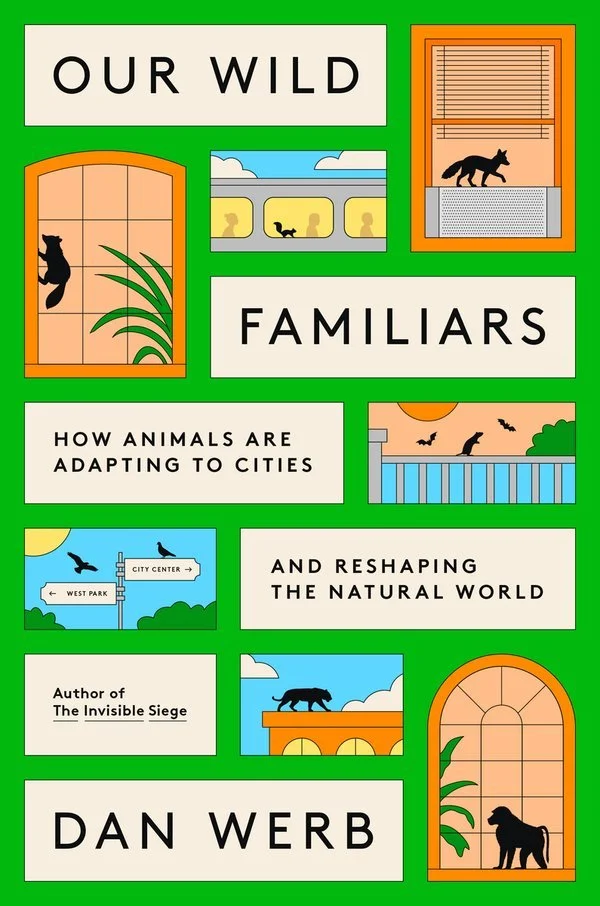
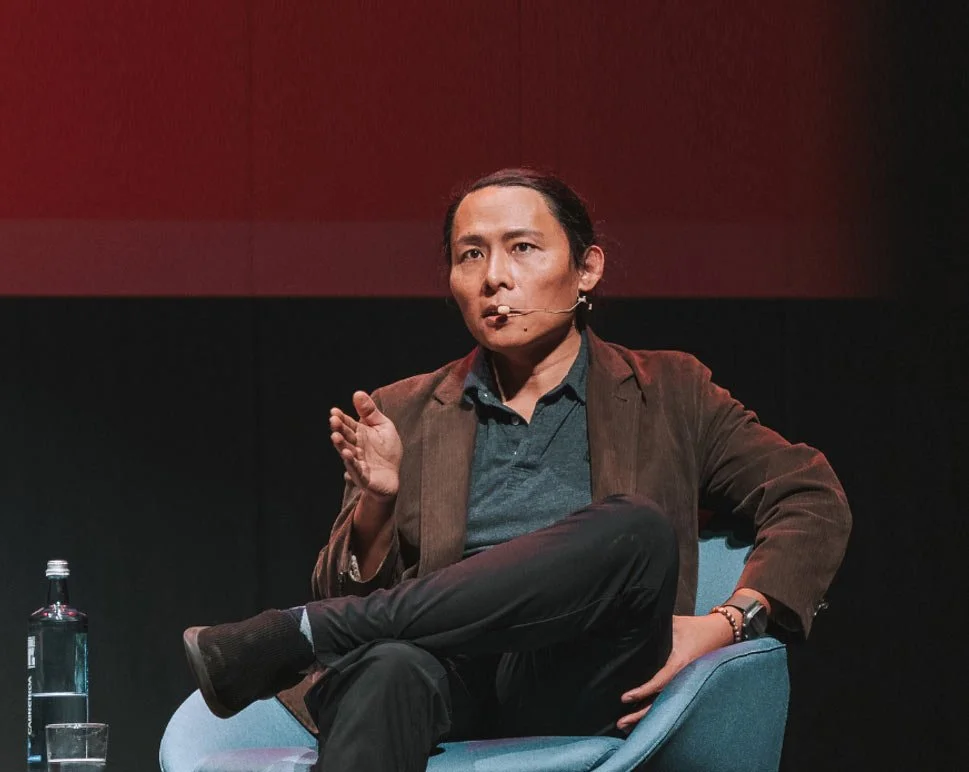
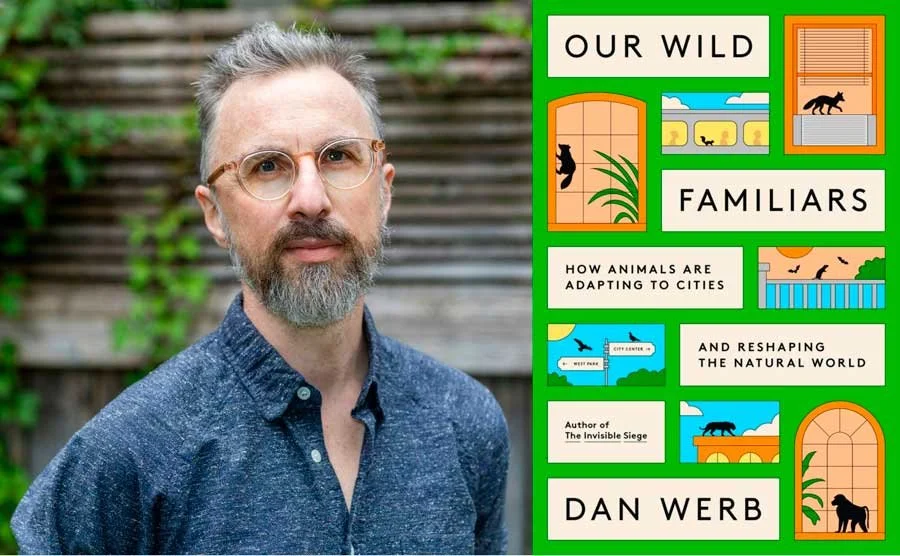
If you live in a city, you’ve probably had that moment in the middle of the night. You hear a scratching in the walls, or you catch the glowing eyes of a raccoon peering out from a dumpster, and for a second, the concrete world feels a lot less 'controlled' than we like to pretend. We’ve been taught to think of cities as 'biological deserts'—places where nature goes to die. But my guest today, Dan Werb, says that’s a myth we tell ourselves to feel safe. Dan is an award-winning epidemiologist and a musician, and in his new book, Our Wild Familiars, he explores the 'synanthropes'—the wild creatures that aren't our pets, but aren't quite strangers either. They are the coyotes, the bats, and even the octopuses that are learning to use our cities as laboratories for their own rapid evolution. He’s also the author of The Invisible Siege and City of Omens.
THE CREATIVE PROCESS · ONE PLANET PODCAST
So well let's just go right into that word synanthrope that I think most of us don't know. I've done a lot of episodes about the environment, but it's not something that we really think about. Synanthropes, what are they and how are they more prevalent than we could imagine?
DAN WERB
So synanthropes are animals that have adapted to human-modified environments, and the Greek translation essentially is together with humans, so synanthrope. And they're a fascinating subset of wild animals that as you noted in your introduction, you know, they're all around us, but we don't really notice them. And so in this new book, I was excited about writing something that had to do with the natural world. I was excited about writing something that touched on climate change and the way that the world was changing, but maybe not with such a sort of dirgey approach or funereal approach. Something that actually explored the wonder of the world as it is and as we experience it around our communities in our cities and towns.
And I had come across this word synanthrope in the research for my last book, The Invisible Siege, which was about the rise of coronaviruses and the long scientific journey to find cures for COVID-19, and it just kind of stuck with me. There is this connection, of course, between wild animals and viruses and lots of questions about the origin of SARS-2, the virus that spread COVID-19 and caused the pandemic. And while that's touched on in the book a little bit, the vast majority of what I was excited to write about was just what these animals are doing in our cities. How is it that wild animals, and as you said in your intro, we're talking about raccoons, coyotes, all kinds of birds and animals as fragile as bats. These are not just insects and earthworms and things like that. These are very large predators that have nevertheless found a way to survive among us. And that in and of itself I think is just an amazing story and what I explore in this book.
THE CREATIVE PROCESS · ONE PLANET PODCAST
Indeed. You write about coyotes, where I guess they survive in our cities maybe because of us, and when you go to a mega city, you also spoke about our cities being places of biodiversity. I've always thought about them as having a biodiversity of thought or creativity or innovation, and we have our green spaces, but it feels like such a controlled environment. But you also say that they're attracted to at least the remnants of biodiversity we have, and we have more than we realize.
DAN WERB
Yeah, I mean, one of the things that struck me early on in doing the research for this book is that on balance, most cities are more biodiverse than the areas that surround them. And like you, you know, I just assumed it was the opposite, that cities were biological deserts, that there really wasn't much happening in cities and that you had to go out into the rural areas or natural areas to get a glimpse of true biodiversity. That isn't the case anymore. And that's because of two things. The first is that humans naturally have settled in places that are the most fertile, the richest. You know, often cities are on rivers or lakes or ocean coastlines. So already you're creating your communities in areas that are abundant and fertile and biodiverse.
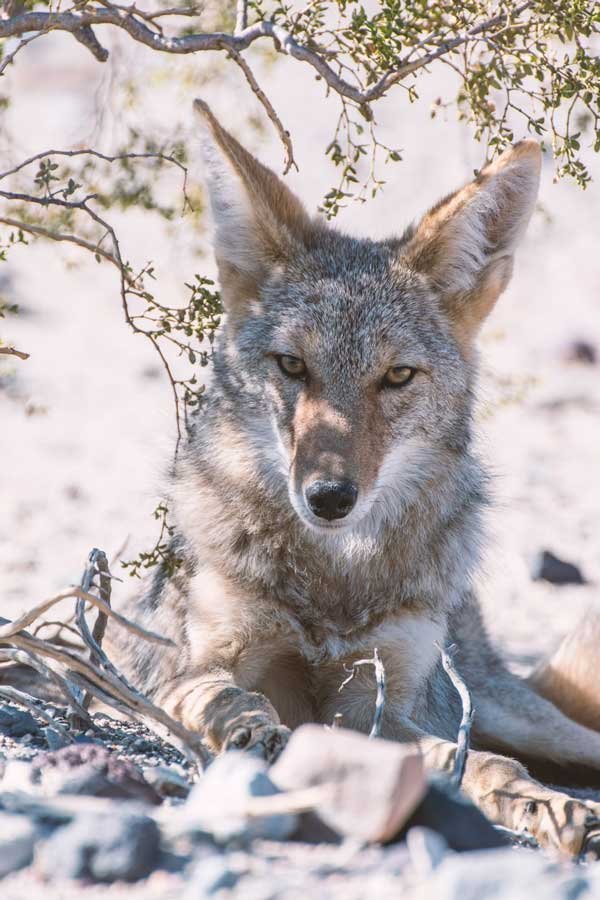
And then as cities have expanded, they've absorbed all of these natural areas around them, and that has forced, in many cases, wild animals to adapt or perish. And so that again expands the biodiversity of cities. And then the third function is through climate change and extreme weather events. You know, you think about wildfires and droughts, and that has actually caused, you know, it's almost like a magnetic pull that is drawing animals into cities. You know, you mentioned coyotes. It's a great example. Coyotes' home range used to be really the central area of North America, the plains, the deserts.
And over the last few hundred years, they've expanded in effectively every direction. So they crossed the Rockies, they crossed the Sierras, they moved into the US Northeast, they moved into Canada. They moved as far east as you can get in Canada, Cape Breton Island, and as far south as Baja California and even further. In the book, I discuss the emergence of coyotes in LA, a particularly huge city that is dominated by roads, by highways and by urban fragmentation because of the ways that, you know, you've got vehicles basically traveling everywhere. And yet these animals have found a way not only to survive within LA but are also drawn to it. And it's kind of this combination of these forces that are pulling coyotes in as well as these forces that are the urban sprawl that is taking over more and more areas that coyotes used to just live in which were natural habitats.
But one of the really interesting forces that seems to be pulling coyotes in are wildfires. And so it's an odd situation, right? Where you think about wildfires, as soon as a wildfire touches an urban center, a massive amount of resources are put towards putting it out. That's not quite the same for natural forest areas where it's a lot harder to sometimes access fires. And the stakes, while obviously you don't want to see woodland burning, but the stakes to humans are so much higher in urban areas. And so when we see this increase in wildfires really in areas across the world that is pulling animals into urban areas where it's actually safer because they're going to be protected by human fire prevention as soon as they step into urban areas.
And so it's this really unpredictable reordering of nature's systems that, you know, on the one hand, you can throw up your hands and say, “God, this is absurd and perverse and bizarre and is just like a signal of our dying world.” I mean, that's not how I'm oriented just naturally. And so I look at this and I think, “Oh my goodness, like, look at how profoundly complex the ecosystems are that are functioning within cities despite us trying to keep animals away.” And so it's this failure really of cities and our species in trying to inoculate ourselves from every other species. We've absolutely failed in doing that, but that's also created cities and towns that are just resplendent with life and packed with biodiversity. And I am so thankful for our failure there.
Synanthropes, derived from the Greek for together with man, are wild creatures that have found a way to survive and thrive in human-modified environments...
READ MORE [ + ]
...These are not our pets or our herds of domesticated animals, but something like our oldest frenemies—beings from which we have long sought and failed to separate ourselves, that now reside within our communities and that have become an ineluctable part of the tapestry of our lives.
They are the reason we hear birdsong in the morning and skittering in our walls at night, and why we take such pains to affix lids tightly to our garbage cans. But they are so much more than that. Soil churners, waste disposers, epidemic vectors, ecosystem partners, spiritual lodestars and sometimes sharp-toothed marauders making their way through our most intimate spaces. These creatures are ambassadors from nature, arbiters of our planet's future and a key influence on the continuing evolution of our species. Synanthropes have always been a part of our lives in uneasy balance, despite our best efforts to feel insulated from the natural world.
But that feeling isn't real. The fact is, we have never really been alone.
If you live in a city, you've probably had that moment in the middle of the night, you hear a scratching in the walls, or you catch the glowing eyes of a raccoon peeking out from a dumpster, and for a second, the concrete world feels a lot less controlled than we like to pretend. We've been taught to think of cities as biological deserts, places where nature goes to die. But my guest today,
Thanks so much for having me.
Well, let's just go right into that word that I think most of us don't know. You know, I've done a lot of episodes about the environment, but it's not something that we really think about. Synanthropes, what are they and how are they more prevalent than we could imagine?
So synanthropes are animals that have adapted to human-modified environments, and the Greek translation essentially is together with humans, so synanthrope. And they're a fascinating subset of wild animals that as you noted in your introduction, you know, they're all around us, but we don't really notice them.
And so in this new book, I was excited about writing something that had to do with the natural world. I was excited about writing something that touched on climate change and the way that the world was changing, but maybe not with such a sort of dirgey approach or funereal approach.
Something that actually explored how the wonder of the world as it is and as we experience it around our communities in our cities and towns. And I had come across this word synanthrope in the research for my last book, The Invisible Siege, which was about the rise of coronaviruses and the long scientific journey to find cures for COVID-19, and it just kind of stuck with me.
There is this connection, of course, between wild animals and viruses and lots of questions about the origin of SARS-2, the virus that spread COVID-19 and caused the pandemic. And while that's a little, you know, that's touched on in the book a little bit, the vast majority of what I was excited to write about was just, what are these animals doing in our cities?
How is it that wild animals, and as you said in your intro, we're talking about raccoons, coyotes, all kinds of birds and animals as fragile as bats. These are not just insects, earthworms and things like that. Like, these are very large predators that have nevertheless found a way to survive among us.
And that in and of itself, I think, is just an amazing story, and what I explore in this book.
Indeed. You write about coyotes, where I guess they survive in our cities maybe because of us. And when you go to a megacity, you also spoke about our cities being places of biodiversity. I've always thought about them of biodiversity of thought or creativity or innovation, and we have our green spaces, but it feels like such a controlled environment. But you also say that they're attracted to at least the remnants of biodiversity we have, and we have more than we realize.
Yeah, I mean, one of the things that struck me early on in doing the research for this book is that on balance, most cities are more biodiverse than the areas that surround them. And like you, you know, I just assumed it was the opposite, that cities were biological deserts, that there really wasn't much happening in cities, and that you had to go out into the rural areas or natural areas to get a glimpse of true biodiversity.
That isn't the case anymore. And that's because of two things. The first is that humans naturally have settled in places that are the most fertile, the richest. You know, often cities are on rivers or lakes or ocean coastlines. So already you're creating your communities in areas that are abundant and fertile and biodiverse.
And then as cities have expanded, they've absorbed all of these natural areas around them, and that has forced, in many cases, wild animals to adapt or perish. And so that again expands the biodiversity of cities. And then the sort of third function is through climate change extreme weather events. You know, you think about wildfires and droughts, and that has actually caused, you know, it's almost like a magnetic pull that is drawing animals into cities.
You know, you mentioned coyotes. It's a great example. Coyotes have their home range used to be really the central area of North America—the plains, the deserts. And over the last few hundred years, they've expanded in effectively every direction. So they crossed the Rockies, they crossed the Sierras, they moved into the US Northeast and they moved into Canada. They moved as far east as you can get in Canada, Cape Breton Island and as far south as, you know, Baja California and even further.
In the book, I discuss the emergence of coyotes in LA, a particularly huge city that is dominated by roads, by highways, by urban fragmentation because of the ways that, you know, you've got vehicles basically traveling everywhere. And yet these animals have found not only a way to survive within LA, but are also drawn to it.
And it's kind of this combination of these forces that are pulling coyotes in as well as these forces that are, you know, the urban sprawl that is taking over more and more areas that coyotes used to just live in which were natural habitats. But one of the really interesting forces that seems to be pulling coyotes in are wildfires.
And so it's an odd situation, right? Where you think about wildfires, as soon as a wildfire touches an urban center, a massive amount of resources are put towards putting it out. That's not quite the same for natural forest areas where it's a lot harder to sometimes access fires. And the stakes, while obviously you don't want to see woodland burning, but the stakes to humans are so much higher in urban areas.
And so when we see this increase in wildfires really in areas across the world that is pulling animals into urban areas where it's actually safer because they're going to be protected by human fire prevention as soon as they step into urban areas. And so it's this really unpredictable and reordering of nature's systems that, you know, on the one hand, you can throw up your hands and say, “God, this is absurd and perverse and bizarre, and is just like a signal of our dying world.”
I mean, that's not how I'm oriented just naturally. And so, I look at this and I think, “Oh my goodness, look at how profoundly complex the ecosystems are that are functioning within cities despite us trying to keep animals away.” And so it's this failure really of cities and our species in trying to inoculate ourselves from every other species. We've absolutely failed in doing that, but that's also created cities and towns that are just resplendent with life and packed with biodiversity. And I am so thankful for our failure there.
Even the resilient stories of their wildness, there are ways that... There are great people working on road ecology, you know. It's hard for the animals to cross the roads and sometimes to mate. We have to say there's a lot of risk. It's not perfect, but I do like to see the resilience and how life finds a way. It always does. Nature finds a way. And now I want to hear, you've selected a passage I think for our readers to set it up.
Yeah, so this is a passage from the beginning of the book that sets the scene in a lot of ways.
Yeah, it's really dramatic, this one, I think. Kind of wakes us up.
In 2007, Earth crossed an important threshold. For the first time ever, more humans were living in urban places than rural ones. It's perhaps no coincidence that the same year saw a social media platform, MySpace, become the most visited site on the internet for the first time. These twin events reveal that while humans have become decoupled from nature, we still crave connection in any form.
We yearn to be squeezed up against one another in space, and when that's not enough, we flock to be close online. Still, the city, or the internet for that matter, isn't always a welcoming communal place, and it's easy to get lost in the glassy-eyed human gazes reflected back at us in grocery stores, in elevators, on subway platforms, in restaurants, at street corners, under the greasy fluorescents of dive bars and beneath the ambient lighting of a pop-up art gallery shoe store collab.
It's the myopia of the city dweller. There are no animals here, at least none other than lap dogs broken by training or genetics, and therefore no danger or spontaneity. All we see anywhere is us staring back at ourselves with vacant looks. Nature, if it still exists, is something somewhere else. But that's not the real story.
Look a little harder and a little longer, and there they are all around us—the synanthropes. You have likely never heard of synanthropes, though you surely know them, and they know you. Wherever you are as you read these words, in an office building, in a city park, riding the subway, lying on your sofa at home, you are surrounded by them.
Synanthropes, derived from the Greek for together with man, are wild creatures that have found a way to survive and thrive in human-modified environments. These are not our pets or our herds of domesticated animals, but something like our oldest frenemies—beings from which we have long sought and failed to separate ourselves, that now reside within our communities and that have become an ineluctable part of the tapestry of our lives.
They are the reason we hear birdsong in the morning and skittering in our walls at night, and why we take such pains to affix lids tightly to our garbage cans. But they are so much more than that. Soil churners, waste disposers, epidemic vectors, ecosystem partners, spiritual lodestars and sometimes sharp-toothed marauders making their way through our most intimate spaces with cruel and bloodthirsty intent.
These creatures are ambassadors from nature, arbiters of our planet's future and a key influence on the continuing evolution of our species.
Yeah. It's funny that, because we always do think that we can dominate nature and we can order everything. What, in the writing of this book, I mean, they're plentiful, the number of species. And so some I understood, but what do you think drew these particular species to live in cities? What do you find that's in common? Because it's a variety and how we can be changed if we choose to open our minds, and we are changed obviously by our environment or the animals that we connect with. But how they adapt to us, you know, even communicate their needs or they adapt their intelligence and evolve. You outline many of these things. But what drew them here, and how are they changing?
It's a great question. So the way that the book is set up is, essentially, for the most part, it's a different city and a different animal for every chapter. And so as you read the book, you kind of cross through all of these different cities, and you come to learn about the adaptive strategies of a number of different species.
Now, there's tens of thousands of synanthropes, if not hundreds of thousands of synanthropes out there. When you think about all of the invertebrates, you know, the insects, the spiders and all of that. For the most part, I didn't cover those because I found bigger animals to be more interesting. And that's not even to mention synanthropic plants, which are...
You know, synanthropes don't only refer to animals. We think mostly about animals when we think of species having adapted to urban places. But there are a massive amount of synanthropic plants that, you know, you think about the dandelion or white clover, these ubiquitous plants that have found their way to prosper in our cities.
Like you asked me this question, what is it that pulls them all together, or is there a through line? And I'll say if there were one word to really broadly sum up how everything is operating, it would be garbage, which is, I don't want to boil down the—
We have to admit it. We create garbage and—
Exactly, right? Exactly. And I don't want to boil down the complex biology and evolutionary dynamics and urban ecology, you know, that goes into studying these creatures. But fundamentally, we're talking about garbage, and we're talking about garbage as this static, reliable source of nutrition. And that's not nice.
That's—it's, as you say, there's some shame there, I think, to think about, you know, the fact that we produce so much garbage. And not only do we produce so much garbage, but we leave it lying around everywhere around us so reliably that you know, entire species have evolved to feed on it, to rely on it as a source of ongoing energy. And support effectively.
And so, the garbage is the starting point for a lot of these species. And I'll just note that in the book, what a lot of the species that I cover are what's known as mesopredators. So these are animals that are, you know, sort of halfway up the food chain. They are animals that both feed on and prey upon other animals, but are not apex predators.
And, you know, that's for a really good reason, which is humans are the apex predators. There is one chapter in the book that covers what happens when two apex predators meet, which is, in this case, Bengal tigers, which are the last of the man-eating tigers, and human beings. And it is certainly not the kind of situation that leads to adaptation, easy adaptation and accommodation and a static situation.
Far different from raccoons, right, which are mesopredators. They're members of the Carnivora order. They're adorable. They're little rascals. You know, I live in Toronto.
About their hands.
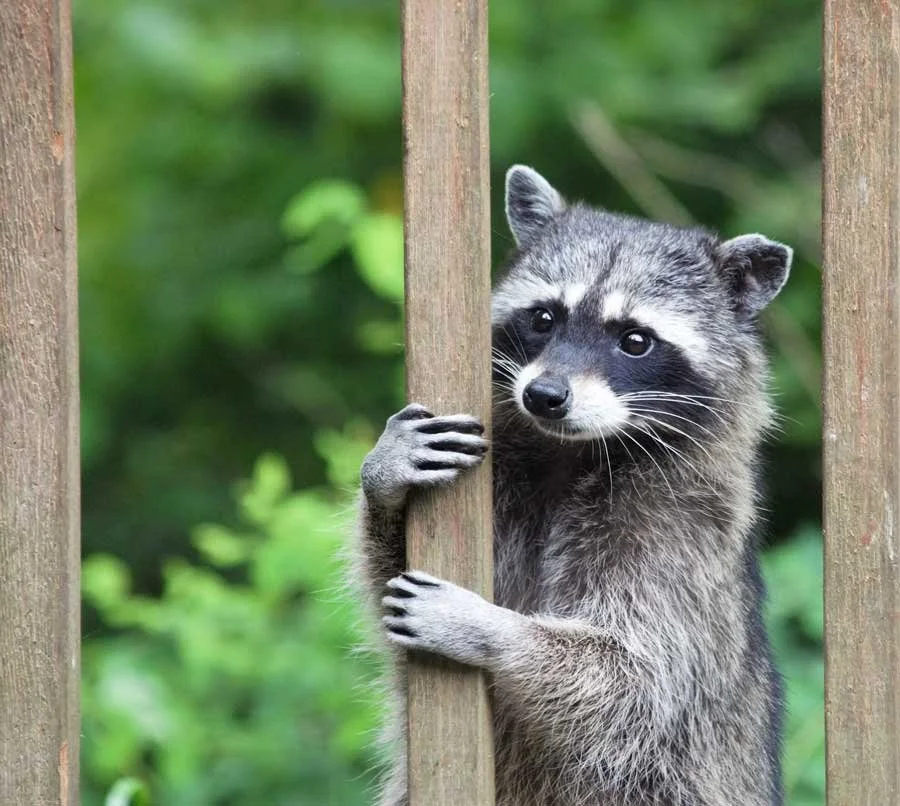
Yeah, yeah, I talk about their hands. I mean, so I live in Toronto, and by some accounts, there are somewhere between 150,000 and 640,000 raccoons that live here. So as one bat expert I interviewed pointed out, there's an entire city, and a large city of raccoons in the city of Toronto. And they're such incredible adapters to the situation that they found themselves in. And this is chapter one in the book. And you mentioned the hands. And right, like, so I wrote a lot about their hands, and then I think one of my editors was like, “You know, you should probably be writing about paws,” right?
They have paws. They don't have hands. And yet, it's hard to think of their paws as anything but hands because they have become so dexterous. Their capacity to grip things and solve puzzles with the combination of what's known as reversal learning, which is basically they can learn something and then when it stops working for them, they can unlearn it and try something else, which is not something that a lot of carnivores are able to do.
But raccoons are really expert at that. And so they have this beautiful combination of this adaptive plastic brain, which allows them to navigate all of these various urban fragments, you know, environments as different as train stations, the roofs of apartment buildings or tree-lined parks in cities, and just proliferate like crazy.
And be like lock crackers for these locked bins.
Well, exactly, yeah. I mean, there has been this battle in Toronto against raccoons. Really, this is like the main conflict across the city is really between raccoons and humans. And there have been multimillion-dollar efforts to try to create garbage cans that they cannot get into.
And so now we all have these raccoon-safe garbage cans that have a handle on the top that you have to turn, right, to open. So it's this lock that's quite large and was supposed to be raccoon-proof because they don't have opposable thumbs. And yet, it turns out they don't need opposable thumbs.
They're able to open these just using their incredible digits that at a moment's notice can look exactly like a dog's paws, like all facing forward and clustered tightly together. And then suddenly they spread out their paws, and they have these five beautiful fingers that can spread and manipulate objects in a number of different ways.
You know, and I'd say even though the battle is ongoing, morale is shot among humans. If you ever find yourself in Toronto, I think one of the things that is fascinating is that you see images of raccoons everywhere. They've become cult figures. There's a local airline that uses the raccoon as its emblem.
There's raccoon-themed coffee shops and raccoon dolls everywhere. This is a city that, while at war with raccoons, has effectively given up the fight and come to embrace the invaders.
So I don't know enough about Toronto, but I'm a big composter myself, and we have a lot of a composter. Is there a way to... or maybe that's already been done in Toronto where, okay, you don't want them going through your garbage because then they have to look through all that stuff. But in the compost, because I also understand that composting, a way of doing it that it's not properly done, and with the citywide composting efforts, sometimes if it's not done well, it can also emit methane if they don't do it correctly. So, if you want to invite the raccoons in for certain stuff. Here's what... you can have this because the food waste problem is huge as well.
I think it's a fascinating question, and my sense is that this is where things have to head, right? In cities around the world.
First of all, we have to recognize that cities are sites of conservation, right? Like, we have animal species that are living in cities that are worth trying to support, worth trying to create harmonious relationships with. And increasingly, what's really unfortunate is that cities are often the last bastion of species that are going extinct, right? Species have been forced from their natural ranges and forced into cities in a lot of places around the world, meaning that we have a responsibility if we really want to stop extinctions, to redesign and rethink cities as sites of conservation.
So what does that mean? I mean, I think it means doing the kinds of innovative or ideating, thinking of new and interesting ways that we can create better harmony with animals. And it does go back to garbage in first and foremost, I would say, in that the best way to stop animals overwhelming cities, right?
And one of the chapters in the book, I travel to Al Baha, Saudi Arabia, in the Sarawat Mountains to towns that are absolutely overrun by baboons, right? Why are they overrun by baboons? Because of the amount of food waste that's being left everywhere. And I think one of the things I learned writing this book is that if you want to find—if you want to create better harmony with animals in urban settings, you have to limit the amount of food waste that they can get.
And so there's this thing called, it's a fancy $10 word, containerization, which is this idea—I don't know why it's so complicated, but basically it's like you have to put garbage in containers that are locked and inaccessible by animals. That is the critical way that you can stop animals from overrunning cities.
And so I like what you're suggesting, right? Which is, okay, so on the one hand, I would say we have to containerize, better containerize our waste. Think about, you know, the most efficient ways that we can do that because cities overrun... animal invasions aren't about animals. They are about the human-created environments that those animals find themselves in.
And so we can't go out and just murder thousands or tens of thousands or hundreds of thousands of rats, for example, and expect that there won't be any more rats showing up in a city. You have to actually create—you have to shift the structural, the built environment of cities to stop the factors that are causing animals to proliferate in numbers that we don't like.
And so what does that mean? You know, once you control garbage, where do you go from there? You know, if we want to support animals, the big secondary question is, okay, well, if we want to support animals in urban settings, how do we help them move from one place in an urban setting to another?
So ecologists describe cities as urban fragments, right? And so you think about a forest, right? And then you cut a highway into the middle of the forest. Now you have two fragments because it's incredibly difficult for animals to cross roads. It's, in a lot of places, the number one cause of deaths for a number of different animals, you know, ranging from insects to rodents to apex predators and everything in between.
You know, you put two highways perpendicular across a forest, suddenly you've got four fragments, and all of those fragments are starting to get maybe a little too small to support the populations of the animals that live there. You keep doing that, and really this is what cities are, right?
They are habitats that have been cut up and fragmented into such tiny little microhabitats that often those microhabitats aren't sufficient to support animals to, you know, remain healthy, to remain sufficiently genetically diverse to have a healthy population and pass down a nice diversity of genes.
Yeah, I heard Ben Goldfarb was telling me about mountain lions not being able to migrate and having incest because they can't mate. It's sick.
And this is the case in LA, right? Where you've got this population of mountain lions. There's, I think, a couple hundred of them that are in the Santa Monica Hills, and they're bound by one of the largest highways in North America, the US 101, and by the ocean.
And so they're in this habitat area. They can't get out because if they try to cross this highway, they're going to get killed. And as you say, right, like their genetic diversity has just dwindled to the point where they have these stigmata of impending extinction. Very low genetic diversity, kinked tails, which is this anomaly that occurs when diversity is low.
And then they also have, you know, the males have low sperm counts and testicular abnormalities and things like that. And the frustrating thing about it is that on the other side of this highway, there's another population of mountain lions. There are hundreds of thousands of acres of natural area that are protected as you know, in the Angeles National Forest.
All they need is a way to cross this highway. And so actually this year after, I would say decades of efforts, there is finally going to be the, it's called the Wallace Annenberg Wildlife Crossing that is going to open up a pathway over the US 101 for these mountain lions to cross. It cost almost $100 million, right?
So this isn't, you know, on the one hand, it's obvious what to do, like the solution is evident. There's also this moral imperative, which is very clear. There's an ecological imperative. But unless you understand why, I think on an emotional level, why it's important to create conservation movements in cities, there's never going to be sufficient buy-in for these grand projects that can really mean the difference between extinction and life. And so, you know, part of the motivations with this book really is, on the one hand, the climate crisis and mass extinctions that are happening right now, they seem impossible to deal with. They seem too big. And also, I think they're easy to kind of abstract away from our lived experiences, because most of us live in cities, and the climate crisis is something we feel it on hot days. We see it when there's smoke in the air.
The urban heat island effect.
Yes, urban heat island effects, right? So we're feeling it in cities, but it's still quite abstract, I would say, for the vast majority of people. And personally, I'm motivated by the possibility of something beautiful happening rather than, I would say, the terror of terrible things happening.
That's just kind of who I am. And so I wanted to write this book that explores how beautiful and elegant and incredible the animals that are living among us are, in a way to try to motivate efforts to save urban animals and create cities into sites of conservation.
Indeed. And if you, I mean, obviously we often talk about economic imperatives or stimulus. We talk about saving them, but it's a way to be selfish or to motivate people to get involved. It's a way of saving ourselves. You write throughout the book about how we feel disconnected from nature. We know about the effect on us psychologically, but in so many different ways, whether one is spiritual or has a sense of connecting to the oneness through art or music, there are portals to that. As you write from the beginning, you're meditating upon ravens and are different—these are like our spirit animals, our spirit guides through different cultures, and we've always found a lot of mystery in them.
And I think that that's really important, and I always think about the importance of creativity. This project is called
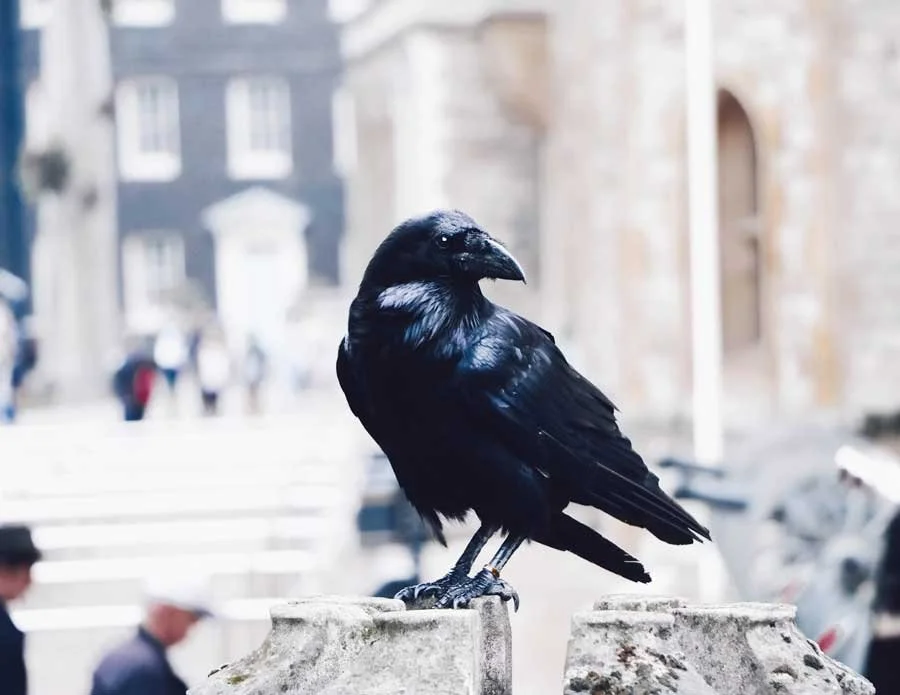
Yeah, I think one of the most fascinating parts of the research for this book was discovering the relationship between our spiritual lives and synanthropes. Not even wild animals, but synanthropes specifically. So you talked about ravens, and there's a section in the book, I did research into the very early origins of synanthropic species. So these are the species that lived among humans from prehistory and back far into the sands of time. And the two earliest animals for which there is evidence of a synanthropic relationship with humans are foxes and ravens. And so, what we're talking about here is 27,000 years ago, there was evidence of ravens living side by side with humans in very early human communities.
And this is in Europe. So this is a time when animals like wooly mammoth, cave tigers, giant terrifying carnivores and megafauna were roaming Europe, and humans were starting to find ways to hunt them. And so what happened basically is that humans would take down mammoth, they would take down these massive beasts. And they would create what researchers have called a carrion landscape, right? So a landscape of just rotting animals. What did that do? That drew other large scavengers and large predators like hyenas and wolves to start coming into contact and start being drawn to human communities.
Humans started pushing those animals away, right? Because it's terrifying to have hyenas or, you know, other sharp-toothed scavengers and predators on your doorstep. But this is what happens when you're such a successful hunter and you can take down mammoth. And so there was this push and pull at the time between humans being these successful hunters, establishing themselves as apex predators, drawing in other large, terrifying predators and pushing them back. And in that movement, what happened was that smaller scavengers were able to find niches because they were so small that, you know, they didn't really bother humans.
And of course, they were also drawn towards these massive corpses that they could feed on. And those two scavengers were ravens and foxes. And so there's this record of bones, teeth and feathers—hundreds of thousands of these objects from caves and communities in Europe. And what's fascinating is that there's a lot of different animal bones that are present in these archeological sites, and the vast majority of them have burn marks, right? Or teeth marks. So you know that they were eaten by humans. Ravens and foxes were not. And instead, actually, you have evidence that raven feathers were used in rituals, in burials.
You know, and there were also amulets where fox teeth were drilled through to have these really beautifully drilled holes, and then they were strung along necklaces. And so even then, you can see that there's this spiritual connection between animals that were so different from each other, right? You think about humans, the way we navigate the world and ravens. And that difference, that separation between how each of our species moves through the world created the spiritual legacy in humans that survives today. And what's amazing about it is that you see it pretty much in every single part of the world, right?
Like you have long oral histories of raven as a god in First Nations and Indigenous communities and cultures across North America. You have Norse mythologies where Odin's eyes and sort of his spies were these two ravens that crossed all over the world. And it's just amazing that we really do feel this relationship, this deep spiritual relationship between ravens and our own species. And at the same time, we've been living together for 30,000 years. And that's, I think, so beautiful, and it's a testament to how profound the relationship can be and how moving and important and spiritually uplifting the relationship can be between humans and synanthropes, the animals that live among us.
No, they're really powerful and smart and majestic. I have to say, on my dad's side, he's mixed and I'm mixed, but he's part of the Crow tribe and Irish mix. And so well, I do have to tell the story. I shouldn't interrupt and tell a story, but I had a connection, and I'm sure you talked about talking with a lot of people about ravens and crows particularly, because I'm very interested in animal storytelling. It doesn't happen with all of them, but they have ways of communicating and you know, you've written about them. Octopuses and so many others that can bypass different barriers. But one Christmas, you know, I'm in Paris, and we're walking, you know, right before Christmas and we see this, my husband and I, this giant raven who's as big as a cat.
But he got his beak into a good bit of garbage. And my husband was just trying to connect, you know, “Caw, caw.” You know, he's imitating it. But the raven looked at us and him, my husband was just like... He gave it like the, “Are you talking to me?” It wasn't... They're annoyed, you know? Like, they don't like you to look at them or tease them when they're eating. And I thought, “Okay, just leave it at that.” But you know, they get angry. And he was into a good meal there, and he was annoyed. So he went up into the sky, started circling, which is fine enough. We know.
And calling out, and it's kind of ominous. I thought, “He's calling out some other birds.” But then kept on looking down at us and crying, and we're just trying to escape, get away. And then it lands, still looking back at us, crying all the time. And then it lands in the eaves of a church, and it's still calling out to us. And I think it's looking for something. I don't know what it is. And it gets something in its beak, and it looks like an old bit of straw. And then it drops it right next to us, and it's the corpse of a dead pigeon. And then it just flew off, “I'm the lord of death,” you know? And I said, it was just... I mean, as much as we don't speak the same language, I mean, I wish that was a more spiritual story, but at the same time, it was like—
But that's a very urban story, which is what I love, right? Urban center cities and towns can be sites of these bizarre and moving cross-species relationships. The thing about ravens also and well, corvids in general, there's been some research done on crows and they are able to recognize individual human faces. And so one of the funny—I mean, I love reading about biology experiments because some of them are just so insane. This one, a bunch of researchers fed crows, right? And so they basically created this situation where a crow would bring an object and then in exchange for the object, the researcher would give them some food.
And they did this for a while, and then they had half of the researchers that were giving food. When the crow gave an object, the researcher wouldn't give it any food. The crows that were dealing with people who would not trade them fairly just stopped trying to trade entirely. They refused. The researchers then came back two months later and the crows would still not trade with the people that had ripped them off two months earlier. Like, they remembered them. They can hold grudges. They can recognize individual humans and they're smart enough to realize, you know, “This person was not fair with me. I am not going to trade with them.” I mean, their intelligence is off the charts. And you know, I was born in Vancouver and I grew up in Vancouver, and it's a city with many, many, many crows and everyone there has a crow story and they can be quite, as you say, dramatic, aggressive and pretty scary at times, right? Because they just have this air of total superiority.
Body language. I mean, you just see they communicate a lot. But I don't want to say nothing bad happened, so it could be taken as a bad omen, but nothing bad happened there. But I just think that yeah, a lot of, “I'm a master of my domain.” And it's very interesting to see that psychology played out, and I always wish I could understand more about the storytelling of animals. But I think we've attributed a lot of, with just recent memory to crow. But I think that all of them, I mean, people have cited in different ways, but obviously migratory patterns of birds or with whales, their ability...
It seems like it's us that we kind of pride ourselves on our memories, but in fact, we're the ones who have to write things down or put it in our computers, and it feels like when you don't have access to all those tools, you internalize them. So I always assume that animals, at least for their specific activities, would have better memories than us. Obviously, because we don't, they don't have a smartphone to refer to. They have GPS inside themselves.
Yeah, exactly. I mean, and that's also why I find the adaptation of animals to new places, and particularly cities, so fascinating, right? Because they're so biologically hardwired to, you know, in some cases occupy a specific niche, right? Some animals are called generalists, right? Which means that they can adapt to other places. But even you would think that the most general of the generalists would nevertheless have problems trying to find their way through cities where resources appear to be so scarce.
Not only that, there's us everywhere, right? And we're not friendly. We're not nice. And yet, these animals that have been so elegantly adapted to particular niches still find a way to live among us. Like, it's a really beautiful thing and that's really the heart of the book, right? Is just how does a raccoon do it? How does a coyote do it? How do bats do it? How do bats move from forest to cities? And in one case, how does the giant Pacific octopus even do it, right? So the range of animals that are finding their way to success among us is pretty astounding. And this has been a very fun book to write and research because I've just been profoundly connected to so many different species and different places.
Yeah, the octopus surprised me as being included, although we know that sometimes they've found their ways in. But I didn't think of that being... I always think of it being a wild creature that we don't encounter. I don't encounter octopuses on my daily walk. They're just not something—
It was totally surprising. I mean, and really this is the result of the research of one pretty incredible marine ecologist named Eliza Heery, who lives in Seattle. And it's outlined in the book, and her story to getting to understanding this strange new adaptation in giant Pacific octopus is fascinating, and I don't want to spoil it for readers. But you know, it's got romance and heartbreak and financial ruin and nuclear waste and all kinds of things. But the long story short is, in Seattle Eliza Heery discovered that the population density of giant Pacific octopus, and this is an octopus species that is indigenous to the Pacific Coast, basically from Alaska down to Baja California.
These are, you know, at times 20 feet across. They have eight brains, one in each of their tentacles and a ninth brain in their head. They are truly incredible creatures. Their intelligence is off the charts. I could wax poetic about giant Pacific octopus all day. I'll try to censor myself. But what Aliza found was that for some reason, octopus preferred areas closer to Seattle, like the bays that were, you know, part of Seattle that were full of garbage. And so she was trying to figure out why. First of all, she was trying to figure out if that could actually be the case, because these are places where, as she points out, they're former Superfund sites, and a Superfund site is an area in the US, it's a designation for a place that has been so polluted with toxic waste that it has to be shut down.
Millions of dollars have to be put towards its cleanup. And you know, these are places where they're like sites of nuclear power plants or sites of munitions factories or military test sites, things like that. And Seattle, I think, has something like 16 Superfund sites that, you know, basically across the archipelago that it's part of. And yet in these totally polluted waters full of garbage, there were more giant Pacific octopus than in places a little bit further out to sea or even bays that were across the water and on pristine islands, or abutting pristine islands where you would think that life would be much, much better for a giant Pacific octopus.
And yet, no, there they were very close to Seattle. You know, and one of the things that she discovered is that these are animals that require topography, right? Like they can't just live in—first of all, they need dens to live in and burrow and hide in. And a lot of the area around that on the sea floor around there is just silty mud. And so they were drawn towards the absolute absurd madness of the types of garbage that were being dumped in the waters by people in Seattle. So, Aliza had found octopus living in 1970s era refrigerators or old vans or boats that had basically collapsed.
And these were places where, you know, she found handguns lying on the bottom of the ocean and cell phones. In one case there's an octopus that she found living in a boat and it had collected dozens and dozens of golf balls that had been thrown at it, and just was playing with all of these golf balls. You know, so again, just an astounding surprise. Not only that this animal that is so exotic and such a stealthy hunter, you know, it can change its color and the texture of its skin in a moment's notice can solve complex puzzles.
There are stories of octopus successfully breaking out of aquariums because they've been able to figure out where the water filtration system happens and where it goes, and they've been able to flee their tanks. And so the adaptation on the part of the animal is amazing. There's a flip side to this also, which I found really interesting, which was that we always think of our cities as ending at the waterfront, right? Like we think of cities as terrestrial places. But you know, just like Paris, just like Seattle, just like most of the cities around the world, most of them are on bodies of water and their impact and influence and their territory expands into the water.
And so again, when we're thinking about how we move from where we are to cities as sites of conservation and promotion of biodiversity, we can't stop at the water's edge. We have to go even further. We have to go into the water and figure out which animals are synanthropic. Like what are the marine synanthropes that have been drawn to or been trapped in cities that we have to care for and create better relationships with?
And the thing we were talking there before about road ecology, I mean, we think of our cities and the way we have really just implanted our roads and our buildings and everything on it, but we're just temporary. We had a musician on a while ago called Plume, and he plays music to animals. So sometimes the songs are interpreting, I guess, classic songs called “Country Roads” or whatever. And I really thought about that. Because you're talking about, say it's elephants or whatever, and they're going on... We have our country roads, but their roads are going back since before the Roman Empire, and we're just in the way or the waterways. So it's so natural for them to come back to these places that they have known, I think with a kind of perhaps a sense of ancestral memory or intelligence. And then as you say, finding things in what we were leaving or the garbage that they're being attracted to, and just to come back, like home. It's a sense of belonging.
There's a fascinating example again from Seattle about just ways that we can change our cities that don't really cost a lot of money, but that can ensure that some cities are or some species are protected. So it turns out, I was taught by Eliza Hirie, that baby salmon are afraid of the dark, which is on the one hand just such an adorable thing to know about baby salmon. But the implications here are that in a lot of places, seaside towns or towns on water, we create these boardwalks, and boardwalks cover up the shoreline and they stop sunlight from penetrating the water. And so what does that do? That stops baby salmon, in the case of Seattle, which has a very famous boardwalk and its piers, and it's this major tourist destination for that reason. It stops the baby salmon from approaching the shallows because they're too afraid of the dark underneath the boardwalk. The knock-on effect here is that on the one hand, the shallows is where they eat little microscopic bugs and other sort of like algae and goo. On the other hand, out, far from the shallows in the deeper water is where their predators are.
And so by creating these boardwalks without thinking about how baby salmon are afraid of the dark because of, like, why would you? You're actually potentially creating like a really destructive cycle where you're going to have fewer and fewer salmon runs every year because these baby salmon aren't going to be able to survive because they won't have enough food and they're going to get eaten by their predators.
So when Seattle did a revitalization of its boardwalk, it created a boardwalk that wasn't just wooden planks that were opaque, of course, and that, you know, stopped sunlight from passing through. They created this boardwalk system where there were interspersed glass planks that were transparent.
And so it created this dappled effect and the baby salmon have returned into the shallows because they're no longer afraid to go there and salmon runs are improving as a result, right? And this is something again that, you know, you don't think about the relationship between healthy marine ecosystems, but even just particular species that seem so decoupled from the urban experience.
And in some cases like this one, it doesn't really cost that much money to protect them. It's more about shifting your thinking so that you're able to think like a baby salmon in this case, and that's where the solution becomes evident.
So, and those are some of the adaptations, because we always ask, we think about the century of the city, and I guess when 75 percent of us will be, in the future, in 2050, I guess they say we'll be living in cities. And we think about the kind of... I mean, we're selfish, so we think about the kind of rapid adaptation we need to survive in those cities, whether it's transport, talking about waste management, all these different, you know, things like from water and dealing with the urban heat island effect and all the storm surges.
But how can we expand our vision of the adaptation that needs to take place so that it's more inclusive of those synanthropes?
It's a great question. I mean, the nice thing about it is that a lot of the adaptations or part... let me just say that a lot of the ways that we could transform the design of our cities to be more inclusive for animals and to promote healthy biodiversity, healthy animal populations, you know, that are neither facing extinction nor prone to overpopulation.
These are actually things that are going to make our day-to-day lives much nicer, right? It's not like we have to build giant warehouses that are going to be eyesores in our cities, and we're going to stick all the animals in there. No. Like, we're talking about thinking about green spaces not only as parks but as pathways across cities, right?
And so one of the things that urban designers and urban ecologists are thinking about is, you know, how do you create corridors, green corridors across cities so that, you know, again, going back to the case of the Santa Monica mountain lions, that some animals that are in situations in a habitat or a fragment that is causing their species to die off or become really unhealthy, how can you promote their movement to better places across cities?
When you do that, what you do is you create less pressure on any one neighborhood or any one urban fragment, right? So you're not going to have desperate predators or mesopredators or animals that are starting to encroach even further into urban areas, like homes or gardens, because they'll be able to move to and from places across the city, and not only across the city but then also onto rural areas.
So this idea of creating green corridors, you know, is I think has long been a guiding light for urban ecologists. Unfortunately, it's not always possible, right? You can't just remake a city, destroy a bunch of buildings, and create a beautiful parkway through it, as much as that would be nice.
So another approach that is maybe a bit more pragmatic that people have been taking is this idea of stepping stones. And so, if you can't create a corridor that is unbroken, you can at least create stepping stones, right? And these can take the form of... they're sort of fractal, right?
Like, they can be as small as a tiny median in the middle of traffic, right? In the middle of two roads where you plant, instead of it just being concrete, you plant a bunch of bushes, you plant a bunch of plants that can attract pollinators like bees or butterflies or other animals.
You could plant some trees. You could create soil systems so that smaller animals can burrow in and find shelter as they move through cities into larger green places like parks. And so again, it can be as small as a median. It could be as big as a park, right? A park can be a stepping stone.
Or you can have, you know, even three-dimensional stepping stones. So this is something that Singapore and a few others—I mean, Singapore has gone totally ham on it, but this idea of green roofs, right? Where you take every single possible area and you cover it in vegetation. And so by doing that, you not only obviously create better air, you've got more oxygen in the air, you can have kind of this natural filtration system, but you're also able to accommodate migratory birds or local birds that have to move in between different areas of the city or even animals that like to climb up buildings like, I mean, raccoons in some cases, but other rodents.
And so, there's all these different ways that I think that there's, even if you're not able to radically transform your city into one in which there are these unbroken green corridors that allow animals to move seamlessly from one place to the next and then beyond the city, at least, you know, you can start building these stepping stones across cities where nothing really is presently, right?
And just take places that are like concrete, literally concrete medians, and cover them in flowers. That's a stepping stone. And the lovely thing about that is it's going to be beautiful. Like it's going to be beautiful for us. In the book I describe it like these are nice-to-haves for humans. These are must-haves for urban animals. And so I suppose, you know, when I think about it, it's really about not feeling like just because a city isn't able to do the perfect top, best thing possible to promote urban biodiversity doesn't mean that there aren't a ton of options available.
Yeah. That's interesting that you mentioned... I feel that Paris is doing a lot, so I feel kind of proud of that. Sometimes it comes at an expense. You mentioned Singapore. I believe they have 90 percent public housing. That's an outrageous percent. I think that that's the statistic.
So because I guess you can do more of that when the housing is that much public. You know, and they can control these areas, and I think that that's good. I don't even know how they manage to do that and make it affordable for everyone because it's an expensive place too.
So there are so many solutions, but as you write about, there's sometimes—we face unbearable choices. Conservation, you know, out in the wilderness is something where we feel we don't have to make those choices, but you have this conservation paradox. But when we come face to face with, like, the beginning chapter of your book, like, when a leopard enters a courthouse or, you know, a baboon dominates a neighborhood, like, then you have to make those difficult choices.
I mean, it's not one that I faced yet, but I think with climate change it's something that we'll all be facing more and more.
Yeah, absolutely. And I mean, in European cities in particular, wild boar are this huge issue, and they can be really aggressive, right? The challenge with these large predators also is that they generally tend to be neophobic, which means that they are afraid of new things. And so this was certainly the case, you know, with coyotes, with wild boar.
Like, these are not animals that like to go to places that they haven't been before. And they're certainly in the case of coyotes, like they're scared. They're timid when they first enter urban settings. But over time, as successive generations are born in urban places and become habituated to humans, that fear of the new, and particularly the fear of humans just is gone.
And so I think there's an interesting parallel, I think, with coyotes in North America and wild boar in Europe, where animals that were scared of humans even a few generations ago, five, ten years ago, are not scared anymore. And that presents a really, really big problem. There are no easy solutions other than really to change behaviors.
And I'm talking about human behaviors, right? To not be as accepting in some cases. Like, the current sort of, I wouldn't say official guidelines, but the approach that most people or most experts in the field suggest we should use with coyotes is really to try to scare the shit out of them.
Like you see a coyote, you have to start screaming at it to make sure it doesn't become habituated because as soon as it becomes habituated, it's over. You know, the possibility of a conflict is going to be higher.
I don't think that I would have the courage to scream at a coyote, but I also want to say a lot of the things that we face also, and you're writing a lot about the invisible animals or those that we don't consider, is like recently it was like last August here they had to close down a nuclear power plant in France because jellyfish got clogged, you know?
And then we know about the giant squid. This is what I'm hearing, but it's not something I even think about. You know, the bottoms of the ocean, there are those vast cables that carry our information and giant squid can attack them. So it's not, you know, if I don't want to be paranoid about everything, but there are a lot of ways the wild can encroach on things we depend on on a daily basis and cause like a meltdown or breakdown in our data that gets sent across the Atlantic, et cetera.
Yeah. And I mean, one of the issues I cover in the book are the orcas off of the Iberian coast, which have become like expert sinkers of fishing or small vessels. And so you have now hundreds and hundreds of incidents every year after only a few about five years ago where orcas are working together to very rapidly disable and in some cases sink boats, and not big ones, like mostly pleasure vessels.
That's tough to deal with because how do you stop orcas, which are extremely intelligent mammals that are known for not only their capacity for social learning and distribution of new techniques and strategies across their pods, but cultural shifts as well, right? Orcas are fascinating in that they have their unique cultures across their pods.
And so once a behavior becomes culturally embedded, like how do you stop it, right? And this is what's happening with the vessels and the sinkings off the Iberian coast.
So the solution, obviously we hear a lot about light pollution, but noise pollution, I mean, we would like them to stop doing that. Also, what can we do? What can we do our end? Because it must be excruciating for... I can only imagine what it's like to be inside of an orca or a whale, all these other animals who we are really harming their navigation systems.
It's not just that they're disoriented, but what's that noise like down there that we do all the time? Yeah. And I think, if you look at these individual cases, they might seem like, “Oh, okay, well, there's nothing we can do.” But I see them as data points, right? Which are like, okay, so something has to shift. The more data points we have like this, something has to shift.
You talk about jellyfish in nuclear power plants. I mean, that is very important. We have to account for the stochastic way that nature functions and the complexity of, you know, biology basically, and how ecosystems are constantly in flux and evolving and changing. And it's that acceptance of change, I think, that humans are really, really bad at.
But it's an acceptance of change and our inability to control nature that I think is probably the most profound realization our species could have that would correct our course in terms of how we navigate. And so, does anybody have a solution for stopping orcas from attacking these boats?
No. But how do we stop the next orcas from doing that, right? And that's where I think we need to put our efforts is figuring out how can we learn from what's happened already and the way that we've aggravated our animal neighbors and find new ways of engaging with them.
And if we do that, I think, again, we become aware of them, which is a beautiful thing because so many of us feel so disconnected from animals and the natural world. We become aware of how close they are to us and that's... we've won just by doing that.
And then, you know, we can find ways to transform. I think we can be motivated to transform our communities to be more accepting and more respectful of animals. It just takes that shift.
You know, we haven't really addressed... I should have introduced you as Dr.
So if you want to talk a little bit just about your book, The Invisible Siege, but also City of Omens, which is also shining a light on those vulnerable, often invisible members of society.
Yeah. So the work I do, I mean, I'm trained as a social epidemiologist, and for the last 20 years, that means that I've been looking at how the way that society is structured influences the health and wellbeing of people, right? So I'm not someone who has, you know, looks at the molecular structure of viruses and tracks viral mutations to see how epidemics move.
But it's really more about, you know, how we structure society, who we marginalize, who we respect, who we don't, who we criminalize, and how that plays out in terms of that group's risk of getting sick, getting killed, and dying untimely deaths. And so my first book, City of Omens, was about looking into a femicide in Tijuana, right? Where women in Tijuana in the 2000s and the 2010s were dying at disproportionate numbers. And you know, not just from one cause, but all kinds of causes. There were women who were being murdered.
There were women who were being hit by cars. There were women who were contracting HIV. There were women seen disappeared that were dying of an overdose. And to me, the frame of epidemiology is actually a really good way to understand how all of these seemingly disparate events are actually connected by the same overarching factors.
And, you know, in that case, it was the combination of a massive US military base, a border with the US that had become chaotic and problematic, cartel movement into the city of Tijuana, the corruption of local police, you know, and the emergence of this maquiladora industry, which is, you know, cheap manufacturing of mostly electronic goods, and how all of these factors worked together, conspired basically to put the lives of women at risk in so many different ways.
You know, my second book was written about the pandemic while the pandemic was happening, and, you know, it's the story of really, as I said at the beginning, like how coronaviruses evolved over millions and millions of years.
But also the story of the science, right? And how people who had started to study coronaviruses in the 1980s specifically because they didn't want to have anything to do with the real world. They just wanted to study a viral family that was never really going to be a threat to humans and that could let them do interesting virological experiments in peace.
How those same people became the responsible for the vaccines and the antivirals and the other innovative, transformative medicines that protected millions during the pandemic. In both cases, you know, I thought a lot about the epidemic triangle, right? And this is like a concept you learn on day one of epidemiology school.
The epidemic triangle posits that there's this triangle with three points, right? On the one point, you have the host of the pathogen. So whatever animal or creature is harboring the pathogen. The second point of the triangle is the pathogen itself, right? So what is the organism that is causing harm?
And then the third point of the triangle is the environment. And so it's sort of the backdrop of how those two, the host and the pathogen interact. And an epidemic happens when at least one of those points of the triangle shift. So either, you know, a host could become more susceptible. Say, our immune system stops functioning in the way that it should, then we can become more susceptible to getting infected.
A pathogen can shift, right? Where you've got suddenly a novel mutation that makes a virus much more capable of entering humans and infecting them and being transmitted across our population. Or you've got the environment that shifts. That suddenly an environment shifts in ways that are throwing those two, host and pathogen, that perhaps were separated somehow.
Suddenly the environment shifts, and they're thrust together. And that's really what happened in the case of this femicide in Tijuana. It's also what happened in the case of the COVID pandemic, where our immune system didn't change. It wasn't a host shift. There was a new pathogen that emerged that was, you know, dangerous to us.
But I would say it was really the environmental shift that was the most important, that suddenly some changes had come upon the world that had made us more likely to interact with novel viruses. And that's borne out in the fact that, you know, in the 21st century, just in the first 20 years of this century, there were more novel viruses that had caused epidemics in humans than across the entirety of the 20th century.
And so the speed at which or the frequency at which we're coming into contact with new viruses is increasing, and that has everything to do with what we're doing to the environment. That has everything to do with the fact that wild animals are now more likely to make their way into cities. It has everything to do with the way that we process meat and farm animals and stick animals in cages together so that basically if a virus infects one of them, they're all going to become infected.
And that's basically what we've got with avian flu right now and cattle herds in the United States, which are increasingly infected with this, you know, potentially really dangerous virus that is one mutation away from being able to be transmitted freely across humans.
Is that where you think the next big one might be?
I mean, it's the one that seems like it's the most dangerous, yes. Avian flu has also been a risk for decades, right? And so you get these kind of emergences and, you know, there have been mass, you know, we're talking about like maybe billions of animals that have died in the wild even of avian flu.
And some of that is covered in the book. So yeah, I mean, there's this epidemiologic element to synanthropes. That's really where I came across the term, right? It's through my research on my last book. And I do touch on it in this book as well. Just to give a sense of, you know, what are the stakes with how we engage with animals and what has shifted because we're living in a new world now where wild animals are much, much more frequently rubbing up against us and intersecting with our communities.
Yeah, embolden, and we've done quite a few things to make them angry and feel encroached upon themselves. I'm wondering, you know, you are also a musician, and this must play into how you tune into the natural world. I guess I should ask what particular animals you feel most attuned to? But I want to know, is there a particular sound that feels like home to you that takes you back to childhood and your awakening to beauty and art?
That's a really good question. I mean, I have to say what comes to mind immediately are ocean waves. So as I said, I grew up in Vancouver and right on the Pacific Ocean. I mean, it's a beautiful place. You know, it's the sound of the ocean and it's the feeling of the undertow dragging on my legs and pulling me in, or trying to pull me in, which is a sense memory that I always come back to.
And you get inspiration from nature, from animals for your music?
I do in a way. I mean, I'm increasingly drawn to ambient music, I think like a lot of people. And there is this subset of ambient music that's really focused on emulating or at least interpreting the experience of being in nature. So a few albums are like Hiroshi Yoshimura's Green, which uses live recordings of natural spaces like water flowing, birds and things like that, overlaid with just lovely ambient synthesizers.
There's an album by a guy who goes by Cool Maritime and his first album is very similar. The cover of the album is just him with a microphone in a forest, like this beautiful Pacific Northwest forest. And it's the kind of music that I'm really drawn to.
I think my music, the kind of music that I'm interested in making these days, is more reflective of the urban experience. And so, I count animals in that. But it's this feeling of sort of like edgy chaos, like order but then hints of disorder. And that's also really what I think drives a lot of my narrative approach in the book as well, which is just kind of opening up this idea that we live in static places to the reality that really, I don't know if I would call it chaos, but things are a lot weirder and more wonderful and stranger than they seem at face value. And I think that's something that I like to explore musically as well as in my writing.
It's interesting because we think about nature being—we've talked about it being calm and the source of creativity and inner light. But you talk about having inspiration of a music that's urban or more like these urban creatures that we engage with. But it may just be our hearing that we don't see how loud nature can be. You're talking about forests, and now we're just learning the ways the mycelial networks in forests, how they communicate. It's just we're kind of numb, I think, in our senses. So it may be, as you say, a chaotic place that's not all about calm. It's not all about meditation.
You know, the thing that I realized, because like I said, I did a lot of travel for this book and went to all kinds of cities. Every city I was trying to track down a different creature, and there would always inevitably be that moment of frustration. And this includes the giant Pacific octopus, right? Where you have to figure out, how do you find a giant Pacific octopus amidst the garbage? But even looking for coyotes or looking for bats or looking for raccoons or baboons for that matter.
I realized that it really takes a shift in your rhythm. We have this idea of how we move through the world. It's all socially defined. People generally move through cities at the same pace, at the same speed, at the same times of day, using the same routes. And if you want to find animals, you have to go against that. You have to break out of that routine. And for me at least, it could feel kind of bad. It could feel like you were doing something wrong.
So when I was looking for coyotes in LA, you know, I started wandering around these neighborhoods that really shut down around sunset. Places that were up the hills, near Griffith Park and this neighborhood called The Oaks. And it was clear that really I was the only person around. These were dark streets. I felt suspicious, right? I felt like I was somewhere that I shouldn't be. But that's exactly how you have to feel if you want to track down animals. And so that rhythm shift was really important in trying to commune.
Yeah, so it's almost, you don't want to say it's like a hunter, but you're an experienced hunter.
Yeah. Oh, absolutely. Yes. 100 percent.
And what did you learn then? I mean, every landscape, there are different sonic landscapes wherever you go. Every animal, like they say dolphins have different signatures or names, and I'm sure they all do in different ways. I mean, what is that tuning in process like? Or how did you contrast with, as you sensitize to their auditory and sensorial world?
Yeah. I mean, bats were really interesting. So I traveled to Buffalo, New York, to meet with someone who... she's an architect. Her name's Joyce Hwang, and she builds architectural sculptures that look just in and of themselves like these beautiful pieces, but also double as habitats, like microhabitats for animals. And she's really obsessed with bats and has done a lot of work on bats.
And so that was really interesting, right? Because you know, you hardly ever see bats. They're really hard to see because it's dusk and there's often just this 20-minute period where you're able to see them before night comes.
And so we wandered around downtown Buffalo with this ultrasonic receiver, which received ultrasonic impulses. So basically sounds, if you want to call it sounds or frequencies, that were higher than human hearing and downshifts them into frequencies that humans can hear. And so we'd just be wandering around regular neighborhoods where people are moving around, where there are humans everywhere, and then suddenly we'd hear this knocking.
Da-da-da-da-da-da-da. Da, da-da-da. Slow at first and then a shift, and then suddenly it's very, very rapid, and some of them are slightly longer than others. And it gave me chills, right? Because what those sounds meant was that there was a bat above us that was navigating and then shifting to hunting echolocation, which was faster, and then moving away, moving back. And I never saw that bat, but I felt such an intense communion with that animal just through hearing its sounds. And it was such a moving experience for me.
So yeah, it's a powerful thing to kind of tap into, and I think that level of performing—I don't have that experience. But the kind of charisma or power or announcing oneself without even being seen, I think it's kind of interesting. I was just imagining from the point of view of a musician, how do you communicate so much just through a sound and you won't be embodied? How do you impact people in that way at great distances or whatever, and make them feel it or fear it, or whatever that is? I mean, do you take away something from that for your music?
What I take away from bats is this idea that they create their entire world through sound. And we are passive, a phototaxic species, which means that we are attracted to light, and we navigate for the most part our world passively because we just are absorbers of light.
Whereas bats have to, as you say, they have to announce themselves. They have to sing their entire world into being by vocalizing. You know, bats can see, but their eyesight is not very good, and they can't really see in the dark. And so they're forced to actively create their world through sound, by emitting sound, by vocalizing and by then interpreting all of that sound.
So I think of them, it's almost like a strobe effect, right? Where it's like strobe sound that is creating images for a bat that they then put together as they navigate the world. And just thinking about the power of sound in that sense, it's astounding. I find it so beautiful. And as you say, it's a powerful capacity to be able to announce yourself like that.
Yeah. And music as a tool of survival or a vehicle and expression. So I do wonder where it all comes from. Obviously, this search for knowledge and educating through passing on knowledge, through being a writer, through being a musician, connecting with others. I always ask where it comes from. Animals obviously are keepers of ancestral intelligence. But for you, what did your parents instill in you or teach you to appreciate and love?
They definitely instilled in me a love of writing and they instilled in me a musical education that I think started to backfire on them a little bit when it kind of took over my life. I think they were maybe a little wary about—you know, I seem to have hedged my bets because I certainly have one foot firmly planted in scientific research and that informs, of course, so much of the writing that I do.
But I also think it's... for me, I've always been fascinated by—you know, I'll be totally honest here. I have a tendency to create multiple pathways at the same time, where I don't like to navigate things head-on. I like to create personal, you know, you could call it secretive, but ways of moving through the world that I and I alone are aware of while I'm seemingly doing something else.
Early on, when I was in high school, my parents were like, “You're going to be a medical doctor.” And in my mind, I was like, “There is zero chance I am going to be a medical doctor.” So I did everything that I needed to do to passively imply that I would be a medical doctor to avoid that conflict, while also getting deeply engaged in art making, you know, music and writing and things like that.
And I managed to move those twin poles or twin pathways forward for as long as I could until it kind of became second nature, right? That I would constantly be, even when I'm 100 percent focused on doing one task, there's sort of this secondary or sometimes tertiary emotional pathway that I'm on where I'm exploring something else simultaneously.
I don't know if I'm explaining this super well, but it's both a desire to make meaning for sure, and then at the same time, the capacity to hold onto so many different disciplines and creative paths at the same time I think comes from just this learned behavior of trying to obfuscate what my real intention is to satisfy others.
I think it's about living an examined life and a multidimensional examined life, and it's the essence of being human and creative in the world. I think that—if you don't mind me asking, sometimes when I speak to scientists who have one foot in the arts or in writing, it's a kind of belief in something beyond. Sometimes they say to me, I mean, do you believe in things beyond what you can see and feel? I guess that mystery of creativity or something else.
I mean, every day that passes, I feel like I understand the world less. And I'm more moved by that lack of understanding. Definitely my confidence and my sense of how the world works used to be really high, and now I just feel like I don't know the first thing about anything. I'm just scratching the surface.
For me, that's healthy. You know, it's one of the things that I talk about in the book, right? I think we approach biology and ecology generally in the sense of, okay, well, we basically fundamentally know what an animal is, and even if they think differently than us and move differently than us and look differently than us, we know what's happening. I think that's fundamentally wrong.
And you know, I don't know if you would call it an analogy exactly, but I compare that to the idea of cosmologists, right? Who have imputed some of the cosmological mysteries by seeing how light from distant planets bends around stars, for example, or how starlight bends around planets in distant galaxies.
And from that bending, they're able to impute something about that planet, about that solar system, about the possibilities of life on Earth. But fundamentally, at the end of the day, it's like we have no idea what's happening. There are so many unanswered questions. And you know, that to me is what we should strive for in biology.
That to me is how we should strive to think about and commune with animals. Going back to bats, we don't know the first thing fundamentally about what it is to be a bat. We can talk about echolocation, we can talk about wing loading and how they prey, their movements, aerial hawking and low-frequency calls and things like that. But we fundamentally don't know. We look at bats and they are a mystery. What are they doing? All we know is that it's beautiful. It's beautiful what they're doing.
And so I think that humility that I see in cosmology that is sort of foundational in cosmology because we are so clearly in the dark about what is happening in the universe. Like, I want more of that in biology, in our relationship with animals, because I think that's where the wonder gets sparked, right? Where we don't assume that we know more than we actually do.
Yeah, and even if one's an engineer, it's like an engineering, a designing miracle. I mean, some people don't like using that word, but yes. Each and every species, and then if you bring it out to the universe, wow. It's so much to take in. So I do wonder, you're talking about that spirit of curiosity and the search. You obviously had great teachers. I mean, I wonder what your reflections are, you know, the state of education today and educating young people for a new and uncertain future. What needs to be in that toolbox of what we pass on?
It's a great question. I mean, the first question I ask all of my students is like, “What do you want to do?” Even when people approach me and they say, “Hey, I'm thinking of doing a grad program in this or that,” my question is like, “What do you want to do? Where is your curiosity?” Because what I worry about is that I think when particularly higher education becomes the default choice, it's very easy to just get lost in it and assume that it's going to help you when it's only going to help you, I think, if you are clear about why you're there.
And this isn't to necessarily dissuade people from going to university, but at the same time, I think you need to do some soul searching before you decide that you're going to spend years of your life studying a particular topic. And sometimes, you know, that's not the best way to engage with the world.
I think you have to be careful what you get good at, because if you are not thinking about what you want to do, society will find a place for you. And it will exploit you just because of the system that we live in in a way that will extract the most value from you without any care of how that impacts you personally.
And so, when I want to know who the people that want to work with me are because I want to make sure that I'm the right person that can help them. I have some skills, and you know, they're really useful skills to pass on to other people, but they're not going to be useful for everyone.
Particularly now in the age of AI, the future of work changing so much ourselves, our imaginations from journalism, influencing politics, militarized AI. You know, every technology has a bright and a dark side, but there are a lot of dark elements too in that. So I'm wondering what your reflections are, generally about AI, how we prepare for it, you know, how you engage with it.
You talk about us adapting to new systems and how animals adapt to us. How are we going to adapt to that and still hold onto our humanity, creativity and nature as well? It has a huge imprint there.
So I would say that I think a lot of people are attracted to AI right now. And I'm not talking about people who work in AI necessarily, who can kind of move it forward, but the consumers of AI. Because it feels like you're talking to a new intelligence and you're connecting to something other that maybe you don't entirely understand, but it's really, really compelling.
My sense of, and I'm not an AI expert, but my sense of what AI is providing most of us is an echo chamber that is confirming or endorsing our worldview. And so AI assistants, they are learning how we speak. They are learning how we write. They are learning how we communicate.
They're learning our interests, and then they're essentially throwing that back at us and providing us comfort in a way. But that is not communion with a new intelligence. That is more... Like really what's happening here is that we're finding a way to turn ourselves into an object that we can then engage with.
But you're not going to get any new information, and maybe information is the wrong word. You're not going to get new experiences that expand your mind by engaging with a program that is designed to create, to objectify you yourself. And so when I've been thinking about AI these days, you know, it's really along those lines.
People are searching for connection. They're finding it in AI. It's this sense that AI can expand your worldview and the sense of how you move through the world. But if you want real mind expansion, if you want to feel connected, you actually need to do the opposite of connect with an AI, which is yourself objectified.
You need to go and try to engage with an organism or a system that you profoundly do not understand. And that's where I think, again, coming back to this idea of engaging with animals, engaging with complex ecologies in our cities themselves, like this is a beautiful thing to do because you don't know how a squirrel thinks.
Go and sit in a park and just watch a squirrel for five minutes, and you'll end up with more questions than answers, right? And it might seem odd that you could learn to expand your mind more by trying to kind of understand a creature that seems so beneath us to a certain extent in terms of intelligence and everything else.
But that is going to teach you more, or at least expand your mind more than engaging with an AI program that is specifically designed to make you feel comfortable in yourself and not push you to be different or look at the world in a different way.
Well, I don't find that to be an odd observation. I mean, if you go back to any meditative practice or different forms of spirituality and prayer, you know, it's all, it goes back to breath and being in the moment, and who knows more? I don't think a squirrel ever had to be told how to breathe or how to focus in on a bell or a sound.
So yeah, we can learn so much from them, and you have shared that through your writings. I do want to ask about your memory museum. Why we call our project *The Creative Process *is I believe that each life can be like a work of art, and we carry with us these museums of memory.
So of all the people, places, arts that have moved you and made you think, kind of your personal memories museum and reflections on, broadly, what would you put in your museum of memory, and how have they given your life meaning?
So yeah, I was thinking about this question and if there were one sense memory, my best friend's laugh. So I lost my best friend ten years ago to cancer, and the thing that I miss the most is this laugh that... You know, so I'm 45. He died just shy of his 35th birthday, and we had known each other since we were about six years old.
And so we had grown up together and really like a friendship defined by laughter and creativity. We played music together. We toured together. We did all kinds of things together, but it was this deep embodied laugh that kind of shook his whole being that, being around that, were the true joys of my life. And so that is a sense memory that I keep with me always and would certainly be in my memory museum.
Oh, that's so important. They can take us back. And you can put some other things. It's like a little exhibit if you want. I don't like to limit you to one.
Well, I mean, recently, there were so many... Okay, so I'm also, if I sound like I'm talking slowly, it's because I have a nine-month-old. And so I am just actively trying to remember every single moment with this baby who is extremely pudgy and giggly, and I spend my mornings just feeding her for hours on end, and she just has this big, beautiful smile.
And you know, seeing her and my older daughter, who's seven now. They just delight in each other's presence. And my older daughter, she's able to make this baby laugh in ways that no other person can. Not unlike my best friend's laugh, but there's like, you know, her whole body is just shaking with laughter when her older sister is playing with her.
And that's really beautiful. And then I would say the other, you know, just some that still stay with me from the research from this book is wandering around this empty neighborhood in LA. I had heard this massive pack of coyotes howling, and they had been moving sort of around the canyons that were encircling me, but I didn't glimpse them.
I took a short walk, and then I came back to the spot that I'd been sitting and looked up, and there, maybe 20 feet from me, was a lone coyote that was there in this kind of dim streetlight or, you know, under the light of a streetlamp. And it just considered me with absolute authority. And we spent a few minutes together just aware of each other.
It moved towards me. It was completely unmoved by my presence. It had other business it was kind of attending to, in the hedge of the house in front of which I had been sitting. And I just—it was a really amazing moment where, like, we were so very clearly aware of each other.
There was no fear on its part. There was a wariness, right? Like this deep biological wariness. But it wasn't skittish. It was just doing its thing. But when I got kind of skittish, it was like, “I'm out of here.” Which was amazing. So the lesson, I mean, I don't know if there's a lesson there, but I was like, you just have to be chill.
You just have to be so chill with animals because they sense absolutely everything.
Oh, that's amazing we can tune in. And I guess you talk about your children. So as you think about the future, the kind of world we're leaving the next generation, what would you like young people to know, preserve and remember?
That the wonder of the world is entirely accessible to you, and you don't have to go far to find it.
Those are important words and important books. So thank you, Dan Werb, for opening our eyes to Our Wild Familiars and to all you do to help us change the way we think of our cities and ourselves in relation to other living beings. By helping us understand the animals in our midst and what we can learn from them, we can better navigate climate change, our coexistence and the challenges we face, creating healthier communities and a better tomorrow.
We all live on one planet we call home. Thank you for adding your voice to One Planet Podcast and The Creative Process.
Thank you.