

I can read any classic romance, but I'm not going to know what it's like to fall in love until I'm with a person and fall in love. So all the stuff that we can gather, the information, it's all wonderful, it can be very helpful, but we don't live a disembodied experience. Our lives are not curated by the data we collect. Our lives are a product of the experiences we have with real people in real time. I think we devalue the beauty of humanity and the capacity for human beings to create and generate so many things of their own volition. I also think that when you create a world where so many things are happening around you and you cannot keep up, that's a great precursor, particularly for children, for stress.
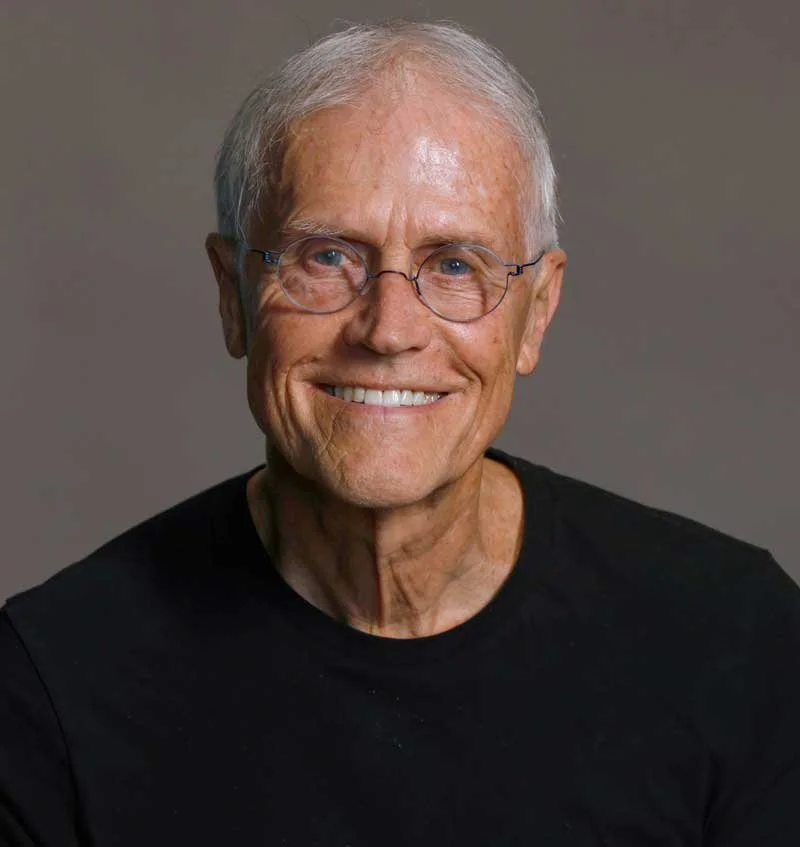
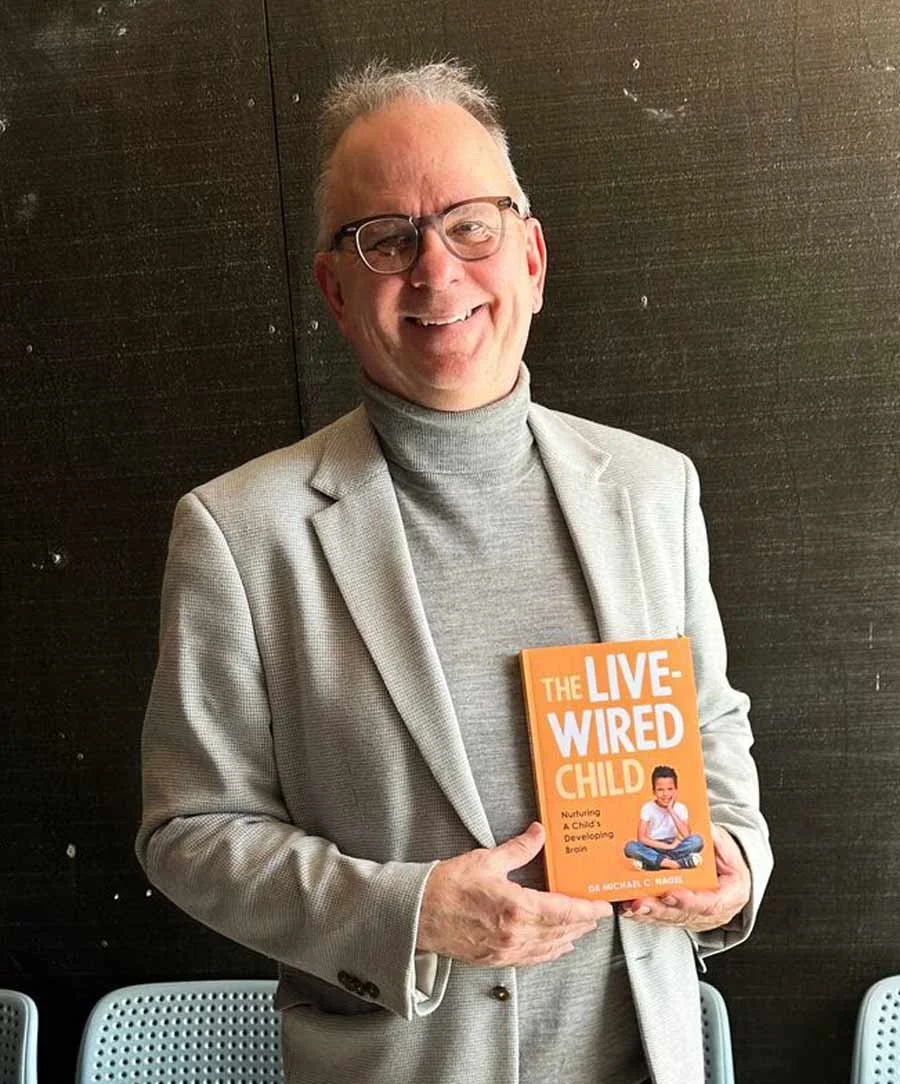
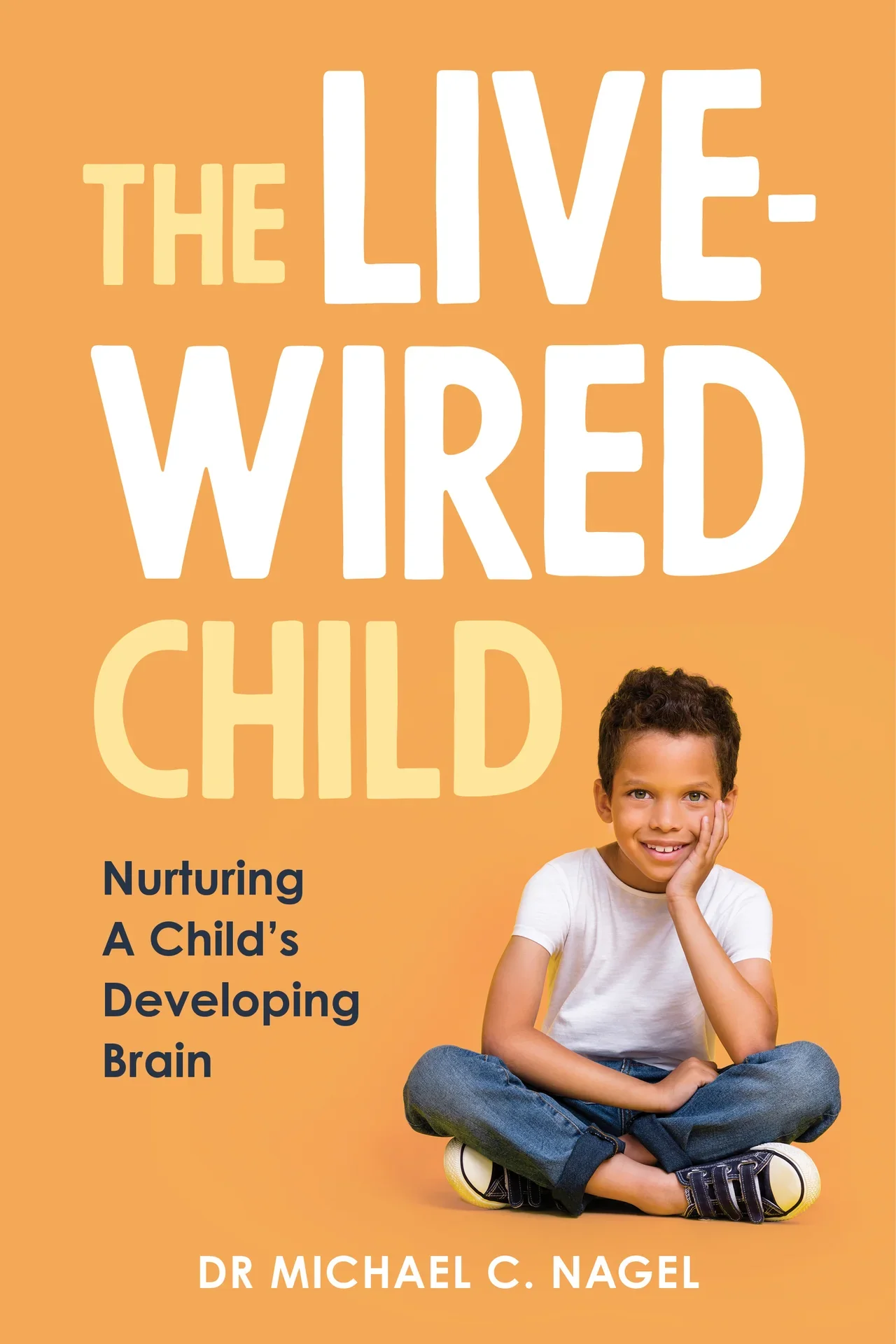
Dr. Michael C. Nagel is a researcher and educator, and a leading voice in neurodevelopment at the University of the Sunshine Coast. He has spent his life studying human development and the relationship between technology, the brain and mental health. In his essential books, The Livewired Child and his new work, The Livewired Teen, he explores neuroplasticity, how our brains are literally physically constructed by the environments we inhabit. And he has taken this science out of the lab and directly into the schools, advocating for a radical rethinking of modern education. But his work is not just about children, it's about all of us. It's about how we develop our personalities in a technological age. It's about the absolute necessity of the natural world for our cognitive health, how we nurture our imaginations, relationships and individuality. How do we foster critical thinking when algorithms do the thinking for us? As we face a critical threshold, how do we hold onto a sense of play, curiosity and what makes us human?
THE CREATIVE PROCESS
Dr. Michael Nagel, welcome to The Creative Process.
MICHAEL NAGEL
Thank you so much for having me. It's a pleasure to be here.
THE CREATIVE PROCESS
So you know, I've learned so much from it—it's really your life's work. But the brain is remarkably adaptable, as you know. But there is, I feel, a point in which the environment changes faster than our capacity to adapt to it. We tend to talk about technology as something outside ourselves, but now looking back after nearly 20 years of smartphones, social media and constant connectivity, how are we doing as a species? And do you feel like technology has actually become part of the environment of the human brain now?
MICHAEL NAGEL
It's become part of the environment. I'm not so sure it's become part of the environment of the human brain, because as you noted, I mean, the technologies that we use today are very new in comparison to the history of humanity. So for many millennia our brains have evolved over an extended period of time to do certain things and to work in a particular world in a particular way.
Yet we've sort of hyperextended that world or hyperstimulated that world. It actually hasn't been that long if we really think about it. I know that we've been using mobile phones and things since the turn of the century, but the biggest change was from about 2007 and 2008 when we held the first iPhone, the first phone that had a forward-facing camera, and that was a game changer in terms of the impact it was having on the minds of children and young people alike.
So I'm skeptical to think that somehow the brain is actually enveloping this notion of technology. I actually think in some respects for children, it's more of an assault the technology is providing to our young people in many respects.
THE CREATIVE PROCESS
That some techno-optimists might think of. I don't really mean that, but I think that we are losing the childhoods that you and I could have—that sense of freedom, play and curiosity, and all that social development, the embodied intelligence that you write about is so crucial. That's not all the data that can be scraped. So I feel like in some ways, yes, it is definitely changing us, or at least our ability to adapt or our sense of wellbeing, which you examine. So as you think about what is so essential to learning, what are we missing in this technological age and how do we protect ourselves?
MICHAEL NAGEL
I think one of the most important things, and one of the things we tend to miss or we don't consider at length is what we call a displacement hypothesis. In other words, when young people, children of any age, are on a device, what are they missing out on? What are the key elements that previous generations thrived on?
So we know that human beings are by nature social creatures, and we know that all aspects of our development, right from the moment of even prior to birth, you know, in the womb, that child is listening to mom's voice and hearing voices and is reacting to that. And at birth, that becomes far more prolific.
But all measures of our development, our social development, emotional development, language, physical and cognitive development, all happen in an arena of social interaction. So increasingly we see children siloed away from that. We see children spending more time on devices and less time in the real world.
And it's only been in the last decade or so that we're actually seeing what some of the implications of that are and have been. And we can kind of speculate where that might be going down the track if we don't alter things to some extent.
THE CREATIVE PROCESS
Right. There's been fairly important legislation. So now we're already having issues. I mean, Australia has been a leader in some of the legislation for protecting young people from social media and its dangers. And now that's a movement that's being adopted in different places around the world.
But now we have AI. Just as we're getting a hold of this, just as Meta has been fined 18 billion for the harms it has done to young people, now we see AI. So how does that accelerate the situation, and how do we get ahead of it when the technology is described as a runaway train and they don't even know how it works, they're saying?
MICHAEL NAGEL
That's the million-dollar question because it's so new. And I think the important thing too to remember is that what we are dealing with on an everyday basis is not where the technology actually rests because things that are provided to culture and society are behind what's actually available in research and development.
So notions of AI are far more advanced than we actually realize. Where AI is going is anyone's guess. It's something we're all grappling with. And I'm not so sure, you know, in terms of child development, it's the biggest problem because for me, what I see is not always what's on the device per se, but the time on the device.
So it's a combination of the two. How much time is a young person spending on a device? Then what are they doing? So if we think of AI, and when I work with my undergraduate students, I tell them, "Try to think of AI as not something that creates anything, but something that helps you as a tool in your own creative endeavors."
But again, universities such as mine and many others are still grappling on how to use it ethically and what it means. And it's one of those things that I don't think is a train we can ever keep up with, because by nature, AI is designed to stay ahead of its creators. And it has the collective resources and energy to draw on many, many, many minds.
So as my colleagues have meetings and discuss the ethical use of AI and how we're going to get our students to use AI in an ethical way so they're not using it to generate assessment, but as a tool to help with their assessment, AI is already ten steps ahead of us, and then another ten steps. It just keeps evolving at a pace I don't think we really understand.
It's a little bit of a worry in my mind in terms of where it is actually going. Historically, what I've spent a good many years looking at is the pervasiveness of technology and what kids are doing in the current context. And today, children, generally speaking, aren't using AI in the same way adults might be using it, because it's still relatively new.
And I know schools are looking to ban it, and there's lots of discussion around that. But I think probably if I come full circle to how we started this conversation, in my mind, it's the displacement. It's taking young people away from the very things that previous generations did, where they were spending time with people in the real world engaging with real people in real time, in physical endeavors or creative endeavors, developing oral language.
I'm very pleased now I have my first grandchild, and so I'm watching him with a different set of eyes, I suppose, than I might have 30 or 40 years ago. And I'm watching as his oral language develops in real time with my daughter who's engaging with him.
And it's those types of things that we see increasingly with young people, with infants, toddlers and children who are having deficits in those opportunities because they're being provided a device to entertain them or maybe to act as a babysitter or to help settle them. But in fact, those very things are not helping those children in the long term.
THE CREATIVE PROCESS
Exactly, because there is a kind of deep listening, I would say, but it's based on different priorities within AI, and it depends, we can't say it's all AI models. They're all trained differently. But what you're talking about are those spaces in between that are so essential to learning, and it's not just what you say, it's the tone you say it in.
It's that affection. It's allowing the struggle to take place and not providing all the answers, but allowing them to come to their own answers, and it's that music of being, bioacoustics, all these things that we took for granted when we sort of leapt onto the promise of all these technologies that make our life easier. But is easy really the point? It's kind of the question. Is easy the point of life, or is it the struggle, and for growth, you need to struggle through adversity, right?
MICHAEL NAGEL
It is. And part of being a human being when you meet adversity is often working through that adversity in the context of others. And not others on a screen, but others in the real world. Because one of the challenges for young people in particular, and adults as well, is we have this notion that somehow on a device if we're in social media or something, we have this multitude of friends, this multitude of people who are there to assist us.
But more often than not, it's an echo chamber. And depending upon what people are looking at, particularly if I think about adolescents, they spend a lot of time in social media, which I honestly believe is an accelerant to misery. Because they find—you know, it's interesting, I was just writing about this today, looking at notions of social contagion and how we tend to want to find like-minded people who, if we're feeling bad, we look for people who are feeling bad so we can all feel bad together.
And adolescence is a time when feeling bad is part of the nonplussed of being an adolescent. But it's okay to feel bad, you just have to find a way to maneuver through that. You have to find a way to not feel bad. So what that means is you have to reach out and find people who can support you, can nurture you and can help you through those times of troubles.
And not a cabal of people who just want to talk about the troubles they're having. And it really is an awful situation, particularly for adolescent girls.
THE CREATIVE PROCESS
We know that in terms of the sexual differences—and you've written books devoted to developmental stages for boys and girls—collectively they are more wired in their development for social relationships. We're very curious. We want to learn. But anything that gives them this information will tickle all those buttons, and I guess you can outline the differences and how the different social media platforms and different technologies can be troublesome for boys and girls.
MICHAEL NAGEL
They can be. You mentioned the legislation that our federal government has put in place. And I recall when it happened, I had a number of reporters contact me asking, "Is it a good idea?" And I said I thought the intent was very noble and the intent was good, but the pragmatics and practicalities, I don't think are going to be very efficient.
You know, telling a 14- or 15-year-old they can't do something is like throwing gasoline on a fire. Fourteen- and 15-year-olds will find back doors to do things. And a recent study just a couple of months ago found that roughly 70% of adolescents and teens have already found ways to sort of circumvent the laws and the blocks.
So I think it's more about putting in place a great deal of education for not just the students but for parents alike and for the communities. Because more often than not, parent communities and schools aren't speaking the same language, they aren't talking together. And so there's a collective amount of time that kids are spending on screen, so we can talk about screen time.
But then when we think about what they are doing on those screens, particularly outside of school. And still today, by and large, boys will spend time on social media, but they do it in a different way, and they're more inclined to spend time in gaming environments. So when it comes to issues and challenges associated with boys, we're often speaking about addictive behaviors.
And when it comes to girls, they tend to spend more time in social media and looking for like-minded individuals to share their lives with. And it's highly problematic because parents are very concerned about child safety. We talk about children's safety and stranger danger, and there's someone lurking behind the shadows everywhere. Yet they won't think twice about their children being in an environment that probably has more predators and more people of ill will than you're going to find around the corner fence.
So there's a lot that has to go on in this discussion. It's about time on screens, it's about what kids are doing in those spaces at particular age brackets, and then how that mediates in schools and beyond. So I think we're still really grappling with it.
And I've been talking about this for many, many years. We should think about how much time children are spending on screens. And now we have studies that are causal. So we are beginning to understand there are some real challenges and issues around screen time, screen devices and what it's taking away from children, but also what it might be applying to them in terms of unhealthy development.
THE CREATIVE PROCESS
Intuitively, anyone who appreciated the freedom, the creativity of discovering things for themselves or among family and friends just knew it, that there was something lacking when you put a child in front of a device and they are deprived of that, and you think you're saving them. But looking at those charts, they call it a hockey stick, it just goes right up. I guess it's sometimes 50 or 150%, you know, depending on what you're measuring, whether it's self-harming, depressive episodes or being hospitalized for depression. Just these things that—there's nothing else that would really cause that except the introduction of the smartphone and social media.
MICHAEL NAGEL
Well, and it's interesting too because it's one thing if you look at prior to the turn of the century on most measures of happiness, self-esteem and many other things young people are doing pretty well. They're doing okay.That started to change at the turn of the century and precipitously from about 2007, 2010.
So in 2007, the smartphone was introduced. It had a forward-facing camera which allowed young people to project themselves everywhere. The second thing that happened was the rollout of social media. Facebook came to fruition in 2010. So then we start seeing that space.
Now if you look at graphs in Australia, Canada, the UK, different parts of Europe, Scandinavia, the United States and New Zealand, you see the same hockey stick trajectory you speak of, where from about 2007, 2010, anxiety-related disorders, depression, a whole array of mental health disorders, suggest that the common thing across all of these spaces which are very different in terms of social cultural context, is the advent of that technology...
SHOW FULL INTERVIEW (15:00+ ▼)
...most measures of happiness, self-esteem and many other things young people are doing pretty well. They're doing okay. That started to change at the turn of the century and precipitously from about 2007, 2010.
So in 2007, the smartphone was introduced. It had a forward-facing camera which allowed young people to project themselves everywhere. The second thing that happened was the rollout of social media. Facebook came to fruition in 2010. So then we start seeing that space.
Now if you look at graphs in Australia, Canada, the UK, different parts of Europe, Scandinavia, the United States and New Zealand, you see the same hockey stick trajectory you speak of, where from about 2007, 2010, anxiety-related disorders, depression, a whole array of mental health disorders, suggest that the common thing across all of these spaces which are very different in terms of social cultural context, is the advent of that technology...
So we see similar statistics in terms of self-harm and depression in Canada, New Zealand, the UK, Europe, Scandinavia and the United States. We see the same statistics emerge on or about the same time. So the only variable that we can account for really is the advent of technology in that space.
And now what we're seeing is the same sort of studies showing that while we should be dutifully concerned about mental health, we also are seeing that those countries, those places that invested heavily in ICT and education, because technology is supposed to be a panacea for learning, are seeing that their results globally are diminishing comparatively speaking.
So countries who've invested more in ICT to advance learning are doing poorer in various standards in terms of literacy,numeracy and scientific aptitude. That too is a global phenomenon mirroring many other countries.
Yeah. It's something that you can actually measure in brain scans of young people and I think adults as well, if we're addicted to our devices, that there has been a change.
So that is sad, and I just want to say here I do think that the legislation in Australia and elsewhere, where they're adopting it, is a good signal. I feel it's very strong to have a signal to show what we value, but then it's to have maybe other legislation or other infrastructures that help develop community and those living experiences for young people or support systems for parents where they feel that there's safe spaces, that there are physical learning and playing spaces that are not digital.
We can't just legislate against the—
I agree.
We can't just say, "Don't eat fast food." You have to eat something, so here's how you nourish yourself and your child.
One hundred and ten percent. And it's important for your listeners to know I'm not a Luddite, I'm not anti-technology, but what I am is someone who's deeply interested in healthy development in children and adolescents. And I think those legislations are really important. I think, as you say, they send a signal.
I think the next best signal would be to basically take technology out of the schools. I've yet to come across any evidence that it's necessary in any measure of primary school or early childhood. And the only evidence in terms of efficacy or worth in high schools seems to suggest in terms of research. But in terms of actual learning and engaging in learning and the science of learning, it fails on most measures.
Exactly. And now to set up this passage from The Livewired Child you've selected to share with us—I think it's from chapter two.
Yes, and thank you for your kind words at the beginning. When I write these books... Well, my job is I write a lot of books. I've written books for universities, I've written research books. But I always think that what I want to do is reach out and touch as many teachers and parents as I can in a way that makes the science accessible.
But I also want to make it a little bit interesting and maybe give them a sense of awe at times because, you know, we talk about the brain in a way that we seem to think we know a lot about it. But I think if you spoke to most neuroscientists,they would say, "You know, we know a lot, but we probably know about one percent of what we'd like to know."
So at the beginning of each chapter, I try to set the scene a little bit. And so in chapter two, which talks about live wiring in the womb, so how the brain starts setting itself up to become live wired before birth. So if I may, the chapter begins as such:
"Imagine if you can, one grain of sand on the tip of your finger.
Now, can you see that image in your mind? Now imagine all the movies ever made, including their trailers. Now, you might be thinking, understandably, where's this going? Here's the hook.
A piece of human cortex the size of a grain of sand could store all of those movies and trailers. That minuscule piece of brain matter can hold about two petabytes of data, and neuroscientists have estimated that the entire human brain holds about 200 exabytes of information.
To give you some sense of what that means, 200 exabytes of storage is roughly equal to the entire digital content of the world. Your brain could store all the data available on the internet, along with all the data on every digital storage device on the planet.
I think it's a safe bet to say that few, if any, prospective parents would have this at the forefront of their minds when they learn that a life has been created and theirs is about to change.
I can still clearly remember the day I heard, 'Honey, we're going to have a baby.' They were magical and life-changing words, and I was fortunate to hear on two occasions. And like many others who discover they are about to become parents in the not-too-distant future, I realized how little I actually knew about babies, let alone parenting and raising a child."
And I like that passage because it speaks to the vastness of the human brain and how amazing it is, you know, the most unimaginable thing imaginable. But it also prefaces the fact that while I've worked in this space for many years on any given occasion when I've been working with my own children, who are now adults, and I have a grandson now, I had to refer back to things I'd written to work out what was going on in their lives because parenting is not an easy task.
If it were, there'd be one parenting book in any bookstore, everyone would buy it, and we would be masterful parents. The challenge is, and it's one of the things that I like about working in education, is that no two brains are the same. No two children are the same.
One of the most amazing things about humanity is the variation in life that is created. My children have the same mother,the same father. They grew up in the same context, but you could not imagine two more different people in how they see and view the world. So that chapter kind of speaks a little bit to what I would call, you know, what do young people call it?
The awesomeness of the brain. But it begins to speak to my own sort of self-reflection on what it was like to be in a situation where, "Oh my gosh, I'm going to be a parent. That whole world is going to unfold in front of me."
Yes. You say so many interesting things. I think it might just be important for us to note here for listeners that I think that that was based on research from the Salk Institute, that our brains have an incredible capacity of 2.5 petabytes, which was roughly the size of the entire early internet.
In recent years, the modern digital world has now expanded past 200 zettabytes. So I'd love to think that my brain could contain all of the digital world. I'm not sure how I could handle that, but I guess we're not cognitively capable of it, which leaves room for all those other important things that you write about, like creativity and imagination and all of those other aspects that are important to human development. You say many things that are very important there. How we lose in technology which optimizes for sameness and efficiency is this whole biodiversity of thinking, of being. Each individual has all these possibilities, and so we close off our possibilities.
I just wanted to say, I actually want to continue on that thread, but I'm kind of editing in real time here. I want to continue with the question right before you read that because I think it was an important follow on technology before we go into your reflection on your childhood and your children's childhoods.
So this is going back, we were talking about AI. So what happens to human development when the environment in which the brain develops begins changing faster than the brain itself can adapt? And we're living now in this kind of Fake New World where our bots can be talking to somebody else's bots, writing our papers in school, our emails, and we create this illusion of competence. But we're kind of behind that. We're like a parrot who asks for tea, but when you give it to it, doesn't know what to do with it.
I think what we end up doing is two things. I think we devalue the beauty of humanity and the capacity for human beings to create and generate so many things of their own volition. I also think that when you create a space where so many things are happening around you and you cannot keep up, that's a great precursor, particularly for children, for stress.
Because one of the things we know for healthy development in children is the human brain thrives really well with patterns, so it understands patterns and we can use the word borders or boundaries, but consistency. When things are chaotic, haphazard and things are all over the place or happening so fast that a young mind can't keep track of what's going on, that's stressful. And it can create all measures of stress in children.
So the AI world, for all of its beauty, I suppose, and what it can do for us, I'm not so sure it's as beneficial to children as it might be for a mechanism for older people to use in their work lives or maybe in creative endeavors, I'm not so sure. But the sort of hyper-stimulated environment of AI is probably not the best space for children to be learning to be human beings.
So you touch on that wonder of being new in the world, and if you can cast your mind back, which you must be always doing when you're writing and you're teaching, who was the young
Yeah, I do. So I'm from Canada originally. I grew up in the province of Saskatchewan in the middle of Canada. So the geography of Saskatchewan is such that the south is farmland and ranch land. People in Saskatchewan like to claim that the most famous thing about it is it's the only place in the world you can watch your dog run away for three days because it's so flat.
But we have this amazing diversity as you go from south to north, where it goes from prairies and ranch land to mixed forest to coniferous forest. My father was... And I was born in a small town. My father's a small-town boy. My father loved the outdoors, absolutely loved the outdoors.
I spent many a summer right leading into adolescence and even as a teenager camping and being outdoors in nature. And it gave me an unbelievable set of knowledge and skills. It taught me that being bored is okay. It taught me that I don't have to be stimulated all the time. It taught me that looking back, you know, when...
I'm pretty confident I wasn't having these thoughts when I was 12 at the time, but sitting on a dock out on a lake in northern Saskatchewan listening to the sounds of the wildlife around you, is awe-inspiring. It's awe-inspiring, but it's also calming. So that part of my life I hold very dearly.
And not to romanticize it, but I do think it had such a major impact on my feeling of well-being, and we know that's one of the things that the research tells us too is one of the best healing mechanisms for people is being in the outdoors and being in nature. So that had a huge part of my upbringing and helped shape who I am today.
My parents were blue collar people, very down to earth. I come from German and Ukrainian lineage. My mom was Ukrainian, my dad was German. So my ancestors immigrated to Canada shortly after the First World War. And I grew up in an Italian neighborhood. But we had so many cultures within such a small city that we celebrated. Even to this day, I mean, I have a brother and sister who still live where I grew up, and even to this day, every July they have something called a Festival of Cultures.They call it Mosaic. And you can...
The city gives you what looks like a passport, but it's actually a pass for free transport, so you can go to different cultural clubs and experience the food, the culture, the language, the dancing and everything those cultures have to offer. So that sort of multicultural environment in a very conservative province that was very much being the outdoors, being in that space helped shape much of who I am today, as did my parents' strong values about what it meant to be a good person.
Yeah. What were some of those things that they taught you to appreciate? You know, values is something that we haven't touched a lot on this conversation, but we've been talking about technology and that it might not have our values. But yeah, what were those lessons?
Yeah, early lessons were always to respect my elders, to live a life of honesty, to admit if you make a mistake and to persevere when you reach a measure of adversity, and get assistance or help if you need it. That for all the challenges that life will put in front of you, there are always...
If you're true to yourself and you work hard and you're honest, you will find no lack of support and love from the people around you to help you get through those difficult times. So for my parents, it was being honest, working hard, respecting your elders and striving for whatever you wanted to be.
Don't let anything get in your way. Whatever you wanted to do, just set your mind to it and work the best you can to make that happen. And it was interesting too because I say that, I mean, I remember my father in particular, who was very supportive of me in many ways, and both my brother and sister.
But as many of your listeners might know, the number one sport in Canada is ice hockey, and for many boys, myself included, we're on skates almost not long after we can walk, we're on ice skates learning to play hockey. And I recall when I told my father, and I was not a bad ice hockey player, things were looking good, but I remember saying to him, "I don't want to play this sport anymore."
And his comment was, "That's fine. Find something else you love and work at that." And I did. So that was his approach.Neither he nor my mother were trying to steer me in any particular direction or create my academic CV or anything else ahead of time. They were there to help me find my own journey whatever that might be, rather than trying to create one in their eyes or anyone else's.
Yeah, that's so important. I mean, if we're so lucky, that's a real privilege that you have, you don't have that stress feeling it's outcome-based. I mean, outcomes are really important, but it's also because you can discover other things when you're not looking for... You often, they always say the biggest discoveries happen when you're looking for something else.
So if you have an exploratory, you have that freedom, that permission, you can find out who you are and you can find out something else that is really important that you didn't even know was out there.
There was a lot of freedom, and if you'd asked me 40 years ago would I be doing what I'm doing now, I would have said,"No. Not a chance." I had no idea. I do what I do now because of how my life has unfolded in some rather serendipitous ways. But in other ways, because I've decided to reach out and take a challenge and go elsewhere.
So by way of example, my undergraduate work in Canada was in education, educational psychology and science. I was a school teacher for three years in Canada, then ended up moving and living in Japan for six years. After coming back from Japan back to Canada, I wasn't sure what I wanted to do, and I decided I'd take another journey.
I'd come to Australia to do my postgraduate work. At the time, my postgraduate work in my mind was to do my master's degree because I thought I'd go back to Canada and at that time, having a master's degree would allow you to get into educational administration. I thought maybe that's where I'd want to go.
But it turns out that I had a real knack for research and writing, a knack of writing that I had completely forgotten about since high school. And again, had met my wife and started a family and did my PhD and then kind of come full circle because I remember when I did my undergraduate work, I was always really interested in human behavior. And so I've come full circle. I've come back to it, but my curiosity in human behavior expands across the lifespan. But in the work I do, it's clearly about children.
It's interesting. I'd like to go into that because it's quite a contrast. I mean, Japan was facing some of the challenges that we're now facing in terms of technology, I think, before. I mean, almost was a test case in many cases because I think you can speak to where... in detail because I didn't live for seven years in Japan.
But I think there's really interesting good aspects of Japanese society, but then others they had the hikikomori_phenomenon, which is... It's not the same as incel, but you can describe this to greater detail where young men in particular were shut in and don't go out and that was identified as a phenomenon, I think before a lot of this social isolation that we've been talking about in terms of technology and social media. Could you just contrast that, open it up, because they have this very strong sense, as I understand, of community responsibility, which I think is really collective.
Yes. I loved living in Japan and my intention was only to be there for one year, and then my work circumstances changed every two years, which afforded me different opportunities at the work I did. But because I decided to stay, I actually invested heavily in studying the language, so I learned to read and write and speak. I wanted to be able to communicate with Japanese in ways that went simply beyond, "How are you today?" and "How much is that meal?" There was a time, too, when I used to dream in Japanese.
One of the things that's very striking about Japanese society is you mentioned the sense of community and collectivism.In Japan, so many things about the Japanese are all about what's best for everyone is best for one. One of my students that I taught he was the vice president of Toyota Motor Corporation, and I was invited to one of their, what loosely translated is called a quality control circle, which is where the president and vice president of the company will spend time with a number of people below them, and they'll discuss what's good for the company and what's not good for the company,what's working and what's not working.
So people on the assembly line are having a direct voice to the people who run the company. Nobody in Japan drink-drives. Drinking and driving is not what's done, because if you get stopped and pulled over for drink-driving, you don't just get a ticket or whatever the law might lay out for you, you also lose your job, because it's seen to be putting the company in a bad light.
So everything is really a collective communal society. Now, what I saw in terms of technology when I was there, so this was some time ago, so this was from 1988 to 1994. But I kind of followed it a little bit afterwards. Japan was a technological, still is a technological powerhouse, but the technology they were producing was for the use by others.
But I can't speak so much to what it might be like now, because that was 30 years ago. But I do recall, particularly males,you know, they have an arcade game called Pachinko, and I could see people spending hours upon hours in this sort of vertical pinball-type game.
So gaming was really prominent. And what I saw in terms of the work I do now in Southeast Asia and Japan and Korea,where, as you mentioned, a lot of young men isolating themselves and spending unbelievable time and hours on gaming environments. So some of the earliest research we had on gaming addiction emerged out...
of Japan and South Korea. So they do have their issues and challenges. I'm not so sure it mirrors ours in the same sort of way simply because of some of the rules and things that families and schools put in place to ensure that what is best for the community is best for one, not the other way around.
That's interesting. And yet even with those protections, you do—there is that quite strong hikikomori phenomenon. So it's just really saying we really have to do more. I mean, with such a community-focused society that can still take place.
It can. It can. And the other thing too is, you know, one of the things the Japanese are very good at, and I don't mean this as a pejorative, is that they're very good at ensuring we don't see the things that are going wrong. So we only see what they would like us to see, and rarely do we speak of things when they go wrong.
You know, it was very interesting. I rarely saw a person of disability in Japan. There were high schools that were for students who weren't academically inclined. You know, they're called agricultural high schools. Very few people spoke of them because the whole idea was to go to high school, which was a stepping stone to university, which was a stepping stone to your employment.
So there is still, again, I'm speculating a little bit because I haven't been there for quite some time, but that culture has been around for so long, and the guidelines they have in place that allow 200-plus million people to live and thrive in such a small space suggests to me that many of those things are still there.
We don't hear some of the... We rarely hear about any research. I rarely see any research coming out of Japan about adolescent mental health. Rarely. If you do, it's very unusual. So it's hard to get a pin exactly on what's going on in Japan.I can only really speak to my experience there, and I loved every minute of it.
I absolutely loved where I was. I loved the Japanese people. I loved the culture. And if not for not really knowing what I wanted to do at the time with my life, I may have stayed there a little bit longer. But I just felt it was time to move on.
Yeah, that is a sense of shame. And we also have that's also in whatever country we're in, I'm talking to you now from France, we also have that sense of shame where we don't want to address issues immediately. But it may be we are less reluctant to conceal.
But a lot of positive things, as I understand, too. You've mentioned there the importance of respecting elders and the wisdom that we can be learning. That's something that we, depending on what country you're in, sometimes forget, where we embrace the new so much. So it's always nice to go back to that long arc of history and to see what mistakes they've made and what they've learned.
So talking about language, you learned Japanese. You know, you've lived in different countries where even English in Australia, in Canada, in America are really different. I mean, they are different. They have different perspectives. And then in Japan, what have the different languages and countries you've lived in, you know, have they shaped your view of the world and people? How essential is that? Because it's on a subconscious level.
That's a great question. I remember when I, by way of example, I don't know if a lot of it is conscious. A lot of it could be subconscious because I do recall when I returned from Japan to Canada. So in the six years I'd lived in Japan, I'd been home twice. So now I was back, and I recall both my brother and sister in different contexts had commented on my mannerisms and how I was conducting myself in a space because I was acting more Japanese than I was Canadian.
In Japanese language, they have a term called aizuchi, which is people stereotypically see Japanese people go, "Hai," when they're in a conversation, and they think that means yes. It doesn't mean yes. It means I acknowledge what you're saying and I hear you. You know, you can translate that however you want, but it's not simply yes.
When I was back in Canada, I was doing the same sort of thing but using English, but my body language, my mannerisms were very Japanese in their nature because I'd been in that space for so very long. So some of those things I think kind of happen subconsciously.
I only wish what I know now I would have known as a child because I do know that there's lots of evidence around the benefits of being bilingual or multilingual in terms of, you know, if we simply... if we're going to use a very utilitarian perspective, kids who are bilingual or multilingual do well at school.
But I think kids who are bilingual or multilingual do well in life because they're able to have a shared understanding of other cultures, of other people by virtue of embracing that language. So there is a lot of merit around the development of multi-languages in kids. And again, I came from a country that's bilingual.
We have two official languages. Yet growing up in Western Canada when I was a young person, that just wasn't important to me. My mother spoke fluent Ukrainian. My dad knew some German. I was at events and with my mother's side of the family, and everything was... My grandmother didn't speak a word of English, so everything was in Ukrainian.
So French never really appealed to me at the time. But I wish I could go back in time. I really would like to embrace and learn more languages. But yeah. And also, I think the other point you just made too is true. You know, when I came to Australia, I've been here 30 years now, and when I came here,
the subtle nuances of the language evaded me on many occasions, and not just the vocabulary, but the sort of innuendo behind them. And even now, after 30 years, I'm still learning. I will hear things and I have to say I'm just not sure what you're getting at, or is this what you mean? It's taken a while to kind of if not embrace, certainly understand some of those subtle nuances.
Language is an amazing, amazing thing. There's so many things, Mia, I would like to do if I could go back in time. You know, it's one of those things that happen as you get older. I would love to learn more languages and really, really hone it,and I probably want to go back and really focus on developmental psychology per se, and maybe be a clinician.
We have one life. But we can live many through education, through the arts, through the sciences. It allows us to have that. There are many things that are important, but living between cultures, living between languages, I think that it teaches us very young that everything that is said, it's not all truth. It's not all literal.
But sometimes if you live just in this monoculture or one language we can take the words for what we say to be what the other person actually means. So much is said there, between the lines. All communication, I think when we're living bilingually, we then understand that all communication is translation. There's so much lost in translation. There's the intention and the body language and then there's more than one way of seeing the world. So I don't want to say it makes us suspicious, but it makes us curious and needing to navigate that.
We find out who we are, and what you said just put a light bulb in my brain to mention too that this is one of the reasons why I have a great deal of reticence around technology with kids is because we are social beings, and we learn so much,even from the subtle innuendos of a person's face, the subtle gestures. Look, we're on screens right now.
I would be able to read your facial mannerisms far better in real time, in real face-to-face than on a pixelated screen. And so we interpret people's intent, people's emotions. We develop our empathy. We develop all aspects of our humanity when we're with other people, when we see other people in real time, when we can hear the subtle nuances of the language and see the mannerisms that go with it in a way that is far more detailed than what happens on a device.
So, you know, oral language development is so important. I say to parents all the time, "When your children go to school,formal schooling for the first time, they do not need to be literate. They need to have good oral language skills." Good oral language skills are a precursor to literacy, not the other way around.
So your son and/or daughter do not have to enter formal schooling and be able to write their name or a sentence. You want to encourage them to talk. You want to give them help build that vocabulary. And there's some differences between boys and girls in that developmental trajectory, but we still want both boys and girls being able to have conversations and communication. And that's one of the things that screens do. They actually derail that in so many ways.
Yeah, and really scrape what is deemed as essential fact-based. And I believe in facts and statistics, and I know that's what you have to prove when you're talking about how we should raise our children and what's healthiest for our own minds as adults. But there's so much more than that. And it's interesting you said you would like to speak more languages than you do.
But I would also say that there are other languages that you are speaking that are not deemed as languages, because I love language, the written and spoken word, some of it was even surprising through these conversations when I would speak to a composer but I always felt, oh, it is abstract. It's a feeling. But then speaking to some composers they're working on films, right? So they're working with language and music, and they say, "Oh, it's so clear when you talk about music language or the written or spoken language."
They feel, musicians or composers say it's so much more precise in music. And I was like, "Oh, really?" So that opened my eyes to what were we before our human language, you know, were we like birds? People make all sorts of speculations about how human language developed. But for some who live in dance, who live in theater, it's not what they say. That's the last thing. And it's not really the most important thing. And it really opens our minds to all that non-verbal living language that we sometimes neglect and forget how to read.
I think that's a fantastic point and one that I'm guilty of is only thinking of language in words and thinking of language in different words in different cultures. But we speak to each other and that's one of the things I love about watching children play. When they are speaking to each other in ways that transcend vocabulary just in how they engage with the world around them with one another. And I think adults would do well to just watch children at play from time to time because there's an innocence about it,but there's also a purpose and I think it's really amazing to watch.
You know, I love watching human beings, and I love watching kids and teenagers in action, in their own space. The nature of the work I do is that I simply really enjoy it, and I really enjoy seeing how they navigate the spaces around them,whether they be in a school or in the outdoors. It fascinates me.
Yeah, and you speak of a wildness. So there, we're, I mean, when you watch the very young children almost they're learning how to be human, right? We're teaching them our human habits. But when you watch them, you talked about the benefits of being in nature. When you watch them around animals, whether they're our domesticated pets or even there's a fearlessness if they see a wild...
I remember when I was very young being like crawling under a fence and going near a buffalo. And I'm like, "Oh my God, this chick's going to be crushed." But there's a fearlessness because we don't see ourselves as separate yet. It's like we all see as "I just want to learn about this thing." So there's a connection, I think.
I'm sorry, I'm very interested in animal languages as well, so I introduced that. That we lose when we tame ourselves. So talk a little bit about the freedoms, that magical thinking in those very early stages where make believe maybe for children is almost as real as the reality that we train ourselves to see the world as.
Yeah. It's one of the most amazing things about the human mind in the early stages of life, is how children have this sort of collective freedom to just be in a space and be whatever that space allows them to be. And then it's reflected in how they play and it reminds us, I, again, I've done many discussions with parents and teachers about the importance of playful environments, and the importance of play where it's uninterrupted and it's self-directed. If you're trying to regulate play and trying to show children how to play, you're doing them a disservice.
Because what children have taught us over many generations is that left to their own devices in an environment, they can stay safe, they can engage with the world and they can engage with others in a way that is instinctive, natural and wonderful to watch. It's only when we intrude in that space and try to regulate it that I think we do a disservice to children.
So playful endeavor is so incredibly important, and playful endeavor in the outdoors is even tenfold more important because the outdoors seem to provide almost a medicinal effect to our overall health and wellbeing. So I encourage parents all the time, you know, we need more free-range kids.
We need more kids out playing and enjoy. I'll share this with you. It caught me way off guard. I was contacted by a reporter, I won't mention what part of Australia, a small rural community who were in a bit of a frenzy. They were uncertain of what was going on.
And the whole story was that a good number of boys had suddenly decided to create a gang of bike riders and go out and ride around the town. And the people in the town, people were like, "Is this normal? Like, do boys do this?" And I thought that's the strangest sort of thing I'd ever heard, because I think what we've seen is so many kids spending so much time not in those spaces outside.
They spend it gathering virtually or in their homes. So for people to see a group of boys on bikes riding around town, and the reporter said, "Is this normal? Like, what do you think created this?" And I said, "I don't know what it is, but I think we should encourage that for all the kids.
Get them outside as long as they're not engaged in any antisocial behavior." But it just seemed really odd to me that the behavior of previous generations that we wouldn't even think about, people were asking questions about, "Is this normal?" I thought, that's one of the strangest interviews I've ever had.
I couldn't conceptualize in my brain why they would consider this to be so unusual, but they did. And I thought if we see kids doing what kids previous generations had done as unusual and we're questioning that, I don't think that's a very good sign of where things are going.
Yeah, that's the other thing is we talked a little bit there about the easiness of information, right? Now it's with AI, but before the Google searches, all those things. So if you can look up something quickly, that's wonderful. Great for research,but then, you know, you have to research with your body actually.
You have to research with the world, because there's so many things that can't be included in a soundbite or something. So this is like a theme of so many of your books. It can't replace the lived experience we aren't computers. It's just a very simple fact. So we are going to have to sometimes ride that bike, scrape our knee, find out the leaders or the followers that we are, find out social dynamics and yeah. There is no one normal.
I can read any classic romance, but I'm not going to know what it's like to fall in love until I'm with a person and fall in love. So all the stuff that we can gather, the information you speak of, it's all wonderful, it can be very helpful, but we don't live a disembodied experience. Our lives are not curated by the data we collect.
Our lives are a product of the experiences we have with real people in real time.
So let's talk about love. ou're a father, you're a husband, you're a grandfather, you're a teacher, how has your view of love changed over the years?
I think it's grown, it's matured. When I was younger, I think my love was maybe a little bit more selfish, a little bit more about what's in it for me. But I think it's also, I'm at a stage in my life too where, Erik Erikson, the esteemed psychologist,wrote about our stages of life, and I'm at a stage of life now where I feel I've had a very good life.
I feel that I've had some amazing experiences. And so my view of love is a little bit different in that I want to give back in so many ways that I can. And I think I was a good parent. My kids might disagree. Most children always lament their parents. But I'm hoping I will be a good grandfather.
I think my kids will be good parents. So I hope I'm leaving a legacy behind that is one of love and acceptance. But yeah,what I struggle with in terms of that word love is how flippantly people use it. Because I don't think you can say to somebody, "Love you," just throw it out there, because I think it's one of those words that you should hold dear and you should only use it in a context where you really mean it.
You can really, really like something. I mean, I just hear the phrase used too easily, I suppose. And I think it's a word that we should cherish and hold dear to our hearts and use it in the context when we really mean it, when there's a sense of... When you're in love, you want to be the best person you can be in that space, and you want to give as much as you can give, and I don't think that happens all the time.
Yeah, exactly. And it's really, I mean, I'm traditional, so I've been with one person my whole life, like really since I was very young. So it's about building a life together for me. And some people, they have many loves throughout their life, but I think it's about, then it becomes never boring.
It's this constant state of learning, in my opinion. You know, a constant state of growing together. And that person from my point of view is always showing you new things, and you grow together. But as I said, for me, it's also I always want to be the best version of myself when I'm with that person. And I don't expect anything in return. So I just am forthright and honest and just want to be in that space and be the best version of who I am.
So I do wonder if sometimes the study of relationships, or in this case as we're speaking about love, does that ever get in the way of, for you, the spontaneous experience? I mean, when you're thinking so much about a topic sometimes... I mean, same thing with writers or whatever artist. You can study something so much, talk about it so much, then the immediacy, that childlike immediacy of experimentation and play and all that, does that ever get in the way?
It does, and I have to be very purposeful in finding opportunities to kind of take my being and myself away from one aspect of what I do. So I work hard to find time to be in the moment. I work hard to find time to disengage from my professional life and find time, and my wife and I we're kindred spirits in the same sense that we also know we need time to ourselves.
We don't need to be together all the time. So we affectionately call them marriage sabbaticals. We might take a little bit of time just to be at peace with ourselves. I found that when I returned to Canada after being in Japan, I was actively looking to find peace, and I would find ways to do that.
And then when I came to Australia, I got in the busyness of life, so to speak, with my study and relationships. So that kind of eluded me for a while. It's only been in the last decade or so where I've actually been looking for that space again. You know, that quiet space, that place of boredom, that place of just being away from what keeps my mind switched on in a particular way all the time. I need to let that go and just soak up where I'm at in that moment, in that space.
Yeah, we have to find our way back to that freedom, that sense that we had, if we were lucky, in childhood. Now, on this topic of love, because you know, there are so many things that weren't around when I was growing up or when you and I were growing up, in terms of young people being exposed to we won't call it love, being exposed to young boys, but I guess also young girls on Instagram, different things, but sex without love, pornography. How that's corrupting their innocence and their ability to discover for themselves and what are your reflections on that?
Yes. A colleague and I had a book come out in 2025, and within that we talked about the advent of cyber pornography and its impact on loving relationships and healthy relationships, and the illusion of what intimacy should be and actually is.
The framing of intimacy between two individuals, human beings, is something that is greatly exploited as a sexual activity in pornography. There's nothing intimate about what goes on in those spaces. And the worrying thing too is I was looking at data, and the biggest consumers of cyber pornography are 13-year-old boys—13, 14—but they're getting access to it.
And so, you know, at a stage in life when that's a very important time for shaping your identity, your framework for trying to understand intimacy in a relationship, if that's it, that's not healthy, and that's just going to end poorly. And I also think it leads to why we see so many challenges and issues with understanding consent, understanding what a healthy relationship looks like and understanding how you develop a healthy relationship.
So it's a worrying space.
Yeah. And there are some people who say, “Oh, sexual expression,” or... I mean, I don't really fall down on that side. Fine,I don't want to shame people for their sexuality, but it doesn't seem a healthy space, and I can only think that this is all very theoretical for me because I won't destroy my innocence such that I feel it's important to hold onto your innocence throughout your life. Like, I really think that's—
I would agree. I would agree. And I think that I would, you know, I'll never condemn a young boy for being curious, but I do think what's really important, and I don't know if we do enough of this culturally and in schools, is even explore what a healthy relationship is really about. And there's a very big difference between sexual activity and healthy intimate relationships. They're not the same thing. They don't marry, right? So you can have a healthy intimate relationship that has loving sexual intimacy, but I don't think you can in a pornographic world. I don't think in that sexual activity or any sexual activity like that, there's any measure of intimacy or a loving relationship. It's exploitative. It's about making money. There's nothing about that speaks to the beauty of a human relationship.
Exactly. And what is beauty? And when people call it, maybe they call it emotional intelligence or, you know, just being kind in the world, we've done some as an educator, but what do you think is missing from our current educational landscape that we maybe optimize away from when we think it's all about tests and certain outcomes?
No question. Schools have become very much about performance. They've become very performative and about results.When I think of the school system in Australia, I think it's very overcrowded in terms of what students are asked to study.The curriculum is just expansive and it's very much oriented towards your future. What do you want to be when you grow up? Because we need them to decide that by the time you're ten or 11 or 12. Here in Australia, we have something called an ATAR, which is the score that students work toward in their senior year of high school that's going to give them particular options at university, and it becomes something of a marketing ploy. So I see schools and they say, “We had six ATAR ones and five ATAR twos.”
And I live for the day when I see a sign that says, “All of our students are healthy and happy.” You know, we're working on positive relationships. We're working on things that you don't necessarily have to quantify by a score. We're working on things where we're teaching young people what it means to be in a healthy relationship. We're talking to them about navigating the idiosyncrasies of adolescence. I think when that happens in schools, it's usually because of someone in that space that has that interest. But by and large, schools are driven by performance. I would like to see a little bit more... I think in high school you can study some aspects of philosophy and ethics.
I think there are things that you could embark on with young people and it doesn't have to be theologically based, but exploration of self, exploration of the journey of being a human being, what it means to be a whole person, not just someone who can regurgitate the best answers on a test and get a score.
Precisely. These are the—not to make it gloomy, but looking forward to the future—like these are the eulogy qualities.These are the legacy. I don't think anyone in their last moments is thinking, “Oh, I got great ATARs and this many social media likes and a million followers,” and all these metrics that are really... No one's thinking—
When I was doing my PhD, one of the most poignant things my supervisor said to me, because I used to burn the candle at both ends, so to speak. I was in my office early, leaving late. And he said to me once, he said, “Mike, always remember that when you pass, no one's going to read your headstone that says, ‘Here lies Nagel, a great scholar and researcher with brilliant scholarly acumen.’
You want it to read, ‘Here lies
And I also think it speaks to because so much is uncertain even in academia in terms of people's career paths. We've talked about the promises and challenges of AI, but that's heavily impacting, as I understand, career paths and the certainty of a reliable teaching post in academia. So these outside interests can actually be your lifelines to your adaptive career paths, your adaptive intelligence. You know, it's not just nurturing experience is important, but we can also say that it is important because we have to... We have no promises now.
You know, the career that lasts decades in one post is unfortunately, in many cases, gone.
Well, and the future I think is far more unpredictable than it ever has been. You know, for previous generations, the future was pretty straightforward—for those who survived World War II, it was getting work, buying a home, starting a family and retiring. But you know, if you had a job... My father worked at the same place for 35 years. And if not for a farming accident, he might have stayed on the land. But previous generations were in the same rate of employment for many, many years. Now it's the uncertainty. And yet that uncertainty, again, we talked about the uncertainty with children, but any measure of uncertainty is very stressful for people.
We like a degree of certainty. We like things when they're predictable, we have a good sense what outcomes might be.And when everything can get thrown in the air and at a moment you lose that, that can create a lot of strife for an individual. And if they're not well-grounded in the first instance, if they don't have a good sense of self, it can just throw you...Because so much of our social context now has been framed on, you know, having excess money, lots of goods, lots of materials and all of that sort of thing.
So if something threatens that, it can be really problematic if that's all you believe in. But if your depth of understanding of humanity is a little bit more than that, you find a way to get through that. And again, with the support of family and friends, you find a way forward. But if that's where your focus is all the time, AI's not going to be a good thing for you.
So you speak about ways of getting through, and you'd mentioned there philosophy and spirituality. You know, these are all ways of understanding the world. Just tell me a little bit about your connection to nature, but also about your relationship to a god or things beyond things that we can see and touch.
Sure, I'm going to go back again to Japan. One of the things that happened to me in Japan when I first arrived there was because I couldn't speak the language, I couldn't read or write. And so anything on television, I couldn't be hyper-stimulated by. So I really got back into reading. I became a voracious reader. And I was working with a lovely American man who convinced me, and rightfully so, you know, read the classics. They're classic for a reason. So I was reading as much as I could, you know, Dostoevsky. I read Homer and The Iliad. I read as much as I could. And what I found is that there's so much wisdom, there's so much to be learned in those classics that you can take away.
You can take bits and pieces from here and there. And so regardless of what your religious belief system may or may not be, you can, I think, within those classics... And I read the Bible, I read the Quran, I read as much as I could to try to have a better understanding of what it meant to be a good human being and to take little bits and pieces from those things and kind of let that shape how I engage with the world around me. And sometimes they weren't always classics per se. I read a book I remember by John Paul Getty Sr., and there were three things he said in there that stuck with me to this very day. He said, “You know, when you live your life, there are three things you must do or must not do.
The first is when economics go bad, stay stable. Don't buy, don't sell and don't panic, because the economies are a cyclical thing. They have a tendency to right themselves.” I'm not big into economics, but I still remember that. The second thing he told me, and I live my life by this, is never be late.
Be early, he said, because lateness is a sign of disrespect for the persons who are waiting for you, but it's also you're disrespecting yourself because you're not setting a very good example. So I embody that. And the other thing he said was about art. You never buy art for its value. You purchase art or you acquire art because you love it, because that's what art is meant to be. It's not meant to be a commodity.
And so it's those types of things I grab little bits and pieces here and there that I think when, in my day-to-day encounters with people in the world around me, they come to the fore and they resurface. Somewhere deep in the ancient recesses of my gray matter, some of those things still linger. But I do think it's really important... For me, it was really important to engage in a wide array of literature, particularly the classics, and to really try to have an understanding of what it might mean to be a human being outside of my own context. So I think living in Japan provided that, but the fact that my mother was Ukrainian helped remind me of that.
So when I try to think about what's happening around me, not just where I might have my own sphere of influence, but nationally and internationally, I'm always mindful that what I might see projected at me via news media and anything else is not ever going to be indicative of what is actually happening unless I'm in that space.
And as you reflect, because you'd mentioned your father, and I think that if you could talk about these classic texts,philosophy or the canonical works of whatever faith we may come from. There's so many metaphors that go back to nature. So I'm wondering—you spoke a little bit about it, but I'm wondering about those sights and sounds that bring you back to that wisdom. Because I think, you know, farming life also is one of understanding there are seasons to life and then you begin again.That's so useful in growth and development.
CLOSING THOUGHTS (1:07:00+)
Yeah. You know, I mean, where I live now, I find it a little bit challenging at times because we don't have four distinctive seasons in the way that I grew up in. My son is living in Melbourne now, and he has four seasons in one day. My daughter's in Canberra, and she has a more sort of fall, winter, spring, summer. But I think the changing of seasons—as I said, we're moving into spring, so I recognize that as a time of renewal. I see,you know, it's getting lighter earlier.
I'm an early morning person, so I'm out, you know, at the crack of dawn. I like to be outside. I regularly, at least four to five times a week, start my mornings on one of the many local beaches around me, just walking along, if not on the beach,near the beach.
And I call it my gratitude walk because it allows me just to stop and take stock of where I am and where I'm going, and kind of... I love to watch the sunrise over the ocean, which I'm very privileged to do where I live. It's that. It's also, I was thinking about this, it's so funny, the other morning Australians will jokingly say, you know, “We have nature's alarm clock.” You don't need an alarm clock because when the sun starts coming up, every bird that you can imagine that's within your domain starts chirping, and it's just a symphony of sounds. And being up here in Queensland, I get the sounds from lorikeets, you know, which are a type of parrot, magpies and this vast array of birds. So all of these things help to ground me at times and remind me that I'm just a small part of a greater ecosystem, a greater dynamic. And it's an honor to be in that space, and my daughter is very good at reminding me of that.
Her connection with nature and her connection with animals actually reminds me of my father. My father was very much like that. So I see that in her, and I watch how people engage with the world around them again. But for me, it is those sort of times of change and times of renewal and just the little things, just making sure I stop and take in those little moments that remind me that I'm here for a period of time. I want to make the most of it. I want to be the best person I can be in it, but I want to also experience as much of it as I can.**
Yes. And people don't realize that Australia has the most biodiversity of all countries on the planet. And unusual creatures, but reading about the lyrebirds and all. You have so many there.
We do. The animal life I grew up with in Canada is so very different than the animal life here. And what I suppose I see on a regular basis that I kind of connect with is where I walk, there's a lookout, and I can look down and often see sea turtles sort of gliding through life.
You know, just being in that moment and floating along and just accepting whatever wave comes their way or doesn't come their way. And so I really find a comfort in that. But coming full circle again, I do love to sit on that lookout and just watch those turtles play in the waves.
Yeah, because what is amazing for those who don't know is that sea turtles travel out 10,000 miles out to sea and they come back to that place of birth, that sand. And how does it remember? And some scientists say, “Oh, well, they can't possibly remember, but maybe bioacoustic memory.” I feel like, what are they looking for? They're looking for their mother. Maybe it's just all biology and they don't have a memory, but we are imprinted at a young age, and what brings them back?
Well, we see that right now we're watching the whale migration that is occurring. Every year the humpback whales travel from the Antarctic up and back, and we can watch them. And what is it that facilitates that? And it's not well understood,but certainly something draws back. And I wonder too if that happens with human beings to some degree because I've lost both my parents. My mom just passed away earlier this year. And I've often... There's sometimes there's a sense of me saying, “Maybe it's time to go back.”
But my life is here with my kids now. But I think there is something that... We know that prior to about age three the formation of memories is very difficult in human beings because our working memory is not well established until after that. But I do think there are things that become instinctive that occur in animal life and human life that draw us back to earlier moments in time. We're very fortunate to spend time on this great blue planet.
Yeah, and then in Aboriginal culture, I don't understand it completely, but I've always been attracted to the kind of mystical understanding of the dreaming and the songlines, things that we can carry with us. We may be away from home,but we can find our way back. It's a way of navigating. So it seems to be something that Aboriginal cultures understood before science really observed it, when you talk about whales, the idea of a song being a way of finding our way and seeing our way in the world.
Because we have been talking a lot about technology and with our own noise pollution, mess with beached whales, their ways of navigating. Sometimes birds falling out of the sky, different ways we have harmed their ecosystems and ways of being. And I do wonder as you write about what our technologies are doing to our own internal systems which we can't even yet observe. I'm not saying we're going to beach ourselves, but we could be going there if we take it too far.
Well, we know that it's having an impact at a very basic level on sleep. We know that it's having a great impact on our overall physical health. There's evidence now to suggest that it's delaying the development of empathy. And it's one of the things I will say to people now when we're talking about this. I'm not talking about banning technology. That's unrealistic.But I do think we need to have some long and hard conversations about how much exposure we want a young developing brain to be exposed to, because we're beginning to see some really worrying signs. The polarization of people in terms of it's my way or the highway.
There's no gray area, there's no middle ground. We see that increasingly. Now certainly there are cultural parameters around that, but there's research evidence telling us that the screens are actually having an impact on our capacity to put ourselves in another person's shoes and try to think from their perspective. So it's watch this space at the moment. We don't know what it's going to mean long-term.
We all have to watch out for that digital smog that we're all living in to see our way. So in closing, what would you put in your personal museum of memory that's given your life meaning?
There's so many things I could add to that. I think one of the things that I hold dear to me in terms of my memories, I was very close to my grandfather, my father's father. And I remember when he passed away, it came as a shock. He was a younger man. His dream when he retired was he wanted to buy a motor home and he wanted to drive around North America with my grandmother.
So at 65, he retired and wanted to do that, and my grandmother decided she didn't want to do that. And I think it broke my grandfather's heart in some respects, and a year and a half later, he passed away unexpectedly from a stroke. So at 65,retired. I think it was just before his 67th birthday.
And the memory that I have from that is I decided at that time, because I loved that man very deeply, still do to this day,and what that said to me, and it certainly had an impact on my journey as a human being, is that I was going to live my life before I retired and then live a different type of life after that space.
So when an opportunity came for me to leave Canada and go to Japan, I went. While I was in Japan, whenever I had a break, I never stayed. I went and visited as many places. I wanted to see and do as much as I could. When I went back to Canada, I could have simply stayed there to study. I said, “Nope, I'm coming to Australia. I never got to Australia while I lived in Japan. I'm coming here.” And my life unfolded here. And I think that the memory of my grandfather in that space was the energy that pushed me to go to the unknown, pushed me to take risks, pushed me to go places I had no understanding of. I mean, I went to places I—
went to places where I didn't know the language and didn't know anybody. And it gave me a strength and a courage and a conviction to live the life I wanted to live so that when it did come time to retirement, I could still live a life of adventure or whatever that might be. But I didn't want to have any regrets and hold anything back, and I think that's probably the strongest memory I have.
Oh, it's so important. We can just put it off and put it off, and we never know when our end will come. So then this is more the public wing of the museum, or different disciplines or what you learn from them.
But if a cataclysm were to sweep away our civilization and we did have to rebuild our world from scratch, we're reevaluating all the things that are meaningful for us. What knowledge do you think is important to hold onto and how do they give our lives meaning?
I spoke earlier of the classics. I think if there were an opportunity to pull out key messages from those, I think those are really important. I do think it is important to have faith in some measure of a higher being, however you want to define that, that might support you or help give you purpose or sense of meaning.
So whether it be Judaism or Christianity or whatever it is. I also think that one of the things that we've devalued that we would do well to work on is the value of a family and a nuclear family and how important that is, particularly with children. And I also think that, you know, for all of the benefits we've received from capitalism per se, I think we'd do well to remember that it isn't about things or about accumulating items.
It's about living, and it's about living well. I think we probably would do well if we could to ensure that our custodianship of the environment is healthy and not exploitative. And I think those would be my wish list.
Well, you know, if we can just learn from a few of those, we'll have lived a good life. So thank you, Michael Nagel, for sharing your reflections and opening our eyes to the miracle of the human mind, the joys and challenges of childhood,how important it is to have a sense of play, family and curiosity, and find meaning beyond the metrics.
So by helping us understand what we value and what we love, we can create a better tomorrow. We all live on one planet we call home. Thank you for adding your voice to One Planet Podcast and The Creative Process.
Thank you so much for having me.