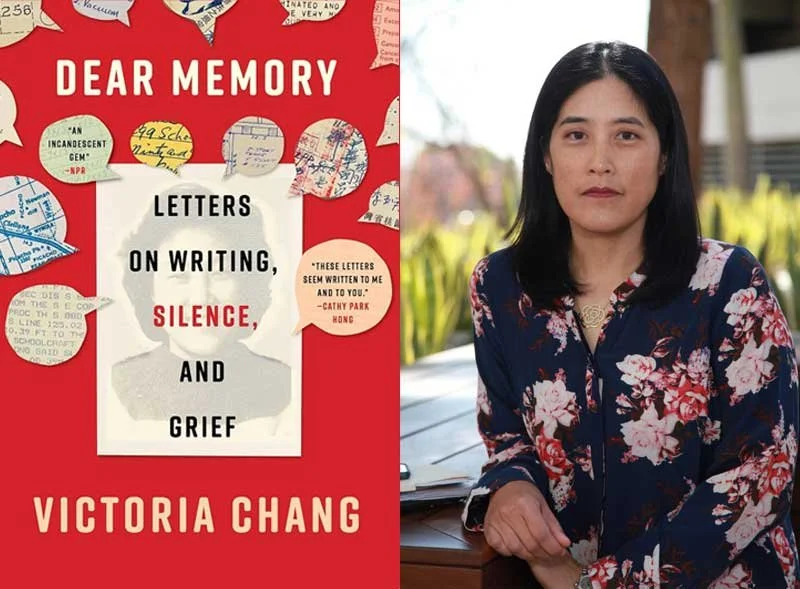


I think different cultures and families also have different ways of communicating, and I think what it tells us is words, speaking—it’s not the whole picture. You know, we put so much emphasis in American culture on, “Hey, speak up. Talk louder.” I mean, the number of times I heard that growing up, even in my student evaluations when I was in elementary school: “Oh, she’s very quiet. She doesn’t talk much.” And that was always positioned as a bad thing and a negative thing. And so I think that it’s kind of baked into this culture of you will be or are a real human being if you actually use your mouth and your words.
I think Tree of Knowledge was an exploration of what do you do now that your parents are both gone? And what’s left, and what are you supposed to do with the rest of your life? And I think that whole book was an exploration of those ideas and thinking through that. I think a lot of my books and works are me sort of thinking through things that I’m experiencing, and I think I came out of that book thinking, “Oh yeah, I’m supposed to live.” And I had to remind myself after they died, like, who am I without them? You know, I’m walking on this earth, I’m maybe walking an inch above the earth now, and I think it’s because all of that burden and history had evaporated.
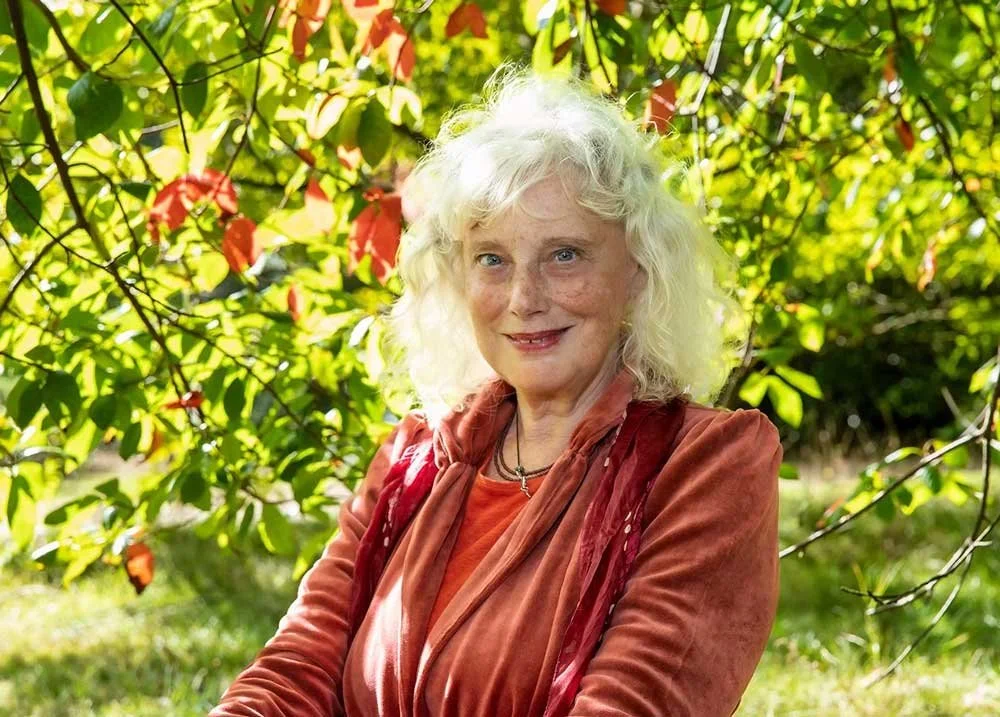
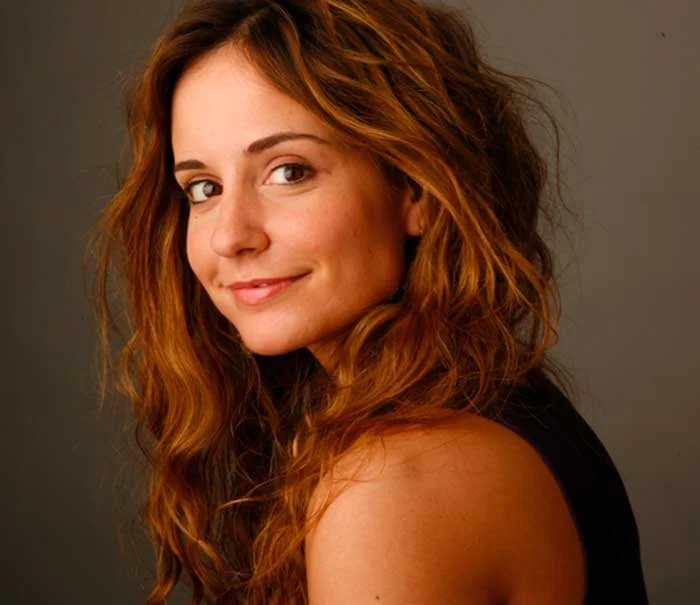
When the poet Victoria Chang’s father had a stroke and lost his language and shortly thereafter her mother passed away, she realized the history of her immigrant parents was disappearing into silence. Since then, her work, including the acclaimed collection Obit and her collage memoir, Dear Memory, has been an attempt to fill those generational gaps through art. In our interview today, we’ll focus on how she uses the natural world and the visions of artists like Hilma af Klint to map the invisible landscapes of grief in her latest book, Tree of Knowledge. We’ll also talk about the felling of a eucalyptus tree outside her window, how she learned to read silences, and how poetry has helped her speak with the ancestors she never truly knew.
THE CREATIVE PROCESS
Victoria Chang, welcome to The Creative Process.
VICTORIA CHANG
Thank you. It’s nice to be here.
THE CREATIVE PROCESS
I’ve been so enjoying your writing. It’s something I could really relate to, and this idea of what is communicated through silence really comes across your body of work, but in particular, Dear Memory really resonated with me. And I’ve experienced it through your poetry and these letters with which Dear Memory is composed of, you communicate with something that had been passed down to me when I was growing up too. This kind of unspoken knowledge that sometimes we’re at our most powerful when we’re silent.
But it’s also frustrating for children when you don’t know how to read it. I mean, how did you become fluent in the different silences that existed in your family? How did you learn to read them?
VICTORIA CHANG
Yeah, I think growing up I assumed that all families sort of operated like mine and all cultures were similar to mine, where love was expressed through food or worry was expressed through, in my mother’s case, anger. You know, the more she worried, the more angry she got at me, and it took me a lifetime to kind of realize that what I felt were these basic emotions would go through some kind of portal, crystal and refract left or right.
And so it took me a long time to learn that language and to realize that there’s so much in my family and my culture related to what’s not spoken and what’s not said. You have to be extremely sharp and paying attention to everything that’s not said. I used to find that really frustrating and strange, to be honest, as a very sort of open, authentic and transparent person by nature, I think. But once I got older, once my mother passed away, I began to think that it’s those quiet spaces, it’s those moments of silence, that’s where richness lies, and in many ways silence is its own language, which I’ve written about a lot before too.
THE CREATIVE PROCESS
I know you’ve gone back to Taiwan. You write about all these experiences, so you’re between two worlds. I think that a lot is assumed, maybe that the child, the young person knows how to read those silences. But let us hear your way into Dear Memory, how you begin it.
VICTORIA CHANG
Yeah. I’ll just read the first letter. So these are all epistolary, letter things. I mean, I don’t really call them prose or poetry.They just sort of are what they are. And a lot of times I think my work maybe doesn’t fall into sort of human-set categories of poetry, prose or something else. So, this is the first letter I wrote to my mother after she passed away. And I had found all these boxes with a lot of papers and materials and learned all this information. Like, I suddenly knew a lot of details, but I realized that once you get more information, there’s just more that you want to know.
Dear Mother,
I have so many questions. What city were you born in? What was your American birthday? Your Chinese birthday? What did your mother do? What did your grandmother do? Who was your father, grandfather? It’s too late now. But I would like to know.
I would like to know why your mother followed Chiang Kai-shek, taking you and your six (or seven?) siblings across China to Taiwan. I would like to know what was said in the planning meeting. I would like to know who was in that meeting. Where that meeting took place.
I would like to know the people who were left behind. I would like to know if there are other people who look like me.
I would like to know if you took a train. If you walked. If you had pockets in your dress. If you wore pants. If your hand was in a fist, if you held a small stone. I would like to know if you thought the trees were black or green at night, if it was cold enough to see your breath, to sting your fingers. I would like to know who you spoke to along the way. If you had some preserved salty plums, which we both love, in your pocket.
I would like to know if you carried a bag. If you had a book in your bag. I would like to know where you got your food for the trip. Why I never knew your mother, father, or your siblings. I would like to have known your father. I would like to know what his voice sounded like. If it was brittle or pale. If it was blue or red. I would like to know the sound he made when he swallowed food.
I would like to know if your mother was afraid. During college, I spent several weeks with her in Taiwan. She bought me bao zi, buns, every morning—the bao that steamed in small plastic bags with no ties, and sweet dou jiang, tofu milk. Always too hot for me to drink. She sat there and watched me eat, complained to me about your brother’s wife. Complained of being sick and how no one would help her.
Do you know how long it took me to figure out how to call an ambulance? And then when they came, she refused to go. I still remember how the two men stared at me, as if I could move a country.
Listen. It’s the wind. That’s the same wind from your countries. Sometimes if I listen closely at night, I can hear you drop a small bag at the door. I hear the sound of the bao touching the ground and the wind trying to open the bag.
But when I open the door, there’s nothing there. Just the same wind. Thousands of years old. Happy birthday, wind. Happy birthday, Mother. April 6, 1940. I know this now. All the nurses, doctors, and morticians asked me, so I memorized it, your American birthday. April 6, 1940, I said again and again. As if I had known this my whole life.
THE CREATIVE PROCESS
It’s a mystery. Silence opens up a space for imagination. If you speak too much, then there’s nothing left, and so I think that’s so beautifully described. And you know, as I’m reading it, I’m also thinking as much as you understand the reason for silence, the reason for reinvention, that you know the things are being communicated, although not always explicitly.
But it made me think, looking at your poems and seeing all the empty spaces on the page, these are other silences that also you need to put across with clarity. So I just thought about how the silence is in poetry really, but it’s not that it’s not being said, right?
VICTORIA CHANG
Oh, of course. I just actually published an essay in The Sewanee Review, and it’s really all about what’s not on the page.It’s all about the utterances that we make as writers and how we think that the words that we’re putting forth in a particular order are actually the poem itself.
But to me, so much about poetry and what makes poetry so beautiful is within its mystery, what’s not said, and it’s in that tension sort of between what’s said and what’s not said. And so I think even when I write, or fiction, I think naturally I just leave a lot of space because I want to invite the reader in. I want to also create or enable or evoke a sense of mystery because, to me, the least interesting pieces of writing are pieces of writing that seem to be very aware of what they are trying to write ahead of time.
They seem kind of inevitable in their endings, in not the great way, in that they seem like they’re sort of predetermined, or they have this very strong rhetoric as if they are just a way to transmit the artist’s viewpoints. You know, I think those to me are less interesting artworks, because for me, when I go look at a painting or read something, I’m interested in leaving a space, a communal space for the reader and the viewer to enter. And so I think that’s where for me the idea of mystery and the idea of silence sort of comes into art making.
THE CREATIVE PROCESS
Oh, yes. And at that beginning letter you talk about, “I would like to know,” and yet, you know, because they are questions, right? And yet, it seems very clear, it might have been communicated in some way. It might not have all been spelled out, but you did interviews with your mother before she passed away. Maybe it was spelled out, as you say, through actions, through love, through discipline, through saying, “You have to work hard,” all these things. But it gave an impression. What comes across is that’s very clear. You have a picture. It might not have been exactly what happened, but even I can see you would say you’d like to know if the fist was closed or if it was open. I feel like it was communicated, but it was just there. It was like a tone. You know, it’s like, what’s in a tone? Like in music, in poetry.
VICTORIA CHANG
I think that’s true, and I think that was the first letter that I wrote. I think the whole book is sort of like a learning process. At the very end, the last letter that I wrote is to the reader, and I learn about all sorts of interesting things along the way of writing all of these letters. I talk about how silence is actually, again, its own language. And I also reference Marianne Hirsch’s concept of postmemory, which has been around for a long time but was relatively new to me as a writer.
And so I think that I had to kind of go through this whole journey of writing these letters to all sorts of people, things and abstract ideas to sort of get to the point where I realized that, wow, this is a really beautiful culture in which I grew up and a beautiful language which I had to learn how to listen for and hear.
I think so much of the way that I was raised allowed me to become a poet, if that makes sense. You know, I think so many questions and so many mysteries, and I learned how to become very comfortable in those questions and those mysteries. And as much as we want to know so many things in our lives, the biggest question is, why are we here?
What are we supposed to be doing in our time here? Is there an afterlife? Those big existential kind of questions, really, I think the questions are enough. You know, I think the most interesting questions to me actually can never be truly or fully answered.
THE CREATIVE PROCESS
Indeed. And we all have different views of what lies beyond what we can see and hear, but you know, don’t commit it because that would limit it. And that’s really beautiful.
There’s often been a tradition of silences in many different cultures, even though parents, grandparents, and children may share the language, and I have experience of this with different relatives. But strangely enough the quiet people in our life imprint on memory. And I have so many memories, particularly the silent people in my life. Now why is that?
VICTORIA CHANG
Yes, I mean, I think different cultures and families also have different ways of communicating, and I think what it tells us is words, speaking—it’s not the whole picture. You know, we put so much emphasis in American culture on, “Hey, speak up. Talk louder.” I mean, the number of times I heard that growing up, even in my student evaluations when I was in elementary school: “Oh, she’s very quiet. She doesn’t talk much.”
And that was always positioned as a bad thing and a negative thing. And so I think that it’s kind of baked into this culture of you will be or are a real human being if you actually use your mouth and your words. And yet, I, as an artist and a writer, I think so much of language and the things that I pick up on are the language of body, the language of eye expressions, the language of sound…
SHOW FULL INTERVIEW (15:00+) ▼
...of eye expressions, the language of sound. So all the senses come into, I think, what we pick up on and what we interpret, and so much of our perception is just as, as a poet, I sit in silence for six to eight hours sometimes at a time. It’s so noisy, you know? It’s the most beautiful noises I hear in terms of hearing nature and then seeing things, and it’s just not based on voice and words.
And I’m just sort of translating all these beautiful things that are happening around me into words. But where that emerges from is actually a very different thing. It’s not like someone talking. So I think speech is, to me, the least important, yet it’s the thing that seems to be valued the most in this culture.
Yeah. And of course, we’re talking about the distances. Everything’s an act of translation. Even if you precisely describe what you mean, what you lived through, what you love, what annoyed the hell out of... I thought it was interesting when you said that you were seen as quiet because there was one little kind of enigmatic scene in Dear Memory where your mother spoke to one of your teachers and then...
Your mother said that you were so loud, and it’s funny, that perception. Tell me a little bit more about that.
Oh, if I remember correctly, you may be referring to me telling my teacher that my mother was sort of teaching me ahead in kindergarten or something. So I maybe disclosed something that I shouldn’t have, and then I got yelled at, and my mother was crying. And I don’t know if she yelled at me.
I actually just remember her crying and being really disappointed in me. And at that moment, that lesson was taught to me is like, silence is better. You know, keep your mouth shut. Don’t share things about our family or what we’re doing. And so I think my instinct, like I said earlier, was I’m just a very transparent, honest and open person, maybe sometimes a little too blunt and honest, as I’ve been told before.
And I work on that obviously. But I definitely think that my family was like, there’s Chinese everywhere in the house. But the minute I felt like I stepped foot outside of my home, I had to be a different person, and I wasn’t really sure how to reconcile those two very sometimes opposing cultures.
You know, one was telling me, “Be quiet, be humble, make yourself small,” and the other one was like, “Be loud, speak up. What do you think?” And all these kinds of things. And so I just really struggled with how to figure out who I was supposed to be and what I was supposed to grow into.
And so that has been a lifelong journey. I mean, these days I spend most of my time talking in front of people, which is the oddest thing because, like I said, I naturally would prefer to sit by myself quietly or talk to one person or two people.
But I don’t really like large groups of people. I don’t really like people looking at me. I don’t really like being the center of attention. I don’t really like any attention. I think that has been an interesting transformation of myself as a person and have kind of grown and learned how to manage those situations when I didn’t really have the tools growing up to figure out if I was supposed to do this or that.
So that’s kind of what I was talking about, I think, in Dear Memory.
Yes. Well, it was a little bit enigmatically described and as was other passages which I loved. I was like, “Wait, I’ve got to read that again.” Her mother didn’t walk into traffic. That was somebody else. I had to reread some passages, which is the beauty of this hybrid memoir poetry book that you’ve written.
You know, it’s interesting because one often assumes this—we were talking about the honesty of silence, but one often assumes through silence might be a way of concealing or at least not showing all. But when you contrast that, say, with a widely—not everyone in America, but it is a more vocal culture—more permission to tell your secrets, tell your life details to strangers seems to be more normal. That I found strange when I was growing up, the time I spent in America. But also speaking too much is a way of concealing, too, isn't it? Talking too much puts all this stuff out there, but it can be a fabrication, and I found it interesting when you talk about your openness.
I related that too. At least sometime I’ve been accused of saying the uncomfortable thing that actually comes from feeling people would want to hear the truth. Like that would be normal.
I feel sometimes there are people who say nothing but see everything, and then there are people who say everything but see nothing. Sometimes I feel that. We have to learn to listen, but you know, there’s so many metaphors. I love the way you brought out memories.
We have to speak about also the visual element of Dear Memory which are photographs. Just describe what were the starting points of the seeds and how that engages with the different letters?
Yeah, I mean, I think I wasn’t really sure what I was doing, which is often what happens when I start working on something. It’s just a process of discovery. I don’t start working on something or writing something or doing something unless I feel this extreme pull, like kind of an oceanic sort of force that kind of pulls me in to start something. And so I ended up writing all of these letters. Dear Sister... I wrote to teachers at some point. Daughters. It’s like whatever came to my mind, abstract things like bodies, those kinds of things.
And then I had all these letters, but actually, I think at some point I thought, “Well, these letters really came from finding these objects and these photos and these documents, and so why don’t I look at those and put some of them in the book?” And at that point, I wasn’t thinking it was a book in this manuscript. And then, I put these photos in, but then I felt this desire to engage with these photos, to correspond with them. And so then I started writing small poems that I just sort of put on the photos, and then I started cutting out paper and then gluing them on. But then I thought, “I don’t want to glue them on. I want to leave them a bit unfastened.”
And then I found an interview that I did, the only interview I did with my mother long before I started writing this. I suddenly remembered, like, you just... Memory is so strange. You repress all sorts of things, and then one day, “Oh my gosh, I think I talked to my mother about some of these things.”
And then I incredibly found the recording just on my computer, and then I realized, “Oh, wow, I want to include those in here too.” And I started basically transcribing it and then putting some of her words in this thing too. And it just became a sort of mashup of all these things that were happening and these things I was thinking about. And frankly, I was astounded that anyone wanted to put it into the world because it was such an inexplicable thing and object that I created.So that’s sort of the history of that book. It was very organic, is what I would say.
Well, I’m not surprised it’s so nice and each letter is written to one person. Although you might imagine other members of your family or others could read it because they might share experiences. But that very one-on-one, I always love that.
I mean, if it’s fiction or if it’s poetry or memoir, whatever, it’s like, okay, because then I’m also seen in this even though you don’t know me. So what’s that like to speak to the original person it was aimed at, but also as you end on that note to the reader, there is like a fog.
You also discuss this kind of fog that’s one of the motifs. And there’s this foggy audience, and we feel very included in that because you talked about writing Dear Body, and so those who might not have any of your experiences, but we all have complicated relationships with our bodies, some of us or all of us.
You know, as we’re growing up, as we try to be thin or your mother’s relationship with that. So there’s so many points where we can relate that I think just opens up our mind, and this is I think the real blessing of it, is opens up our mind to remember what we love.
Those of us who have lost, and most everyone has lost somebody, if it’s not even maybe just families overseas or something. And like, “Oh, I need to call.” That’s what I want to do. I’ve lost people, but I want to call those ones that are still around. So that was a real blessing, to write the letters.
You know, a reminder for us to do those interviews before, if anything happens to our families. So I just thought that it could be at once, as you say, a learning for you personally, a reminder for us also to make those connections while people are alive to ask the questions.
So in the interviews, they were recordings, because it was printed out. What did you find, which questions were most receptive in opening those doors for your mother? Because your father was resistant, so you had that with your mother.
Yeah. You know, I think for me, I had another job before where I actually interviewed people, and I think that if you just start with a question, you can just open up so much in people. And because I interviewed thousands of people in my job before, I became aware that in conversations in my daily life, so many people don’t ask questions and prefer to talk about themselves. And I totally understand why that is. Narcissism is a thing in this country, and all of us to some extent.
But I learned a lot of things from that job, and I learned that curiosity is a wonderful thing. I think that just also after you ask a question, just let people talk for a while. And so many of my mother’s answers were longer because she was kind of working through the memories in her own head, and they were images and vivid stories of things that she saw or things that she heard.
And what I later realized is what she heard and what she saw were kind of all mashed together because she couldn’t have remembered some of these things being as young as she was. And so stories of people she saw on the train ride down to Guangzhou before they went to Taiwan during the Civil War. Like the people that she met, what happened to the driver that they had, what happened to their nanny or their caretaker disappeared and just ran off. And those stories were so vivid to me, and when she spoke, I just let her talk, and then I listened, and then I...
They kind of followed up with questions that were like, “What did they eat?” Or, “What food did they buy on the side of the road?” Or, “What did they look like? How old were they?” You know, just to kind of continuously helping her jog her own memory. But I found one of the most valuable experiences in my life is to listen. Maybe it goes back to the whole idea of silence and what I love about my culture and sort of what I learned from my family is just having a lot of humility.
And I think that listening and humility are a part of my artistic practice as well, and also the ways in which I live and am in existence in the literary communities in which I engage in. You know, I think that being humble, not thinking that I deserve something or that I’m better than people or that I’m actually even this great writer or anything. Like, those things don’t interest me. I’m interested in kneeling in the face of language, in the face of this world that we were gifted.
I’m interested in humility. I’m interested in community. You know, all the things that I think in retrospect was how I was raised. And so I think so much of how I was raised and who I am and also my family culture and my culture intersect so many aspects of my artistic practice too.
And even my poetry, like you were saying, it’s not that I don’t think about the audience or the reader, but I’m aware that I’m not just navel-gazing. What I’m writing about and exploring are also things that maybe other people may have felt before, and that sort of communal aspect of being an artist is very important to me.
You know, I’m not just sort of transmitting my own ideas and thoughts onto another person or a reader. That feels very boring to me. I’m interested in building a connection and reaching out literally, like a physical hand comes out of my books, hopefully, and is sort of engaging with the person who’s reading.
Yes. And you get to tell your father’s story, his story, and you intuit what it was like for both of them to build their life anew in America. So, how did you get that other side of approaching your father’s story without all the documentary? You found it in other ways.
Yeah, I mean, it was very speculative, and I think that it was based on observation as well, and based on when he had a stroke, I was probably in my very late thirties, so I had all of my life before that and my experiences with him before that.And so I think I knew him really well, but I obviously didn’t know the history and the stories behind his whole life.
Until I, you know, my aunt a couple years ago, and learned a whole bunch of interesting things about him that I’ve since written about in other ways. That my grandfather was illiterate was something I learned, and that was his father. And so I just learned all sorts of interesting things about my father through other people at some point, but never got to really hear his words, which is a bit of a tragedy when you think about it.
But it is what it is, is my motto in life. You can control what you can control, and then everything else is sort of beyond our control. And I think it’s okay to grieve those things, but then recognize that well, again, maybe not knowing these things yielded something more interesting in your writing or in your life. Like, to know isn't always the goal.
And even knowing is an illusion, that’s what we come to understand too, to put a frame. You know, you write it, it’s so many beautiful sentences and fragments, but you write that memory is clinging to the memories of others so that when the person holding the other half of the shared memory is gone or loses their language, that memory becomes...
Yeah. I mean, it disappears. I just have so many thoughts about how interesting it is when, as an immigrant child, that when they died, basically my whole connection to my homeland is what I call it, even though I wasn’t born there, but I’ve lived there for some summers and things like that, but it’s not where I grew up. I still call it my homeland. That’s my homeland.
I think that my whole connection with the homeland evaporates, it vanishes because I realized, oh, they were the conduit, they were the bridge across the waters to my own history. And I think I realized too, as an immigrant child, you rely so much on other people’s stories and other people’s histories. And even you rely and maybe even, I wouldn’t say appropriate, but you have intermeshed or overlapped with their histories to some extent because of all this sort of baggage they brought with them that it manifests in how they raised you.
And I could feel my mother’s anxiety thinking back on it. I could feel her stress. I could feel her grief. All the ways in which she raised me were so much shaped by a young child who grew up in a war and fleeing a country and moving to new countries and having to adapt so many times. You can feel that anxiety.
It’s what they call intergenerational trauma, and that seems so obvious to me when they kind of came up with that phrase.That’s what I and so many people grow up feeling but not having words for it. The flip side of that is when they pass and all that stress and that grief actually, in my experience, just lifted.
And I felt like someone pulled it away from my body outside like a string and pulled it out from my body. And so their experiences and their grief and their heaviness and their assumptions and their ideas about what I should be or how things are just disappeared. I think that’s very common when people’s parents maybe leave the physical earth. I think people feel that release of some kind of pressure.
So there was an enormous amount of grief because I was grieving my history, their history, their bodies, all of my relatives that I didn’t know kind of thing. But I was also relieved to some extent. And later I was like, “Oh, well, I feel lighter. You know, I’m walking on this earth, I’m maybe walking an inch above the earth now.” And I think it’s because all of that burden and history had evaporated.
Yes. Well, it comes across. You said you didn’t want to write an elegy, but it comes across all this love, all this listening in the in-between spaces and the silences. Just how observant you are. But then, yes, now let them go free like birds, a metaphor that recurs in your writing.
So talk about this. You say of course you’re American, but you’re also not American in a sense. You write, “I had no idea what being Chinese meant. I had no idea what being American meant. I was here and nowhere.” You know, “Still couldn’t hate something that I didn’t understand, but still couldn’t be something I didn’t know.” For you, how does a child build oneself on this kind of foundation that’s made of shifting sands on clouds of not knowing?
Mm-hmm. I think quite a few people live this experience across the world, and I think it feels very unstable. I think that one thing that I had to learn is how to shape-shift. So I was constantly performing depending on who I was around or what kind of environment that I was around.
And I think that at some point I realized, oh, maybe I shouldn’t shape-shift quite as much, but I should sort of go toward the things that I’m interested in. And it took me a long time to do that, which is like I figure out like, “Oh, well, what is it that you like?” Or, “What is it that you want to do?” Or, “What are you interested in?” You know, those weren’t always questions that I allowed myself permission to ask myself beyond the basic, “Oh, what do you want to do when you grow up?” kind of question. But really in my soul, what kinds of things move me? And it’s a lifelong journey though.
I mean, I still have to remind myself that I have agency, that I can choose who I want to be friends with. Like, that’s a big lesson that I remind myself every day, that I have choice, I have agency. Because as someone who grew up the way that I grew up, I was very used to just accepting what was allowed or what was given to me or not given to me as a way of just a child holding up your hands. Like, whatever you give me is what I deserve.
And I think that’s how I grew up, and that’s the kind of physical environment that I grew up in, having grown up in a very sort of white community too. And yeah, even in the workplace today, I have to be like, “Well, I don’t really feel like that person should talk to me that way or treat me that way, and I have agency.”
So I think it’s a beautiful journey too, because I don’t think it’s coming from an idea that there’s anything wrong with how I was raised or how I am, because I think it’s a beautiful way to be. You know, to have humility and not always be sort of climbing or seeking or wanting or desiring or you deserve things. It’s like, I get up every morning, and I literally, metaphorically get on my knees and I think to myself, “I’m here to serve nature. I’m here to do something for other people or other non-animate beings, and I’m not here to take and I’m not here to grab, and I’m not here to verb.”
It was very verby. And that I think is very common in the twenties and thirties. And then things happen in your life, and it changes your perspective. And I think that my parents becoming ill so early was a really difficult experience for me. And for so long, it was a burden in many instances, but I look back on it and I think, “Wow, I grew up really fast,” and it taught me a lot about how to be a better person in this world. And so I think those were all really, really wonderful things.
Yeah. Well, of course, chasing after success is one thing. It’s a beautiful thing to achieve and put things into the world and create for your family, but they also do say that graveyards are full of high achievers, and it does present you with a reckoning. Wow, we can embrace a certain slowness and just enjoy the beauty of the day.
I want to go... You talked about agency, and I thought it was very moving where you said that you only saw your father get angry in public once, like your junior year in college, and he was trying to negotiate a lower price for a rug for your apartment, and it was just the only time. Talking about, maybe he was not able to find that sense of agency. It wasn’t the way to get things done, is be kind, be quiet, find other ways not to make a noise. But you had wondered about how many times he had wanted to show anger, but he couldn’t. So what were your reflections on that?
And now when you’re in a place where, I don’t want to say you’re a spokesperson, but you are in a place where your voice is listened to and you’re speaking for not just yourself, but in a different way for many who have gone experienced some similar experiences.
Yeah, I mean, I think that my father, I think so much about immigrants, like they have to learn so many new things, and I can relate to that because I was raised in a very Chinese, a very Taiwanese family. Like my mother actually didn’t speak English to me. Even as an adult, she just spoke Mandarin to me. And so our family I think was extremely Chinese-Chinese. You know, we always ate Chinese food. Like we loved the culture, it was just a part of who we were.
And I think that made it harder for my dad, especially when he came over here to kind of learn the new social mores. And my father was... I could just tell I was like, “Oh yeah, this man is—he’s just a really successful human being.” I could just feel it, but I also felt like there were glass ceilings for him. There were all sorts of ceilings for him along the way, and he had to learn new skills and learn how to be.
And it’s hard to perform beyond what you look like, so your... You know, I think the physicality of who we are creates these assumptions about us, and so even though he did really well in the workplace, eventually I think everyone there just would always think of him as just being like, “Oh, that Chinese man. He doesn’t understand,” or “He doesn’t know,” kind of thing.
And so I think he struggled with all of that looking back on it, and then I actually know he struggled with it because I remember hearing him talk about that as well. But that’s the gift that we get as the next generation. I think about all of their struggles and think, “Well, wow, I still have plenty of struggles,” but I definitely feel so gifted all of their sacrifices that they made.
And it’s such a cliché, but I feel that immensely. You know, they sacrificed so much to give us these better opportunities, and not a day goes by where I don’t think that my life is so much easier than my mother’s life or my father’s life, and that definitely keeps me going and makes me feel really grateful on a daily basis.
Yeah, it’s true. I mean, we have so many other things that are open to us. Now, you mentioned growing up in Michigan, right? So just tell us a little bit, describe what you were as a young person finding your way to the word, finding why that spoke to you? Just paint a picture for us.
Yeah, I was born in Detroit, Michigan, and I grew up in the suburbs of Detroit and many different cities. Southgate, also West Bloomfield. So I think I just had a really imaginative childhood. I was surrounded by nature. It was a choice of playtime. You know, I would just grab my bike and go out and was allowed to go out.
And my friend, who was also one of the only Chinese Americans in the neighborhood, she and I both loved nature. She’s actually an animal illustrator now, which totally makes sense to me. We would go out and just ride our bikes through the forest and look at animals and hang out and listen to music, and that was my childhood, hanging out outdoors.
And I also had really wonderful public school teachers and systems too, like the West Bloomfield School District. We had to write poetry in first grade. I remember this. Second grade, third grade, we just wrote poetry every year. And yeah, I realized that it’s something I really enjoyed, and I also drew all the covers for some of these little anthologies they put together.
So art was always a part of my upbringing. And then I had great middle school English teachers, amazing English teachers in high school, we just memorized Emily Dickinson and read a lot of Shakespeare. And I feel very lucky because I think other people had to take those courses, but I felt like, “Oh, I actually really enjoy these courses.”
I didn’t really like biology and some of those classes that I was also okay at, but I found myself gravitating toward the English and the literature and the art classes. So I think a lot of that encouragement happens in the school systems, and I certainly don’t think I would have written poetry without that.
I just wouldn’t have known it existed. It wasn’t like my mother was like, “Oh, write poems.” But she did know that I liked to draw. But I think a kind of a fortuitous thing that happens in all of our lives is that somebody we meet at a young age encourages us to do this or introduces us to the guitar and suddenly we’re playing in a band for the rest of our lives kind of thing. So that was my experience.
Yeah, and there’s so many beautiful letters you receive—it’s not just one. Dear Teacher is several letters, and they’re different teachers. Those who see, you got back in touch with them, and they saw you, and you say, “You remember me?” “Yes, I remember.” They recognize something in you, and that’s... Teachers love to hear that because they only know, they kind of imagine, but it’s so wonderful when the intuition they had about a person, that quality was there, that it continues. Because our dreams can be so easily crushed when we’re just at the beginning.
So easily. Yes, and so easily. And we don’t even know that they’re your dreams. Like, I didn’t know writing was a dream of mine. I just did it. It was like, I wouldn’t say for me writing was ever a dream. I didn’t really think about it as that. And I don’t think about it that way. I actually do not, still to this day, I don’t think that writing is my dream.
I just do it because I enjoy it and I love it. I love it. I love working on things that I’ve written. I love revising. It’s my favorite thing. I could, yeah, every weekend and every spare second I get is me meeting my writing on the page or writing. It’s hard to find those spare seconds.
But not even that I’m disciplined or committed, it’s just something I really enjoy doing because I’m not actually super disciplined, especially if I don’t like doing something, I won’t do it at all. But if it’s something I love doing, I just do it over and over again. It brings me great joy to do it. But I don’t think of it as a career or anything else. Just pleasurable, all pleasure.
Well, that’s the beautiful thing because that’s how we can experience them as direct letters to us even though they weren’t addressed to us. It’s a sense of play, a sense of intimacy, a confession and an exploration. And I think that’s the best attitude to go into it really because then it connects us to the first reasons we became whatever artist or whatever creative person that we are.
So but you touched on a few things there, and I’ve been getting so focused on Dear Memory and the things I love about it, but of course, in your body of work, you have... You’ve talked about nature, you talked about art, and that’s been something running throughout. You know, recent collection, The Trees Witness Everything, also With My Back to the World, inspired by Agnes Martin’s work.
And then Tree of Knowledge too, also inspired by different artists and in conversation about a lot of different things. So maybe you can tell us the threads of inspiration for those different works and how those works came about?
Yeah. I mean, I think I’ve written a lot of different types of poetry, and I’m primarily known as a poet, but I think all of my interests sort of appear in my writing. And so I think I’m also very formally organized. You know, I kind of look at the shapes of things and how even the epistolary is a form. Like what form might allow the things I’m thinking about to kind of grow and expand and be their best selves? And so I think of the epistolary as a form.
And in my most recent book of poems, Tree of Knowledge, I write a lot about personal things, like what it means to be a woman of this age, but I also write a lot about history and Asian American history. What happened to the Chinese people who lived in Eureka, California, and how they were kicked out of their own Chinatown in their hometown during an altercation where a councilman was killed by accident.
And so I think all the things I’m interested in just sort of appear in all of my books, no matter what genre they are, what year it is. I think I have very set interests. I like visual art, I love reading philosophy, I love trees, nature, birds, they’re everywhere in all of my work, and history is a big part of my interest as well. It’s like those are the things that actually interest me more, and they all show up in everything that I write.
Yes, and we should say also when you are writing about nature, you bring in... It’s not just the observing at the beauty of nature, it’s the complications of it. As you mention eagles and swans, I think about them as I believe that they mate for life or pretty much unless something unfortunately breaks, happens, that someone dies. So it’s a way of speaking about how we love too. It’s always so instructive because it’s very clear to watch it in nature.Sometimes we’re blind to it in our own stories, in our own lives.
But also, yeah, that I think it inspires closeness in us. So I like the intermingling. And you know, it’s funny because Tree of Knowledge is, yes, it’s a nature book, but it’s interdisciplinary and art dialogues. So are there sometimes artworks that you’re doing that don’t make the cut, but they’re your starting points, yours or others?
I think I like to try a lot of different things in terms of making, so I always have a lot of extra things hanging around and just from me trying, and that don’t get used or don’t get put into a physical book at the end. But I definitely am... I don’t necessarily have enough time to sort of constantly be experimenting. And so I have to figure out how to create more space for myself in terms of making and creating on a daily basis.
I was wondering a few things, you know, what attracted you to certain artists like Hilma af Klint or Agnes Martin, you mentioned Picasso. What is it about their stories or their art or whatever that drew you to them? Or is it both for you?
Yeah. I mean, I think it depends on... Like the Agnes Martin book, With My Back to the World, was a commission. So it started with a commission from the MoMA, the Museum of Modern Art, and they said, “Write a poem on any piece of art in our entire collection.” And I started taking notes and looking on their website until I realized that was such a fool’s game. It was going to take forever.
And so I pivoted my thinking and said, “Oh, is there an artist that I don’t understand or I don’t appreciate?” And Agnes Martin came into my mind. And I realized I wanted to keep talking to Agnes Martin and Agnes Martin’s work.
And at that time, I think I was struggling with mental health and physical changes in my body that I wasn’t aware of, and so I was feeling really depressed and really sad. And something about meeting Agnes Martin at that time in my life was the perfect time because I didn’t understand her work before, but then suddenly her work became the most important work to me in that period of time in my life.
And I think there was something about the electricity of the grids that she’s known for that really connected me to her work. And then I just, I love going to museums and seeing art, and so it just appears in my work.
And Tree of Knowledge was more, I think, I just was thinking about trees all the time because this large eucalyptus tree was taken down slowly, and it just was so traumatic to witness that. And I started noticing trees everywhere, and especially in artwork. And so there are a lot of the pieces that I’m corresponding with that are related to trees or have trees in them.
And then I started noticing that Picasso—like, not noticing. It’s something I’ve always noticed, but thought about more seriously how so many of his works are dismantling the woman’s body into various shapes.
And then I’m quite the feminist, and I find misogyny to be rampant on a daily basis everywhere, especially in the workplace, but also in the literary and in terms of who is read and all those kinds of things. I find it to be so rampant. And then I started noticing, or just really noticing that his paintings were so much about reshaping the woman’s body, taking it apart, making it into shapes.
And I just found it to be so unpleasant to think about those things, and so those things appeared in some of the poems.And Hilma af Klint, I had just been lucky enough to be at an exhibit that my friend invited me to in New York, and I got to see her Tree of Knowledge series, the whole series just on a wall.
I think it was in the Zwirner Gallery. And that was just because it was showing, and I was mesmerized by these pieces.And about Hilma af Klint, again, going back to misogyny, you know, she was so ahead of her time and now people are crediting her for abstraction and abstract art and abstraction and visual art, whereas before it was more of like, “Oh, this is Kandinsky,” and all these kinds of things.
So it all kind of intersected with, again, all of my interests. But I do notice a lot of misogyny on a daily basis, and it just frustrates me to no end, and I think that just shows up in some of my poems. But I like to celebrate women artists and look at women poets and women artists throughout time, and so it’s just something that I think about a lot.
Yeah. Gosh, Picasso is a whole other topic, the complications of his history. There is a greatness, obviously.
I feel he had a complicated relationship with not only the women he painted. But he taught us new ways of seeing. So with Hilma af Klint, it’s interesting because, well, you say that’s Tree of Knowledge. It’s abstraction. It’s another way of understanding mystical states. It reminds me also of what you wrote in Dear Memory.
I love this line because it’s your own reflections on the mystical or on God. But, you know, “Each night I prayed to God, but God just gave me tomorrow. Eventually, I stopped praying because I realized that God and I did not speak the same language.” I’m just wondering as everyone has a complicated personal or evolving relationship with the spiritual, how have your reflections upon what lies beyond, where we come from, how has it changed over the years and what were you taught to appreciate?
Oh, I think the word you used was evolving, and I think we are evolving. I’m not the same person as I was yesterday. I’m not the same person as I was when we first started talking a little bit over an hour ago. We have transformed since then, and it’s a beautiful thing.
That is the journey of life, and that is what I love about being alive, is the transformation and the evolution of our ways of thinking, our ways of being in the world. And so yes, my relationship with the spiritual is constantly changing.In fact, the manuscript I’m working on now talks so much about... I think God is, if I haven’t used that in that manuscript, but I think I mentioned the word God probably more than I ever have.
And I was thinking too about when you asked the question about the progression across my work. Everything is just an evolution in sort of a parallel of how I’m growing and changing and how I change in the world. Nothing is static, and one of the through lines that I think is grief, and I think when I’ve experienced the things that I’ve experienced, which I think a lot of people experience, but I hope that no one has to experience the things that I experienced with my own parents for as long as I did.
Some of the things that I saw were pretty awful. But I do think that through line is still in my writing. You know, I think even when I was thinking about Tree of Knowledge, my most recent book, I was suddenly thinking yesterday about, “Oh, why did I even start writing that book?” I think thinking back on it, so much of that book is like, what do you do now that you have no one in front of you anymore? And we were sort of shielded by other people, even generations. So it’s not even my own personal experience.Like, there’s a whole generation shielding my generation right now from what is the precipice of or rising, however you want to view your own death.
But I think Tree of Knowledge was an exploration of what do you do now that your parents are both gone? And what’s left, and what are you supposed to do with the rest of your life? And I think that whole book was an exploration of those ideas and thinking through that. I think a lot of my books and works are me sort of thinking through things that I’m experiencing, and I think I came out of that book thinking, “Oh yeah, I’m supposed to live,” and that’s what I came out of it thinking. And I had to remind myself after they died, who am I without them?
You know, these are all big identity questions and then what am I supposed to do now that I have no one to tell this to or ask this to? And it’s very jarring. And luckily, none of us have to experience any of this until we’re faced right there, that door is right in front of us. And so I think for me, my writing and my art and making is just whatever new door is right in front of me, I’m happy to open it and then write myself through that until there’s another door that suddenly appears in front of me.
And so yeah, I think that is how I view art, and I think it can become a really beautiful communal and shared experience because we all feel the same things. We all feel joy, we all feel sadness, we all feel grief, we all feel despair and beauty.Like all these big ideas are things that we all share in common. So I hope that writing through my own life makes it so much more than just about my one life kind of thing. It’s about something a lot more, something larger.
Yeah. And you’ve written about a sense of continuation. I mean, for some, when we’re talking about the spiritual or the religious, one’s own personal beliefs, the idea of what we may pass on to, or if you feel it’s a full stop and that’s it, this is the life we’re given, we embrace that. What do you think happens after? Because you write into a future that you’re not sure of for your parents and what they may be rejoining.
Yeah. I am grappling with some of those questions in what I’m writing right now. I actually suddenly remembered something that I wrote in some of the poems I’m working on now of just sort of thinking about... You know, I had my favorite dog pass away this year, and just thinking about what happens to beings after they die, and I’ve just been exploring a lot of that in my poems.
And in one poem, I think I wrote something like, I always assumed that the dead would recognize us when we see them again. And in this poem, I wrote that the dog did not recognize me, and how that was sort of shattering but illuminating at the same time. So I just sort of am exploring a lot of these kinds of ideas, creating these surreal landscapes of what happens after death. And the spiritual is pretty much what I’m writing about now, I think.
It’s so fascinating to think about all the different ways, the different interpretations of our different spiritual paths from one country to the next, one cultural point of time in history to the next. You end by coming to understand they’re all the same story. And I find it, so many of our problems today are problems of translation. Like, we don’t realize we’re all saying the same story. We really all want to have this sense of connection, and it’s such a pity that we somehow think we’re telling different stories, have different perspectives because really we just all want that sense of love and belonging, right?
Yeah. Like, if there was some major disaster we would work together, and we would love each other and we would help each other. And it’s sad to me that it would take something like that for us to refocus and be friendly to each other and try and figure out how to actually deal with this new problem that we have.
And maybe I was thinking about that because there were so many September 11 memorials a few days ago, and they’re still continuing. And thinking about how much we just don’t get along and how something so awful and tragic can happen to these beautiful human beings that were born into this world through a lot of effort raised and how we just have so much conflict in this world.
And how if we just snap, I could snap my fingers, and something could happen, and yet all of a sudden we could be working together. It just strikes me as really hopeful. I know it’s a strange thing to call hopeful, but I do think it’s hopeful that, like you were saying, we are actually very connected to each other.
We all want the same things, want to live a good life and we all want to live the best life we can in the short time period that we’re here. I don’t know if everyone believes in reincarnation, but I think that for the time in this body here, we all want the same things. And so it’s sad to me that there’s always so much infighting and arguing and war and all those things that seem so toxic to me. Empire, all the same things. I just don’t understand it. It just doesn’t make any sense to me.
Yeah, but I think that because of September 11... But there’s always, there’s been a lot of other reckonings. You know, the mass deaths of COVID, it was a coming together when we kind of collectively agreed to almost stop time, and then people learned to, within their little bubbles, appreciate if they weren’t experiencing the loss of their loved ones.And they remember what they love about poetry, about art, about this time and time to spend with their families and so many other things. Nature, you mentioned their beauty, and I’m wondering...
What were your first memories of when you became aware of the beauty of writing, the arts...of this world we’re living in?
Oh, for me it was so young. And I don’t know if all poets are like this or all writers or artists, but I know for me, I remember being a very small child and just standing outside, and I always use this quote because I still remember it. Like, I just remember watching smoke come out of the chimney in the dead of winter in Michigan, which can get really cold, and how slowly it came up and piped upwards, and how I just stood out there and marveled and started thinking, “Oh, what does that look like?”
And I think similes and metaphors are a big part of my childhood. Like, I just felt like naturally... And maybe it’s related so much to how I was raised, that there wasn’t language, direct language to articulate how I was feeling. And so metaphor and similes became very, I guess, easy for me.
They were something that almost became how I communicated. So I was constantly thinking about those things and just sort of looking around. And I loved just being in nature. I was just outside all the time. And it was just trees, especially trees. And so I think growing up where I grew up, there was also quite a bit of natural beauty and undeveloped natural beauty as well.
And then my parents were also new to this country, so they were very adventurous in a lot of ways. And so they took us on a drive across the country, and we stopped at so many different cities. And so a lot of people new to this country do things like that, but that was such a seminal trip for me when I was nine, I believe.
Nine to 11, we did a lot of those kinds of things, canoeing, rafting, camping. My parents didn’t have a lot of resources, and so we were constantly camping, constantly outdoors and doing adventurous things because I think my father was extremely entrepreneurial, very adventurous, and he was always doing all sorts of those things.
So I think at a very early age, I was very attuned to nature and animals, and it was never like an aha kind of moment. The sublime was never like the sublime. It was always just in my life on a daily basis. But I think in my twenties and thirties, I got really busy.
Even the forties, it just got really, really busy. And so I wasn’t able to appreciate and enjoy nature sort of as much. And now that I’m busy in different ways but less busy in a lot of ways, I’m able to re-engage with the natural world in ways that feel reminiscent to me as a child.
I was constantly outside, even in the wintertime. So I definitely think that those experiences have strong sensory memories for me. And food, obviously. We didn’t grow up near any Chinese restaurants when I was really young, so my mother’s food was a big part of the experience of growing up. And then we had a restaurant for a while, and then we would go over across the border to Canada and eat Chinese food in Windsor.
So the border and the border patrol are a big part of my upbringing as well. And just, yeah, I think growing up in the ’70s and the ’80s was a beautiful thing. Now we look back on it, I was like, “Oh, yeah, we got to go run outside and do whatever we wanted. There’s no serious risk of being abducted or anything like that.
Nobody could find you. You were safe. You were truly safe in a lot of ways.” And the only non-safeness was in your immediate communities. People wanted to bully you or make fun of you or things like that, but there was no kind of macro danger that I think children feel today.
CLOSING THOUGHTS (0:00:00)
Yes. And so when you talk about the sense of freedom, the sense of childhood, a lot of roaming, a lot of time in the outdoors. This is the pre-algorithmic childhood that we were lucky to have. You might not have all your memories because everything wasn’t digitized, but you had a sense of imagination and the freedom. So what do you think now, as you’re raising your daughters, as you’re thinking about this strange new AI world...What are your reflections on it? How do you hold onto your humanity or what you appreciate, your sense of beauty and art?
Yeah. I mean, we are in a very interesting time. I think that we have lost so much, and we have to every single day in all of our communities... I teach in college, so I teach young people, and I’m revamping my entire syllabus again next semester so that it’s more experiential, for example. I want to get the students into the world. I received a great grant from my university to go on field trips, so we’re going to go to the art museum, we’re going to go to the botanical gardens and we’re going to go to the historical museum.
I want to create a sense of radical attentiveness in these students of today. I don’t care what they do outside of my classroom. I can’t control that. But I think in the classroom, I’m trying to create a whole world without any devices, without any technology. So we read everything on paper.
We talk about things without any devices, and we go physically to these spaces and write by hand on blue books or notebooks, and those are turned back into me. Like, I’m just trying to replicate some of the ways in which I grew up and I was educated as a way toward radical attentiveness and being physically in the world and using your own imagination without the assistance of all of these technological technologies that can assist us now.
And that’s what I think my task and my job is in 2026 and how that changes. Next year will be a whole new thing for us to learn because in one year things change so rapidly now. But I’m just trying to tell people and remind them that they have imagination, they have a soul, they have their own ideas, that while these technologies can support them in different tasks, they have all of those resources within themselves, and their job is to grow those things.
So it’s not like, “Oh, I have imagination, therefore I’m done.” No, no. You have to grow your imagination for your entire life. It’s a live being, and if you are constantly using technology to sort of assist you and support you, what you have inside you is no longer going to grow in the beautiful ways that it can grow.
And so that’s kind of how I think about things, as just dropping all of these... getting young people to drop all the things that they’ve become used to and really focusing on the corporeal, their own body, and also being in physical spaces where they don’t rely on devices. And so far, my students seem to love it.
So in terms of the public wing of your memory musuem. You were talking there about if we had to come together at a moment of crisis, like we had a cataclysm or something, a wave that swept away that knowledge, whether it’s nature or in the arts or sciences or the different things that are important, we had to rebuild our civilizations.
What are those things that have very meaningful for you, but you think for others that are a central part that we would need to rebuild?
Yeah. I mean, I think if we could put poetry in there, I think that’s very important to me. Obviously, visual art, music, anything artistic, we could remind people, “Oh, this is what we used to do.” I think books are really—physical books are really important. I also think different writing, so different types of language in how people wrote.
I think any religious documents, things like The Bible and various religious books and things like that would be really wonderful to put in there to remind or let people know that we used to do all of these things. I also really love philosophy, like I was saying. So I think just putting as much philosophy into this wing would be very helpful to show people how we thought about our own existence and why we exist, how we exist, and the way we think about our existence would be really interesting to me.
So yeah, I’m very multidisciplinary, and I just think jam it all in there if you can, and to show people or show whoever, like, this is who we were as a civilization. And yeah, I think we’re—if you think about it, it’s quite incredible all the things that we’ve achieved. You know, thinking back to the Industrial Revolution, I’m always struck by how not that long ago, we didn’t have... Like, it’s just incredible how far we’ve moved forward and are able—have really pushed so many frontiers in good ways and bad ways.
Yeah. That word that you write about is important. We are a striving species. We do make mistakes, but there are a lot of things to be grateful for. So thank you Victoria Chang for opening our minds to these ideas of radical attentiveness and our eyes to how our memories are always tied to the memories of others, opening our spirit to the beauty of what is said and what is not said, and how language is a refuge and also a means for survival and for remembering who we are, what we love and why we’re here. Thank you for adding your voice to The Creative Process.
Thank you for having me. It was very pleasurable to talk with you.