

Artists on Creativity, Improvisation & the Search for Meaning
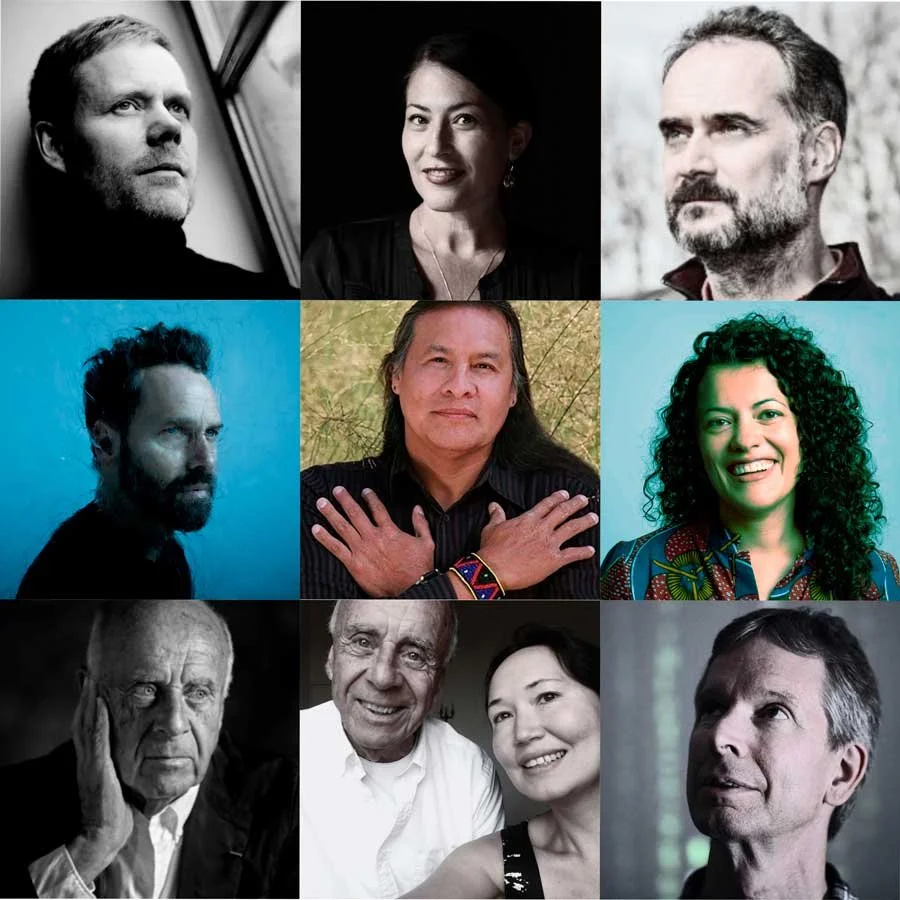
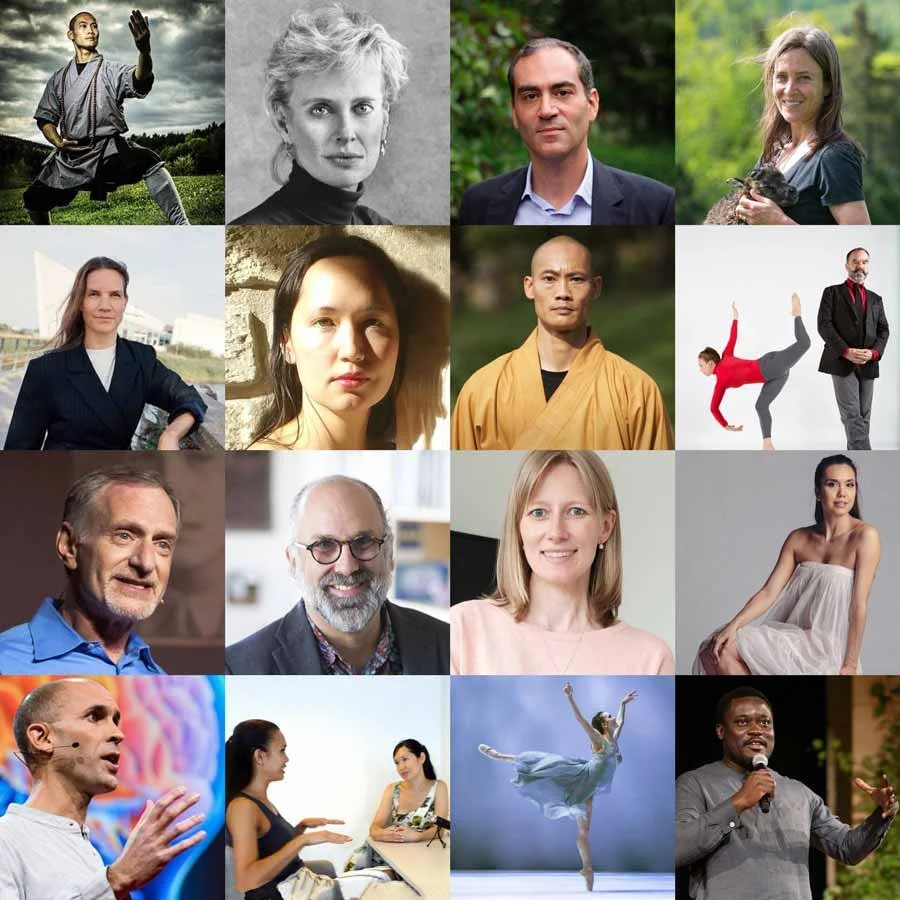
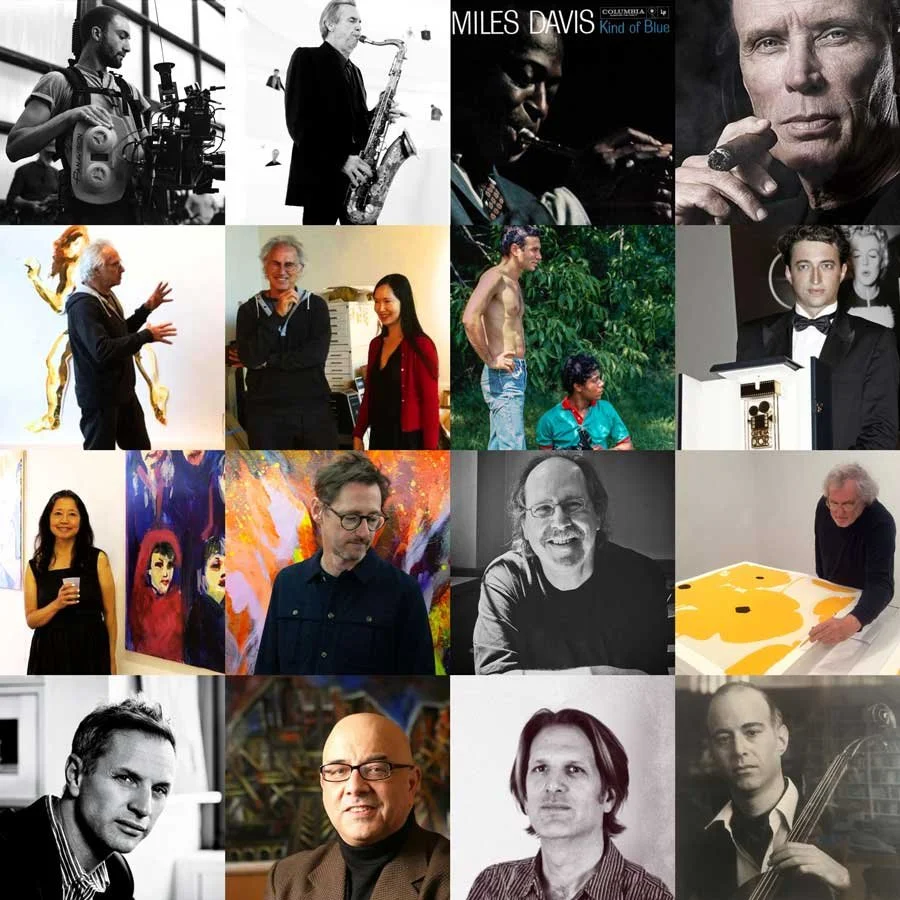
Our creative lives are shaped by those who come before us. But where does creativity come from? Today, we hear from voices across the arts and sciences. The visual artists exploring emotions through imagery: Eric Fischl, Donald Sultan, Anthony White, Lee Jaffe, and Gloria Pacis. Director Benh Zeitlin, cinematographer Chayse Irvin, and actor, director, and art historian Peter Weller discuss the beauty of small details hidden in the larger story.
We examine jazz and the improvised life with musician and artist Dickie Landry, and author Bruce Evan Barnhart. We speak with former New York Times Magazine editor Adam Moss on how magazines help us understand and honor the urgency of events like 9/11, while sociologist Richard Sennett, writer Paul Levinson, and scientist Julio Ottino talk about the need for a nexus of creativity across disciplines to meet the challenges of our current moment.
PETER WELLER
Actor · Director · Musician · Author of Leon Battista Alberti in Exile: Tracing the Path to the First Modern Book on Painting
My dear friend Treat Williams and, bless his heart, a great actor. And he died on a motorcycle crash. My heart, because I hung out with Treat a long time, but my whole thing is, thanks to my mother, is jazz. My whole obsession, that's how I got to meet Miles, because every time I was interviewed for a movie, I would turn the conversation back to jazz and start talking about Miles or Coltrane or Duke or somebody. And by the time I met Miles, Miles knew he had a sucker walking in. Because all these people, because by that time I knew Herbie Hancock, I knew Wayne Shorter, I knew Ron Carter, I knew all the greats, man.
And they'd all told him, this actor guy was constantly talking about you. So he knew he had a total sycophant walking into that dressing room. But Treat, bless his heart, because my language has always been with man and cool and jazz and bop. And the rebop of, jazz talk. And Treat said, "Peter, you know what? You know who you really are? You're a middle-class white boy posing as a Black hipster." I said, "Treat, I think you pinned me, man. I think that's going to stay with me forever." I am a middle-class white boy posing as a Black hipster.
And with that, it's going to make, I promise myself I won't weep. But the thing, I think it's in the diary, but my mom said that if I was God… because I walked Miles Davis to his car with Bob Thiele Jr., whose dad produced Coltrane and we're backstage at the Hollywood Bowl, the last gig he ever played, Miles asked me, "Who's that white boy?" I said, "It's Bob Thiele Jr. Great music supervisor." He says, "His dad produced Trane?" I said, "Yeah." He walked up to Bob and said, "Your father took Coltrane out of my band." I said, "Yeah." He says, "Your father produced Trane." He says, "Yeah." He says, "Well, you can hang." He gave him permission. And we walked out.
I did not know he was dying. I did not know he was sick. I kissed him on both cheeks, and 18 days later he was dead. I told my mother that. My mother said, "If I was God was thinking of somebody to say goodbye for all of us,” And I say that in the thing.* “Who better than a white boy who’d been listening to him since he was 11."
*Peter Weller’s essay “Morte de Miles: Time with a Virtuoso” was published in Jazz and Literature (Routledge, Edited by Maria Antónia Lima and Mia Funk). The book features interviews, essays, poems, and artworks by Mia Funk and contributors to The Creative Process.
CHAYSE IRVIN
Award-winning Cinematographer · Blonde · Beyonce: Lemonade · BlacKkKlansman
I think it was Kafka who said all language is but poor translation, something like that. I might be butchering the quote, but I like that a lot. I think about it a lot. I feel like what we are trying to communicate or what we're trying to say about something or how we're doing, all these ideas, all these things, all these feelings are going through these things that are distorted or fragmented. We can never really communicate with absolute clarity what is going on. We're too limited.
There's not a word for it, and I like that. I think what it is to be human is to be less than perfect. And when I watch films and I see these scenes that sometimes make me feel sick or other times they make me happy, but they're executed with imperfections. Or maybe there's something wrong, maybe the camera sort of conceals a moment that you would have liked to have seen.
But then all of a sudden it becomes an interpretation because you're creating it in your mind because it's been concealed. But when you created it in your mind, you're projecting something from your own experiences as a human being onto the scene because you're going into memory. There's a lot going on and those are all virtues. To me, those are all the things that make it beautiful because they are an articulation of humanness.
LEE JAFFE
Artist · Photographer · Musician
Author of Hit Me With Music: roots rock reggae · Jean-Michel Basquiat: Crossroads
When I am painting, yeah, I'm listening to music a lot and sometimes you need to stop and have some silence, but Jean-Michel Basquiat is listening to music all the time. So I could be in his studio, and he can be carrying on a conversation, and there'd be music, and he wouldn't stop painting, which was kind of really exciting. I mean, there's all this stuff going on, and then you're watching it, this masterpiece.
And I used to, I played with Bob Marley. I played in his band. And I was living in his house for three years in Jamaica before he became this big thing. And we were struggling to find an audience, but I was a harmonica player, and I would sit with him while he was on acoustic guitar. And he'd be making up these songs. It just seemed like it was coming from some otherworldly place, this incredible inspiration.
It was like, I would just be shaky. I'd be playing harmonica. And I didn't know whether I should stop because it was just so brilliant or I better keep going not to lose the, uh, not to interrupt his feeling. And watching Jean-Michel paint, it was like that. It was like Bob Marley making a song. I have to tell you, I felt like I was witnessing this cultural event, and I just happened to be there. I was just like, wow, playing harmonica. I'm not the best harmonica player, but I'm okay. But I happen to be there.
THE CREATIVE PROCESS
What I like also about your painting and sculpture, the Tumbling Woman, it is destabilized. Or in your painting, you feel like a person may fall over sometimes, like you don't paint part of their leg so I want to reach out and catch them. Because our imagination jumps in to finish it. There's a sense of instability.
ERIC FISCHL
Painter · Sculptor · Co-founder of The Church: Arts & Creativity Center
Well, I found that in order to create an immediate narrative volition and to create an immediate connection to an unfolding, you need to have imbalance. You need to have something that is in motion. And motion is an imbalance trying to correct itself. That should be a good, I've never said that before, but I think that's actually a really good definition of motion in my work. That actually is the metaphor for my work.
It's very interesting. In order to paint feelings, you have to somehow separate yourself from them. And maybe that's what you mean by autistic or something like that, that there's a strange detachment that occurs. Is that what you're talking about?
THE CREATIVE PROCESS
But I think a detachment full of feeling. When I look at the Krefeld Project, how much emotion you put into a chair or a bottle of water or the glass.
That's the magic of painting. That's why I love painting as opposed to some other forms is because you actually can invest all kinds of feelings into things that are inanimate. You can actually put consciousness into a chair. You can make the chair become the witness that to me seems kind of amazing that we can do that, that we can communicate with each other through that way.
Fmr. Editor · NYTimes Magazine
Fmr. Editor-in-chief · New York Magazine · Author of The Work of Art
And I learned once I was transferred to the role of a young editor, just how creative those positions can be. You come up with the ideas. Find the right person to do the ideas. Figure out how to tell the story. If you're the head editor, you basically figure out what the personality you are, the guiding spirit of the magazine. And that was something that I aspired to do.
It was the last great era of print when I was coming up in magazines. But then as soon as it also became digital and the digital looked like its future, I became quite entranced with the possibilities of digital journalism. They seemed just as creative to me. The sort of last big chunk of my career was figuring out how to translate the values of print magazines into the world of animation and sound and graphic and interactive storytelling. That was amazing. I was very lucky to have been a magazine editor and to traverse these two eras of it, during the last half century.
THE CREATIVE PROCESS
And I think it's really a beautiful art form for anyone who's really curious and loves learning. It's an art form of visual delights, but you're learning all the time.
It's a periodical, so you just do it. You're not overly fussy about it necessarily. You try to do an amazing thing, but then you have an opportunity to do it all over again and all over again and all over again. So you're constantly learning and you're constantly goaded into trying new things, which is a very creative spur. And it just ends, and then you get to do it again. That's, to me, a great thing.
One of the frustrating things about writing a book is that I spent almost four years doing this book, and then it exists. It's fantastic. It has a nice physical form and everything, but you don't have an opportunity to do it again. I realized, of course, after I finished the book, how many things I would do differently if I was to do the book all over again. And magazines give you that ability and books. They have their own delight. They're a different thing.
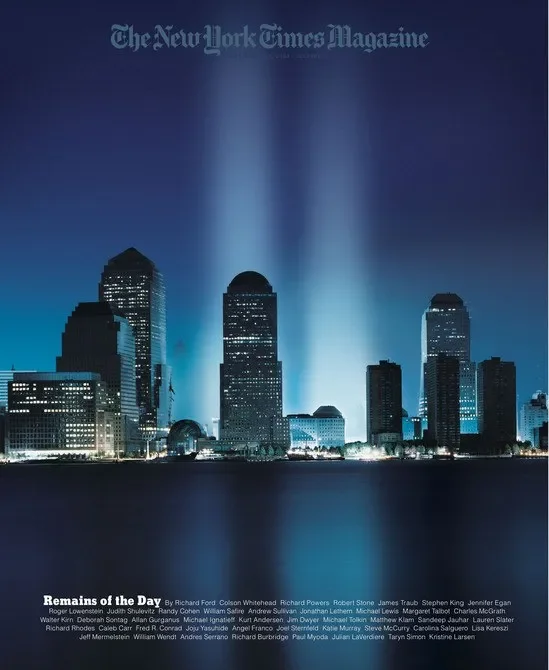
The New York Times Magazine, 9/23/2001
When I was working at The New York Times and working at The New York Times Magazine, one Tuesday morning, the towers fell. 9/11, 2001. The magazine had a ten-day lead time so that it was a weekly, ten days old by the time it came out. We came to work and realized the world had changed and the entire process, the magazine had been made for a hundred and some years, had to be thrown out the window. We had to make a new magazine in 36 hours that would, in some way speak to this very different and scary and interesting world we were now in.
Usually a magazine would be made really over months. Take all of its aspects, it's a long journey whatever. So we made a magazine in 36 hours that was in some ways the best magazine I ever made because of the urgency of the moment. We made a particular set of decisions. The decision was, we're going to focus just on this day, what happened this day. And that was a fantastic limit.
And we're going to bring in all the talent we'd been assembling all these years. And they, because they were all in their own states of agitation, which also was a creative stimulus for them. They were able to create these things overnight, that we then worked into a kind of tapestry magazine, with observations, impressions, sensory experiences, that were combined with this incredible photography that we'd assembled. And on the cover of the magazine, we found a memorial which actually came into being called The Towers of Light, that was just imagined in the last 24 hours. And I just will say that the magazine out of circumstance and constraint, and kind of new supercharged condition. We were able to make as perfect a magazine form as I've ever been associated with in my career.
ANTHONY WHITE
Artist
All these things happen in history and things are happening alongside of us right now, and people don't see it or they choose not to see it. I mean, there's one thing which is trauma, is the fact things are too great to see because you can't handle it. So countries and people forget. People forget what happened to them because the trauma's too great for them. And one could argue that a country could forget because the trauma is too great for it as well, but that's the role of artists to remember.
The role of artists is to facilitate that remembering in a way through the production of their work. That's important. It's important to me because you have to say something. I'm one of the people that when I feel something, I have to say something. And the joy of color is, there's nothing wrong with that either with other artists that make paintings that are explosive and colorful.
Josef Albers, one of the most colorful artists, that explored color in a really joyous way, but in a scientific way as well. He said that color can be relative, political, and volatile. He didn't say joyous and warm and fuzzy. He said relative. He said volatile. Volatile is something that's explosive, volatility has to do with power. That's a tremendous way to describe color, and those qualities, I guess, that is what kids relate to. It is the emotive quality that comes with color.
DICKIE LANDRY
Composer · Musician · Photographer · Artist
Thank god it changes. It'd be awful if everything just remained the same. And the way I became interested in art was in high school, I was graduating in 1956. I remember going to the library and looking at Time Magazine, Life Magazine, et cetera, and Abstract Expressionism was coming out with Jackson Pollock on the cover, de Kooning and others. And I'm going like, "Well, this is interesting." After looking at classical art for all these years because I was having this battling in my head.
Do I want to be a jazz musician, classical musician, or classical artist? What am I going to do when I'm out of school, the people break. What are you going to do? What are you going to do with your life? So one day I went to the library and was thumbing through Time Magazine and turned the page and there's a work of art by Robert Rauschenberg. And what he had done and was getting international attention for this, his pieces hanging in the museum somewhere in the world, the light bulb went off in my head.
I can be whatever I want. I don't have to be categorized, I'm free. Free. He painted his bed and put it on the wall. It was a very famous piece. Little did I know I'd ever get to meet him. So in 1960, I'm new in New York and my wife at the time, Tina Girouard, was working for a dancer, Deborah Hay, and Deborah wanted to look at a 16-millimeter film. I had the 16-millimeter projector, and Deborah said, "Do you mind if I invite friends?" I said, "Invite whoever you want."
Well, the first place he said was Robert Rauschenberg with a famous dealer from Switzerland. And I said, "Bob, Mr. Rauschenberg, before you come in, I want to tell you how I know about you." And after I finished it, "Oh, that's okay. What do you have to drink?" Jack Daniel's is my favorite drink. Anyway, walks in, he leaves at 5:00 am running completely drunk. And I have to give the taxicab the number for him to get home.
So two weeks later, my friend Keith Sonnier wanted to make a 16-millimeter film. I said, "Well, I met Rauschenberg two weeks ago, and he has a camera. Why don't you call him?" "Oh, I can't." I said, "Well, you know each other." He said, "I met him a couple of times, but I don't feel comfortable calling him." And I'm thinking, I'm a social butterfly. I met him, I can, "Hey Bob," I call him. He said, "What are you doing?" I said, "I'm talking to you right now." I said, "No, no. I'm having a party, come over."
So I go at 5:00 pm, 6:00 pm in the afternoon, the party's on. I leave at 6:00 am the next morning, completely drunk. And I'm walking out with this camera, and she shouts out, "Hey, wait a minute. I really don't know who you are. Oh, but you're from Lafayette. You're okay." Because he and his family moved to Lafayette, Louisiana in 1948, and his brother was living there. And his sister is still alive. She's 85 living in Lafayette. So that's how we became friends and through the parties and stuff, started traveling the world with him opening up for galleries and his exhibitions.
BRUCE EVAN BARNHART
Author of Jazz in the Time of the Novel: The Temporal Politics of American Race and Culture · Co-director of University of Oslo’s Literature · Rights & Imagined Communities
I think you're absolutely right to point out the way in which there's a great deal of practice and preparation that allows for the creativity in the moment. And I would just say that that kind of treatment of repeated sequences with possibilities for change and creativity and improvisation, if you think about it in those terms, then you get a sharper sense of the way in which jazz is entangled with the way in which people live their lives or might be more of a model for how people live their lives.
Because of course, we've all got these repetitive rhythms. Some of them are called the week, some of them are called the month, and all sorts of things like that. But within those forms, jazz would suggest there are all sorts of opportunities for creating something vital and new and different. And so I think it's not just about the new and the made up on the spot, but it's this articulation of the creative newness with continuity.
You repeat the same thing over again and it creates a certain kind of continuity, and of course that's important for both dancing and listening and life in general. So it's this really interesting model for how to coordinate continuity, repetition with improvisation or the new, the surprise, the contingent.
BENH ZEITLIN
Camera D’Or-Winning Director · Screenwriter · Composer
Beasts of the Southern Wild · Wendy
I had an amazing childhood and I was really lucky. I grew up in Queens as a small child, and we had this alleyway between the houses where I could just go out. My parents, it was interesting. My mom and my dad are folklorists. And my mom, at the time, was writing a book about children's games and children's plays. So her job was just watch, she would just sit on the stoop of her house and just let me and my sister run wild with all these other kids that lived on this alleyway.
And we just were out there imagining, inventing worlds, creating games. And she would just take notes, let us do whatever we wanted, and then come back for dinner. So I did, even though I grew up in the city, I got to have this experience of this limited, it's a little world, but for me it was the universe, like this alleyway that was just endless bottomless adventure and all these other kids that we kind of had these experiences and worlds with. And then beyond that too, of just my parents, people don't really know what folklorists are, but they're basically documenting, celebrating, folk cultures within New York City.
All the different ethnic groups and different cultural experiences that people have and ways they express themselves. So I just had a really amazingly varied childhood where instead of getting a babysitter, I would be at a gospel concert, I'd be at a Chinese opera. I would be at a birthday party with the freaks from the Coney Island Freak show. And this was like every weekend, these totally different worlds of cultural experiences. They also are people who just love eccentrics and people that express themselves.
And I think that they definitely pass that on to me. And anybody you see in one of my films, the most minor character, if you run into them at a bar, you'd want to spend a year with them. It's people that just are so unique and such individuals and have such fascinating ways of thinking about the world. And so, the thing I love about making a movie is just populating an entire world with people like that.
Even if they just have one line or they're sitting at the bar. I hope that when you watch the films, you can feel this celebration of really eccentric different people, which goes with the kids and the adults and everybody who's involved.
THE CREATIVE PROCESS
And in your view, reading a story and watching it dramatized on stage or film, they're different, but the ethical connection is stronger than the medium. All three can harm as well as inspire. Can you expand upon those themes?
Centennial Professor of Sociology · London School of Economics
Author of The Performer · The Fall of Public Man · The Culture of the New Capitalism · The Craftsman
Well, oftentimes we look at creative work as though the very creative process itself is something good, and we have to break that habit. These are tools of expression, and like any tool, you can use it to damage something or to make something. And so I've been very mindful of even in the art I know best, which is classical music, which seems harmless. If nothing else, that it can be turned to very malign purposes, for instance, in the operas of Wagner.
So I wanted to do this set of books to show what is the basic DNA that people use for good or for real? What are the tools they use in the creative process?
DONALD SULTAN
Artist · Painter
Well, I think the reason that I was drawn to art is that I could make my own voice uniquely mine. I didn't have other people involved in it, like film or theater where there are many people involved. Everything could be myself. And so, I had started in the theater, and then I tried to move to motion pictures and television, and I found too many people involved.
Too much fundraising, too much things like that. And I found that by going to painting, I could control my artistic vision.
THE CREATIVE PROCESS
And as your themes have evolved, has it always involved bold silhouettes or explorations?
Yeah. They've always involved a kind of interplay between the interior and the exterior of building and the interior creative form of building. Right. The earliest work was more or less like a dialogue between the interior of the studio and the exterior of the city.
And it developed, more and more focused on that idea. Instead of two different images, you'd have the same one combined into one image. Either a flower in a street lamp or a disaster picture in a landscape. Or fruit and flowers, memento mori with a kind of sock in the eye, in the center of it.
A black lemon or a black egg. Or something that disturbed the image behind it. Also all involved with weight. And I've always used industrial materials, and I've always used heavy materials, which is a play between structure, architecture and the fragility of meaning in art.
GLORIA PACIS
Artist · Painter
I am drawn to that aura. That's exactly the word. You don't know why, so it's like I paint first and ask questions later. Which is a lot of the job. You don't quite know exactly why, but you just have to do it.
THE CREATIVE PROCESS
You've been doing these dancers, it's not the typical depiction of dancers. They could almost be people engaged in a struggle or lovers. It's not as one thinks of the pretty idealized ballet dancer. What drew you to that?
It's because I consider life a dance, really. A dance. Some dancers are clunky, and some dancers are graceful, but it's a dance, a compromise, a puzzle and it just has a lot of elements that I can draw comparisons with life. The dance of the planets.
There are so many dances all the time, all around us. And do you know what they're all saying? Yes, no, maybe, but that's what we're in, and we're trying to figure out why are we here? Why do I have to do this dancing?
And what's animating me? I just like the way there are a lot of analogies between life and dance, between the way people interact. People who are not dancers. I just like that lines can be drawn between regular life and dancing.
PAUL LEVINSON
Author · Musician · Professor at Fordham University
The Silk Code · The Plot to Save Socrates
I define myself as a writer, and if you think about that, that encompasses being a songwriter, it encompasses being a writer of science fiction and it encompasses being a writer of nonfiction. That I've written books like my doctoral dissertation, Human Replay: A Theory of the Evolution of Media, which argues that as media evolve, they don't get more artificial, they get more natural. Once upon a time, all we had was black and white photography, now we have color. Color is part of the natural world.
Once upon a time, we had silent movies, now we have movies that have sight and sound. Obviously, we hear as well as see. We even have holography now, which is the third dimension. That was my thesis back then in 1976, and I've written books about Marshall McLuhan more recently, books about fake news, which have a lot of political content.
And all of those, to me, are part of the same process, the process of being a writer. And it really is the case that I have an idea, and the idea is first, and then I have to decide am I going to write a science fiction story about this, or am I going to write a more serious scholarly article, or am I even maybe going to write a song about that? And I'm just fortunate that I'm able to do those things. But for example, there are other people I know who might have a visual talent.
They could be painters. So they might be painters and writers at the same time. And for them, they come up with an idea and they have to decide, do I want to write it on the canvas through my paint, or do I want to write it in words? So by writer or author or creator, maybe that's even a better word, that word creator pertains to all of those processes, and that's honestly how I think of myself.
JULIO OTTINO
Founding Co-Director of Northwestern Institute on Complex Systems
Award-winning Author of The Nexus: Augmented Thinking for a Complex World - The New Convergence of Art, Technology, and Science
So the reason for the book we said today more urgently than ever, we need to augment our thinking. The world faces normal challenges of unprecedented complexity, problems that intertwine in a decently interconnected, interdependent and changing landscape. The demands are clear. We must adopt new ways of thinking and working that cross the boundaries of classical knowledge and practice.
Creativity must increase, and execution must excel. How can we augment our thinking spaces to increase creative solutions, and how can we make those solutions real by mastering complexity? By working at the nexus where art, technology and science converge? I can give you a few words about how science, technology and art work. Obviously, this is really complicated, so this will go to the core.
Stereotypical components of these. Science builds on the past, and although science occasionally produces radical disruptions like the Copernican worldview evolution, quantum physics and post-DNA molecular biology, the idea of incremental progress is wired into the very fabric of science. The biggest discovery of science is science itself, is how science grows in a normal mode. Science is about methodically building on other knowledge.
Let's leave it in there that science is now the ultimate open-source enterprise, and the idea that the biggest discovery of science is science itself can be connected to Francis Bacon. Bacon's idea way ahead of his time was that science was a shared enterprise. Something that relied on a process or a method, it would not have to rely on occasional geniuses to advance. Technology, on the other hand, is both about building and disrupting in a way not dissimilar to science.
Most technology follows the pack and builds on what has been already accomplished, but disruption in either minor or major scales is essential for growth. The culture of technology embraces innovation and has developed the mythology of the garage. Now, modern art's aspiration is not all art. I'm talking about more than art. Modern art's aspiration is uniqueness, disruption and progress have little or no meaning.
The challenge for contemporary artists is not to extend an existing historical line. The role has been handed off to craft, but to break from that line and create a territory not already occupied, a new form of expression that is not necessarily better, but different and distinct enough to be recognized as a new space. Today's artists need a logo, a personal DNA that they can own. At best, art does not solve problems.
It creates questions. There's no inevitability in art. The history of modern art appears to be driven by replacing and disavowing heuristics. Because science is built layer by layer on the foundation of previous science, a Newton remark standing on the shoulders of giants is built into the fabric.
In technology, however, the only reason to stand on the shoulders of giants is to crash the elder giants. A new technology appears before the old one can run its course, and in art now is a bad idea to stand next to anybody. Derivative is not a bad word in technology. Adaptations and remixes are good, but in art derivative has a negative connotation.