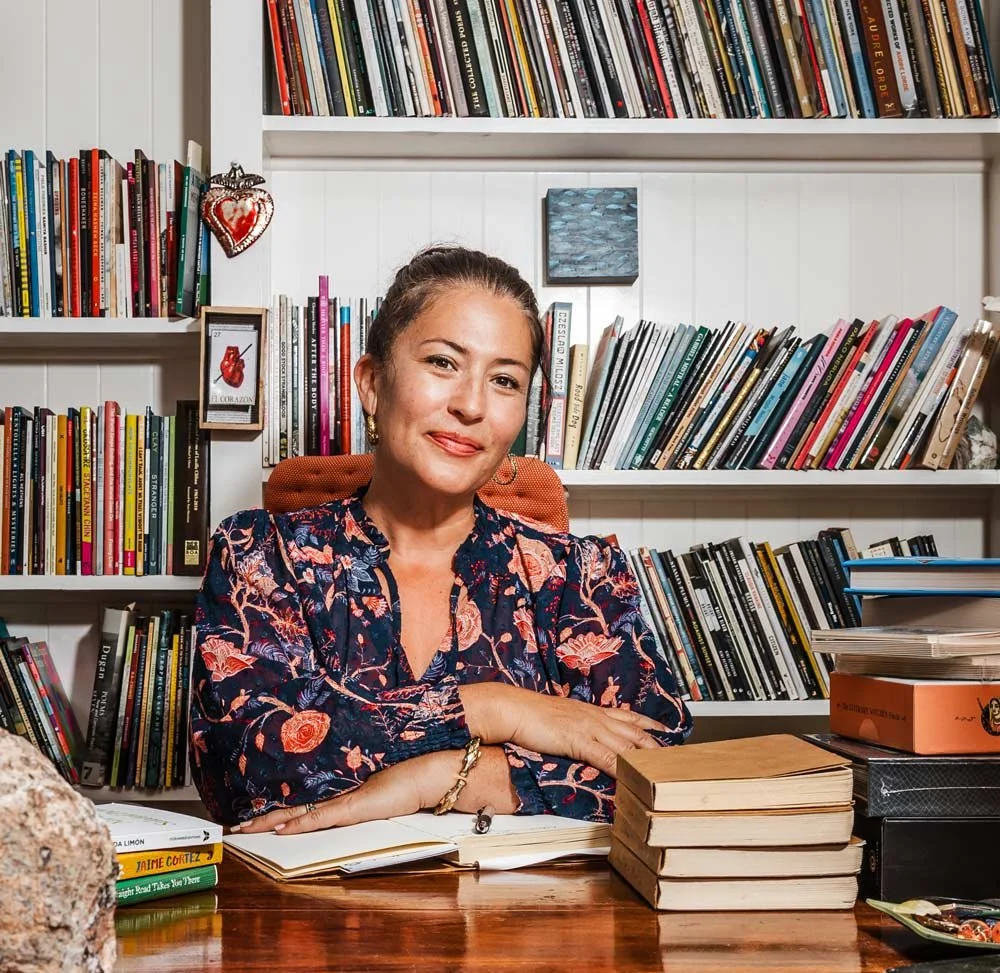


It’s always very interesting that we have to make a case for art because we don’t have to make a case for fast food. Like, we don’t have to make a case for all of these sort of things in our lives that we do not need, and yet we have to make a case for beauty? We have to make a case for the soul? We have to make a case for humanity? We have to make a case for singing back the wounded world? That to me is fascinating.
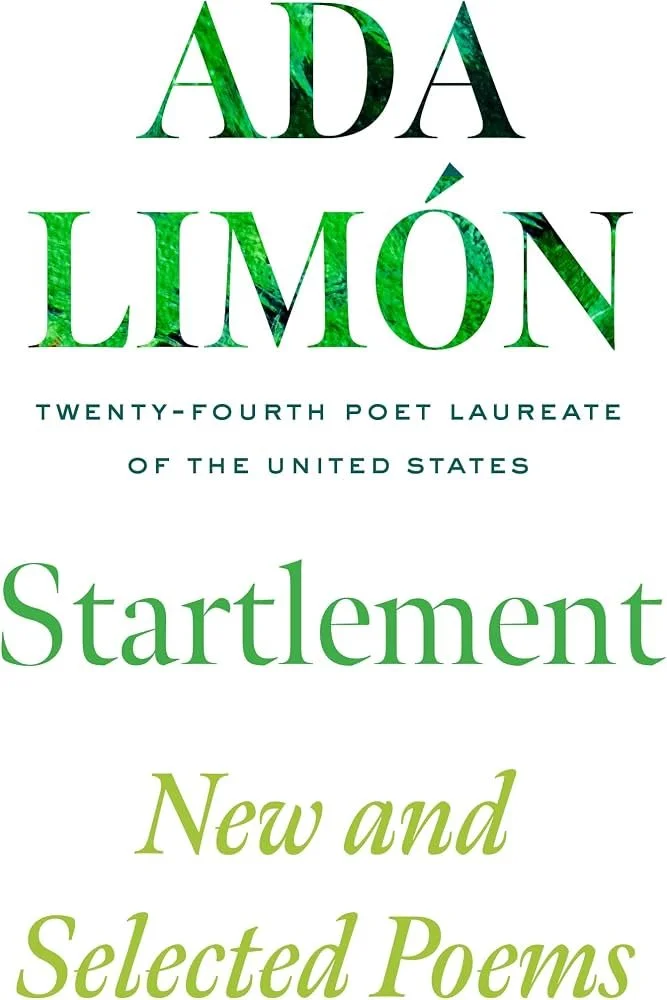
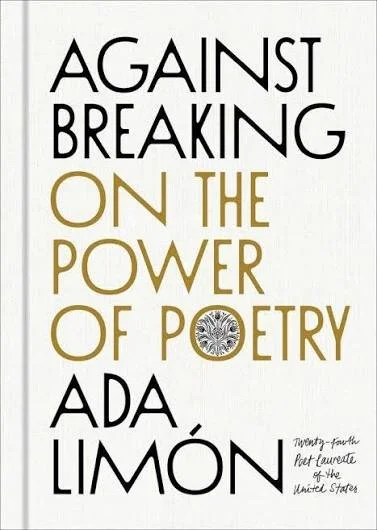
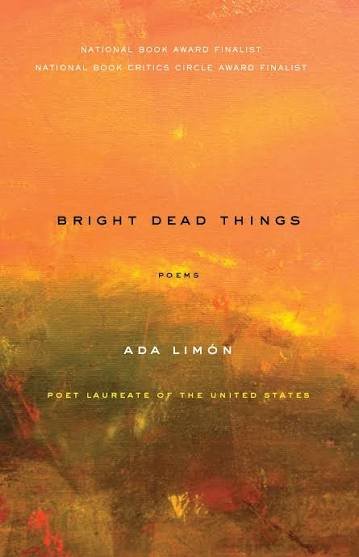
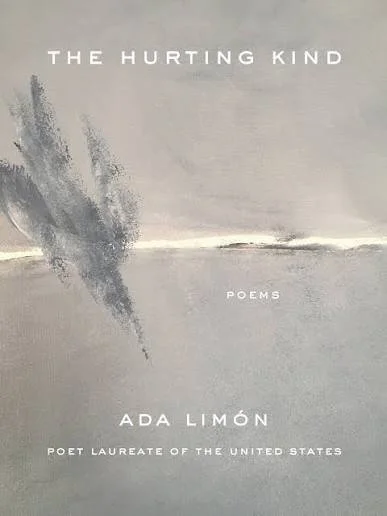
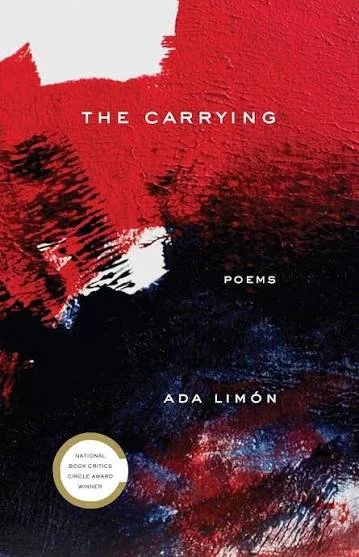
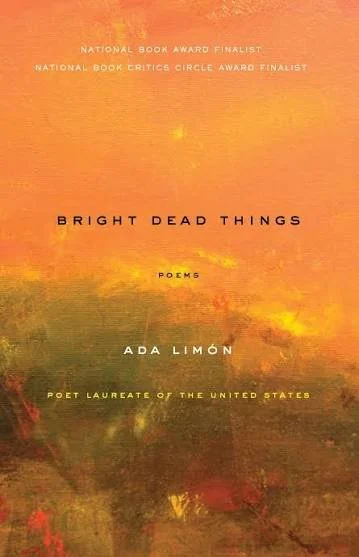
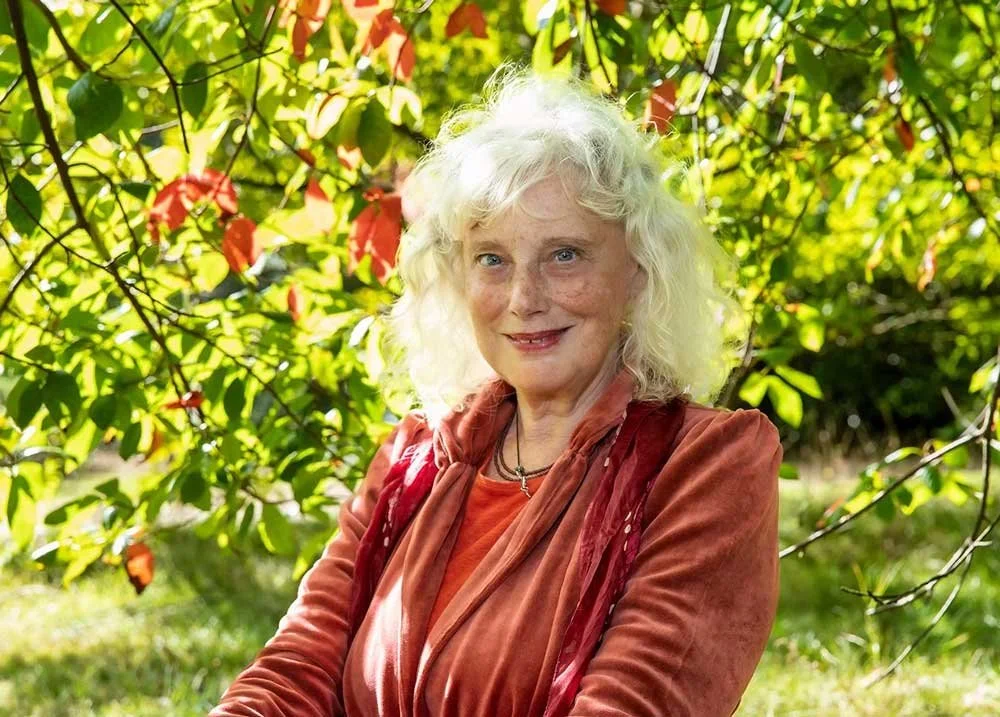
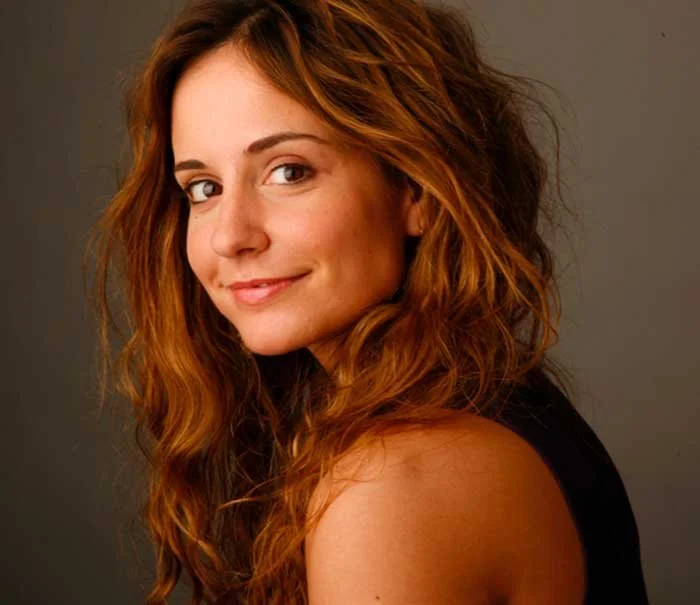
My guest today is Ada Limón. She served two historic terms as the 24th poet laureate in the United States. She has brought poetry to public parks across the US, and her words have traveled through deep space, engraved on NASA’s Europa Clipper spacecraft. In over 20 years of writing in celebrated collections like Bright Dead Things and The Carrying and her new book, Startlement: New and Selected Poems, Ada has brought a sincerity to American poetry rooted in connection to the natural world.
She’s written with inspiring honesty about the death of loved ones, trying to conceive and also the unexpected liberation of deciding to step away from societal expectations of motherhood and embrace a life happily childfree. Her latest book on craft, Against Breaking: On the Power of Poetry, asks how a poem can hold our heaviest grief without letting the human spirit fracture.
After years living in Kentucky and New York, she bought back her childhood home in Sonoma Valley, stepping back into the rooms where her poetic imagination first took root. We’ll talk about the discipline of paying attention and why poetry remains an essential act of human survival.
THE CREATIVE PROCESS
Ada Limón, welcome back to The Creative Process.
ADA LIMÓN
Oh, it’s so good to see you and be with you again. Thank you for having me, and thank you for all the work you do.
THE CREATIVE PROCESS
Well, thank you. You know, in bringing Startlement to the world, which is looking back on over 20 years of poetry, what were you learning about the way your mind works? I feel it’s like a mother tree looking at the roots of your life’s work and seeing those connections again. So I was just wondering what it’s like to be in conversation with your imagination, with your different selves in the past and now and what has gone before, because it’s an important year for you and also for me too. I’m also coming up to my 50th year. It’s also America’s 250th. So I feel like in the beginning, you have this, to use the name of one of your poems, this endlessness, and now it’s going home. You can go out in any direction, now you’re coming closer to the horizon. A sense of ending, but not yet. What does it feel like to return?
ADA LIMÓN
That’s such a beautiful question, and it was very interesting to experience the physical return, the body and the brain and the mind returning to my childhood home, not just to my home valley but to my childhood home, a place where my office, where I’m talking to you right now, was my childhood bedroom. To return in that way, in the physical way, while I was also returning to all of the poems I’ve written, working on putting together the newest book, Startlement, and looking at all the poems that I’ve made.
And like you so deftly put, the idea of the past selves, the many selves that we are inside what we create. I think that one of the things that kept coming back to me, kept returning, kept coming up, if you will, rising to the surface, was that I have such amazement at being alive. And I think at the earliest poems, that it’s there. It’s this strangeness of being in a body, of living in a world, of this incredible Earth that we get to have in our lifetime. And I think what surprised me the most when I was working on the book, and even maybe as I return to this valley, is that I haven’t lost it.
I think that not only is it still present, this sort of complete bewilderment at this world, this life, the connections that we have, but that it’s deepened. It’s deepened in many ways, and I think that’s what surprises me. I think that there are moments where you think, “Oh, that’s something that we will get used to, that we will tune out as our life begins.” Sorry if you heard my dog drinking water, speaking of life.
But I think that is what was a big takeaway for me, not just the move back but the move into a state of reflection when making the newest book. And so I think that I was surprised at how much of me is still me, how much of me is still in a constant wonderment at the living body in a living world.
THE CREATIVE PROCESS
Yes. Now wonderment, that’s a gentle word. I mean, it opens up, but of course you chose startlement, which is a spikier word, and I like it.
ADA LIMÓN
It is a spikier word. That’s a great way to say it.
THE CREATIVE PROCESS
And that’s what I appreciate, and I think so many people love about your poetry, is a sense of wonder. I guess we’ll get later to the reason for choosing that word startlement, but staying a little bit on the place of childhood, the place of memory, you know, where dreams begin, where the longing begins, which leads us out and leads us back. When you walked back into those rooms, and I guess there are ghosts and memories and people who are no longer with us and all those things, what is that like? It just sounds like a rebirth, a renaissance.
ADA LIMÓN
Yeah. You know, it’s funny because I have a line in a poem that I believe is in Bright Dead Things, but it might be in Sharks in the Rivers where I say, “The office was not haunted, but I wish it was.” And that refers to a moment where I was working for magazines in New York, and my friend Jessica Yen had died of cancer at the age of 30. When she left this world, I actually ended up working for the same magazine she was working at when she had passed away. And they waited for a while to tell me that I was in her office. And so I kept thinking, “Oh, I’m going to see her. I’m going to feel her.” And then I was so disappointed when I didn’t.
And so I think that I thought maybe I wouldn’t feel any sort of sense of hauntedness here in the house, and yet I do. And I think that it’s not a sort of hauntedness of ghosts but that idea of memories and really the many selves that we are, you know? The thought of the little self who I was when I first made my first steps, when I first read a word, when I first learned how to read, all of those things were here. And so I moved into this house when I was six months old, so this is the place of memory for me.
And so I was thinking, oh, it might not be... I might be sort of putting a lot of my own expectations on how the house might feel, how this might feel, and instead it was actually more so. I think that the two answers I’ve given you already, I’ve just said more so. But that’s, that’s how I can feel my little self in this room. And I remember so well spending hot summer days inside with the fan on, reading and trying to figure out the language for songs that I was going to make up for my dog.
I walk in the same valley, and I go for the same walk. In fact, I just got back from a little three-mile jaunt that I do near daily. And I was thinking about how many times I used to walk to that same spot and look at it and dream, and now here I was doing the same thing.
So it's not as much the people who have passed, although they're here, but it's my past selves that I feel are so intertwined with the experience of moving home and of childhood, that they're inside of us, that they're with us. It's not something you move past. I keep thinking about the idea of growth. You mentioned the mother tree, which is so beautifully said, and I keep thinking about how as we grow up, grow older, we think of growing wiser and we think of forward momentum.
And what I'm finding here is the deepening of the root systems, so that all that forward momentum might be happening, but at the same time the roots are going further and farther to stabilize and to reach out, and they're happening at the same time. It's not one or the other. It's not looking back or looking forward. It's that the simultaneity of this moment is creating this really rich present that is new for me, and I'm really delighting in it, and sometimes I'm overwhelmed by it.
THE CREATIVE PROCESS
Well, you're glowing with it. It's evident. And I've always loved this word arborescence, since we're talking of trees. I just can't wait to read more of your poetry that you do now in this place of childhood and memory and creativity because it's like you're in this forest. It can be an old-growth forest, but there are always new saplings, so there's this wisdom of old and the new life pushing up. Have you selected a poem from Startlement that you'd like to share with us?
ADA LIMÓN
Yeah, I would love to share something. I'm going to put my glasses on so that I can... You know, it's funny, when I first started writing poems, I didn't need glasses. I thought I would read this shorter poem. It's a poem that I wrote... here we go. For me, it's a poem about this feeling of being both inside the world and of the world, figuring out where the self exists, as so much of that was what I was doing here. So this is a poem called "On Earth As It Is On Earth”.
Green and green and green, I speak
to the tree line, a booming body, trying
not to boom. I see myself as I once
was, hiding inside a manzanita outside
the ceramic studio, the mirrored rain
drops hanging on urn-shaped blooms
and soon, too, my strands of hair. There was
always a line where the rain fell and where
it didn't. It was the line between abandonment
and freedom, loneliness and imagination.
How I waited in there, composing in my mind
a life without rules, without money, cruelty,
clocks, or clothes, how still I am the same,
in the green, in the green, waiting out the rain.
THE CREATIVE PROCESS
That's... I love all your poems. I always try to guess which one you'll read, but I think that sums up so many things about your writing. You obviously have this appreciation of the natural world and the many intelligences and languages that you're listening to but we can't fully speak.
If you had to talk about the mind of the universe or talk about the mind of the forest or the spirit of the ocean or any of the other smaller living creatures, if you had to be one or a few—okay, I'll grant it, you could be a few if you want. We're in magical thinking mode. What would they be?
ADA LIMÓN
I like how you say we're in magical thinking. I think I'm always in magical thinking mode. You know, I've always thought that I love the idea of being a bat, and it goes back to my friend Jason Schneiderman, the poet, who said this to me once. I thought, for sure this is a beautiful way to be, which is that if you're a bat, you have wings and hands.
THE CREATIVE PROCESS
And a little dog face too.
ADA LIMÓN
Yeah, which I kind of love, and I also love the idea of existing in that space between the light and the dark in the shadows. I also like the idea of the community. Bats are in community. I also think that they have this different viewpoint as they are often upside down and then right side up. So that is something that I've often thought about.
If I were to be an entity or I got the gift of dissolving into something, I think water. Water would be incredible for me, and I think that as much as I love the vastness of the ocean, I would choose a creek. I would want to be the creek water because where I am, my closest watery love is a seasonal creek that I visit every day and talk to. Sometimes it's gone and sometimes it floods. Sometimes it's just a small little dried-up pool, and then soon it's something rushing and dramatic, and I love all the different changes the seasonal creek goes through…
SHOW FULL INTERVIEW ▼
...Another one that I really love is the bird, the coot, because they do something that is sort of like walking on water, which is that they skim the water. They have, you know, like ducks do, that sort of... But they can run on top of water, and then they're just as comfortable in air as they are in water, and they're incredible swimmers. The way that they dive is really remarkable. So I also love the idea of being a bird that is as comfortable in the air as I am in water.
So yes, you like the transformations. Of course, this is a big theme for you, the becoming. It's never static in your poetry or life. There is movement. It's not all nostalgia. That was a point that I think was behind a particular commissioned poem for the IPCC. Let us face those truths, but also the beauty and wonder. I can imagine the questions you ask yourself and you're constantly asking yourself as you appreciate what we have and what we may be losing.
Yeah. I think a lot about that, about how we live. Like everyone, I'm sure all of your listeners who are living a creative life, how can you live a creative life without bearing true witness to the destruction that humanity has had on this planet and humanity has had on humanity?
And as an artist, there's some part of us that wakes up and thinks, "Okay, how do I take this and make something? How do I start the day and move in a way that is bearing witness and paying attention, but can also foster some sort of calm and vastness from which to create something, some kind of rootedness, you know?"
And I think that's a very interesting place to be, because we cannot just surrender to our grief. I've always thought there's a great privilege in giving up. There's a great privilege in just thinking, "Well, everything is going to hell, and that's what will happen."
I really believe that we have to try our best continually, just to raise awareness as to what is happening, but to act in small ways and in large ways. And I think we do that as artists. Sometimes we can only do that through our art because that's how we gain our strength, and sometimes we have to be more of an activist. Those two things sometimes go together and sometimes they don't.
Sometimes they're quite different, depending on who you are and how you can move in the world safely and in a way that sustains you. But yeah, I think about that a lot. As you say, the questions that come up are large questions. And how can they not be? How can they not be?
Yeah, it's as large as our earth and beyond our smallness in the vastness. Sometimes people think this is a Band-Aid. You know, they say that about the arts sometimes. It's like, "Ah, we have to think about the important things." But even going forward, because I know you're having conversations with scientists and so many who are doing important work, the arts are important work, and it gives them something to take away.
When you have the project in You Are Here and also in the public parks, people can take that poem even when they're not near nature and think about their responsibility. Not that art has to have a function, because the music of life is important. Anyway, I'm going on.
No, I totally agree with you, and it's always very interesting that we have to make a case for art because we don't have to make a case for fast food. Like, we don't have to make a case for all of these things in our lives that we do not need, you know?
And yet we have to make a case for beauty? We have to make a case for the soul? We have to make a case for humanity? We have to make a case for singing back the wounded world? That to me is fascinating. What a fascinating thing we have to do that. You're not wrong. People think it's frivolous. And how many of us think a life on Wall Street is frivolous? You know?
And it's imaginary.
Yeah. I mean, money is a concept, and yet we bow down to it. So I'll make a case for arts and beauty all the time. But just like in this role that you have made for yourself, that you've created, sometimes it can be exhausting, right?
Because you think you have to show up and you might just want to talk about poems. You know, when I was serving as the laureate, you want to talk about poems, or you want to talk about creation or making or joy or something like that. But then you're confronted with, "Why should poetry matter? Why does it even exist?" It's a very interesting thing.
And so I learned to do it. I learned by watching the other beautiful laureates like Joy Harjo and Tracy K. Smith and Juan Felipe Herrera and Natasha Trethewey and all of these wonderfully articulate, creative geniuses that were able to talk about poetry in a way that was both expansive and personal.
But there were times where, you know, I thought, "Oh, if one more person asks me, 'Why does poetry matter?'" I felt like I was going to fall over, you know? And I'm sure that happens in your world too because I think there is this strange thing when you go into the arts, whatever they are, whether they're painting or photography or acting or music, whatever it is, someone is going to say, "Why does that matter?"
It's interesting because I hadn't thought about poetry being the closest thing to consciousness. But then when I thought that that was the closest thing to consciousness, well, that's how we prove that we're human. Like now all the conversation is about whether AI has consciousness. So you know, it's life itself, and I don't see why we have to make that case.
You mentioned beauty, and so I just want to ask simply... There's a line in In Praise of Mystery: A Poem for Europa. You say, "We are creatures of constant awe, curious at beauty, at leaf and blossom, at grief and pleasure, sun and shadow." And it's kind of an ode to beauty. So for you, what is beauty?
You know, I think I find it in so many different things. But for me, because I'm such a feeler, it is a feeling. And it is that moment when I feel like the smaller self in me, the self that deals with the details of life, you know? The self that makes coffee, feeds the dog, gets groceries, sees my parents, checks in on my family, does the Zoom call and checks the emails. I think beauty happens when my smaller self dissolves a little, and the larger I in me—and I don't mean the I as the letter, but the I as in the observer—opens and is just suddenly alert and more open.
And I find that beauty, to me, is that sort of turning on. It can happen primarily in the natural world for me, but it also happens with human connection, with animal connection, a moment between two people or someone caretaking another person, small kindnesses. But it's that the small self just went away for a moment, and the larger observer, the deeper self, just kind of got a little excited and all the feelers came out.
Well, it's hard for me to believe that you're not constantly in contact with it just because of living in poetry, and I feel like you are there. Actually, it surprised me when I was asking about animals that you didn't mention horses. I thought that might be, but maybe because there's only so much time. I'm sorry, I'm kind of mind-wandering at the moment.
No, I love that. And I couldn't have an answer for why I wouldn't choose horses because I love horses, but to me, there's a power in them that I adore and admire, and when I need power, that's the animal I think of. I think of them as power.
But I also find them, in some ways, so distant, which is why I think I write about them, because I'm fascinated by them. They feel to me very otherworldly, and I think there are some people who move with them like they're sort of big dogs. They move so easily with them. I don't. I'm not scared of them, but I am very reverent of horses, so I think that it's hard for me to choose that as my animal being because I think that they're my husband's animal being. Horses are his, and so I see that as, I love them, but they're not mine.
That's interesting. So it's sacred too. You're a visitor and observer. That's nice to see. And yes, because in some of the poems it's like you're not jealous of the horses. Like, "Oh, come back from the field." And there's your mother also, her connection to horses.
Yes.
There's a kind of sibling outside. The sibling out in the field. And it's interesting. I love that you have humor and you have all the emotions. It's not just the appreciation of nature that we get in your poetry. You write about many different kinds of love too. We've been talking about family or your husband or nature. Over the years and then coming back into your childhood home, what have the years taught you about love?
That it's a choice. I thought love when I was younger was something that was uncontrollable and wild and outside of the self. And now I think about how it deepens and deepens, and that you can choose it. You can choose it. You can move towards it. And I had no idea that that was true.
You can choose it from people who didn't even... You may feel like they didn't love you, and then you can look back and think, "No, there were times that they did." And I think that there's a lot of recasting and recalibration sometimes that happens when you think about love in the past.
For me it's much more of a... I don't want to say it's controllable, but you can set your intentions toward it and move toward it, and there's way more of it in the world than I thought. I thought that maybe it was scarce, it was rare, but I actually think it's everywhere.
I think that goes to your expanded sense of love and that we feel it in your poems. And you said maybe it's not even reciprocal. It's sometimes this compassion that you can have for a stranger just watching them in their own private choreography on the subway, you know? A chance encounter or exchange and they don't really realize how beautiful they are. Or even though they think they're holding it all in. And it's just a constant reminder to appreciate that everyone has beauty and the capacity for love even if they've been damaged. You just open our hearts. You open my heart so I just wanted to say.
I think it was 2007, but I'm not exactly sure, but I started loving-kindness meditation when I was living in New York and I needed something. They had free classes at the Tibet House in New York City and Sharon Salzberg was teaching a loving-kindness meditation or Metta. And I went in and it changed me. I had never done it, and I thought, “This is a kind of meditation that I could really devote myself to.” And so I still practice loving-kindness daily. And that has changed my relationship with the idea of love.
And I remember when I first started practicing one time, one of the things that you do is practice toward a stranger, like someone who's a neutral person. And I remember I practiced offering my loving-kindness. So it was just for... You know, you just think about them and you think, “I'm just going to offer love and safety and care and all of these things to this stranger.” And I chose the guy that I got my coffee from every morning at a coffee cart across from my office building.
And by the time I finished this week-long meditation towards a stranger, I was just like, “Hi!” I was so excited to see him. And we had this great connection and... So then for years afterwards, we just had this beautiful connection. And it's amazing how those things can happen, and that was just intention. It was just intention.
And that's something my younger self would have never understood or, I shouldn't say wouldn't have understood. I didn't have access to that. And so I'm very grateful for that meditation. I know it doesn't work for everybody, and everybody has their own way of maybe doing that, whatever practice works for them. But for me, that's been really helpful in my life.
Yeah, and it costs nothing. What's nice, I mean, I'm part Irish, so I lived in Ireland. I'm not always in the countryside, but you probably have it where you are in Sonoma and you see people in the countryside, they're just waving. I know that you sometimes talk to animals or are waving to people. Everyone is just part of this big family and even just greeting them to appreciate that is really part of the spiritual of the everyday.
And I'm wondering how your thoughts of God... I mean, there's a beautiful poem—if I quote it to you, but you'll read it better—"Hell or High Water", where you talk about the sense of the spiritual. It's nice when you talk about singing as a kind of...
Yeah. Would you like me to read it?
Yeah, sure. Yeah.
Um, yeah, this is a poem that... For me, when I think about spirituality, it's very funny because I will say I was raised an atheist and I continue to be an atheist, but I find so much spiritual connection to the land and to others and the sacred in so many things, and so this is sort of a poem about that.
Hell or High Water
Not churchgoers or joiners, still my people sang,
up Highway 12 or Arnold Drive, depending
on the traffic. “Blue Moon, you saw me standing
alone,” my maternal grandfather would croon
in a big put-on cowboy voice like Marty Robbins
as we barrelled up the 79 from Julian to Calimesa
after all their money disappeared in a savings-
and-loan scam and they lost everything they
thought was safe come hell or high water. On
the other side, el otro lado, my grandfather would
sing Lydia Mendoza rancheras and “Mal Hombre,”
songs about la frontera, on our way from Oceanside
to Laguna Beach. Also here, in the mountains,
I remember driving up from Glen Ellen, the drive
interminable, my brother’s pugilistic tendencies bruising
me on the back seat’s sticky vinyl; even then, we
could be swayed to sing. At the campsite, my
father would pull out his guitar, and we’d beg
him for “A Cat Came Back” or “500 Miles,” something
with a chorus we could sing along to, sometimes
we’d even like the sad songs. Drifting to black
between the flames of the fire, and the aspen
and the pines all flickering in the distance. What
was the difference between a song sung on
the journey and a song sung once you got there,
one was about passing the time, the other about
bellowing your presence to the rocks and stones,
I don’t know. I know that we sang, and here in this
valley I can’t help but think of how my father pulled
out his guitar at my stepmother’s deathbed, which
was just their bed really, at home up north and on a cold
clear day he sang “500 Miles,” and she was already
almost gone and I wept and his voice sounded so strong
so when the hospice nurse came and said, “You
have no religion, right?,” I didn’t know how to answer,
because we did, it was this, it was all those years
tied together on the road, singing at the top of our
lungs, harmonious and inharmonious both, and with gusto,
our voices meshed together like tree roots, not for any
good reason other than the sheer pleasure of it,
something to pass the time, like beauty, like going
to the mountaintop just to go, it’s the old way,
it’s the only way I know, a mountain, an echo,
a coming back and coming back, a chorus.
Yes. And I think that it's really important to say that, and I think a lot of people can relate because that's the spiritual they take into their daily lives. You mentioned some of the writers, the poet laureates, but also I'm thinking about musicians and that's entwined them both. What do those writers you've appreciated and been companions throughout your life and reading, and the musicians, the music that you've lived with, what do you feel they reveal about you and the life you've lived?
You know, it's interesting because I can't write with music on. And maybe many people relate to that, but because I'm hearing the music, I have to hear the music of the poem. I have to hear the music that's moving through me, through my bloodstream, the connectedness in my lungs and my mouth and my body, and I need to hear the sounds of the trees or whatever it is, the birds, the dog snoring, traffic. I need to be very present and the world needs to feel tangible in order for me to write.
But the reason on top of all that why I can't write with music on is because I am so moved by it that oftentimes I am sort of transported very easily with songs. I think my mother is the same way, and I think a lot of my family is the same way, where we're very moved by music. My husband will tell you my music tastes have stayed sort of the same. I have sometimes difficulty in reaching new music and I have to be sort of forced to listen to new music, and then I often love it. But I go to some of my heart songs often, you know?
So it's like I'm listening to whether it's Fleetwood Mac or Leonard Cohen or Aretha Franklin. There's a lot of returning to some of the original songs of my life and my youth and those places that they remind me of and take me back to and move with me. But it is interesting that they're such a part of my poems, they come in, and yet I can't have them... I don't even have a speaker in my office because I need to be listening to the world or the echoes.
Yeah, exactly. We can and because then we will also realize there's never really silence in nature too. So you need to have that off so that you can be receptive. And listening to your own music and dreams, I believe you're a big dreamer. You can feel it. Yes. How do they come into your poetry?
You know, when I was really struggling in 2015 I had sort of a health event, but no one is exactly sure what it was. It probably had something to do with my spine. I have scoliosis and cervical curvature that is significant. So sometimes I have symptoms that I don't know what they are and they tend to be related to my spine.
But I had vertigo that was so consistent that I was really unable to do much. And it was during the month of April in 2015, and I always write a poem a day. I try to in the month of April for National Poetry Month. And so I thought, “How am I going to write poems?” Because I am sort of stuck in this state of just dizziness and unable to really stand and walk and feeling just completely untethered from the world.
And so what I did was, because lying down was good, I could lie down and I could dream. And so what I would do is I just slept. I just tried to sleep and rest as much as I could. And then when I would wake, I would write a poem that was about the dream I had. So I began a whole month of just writing about my dreams and making sure they were poems.
And that was really... It made me even more connected to the dream world but also more connected to the ways in which poetry and dreams can intersect. So they often find their way into my poems because I think of them as archetypes of the self. Just as many people will have Bible references or things that are sort of the original symbology of their consciousness, for me, it's the dream world. And those are my archetypes and my internal symbols that keep returning and coming back.
And I think paying attention to those, to me, is as much of a literary commitment as it is a psychological journey.
Yes, indeed. I mean, they're the original black box.
So yeah, the black box of the imagination. I'm wondering what you think now.
We have AI. It's on all our devices, and people are using it to write and all the other ways. And you address this in Against Breaking as well. Why would we want AI to make art for us? But what are your reflections on that and what it means for the future of humanity and the arts?
Yeah. I think that it's a hard topic for me. I think the original missteps have been so massive that it's hard for me now as some AI companies are trying to recommit to a moral center, trying to find ways in which to make AI have a moral center. And it's my opinion that it is too late for that. My hope is that they are able to scramble something together. But I think the greed that an exponential growth of artificial intelligence has already done so much damage when it comes to the environment, its massive use of our most precious resources on the planet.
I don't even like to say resources. That's a terrible word. Our precious entity, our precious life-giving source, water. And then on top of that, the fact that they stole so much of our work as artists. I had three books that were open source, so that now if you type in, “Oh, I want to write a poem like
So I have a hard time talking about it because I think that I have so much rage, and I don't like to live in fear, so I don't think I'm as scared as maybe I should be. But I think that what I am right now is very angry at the companies that have allowed this exponential growth unchecked and unmonitored without guardrails, and who are now paying lip service to some kind of morality.
Yeah. It's dispiriting to know that some of those people in, I think it's Anthropic, you know, they come from a background even of literature studies or philosophy, so they have those in their employ and in their leadership. But you know that old expression, the ghost in the machine, and it may be that we are becoming the ghost in the machine. Once our labor is now considered dispensable, scraped, we become this ghost and that would be real sadness.
If I were to have hope in this, for this particular technology, my hope would be that we find some way to mitigate and adapt to the climate crisis, and that we can use these systems to help us heal portions of our planet. If we could use it for that, which is really the largest crisis of our time, and if in some ways it could help to save this place, then it might have a purpose. Otherwise, I find that we've created a tool for our own destruction, and it seems as if nobody thought about it.
Yeah. Well, so if they can enrich themselves, it's like fossil fuels all over again in a different way. We become addicted to the convenience and we just can't dispense with it. But just on that tiny note, there are some people who say hopeful things about being able to balance the energy grid and of course cures for cancer, and that's important. But I then have to balance it. If it creates a future where no one can afford except the very elite those cures for cancer, it's just the same problem.
Exactly. Exactly. And I fear that what we need to look for... I mean, yes, of course, everyone wants a cure for cancer, but we also need to figure out how to heal the planet. And the reason why people get cancer so much is because of what we have done to the planet. So it seems like we should start at the root of everything, which is our damaged relationship with the Earth itself, and that's where the repair needs to happen.
Yeah. And I think, not to put it all, because obviously China is in this great race and Europe has a different perspective, but America is pushing this forward. And I just wonder now in our 250th year, your reflections on America, and of course when you've been poet laureate and you have to represent all these conflicting feelings. You talk about rage or the pride. Your reflections on America and what it is today, how do you keep calm through all this that we're going through, our present moment?
Mm-hmm. Yeah. You know, I think that sometimes I keep my calm and sometimes my calm is not good enough. Sometimes it needs to be an empowered action. I think that where I place my hope and where I place my belief when I think of the United States as a country, it is in the land. And the conservation efforts have been tied to this land for a long time. It is in the stewards of this earth, indigenous communities that continue to steward this earth, as well as the people who work for our national parks, our regional parks, our state parks, who do so much to protect and preserve the land itself.
And I think when I have such complicated feelings about citizenship and about the United States, but having worked for the largest library in the world, the Library of Congress, I think about how many people, the librarians, saved things, saved pieces of knowledge of our history, saved artifacts and pieces of language and letters to show us who we were and who we are. And for me, I think when I find myself really lost in the downfall of democracy, the woundedness that our country has experienced and is experiencing, I try to put my faith in all of the people that I know who are doing the work. And I think sometimes if I get too wound up in all of the disaster that's happening, I'm also doing a disservice to all the people that are doing the good work and who are really in there trying to make effective and lasting sustainable change. I want to stay true to that. So I think that's oftentimes my reflections have to do with not giving up on this experiment of this land, of this place.
And partly because I feel like giving up is giving up on all those good human souls that have dedicated themselves to making sure this is a place that flourishes for people of all kinds and for animals, plants and trees and water and all the good things that make this place so incredibly rich, diverse and beautiful.
It's so true. And you talk about all those people behind the scenes, whether they're, you know, foresters or librarians. I call them the invisible arts, you know, they're not always up front. They're teachers giving that hope, purpose and seeds for the next generation. Who have been those teachers for you, and do you ever think of yourself as a teacher? Because to me, you're a teacher one-on-one with people and in groups, of course.
Thank you. You know, for me, I think of a lot of my teachers as writers, as everyone I read. You know, I read so much, and I think of how many times I've just gone to a passage and been like, "Oh, this is what I need." I think of going to Emily Dickinson again and again. You know, the quote I have at the beginning of Startlement, "Not knowing when the dawn will come, I open every door." Like, yeah, you open every door. That's what we do. That's how we continue.
And I think of the good teachers I had throughout my life. Colleen McElroy, a teacher I had who was a great poet at the University of Washington when I was an undergraduate who encouraged me to go to graduate school. And then in graduate school: Sharon Olds, Phil Levine, Marie Howe, Galway Kinnell and Agha Shahid Ali. There was just that kind of connection. Eamon Grennan. I think of all those people that pushed me forward sometimes when I felt unready.
But I also think of my friends who are teachers, the people who teach me and inspire me with their own creative acts, their own humor and the ways that they move in the world. And then as well, again, to go back to all those stewards that teach me so much. And then I think of my tree teachers. You know, I'm back at home in this valley with my original trees. I think of how much they've witnessed and what we've gone through together and what they've seen without me and what I've seen without them. And I think of the land as a teacher too.
It really is. People don't think enough about trees, that they think they're so... They are still, of course, but they have to make it through a freezing winter. You know what I mean? They have to, in stillness, still steel themselves.
I mean, we couldn't survive it. So I'm just asking about education because we were talking there about AI, and there is this kind of feeling that if you don't even have to learn it, you can press a button. It becomes a lazy way, and in all the different ways, it reduces the full experience to something transactional. So I'm wondering about your reflections on education and how we can educate for the whole person. What do you put in your curriculum, and what was important to you?
You know, my thoughts on education are that I feel like oftentimes we have this huge emphasis on testing, and I understand it, I get it. But I've always thought that everyone learns best when they find the things that excite them. For me, I was excited in first grade when my teacher, Mr. Mike, gave me the assignment to look at one little square foot of land and name and identify all the things that were inside of it, and realize that we're connected to this little place, to look at the beetles and the grasses and all of these things. That was something that excited me.
And it changed my life, and I was in first grade. I was five or six years old. I see him all the time. But I think that's one of the things that is really important to me, is to try to inspire and ignite joy. And it's difficult to do if you don't have safety and if you don't have nourishment. You need those things first and foremost, which is to feel safe and to feel fed, and then joy. So those are the things I think about when I think about education.
And I know we're running short on time, but I feel like I should ask you because it's something you've spoken and written about so honestly, and some people don't feel they have the permission, whether they have children or don't have children, to speak about it. It's a sacred way or a reverential way, but also one that you just... I'm putting words in your mouth. You tell me.
Yeah. It's very interesting being childfree because I find so much pleasure in it, and sometimes it feels as if I'm not allowed to say that. But I enjoy my life. One of the things that has been really interesting to me as I've aged is that I do think I have been allowed access to be a daughter in different ways. I am not mothering. I am not dedicating all of my hours to raising children. Instead, I can dedicate myself to my work but also to my parents and be able to actively do the daughter work in a different way.
I think about that a lot too. I also think how interesting it is that my mother and I have the same relationship, that she doesn't see me as another mother, right? And I think that so many of my friends see that, right? They have the mother and then they're now a grandmother, and it becomes this sort of mother and mother relationship.
And my mother and I have the original relationship still, mother and daughter. So I think being childfree is a fascinating way to move in the world, and we don't talk about it enough. For me, it's been a happy reality, and I think for my husband too.
I think so too. There's this distinction that sometimes people make about selfishness. Let's put that word out there. As you said, you have the children of your books, so they say that, but you're also teaching and connecting. You're making a lot more connections. When you're a mother, you have to really focus on that one or a few children, so you can't always do that extended mothering or extended friendship. It's just very difficult, let's say...
...Of course. And I have so much admiration for mothers, fathers and all the parents and caregivers that bring many intelligent young people into this world. I'm meeting so many of them on the road and at my readings and in schools, and I find the work that they're doing really inspirational. I know I'm doing a different kind of work, and I think they both have to exist.
Exactly. There's space for all kinds of mothering, all kinds of daughtering and all kinds of nurturing. I want to go into the Memory Museum. I know sometimes people ask about memories and say you can only take one memory or one book into eternity, and I don't think that's really fair. So for your personal Memory Museum, you can put anything in it. It's vast because we have unlimited space there. Who or what would you put into your Memory Museum, and how have they given your life meaning?
Well, I would put everyone in. But I'm going to say a very sentimental thing, which is I lost my beloved Bean, my pug. She was 14, and I lost her five months ago. She died in my arms of a sudden seizure. It was one of the most painful things I've ever experienced, and I'm so glad that I was holding her and that I got to witness her passing.
But I was thinking about her just the other day, I think about her all the time, about what a gift she was to me. She was this just joyful soul, and I always laughed that she was the most extroverted member of our family. I can sometimes keep to myself, but every time I would go out of the house with Lily Bean, everyone wanted to talk to her.
I engaged with people in a whole new way because she was this joyful, beautiful little being. It's funny to feel that way about what some might just consider a pet. For me, she was my other. And so I would put my little girl in that Memory Museum.
Well, you can put more too. If there are others, you can. It doesn't have to be people or books. It could be the summer you went to Greece and had your first kiss. I don't know, whatever.
Yeah. I think there's this valley oak that is outside of my office now, and I remember that was the first tree I had this connection to, and I still look at it every day and talk to it every day. I remember being in a tire swing and throwing my arms up, and the tire swing was on that tree, and just going round and round and round and staring at the branches thinking it was sort of flying inside of this tree. I was both dizzy but feeling very alive. That's one of my earliest memories. I love it because it's me with this beautiful tree, this valley oak.
Oh, that's so beautiful because there's this beautiful lack of boundaries that we have in your poetry. And I do want to follow up. What have these non-human animals or living beings taught you about all the different kinds of communication, the non-verbal? How do you tune into it? Because a lot of people don't know how.
I think that tuning into... You know, I was with someone when my anthology You Are Here came out. I was doing a small tour in the Northwest, and I kept talking about what it was to listen to trees, to just hear them, to just sit with them and sort of receive the sounds that they're making, the way a leaf falls and you can hear it falling through the other leaves, the way the wind rustles it, all of these sounds. And I was talking about being present with trees in this way that was like a real witnessing, and I was calling it listening to trees.
And then this woman came up afterwards, and she had this very high kinetic energy. She's very kind and very bright and glowing. She kept saying, "I want to know how to talk to trees. I want to know how to talk to trees." And she was so excited. But I had to kind of calm her energy down, and I said, "Well, what I was saying was about listening to trees." And we both started laughing because I think there's so much of our lives that is about output, that is about having to connect and move forward and write the email.
If you're a writer, you have to write the book. You have to write the words. Or if you're a content creator, now you don't even have to write it. You just type it into those terrible machines. So with all of these things, I just said, "No, no, no. It's listening."
And so I think that sometimes when we move in whatever natural landscape, if it's the natural landscape of a city, if it's the natural world of trees and lakes and rivers, it's listening. It's being comfortable with the receiving and being quiet.
I used to think that I was just going to move through the world with my headphones in because I always want to listen to music or an audiobook or something, and now I don't do it at all. When I walk, I do not have headphones in. I don't make a call. I just listen. I just receive. To be comfortable with silence that, as you said earlier, is not silence. Comfortable with silence that isn't silence but the music of the world.
That is the receiving we need to do more of, and I think being comfortable in that space where we're receiving the music of the landscape around us is one of the first acts of reciprocity, because we are noticing what we are being given. We are noticing who we are sharing our small location with. And if we can begin by witnessing and recognizing who is with us, then we can start maybe naming and identifying, "Oh, that's that kind of plant, that kind of tree." And then you can maybe start seeing the birds that are in the tree, and you just get wider slowly. You just begin with those entities that share your small space with you.
It's so true. Even the ground beneath our feet, the soil. They say a spoonful of soil has more living creatures in it than there are humans on Earth. So that is humbling. I want to ask you just in closing, as you think about this broader Memory Museum and your interest in the arts and nature and the breadth of your curiosity. If, God forbid, a cataclysm were to sweep away our civilization and we had to rebuild our world from scratch, what knowledge, art or sciences do you think is important to hold onto?
The interconnectedness of all living beings. Interconnectedness. That, as Sharon Salzberg would say, "What happens over there doesn't safely stay over there." We are all connected, and so if we needed to begin again, what began in the headwaters would end up in the ocean. What began in the roots would end up in the canopy. What we ate began from all these microbial beings in the soil. All of these things, the interconnectedness.
I think that one of the great issues of our time when we think about the climate crisis is not that we have to rediscover interconnectedness, but that we lost it because it was there. It was there, and somehow we forgot it. So as you talk about memory, it's not that we have to discover interconnectedness, it's that we have to recover interconnectedness. It's that we have to remember interconnectedness. So that would be the one thing that I would want to place a seed to begin again.
It's so important. Thank you, Ada Limón, for your commitment to art, to shining a light on our interconnectedness, truth, beauty and connection in a fractured world. Thank you for sharing your courage and resilience, bearing witness and awakening us to the startlement and the art of noticing. We all live on one planet we call home. Thank you for adding your voice to One Planet Podcast and The Creative Process.
Thank you so much. It was great to be with you.