

I do imagine the young Nicole, who is a character in this book. She is my reimagining of a girl that I once was. So I try to also really distinguish her as a character from who I am. But it is based on all the experiences I went through as a child,that young Nicole in the book is a cartographer. She's mapping on so many levels. She's mapping the segregated streets that are meant to keep her safe, her and her cousins. She's mapping the emotional spaces of safety and belonging. She's mapping the history of the town, and it's layered and complicated, sort of economic,gender boundaries and environmental. And she's also very interested in the way that community that she's mapping is connected to longer histories of freedom and unfreedom.
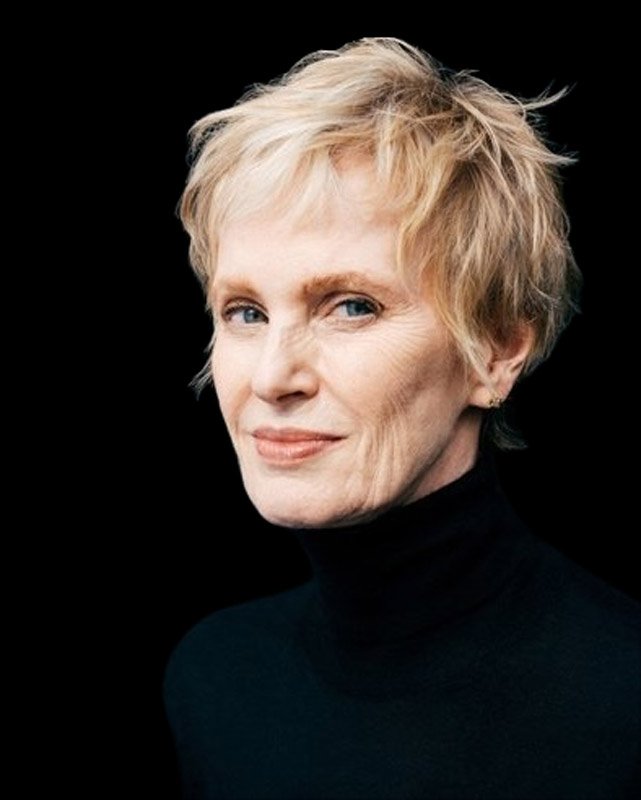
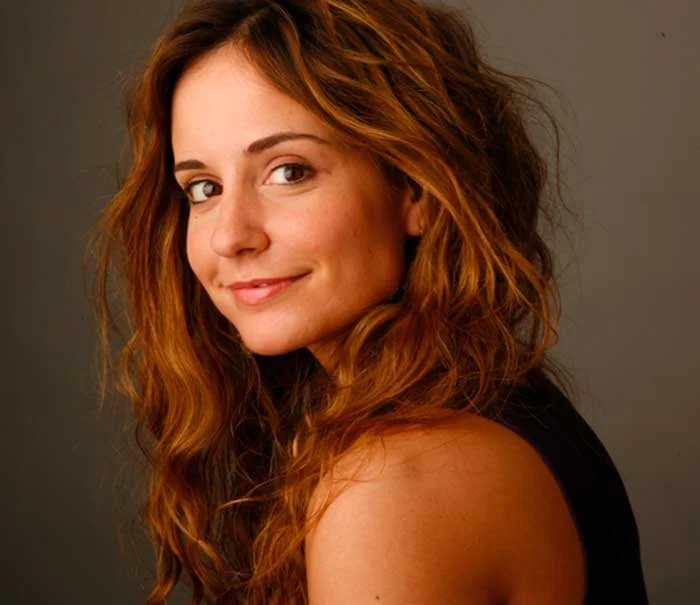
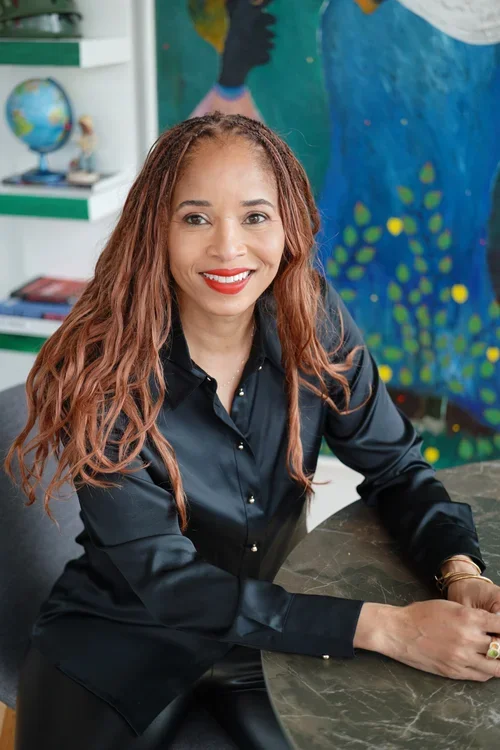
What does it mean to be shaped by a place you know you must leave to survive, yet find that it never truly leaves you? My guest today, MacArthur Fellow and New York University professor Nicole R. Fleetwood, grapples with this question in her new memoir, Between the River and the Railroad Tracks. Before this book, Fleetwood won the National Book Critics Circle Award for her groundbreaking work, Marking Time: Art in the Age of Mass Incarceration. Now, she turns her keen, curatorial eye inward—and backward—to the Second Ward of Hamilton, Ohio, the segregated, tight-knit Black neighborhood where she was raised in the 1970s and 80s.
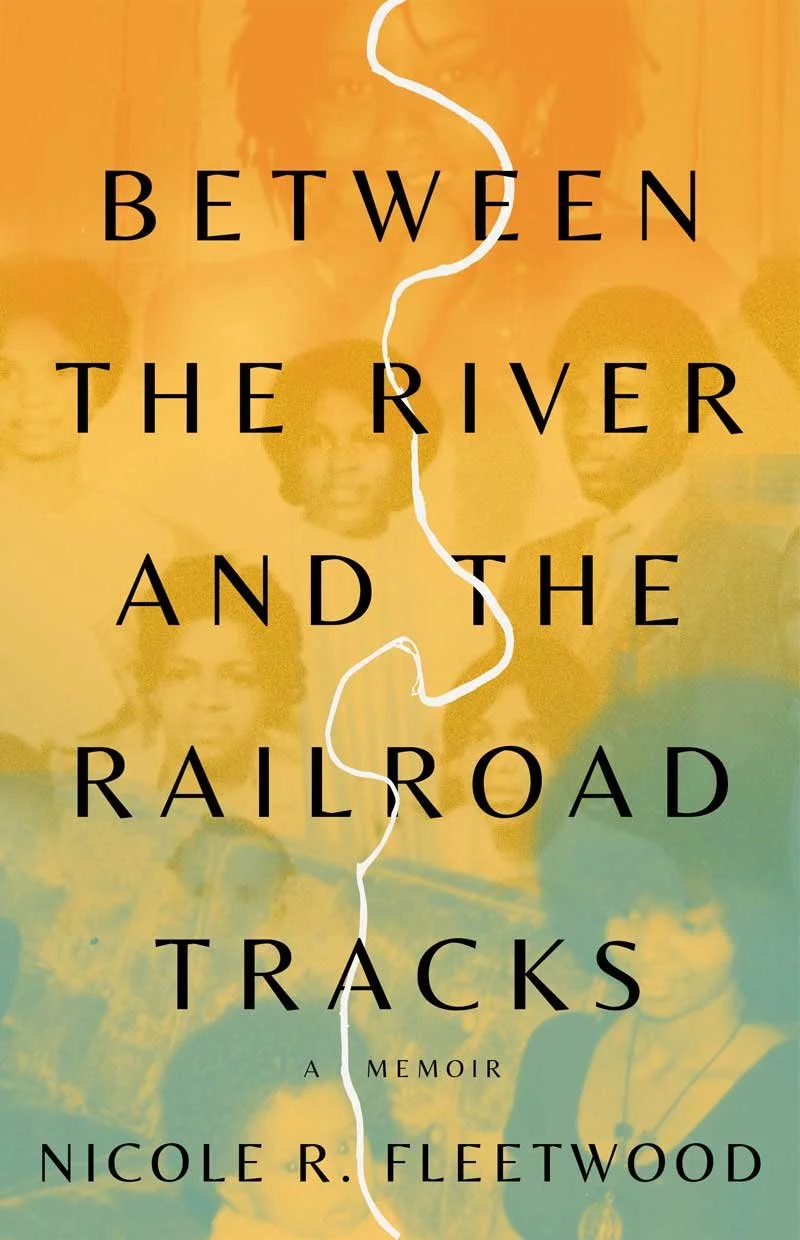
It’s a story of an American mill town devastated by deindustrialization and drug epidemics. Fleetwood writes movingly about what she calls an "ancestral curse" born from the legacy of slavery—a cycle of systemic violence and addiction that doomed many of the men in her community, leaving the women, including her mother and grandmother, to bear the weight of keeping their families together, fed, and educated. But it is also a story of creativity and joy. The legendary funk band Zapp, whose music influenced everyone from Prince to Biggie Smalls, was founded by Fleetwood’s relatives and practiced right in her grandmother’s basement. Between the River and the Railroad Tracks has been praised by writers like Jacqueline Woodson and Saidiya Hartman as a brilliant and harrowing counternarrative to the traditional Rust Belt story.
THE CREATIVE PROCESS
Nicole Fleetwood, welcome back to The Creative Process.
NICOLE FLEETWOOD
Hi Mia, good to see you. I am so delighted to be back on your podcast. I learn a lot from it. I think it's a beautiful archive.I think it's an ambitious project, and I love that you're just committed to continuing these conversations around creativity and really around how we connect as humans. I feel like you have a deep investment in humanity and connecting, so thank you for this space.
THE CREATIVE PROCESS
Thank you. And I was so excited. We had spoken as this book was in progress, and it surprised me in so many ways, and I feel like I got to know you a lot better. It must have taken a lot of courage and patience to do that kind of excavation. I can only imagine what that takes, just to give a bit of background on Between the River and the Railroad Tracks, you know, there's a lot of real rivers, real railroad tracks and emotional and metaphorical maps in your book. Mother, father, grandmother, grandfather, aunties, uncles, all of this, the love and the joy, and you'll talk a bit more about this kind of feeling of a family curse. And so I'm just wondering what it was like to navigate some of those actual spaces, the invisible fault lines, learning to read between the lines and find yourself along the way. What was that like? Just paint a picture of the young Nicole.
NICOLE FLEETWOOD
I love these questions, Mia. And it was great to see you in Paris in 2025 because I was at the NYU Paris campus working on a draft of Between the River and the Railroad Tracks, and you saw me at times where I was sort of stuck in my head trying to figure out parts of it. You asked me about the mapping, and I love this question. I do imagine the young Nicole, who is a character in this book. This is a character who's definitely based off of me, but she's not me. She's not Nicole in 2026, right?
She is my reimagining of a girl that I once was. So I try to also really distinguish her as a character from who I am. But it is based on all the experiences I went through as a child, that young Nicole in the book is a cartographer. She's mapping on so many levels.
She's mapping the segregated streets that are meant to keep her safe, her and her cousins. She's navigating this world with her cousins. She's mapping the emotional spaces of safety and belonging. She's mapping the history of the town, and it's layered and complicated, sort of economic, gender boundaries and environmental tolls.
And she's also very interested in the way that community that she's mapping is connected to longer histories of freedom and unfreedom, right? So she's mapping a lot, and then inside the home she's also doing mapping, constantly figuring out where are the adults in her life. Like, where they are in their own spiritual, psychological and mental states, right? So there's a lot of mapping, and yeah,mapping is quite literal and is quite metaphoric, as well as the river and the railroad tracks.
THE CREATIVE PROCESS
There's so many strong women in your life, and you are a strong woman, as we know. But also, the men have their different strengths, but they just had different challenges to overcome. When I think about your own parents, they were very young. When you're looking back, did you realize how young they were? And how maybe innocent and all these things, you just had to take that in because sometimes when we’re young, we think of them as adults. Just tell us a little bit about that.
NICOLE FLEETWOOD
Yeah. I mean, I'm 53. So I see my mom totally different as an 18-year-old mother or 21-year-old roller skating queen who's sneaking me into the rink while she's winning these competitions. So now I look back and I have a lot of tenderness towards her and the decisions she's making.
And generally she's making quite wise decisions on my behalf. She's really investing in my education. She's really investing in raising me to be an ethical person with a moral compass. The world she centers me around is a really abundant, rich and loving world, but she can't protect me from the greater world of gender and racial violence. And so going back, I was sort of marveling at a lot of the choices that my mom was making.
And my father's a complicated figure because he is quite frightening to me as a child, and I write inside that space of the child who's frightened by this person, but there are times when I can pull out and also see him as a very lonely and lost human being who's sort of isolated with his questionable mental health and his substance use, right?
So it took me deep into the process of working on the book for me to really be able to pull back from having just a reactive emotional response to my father and see his vulnerability, and see him as a much more vulnerable person, right?Instead of someone who's being aggressive and causing harm, and I think the same with my Uncle David.
THE CREATIVE PROCESS
And alongside that, you were also surrounded by some really strong women. I mean, I think your grandmother is like a beating heart of this whole book. And so I think now is a good time to hear you read a little from Between the River and the Railroad Tracks.
NICOLE FLEETWOOD
I could glimpse the river if I rose out of my seat in the back of Grandma’s station wagon and craned my head when she or another grown-up drove across the bridge to the west side of town. My cousin Cassandra sat close to me. She feared crossing bridges; she closed her eyes and prayed. The West Side was largely off-limits to us. I strained my neck wanting to see what was underneath the bridge; what besides water, concrete, and steel separated us from the other side of town.
The river was gray, syrupy, and barren. Smoke plumed from the factories along the shore. The river’s waters had been made toxic by the factories built along it. I saw no signs of boating or swimming, but Grandpa fished here on occasion and some of the churches baptized parishioners in its shallow parts. The newly converted stood shaking on the river rocks in white gowns and hairnets; the pastor held their nose and led them backward until they lost their footing. To be baptized means to surrender. They closed their eyes and mouths; they jerked for a second— survival instinct. The pastor brought them back upward. Saved from damnation, they rose covered in the soot and debris of the water, their souls washed clean.
In our southwestern corner of Ohio, an hour's drive north of Kentucky, a half-hour drive east of Indiana, tracks both surrounded us and zigged and zagged through town. The tracks were built for industry. They brought coal north and manufacturing goods east, west and south. Unlike the river, we could see and hear the railway rattling through our neighborhood all times of day and night. The trains were long and emblazoned with letters like B and O and CSX. Engines growling, wheels stampeding, whirling towards us, then through our communities and onward. Horns echoed westward and north, reminding us they were not done. They would pass through again and again.
For more than a century, my family has lived in southwest Ohio between the Great Miami River and the railroad tracks bringing coal to the mills and factories that employed the region. Both the waterways and the railways were conduits of industry that transformed where we lived; they were also the boundaries that confined us to the Second Ward.
To migrate to the region from sharecrops in the South, my great grandparents and their siblings crossed the vast Ohio River. Ohi:yo’, “great river,” is a transliteration of a word from the Seneca people, a river flowing almost a thousand miles. So great was the river that the settlers borrowed its name to inaugurate a new state in the union, once thought to be the emergent nation’s western frontier, but now deemed quintessential Middle America, though geographically located in its eastern region. Ohio is both a place and an idea.
The Great Miami River flows two blocks from our home on Beckett Street, though it is impossible to see from our windows, with the levees so high and steep that the river becomes inaccessible. When the sun sets, the light reflected from the river’s surface radiates to our porch landing and through the picture window in the living room where we used to gather around the television, laid out on the floor, feeling the rays on our back, as if shimmering with promises of tomorrow.
In the morning everyone was asleep except for Grandma and me. I lay awake in bed between my cousin Rhonda and girl-aunt Sheila, listening for Grandma to rise in the quiet dark. Knowing she liked to be alone first thing in the morning, I waited until the kettle whistled, the toilet flushed, and the oven door opened and closed before coming downstairs. The kitchen smelled of sugar, coffee, butter, and bread.
I stood in the doorway as she was in the middle of committing a Bible verse to memory.
“Nik-’em-Hick-’em-Slick-’em Ball,” she greeted me singing in her raspy alto. “Do you want toast?”
I kept my answer to a nod. Grandma didn’t like a lot of chatter first thing in the morning, and I was known around the house for asking too many questions and having too many opinions. Once I started, I got carried away, and she would say, “Oh, Nik, can you just be quiet for once? My goodness.”
At home, Grandma spent most of her time in the kitchen. At church, she could be found at the piano or organ. At dawn, she whistled and hummed along with the birds in the backyard. At dusk, she rested in her recliner, or on the porch enjoying a cool breeze, which she called “loverly,” the tickle of air on her moist skin. “Thank you. Thank you, Jesus. God is good,” she recited quietly.
Grandma talked sparingly but sang throughout the day. She was a walking catalog of hymns, gospel music, blues tunes, folk songs, work songs, and nursery rhymes, a catalog rooted in our family’s history of slavery and sharecropping in Alabama. Her mother, Edna Matthews, was born in 1905 on a farm in Wetumpka, Alabama, into a large family.
In the early 1900s, Wetumpka was a place that black people sought to escape. While its population was a little over five hundred in 1900 in the rural county of Elmore, the area had received national news coverage for its lynching of black people. In 1898, four black men were lynched together outside of Wetumpka: Solomon Jackson, Lewis Spier, Jessie Thompson, and Camp Reese.1 Two years later, in Eclectic, a small town east of Wetumpka, a man named Winfield Townsend was burned at the stake after his nephew was hanged in the Wetumpka jail.
Sharecropping fields were ubiquitous, with few other options for work. Edna followed her older siblings north, to Ohio, in the late 1910s and early 1920s, hoping to escape the racial terror and find opportunity. The Matthews siblings initially found housing and work in Cincinnati. In 1920, Edna was sixteen years old and lived on Mill Street in the Sixteenth Ward of Cincinnati along with her mother, two sisters, and two other boarders. She worked in a factory as a packer.
The jobs were better in Ohio, but the conditions were otherwise hard, and the cross burnings and lynchings extended well beyond Alabama and the deep South. The winters were cold, and black migrants were forced into cramped quarters on a few narrow streets heavily patrolled by racist officers. Blacks migrants to Ohio, like the Matthewses, found work, but they faced wage discrimination from employers, hostility and exclusionary practices from unions and white workers, and rampant housing discrimination…
– Between the River and the Railroad Tracks
SHOW FULL INTERVIEW (17:00+) ▼
It's really illuminating and, I mean, hard to imagine the conditions, endurance and perseverance it took just to get by. We're talking about a time when you're growing up. It's just a few decades ago. And there's so much in your book. Your personal history, how Ohio fits into these greater histories of the Underground Railroad. I didn't even know what a role it had played. I like the way you weave it between the personal and how this also plays out.
You're talking there about work and finding a sense of grace and a divine, even through hard work or deprivations or other very serious grave things that they faced, but finding hope, music, a sense of love and community. And alongside all that, you pull back, you're also talking about the decline of working-class America that we're seeing now played out decades later even more so, with the rise of globalism. But it all comes back to a personal story that we can hold in our minds. So what was it like to weave those different strands together?
Yeah, I love that question and I have to say it was very hard because, when I saw you, Mia, I told you that I was trying to figure out the structure for the book. You know, at some point I had... I think the word count for the book is like 115,000, 120,000 words or something. It had grown to like 150,000. You know, but at the time I think I was in Paris it was maybe 80 or 90,000 words, and I could not figure out how to organize the story. I really struggled and it was a painful struggle to try to figure it out. And I had two editors that helped me with the book, who guided me.
One was Ben George, who is the former executive editor at Little Brown. He's now with another publishing house. But he worked with me, really he acquired the book and then worked with me on the developing stages, and really the kind of big picture arc. He gave me this wonderful feedback also about how much risk to put into the book.
You know, he thought that I was being safe in some ways around telling certain stories, and so kind of pushed me to be more vulnerable and a bit more disclosing. And that was a bit of a struggle too because I really thought carefully about what do I disclose about other people, especially people who are alive and people who haven't chosen to write a book about their own struggles, right?
So I'm writing a book about their struggle. I'm writing a book about my life, but their struggles are intersecting with my life. So I had to really think about that also as I was arcing the book. And then I started working with Bryn Clark, who came on to Little Brown after Ben George left, and Bryn really helped.
It was a rapid editing process. With Ben it was very big picture and he'd send me 15, 20-page briefs that were really, really thoughtful. With Bryn, it was every six weeks we were going through a round of editing the whole manuscript, and we did that probably three or four times over a six to seven-month period.
It was intense. And between that kind of big picture and that rapid editing, we figured out a structure. And the structure is more—I don't mean this negatively, but it's more of a conventional kind of arc. It's more linear than I had imagined it. But I think because I'm moving between so many parts, as you were saying, a kind of national history that's connected definitely to a global history. A history of slavery, sharecropping and the Great Migration, the specificity of Black life in the Second Ward, and then the town of Hamilton and the region of Southwest Ohio that has a huge legacy with abolition, with utopian communities, religious communities like the Quakers and the Shakers, and also with unbelievable relentless segregation and racism, right?
All those histories are intersecting with my family, and then with me emerging. Early on, I knew that I was pursuing a life of the mind. Early on I was reading and thinking, and I don't mean this in a pompous way, but I was someone who was thinking a lot as a child, and thinking about consequences and ethics.
A friend of mine who read the book said that I was clearly, as a young girl, someone who liked rules. Like, I liked rules and order. And I never thought of myself as that way, but I could see how his reading of the book comes across that way. But I was really trying to figure out our greater purpose, you know? And connecting to the world of ideas and the world of practice, you know?
Yes, I like order too. But also, I don't want to say it's always a response to trauma, but sometimes when you have people around you, you can't always depend on them. You talk about that self-reliance, and then you could rely on those like your grandmother and others around you, and your mother. Although she was young, she's looking after you and your brother.
But you have to be vigilant. You're talking about the roads that you can take. Those are safe. Those are not. You have to be alert every moment, so order is a friend. I think education is a friend in these times. It's like, "Well, I can learn, so I don't have to have an emotional response."
I've seen others do that. I can step back, analyze and have a higher approach to things that's not impulse-driven. And so books were another teacher as well that comes across.
Yes. I learned to love books really early on. Someone had this early impression of reading a draft that somehow this is a religious book, and I'm like, "This is not a religious book."
And I think this is a book where religion is definitely incorporated, and my family, I grew up in a quite religious Black family, and I would say that religion also serves a very different purpose for Black people than this critique of white Christian nationalism, right? That's rising, and you feel it strongly in the U.S., like what white Christian nationalism is doing in terms of being anti-immigrant and trying to enforce very rigid gender lines and limit women's reproductive access, all these types of things.
And so religion is very, very different in Black communities historically, and there's not to say that there aren't some conservative tendencies amongst certain Black Christians. But generally it's much more of a liberation theology. You know, it's much more about connecting to a higher purpose, connecting to something that feels like divine order.
As you said, in a world where racism is so arbitrary and so relentless, you want to believe that there's a greater good, right? Because what you're seeing right here, right now is so atrocious that I really try to demonstrate through interacting with my grandmother or my mother how religion is a guiding force for them in times of despair or hardship. And just the everydayness of making decisions for the greater good. I think one of the things that got dropped from the final version of the book is me talking about Christmas where everyone got the same thing. My family in some ways operated like socialists. It was the belief that everyone should get the same thing, you know?
If there was an aunt who didn't have the money to get their kids gifts, we pooled everything together, and everyone got the same thing. And I love that value. And I grew up in a school that was kind of like that too, because we were mainly working-class and working poor, and a lot of what was provided was by public schools. Later when I taught in a public school in California and I saw how uneven and unequal things were, I was shocked because Ohio was a state—it's shifted, it's grown more conservatively—where there was a lot of money put into public school for all classes of people. So yeah, you're right. Learning was definitely a spiritual journey for me. And a spiritual journey is like, what is my relationship to this ancestral curse? What is my responsibility to history, to family, to community, to myself?
And only later the question of to myself becomes real for me, like when I go to college. So that's one question. And then, what is the life of the interior? I'm asking a lot of questions throughout the book, even as a child. As a very young child, I'm asking questions and I'm studying the people around me for answers. So I wanted to map that. I wanted that to be the arc, and then in the epilogue I return to the importance of reverence. And I hope it's a book where people feel like there's an authentic engagement with ideas of reverence, compassion, love and also honesty.
Like looking at things as they are, even when they're really brutal and painful.
Yeah, I think that's true. I mean, we can't heal unless we reveal. We can't conceal everything in order to heal from those things. And I think, yeah, sometimes spirituality may have this skeptical eye on it from a lot of people, but what does it mean?
It's the spirit. It's what's alive in us. So we can't just have the intellect. We're not just this body, I hope. We're going to leave it someday. So yes, that spiritual sense, that sense of the music of life. And when you talk about religion, of course you celebrate the musical roots of Ohio, and I wasn't as familiar with all of this history.
I love this quote: "Funk is transcendent joy!"
That's a great quote.
So finding all of this, I think the church really is a home for that. And also finding your voice. Through the books you read, through your family, through these different educators in your life, where did you first find your way towards writing?
Not just in this book, but when you realized you'd be a writer and curator?
Yeah. Well, I do recall once in Sunday school, I was very young, maybe I was in first grade, I don't remember. My Sunday school teacher telling my mom, "You know what your daughter did today? She was writing love letters." And my mom looked and she was writing love letters to God. And I don't even remember what I wrote, but I remember that conversation with my mother and the Sunday school teacher. And I love that idea of writing a love letter to the divine source, right?
So there was a way that spoke to me at an early age. And then my grandmother would always write letters to her relatives in Colorado. My grandmother had a ninth-grade education, but she read every single day. So my reading practice comes from watching my mom and my grandmother read their Bible every single day.
I mean, they would study and they'd do a lot of interpretive work. And so that careful reading and that writing as part of the everyday, like the letter-writing tradition. My family was very, very into the letter-writing tradition. When we had a relative who was in the military or unfortunately in prison, there was voluminous correspondence among us.
And to grow up and see that, that's a kind of literary tradition of the everyday, of the Black everyday, that I think has influenced me deeply and has influenced also my writing about the everyday. Because even as you know, when I write about art, I'm also writing about it in the context of the everyday.
I'm not so interested in a work of art just on a museum wall. I'm really interested in the making of it, the care practices, the history and the politics around it too.
So yeah, it means nothing if it's just decoration. You talk a lot of real talk, a lot of real stories here. You mentioned earlier your Uncle David, and you kind of skirted over that, and your father. So this is a book also about understanding anger or understanding violence, and then where maybe that comes from.
And I guess in hindsight, sometimes you realize they're angry most at themselves, or not being able to function in the world the way they once did or could have the potential to do.
Yeah. And it's specifically about gender violence, and racialized gender violence, and how Black women are particularly vulnerable because of segregation, because of the limitations placed upon us in terms of employment, housing and just other networks outside of our church or community organizations, right?
And so my mother separated from my father when I was very young, when I was nine months old, because my father started showing signs of abusiveness that actually, even after she separated from him, those acts just worsened. So she is trying to raise me as a single divorced mother in a segregated community that's tiny.
There's a few streets in the Second Ward. And my father is stalking us in this small community, so we move around a bit and he'll start harassing, he'll break in, he'll cause harm. We end up back at my grandmother's house, and so there's this tension throughout of us going back to my grandma's house where we feel safe, but where the house is also overcrowded, and where my mom feels like she's a burden on my grandmother. And so then we venture out, we go back to Grandma's. So throughout you see this going back and forth. And that's really a way also for me to think about where we go for safety. Where do women who are experiencing various forms of abuse go for safety? And then it made me really reflect on the larger culture of gender violence and the culture of sexual assault. I mean, right now in New York, in the U.S., there's a lot of reckoning and contemplation about a young girl who goes by Jane Doe who was severely assaulted by a group of men at a university campus.
You know, and it's raising a lot of questions, I think, that young girls and women deal with intimately and often through shame, not silently, day in, day out, right? And so for me, it was looking at it from the perspective of a young girl watching her mother who's trying to raise her and trying to protect her, but her mom's not safe.
I had that felt sense as a child that my mom's not safe. And so that's part of my hypervigilance and part of my desire for order and also my false sense, both false and real sense of control, right? Like I actually felt a lot of power as a young girl, and some of that was imagined power, but I needed to feel powerful in a situation where we were so vulnerable.
Well, that's beautiful that your grandfather was also a strong figure in life. There were different male figures that had a positive role model in your life. They gave you that sense of power even though there are things you might not have had. Even though there was instability and all this stuff around, they were like, "You have agency."
And that's even something a lot of us don't feel. I think it comes from you, too. It's not just people telling you that. But to have given you that seed of you can do anything, that's a beautiful gift to give.
Yeah, I felt a lot of agency. I did. And I also think I really try to paint men who are causing harm in the family, men who are close to me, in loving and complex ways.
Like my Uncle David was a star student. I mean, he was the first in our family to get a college scholarship and was potentially the first to go to college. But then he was drafted into the Vietnam War, and partly his bravery in protecting his younger brother, he does two tours in Vietnam, and he comes back severely crippled by PTSD. Having night terrors, hallucinating that enemies are all over town, having fights in and outside of the house, turning the women who were in his intimate life into enemies. And I witnessed that, and I just witnessed the horror of this person whose mind just seemed to completely detach from reality. Everything seemed like it was an assault or something he needed to handle with violence. And it was tragic to watch someone that my mom and grandma and grandpa knew otherwise.
I only knew him as this person who came back from Vietnam and was very, very violent and troubled. I mean, he came across just as someone who was suffering, and I really try to talk about my fear and how I was repelled by that behavior, but also just mourning the person that he was not allowed to become.
Yeah, because really his kindness towards his younger brother who escaped that. I mean, he went for training, but he didn't have to have that experience. It cost him, and I was sad. I wanted to hug the different members in your memoir because it seems that they needed love at certain times and that I can't imagine what that's like. It makes me so sad that we do get involved in these wars that, you know, I understand sometimes we need to defend people, but it seems like there should never be war. I don't understand. But anyway, that's me and my pacifist ways.
Yeah. Something you said is that you wanted to hug. I love that you felt that compassion. I would say that there was an abundance of love in the family. I think you can feel, I hope everyone can feel how my grandmother is just overflowing with love. I mean, my grandmother is just an enormous source of love for all of us, and we love each other.
But what I think maybe the hug means, when I hear you say you want to give them... I think what the hug means is relief, right? Like, how do people experience relief when they're suffering from so much systemic trauma too, and carrying the weight of, whether there's an ancestral curse or not, you're still carrying the weight of ancestry. Like, the journey that brought us to that community. In our bones, right? You know, it's in our genes.
So what have the years taught you about love? I mean, you got many lessons from these strong women in your life. I think about your grandmother, with your mother and what you've learned over the years. What have the years taught you about love?
That one is, you know, that love is abundant. I mean, I think the reason I'm saying that is because I think sometimes in our day-to-day we engage with people in our intimate life and strangers on the street as if love is a scarce resource. And I think that it's a gift to be able to love people in big open ways and in quiet everyday ways. I think to hold back love is to harm ourselves and others.
And so for me it's like I want to be in the always flow of loving. Like love is bigger than me, love just keeps flowing. It really is. It's a force that flows through us, it flows between us, flows above us and under us, and I want to be in that. I want to always be in that vibration. And it doesn't mean I always succeed, but it's just one of these things we can always lean into.
Like this very moment you and I can lean into love. We don't have to do anything but just lean into it. And that to me is just such a beautiful option. Love is always an option. That's always a forever option.
Yeah. It costs time, but it's free.
Isn't that a great thing? It's free. You know, and it can connect me to my grandmother right here, right now, even though she died many years ago, right? So I think that is one of the lessons. And I talk about this idea that as a child I would hear in the church, which was non-preferential love.
It's really a kind of love of humanity that asks, what does it mean to model the idea of the divine or God's love for people?What does it mean for humans to practice it amongst themselves? And it was such a profound idea. I think I first heard it when I was maybe seven or eight. That's when it registered, and it really became this idea that I always aspire to.
It just seemed so wild to be able to just love everybody, you know? And I still think it's an exciting idea. It doesn't mean we're endorsing... You know, I think sometimes people think to love something means you're approving of it, and they get stingy around loving. And loving has nothing to do with judging or approving, it's not that, you know? It really is to me a deep, profound recognition, a kind of bowing to a reverence of everyone.
It's true. And in your life, because obviously there are people in your life that are maybe harder to love or harder to forgive. So how do you find a space in your heart for those who were not the easiest to love? Change that.
So I talk about non-preferential love. And so non-preferential love is a love where, like, I love my son. That's my son. He's part of my DNA, it's very possessive and it's very specific, or I'm going to marry this person. That's clearly preferential. So non-preferential love is just allowing yourself to connect to the love of everyone.
And in some ways, to me, it is formal, and I'm someone who's learned from a lot of different religious and spiritual traditions. And so to me, there is—by formal, I do not mean inauthentic. But it is like there's a form, like love and compassion and or a kind of prayer for all of humanity. Kind of like my grandmother and at her church, they would do a foot washing. They would wash whoever came.
That's a form, that's a formality. That's a formal way of engaging with this idea of non-preferential love. And so sometimes I live in New York City. Right now I'm living in Soho. There's lots of people and lots of buildings around me, and when I walk out my house, I see people suffering all the time. And so my formal practice is to take a moment and as I'm walking, to say a prayer for them as I walk by them.
Say a prayer that they are relieved from suffering and that they find safety and purpose. And so that way of engaging with non-preferential love allows me a way of loving the people in my family, like my father, who has caused harm. He doesn't have to be my favorite person for me to love him. I don't have to accept what he's done, nor do I have to allow him to cross my boundaries.
Like perhaps he wants to be closer to me, or most of my life it has felt like he's wanted to be closer to me than I've wanted to be to him. And maybe I have felt some guilt around that, but now I see that as a really healthy boundary. You could actually still love someone and find that their behavior is one that causes you to have to have clear boundaries.
So learning about this idea or learning about various traditions of non-preferential love, and that's just the real ability to love everyone. Some people think that's surface or superficial, and I think it's the opposite. I think it's really, really deep, really profound, it's not easy. You know, and I think when you and I talked about Marking Time, my book about art in prison, I told you for me, in order to finish that book, I really had to be able to love everyone I wrote about in that book.
So I had to practice a type of non-preferential love and also an idea of maybe Martin Luther King and some other pacifist and utopian thinkers of beloved community, right? Like just imagining a world where it is possible to be able to love everyone, you know?
It is. It takes energy. I don't want to say like to be a saint because people will try your patience. But it's a wonderful practice.
I am far from a saint. I'm impatient, I'm an introvert, I don't like talking to people a whole lot of times. So I'm all those things, so I'm far from a saint. And I am very protective of my time and space. So I'm practicing non-preferential love, and yet I am also very, very protective of my time and space and who I allow into my home and who I allow into my intimate life. So all those things can exist, right, in one person.
Yeah. No, it's really interesting. And so you're having a lot of conversations obviously with your family members that are still with us, going through the artifacts, the photographs and the maps, and asking them questions about things maybe that had never been said, that they just assumed you knew. I mean, what... Just tell us a little bit about some of those conversations or maybe letters you might want, or things you might have wanted to say to the young Nicole as well. Like, the things she thought she knew and she's like, "No, you didn't. There were some other things." What were those like, those conversations?
So I shared an earlier version of the book with my Aunt Sheila, who's just five years older than me. My grandmother had nine daughters, and they span 22 years. So the youngest daughters are really much more like big sisters to me. They're three to five years older than me. The older daughters are 18 to 22 years older than me. So it's just this really wide range.
But my Aunt Sheila, who's a younger aunt and she's a writer, I shared the book with her. I shared an early draft with her, and I wanted her to... She read most of it. And she gave me some really great feedback. Some parts where I was asking things about my great-grandfather Fleetwood, I talked to... He has two surviving children. My Aunt Dorothy is 96, and she has a very sharp memory.
And so I went to Ohio the summer, August of 2025, when the book was about finished, and sat with her in her home for a couple hours recording a conversation with her about some of the early details, and that was very, very helpful. And then my Aunt Sharon and my mother, I just kind of had an ongoing back and forth with them about certain details. I didn't read the whole book to them because I also didn't want to censor myself, you know?
Like, there were things that I shared with my Aunt Yvette, and she is also one of my closest friends. We've become very good friends. And there were moments where she was kind of pushing back on a description of Grandpa or a description of my grandma. And some of that, I incorporated it, and then others, I was like, "Well, this is about my reading of Grandma or Grandpa."
It's not about the fact of the, you know, it's not about the actual what happened. We all agree that my grandfather died on this date, right? But the legacy of his death, we don't always agree on what that is. So I'm writing from my perspective and it's okay. So then I really started giving myself space, because I'm a people pleaser in my family. I'm someone, like, I'm an overachiever. I want to do it right. I want to make them happy.
And I had to really struggle with that early girl stuff. That early childhood stuff was coming up very strongly for me. And then I just, before the book is published, I had to say, "This is a book where I really practice do no harm, but I also have to accept that people are going to have hurt feelings, and those are not the same things." Causing harm and people having hurt feelings aren't the same things.
Like, I can have a birthday party. I don't want to invite this acquaintance to my birthday party. They have hurt feelings. I didn't do harm, right? So separating that out, right? And that I'm not responsible for someone's hurt feelings. I am responsible for my actions and my intentions. And so I know my intentions are not to cause harm, and I know that I've tried to write things in ways to not cause harm.
An example would be my cousin Eric, who still doesn't talk to me. And so I couldn't really share with him directly some of the things, but I shared it with his sister Rhonda and his mom, and I think that there's going to be some dissonance around some of the things I shared about our experiences and about how we come to the place where we're not communicating. And that's his choice.
And then I'm still, and I don't mind this going out with me saying this. I'm still also like, you know, the book comes out in a month from our recording this, and I haven't quite decided what I'm going to share with my father before the book comes out. I've given it some thought and I also just didn't want to have a huge lead time, like tell him two months before the book came out.
Again, I don't mind any of this because this is me thinking it through and then also talking with my mom and my aunt about it. And also like, well, you can let him read it when it comes out, or you can share with him in advance that there are some things that he might not be comfortable with. But they're my truth and it's important for me to be able to share my truth.
And I actually haven't made a decision around how I want to handle that, and I'm also okay with it because I'm okay right here, right now not knowing how I'm going to handle that because I'm really trying to ground it in higher good, my safety, why I wrote this book, those kind of things and I'm just not there yet. I know I'll get there because I'm giving myself space to think about it, but I also want to feel like I'm doing a thing that feels right.
I'm sure it will fall into place somehow. These things do. And, but as you say, it's not just your truth, it is a truth as other members in the family have observed this. And that's a form of love, you know, putting that out there because sometimes people can't move beyond something if they don't understand it, or at least your perspective, and they'll have another perspective. I actually thought it was very fair and very gentle in terms of the different male members of your family like your great-grandfather...
Yeah, my great-grandfather is a particular figure around this idea of an ancestral curse. So a lot of people kind of focus around this great-grandfather figure. Someone who died way before I was born.
In terms of the curse, because it's something you'd been hearing from a lot of people, what is your relationship to belief in this curse, or is it just more metaphorical? And on the other side of that, you know, what are those talismans? There's other things that you can hold onto, but this is really, you talked about having agency and feeling strong. I mean, that's the other side of the coin?
For me, I think for a while it was... As a child when I would hear adults talk about this, mainly the women, as I say. I've never heard a man say, "I'm cursed," in the family. I hear the women say the men are cursed, right? So it's a very gendered story. So only through writing the book did I realize that the women are cursed too. If the men are cursed, so are the women, because the women are carrying the story.
And the women, like, they shoulder the burden of the story. They're the problem solvers when the curse arises. You know, they're the ones who are dealing with whatever crises is created around this idea of the curse, right? Be it someone ending up in jail, someone struggling with addiction, all these issues that are kind of popping up. So I got more interested in, well, why do we keep telling ourselves this story? What are we gaining from telling this story?
And truly I don't think we're gaining much. I think it is a way, though, of understanding a very, very complex history as Black Americans descended of U.S. slavery, you know? Which is a very different story than many of my friends who are Black immigrants to the U.S. And we might have some overlapping shared histories, but many of them do not relate to the specificity of the journey of Black Americans whose ancestors were enslaved here. And so I wanted a 2026 story about a story now on that form of Blackness, of Black identity.
And I think the curse, the way our family talks about the curse, is one way that we come to understand intersecting forces of history, family legacy and our individuality, or our own individual identity. So it's not so much whether I believe it or I don't believe it, I'm interested in its impact. The idea of it, how it impacts us and how we carry it and where we see it, where we might say, "Oh, there it goes again, arising."
It's something I think of because of course you've written and curated so many exhibitions and, you know, obviously for those who don't know your Marking Time exhibitions and book, dealing with incarcerated or formerly incarcerated artists, and you often hear about the curse of artists. Like they get a gift and they get this curse that comes with it. Maybe that's the something secret that gives their voice power. That something, you know, where does this come from? It's about trying to resolve that. So it's nice that also the members in your family were gifted, are gifted. And maybe I don't like to think it only comes from that because that seems like a little bit fatalistic.
Oh, yeah. I hear you, and I do think there's a way that we understand... Like, I come from a wildly talented musical family, like many generations of people who make incredible music, and it was just the everydayness of my life hearing people make amazing live music, right? And so it was an abundance of live music, so much so that I just thought everyone grew up with live music every single day, you know? Like, or everyone grew up and heard their uncle and older cousins performing a song in the basement, and then that song is on the radio, you know? Like...
So cool.
Bounce to... or something, right? So I do think that there's a way that we understand creativity, especially creative outburst through ideas of a gift and a curse, that there's somehow a twinning around that. And I think that is just the way that we come to understand what happens to somebody like a Basquiat or a Billie Holiday, right? Like these people who are incredibly talented, but they also seem doomed in some kind of way.
Is that just an archetype that we've created to understand certain things? Because there are also artists who have lived long, abundant lives into their 90s. You know, but we don't tell that story as much. So I don't know if there is some truth to it, but I do think that there is... You know, I was thinking about funk music and gospel music and how they have shared similar roots, like kind of ecstatic performances and they're very embodied, right?
And there's a way, a thematic that you see people use to talk about especially the relationship between Black religious culture and Black secular music, and it's called Saturday night, Sunday morning. So Saturday night, you're at the juke joint, you're at the blues club, you're doing all this. You're getting drunk, you're flirting, whatever. And then Sunday morning, you're in the gospel choir, right?
And we can look at them as like they're binary instead of... But I think of them as more of a fluidity. And yeah. And so I think that this idea of curse and gift, they're not two sides of a coin as much as there is a porosity around it. You know, they kind of bleed into each other. I think we've all... I won't say we all. I know I've had moments where I'm like, "I have to get something done. I'm on a deadline," and I have an influx of energy that propels me to get to the end of this book and it's a very specific kind of moment where I'm feeling creatively elevated.
I have extra energy, and I'm just going to push through, right? And then maybe after that, I'm down for a couple weeks, right? I'm coming down. Runners have that runner's high. You know, there's just different ways, I think, that we tap into that kind of creative energy. But...
Yeah. The creation, and sometimes it can have destruction, or you need a pause. And I was thinking back to a moment in your book, and I was thinking about curse and gift, where again, your Uncle David seemed to have been often taking a burden upon himself, protecting his brother, your Uncle Sherman, his musical talent and that moment in your book...
Yeah, my Uncle David. There's another moment where my Uncle David is trying to protect his younger brother. It really is around my Uncle Sherman is a very talented musician, and he's the founding bass player of our family band, Zapp, featuring Roger Troutman. And there's a moment where Uncle Sherman is having conflict with somebody in the neighborhood, and it's around music, and it's around something that belongs to my Uncle Sherman. And Uncle David intervenes, and he intervenes, though, in a way that really harms him, you know, sort of long-term.
It just, as we were talking, made me think that your Uncle David wanted to take the curse upon himself again, taking the extra tour of duty in place of his brother, taking it upon himself to solve something for his brother so that he can do his music.
It seems like this is something that he showed up, sacrificed himself in a very flawed way in that instance. But it came, if you could see into his mind, from a place of love. Mm-hmm. Absolutely. It came from a total place of love and his belief that he had to protect his family.
And there's a lot of love for Ohio and its history, and a kind of also vanishing way of life. And I think that's vanishing from a lot of neighborhoods.
I think that's true, and I remember when I had the book proposal with my agent, PJ Mark, and we were sharing it with a few editors, and we had gotten some really great responses from various editors. And one of them said, “This is so fascinating to me.”
He had not spent any time in the Midwest, first of all. He grew up on one coast, lived on another coast, but he was like, “It feels like a time that was not that long ago, but it feels so long ago.” Because those kind of large intergenerational families living on the same block, not that you never see that anymore, but I do think that we live a much more sort of fractured life. Our lives are more fractured, you know? People I know who are from the Second Ward who remain in that area, that broader area, they're now either in a townhouse in a suburb, or their mom and dad, aging parents still might be in the Second Ward, but they live in a more affluent community if they can, right?
But that also has shifted because though we're still dealing with rampant forms of discrimination, there are more places where Black people can go to rent or own in that area. And now there are quite a few Black people, even on the west side of town. I talk about how the west side of town when I was growing up was almost exclusively white. A lot of the people I know who are educated and are still living in Hamilton, Black people, are living on the west side of town. I think this is something Black historians have looked at, in no way romanticizing segregation, but also what Black communities might lose once certain forms of de facto or du jour segregation have ended. Sometimes the options to move into more affluent, white neighborhoods mean a weakening of local institutions and stores in that segregated community, right? As people are moving further and further out.
Yeah. Oh, completely. As someone who also grew up in a multigenerational family, yes, because you do need those grandparents who have that wisdom.
I do want to ask here, you're a teacher, and you've seen the way, whether it's social media or AI and how it's changing the way we communicate with each other, with ourselves or not even thinking our own thoughts. What are your broader reflections on that, how it's affecting us and accelerating into a future you want?
Right. I think that's a question that we're sort of grappling with in macro and micro ways, right? The world is thinking about it, and then we're also just thinking about it in our own individual lives, and people are afraid that their way of life is going to be eradicated. One thing is I don't panic around these things because maybe it's something I learned in my childhood, is that panic takes away your power and your agency.
I talk to my students about it. I think it's impossible to know what kind of resources students are bringing into class. You can see signs of plagiarism or bad writing or bad research, but you just don't know the bigger picture of what they're bringing. So I just tell them the importance of not using any tools that are dumbing them down. It's like, you don't want to go into the world becoming dumber and using materials, ideas or technologies that are literally going to make you dumber. I'm definitely saddened that we live in a world where we worship tech billionaires and where we give them so much power to control our destiny and to sort of set the terms of what's legible, what's possible, how resources are getting used. And I'm glad that there's a pushback in many communities against the expansion of data centers. So politically, I'm engaged with this idea of why are we hyper-fueling very, very wealthy, very elite, largely white men, many of them with terrible gender ideologies that they're embedding in their technologies, who are really committed to resource extraction and inequality. At the same time, I don't want to live in a world where I'm experiencing everything as something I have to be panicked about.
Yeah, and I think it also relates back to as you chart the history of Ohio, a rise and kind of decline in working-class jobs. We're talking about the evolution, you know, ups and downs of communities. I mean, that rise of globalization, which has outsourcing of so many jobs, that's potentially exponential. So I mean, these are important issues, and you've grappled with that, and your family has grappled with that, and we all have in our own lifetime. So we have to keep our eyes open, just to make sure we don't have social unrest.
Right, and what led my family to that area and what have led people out of that area are all technological changes.
You know, what are those... You wrote about a lot of these things that bring back that sense of home for you, that kind of place of comfort and joy.
You know, sort of thinking about those aging photographs, about the fashion. My Aunt Sharon used to sew and make their outfits. She made the bridesmaids' dresses when my mom got married. And my grandmother was always...
There was always a huge pot of something on the stove. Pots of beans or stew so the many people who were entering and exiting the house could always have something to eat. My grandpa's pickup, and so I remember the smell of gasoline as he's leaving for work, and the fumes from the factories too, right? That really foul smell that comes out of especially a steel mill as we're driving to or from Armco Steel Mill where he worked.
So there is a whole sensory world, and I say in the book that the aesthetic of the Black everyday during the funk era and the way that people dressed. They did not dress like they were working in factories. The way that people wore these long, sometimes dashikis or bell-bottoms, and the men wore platform shoes, and they had sort of these big afros, and their shirts were all deep cut.
CLOSING THOUGHTS (1:03:00+)
And so it was this way that it was a kind of abundance, a kind of leisure. And again, the fashion also kind of mirrored this idea of transcendent joy. You talked about music and of course, how much reading meant to you, just informing your view of the world. What do you feel that the music that you love, the books, film or all those different touchstones say about who you are and the life you've lived?
Oh, so I like a range of film, music, I read a lot of poetry, but I also like bluegrass and I listen to a lot of incredible genres that Black Americans have created, but I think what that is for me is just a life of curiosity.
I've always been guided by curiosity, you know? And I love that. I love waking up feeling, “What am I going to learn today?” And every day I'm learning something new. I feel very blessed that I live a life as a professor and a writer, and those fields allow me to produce things that really are coming out of just a space of being curious. That's a huge material gift for me. That I can actually make a life for myself, that I can support my child, help my community and help family members leaning into my curiosity. That is a huge gift.
You've curated exhibits, of course, many great ones. In this "Museum of Memory" we're building, we have unlimited space. So who and what would you put in your museum of memory, and how have they given your life meaning?
So I want to say I love this idea of a museum of memory. I love this idea. For me, it's a lot of ephemera. I carry this trunk around with me that I got at a thrift store in Hamilton when I was a teenager, and in that trunk I open it and there's so much random stuff, like a report card from when I was in the fourth grade or a beautiful letter that my grandmother wrote me when I lived in the Netherlands or a photograph with me and somebody I dated when I was 16.
Right. All these things, right? And so I could say in the museum of memory, there are very specific things like a photograph that I have of my grandmother that everyone in our family has because my grandmother didn't like being photographed. The beautiful photograph in part one of my book of my grandmother and grandpa and their 11 children.
But I also like this random assortment, this accumulation, a broken toy from childhood. I think I've always been a little sort of off-centered around valuing what people devalue. And that's one of the ways I got into Marking Time, looking at art made in prison, because I was thinking about a lot of the artists that when they pass away or they leave prison, a lot of that stuff just gets thrown away or gets discarded in various ways.
And so my museum of memory would have a lot of items that would be discarded by other people. You know, it's all those broken parts. The broken parts, the forgotten letter, the bad draft.
I think that's really important because that's the seed, the soil from which it flows. So just thinking about the kind of world we're leaving the next generation, if a cataclysm were to suddenly sweep away our civilization and we had to rebuild our world from scratch, what are those seeds do you feel are important if we had to begin again? What knowledge do you think is important to hold onto?
I think reverence is very important, and that's just a kind of deep respect for the plant, the person, the bear, that which we do not know, like a type of grace. I think intergenerational relationships.
I mean friendships and learning from grandparents, learning from elders, but also learning from children. Intergenerationality is so important, and I think a lot of the young people who are suffering in our world right now is partly that they don't have that. You know, they might have their parents, but their grandparents might be somewhere else. I knew my great-grandparents, right? A lot of them, not all of them. So I think that intergenerational knowledge is so important for our survival, and also just being able to live through wisdom.
And you know what? I would hope if we were to be starting all over, that we'd be starting all over more with an indigenous system of stewardship, of mindfully and respectfully using resources. I think resource hoarding is the root of a lot of our problems. Resource hoarding leading to wars, leading to unbelievable inequality inside cities, destruction in families, kind of family conflict.
Thank you, Nicole Fleetwood, for opening your life to us and opening our eyes to intergenerational relationships and untold stories of Hamilton, Ohio, Between the River and the Railroad Tracks by sharing your wisdom and spiritual perspectives on love, family and healing. Through understanding, we can find ways to create a better future. Thank you for adding your voice to The Creative Process.
Thank you, Mia, and The Creative Process. Thank you, dear. I really appreciate this time with you.